 Jury rips districts: A statewide grand jury has concluded that many Florida students are in imminent danger because their schools are not complying with state requirements for school security. “There is no conceivable set of circumstances that any Florida school, charter or not, should be unprepared to comply,” according to the report that was issued Wednesday. It's the second report issued by this grand jury since it was empaneled by Gov. Ron DeSantis to look into school safety noncompliance by districts. The report singled out the Broward County School District as particularly slow to comply, citing its flawed communications systems, under-reported student incidents and its rushed efforts to meet the law's requirements. Sun Sentinel.
Armed teachers: Republican legislators who pushed to allow Florida teachers to be armed in classrooms now say they don't need to know how many have signed up for the training to carry weapons. State Sen. Kelli Stargel, R-Lakeland, and the chair of the Senate’s education budget-writing committee, said this week that she doesn't know how many teachers are carrying concealed weapons in schools, and that it isn't something that concerns her. Sen. Janet Cruz, D-Tampa, is pushing for disclosure, and said she thinks Republicans don't want the number released because it will prove the program is a failure. Thirty-eight of the state's 67 districts are participating in the armed guardian program, but Safe Schools director Damien Lewis said in September that only 11 were considering arming teachers. News Service of Florida.
School board term limits: Local school board members in Florida would be limited to 12 years in office under a proposed constitutional amendment filed Wednesday in the Senate. State Sen. Joe Gruters, a Republican from Sarasota who is also chairman of the state party, filed the resolution that, if approved, would place the question on the November 2020 ballot. A similar proposal was filed in the House in September, but it calls for term limits of eight years. News Service of Florida. Florida Politics.
Four-day school week rejected: Hernando County School Board members informally have agreed that a four-day school week is not in the district's future. “I see this going over with parents like a ton of bricks,” said board member Gus Guadagnino, echoing the thoughts of the rest of the board and school officials who looked into the idea as a way to cut costs. They said the arguments against four-day weeks -- longer school days, a loss of art and music classes, trouble with transportation and sporting events -- outweighed the arguments for the change, which centered on saving money. Tampa Bay Times.
Teachers honored: Heather Young, an art teacher at Venice Elementary, has been named the Sarasota County School District's teacher of the year. Joshua Grant of Venice High was named the district's high school teacher of the year, and Sarasota Military Academy Prep's Marissa Dobbert was chosen as the middle school teacher of the year. Sarasota Herald-Tribune. Charlotte Sun.
Student-athlete safety: The House PreK-12 Innovation Committee has given its approval to a bill aimed at improving safety for student-athletes against health crises brought on by heatstroke. The bill, filed by state Rep. Ralph Massullo, R-Lecanto, would require defibrillators to be available for all games, practices, workouts and conditioning sessions, with an employee or volunteer trained to use it, and amend guidelines for when schools should have cooling zones or cold-water immersion tubs available. Tampa Bay Times.
Campus therapists approved: Therapists will be on Citrus County school campuses next year after a contract between the school district and a community mental health provider was approved by the school board. The deal calls for LifeStream Behavioral Center to provide 6-10 mental health counselors to be divided among schools. The therapists will treat students for behavioral and emotional issues and refer students to other services as needed. Citrus County Chronicle.
Desegregation plan reconsidered: The Volusia County School Board wants to take another look at the desegregation plan that's been in effect for decades. The plan bused black students from a Daytona Beach neighborhood to schools that were predominantly white, but did not bus white students into the mostly minority schools near that neighborhood. Board members have asked district officials to research the results from the plan. Daytona Beach News-Journal.
Medical marijuana in schools: The Duval County and Citrus County school boards have approved policies that will allow students with prescriptions to receive medical marijuana treatment at schools. The treatment must be administered by a student's caregiver or parent, and no one at any school is permitted to help or store the drug. WJAX. Citrus County Chronicle.
Vaping by students: The percentage of Collier County middle and high school students who use electronic vaping products is the highest in the state, according to the Florida Department of Health. Its new report said 39.2 percent of Collier students reported vaping in the last 30 days in 2018. The county with the lowest rate is Gadsden, at 15.6 percent. The statewide average is 27.9 percent. WBBH. A look at what vaping is costing one U.S. school district. Education Week.
Contract negotiations: The Manatee County School Board approves a contract that gives 71 percent of the district's teachers a $1,249 pay raise, and $936 to another 28 percent. The raises are effective as of Dec. 20, and paychecks will include retroactive pay to July 30. Sarasota Herald-Tribune. The Pasco County School Board is expected to vote Dec. 17 on a tentative contract agreement that would give 3.25 percent raises to the district's 1,100 school-related workers. The agreement would cost the district about $2.2 million. Gradebook.
Board rejects Maier request: Marion County School Board members reject Superintendent Heidi Maier's request to hire an accounting firm to audit the school district's hiring process. Maier wanted authorization to spend $21,350 for the random audit of 200 employees to see if their applications had been properly vetted. Board members called it a waste of money and unanimously rejected the request. Ocala Star-Banner.
Board meeting security: The Manatee County School Board will discuss making changes to the security protocol it established for board meetings shortly after the district took over the Lincoln Memorial Academy charter school in July. Bag checks and metal detectors will probably remain, but alternatives to the prohibition on standing during meetings, heavy police presence in the room and the removal of some attendees for breaking the board's rules could be considered. Bradenton Herald.
School start times: Palm Beach County School Board members have authorized Superintendent Donald Fennoy to research the feasibility of later high school start times. Sun Sentinel. Parents and students in Broward and Palm Beach counties say high schools should start later in the day, though many worry about the impact of later times on after-school activities, homework and working students. Sun Sentinel.
School calendars: The Palm Beach County School Board approves a change in the school calendar. Schools will be closed March 17 for the state's presidential primary. That day will be made by by cutting spring break a day short, with schools open March 30. Palm Beach Post. Sun Sentinel. The Lake County School Board approves a 2020-2021 school calendar that closes schools on Veterans Day and Thanksgiving week. The year will begin Aug. 10, and the last day of classes for students is May 28. Daily Commercial.
Teacher shortage: The national shortage of teachers is also being felt in special skills fields such as braille instructors. Officials at the Florida School for the Deaf and the Blind say the shortage is due to cuts in teacher training. “Since the day I started, there has been a chronic shortage of teachers who are able to teach reading and Braille,” said school president Jeanne Prickett said. News Service of Florida.
New school program: A program to train Charlotte Technical College students in breaking down airplanes and assembling them could start at the Punta Gorda Airport by January 2021. The Charlotte County School Board approved a lease for a donated plane and other equipment, and the school district has received a $1.7 million grant from the state. The Charlotte County Airport Authority still has to approve the lease, and the Federal Aviation Administration must sign off on the plan. Charlotte Sun.
No charges for principal: Bradenton police have concluded that there's not enough evidence to charge Palmetto Elementary School principal Michelle Mealor with child abuse. A substitute teacher told police she saw Mealor yank a chair out from under an autistic boy, causing him to fall the ground. “Basically, we have conflicting statements,” said Police Chief Scott Tyler. “To bring a battery charge, we would have to show that she deliberately caused physical harm.” Bradenton Herald.
School investigations: Police in DeLand are investigating a report that girls at a private school in Volusia County are being ordered to change in a classroom with windows and surveillance cameras. If they didn't change into their gym clothes in the room, they were reportedly told by a female teacher at DeLand Preparatory Academy, they would receive failing grades. School officials say they believe the investigation "will be resolved in our favor.” Orlando Sentinel. Kirsys Elizabeth Padron, 35, a language arts teacher at Dr. Michael M. Krop Senior High, is identified as the teacher who resigned during an investigation into allegations that she was having sex with a student. Miami Herald.
Teacher retires: A Palm Beach County teacher who was facing being fired for threatening to kill someone has instead retired. Raymond Berger, 56, a physical education teacher at Eagles Landing Middle School in Boca Raton, cursed and yelled the threat in front of students. The school board had scheduled a vote Wednesday to fire Berger, but he submitted his resignation and retired Tuesday. WPTV.
Bus driver facing firing: A Manatee County school bus driver faces dismissal after a student she was driving was struck and badly injured by a vehicle as he crossed the road to board the bus. District officials are not saying why they intend to fire bus driver Tina Rodriguez. “Why they want to discharge her, I don’t know,” said Hector Ramos, the coordinator for Rodriguez's union. “If management persists in terminating her, we will proceed to arbitration.” Sarasota Herald-Tribune.
Opinions on schools: While support for school choice is surging, some of the Democratic presidential candidates are swimming upstream. Patrick R. Gibbons, redefinED. School districts know their students and communities far better than legislators in Tallahassee. The decision to teach about the Bible as part of secular public education should remain in their capable hands. David Barkey, Orlando Sentinel. If Gov. Ron DeSantis wants to emphasize civics as part of public education, fine. Just don’t imply that Florida hasn’t already been doing that for a while. Joe Henderson, Florida Politics. Former Florida Gov. Jeb Bush suggested we need a common term for concepts such as mastery-based learning, personalized learning, competency-based learning, individualized learning and customized learning. I recommend we use the term ”customized education.” Doug Tuthill, redefinED.
Student enrichment: Sales from a Florida 4th-grader's hand-drawn University of Tennessee shirt have raised more than $950,000 for an anti-bullying organization. The university marketed the shirt after the boy was teased by his classmates over the homemade design he wore for his school's college colors day. Associated Press. WTVC.
 In a recent interview with Sal Khan, former Florida Gov. Jeb Bush suggested we need a common term for concepts such as mastery-based learning, personalized learning, competency-based learning, individualized learning and customized learning.
“We need to come up with a name that everyone uses,” Bush told Khan at a recent education reform conference in San Diego. “When you figure it out, send a memo out to the rest of us.”
Governor, I recommend we use the term ”customized education.” Here’s why.
All learning is personal. Thirty students sitting quietly in rows taking detailed notes of their teacher’s lecture are engaged in personalized learning. No two students assimilate the teacher’s words in the same way. We all interpret incoming stimuli through the lenses of our previous experience and knowledge. Since no two people have lived identical lives, no two people interpret information, such as a lecture, in identical ways. Consequently, all learning, including how well someone masters a competency, is personal.
When people use terms such as personalized learning, they are really referring to teaching, not learning. While 30 students sitting in rows taking lecture notes are engaged in personalized learning, the teacher is not engaged in personalized instruction. The teacher is using one-size-fits-all group instruction. This group instruction is what reformers want to replace with instruction that is customized to each child’s needs.
Progressive educators have been advocating for personalized instruction for at least 150 years. Public education adopted one-size-fits-all batch instruction in the late 1800s because it was scalable and personalized instruction was not. Our inability to scale personalized instruction has thwarted us ever since. What’s different today is technology. Technology that did not exist 30 years ago is now enabling entities such as the Khan Academy to make customized education possible for every child globally.
So why do I prefer customized education over personalized instruction?
Khan Academy does not provide personalized instruction for every child. But it does provide content and tools that make it possible for learners to customize their education.
Education is more than instruction. Many of my most powerful learning experiences have come while doing yard work. I listened to a thought-provoking discussion between Sal Khan and Jeb Bush, thought about their exchange while working in the yard, and then clarified my thoughts by writing this blog post. This is why the term you are searching for, Governor, should be broad enough to encompass external instruction and self-guided learning activities. And why I prefer customized education.
So why customized education and not personalized education?
The term personalized learning has become so ubiquitous that trying to explain why it is redundant and misleading seems overly complex and onerous. I’d rather reboot, dump the word “personalized,” and go with customized.
Customized education – the future of public education, workforce education, and civic education.
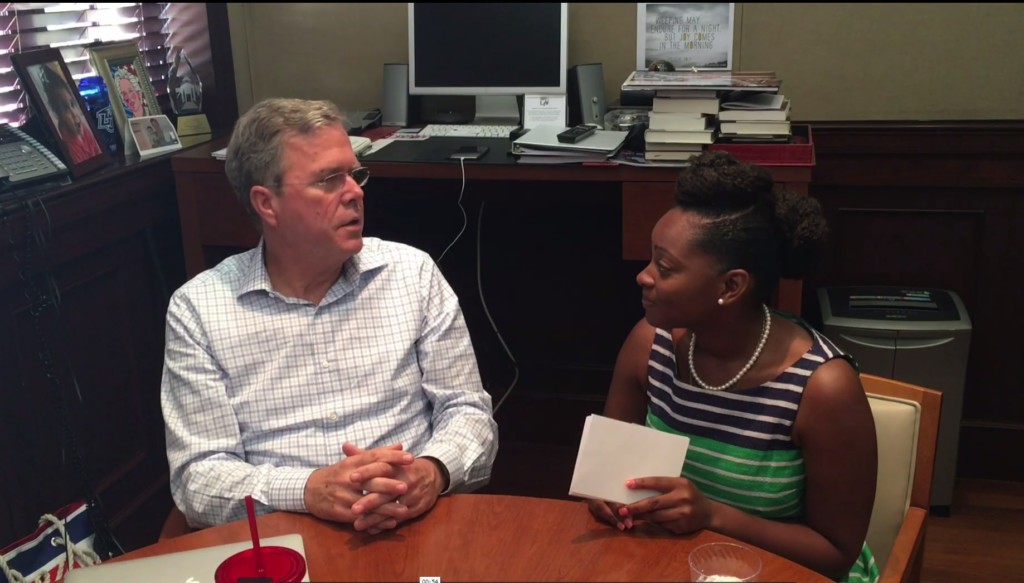
Former Florida Gov. Jeb Bush spoke with former Step Up For Students intern Denisha Merriweather in June 2016 about school choice, parent empowerment and the politics of education.
Editor’s note: Each Saturday in November, redefinED is reprising a podcast from our archives, reminding readers that we have a wealth of audio content to complement our written blog posts. Today, we revisit a June 2016 interview with former Florida Gov. Jeb Bush conducted by former Step Up For Students intern Denisha Merriweather.
When it comes to politics, I’m not alone. Many members of my generation don’t align with either major political party. Our views don’t always fit the traditional left-right mold. But we also aren’t tied to the status quo. We are willing to break from tradition to make a difference.
Our willingness to embrace change is one cause for optimism that Jeb Bush said he found in this crazy political season. In a new interview, we talked about education politics, the importance of creating new educational options, and what politicians might learn if they spent more time in the classroom.
The former Florida governor says that on the campaign trail, he saw a backlash against some aspects of education reform. The solution, he said, is to use a bottom-up approach that puts more power in the hands of parents by giving them more choices and better information.
“If you start with the premise that this about educating children, and families are the most important political jurisdiction for their child – to be nerdy about it – the money would follow the child, not the school system,” he said.
One promising way to do that, he said, is to give parents education savings accounts, which will allow them to send their children to public schools or private schools, or to teach their children at home, or hire tutors and therapists, or even (my favorite) save for college.
While running for president, he released a plan that would have allowed states to create ESAs that could help parents pay for every stage of their child’s education, from preschool to grad school. And it would have given low-income parents direct control of federal Title I dollars that would have gone to their child’s school.
As I think about my own student loans, the notion that ESAs could be used to save for higher ed certainly piques my interest.
Bush has returned to his role as chairman of the Foundation for Excellence in Education, and he said one of the organization’s top priorities is identifying states that are prepared to be “bold” about creating ESA programs. Scholars were talking in the late 1970s about an idea that sounded a lot like education savings accounts, but nothing came of it. Fortunately, this new iteration of the concept does not seem to be lying dormant.
Some opponents of school choice have implied low-income parents don’t know enough to pick the best school for their child. All too often, people who oppose giving them options have a patronizing attitude.
Educators need to respect the ability of low-income parents to decide what’s best for their children, Bush said.
“The government doesn’t trust people near or at the poverty level,” he said. “For some reason they think they are stupid. They’re just poor. ”
To make those decisions, he said, all parents need better information, like a report card on the schools in their area, and detailed information on how their own children are progressing, so they’ll know which schools might be a good fit. This isn’t exactly a radical new invention. But for most parents, that simply doesn’t exist, and it should.
Parents need to be informed of the options that exist around them. If they don’t have that information, they’ll probably send their kids to the school that’s right around the corner, the one the bus goes to, even if they may be better off somewhere else – like I was.
Bush said that when he was governor, he sat in courtrooms hearing family law cases to learn about problems in the state’s child welfare system. To learn about education, he visited hundreds of schools around the state. He joined principals knocking on the doors of children who were chronically absent, and spent time in teachers’ lounges.
“They thought I had horns because I was for vouchers, but I learned a lot from them,” he said of the educators he met in public schools. “They’re not the problem. It’s the system that’s not working.”
Everybody has their plan or their theory or their own advice to give, but many times, politicians don’t actually have first-hand knowledge when they make decisions that can change children’s lives. If they spent more time in schools, or talking to low-income families about their kids, that might help pull education out of the ugly vortex that’s consuming national politics.
“Don’t you think that there should be a left-right coalition for reform, when you’re empowering low-income families?” Bush asked during our interview. “I don’t think that has to be a Democrat issue or a Republican issue.”
Gov. Bush has been advocating for school choice for more than 20 years now, and his zeal doesn’t seem to be fading.
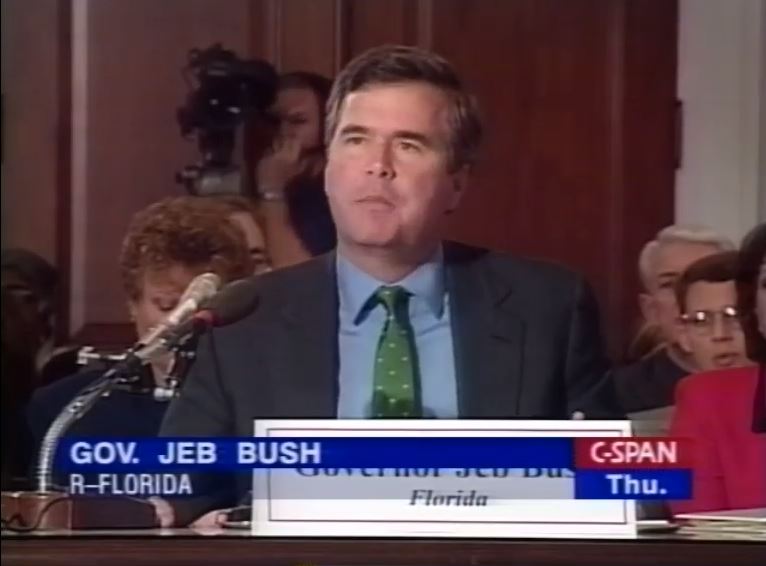 Florida's then-Gov. Jeb Bush testifying before a U.S. House committee Sept. 23, 1999.
Twenty years ago this week, Gov. Jeb Bush spoke before the House Education Budget Committee about Florida’s recently passed A+ Plan and the state’s first voucher, the Opportunity Scholarship Program.
“It’s been fun, in all honesty,” Bush said with a smirk, “to watch the myths that have been built up over time when you empower parents.”
Those myths were shattered, Bush said, though he admitted the program was only just a few months old at that point. Nevertheless, two decades of evidence have proved him correct.
By the time of Bush’s presentation, the Opportunity Scholarship had awarded scholarships to 134 students at two schools in Pensacola. Seventy-six of those students used the program to attend another higher-performing public school, while 58 used the voucher to attend a private school, according to Bush’s testimony.
The first myth Bush called “the brain drain,” which occurs when only the high-achieving kids leave public schools. But according to Bush, the students on the program were no more or less academically advantaged than their peers who remained behind.
The second myth was that vouchers would only benefit higher-income students. “Eighty-five percent of the students are minority,” Bush said. “Eighty-five percent qualify for reduced and free lunch. This is not a welfare program for the rich, but an empowerment program for the disadvantaged.”
The third and final myth he called “the abandonment myth” -- schools where students leave will spiral ever downward.
Twenty years later these myths remain busted.
Eleven years of research on the Florida Tax Credit Scholarship show the critics’ claims ring hollow.
• Students attending private schools with the help of the scholarship are among the lowest-performing students in the public schools they leave behind.
• Today, 75 percent of scholarship students are non-white, 57 percent live in single-parent households, and the average student lives in a household earning around $27,000 a year. Researchers at the Learning Systems Institute at Florida State noted that these students are also more economically disadvantaged than their eligible public-school peers.
• More importantly, scholarship students are achieving Jeb Bush’s goal of gaining a year’s worth of learning in a year’s time.
• Even the abandonment myth remains untrue. Overall, public schools with large populations of potentially eligible scholarship students actually performed better, as a result of competition from the scholarship program, according to researchers David Figlio and Cassandra Hart.
When Jeb Bush took office just 52 percent of Florida’s students graduated. Today 86 percent of students graduate. According to the Urban Institute, students on the scholarship are more likely to graduate high school and attend and later graduate from college. State test scores on the Nation’s Report Card are up considerably since 1998 too. And when adjusting for demographics, Florida, which is a majority-minority state, ranks highly on K-12 education compared to wealthier and whiter peers.
There’s still room for improvement. But the naysayers at the turn of the century have been proven wrong.
Editor’s note: Today, we offer Part 2 of a two-part post from redefinED executive editor Matt Ladner. You can read Part 1 here. Ladner’s commentary ends our series commemorating the 20th anniversary of the K-12 reforms launched by Florida Gov. Jeb Bush, collectively known as the A+ accountability plan.
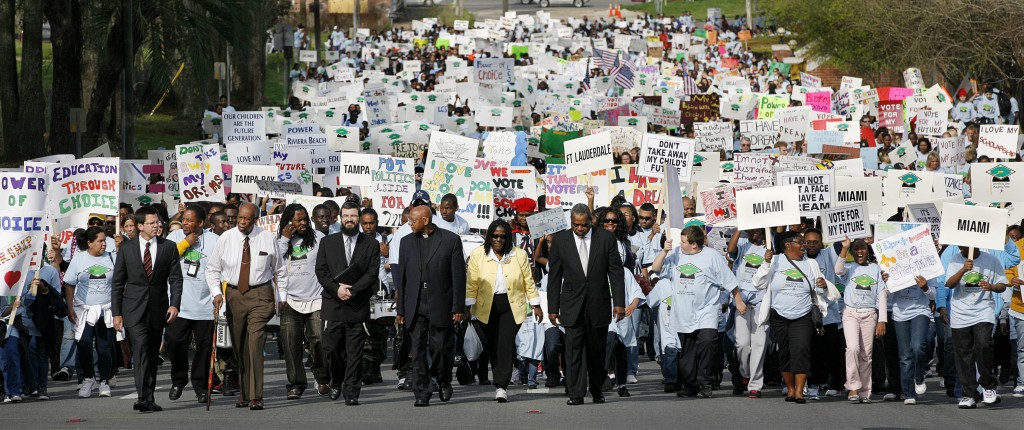
One challenge to several of the A+ reforms is that they lack a natural constituency, which makes them politically vulnerable. The photo above is a good example of a natural constituency.
Not all policies, even worthy ones, necessarily animate people to appear at a state capitol in vast throngs. Bill de Blasio’s new administration, for instance, cast productive school grading and third-grade literacy policies aside without breaking a sweat and (lamentably) nary a murmur of protest. You can see what resulted when the mayor (who by his own confession “hates” charter schools) took them on here.
The most basic rule of politics is that organized beats unorganized every day of the week and twice on Sunday. Sadly, the folks who oppose most K-12 solutions – other than “hurl more money at the system and hope for the best” – have a high degree of political organization and engagement. They tend to have sympathetic allies working in bureaucratic agencies and commissions.
State law can attempt to compel them to do things but has a hard time compelling them to do something effectively. The families who have benefitted from state literacy policies or school grades largely are unaware of that fact, and thus do not constitute an effective constituency to defend or extend such policies.
The Florida Reading Scholarship, a recent program providing families with struggling readers funds to purchase services for them, might suggest a way forward. This program is relatively new and provides only a small subsidy -- $500 -- to students with a large problem (poor literacy skills). A primitive prototype version of this policy failed in an entirely predictable fashion when the No Child Left Behind Act funded the program through district budgets and left them in charge of program administration. You don’t need a Ph.D. in game theory to guess how that worked out.
You have to admit our technologies are getting better all the time. Now we can envision a supplemental services program that can interact with parents directly. Despite the many challenges that lay ahead in making the Florida Reading Scholarship program a success, a lack of a natural constituency would not be one of them. Onward.
Upper income families have engaged in multi-vendor education out of their own pocketbooks with a growing frequency (see trend on the far right, below). This also seems to be working out relatively well on the outcomes side of things (see two charts on the left).
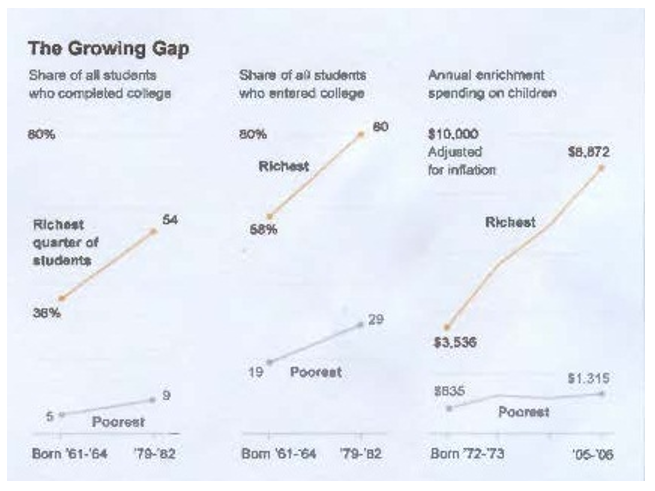
A $500-per-year scholarship for struggling readers is only a small step in attempts to address the glaring equity issue in the chart above. But the first step is the most important step, and once again, Florida is taking that first step.
Right about now, we don’t even know how much of the differences seen in education outcomes are the result of school effectiveness, or lack thereof, and how much is due to what we see going on in the right side of the chart. Put me down for some of both, but hopefully future research will give guidance.
If you lived in normal times, you might think about working out the kinks to the Florida Reading Scholarship and going big with it if the results seemed promising. Just as a reminder however, the budget math looks unforgiving:
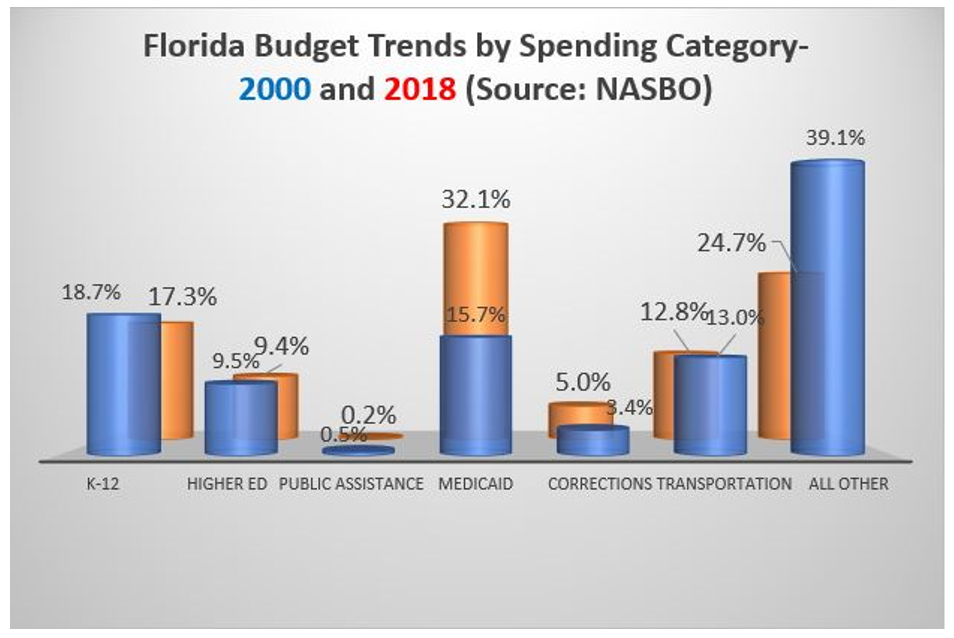
Grandma and Grampa Boomer already have called dibs on a great deal of expected revenue growth in the form of health spending; the middle of the chart indicates it’s already started. This means you’ll have to rely upon increases in the productivity of spending in the years ahead. Usually, this means adopting technologies to increase the productivity of labor, but this is easier said than done in the public sector.
Don’t feel overly daunted. Florida’s A+ plan increased the productivity of K-12 spending in a variety of ways after all. The young Florida adults in the early stages of their careers were far better educated than older generations. Florida’s public pensions are in relatively good shape. If you were, say, New York, none of this would be true, and you would have been spending approximately twice as much on per-pupil K-12 results and would not have gotten results as good as the ones you actually achieved.
So you need only increase the productivity of public spending in a politically sustainable fashion while the country struggles to cope with large imbalances in entitlement programs. Your ancestors had to stare down nuclear annihilation after defeating global fascism, which came right after the biggest global economic depression in human history.
See? It really is getting better all the time.
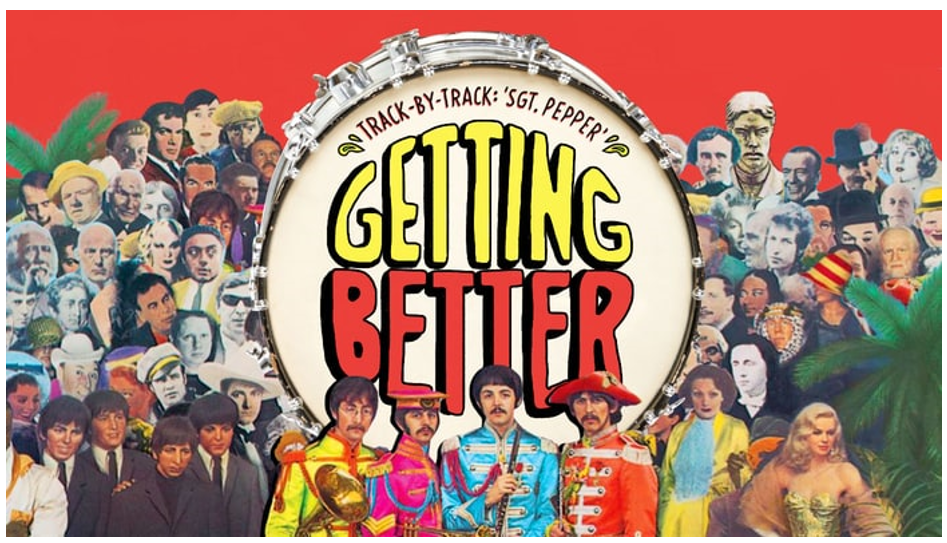
I used to get mad at my school (No, I can't complain)
The teachers who taught me weren't cool (No, I can't complain)
You're holding me down
Turning me round
Filling me up with your rules
I've got to admit it's getting better (Better)
A little better all the time (It can't get no worse)
I have to admit it's getting better (Better)
It's getting better
Since you've been mine
Getting so much better all the time!
-- John Lennon and Paul McCartney
Editor’s note: redefinED concludes its commemoration of the 20th anniversary of the K-12 reforms launched by Florida Gov. Jeb Bush, collectively known as the A+ accountability plan, with Part 1 of a two-part post from executive editor Matt Ladner.
Given that Florida’s A+ Plan had reached the grand old age of 20, we started this series in March, looking back with a Sgt. Pepper’s Lonely Hearts Club Band theme. For those tuning in late you can catch up here.
I’m sorely tempted to reprise gobs of evidence showing that Florida K-12 has in fact been getting better all the time over the last 20 years with a certain Liverpool lads' song jingling around in your head. To that end, the states with statewide averages for all students equal to or lower than Florida’s statewide average for Hispanic students on the 2017 NAEP fourth-grade reading exam (in English mind you) are presented below in red:
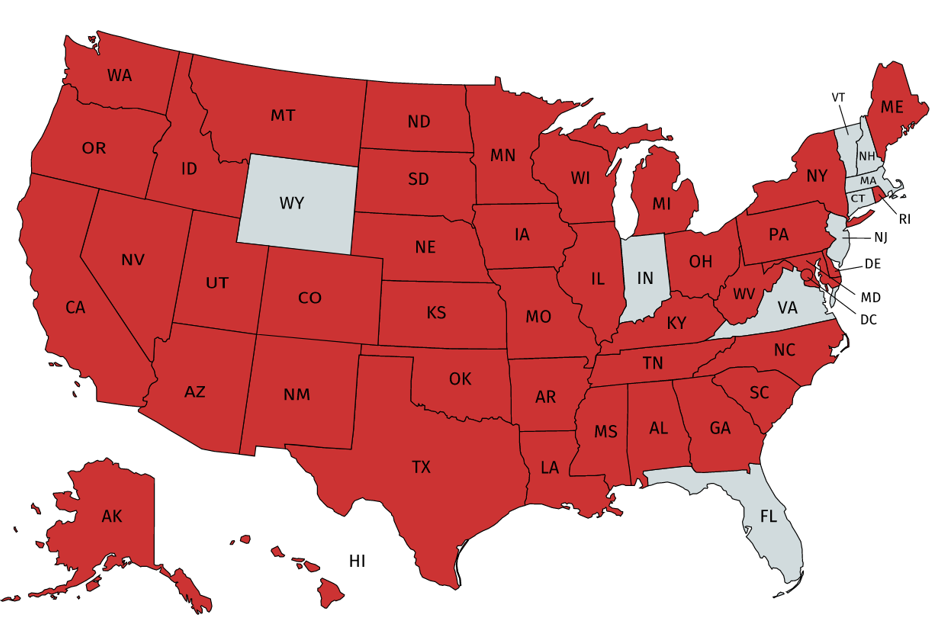
It would be jolly good fun to trot out a half-dozen graphics like this one, but let’s just pretend we already did that. See what I did there? With that little Jedi mind trick, an entire post just flashed through your mind’s eye with a Beatles mental soundtrack. Hopefully you enjoyed that, because now we're going to look ahead to the future rather than back on the past.
What will be necessary to continue Florida’s K-12 progress that began during the A+ era?
Gov. Bush’s A+ Plan included a complex mixture of K-12 improvement strategies. The state graded schools according to a mixture of proficiency and growth. The state put in sanctions for prolonged failure, and incentives for improvement and performance.
Additionally, the state provided financial rewards for students earning high-demand professional certifications and college credit by exam, and created expanded options for families in the form of charter schools, private choice programs and digital courses. Florida lawmakers threw the kitchen sink at improving early literacy in particular.
As can be seen from the map, results have improved, and Florida lawmakers have made moves to build upon several of these policies.
The A+ Plan simultaneously became more prescriptive to schools while granting more freedom to families. In 1998, 69 percent of Florida’s black fourth-graders scored “Below Basic” in reading. It wasn’t just time to do something, it was time to do everything.
In 2017, Florida’s black fourth-graders displayed about two-and-a-half grade levels of average academic progress and better reading ability than their peers from 1998. Yet despite this progress, 43 percent of black students scored Below Basic in reading in the most recent NAEP. The work, in other words, is far from finished. More on that tomorrow.
Check back Wednesday for Part 2 of this two-part post.
 Editor’s note: redefinED continues to commemorate the 20th anniversary of the K-12 reforms launched by Florida Gov. Jeb Bush, collectively known as the A+ accountability plan, with this post from Step Up For Students' executive director for advocacy and civic engagement. In her first-person piece, she recounts how she became aware of the legislation that transformed education throughout the state and how it impacted her family.
Back in 1999, when Florida Gov. Jeb Bush and the Legislature decided to put the A+ Plan into effect -- thereby increasing accountability for schools, rewarding them for improved outcomes and creating options for families – I was living in Boston and working on presidential visits and various campaigns for Young Democrats of America.
I knew my former home state was going through some changes, but I didn’t pay much attention.
That changed when my sons were born in 2000 and my husband and I decided, as much as we loved Boston, we would raise our children in the Tampa Bay area, surrounded by family and loved ones. At that point, education in Florida became my primary interest.
We returned to Florida and looked around. The academic landscape had changed from when I was a student in the ‘80s and a young teacher in the ‘90s.
In 1981, I rode a bus for 45 minutes (one way) from a middle class neighborhood in North Tampa to a struggling, low-income area in order to attend Young Junior High (now Young Middle Magnet) for seventh grade.
This was not my family’s choice.
Children of different ethnic backgrounds were bused to Young from all over Hillsborough County. Ours was a truly integrated school, filled with black, white and Hispanic students.
It was also a culture shock.
We all went from a neighborhood elementary school to this strange set of buildings in a part of town regarded as hostile and dangerous. Weird characters wandered on to our campus and routinely had to be escorted away. I remember feeling like the area around the school should have been made safe before bringing in children for schooling.
None of us felt a connection to the school or each other. We couldn’t put on plays or performances in the evening because it was too far a drive for almost everyone’s parents.
It didn’t seem to make much sense.
I returned to my neighborhood schools for the rest of junior high (eighth and ninth grade back then) and on to high school for 10th-12th. We all knew which schools were good and which were not, but only through word of mouth. Nothing official. And no accountability for the children who suffered through a substandard education.
After graduating from the University of South Florida, I taught at an alternative high school.
Our students were overwhelmingly poor, minority, and male.
They came to our school one of two ways. They were either arrested and the Department of Juvenile Justice sentenced them to our program, or they were expelled, and the school district sent them to us.
Students could learn at their own pace and in a setting that encouraged their thoughtful participation. In the morning they took core academic classes, leaving the afternoon open for a marine-based curriculum. Students learned how to operate a boat or become SCUBA and lifeguard certified.
This was the first time I saw disadvantaged youth thrive and do well. As teachers, we visited each student’s home and talked with their families. We learned about who they were and where they came from, rather than trying to help them simply based on their age, socioeconomic status, and alleged crime.
I was allowed to teach interesting social studies classes, such as Religions of the World and Politics and Government. Local field trips involved taking students to a synagogue, mosque, and church. We had lunch with Hare Krishnas in Ybor City. We also secured grants that funded field trips to Washington, D.C.
Our students saw a whole world outside the one in which they lived. I often wondered if at-risk youth might actually avoid arrest or expulsion if this type of learning environment were offered before it was almost too late.
Ours wasn’t a school of choice, since the students were assigned to it. But it showed me how developing a curriculum based on the needs and interests of the students in my classroom was a step in the right direction.
By the time we returned to Florida and started looking at schools, my kids had a lot more options than I ever did. Thanks to the A+ plan, scholarships to attend private schools were available, and magnet programs were created that expanded students’ knowledge and prepared them for high school and beyond. Advanced Placement classes and dual enrollment got them ready for college. Virtual classes allowed for flexible schedules and off-site learning activities.
When my children were ready for preschool, I also returned to the classroom and had more options as well.
Charters and magnet programs were able to do what busing never accomplished – probably because parents respond better when presented with choices, rather than something compulsory. I noticed this in other areas, too. Parents who bitterly complained about the Florida Comprehensive Assessment Test never showed a resistance to AP testing. Both were rigorous and challenging, but only one was seen as a choice.
I am dismayed when my friends on the left act as if there haven’t been any improvements these last twenty years. There is still work to be done -- too many children are still trapped in substandard learning environments.
But there is no denying the improvements that have benefited all of us. Maneuvering my children through the educational system was eye-opening, in more ways than one. Any parent who has options owes a debt of gratitude to Gov. Bush and the lawmakers who created this system of choice and accountability.
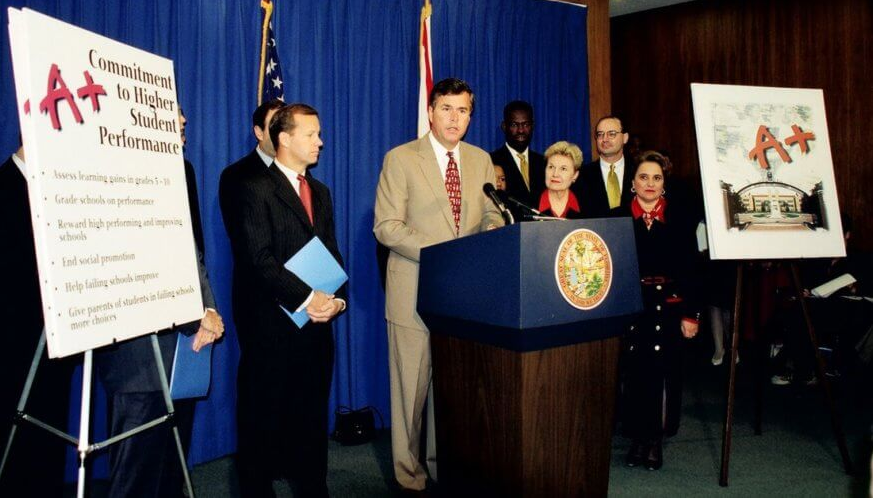
Florida Gov. Jeb Bush signed into law on June 21, 1999, the A+ Plan for education at Raa Middle School in Tallahassee. The comprehensive reform plan called for greater school and teacher accountability, changing the landscape of education statewide.
“I think we’re in for a renaissance in public education.”
With these words, Gov. Jeb Bush signed into law on June 21, 1999, a bill that set in motion his vision for the future of education in Florida.
The A+ Plan, which had been Bush’s top campaign promise when he ran for governor, aimed to toughen standards for teachers, students and schools. It called for the state to assign letter grades to all schools, end social promotion and institute statewide testing in grades 3 through 10.
The plan’s philosophical underpinnings ran deep.
According to testimony Bush delivered before the U.S. House of Representatives three months after the bill-signing, its foundation rested on three fundamental principles: meaningful and undiluted accountability that would allocate different consequences for success and failure; zero tolerance for the latter, which Bush acknowledged could be “extremely difficult and painful”; and the belief that Florida’s education system must be child-centered, not system-centered, or even school-centered.
The most controversial provision of the plan allowed students in failing public schools to obtain vouchers that would pay tuition and fees at participating private schools, including nonsectarian and religious institutions. It was this provision that set off a firestorm of controversy from voucher opponents that resulted in a lawsuit filed on behalf of the Florida Coalition for Public Education, which consisted of 17 organizations including the NAACP, the Florida PTA and the League of Women Voters.
Twenty years later, critics still argue the merits of vouchers. Some continue to argue the merits of the A+ Plan itself. But it’s hard to argue with the fact that, largely as a result of the plan, Florida’s families today enjoy access to one of the country’s most robust sets of education options, including public school choice, public charter schools, virtual learning and homeschooling. Many also have access to private school scholarships for low- and middle-income families, students with disabilities and bullied students.
In an opinion piece published Wednesday in USA Today, Bush reflected on these options, as well as on the upswing in student performance since 1999. He credited the positive turnaround to Florida’s willingness to continue to adopt bold and innovative education policies and expressed optimism that even more success can come in the next 20 years – as long as the state continues to “keep pushing the envelope until each and every child gets the great education they deserve.”
To read a series of stories authored by redefinED contributors commemorating the 20th anniversary of the A+ Plan, click here.

