The debate about the next wave of educational choice - allowing students to select not just their schools but individual courses - is likely to surface again in Florida, which already has a course choice program on the books.
The Legislature created the Florida Approved Courses and Tests Initiative in 2013. Under the current law, the initiative is set to go live during the 2015-16 school year, but more legislative changes would likely have to be made before then, including a system for funding the courses.
While the effort has gotten a lot of press because it would allow high school students to take Massive Open Online Courses for credit, there's more to it than that. Some Florida school districts have already begun experimenting with MOOCs.
But making the leap from using them as a type of course content (the way some teachers might use Khan Academy lectures) to treating them like a full-fledged education provider, and figuring out how to fund, regulate and hold MOOCs accountable can create a broader platform for course choice.
One of the architects of last year's law, Sen. Jeff Brandes, R-St. Petersburg, said the goal is not just to offer MOOCs for credit. It's to bring in new providers that break the traditional mold.
Imagine students selecting a mix of classes tailored to their interests, some online, some in-person, and moving through them at their own pace. They may be taught by Florida-certified teachers, or adjuncts approved by districts.
"We're moving away from the JC Penney model of education, to the Amazon model," Brandes said. "We have an old institution that now has to respond to the changing marketplace." (more…)
Update: The bill with the charter school language is headed to Gov. Rick Scott's desk after the Senate approved it this morning on a 38-0 vote.
Florida lawmakers are set to approve a proposal intended to help military bases offer more education options for children of their personnel.
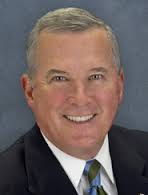
Sen. Richter
The move comes amid a high-profile effort to create a charter school at MacDill Air Force Base in Tampa. The organization looking to create the school withdrew its first application last week after being denied by the Hillsborough County School Board and losing its first state appeal.
A provision added to the "Florida G.I. Bill" would add new language to the state's charter schools law, calling for commanders on bases to "collaboratively work with the Commissioner of Education to increase military family student achievement, which may include the establishment of charter schools on military installations."
SB 860 contains a number of provisions aimed at helping the state's veterans, from extending hiring preferences to charging them in-state tuition at colleges and universities. The Senate is scheduled to take it up today on the floor. The House passed its version, which also includes a charter schools provision, on the first day of the session.
Sen. Garrett Richter, R-Naples, faced questions from Democrats on the Appropriations Committee last week when he helped add the charter schools provision to the Senate bill. They wanted to know if it would change the process for charter school approvals or affect the MacDill application. (The Florida Charter Educational Foundation withdrew its application later that day, and has pledged to revise and resubmit it).
Richter said the proposal "does not affect the MacDill situation." It simply "encourages the MacDill base to work with the school district" and "recognizes the unique characteristics of our military families with deployment and certain other circumstances."
Richter could not be reached for comment Monday. (more…)
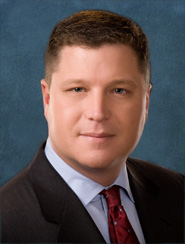
Sen. Brandes
Florida is moving ahead with plans to bring school choice to the class level, but will study the issue before taking a deep dive.
The heart of a “course choice” proposal by Sen. Jeff Brandes, R-St. Petersburg, (SB 904) was rolled into a digital learning bill (HB 7029) and passed by the House on the final day of session last week. It’s expected to be signed into law by Gov. Rick Scott.
The bill directs the Florida Department of Education to hire a contractor to review the state’s approach to online learning and make recommendations on funding, access and accountability. It also says the new course choice program will be up and running in 2015-16.
“We’re taking a measured approach to implementation,” Brandes said. “We want to implement based on data, based on science and research. We’re really going to allow the data to drive how we go into this.”
The DOE must hire a contractor by Aug. 30. The contractor’s report is due to Gov. Scott and legislative leaders next February.
In the meantime, Brandes said, the bill authorizes the state to go ahead and begin authorizing “massive open online courses” (better known as MOOCs) in four subject areas that require end-of-course exams: Algebra I, biology, geometry and civics. The state Board of Education must come up with rules detailing how potential providers would apply and be approved. (more…)
Parent trigger. The parent trigger bill is amended in the Senate so school boards have the final say. Coverage from redefinED, Associated Press, SchoolZone, The Buzz. StateImpact Florida talks to Sen. Bill Montford, D-Tallahassee, about why he's opposed to parent trigger. The Orlando Sentinel highlights the amendment sponsor, Sen. David Simmons. Palm Beach Post columnist Frank Cerabino sees the specter of mass privatization: "The parental trigger bill is designed to lead to the widespread conversion of traditional public schools in Florida to charter schools."
 Online education. The bills being considered by this year's Legislature, including Sen. Jeff Brandes' course choice bill, are about profits and privatization, not choice and competition, editorializes the Tampa Bay Times.
Data. Lawmakers are dealing with data issues related to teacher evaluations and access to researchers, the latter being complicated by critics raising fears of privatization, reports the Tampa Bay Times. A group called Liberty in Action protests the access bill outside the office of bill sponsor Sen. Bill Galvano, reports the Bradenton Herald.
Remediation. The Senate approves a bill that would end a requirement that college students take remedial courses for no credit. StateImpact Florida.
School spending. The Seminole school is scrambling to explain why it decided to spend $100,000 to send 176 teachers and school administrators to a teacher training program when a cheaper alternative was available. Orlando Sentinel.
Employee conduct. Three staffers at a Collier County school are under investigation for some kind of impropriety with FCAT testing. Naples Daily News.
 Halfway through this year's Florida legislative session, here's a brief look at the school choice related bills that are still moving. To compare to the bills at the beginning of the session, click here. Things are changing fast. Several bills, for instance, are up for a House vote today.
Career Academies:
CS/CS/SB 1076 by Sen. John Legg, R-Lutz. On Senate floor, on Special Order Calendar
April 4. Creates funding incentives to increase innovation in public school programs to better prepare students for future careers; provides for the development of industry certifications at the middle school level; requires financial literacy to be included in high school graduation requirements; revises the funding for industry certifications earned in high school and at postsecondary institutions; and requires the development of multiple pathways to meet high school graduation requirements.
Charter Schools:
The Senate Education Committee conducted a workshop March 18 to discuss the charter bills that were filed. The committee took input from the workshop and proposed a substitute for SB 1282, related to charter schools, during their next meeting April 1.
CS/SB 1282 by Sen. Kelli Stargel, R-Lakeland. Committee Substitute favorable by Education Committee on April 1. Includes financial and accountability requirements for charter schools; prohibits a governing board under deteriorating financial condition, financial recovery plan, or corrective action plan from applying for a new charter school; requires a charter agreement to immediately terminate when the charter school closes; requires the use of standard charter and charter renewal contracts; clarifies that members of a charter school board may not be an employee of the charter school; prohibits a charter school that closes from spending more than $35,000 unless the sponsor approves in writing or previously approved.
CS/SB 1390 by Sen. Bill Montford, D-Tallahassee. Committee Substitute favorable by Education Committee on April 1. Includes a mechanism through which a school district may establish one innovation school within its district to enhance high academic achievement and accountability in exchange for flexibility and exemptions from specific statutes; exempts facilities leased by the district from ad valorem taxes; and provides that the class size calculation be changed to the school level for district schools or schools of choice.
CS/CS/HB 7009 by Choice and Innovation Subcommittee. On House floor, on 3rd reading. Provides for increased charter school accountability by prohibiting a charter school, upon termination of the charter, from expending more than $10,000 without prior written permission from the sponsor; requires the DOE to develop a proposed statewide standard charter contract by consulting with school districts and charter schools; and requires that a district board-owned facility that has previously been used for K-12 educational purposes be made available for a charter school’s use, with the charter school responsible for the costs to bring the facility into compliance with the Florida Building Code. (more…)
 Perhaps the most far-reaching education legislation in Florida this year isn’t getting much attention, overshadowed by bills like the parent trigger. But buzz or no, the quietly cruising “course choice” proposal is on the leading edge of a revolution in online learning.
It takes school choice and “puts it on steroids,” said Michael Horn, a leading thinker on digital education, in the redefinED podcast below.
The course choice bills in Florida are sponsored by Sen. Jeff Brandes, R-St. Petersburg, and Rep. Matt Gaetz, R-Fort Walton Beach. They would allow providers from virtually anywhere to create state-approved courses in K-12 and higher ed, and students from virtually anywhere in Florida to take them.
Together with other online learning advances, the bills will have repercussions on how, when and where students learn; how they’re tested and funded; and how school districts fare against growing competition from charter and private schools. Things like course choice and MOOCs, Horn said, “just blow up the geographic … scheme we’ve had for where someone goes to school.”
“So actually, wherever you are, you can get the best class for you. And there will always be that for you. Because you may love the MIT course. I may love the one that has a couple Sal Khan videos … But why shouldn’t we have that best experience for us?”
This doesn’t spell the end for school districts, Horn said. In fact, it could give them a boost. (more…)
 Editor's note: Another year, another legislative session, another stack of school-choice bills in Florida. Here's a roundup of choice legislation that lawmakers will consider in the annual session that begins today.
Career Academies:
SB 1076 by Sen. John Legg, R-Lutz. Expands the "Career and Professional Education Act (CAPE)," revising requirements for high school graduation and accelerated high school graduation, and allowing students to earn and substitute certain industry certifications for certain course credits. Also requires districts to make digital materials available to students and to use the Postsecondary Industry Certification Funding List in determining annual performance funding distributions to school districts and Florida College System institutions, etc.
Charter Schools:
HB 373 by Rep. Joe Saunders, D-Orlando. Provides that a contract for a charter school employee or service provider may not extend beyond the school’s charter contract, and that the employee or service provider is not entitled to compensation after the school’s closure. (Identical to SB 780 by Sen. Geraldine Thompson, D-Orlando.)
HB 453 by Rep. Victor Torres, D-Orlando. Requires the compensation and salary schedules for charter school employees to be based on school district schedules. (Identical to SB 784- Charter Schools by Sen. Geraldine Thompson, D-Orlando.)
SB 744 by Sen. David Simmons, R-Altamonte Springs. Requires charter school applications to demonstrate the applicant is financially qualified to open and maintain a high-quality charter school, requires the charter to set forth detailed reporting of the financial operations of the school to ensure employees are not paid unreasonable compensation, and requires that the term of the charter must provide for cancellation of the charter if the school becomes insolvent, fails to provide a quality education, or does not comply with applicable law. The bill also clarifies that a charter school system shall be designated a LEA solely for the purpose of receiving federal funds if certain criteria are met.
SB 828 by Sen. Rene Garcia, R-Hialeah. Grants school districts the ad valorem tax exemption given to charter schools, and restricts the use of capital outlay funds for property improvements if the property is exempt from ad valorem taxes. It restricts charter schools or technical career centers having financial problems from certain activities, and grants flexibility to high-performing school choice districts.
HB 1001 by Rep. Karen Castor Dentel, D-Maitland. Prohibits charter schools from requiring, soliciting, or accepting certain student information before student's enrollment or attendance. Also requires charter schools to submit attendance plans to the school district for students enrolled in school; provide funding to the school district in event of student transfers; and report to the school district certain student enrollment and wait-list information.
SB 1092 by Sen. Geraldine Thompson, D-Orlando. Requires charter school to submit attendance information for each student to the school district, and requires the charter school to provide a prorated portion of per-student funding to the school district if a student transfers to another public school in the school district before the last day of the school year.
SB 1164 by Sen. Kelli Stargel, R-Lakeland. Revises the eligibility criteria for extracurricular activities to include students in charter schools, and revises the criteria for bylaws, policies, or guidelines adopted by the Florida High School Athletic Association. (Compare to HB 1279 by Rep. Larry Metz, R-Groveland.) (more…)
Washington: The new Charter School Commission is attracting candidates from across the state and beyond, including Liz Finne, a lawyer and director of the Center for Education Reform at the Washington Policy Center. The governor and other leaders expect to choose nine volunteers by March 6 (Associated Press). A coalition of educators and community groups filed a legal challenge that questions the constitutionality of Washington's new charter schools law (Associated Press). More from Education Week.
Colorado: With more than 80,000 students enrolled in 190 charter schools, charter leaders try to clear up misconceptions about the school choice option (Reporter-Herald). Douglas County's Choice Scholarship Program does not violate the state Constitution, rules an appeals court. The outcome could have wide-ranging implications for whether vouchers can be used statewide (Associated Press).
 Alabama: Legislators approve tax credit scholarships for students attending failing public schools (Associated Press). More about the "legislative bombshell'' that Republicans called historic and Democrats said was a sleazy "bait and switch,'' at AL.com. And the site offers a primer on the Alabama Accountability Act.
Idaho: Khan Academy will provide math, physics and history classes in 47 public, private and charter schools this fall, making Idaho the nation's first proving ground for statewide implementation of the free online educational content and teaching model (Associated Press).
Michigan: A report measuring charter school performance statewide calls the Eastern Michigan University-authorized schools the second worst system in the state. EMU says the report doesn't take into account that the schools serve some of the state's toughest communities (Ann Arbor.com)
Sen. Brandes
Florida has been a national leader in expanding parental school choice via magnets, charters, vouchers, tax credit scholarships, career academies and virtual classes. Now a state lawmaker wants to hasten the customization wave by opening up choice at a more fundamental level: Class by class.
A bill filed by freshman Sen. Jeff Brandes, R-St. Petersburg, would allow providers of all stripes to create state-approved “charter courses” in K-12 and higher ed, and allow students to choose a la carte.
“We’re offering choice within choice,” Brandes said in a podcast interview with redefinED, attached below. “You might go to a charter school. And then you’d say, ‘Look, I want to take the MIT version of physics. So can I take the MIT version of physics from my charter school?’ Why aren’t we letting students do that?”
Brandes, a member of the Senate Education Committee, does not shy from ahead-of-the-curve ideas. As a state representative two years ago, he sponsored a bill to create education savings accounts. Last year he led a successful effort to make Florida a test site for self-driving cars (and was both attacked for it in a senior-scaring political ad and given free, positive publicity from the likes of Forbes and The Atlantic). This year, he’s sponsoring legislation to transform public libraries.
Course choice is a new frontier. Louisiana created a head-turning course choice program last year. Brandes' bill puts emphasis on STEM fields and industry certifications. He said he got the idea from watching a YouTube video of Clayton Christensen, in which the Harvard business professor talked about accrediting individual courses.
“And when he said that, I remember rewinding it, and thinking about that concept again,” Brandes said. “And I must have rewound it two or three times and I went, ‘Wow. This is a radical idea.’ And I instantly got where all this could go. Because you think about the variety of people that spend so much time and energy and effort creating all of this content, when you could have only a handful of people creating really high-quality content – and instructors now really coaching on that content.”
Students will benefit when providers compete to create the best classes, he said. (more…)
Course choice. Florida students in K-12 and higher education could pick courses provided by entities outside the traditional public school system under bills filed Thursday by Sen. Jeff Brandes, R-St. Petersburg. SchoolZone.
 Jeb Bush. He meets with lawmakers in the Capitol and predicts passage of the parent trigger bill. Coverage from Palm Beach Post, Miami Herald, Tallahassee Democrat.
More parent trigger. Senate President Don Gaetz and House Speaker Will Weatherford are enthusiastic, reports StateImpact Florida. More from Sunshine State News.
Gifted academy. Orange school board members discuss the possibility of a K-8 gifted academy in the face of competition, including one parent's call for a gifted charter school. SchoolZone.
Common Core. The language of key lawmakers and Education Commissioner Tony Bennett suggest an implementation delay is in the works. Gradebook.
Gays and lesbians. A Gay-Straight Alliance at Carver Middle School in Lake County could teach teens much-needed respect and tolerance, writes Orlando Sentinel columnist Lauren Ritchie.
Bullying. A girl's beating at school is captured on video and put on facebook. Tampa Bay Times.
Early learning. News Service of Florida.
School calendar. SchoolZone.
Rezoning in Seminole. Orlando Sentinel.

