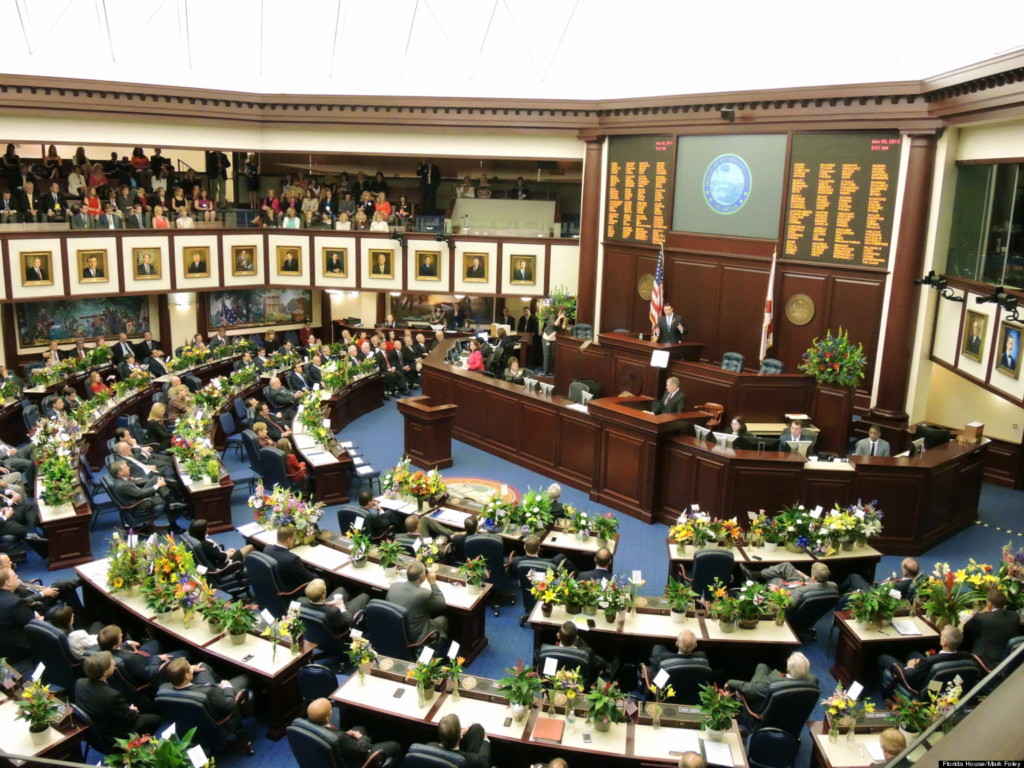
A bill that would expand school choice for thousands of students won approval today from the Florida House education committee.
Under PCB EDC 20-01, the Family Empowerment Scholarship program approved last year would grant priority to students who already have scholarships and to new families whose incomes are at 185 percent of the federal poverty level as well as to foster children and children in military families. If more than 5 percent of available Family Empowerment Scholarships have not been awarded, the maximum household income eligibility level would rise by 25 percentage points the following fiscal year.
The bill also would allow the number of students on the program to grow to 1 percent of the state’s total public school enrollment. The annual growth rate is now capped at .25 percent for the program, which serves 18,000 students.
State Rep. Jennifer Sullivan, R-Altamonte Springs, who introduced the bill, said during the committee meeting that the changes would open the program to an additional 10,000 students.
“There is a demand for these programs because they are working, and they are helping our families,” Sullivan said.
The bill additionally makes changes to the Florida Tax Credit Scholarship program by allowing students who receive scholarships to remain in the program until they enroll in a public school, graduate from high school or turn 21. The Florida Tax Credit Scholarship is administered by Step Up For Students, which hosts this blog, and serves 108,000 students from economically disadvantaged families.
Also included in the bill were changes to the Gardiner Scholarship program for children with unique abilities. It would allow those students who turn 3 after Sept. 1 to receive a scholarship if funds are available instead of having to wait until the following year to apply.
The program, created in 2014, allows parents to create a customized education plan for their children. Expenses such as tuition, therapies, supplies and technology are covered, and unspent money may roll over from year to year. The program currently serves 13,000 students.
Several supporters spoke in favor of the bill at today’s hearing including Blake Jones, whose 5-year-old son attends a private school on a Family Empowerment Scholarship.
“We are thrilled to send our son to a school that matches his personality and affinity to be active in everything he does,” said Jones. Without the scholarship, he added, tuition would cost 20 percent of his family’s household income.
With it, Jones said, “We don’t have to live on a financial knife’s edge.”
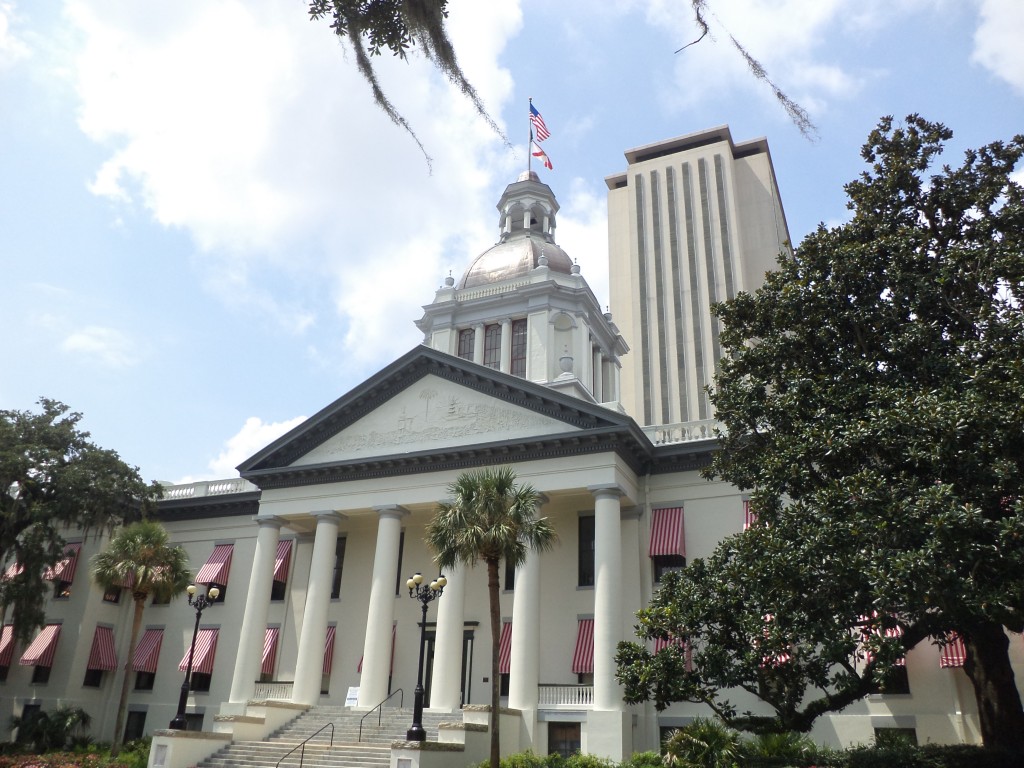
A bill creating a new, state-funded scholarship passed the House Education Committee with some bipartisan support
TALLAHASSEE -- In a bipartisan vote, the House Education Committee on Thursday passed a bill that would eliminate a waiting list for the Florida Tax Credit Scholarship for lower-income families.
House PCB EDC 19-01, known as the Family Empowerment Scholarship, would help pay for private school tuition and fees, with unused funds rolling over to the next school year. The scholarship also could cover transportation costs to a public or lab school in the student’s district.
The bill passed by a 15-2 vote during a hearing marked occasionally by emotional debate and testimony. All 12 Republicans on the committee voted in favor of the measure. They were joined by three Democrats: Reps. James Bush of Miami, Susan Valdes of Tampa and Kim Daniels of Jacksonville. (Rep. Patricia Williams, D-Lauderdale Lakes, was absent.)
“This isn’t about good schools and bad schools, or public versus private. It’s about what is best for our students,” said Committee Chair Jennifer Sullivan (R-Mount Dora). “Students are the ones who get lost in conversations with political rhetoric … I don’t believe government knows best. I believe a parent knows best.”
The House bill’s goal is similar to Senate Bill 7070, passed last week by the Senate Education Committee in a 5-3 party-line vote, but there are significant differences between the two measures. The House bill would help about 28,000 students in 2019-20, while the Senate version would be capped at 15,000 students in its first year.
Unlike the Florida Tax Credit Scholarship, which is funded with donations from corporations that receive tax credits, the new programs proposed by the House and Senate would be funded through the Florida Education Finance Program (FEFP). While the Senate program would be administered by the state Department of Education, the House version would be managed by eligible scholarship funding organizations (SFOs) such as Step Up For Students, which hosts this blog.
Under the House bill:
The value of the scholarships would be 97 percent of the district average per-student funding in the FEFP. Eligibility would be limited to students whose household income levels do not exceed 300 percent of the federal poverty level ($77,250 for a family of four) in the first year. That amount would increase by 25 percent each following year until it reaches 375 percent of the federal poverty level ($96,563 for household of four).
Students would be eligible if they spent the previous school year in public school for grades 1 through 12, if they are entering kindergarten, or received a scholarship from an eligible Scholarship Funding Organization – or the state – the previous year. Once families are found eligible, they would not have to re-verify their income every year.
Priority in each year would be granted to renewal students and new applicants with household incomes under 185 percent of the federal poverty level ($47,637 for household of four) or who are in foster or out-of-home care. The number of new scholarships in any school year cannot exceed 1 percent of the total public school enrollment for that school year.
In comparison, the Senate bill puts the value of the scholarships at 95 percent of the district average per-student funding in the FEFP. Like the Florida Tax Credit Scholarship, eligibility would be limited to students whose household income levels do not exceed 260 percent of the federal poverty level ($66,950 for a family of four). Beginning in 2020-21, the number of students on scholarship would increase with the percentage increase in the public school student enrollment.
Both bills address a disconnect between supply and demand for tax credit scholarships. Enrollment in the Florida Tax Credit program dropped for the first time in 14 years in 2018-19; in the preceding 13 years, the average annual enrollment increase was 20 percent. The dip was due to slower growth in corporate contributions, according to the state Department of Revenue.
Rep. Bruce Antone (D-Orlando) opposed the House bill during Thursday’s hearing, saying he worried that raising income-eligibility levels would defeat the tax credit scholarship’s original purpose, which he said was to help low-income parents.
Bush voted for the bill, but echoed some of Antone’s concerns.
“The original intent of FTC was to address, aid and assist low-income families and students,” Bush said. “That’s where we have to stay if we’re going to keep the original intent of helping these students, especially inner-city kids, African-American, Hispanic, white – whatever. Increasing the income level each year, that’s my only concern. We have to keep it at a level so that the bottom tier will not get lost in the shuffle as the program grows.”
In public comments, several parents spoke in favor of eliminating the waiting list. Among them was Shy Addison, a mother of three from Tallahassee who said she recently completed six years in the Army Reserves and just started a part-time job. She said her husband works full-time in the custodial department at FSU and is currently in the Army Reserves. Their oldest son, Ashton, has been on the waiting list for about a year.
“He doesn’t dislike his current school, he’s a pretty social kid, but he’s already struggling with math and reading,” Addison said. “I do what I can to help him, especially with reading, but as you can imagine, our household is pretty hectic."
“We are hard-working and want what’s best for our children. Please do everything you can to eliminate the FTC waiting list to help families like ours.”
Chikara Parks, a single mother from St. Petersburg studying to become a teacher, said the FTC scholarship enabled her four children to leave a neighborhood school and attend private schools, where they are succeeding.
“I’m not against public schools, and private schools are by no means perfect. But my children’s private schools have been quicker and more effective at addressing issues than the public school was,” Parks said. “They’ve been given opportunities that weren’t available to them before. And none of it would’ve happened without the tax credit scholarship.”
Nicolette Springer, representing the League of Women Voters of Florida, spoke against the measure, calling it unconstitutional.
“We want to take (public) dollars and funnel them to private institutions and it flows through with no accountability,” Springer said. “(Private schools) are not certifying teachers or testing students the same way as in public schools. They don’t follow the same standards as public school teachers. It’s unfair to voters and taxpayers. It also re-segregates school districts; it does nothing to affect children in a positive manner.”
Teacher Amy Smith of Hardee County offered an emotional plea in opposition of the bill. She said that every year, her children are disappointed when they find out their favorite teacher has left the school because the district can’t afford to retain educators.
“They’re leaving my profession because the cost-benefit balance is no longer in the best interest of their families,” Smith said. “This bill would further erode districts’ ability to retain teachers and fill the thousands of vacancies projected for next year.
“Sometimes,” she added through tears, “public school teachers feel like the state ties an anchor to our ankles and we can’t swim. We want to provide a world-class education to all students in the state. I implore you to fund the public education system and not vouchers.”
Rep. Byron Donalds (R-Naples), who supported the bill, also became emotional while commenting.
“This is not about favoring public, private or charter schools,” he said. “It’s about favoring parents who have one goal in mind: the future of our children. It’s a crime we haven’t done this sooner.”
Despite the waiting list, demand for the Florida Tax Credit scholarship remains strong. Parents of more than 170,000 students had started applications by the time Step Up For Students halted the application process in June. This year, Step Up already has awarded more than 87,000 scholarships for 2019-20, more than 44,000 of which are new — approximately 20,000 students ahead of last year. New students are starting applications at a rate of more than 1,000 a day.
Gov. Ron DeSantis last month proposed a state-funded “Equal Opportunity Scholarship” to eliminate the Florida Tax Credit Scholarship waiting list.
The two most powerful state lawmakers on education issues previewed their legislative agenda today at a luncheon celebrating National School Choice Week
TALLAHASSEE, Fla. – Two of the Florida Legislature’s biggest players in education policy indicated Wednesday that accommodating students on waiting lists for education choice scholarships would be a priority in this year’s legislative session.
Both Senate Education Committee Chair Manny Diaz, R-Hialeah, and House Education Chair Jennifer Sullivan, R-Mount Dora, spoke at a luncheon celebrating National School Choice Week at the James Madison Institute.
Diaz said his priority will be addressing the 13,000 students on the waiting list for the Florida Tax Credit Scholarship and the smaller waitlist for the Gardiner Scholarship.
“I’m looking forward to having the Senate lead,” Diaz said. “We must eliminate waitlists. No child at the current poverty levels should be on (a waitlist).”
Sullivan, Diaz’s counterpart in the House, revealed plans for a new Education Savings Account (ESA), but said the details of what it will look like are still being discussed internally. At the very least, Sullivan said, it will serve wait-listed students.
Corporate contributions to the Florida Tax Credit Scholarship (administered by nonprofits like Step Up For Students, which hosts this blog) slowed in 2018, causing enrollment in the nation’s largest scholarship program for economically disadvantaged K-12 students to drop for the first time in 14 years – a case of supply being unable to meet demand.
In a speech on Martin Luther King Jr. Day Monday at Piney Grove Boys Academy in Lauderdale Lakes, Gov. Ron DeSantis pledged to work with lawmakers to find a solution.
“I would like to eliminate the wait list so that every parent has the ability to make these choices,” he said. “And that will be a priority for me in this next legislative session.”
Diaz told guests at Wednesday’s luncheon that he has additional ideas for the session, specifically working with Florida businesses to provide certification education that aligns with the modern workforce. He also spoke about the importance of civic education, noting that he would like teachers across all subject areas to have a greater understanding of it.
The chairman stated his belief that everyone in the Legislature shares a similar vision when it comes to education.
“Philosophically, we are aligned,” Diaz said. “But we have to be very careful that we are thoughtful and methodical, that we do things correctly.”
Sullivan was more circumspect.
Responding to a question about “how far the ball is going to be pushed” on choice, she said, “To the extent the Senate is supportive, we will find out.”
“We don’t want to jump the gun on anything,” Sullivan said. “It would be easy, out of excitement, to put something out that isn’t ready. But we need to go about it systemically and build consensus, so we have the buy-in.”
Asked about the lagging numbers for the new Hope Scholarship for bullied students – despite the fact that consumers have contributed $12.3 million of their automobile purchase taxes to the scholarship in its first year, only 80 students have been awarded so far – Sullivan noted that some district schools may not be producing documents families need to begin the process of receiving the scholarship.
She hinted that there may be a legislative fix coming to address the low numbers, perhaps in the form of accountability measures for schools that are slow-walking the process.
Sullivan closed by stating that every parent should have educational choices.
“That’s ultimate the goal, the dream of where we want to go,” she said. “Each year we make small steps towards that.”
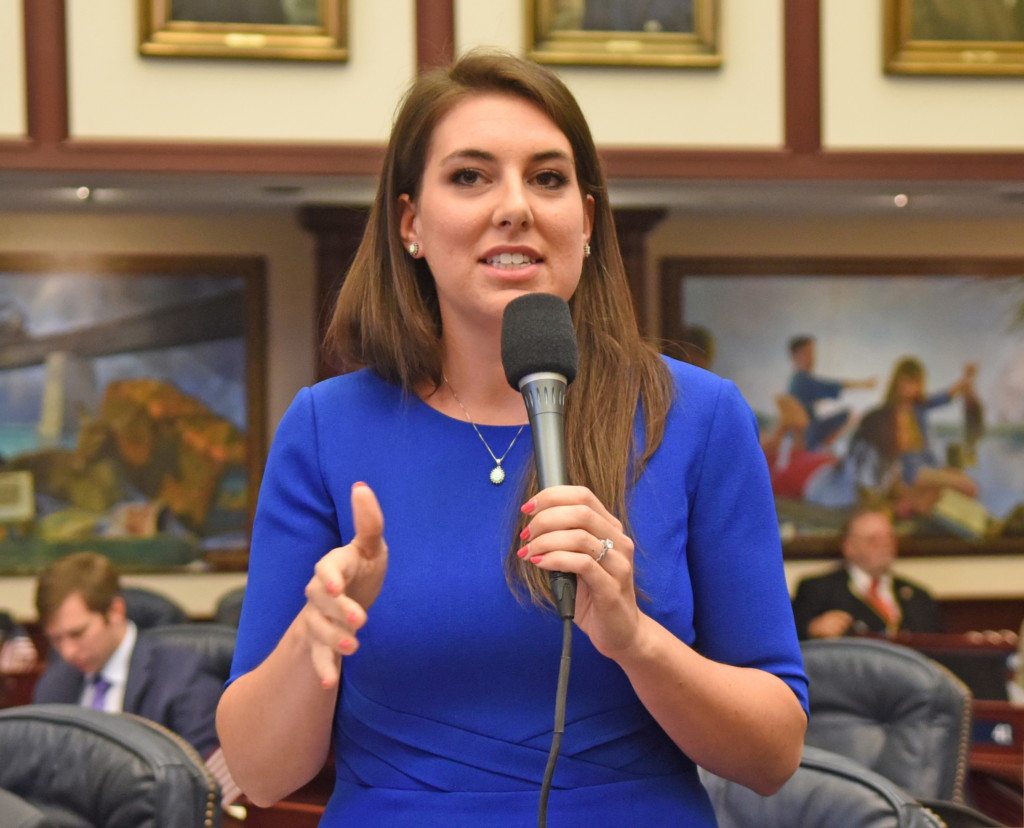
State Rep. Jennifer Sullivan, R-Mt. Dora sits down with redefinED in the returning edition of podcastED.
Arguably no state in America has redefined public education more than Florida. So how fitting that the latest lawmaker to rise to one of the key policy making slots is a former homeschooler.
State Rep. Jennifer Sullivan, R-Mt. Dora, said being homeschooled gives her unique insights into parental choice and personalized learning that will inform her world view as new chair of the House Education Committee.
In this redefinED podcast, she points out she struggled to read as a child. Had she been educated in a Florida public school rather than at home – where her mom had more flexibility to try different approaches – she said she may have fallen short on Florida’s third-grade reading test and been retained.
“As we did life, she read to me a lot. And we would work on it. But not in a way where I even knew we were working on it,” Sullivan said. “So when I was nine, it completely clicked for me. And I haven’t put down a book since.”
Sullivan, a conservative Republican, is all in for ed choice. But it may surprise some, given the caricatures of choice supporters, how much she emphasizes the equity and opportunity arguments – in part because of her own life experience.
Her family, she said, “wouldn’t have had the money to move into the really nice neighborhoods to go to the really nice public schools.” In a similar vein, students assigned to district schools that are not working for them “deserve better.”
Sullivan also makes clear that, in her view, expanding choice and strengthening public schools isn’t either/or. “I’m all for school choice. But I am not against our public schools,” she said. “Public schools are where the significant portion of students go to school. And if that’s where our students are, maybe that’s where the reform needs to take place.”
Bills expanding a state initiative to help students learn at their own pace fell by the wayside late in Florida's legislative session.
The House approved its version of the "mastery-based learning" bill. But Sen. Jeff Brandes, R-St. Petersburg, was stymied in multiple attempts to advance the proposal in the Senate.
In a last-ditch effort, Rep. Heather Fitzenhagen, R-Fort Myers, attached a version of the proposal to SB 88 — a bill creating a high school financial literacy course. The amendment also would have made the financial literacy course optional, watering down a longtime priority of Senate Education Chairman Dorothy Hukill, R-Port Orange. (more…)
Florida students might soon be able to attend virtual charter schools authorized by any school district in the state, no matter where they live.
The potential change has moved through the Legislature with ease, though it remains unresolved as the annual lawmaking session approaches its May 5 end date.
A bill that passed the House this week on an overwhelming 115-1 vote would extend the state's public-school open enrollment law to virtual charters.
The open-enrollment law, passed last year, allows parents to transport their children to any public school in the state that has room for them.
But separate laws govern virtual charters and district-controlled virtual instruction programs, which are local virtual schools run by private online learning companies. (more…)
Sullivan
The Florida House this afternoon unanimously passed legislation that would strengthen two private school choice programs.
HB 15 would increase per-student funding for tax credit scholarships. Children would be able to receive larger scholarships in high school, where private school tuition tends to be more expensive.
The bill would also allow military families to apply for the school choice program year-round.
Maximum scholarships in a branch of the program that reimburses transportation expenses for children attending public schools across district lines would increase from $500 per student to $750.
The measure would also expand the list of conditions that allow students to qualify for Gardiner scholarships, which provide education savings accounts for children with special needs. (more…)
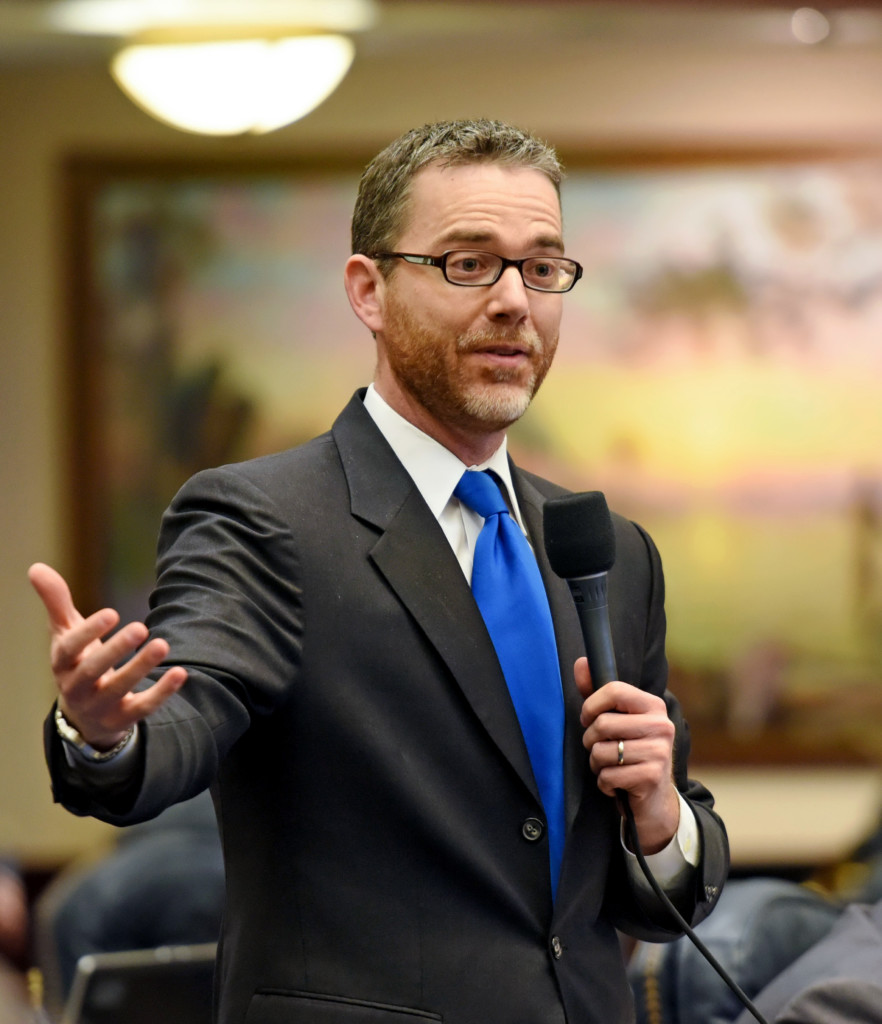
Eisnaugle
Home education students would have more access to college classes and career education programs under a bill approved this morning by a Florida House panel.
HB 1391 would allow homeschoolers to take career education courses offered by school districts. Public schools would be able to receive state per-pupil funding for courses they take.
The bill, along with a counterpart in the state Senate, would also require school districts to accept parents' home education registrations if they meet the requirements in state law.
Several parents told the committee that some districts have begun asking for information — like birth certificates and proof of residence — that go beyond what the law requires.
"They're taking the mindset, as we've tried to resolve this issue locally, that the law doesn't say they can't ask for additional documentation," said David Bosworth, a Broward County parent who's taught six children at home. As a result, he said, families can get stuck in administrative limbo trying to create home education programs for their children, even if they meet the requirements spelled out in state law.
The House bill also included provisions that would create textbook allowances for home school students who take dual enrollment courses at colleges or universities. Bill sponsor Eric Eisnaugle, R-Orlando, took those portions out of the bill today because they required money from the state budget.
But he said hoped the removal would be temporary. He said he wants to put home school students on equal footing with their counterparts in public schools, who don't have to pay for dual enrollment textbooks. (more…)
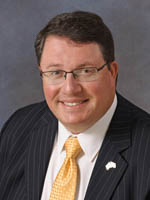
Rep. Randy Fine
Citing a rash of anti-semitic threats, the Florida House PreK-12 Appropriations Subcommittee unanimously approved a measure setting aside $1.5 million to enhance security at all Jewish day schools in Florida.
Rep. Randy Fine, R-Palm Bay, said since the beginning of the year there has been a dramatic rise in anti-Semitism. He said there had been 154 bomb threats reported at Jewish schools around the country, and 17 reported in Florida.
Appropriations documents show the measure, HB 3653, would benefit students in preschool through high school. Florida has 35 Jewish day schools in nine counties.
Fine mentioned there were no such schools in his district, but he felt the issue had statewide importance.
“We have a situation that Jewish students are very afraid and beginning to drop out of the schools,” Fine said. “It would put in security precautions so students and parents will feel safe having students attend these schools.”
Rep. Jennifer Sullivan, R-Mount Dora, asked what security measures would be put in place with the funding. (more…)
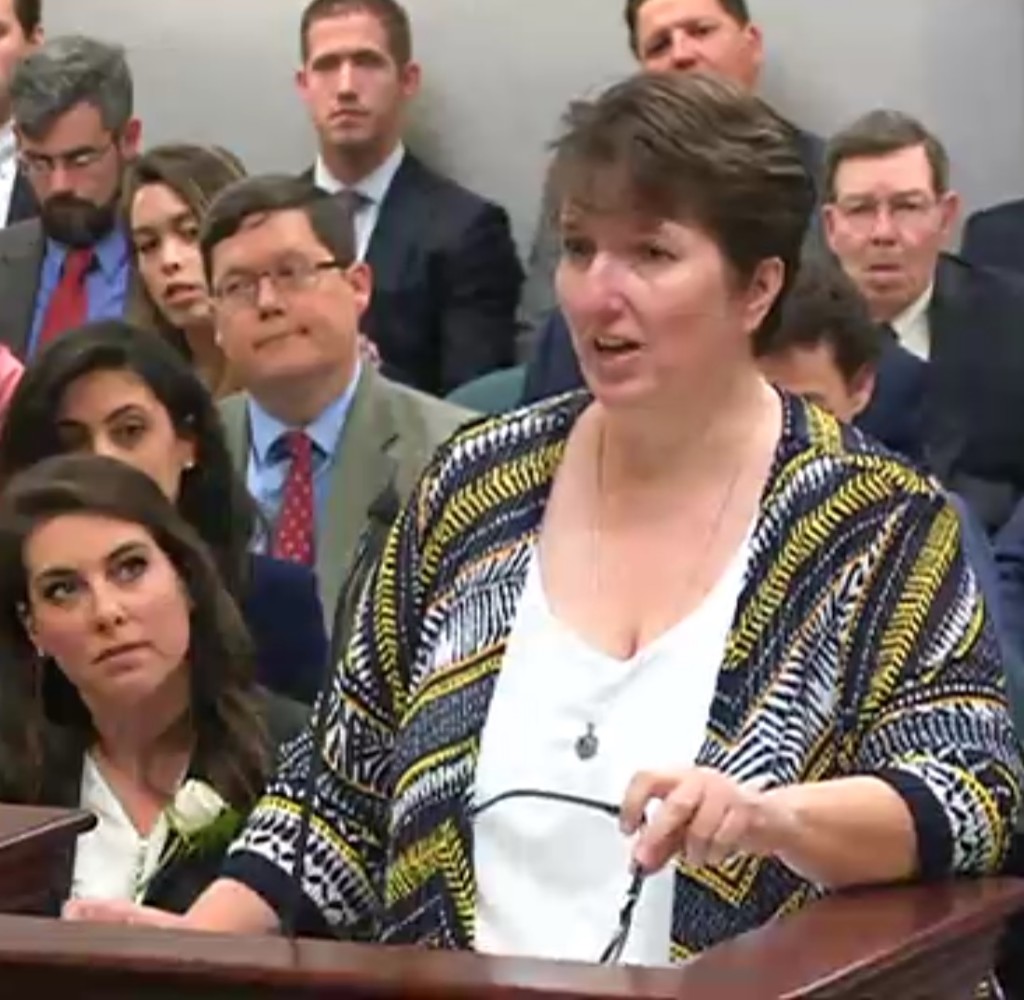
Kathleen Dale, a Gardiner Scholarship parent, testified gbefore the Florida House PreK-12 Innovation committee.
The House K-12 Innovation Subcommittee passed HB 15 on a 12-3 vote.
The measure by Rep. Jennifer Sullivan, R-Mount Dora, would triple the size of Florida's Gardiner Scholarship program, which offers education savings accounts to children with special needs.
It would also broaden eligibility for special needs vouchers, known as McKay scholarships, and increase per-student funding for tax credit scholarships, which help low-income and working-class students pay private school tuition.
Step Up For Students, which publishes this blog and pays my salary, administers the Gardiner and tax credit programs.
The panel heard impassioned testimony from parents like Kathleen Dale. She said complications from throat surgery damaged her son's brain, causing epilepsy, paralysis, aphasia and intellectual disability. He suffered from dozens of seizures a day, she said.
The family first received a Gardiner scholarship in 2014, and used it to pay for curriculum, art supplies, science kits and therapy that enabled them to teach him at home. In early 2016, Dale's son gained access to a drug trial that dramatically reduced his seizures. Since then, she said, he's made three years of progress in a year's time. (more…)