From the beginning, when my children were barely out of pull-ups, I was a school-choice mom. Living in a rural area, surrounded by cows and NASCAR flags, I insisted on driving 45 minutes one way, every day, so my kids could attend a Jewish preschool. Despite massive headaches caused by northern drivers on vacation, I knew the learning environment provided by the JCC was best for my kids, building a strong foundation to support lifelong learning.
 As preschool graduation neared, my husband and I chose an excellent, traditional public school for them to attend for their elementary years. This school was not located in our neighborhood and we couldn’t afford to move. But, because I was a teacher in that same district, I applied for the choice program and my children were accepted. It meant I had to transfer closer to home and still drive a half-hour out of my way, but I felt fortunate to place my children in a school that would meet their needs.
After leaving the teaching profession, I once again exercised my right to choose. We moved the kids into a private Jewish school for the rest of their elementary education. My husband and I had to live in a simpler neighborhood and forgo little luxuries, like fashionable shoes and date nights, to make it work, but our boys excelled in their new learning environment.
For middle school, our family moved yet again, prompting jokes that compared us to nomadic ancestors, and we applied for a magnet program. Once more, we were lucky. Our sons won the lottery and were accepted into a dynamic, academically rigorous program.
Who knows where we’ll end up for high school?
During these public school years, I’ve been a consistent PTSA member. Joining this organization seemed the best way to be involved in my children’s school. PTSA volunteers are dedicated parents, teachers, and students committed to helping schools raise needed funds that enhance learning opportunities. I joined to show my support for those who were educating my children, and to act as an important presence among teachers and administrators.
Over the years, though, I sadly watched the PTSA take positions that alienated moms like me, moms who choose. Sure, the organization is a presence at my sons’ middle school – they sell magnets for cars and snacks at sporting events. The PTSA agrees that magnets are a valid choice, but parents who choose other options are not represented by the PTSA and, worse yet, are regularly dismissed in alerts and agendas. I would often read PTSA literature and wonder out loud:
“Why is a parenting organization working against so many parents?”
But I’m not one to give up easily. (more…)
Eleven states currently offer tax credits to specified taxpayers who make contributions to tax-exempt non-profit organizations that in turn use those contributions to fund scholarships for qualifying, financially-needy, elementary and/or secondary school students attending private schools. This fairly recent development is currently empowering perhaps 150,000 lower-income families, who generally are unable to afford private schools, to make this sort of school choice for their children. To be clear, these plans provide benefits for taxpayers who make contributions that help other people’s children attend private schools.
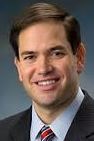
Sen. Rubio
Sen. Marco Rubio, R-Fla., has just introduced a bill that would expand this tax credit scholarship initiative nationwide. To understand the good (and dubious) features of Senator Rubio’s proposal, it is important to appreciate the state law background against which it is set.
Florida has the financially largest of these 11 state tax credit programs, with about 50,000 children currently participating. It restricts the scholarships to children from truly low-income households; the child must be eligible for a free- or reduced-price school lunch – currently just over $40,000 a year for a family of four. Other states are more generous, with Oklahoma reaching well into the middle class since there a family of four can still qualify with $120,000 in annual income. Senator Rubio’s plan, while not as tightly restricted as Florida’s, focuses the scholarships on families with income no more than 250 percent of the poverty level, which is a bit over $50,000 today. The main thing to emphasize here is the senator clearly seeks by his bill to empower the least well-off Americans who are currently least able to exercise school choice – a choice that more well-to-do families make by either moving to a better public school district or paying for private schools on their own.
Several state plans give tax credits to both individual and corporate donors (and for corporate donors the plans sometimes allow credits against a variety of state taxes). Senator Rubio’s bill does the same – allowing married couples and single taxpayers both to obtain a federal income tax credit for an annual contribution of up to $4,500, and allowing corporations an annual corporate income tax credit of up to $100,000. Florida by contrast only allows corporate tax credits and Arizona (which was the first state to adopt this program) initially granted only individual tax credits. Senator Rubio’s proposed tax credit limit for couples and individuals is about twice that now allowed in Arizona. Some states have no cap on donations, and indeed in Florida a few very large corporate donors contribute millions each year to the plan.
Senator Rubio’s proposed tax credit is a 100 percent credit, as is true in both Florida and Arizona, for example. This means that for every qualifying dollar contributed, federal income taxes would be reduced by a dollar. This essentially makes contributions costless to the donors. They, in effect, are able to re-direct their tax dollars to this specific cause – helping needy families send their children to private schools. It is worth nothing, however, that some states grant only a partial tax credit, such as the 65 percent credit allowed in Iowa and the 50 percent credit allowed in Indiana. In those latter states, donors must put up some of their own money.
Most states that adopted these plans imposed a maximum overall limit on the amount of tax credits that may be claimed each year in support of the program. These maxima vary enormously and even so are often not reached. Senator Rubio’s plan has no such limit. It probably would be complicated and costly, but clearly not impossible, for the IRS to administer an overall ceiling in a way that allowed would-be donors to know whether their contribution was within the national maximum and hence truly eligible for the credit.
One important difference between many state plans and Senator Rubio’s proposal is there is no limit on the amount of the scholarship that may be awarded. Florida, for example, caps scholarships at $4,335 at present; in Georgia the limit is just over $9,000. Hence, as appears to be the case in states like Iowa and Indiana, it would be legally possible under the senator’s plan for a child to win a full scholarship to a very high cost, elite private school and hence indirectly obtain government financial aid well beyond what is now being spent on public schools. This is perhaps unwise. Note, however, that nothing in Senator Rubio’s bill would require scholarship granting organizations to award full scholarships or high-value scholarships. In many states at present, the average scholarship is less than $2,000 a year. Since it would be rare to find a school with tuition that low, either the families must find some way to come up with the difference, or the schools must use their own financial aid plans to make up some or all of the gap.
The most striking difference between most state plans and Senator Rubio’s is children already enrolled in private schools would be eligible for scholarships. (more…)
 It’s another persistent myth about expanding school choice: Ethnic and religious groups will retreat into walled-off camps that are more insular and intolerant. Society will splinter. Democracy will crumble.
Rabbi Moshe Matz offers a polite rebuttal. “The reality is that an educated population is bound to be the force for greater democracy and greater embracing of unity in a society,” Matz, a school choice stalwart in Florida, says in the redefinED podcast interview below. “Look around. Tyranny always feeds off the uneducated.”
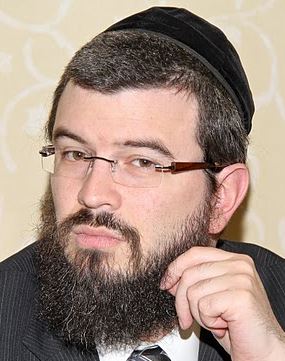
Rabbi Matz
Matz, 39, is director of Agudath Israel of Florida, which represents roughly 100 rabbis and synagogues. In 2010, he was literally front and center when 5,000 people marched in Tallahassee to support an expansion of Florida’s tax credit scholarship program. Last school year, 27 Jewish schools participated in the program, with 778 students on scholarship.
Matz’s comments are especially timely now. Conversation about school choice in the Jewish community spiked a bit in the spring after a provocative op-ed in the Wall Street Journal by author and pundit Peter Beinart. Jews in America could strengthen Jewish identify by shoring up Jewish schools, he wrote – and vouchers would be vital to that effort.
The past few months have also seen a steady stream of anti-Muslim comments in school choice debates, including a state lawmaker in Louisiana who said she regretted voting for that state’s new voucher program because she now fears it will promote Islam. Matz called such comments unfortunate and a distraction.
“The argument can’t stray away from the real issue here, which is parental choice,” he said. “Concerns like this are going to be out there, like they are probably for many other choices that parents are going to make for what’s the best education for their child. But ultimately, I think that you can’t allow these types of things to distract us from the ultimate goal.”

