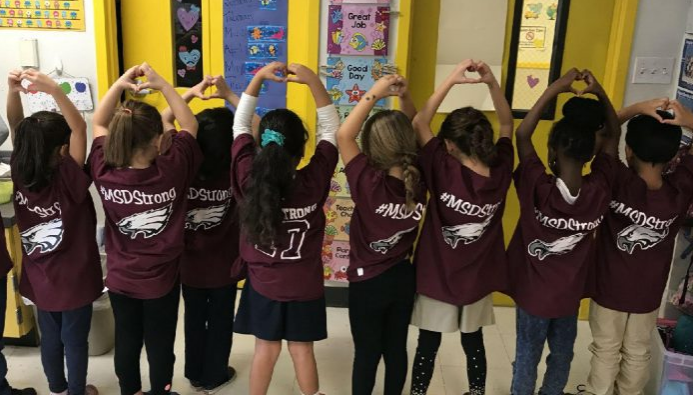
Imagine School at Broward is a tuition-free public charter school in Coral Springs, Florida, one of 712 charter schools in the state serving about 360,000 students. Imagine Schools is a national non-profit network of 51 schools in seven states and the District of Columbia.
Longtime education choice advocate and founder and chairman of Step Up For students John Kirtley recently joined Paul E. Peterson, editor of Education Next, on the Education Exchange to discuss how choice programs, including tax credits and charter schools, are serving Florida families.
Here is an excerpt of Kirtley’s remarks.
 “We have about 3 million kids, K-12, in Florida, whose educations are paid for by the taxpayers. Roughly half of them do not attend their zoned district school … of that 50 percent, the largest category of choice is, in fact, district-run schools of choice, whether they be magnets, the biggest category, [and] there are some districts with a lot of open enrollment, which is great …
The largest category of parents choose schools run by the districts with unionized employees, which is fantastic … You also have about 360,000 kids attending charter schools. You have now almost 250,000 kids attending private schools using taxpayer funds whether directly or indirectly … You have kids taking virtual classes … Now you have parents who are beginning to combine different providers and different delivery methods all at the same time, which I think is the wave of the future."
You can listen to the full podcast here.

Recently, the Trump administration proposed consolidating several federal education programs into a single block grant to states, including federal charter school funding. The same budget proposal calls for the creation a federal private school tax credit program.
In other circumstances, both ideas would be worth a tussle on the merits. But the House hasn’t passed much of anything in the way of a budget in a long time. Our Senate Olympians, meanwhile, busy themselves by admiring their own reflections and asking, “How are you today, Mr./Madame President?” leaving little time to consider serious proposals from the House in the unlikely event something of the sort were to occur.
Trench warfare over K-12 policy is all too real, but it’s taking place in state capitols rather than Gucci Gulch. Yet Conor P. Williams, a fellow at The Century Foundation, took this budget proposal seriously enough to suggest that the charter movement divert energy from the fight against an ongoing onslaught to launch an attack against … the private choice movement.
Williams starts his piece in The 74 with a highly questionable thesis: The charter movement’s problem is that it has too many friends rather than too few. He then misrepresents polling results before moving on to a slanted review of the research on education choice literature.
After the Question 2 debacle in Massachusetts, some charter advocates in that state attempted to curry favor with Sen. Elizabeth Warren by reciting a litany similar to that presented in Williams’ article. Warren was so deeply impressed with this effort that she called for the elimination of federal charter funding entirely in her run for president. (It was the unions, their camp followers and a whole lot of left-leaning voters who crushed Question 2 by the way, not anyone from the private choice movement.)
Last year, California lawmakers passed legislation that will grind charter growth to a halt. Did an association with private choice efforts cause this to happen, or was it the relentless efforts of the California Teachers Association? Imagine if Golden State charter advocates had recited a triangulation litany against tax credits. Would hundreds of thousands of children waiting on California charter school wait lists have a shot at new schools?
Color me skeptical.
In Arizona, charter opponents want to force charter management organizations to issue a request for proposal to manage new schools. Charter management organizations, in other words, would raise millions of dollars needed to build facilities but would then turn management of those schools over to outsiders.
Arizona districts would of course never build a new school again if required to abide by such a practice. The sheer lunacy of such proposals does not engender confidence that even the most ostentatious anti-private choice virtual signaling would soothe the savage anti-charter beast.
Every so often, people need to be reminded of things. On a Fordham Foundation panel back in 2011, Step Up For Students founder and chairman John Kirtley noted there were six charter schools in Jacksonville, Fla., and 90 private schools serving low-income students through tax credits. Kirtley further noted that not all of the charter schools primarily served low-income children. He asked his debate opponents how much longer single mothers with children in the schools should wait for school options.
I don’t recall much in the way of a coherent response. Some nine years later, there are more charter schools in Jacksonville, but you would have a difficult time indeed arguing there are enough.
Doomed efforts at Jedi mind tricks are no substitute for the actual practice of coalition politics. Charter advocates have plenty of enemies and too few allies. There is no room for unwarranted technocratic vanity in the expansion of educational opportunity. After all, students have only one shot at a quality education.
 Bullying scholarship verification: The Florida Department of Education is advising school districts not to verify students' bullying claims before deciding whether to award them Hope Scholarships to attend different public schools or private schools. Doing so would violate state law, the DOE told superintendents in a memo that also warned that "any district that is adding this requirement is in violation of statute and administrative rule and will be dealt with according to law.” The Pasco County School District, which had announced it was considering verifying incidents before offering the scholarship, has abandoned that idea. Gradebook.
Teachers protest: Teachers around the state rallied Monday for more financial support for schools from the Legislature. The “fund our future” events were organized by the Florida Education Association, the state's largest teachers union. The union wants a boost in per-student spending of $743, or about 10 percent, to better fund schools and would allow higher pay to combat the shortage of teachers statewide. The 60-day legislative session begins today, and Gov. Ron DeSantis will deliver his State of the State message at 11 a.m. Orlando Sentinel. Keynoter. Florida Phoenix. Florida Politics. WKMG. WINK. Daytona Beach News-Journal. (more…)
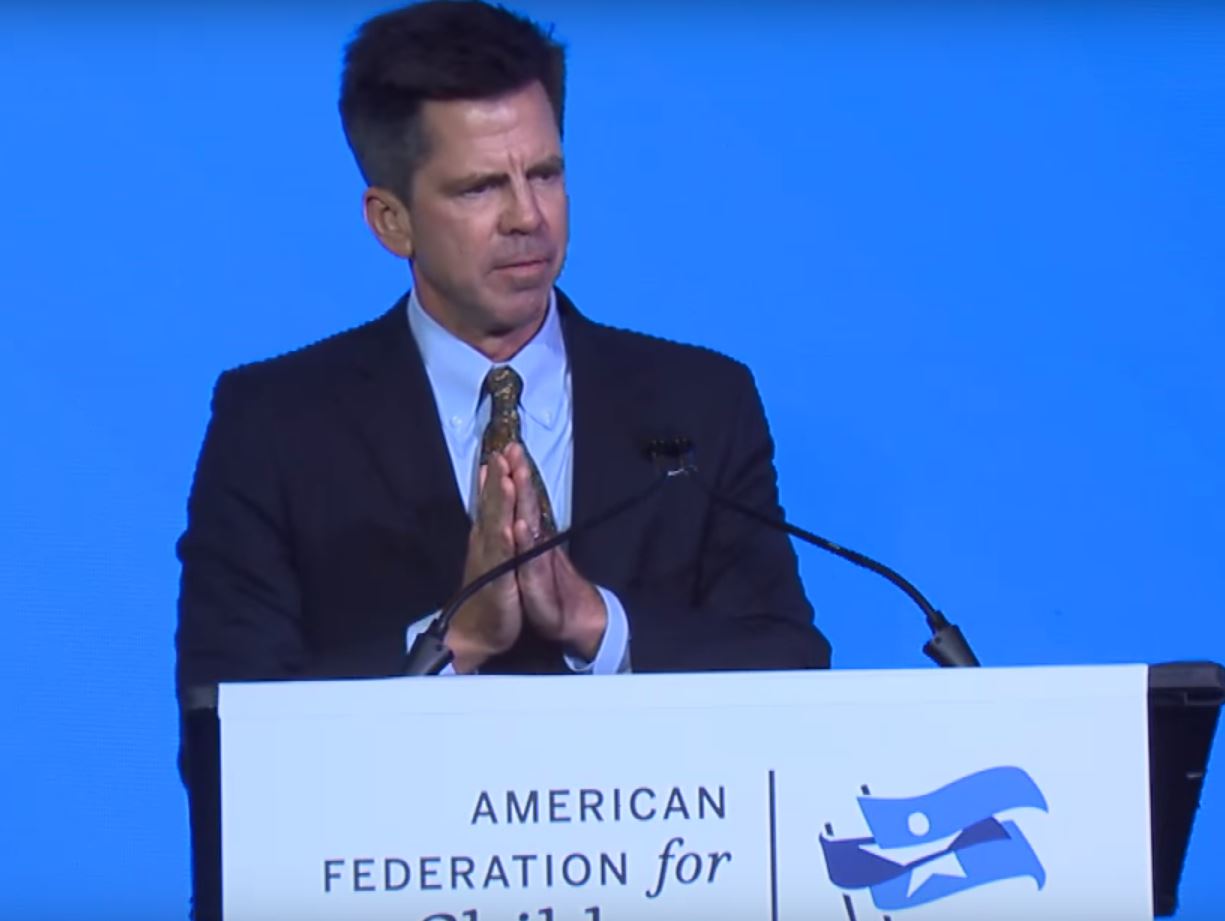
John Kirtley is the chairman of Step Up For Students, which publishes this blog
Jeffrey Solochek of the Tampa Bay Times recently interviewed Step Up For Students Board Chair John Kirtley for a Times story on Florida’s education choice programs. Jeff’s questions and John’s answers are below. This interview has been edited for length.
Why did you first create the tax credit scholarships? Were you trying to come up with an alternative to vouchers? Were vouchers always the end goal?
… It is often erroneously said that “the tax credit scholarship program was created after the Florida Supreme Court ruled Jeb Bush’s voucher plan unconstitutional.” That is false. The litigation had only just begun when the Legislature created the tax credit scholarship. Most of us — including some very smart lawyers — thought that the governor’s voucher program would prevail in court. … I would urge you to read this story about that ruling …: https://nextstepsblog.org/2019/02/state-funded-scholarship-programs-then-and-now/
But I digress. The Bush v. Holmes opinion came out five years after the tax credit program was created. The opinion wasn’t the motivation for its creation.
The end goal is to empower low-income and working class parents to be able to choose the best educational environment for their children, regardless of who runs it. I am agnostic when it comes to what kind of school parents choose. I don’t believe private schools are better than district or charter schools. I believe that the parent needs to have the ability to find the right environment for their children. My “end goal” would be that economic station would not prevent any parent in Florida from doing just that.
Did Florida need to go through 20 years of becoming accustomed to these programs to get to this point today, where the governor now says, if it's taxpayer-funded education, it's public education no matter where you sit?
Maybe so. Twenty years ago the definition of “public education” was pretty simple. We raised taxpayer dollars to educate kids, and we gave every penny to the districts. The districts ran every school in a fairly “uniform” manner, and assigned kids by their ZIP code. Today the definition of public education is very different. We now have children attending district magnets, career academies, charters, virtual classes, dual enrollment college classes, and yes even private and faith-based school using taxpayer funds. Many students are now combining different providers and delivery methods at the same time. For example, a senior in high school might take two classes at their zoned district school, two classes through the Florida Virtual School, and two classes at the local state college—all paid for by the taxpayers. People are surprised to learn that of the 2.8 million students in Florida educated by the taxpayers, over 30 percent now do not attend their zoned district school. In Miami Dade, it’s [nearly] 70 percent! So I agree completely with Gov. DeSantis on this question.
Are education savings accounts and portable per-student funding the next logical step in the movement? Or is it something else?
I believe ESAs are the next logical step. They give a parent the ability to customize a child’s education to a greater degree. We have seen this be very helpful in the Gardiner program. Money can be used for tuition, but also tutoring and specialized therapies. ESAs would be of great help to low-income families. Think about all the things that better off kids do outside of the classroom that help with their development. Music lessons, dance, sports, etc. Some of these activities are crucial in helping children develop into successful adults. ESAs could help low-income parents give their children the same advantages in this regard as better off families. ESAs would also promote a more efficient spending of educational dollars. Think of the example I gave of the student using three providers and two delivery methods. With an ESA, they could purchase those classes from each provider, and we could ensure that the taxpayer doesn’t overpay for any one of them. The key to ESAs is having excellent state oversight, particularly in the area of deciding what are proper expenses. Fortunately, Step Up For Students has raised $4 million in private funds over the past few years to develop an online platform that makes the administration of ESA possible with great accountability. It prevents funds from being spent on purposes that the state doesn’t allow.
How important were Jeb Bush and the Bush v. Holmes case to the state's progression on school choice?
Jeb Bush has done more for educational choice — and K-12 reform overall — than any single person. First, people forget he started the state’s first charter school in Liberty City with Urban League President T. Willard Fair. Then in 1998 he ran for governor on a platform of K-12 reform and was the first governor candidate in the nation to propose giving poor families the ability to choose a private school. Opponents went nuts during the campaign, and did so again when he fulfilled his promise with the A+ Plan. Florida has made more progress in public education in the last 20 years than any other state. It’s indisputable, even though people deny it or try to ignore it. And it all started with Jeb Bush.
Should the state place accountability requirements on any school that receives state funding for education, as it requires on district schools and charters? Why or why not?
There are two kinds of accountability — regulatory accountability and market accountability. Regulatory accountability is using laws to force schools to act in a certain way. Market accountability is parents choosing to send their children to a school. For all kinds of schools, whether they be district, charter or scholarship schools, the key is finding a balance between these two forms of accountability.
District schools face large degrees of regulatory accountability. Generally, district schools in low-income areas face little market accountability, because parents can’t afford to move to a neighborhood with a different zoned school, and they can’t afford private school. I contrast that with district schools in better off areas, because parents can afford to move or pay for an alternative.
I personally believe that district schools are overregulated, and should be allowed much more flexibility to innovate and operate. I think we have wrung all the improvement we can out of district schools from regulatory accountability.
Charter schools and private schools serving scholarship children face the ultimate in market accountability, because if parents don’t choose them they don’t get funded. Because they face this aspect, which forces them to perform or go out of business, the regulatory accountability needed is less. But there is absolutely a need for regulatory accountability for them. With the scholarship schools, they must prove that they are in compliance with all health and safety laws. They must have employees undergo the same background checks as district schools. If they take $250,000 worth of scholarship students, they have to have an independent CPA come in and examine their books, and submit that report. They have to administer either the state assessment or a nationally recognized test approved by the state, and report those scores to Florida State every year. Scores are publicly reported by FSU down to the school level.
Critics of choice programs point to incidents of bad behavior and demand that the programs be shut down. But you can’t legislate away human frailty. Every day we read about bad behavior by employees in district schools, but we don’t advocate shutting down a school when it happens there. Now, if a private school hasn’t complied with the law, I say expel them. For example, if they haven’t done background checks on employees, that’s inexcusable. We need to ensure that the Florida DOE has enough resources and capacity to enforce the accountability laws that are already on the books
I often wish that critics of choice would apply their concerns across the entire K-12 landscape. For example, some critics are upset that the law doesn’t require private schools serving scholarship students to employ teachers with college degrees. But they don’t want to hear that there’s many teachers in public schools without college degrees, especially in district schools serving low-income children. For schools in Orange County serving more than 80 percent low-income students, 39 percent of teachers missed between 11 and 17 days of school, and 14 percent missed more than 18 days of school. Substitutes in Orange County can be hired with only a high school or GED degree. In Duval County high-poverty schools, 41 percent of teachers missed between 11 and 17 days of school, and 29 percent missed more than 18 days. Here’s the source for that:
https://www.nctq.org/dmsView/RollCall_Orlando
https://www.nctq.org/dmsView/RollCall_Jacksonville
Your own paper did an excellent piece on the challenges with substitutes. Now understand, I’m not saying that the districts are to blame — they’re doing the best they can. I’m just saying that if we are concerned about teachers without college degrees, let’s find out how bad the problem is an all types of schools and find a solution.
Every year Step Up makes suggested to the Legislature to improve the accountability of the choice programs. We will continue to do so every year.
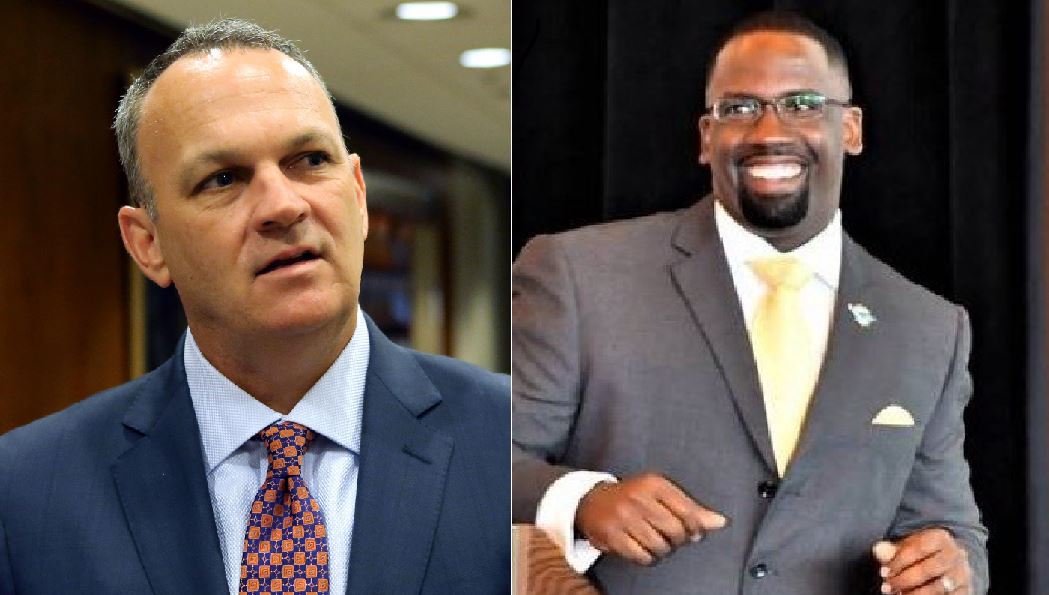
Richard Corcoran is the new Commissioner of Education. Fedrick Ingram is the new President of the FEA. Both have publicly signaled an interest in working together.
A day after the Florida Board of Education unanimously approved former House Speaker Richard Corcoran to be Florida’s new Commissioner of Education, the new president of Florida’s state teachers union extended an olive branch.
Florida Education Association (FEA) President Fedrick Ingram told the Tampa Bay Times: "We want to work with anyone who wants to empower our public schools…If we have to consult, work with and possibly collaborate with Mr. Corcoran, we will certainly do that to the extent possible, if Mr. Corcoran wants to do that…What I want is genuine conversation, policy talk about what can empower the classroom, what can empower student success…We teach our kids, if you have differences, you sit down, you talk it out…We will not agree on everything. But there has got to be some common ground."
Commissioner Corcoran quickly embraced Ingram’s invitation: "I've always had an open mind. I've always had an open door…The focus needs to be on providing our school children … the best world-class education possible. Anybody whose motivation is that, I'll sit down and meet with them."
I hope Ingram and Corcoran find time to talk. If they do, a dialogue I facilitated over a decade ago on behalf of the Collins Center for Public Policy might inform their discussions.
From 2006-08, John Kirtley, the founder and board chair of Step Up For Students (SUFS), met periodically with the FEA leadership, which at the time included President Andy Ford, Executive Director Aaron Wallace, and Public Policy Director Jeff Wright.
They began by getting to know each other. John talked about the great experiences he had in district schools growing up, Andy talked about how important attending Catholic schools was for him, and Jeff jokingly asked John where his horns were since everyone in FEA assumed he was the devil.
By their Jan. 25, 2007 meeting in Orlando, the group had agreed to a list of shared beliefs:
“We share a passion for all students being successful in school and being properly prepared to be successful in life, especially those urban, low income and minority students who may have fewer resources and opportunities available to them.
“Blaming individuals or institutions does not help educate students, nor does a public versus private school debate. Choice programs based on blaming ’failing public schools’ only serve to divide us.
“We need sufficient diversity in our learning environments to ensure the needs of all children can be met. All parents should have the right and ability to match their children with the learning environments that best meet their needs. A school or program that works for one student may not work for another student.
“All schools receiving public funds should serve the public good and be fiscally and academically accountable for how those funds are spent.”
On Feb. 9, 2007, the group met again in Washington, D.C., at a National Education Association gala fundraiser. The FEA leaders took John around and introduced him to several key NEA national and state leaders. Although more than a few eyebrows were raised, the NEA leaders were classy. John received a warm welcome.
On March 7, 2007, FEA’s Communications Director Mark Pudlow issued the following public statement on behalf of Andy Ford and John Kirtley:
“After years of stereotyping and talking past each other, we recently sat down and started talking to each other. Turns out we have many common values and aspirations, most notably our passion for insuring all children — especially low-income children -- receive the high quality education they need and deserve.
“While our talks are still in the early stages, we have made good progress in a short time. We are not naïve about the challenges ahead, but we are determined to resolve our previous disagreements and reach consensus on short and long-term initiatives that will help all students. Reducing Florida’s achievement gap is a moral imperative that we are committed to tackling together.
“We know we can accomplish more for children together than we can separately. These are hopeful times.”
By this point, the sense of hope and possibility within the group was high. They decided it was time to turn their words into actions. They agreed on a win-win compromise and asked Marshall Ogletree, a member of Wright’s legislative team, to turn their compromise into legislative language.
FEA would support Florida’s tax credit scholarship program, which enables low-income children to attend private schools or public schools in another school district. In exchange, Kirtley and the education choice community would support a pilot program allowing district choice schools to operate under the same regulatory accountability as private schools serving scholarship students. The group thought the balance between regulations and consumer choice in the accountability system for scholarship schools might work well in district choice schools. Kirtley also agreed to support a provision that redirected all the cost savings from the tax credit scholarship program to these district choice schools.
Soon after the 2007 legislative session opened in March, Ford, Wright, and Kirtley met with Senate President Ken Pruitt to present their legislative proposal. Sen. Pruitt opened the meeting by joking that he assumed there was a scheduling error when he first reviewed that day’s meetings. That Kirtley and the FEA leadership would be in his office at the same time presenting a joint proposal didn’t seem possible. And yet, here they were.
Sen. Pruitt listened politely, encouraged the group to keep at it, but was noncommittal. My sense watching the discussion was that he was somewhat intrigued, but skeptical the group could pull this off.
Kirtley next began sharing the proposal with other key political leaders. A few were hostile since the proposal rolled back some of the increased regulations on district schools that had only recently been enacted. But most had the same response as Sen. Pruitt. They were intrigued but skeptical the group could follow through.
A common theme Kirtley heard was that leaders wanted a more public commitment, especially from the FEA leadership. The FEA had developed a reputation in Tallahassee for making private commitments that they later back away from in public.
John was talking to the FEA about Andy Ford speaking at an April 12 education choice rally at the capital. If Ford made a public statement supporting the group’s proposal, key political leaders said they would publicly support the proposal.
Kirtley formally invited Ford to speak at the April 12 education choice rally, a draft speech was circulated, and then we waited to see how the internal discussions within the FEA would unfold. Ford eventually declined to speak at the rally or make any public statements supporting the proposal. Jeff Wright did come to the rally and stood in the back with me. The group’s legislative compromise was now dead.
When I accepted Kirtley’s invitation to become SUFS’s president in August 2008, my role changed from group facilitator to being SUFS’s primary point of contact with the FEA. Jeff and I continued to have occasional discussions about possible areas of collaboration. In his Sept. 20, 2007 testimony to the Florida Tax and Budget Reform Commission in Jacksonville, Ron Meyer, FEA’s lead attorney, laid out his reasons for why the FEA had no intention of challenging the constitutionality of the McKay or tax credit scholarship programs. For the next two years, we settled into a state of peaceful détente.
Leading into the 2009 legislative session, we made several changes to SUFS’s legislative agenda at Jeff’s request. He said if we made those changes the FEA would not oppose our items. A month later the FEA stood up in committee and opposed the bill containing these provisions. Jeff told the House Democratic Caucus that the FEA opposed the bill because of internal political pressures. We pretty much stopped talking after that. The FEA filed a lawsuit to shut down the tax credit scholarship program in 2014. They lost.
Fed Ingram’s election represents a sea change in the FEA’s internal politics that bodes well for his ability to follow through on any commitments he makes.
From 1974 until 2000, Florida’s district teachers were divided between two competing statewide unions with diverse histories and cultures. When Andy Ford became president in 2003, these cultural differences were still dividing the organization and undermining Andy’s ability to make bold moves. In addition, Andy was from a mid-size local, Duval County, which also limited his internal political clout.
For over 40 years, Pat Tornillo ran the state’s largest local teachers union in Dade County, and one of the two state teacher unions. Tornillo was the stereotypical strongman union leader. He was also a crook who betrayed his members. Tornillo pleaded guilty in federal court to tax evasion and mail fraud in 2003 and went to prison. Tornillo’s political demise created a crisis within the Dade union that took over a decade to clean up.
Fed Ingram’s election means Dade County is now ready to resume its historical role as the controller of the state teachers union. The cultural divide within the FEA has also largely been resolved with the American Federation of Teachers’ more top-down, autocratic leadership style becoming the norm. This all means Ingram probably has more organizational power than any previous state union president, including Tornillo. Ingram should have the internal political power to follow through on any commitments he makes.
Any systemic, sustainable improvements that Ingram and Corcoran agree to will probably be based on the same concerns about overregulation and insufficient access to education choice that informed the 2007 agreement between Kirtley and the FEA. District schools are overregulated, and low-income and working-class parents don’t have the same access to diverse learning options as more affluent parents. To have a lasting positive impact, any grand bargain will have to include less regulation of district choice schools and more choice for less-affluent families.
Ingram’s ability to embrace progressive improvements in public education is hindered by his union’s business model, which assumes a top-down, command-and-control management system that disempowers teachers, parents, principals, and students. One-size-fits-all union contracts require a one-size-fits-all public education system. Corcoran is going to push for a more flexible, customized system that empowers educators, students, and parents to meet the unique developmental needs of each student. This is the core tension that undergirds most disagreements today surrounding how best to improve public education. Ingram’s ability to navigate this tension within his union will be important.
New faces in old positions often provide the opportunity for progress. I hope Corcoran and Ingram seize the moment.

