 Corcoran chosen: Gov.-elect Ron DeSantis has officially nominated former House Speaker Richard Corcoran for the job of education commissioner. Corcoran is a staunch supporter of school choice, vouchers and charter schools, and former Senate president Don Gaetz says Corcoran could become the "most disruptive education reformer in our state's history." Politically liberal groups and traditional public schools advocates are reacting negatively. “Richard Corcoran has a terrible track record of putting private interests over the needs of Florida’s children,” says Scott McCoy, senior policy counsel for the Southern Poverty Law Center. The State Board of Education will have to approve the appointment. Associated Press. News Service of Florida. Orlando Sentinel. Tampa Bay Times. Politico Florida. WUSF. Florida Times-Union. Tallahassee Democrat. Florida Politics. WJXT. Florida Phoenix. DeSantis' 41-person education transition committee includes, among others, state Board of Education chairwoman Marva Johnson, Florida State University president John Thrasher, former Brevard superintendent Desmond Blackburn and John Kirtley, founder and chairman of Step Up For Students, which hosts this blog and helps administer several state K-12 scholarship programs. Sunshine State News. Florida Politics. Gradebook.
Spending on schools: Spending on K-12 schools across the United States increased for the third consecutive year, according to a report released Thursday by the National Center for Education Statistics. Across the country, $678.4 billion was collected and $596.1 billion was spent in the 2016 fiscal year. The average spent per student was $11,841, but the totals varied widely. The District of Columbia, for example, spent $27,067 per student, and New York spent $24,717, while Idaho spent $8,258 and Utah $8,408. Florida spent $9,176, which was almost identical to the two previous years and ranks 43rd among the states and D.C. Education Week.
School choice wins: A clear winner in Tuesday's elections in Florida is school choice, according to the founder of the state's tax credit scholarship program. "When given a clear choice between a candidate who supports empowering parents to choose K-12 options for their children and a candidate who wishes to restrict those choices, voters prefer the candidate who supports educational choice," says John Kirtley, whose Florida Federation For Children donated about $1.6 million to school choice supporters in 39 key races around the state. Step Up For Students, which hosts this blog, helps administer the tax credit scholarship and several others. Gradebook.
Education challenge: The Florida Supreme Court hears oral arguments today in a 2009 case that claims the inadequacy of funding for education is a violation of the state constitution. Citizens for Strong Schools, the plaintiffs, lost at trial and in an appeal as judges ruled that the constitutional amendment requiring a "high quality education" uses political terms that can't be objectively measured. Another plaintiff, Eunice Barnum of Jacksonville, says her then-elementary aged children "were failing in math, failing in reading, even though they were there every day. The constitution clearly says that it’s the paramount duty of the state to provide a high quality education. And, you know, when I went to school, ‘F’ was never considered high quality. It just wasn’t.” WJCT. Orlando Sentinel. (more…)
Bright Futures: Florida Senate leaders want to amend the higher education bill by incorporating the proposed Bright Futures expansion into it. The bill would expand and fully fund Bright Futures scholarships and restore Medallion coverage to pay for 75 percent of tuition and fees. It would also roll the $130 million for the programs into the legislation. Last year the money was put in the general fund and was available for just one year. Legislators are trying to make the expansion permanent. If the bill is approved by the Senate Appropriations Committee today, it moves on to the Senate floor. Politico Florida.
Union bill advances: A bill that could affect Florida teacher unions is approved by the House's Government Accountability Committee. The bill requires all public-sector unions whose dues-paying membership falls below 50 percent of all those eligible to reapply for certification. The bill exempts unions representing police officers, firefighters and prison guards. The bill's sponsor, state Rep. Scott Plakon, R-Longwood, says it will make unions more accountable. Critics call it a "union-busting" bill. Politico Florida. WCTV. Florida Politics. WFSU. Capitol News Service.
Impact fees: Senate lawmakers continue to work on amending a bill that spells out when government agencies such as school districts can start collecting impact fees from housing developers. Developers want the fees payment as late as possible. The original bill called for fees to be due when a certificate of occupancy is issued. One of many amendments changes the date to when the building permit is issued. It's favored by government agencies, which want to collect the money sooner so they can start building infrastructure such as schools. Politico Florida.
Teachers honored: Kyle Dencker, a computer science teacher at Timber Creek High School in Orlando, is named the Orange County School District's teacher of the year. Orlando Sentinel. Five finalists are named for the Hillsborough County School District's teacher of the year. They are: Jennifer Jackson, 7th grade science, Stewart Middle; Alexa Trafficante, 4th grade, Gorrie Elementary; Bonnie Bresnyan, exceptional student education, Lewis Elementary; Nicole Meyerson, 5th grade, Carrollwood Elementary; and Lisabeth Leist, math, Steinbrenner High. Four finalists also are chosen for diversity educator of the year and for instructional support employee of the year. Winners will be announced Jan. 16. Tampa Bay Times.
INDIANAPOLIS - With an award described as "overdue," a national school choice advocacy group recognized Jeb Bush for his contributions to the movement.
The former Florida governor received the John T. Walton Champions for School Choice award from the American Federation for Children today at its annual gathering.
A past recipient of the award — John Kirtley, the chairman of Step Up For Students, which publishes this blog — said Bush summoned him to Miami shortly after he started a Tampa-based offshoot of the Children's Scholarship Fund in 1999. The governor recognized that the thousands of parents on the waiting list for scholarships could become foot soldiers in Tallahassee.
That conversation led to the creation of Florida tax credit scholarship program, now the largest private school choice program in the nation, in 2001. (more…)
The lead plaintiff in a lawsuit challenging the nation's largest private school choice program and an advocate who helped establish it squared off Wednesday on Southwest Florida public radio.
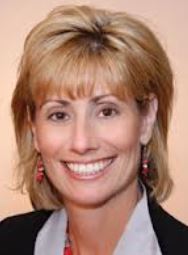
McCall
The rare public exchange between Joanne McCall, the president of Florida Education Association, and John Kirtley, the chairman and founder of Step Up For Students*, came the week after the case was argued in a state appellate court. The full WGCU broadcast can be heard here.
A key issue at this stage of the case is whether the plaintiffs adequately alleged that the tax credit scholarship program, which serves more than 78,000 low-income children, actually harms the plaintiffs in the lawsuit, or whether they just dislike it politically.
Kirtley pointed to multiple studies by state economists showing the scholarship program saves the state money. In recent years, as the program has grown by tens of thousands of students, per-pupil public-school funding has gone up, he said. If school districts suddenly had to absorb nearly 80,000 students, "per-pupil spending would go down."
What's more, public schools would have to build new space for them, at a time when many are struggling to handle existing growth. In fast-growing Central Florida, for example, WFTV recently reported that Osceola County expects to add 10,000 students in the next five years, and is hoping charter schools can help accommodate them. There are nearly 3,000 students in the district on scholarships. (more…)
Bathroom access: The Marion County School Board approves a policy to ban transgender students from using the bathroom based on their gender identity. The measure goes into effect today. Ocala Star Banner. Earlier Tuesday, the ACLU of Florida issued a letter warning the board that the policy would harm students and "violate Title IX sex discrimination requirements, violate the equal protection clause of the U.S. Constitution and jeopardize federal funding for the school district." Ocala Star Banner. WCJB.
LGBT policy: A divided Brevard County School Board is asking school officials to amend the district's nondiscrimination and equal employment policies to include protection for lesbian, gay, bisexual and transgender students and staff. The revisions would be discussed at a public meeting before being voted on by the board. Florida Today.
Test scores: U.S. high school seniors' National Assessment of Educational Progress test scores dropped slightly in math and stayed about the same in reading, according to the 2015 Nation’s Report Card from the National Assessment Governing Board. Florida seniors' results mirrored the national ones, though Florida scored slightly higher than the national average in both subjects. Sunshine State News.
District overspending: The Broward County School District's police department has overspent its budget by about $2.5 million, prompting an audit and a request to the school board for more money. The department has just $50,000 left in its budget for this fiscal year, and $3.5 million in expenses that have not been paid. The financial problems were discovered in a review of the way the department handles personnel investigations. Sun-Sentinel.
School choice: Dismantling school choice would harm Florida students, schools and taxpayers, warns John Kirtley, venture capitalist and chairman of Step Up For Students, which hosts this blog. He was speaking to the Economic Club of Florida. The Florida Education Association and other groups have sued the state, challenging the constitutionality of the school choice programs. The case goes to a state appeals court in May. Step Up For Students administers tax-credit scholarships for about 80,000 low-income students, and also the Gardiner Scholarships for students with disabilities. Tampa Tribune. Miami Herald. Politico Florida. WFSU. (more…)
Editor's note: The definition of public education is changing, as more than 1.5 million Florida students choose options beyond their zoned school.
Last month, John Kirtley, the founder and chairman of Step Up For Students, discussed this shift during a Catholic Foundation celebration hosted by the Diocese of St. Petersburg. He was calling on church supporters to help fight a lawsuit challenging Florida's tax credit scholarship program (Step Up administers the scholarships, and also hosts this blog).
But Kirtley's remarks highlighted the ways school districts — particularly the large urban school systems of Miami-Dade and Hillsborough — have embraced the new definition. What follows is an excerpt, lightly edited for clarity and length. A video of the full speech is embedded below.
Think of the diversity in this state. Think of the diversity in Miami-Dade county.
Did you know that there are over 100 languages spoken in the Miami-Dade public schools?
In addition to ethnic diversity, if you drive from Coral Gables to Overtown, you will see the incredible economic diversity and disparity.
With that incredible amount of diversity, is a one-size-fits-all system going to produce excellence for every single child?
Probably not. (more…)
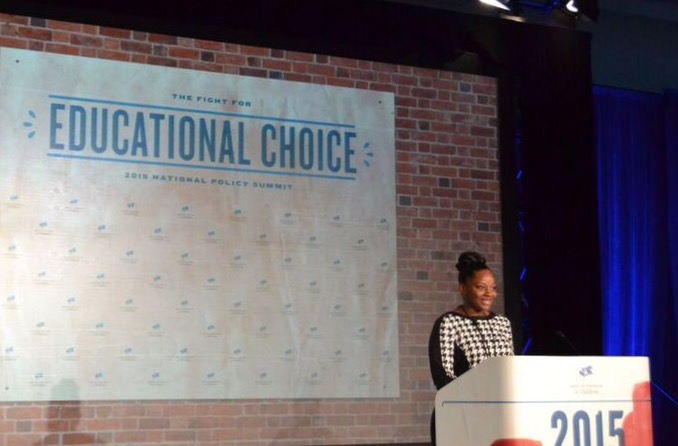
Merriweather
The founder of the organization that helps administer the nation's largest tax credit scholarship program, as well as one of its most prominent graduates-turned-advocates, were honored Monday for their contributions to the school choice movement.
John Kirtley, who helped start Florida's scholarship program, and Denisha Merriweather, a former scholarship student now headed to graduate school, received this year's John T. Walton Champions for School Choice Award during the American Federation for Children's annual gathering in New Orleans.
Kirtley founded the Tampa-based organization that evolved into Step Up For Students in 1998, and advocated for creation of the state's tax credit scholarship program three years later. It has since grown to serve nearly 70,000 low-income students. The organization also co-hosts this blog and employs the author of this post.
Merriweather has become a leading voice against the lawsuit filed last summer to end the program. Over the past year, she introduced former Gov. Jeb Bush at his education foundation's summit in Washington, told her story in the Wall Street Journal, and appeared on local TV stations in her hometown of Jacksonville. (more…)
The cover story in this spring’s Philanthropy magazine opens with redefinED host John Kirtley walking beside a civil rights legend at the front of a record-setting 2010 school choice rally that urged Florida lawmakers to expand Tax Credit Scholarships for low-income students. It then drops backs a dozen years to trace his efforts at helping poor schoolchildren and, in the process, provides considerable detail about how and why he entered the arena of political action committees and campaign contributions.
The magazine is published by the Philanthropy Roundtable, which is directed by former Heritage Foundation educational affairs vice president Adam Meyerson, and the article certainly takes for granted that the public education system needs a profound push to get students back on track. But this story includes a variety of political and philanthropic voices, all of whom insist the charitable model for education reform must now apply business principles similar to those instituted by Kirtley and, more pointedly, be committed to stepping into the political arena to counter the powerful influences of teacher unions.
Those voices include New York City Mayor Michael Bloomberg, who tells Philanthropy: “We have an obligation to stand up for our children, for their lives, their futures, their hopes and dreams. And that means putting their needs first.”
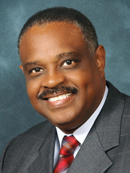 Al Lawson, an iconic Democratic lawmaker who served in the Florida Legislature for nearly three decades, has joined a nonprofit board that oversees state-supported scholarships for low-income schoolchildren.
Lawson was selected last week to serve on the corporate board of Step Up For Students, which is a state-approved “scholarship funding organization” that provides Tax Credit Scholarships this year to 51,000 students whose household income meets the threshold for free or reduced-price lunch. (Step Up For Students also oversees this blog.) The program is fueled by $229 million in corporate contributions that receive a dollar-for-dollar tax credit from the state.
“Throughout my legislative career, I was always concerned about students, especially minority students, who had no option when the regular school wasn’t working for them,” Lawson said. “The most important thing is to give these kids an opportunity to succeed, and this scholarship is one of those opportunities.”
Lawson was praised by Step Up board chairman John Kirtley, a Tampa businessman who helped persuade lawmakers to adopt the law in 2001. “Senator Lawson has been a smart, compassionate leader in Florida for years,” Kirtley said. “We’re thrilled Step Up and our families will benefit from his judgment and experience.”
Two-thirds of the students on the scholarship are black or Hispanic, the majority live in homes with only one parent, and their average household income is only 6 percent above poverty. State research shows they are the lowest academic performers in the public schools they left behind and, on their latest standardized test scores, they achieved the same gains in reading and math as students of all incomes nationally.
Lawson, who initially voted against the creation of the scholarship in 2001, told a newspaper reporter in 2007 that he could no longer oppose a learning option aimed at economically disadvantaged students with desperate needs: “When you have a lot of poor kids in your area that need help, and you have people saying, ‘We’re willing to work with these kids,’ ... it’s hard to say no.” By 2010, he was co-sponsor of a bill that expanded the program and made the closing argument on the Senate floor. (more…)

