INDIANAPOLIS - With an award described as "overdue," a national school choice advocacy group recognized Jeb Bush for his contributions to the movement.
The former Florida governor received the John T. Walton Champions for School Choice award from the American Federation for Children today at its annual gathering.
A past recipient of the award — John Kirtley, the chairman of Step Up For Students, which publishes this blog — said Bush summoned him to Miami shortly after he started a Tampa-based offshoot of the Children's Scholarship Fund in 1999. The governor recognized that the thousands of parents on the waiting list for scholarships could become foot soldiers in Tallahassee.
That conversation led to the creation of Florida tax credit scholarship program, now the largest private school choice program in the nation, in 2001. (more…)
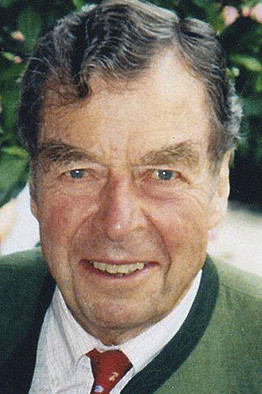
Peter Flanigan
Peter Flanigan, one of the giants of the education reform movement, passed away last week at age 90. The Wall Street Journal featured this tribute in its Saturday edition.
Peter unknowingly recruited me into the parental school choice movement before even meeting me. My first (and accidental) exposure to non-public education was in 1996 through a program Peter established, the Patrons Program. This program matched business people with individual Catholic schools in poor parts of New York City. I, along with my good friend John Griffin, were matched with Christ the King School in the South Bronx. We gave it money, sure - but it gave me an education.
For the first time I met poor parents who would do anything to see their children get a good education. To pay for the $3,200 tuition, these parents would work two jobs and even cut off their TV service. They did this when there was a free public school nearby. They didn't say the public schools weren't any good; they just weren't right for their children. This experience prompted me to start a private scholarship program in Tampa Bay in 1998. We received 12,000 applications for our 700 scholarships. I plunged into the movement and never looked back.
I finally met Peter in 1999 when I joined the board of Children First America, a non-profit dedicated to bringing more school choice to low-income parents. He was already a board member, of course. I was amazed what he had already accomplished in life. The Journal account doesn't mention his stint as a naval pilot in World War Two. Can you imagine a life in which that's a throwaway item? I had the great pleasure of both working with Peter and for him; in 2001 I left my business to become president of CFA. Peter's advice and guidance to me during this period were invaluable.
Peter remained a guiding light of the school choice movement to the end. He remained on the boards - and was a vital, contributing member - of all the successor organizations to CFA until his passing. Other than perhaps John Walton, I can think of no other person who has done more to empower low-income parents to do what is best for their kids.
I'm sure they're together now, comparing notes on the movement's progress. I only hope we can live up to their examples and their expectations.
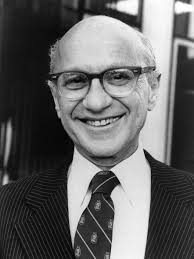
Milton Friedman
Colleagues in the American Center for School Choice have convinced me to add a more personal note to my recent 100th birthday blog about Milton Friedman. They ask that I describe my connections with - and occasional disconnections from - the great man. I am honored to be consulted and hope to contribute light sans heat. Though there is no avoiding one’s perceptions of human limits, correct or otherwise, my aim here will be neither to praise Caesar nor to pester him. Our 40-year acquaintance centered on a very public issue - that of subsidized school choice. The civic importance of this question justifies a story or two and, inevitably, a rough and rambling interpretation of our own relationship.
These stories could bear on the historic and continuing question of whether Friedman’s free market style of argument was the most efficacious to advance his own project. It is just possible that his prodigious contribution might best be honored today by considering a shift in the civic and moral mood music supporting our common pursuit of genuine authority and responsibility for less well-off parents.
Milton and I met a half-century ago in Chicago. He taught economics at UC; I taught law at Northwestern. He was maybe 18 years my senior. Milton became a frequent guest on my weekly (unsponsored, largely unheard) radio talk show. Over the air, the two of us would argue about appropriate government responses to the various challenges posed by the young and diverse civil rights movements.
In 1962, I had written what became a controversial report on racial segregation in Chicago public schools for the U.S. Commission on Civil Rights. My head was bursting with solutions for our educational calamities. These solutions included vouchers, but soon it was clear that I was bit more inclined than he toward government guardianship of equal access for poor and black families to schools that would participate in any subsidized system of choice. Milton was opposed to most of what seemed to me rather modest commitments by the school. He was confident that subsidy plus an unfettered market offered the best long-term protection for our civic values.
I think we liked each other. Milton was a tough guy and could be intimidating. Others may recall his classic trick of breaking into the middle of the opponent’s argument with “Excuse me,” and then proceeding to turn the conversation in whichever direction he preferred. But I never felt personally beset. When, later, he became a TV personality (the late ‘70s), Milton, to my glad surprise, invited me to represent the pro side in a TV debate on vouchers. The opponent was, like Milton, my sometime friend—the formidable Albert Shanker. It was fun and altogether coherent.
By then we had both moved to the San Francisco Bay area. I was pushing a popular voucher initiative that Steve Sugarman and I had designed; I was confident that my Friedmanic connection would generate financial support from business folk. We wined and dined with Rose and Milton and their admirers; we invested precious time and what was, for us, considerable capital in the campaign. In the end, to our surprise, Milton successfully urged our targeted business angels to wait for a more appropriate—i.e., less regulated—proposal. They took his advice. We bit the dust.
This turn of events was a bit difficult to digest. (more…)

