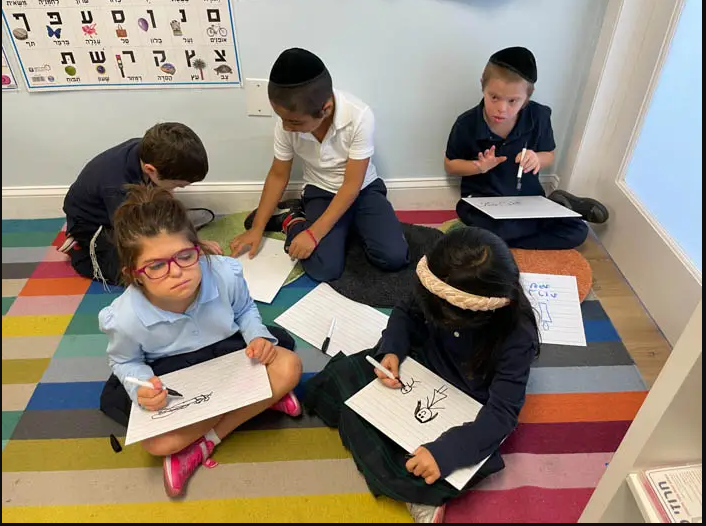
The hard work and determination of two South Florida mothers, along with support from Teach Florida, led to the launch of JEMS Academy in North Miami Beach. The school serves children with special needs, many of whom attend using Florida’s Family Empowerment Scholarship for Students with Unique Abilities.
Like many worthy endeavors, it started with two determined moms.
Both Avigayil Shaffren and Shoshana Jablon had children with unique abilities. Shaffren’s son was born with cerebral palsy, which affected his left side. Jablon’s son was born with Down Syndrome and later was diagnosed with attention deficit hyperactivity disorder.
Shaffren’s son attended a charter school for the first four years of his life. The program had its benefits, such as therapies and personal attention that she says he wouldn’t have received anywhere else. But when it came time to start kindergarten, she said, “it was awful.”
Despite her son being assigned a “shadow,” he made little progress. An evaluation turned up other diagnoses, which further complicated things. School officials gave Shaffren a choice: she could have her son repeat kindergarten or place him in a specialized school that would meet his educational needs.
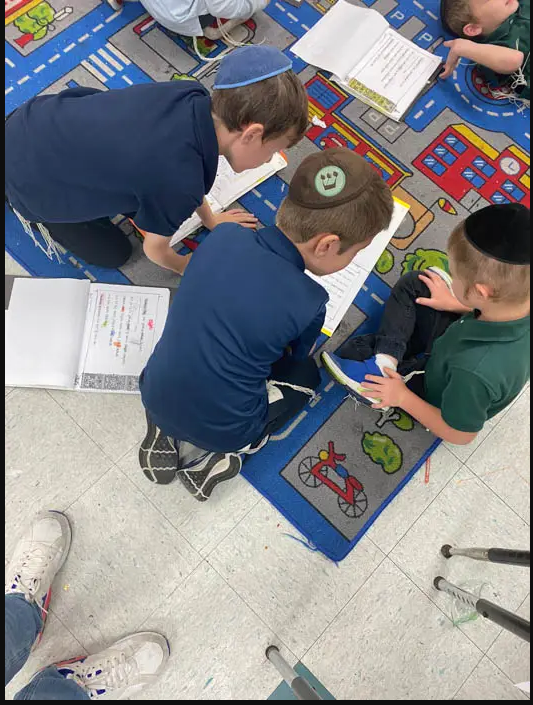
JEMS students, whose unique abilities vary widely, frequently help each other with assignments.
The Shaffrens chose to have him repeat kindergarten, but Shaffren, who is Orthodox Jewish, was concerned about her son’s religious educational needs, especially as he got older. Shortly thereafter, she was laid off her job. Though three months of unemployment brought hardship, it also offered an opportunity.
Shaffren turned to her friend, Jablon, who is also Orthodox Jewish, and said, “That’s it; we’re done. We need to create this school, and we’re not done until we create it.”
Shaffren spent the time she would have devoted to a paying job researching Jewish special education programs, such as OROT, which is the Hebrew word for light. Based in the Philadelphia suburb of Melrose Park, OROT (pronounced OR-oh) partners with four Jewish day schools to provide an integrated education for diverse learners.
Another was SINAI Schools in New York, which is based on a similar model as well as JEWELS, or Jewish Education Where Every Learner Succeeds, a Baltimore program that incorporates therapies into the school day.
Shaffren and Jablon developed a business plan, which Shaffren felt at the time was “a house of cards that was falling apart.”
But, through hard work, determination and support from Teach Florida, they opened JEMS Academy in a building across the street from its umbrella school, Toras Chaim Toras Emes in North Miami Beach.
“It was a miracle,” Shaffren said about the process, which the women said they completed right before the new school year was about to begin.
Though Shaffren’s son was able to start first grade and continue in the umbrella school, she continued to support JEMS, which stands for Jewish Education Made Special. This past year, JEMS opened its doors with five students.
Of those, four received the Florida Family Empowerment Scholarship for students with Unique Abilities. The fifth student had applied but was on the waitlist. The founders say they expect that student to be awarded due to the additional funding and higher growth rates that state lawmakers allowed this year in HB 1.
According to Jablon and Shaffren, the students’ unique abilities vary widely. Staff members, who have advanced degrees in special education, personalize education to best fit each students’ needs. JEMS also provides onsite therapies. Jablon’s 10-year-old son, Nesanel, receives occupational and speech therapies there. The founders are seeking to add a Hebrew reading specialist and build a sensory room.
You can see a video of a typical day at JEMS here.
“It’s mushrooming, really growing,” Jablon said. “We just keep adding things as we see what the needs are.”
The program also includes a music program, which Jablon said serves as a type of therapy for students, some of whom experience anxiety or have autism. A staff member also brings a therapy dog.
“They really act as a cheering squad for one another,” she said. “If someone does something inappropriate, the whole class stops.”
She said it’s a real opportunity to develop social skills because they see how to act with one another.
But one of the biggest benefits to the arrangement has been the opportunity for students at both schools to interact and bond. On Fridays, JEMS students join the Toras Chaim Toras Emes students at an assembly to end the week.
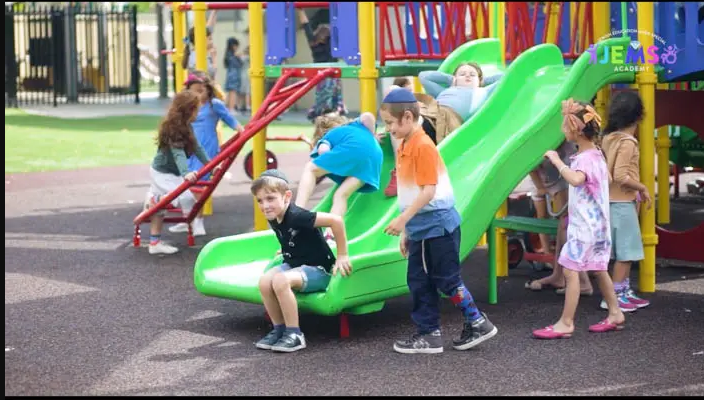
JEMS students join their umbrella school classmates from Toras Chaim Toras Emes, located across the street, for recess.
Girls from the umbrella school also visit and engage the JEMS girls in educational games and performances. Boys from Toras Chaim Toras Emes help put on Bible studies and play games and sports with the JEMS boys. JEMS students also participate in recess at the umbrella school’s playground.
Those interactions have enriched both groups, the JEMS founders say.
Jablon said she hopes getting the word out about what JEMS offers will encourage more parents to consider enrolling their children.
“In general, with parents of students of special needs, moving kids from one school to another creates a lot of instability. So, parents keep their children in programs even if they’re not that great.”
Jablon said the Miami-Dade County School District has been helpful by issuing timely individual education plans for students seeking to go JEMS so they can qualify for the Florida Family Empowerment Scholarship for students with Unique Abilities.
JEMS already has opened a second classroom. The founders hope to expand the program at other Jewish day schools as the original students get older and need to attend single-gender classes as Orthodox Judaism requires. The founders also hope to be able to teach general life skills so the students can be as independent as possible as adults.
Says Jablon: “We want our kids to exist in the larger scheme of people and activities and potential jobs in any capacity they can muster.”
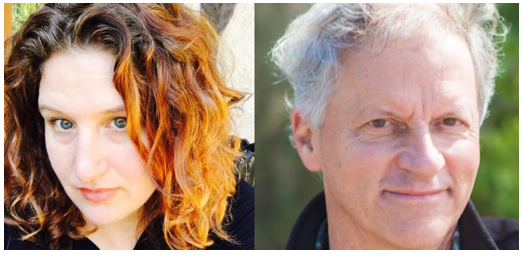
Samantha Cook and Andy Calkins, in their own ways, have been interestingly prophetic in predicting the future of education.
Silicon Valley homeschool mom Samantha Cook had this to say to Wired magazine in 2015:
“The world is changing. It’s looking for people who are creative and entrepreneurial, and that’s not going to happen in a system that tells kids what to do all day … So how do you do that? Well, if the system won’t allow it, (and) as the saying goes, if you want something done right, do it yourself.”
Her take was prescient considering the subsequent rise in home-schooling in her area. Silicon Valley.
A follow-up and spot-on K-12 prediction came two years later from Andy Calkins of Next Generation Learning Challenge published in Education Next, who spoke of the pent-up demand for innovative educational opportunities.
“It wouldn’t surprise me if, five to 10 years from now, everyone looks at this and thinks, ‘That grew a whole lot faster than I thought it could.’ There is a slice of the market that is not being served by public education. They’re saying, ‘The public schools don’t work, [and] I can’t get into the charter schools.’ ”
Today, we are on the lower end of five to 10 years later, and the “that grew a whole lot faster than I thought it could” is indeed a thing.
If we unpack the statement a bit, we see that the “I can’t get into the charter schools” sentiment reflected a broad inability of the charter movement to match demand for seats with supply, resulting in waitlists. The problem has gotten worse rather than better since 2017.
It also is worth noting that private choice programs did not merit mention in the statement at all, an implicit indictment of their limited scale.
America’s reactionary K-12 preferences community successfully multi-tasked for 30-plus years, undermining state accountability systems while simultaneously keeping choice programs largely contained. Most states passed charter and/or private choice programs but only rarely, even in combination, did those programs prove even moderately disruptive to the status-quo.
The demand for choice exceeded the willingness of the political system to provide choice, resulting in ubiquitous waitlists. Families, as Cook and Calkins both noted, began making their plans accordingly with a do-it-yourself spirit.
In 2023, limited choice programs are “out” and universal programs are “in.” Lawmakers obviously have gotten the memo that their constituents want choice, and they want it now. As Samantha Cook sagely noted, the world has changed, and our system of education must adapt.
You don’t need to be gifted with prophetic powers to surmise where things are going next.

In the expanding world of interactive video learning, New Jersey-based Shooting for the Stars employs creative tutors located in Florida and Texas who instruct students hundreds, if not thousands, of miles away.
School choice is plenty of things, and most of them involve helping students find the manner of instruction that suits them best.
If that were all school choice was about, it would be sufficient. But wait. There’s more.
School choice, it turns out, also presents opportunities for teachers, opportunities that are limited only by their imaginations, resolve, entrepreneurial spirits, and, occasionally, their ability to weather a punch.
Christina Jones effervesces with all these remarkable qualities, plus at least two more that, it seems, are not unrelated: She is a second-degree black belt in Tai Kwan Do, which, at least in part, helped her win the heart of a web-design genius. (More on that in a moment.)
Six years out of West Virginia University with a master’s degree in elementary education and a bachelor’s in special education, Jones found herself stretched to the brink of despair by the shifting demands of a private school in Mountain Lakes, N.J.
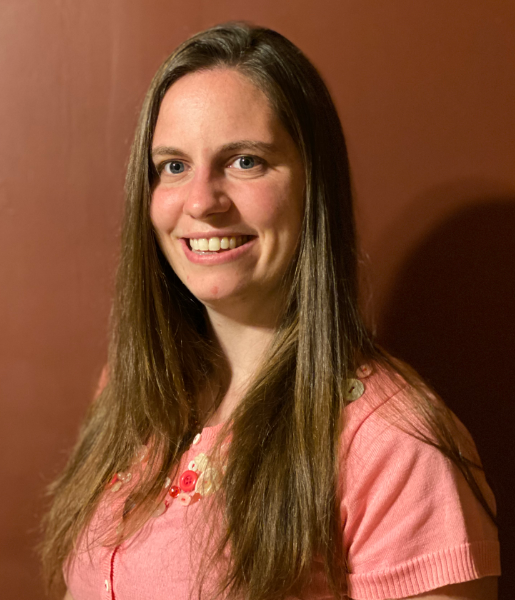
Christina Jones
“I taught third through eighth grade, multiple subjects, and I just kind of ... I was spread very thin,” Jones says.
But a one-on-one summer tutoring gig sparked a torch that illuminated a new course. Jones advertised and picked up a handful of student clients, prompting further inquiries. This, she began to think, could work.
Jones launched Shooting for the Stars Tutoring in 2018, determined to be a maker of differences.
Beyond the practical — earn enough to stay out of poverty — her goals were twofold: teach only in those areas where she was certified and recruit like-minded instructors to be part of the Shoot for the Stars team.
Jones reasoned she couldn’t be the only teacher out there who was dissatisfied with the unpredictability of her role from one year to the next, was nudged by administrators into subjects beyond their expertise, or whose carefully crafted lesson plans were made obsolete by shifting demands.
Then again, others might simply want to earn more or stretch their wings.
Steven Craw, who teaches engineering at Western High School in Davie, Fla., finds himself among the latter — an instructor looking to add to his bottom line while dipping deeper into his bag of certificates.
With Shooting for the Stars, Craw coaches high-level mathematics and physics … to students in New Jersey. The best part: Jones finds clients for him.
“I’m not looking to the customers who deal with websites; I’m not dealing with Facebook,” Craw says. “I’m not a social media guy. I don’t post anywhere, so Christina does that, and it helps me.”
So, about that.
While Shooting for the Stars continues to do most of its marketing via Facebook, there is a totally cool, professional website in the works, thanks to her new husband, Istanbul-born and New Jersey Institute of Technology-trained Arif Gencosmanoglu.
The pair met in a Morristown, N.J., gym (Jones also teaches Tai Kwan Do), and it wasn’t long before Arif discovered Christina’s love language: “I’m a software engineer with a can-do attitude, and I can build for you a world-class website.” (It sounds more romantic if you imagine the line delivered by Turkish actor Can Yaman.)
Shooting for the Stars understandably thrived through the pandemic shutdown that saw an eruption of homeschooling and learning pods. Jones herself added a full year of teaching third graders in a pod.
When the schools reopened and most of the kids headed back to traditional classrooms, Jones returned to the business of building her business.
“I persevere,” she says. “The Wright Brothers never gave up when they had failures; they kept going, and that’s me, too. You have to prove to me that I can’t make something work.”
It’s not like she’s operating in the friendliest environment, either.
New Jersey offers limited school-choice options. Some districts allow students to choose among public schools. The state also offers charter schools and STEM magnets, as well as a starchy homeschool alternative.
However, the Garden State is a laggard in at least two areas. New Jersey lacks a free online full-time school option. And there’s no public funding for students seeking alternatives to public schools, even though the average private school tuition — $14,322 for elementary schools, $19,522 for high schools — is lower than the state’s third-in-the-nation per-pupil spending ($20,021).
Jones notes those restrictions playing out at the local level.
“I did see a lot of fighting with the [Morris County] school district,” Jones says. “There were kids who had lawsuits … against the school district because [the district wasn’t] going to pay for the kid to go to the private school.
“Most of the kids I’ve seen seem to have some type of learning issue where their needs are not being met in the public school, and private school is expensive.”
Jones and her Shooting for the Stars team attempt to fill that gap. “A lot of the kids that are seeking our tutoring is because the school is not meeting their needs,” she says.
Homeschoolers, too, provide target-rich environments. But scoring those clients brings challenges of its own, chiefly making sure she has instructors qualified to make the students’ experiences worthwhile.
“I’m looking for tutors as well,” she says.
In this age of interactive video learning, location doesn’t matter. Shooting for the Stars already has tutors located in aforementioned Florida, as well as Texas, who instruct students hundreds, if not thousands, of miles away.
What she hopes to assemble is a team of tutors “who can address every single different need — but not so many that we lose the feeling of having a family orientation to the business.
“If I have a parent reach out to me, I don’t want to turn them away. … I always want to be able to say, ‘Hey, I have a tutor for you!’ ”
After all, if you’re shooting for the stars, you can’t afford to say no.

At the start of the pandemic, team members at The Discovery Center opted to serve the community in person rather than wait out COVID-19 at home. They rapidly built out classrooms and turned the center into a COVID-safe, licensed emergency childcare center capable of caring for hundreds of children a day – and then it became so much more.
Two years ago, as the coronavirus pandemic began shuttering childcare centers nationwide, a Springfield, Missouri, center that had been providing STEM education activities faced a critical decision.
Should it close, or should it attempt to fill the area’s childcare gap?
The team at The Discovery Center voted to stay open. Within 48 hours, it transitioned its 60,000-square-foot building into a support center for the children of the area’s essential workers. As the pandemic raged, the center served the educational needs of more than 1,500 students and provided more than 50,000 free meals and snacks.
“In five days, we went from a science center to licensed emergency childcare,” executive director Rob Blevins told OzarksFirst.com. “We took the kids right then and there. It was one of those moments where we felt it was our patriotic duty to take these kids and let health care workers do their job.”
Then The Discovery Center pivoted to become something more.
It poured its 20 years of experience in STEM education into creating hybrid learning support in a student-centered environment to benefit children who struggle in a traditional school setting. The daycare operation expanded to in-person learning pods and donated supervised space for students using the district schools’ remote instruction programs. A preschool was added, along with a science museum for K-8 students.
Combined, these efforts earned The Discovery Center $1 million, the grand prize in the inaugural STOP Awards, created through a partnership between Forbes and the Center for Education Reform. The awards program recognizes education innovators, providers and entrepreneurs who continued to support underserved communities during the pandemic.
The Discovery Center’s efforts aligned with the very essence of the STOP Awards: Sustainable, Transformational, Outstanding, and Permissionless – four words that form the program’s acronym. Four finalists aligned with each of the four pillars.
Louisiana Key Academy in Baton Rouge was recognized for providing a sustainable education during the pandemic to its 441 students with dyslexia. The public charter school uses evidence-based instruction to serve its population, 70% of which are minorities and 60% of which are economically disadvantaged.
Dallas Education Foundation shone in the Transformational category, fighting the impact of COVID with 21st century technology and creating a metaverse of innovations and opportunities for the district’s 145,000 students.
CARE Elementary School in Miami was recognized in the Outstanding category. The no-cost private school reopened quickly to in-person learning, with state-of-the-art technology powering dozens of learning pods.
The entrepreneurial start-up Rock by Rock, developed in partnership with educators nationwide, was the finalist in the Permissionless category. Rock by Rock provided thousands of underserved families whose children lacked effective education during COVID affordable, relevant, and engaging materials in a homeschool environment that made learning come alive.
All four finalists plan to use their award money to continue pushing the envelope, moving forward in even more inventive ways to provide additional education choices for families. But the grand prize winner, The Discovery Center, has especially big plans.
Among them: expanding current offerings to become a full-time school for hundreds of students with the addition of a STEM-themed playground and then scaling and disseminating that model to its network in more than 27 rural counties over 30 states. The center also hopes to expand classes to high school freshmen and sophomores.
“Educators, whether they’re homeschool, public school, charter school, private school or pod school will be able to provide the type of knowledge we want to provide our parents as far as how their kids are attaining grade level in real-time,” executive director Blevins said. “When you get a grade card, that’s a backward look of how things went this semester. We want to provide a real-time look so you can look forward and say, ‘Are we on target to hit our grade-level standards this year?”
Forbes and the Center for Education Reform recently announced a second round of STOP Awards, which will offer more than $10 million in grants.
“In the wake of COVID-19, educational declines and mental health challenges, the 2022 STOP Awards are dedicated to celebrating and expanding the education providers who are going above and beyond for their students,” said Forbes chief content officer and editor Randall Lane. “We’re proud to continue our partnership with the Center for Education Reform and help launch the STOP Foundation 4 Education to honor education innovators who are creating new pathways for underserved students across the country.”
Center for Education Reform CEO founder and CEO Jeanne Allen knows that overcoming education deficiencies wrought by the pandemic will continue to be a huge undertaking.
“While COVID is not nearly the threat it once was, challenges remain,” Allen said. “In 2021, we uncovered hundreds of pioneering education providers who were defying the odds and serving as a beacon for what education can and should look like, and I can’t wait to promote the efforts of more outstanding leaders in 2022.”
Applications, limited to U.S.-based individuals and groups who serve K-12 students, are open through July 15. For more information about the STOP Award, how to apply, and the education providers who made last year’s list, click here.
 Editor’s note: This commentary from Kerry McDonald, a senior fellow at the Foundation for Economic Education and an adjunct scholar at the Cato Institute, appeared Monday on forbes.com.
Over the past two years of social and economic disruption, U.S. education has experienced an extraordinary transformation that can best be defined by 3 “Es”: Empowerment, Exit and Entrepreneurship.
Empowerment
Beginning in the spring of 2020, and prompted by widespread school closures and remote schooling, parents began to reclaim control of their children’s education. For some, getting a close-up look at their children’s classrooms and curriculum over Zoom was the prompt they needed to make a change. For others, they may have long pondered a different learning environment for their children but lacked the catalyst to take the leap. The education upheaval of 2020 provided that catalyst.
By summer 2020, “pandemic pods” emerged, as parents began taking their children’s education into their own hands to confront the uncertainty of fall schooling plans. These spontaneous, parent-driven learning communities brought together small groups of local children in someone’s home, often with a hired teacher or with parents taking turns facilitating a curriculum.
Exit
With most American children beginning the 2020-21 academic year remotely, many parents exercised their newfound empowerment through exit. Some shifted their children into private schools that were more likely to reopen for in-person learning than district schools in certain locations. Others delayed early school entry for their preschoolers and kindergarteners.
Many parents left schooling altogether, pulling their children out of school for independent homeschooling. The U.S. Census Bureau found that the homeschooling rate doubled from the spring of 2020 to the fall of 2020, with more than 11 percent of the U.S. school-age population being homeschooled at that time.
To continue reading, click here.
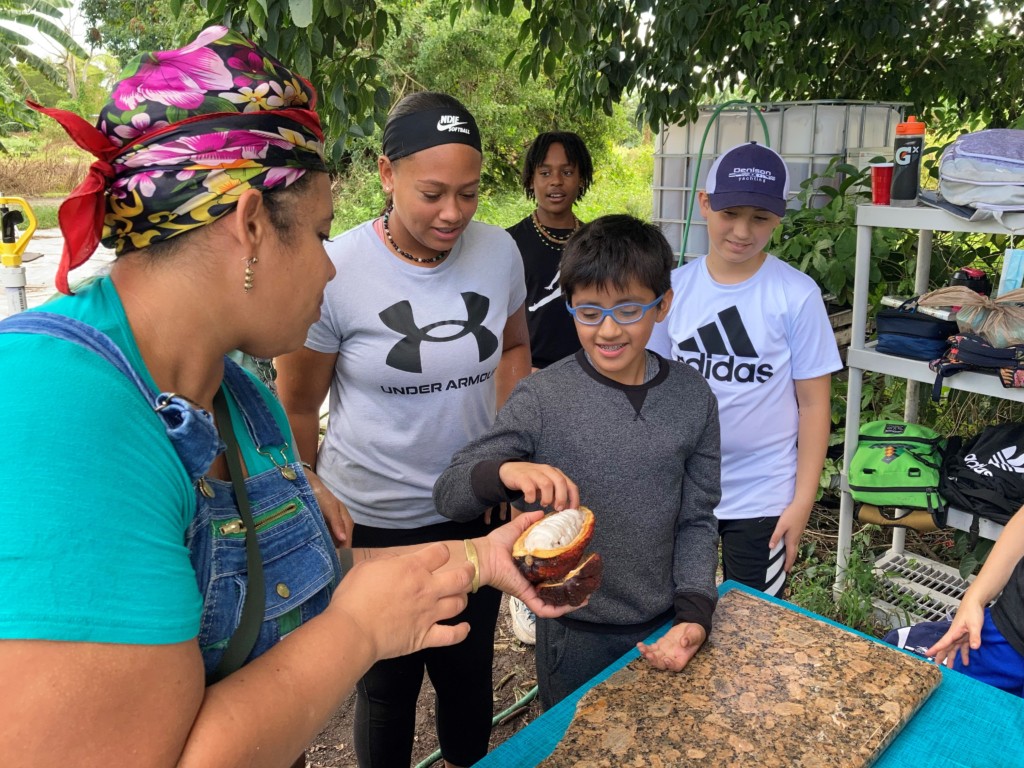
Colossal Academy director Shiren Rattigan, left, who taught in public and private schools for a decade, launched her school in 2020 to make education better for all students.
DAVIE, Fla. – Two million people are crammed into Broward County. Two hundred and sixty thousand students are enrolled in its public schools. Big school districts all over America look more or less like the really big school district here, and they have for a long time. But if you want to see where things are headed, leave the beaten path near Flamingo Road – and think small.
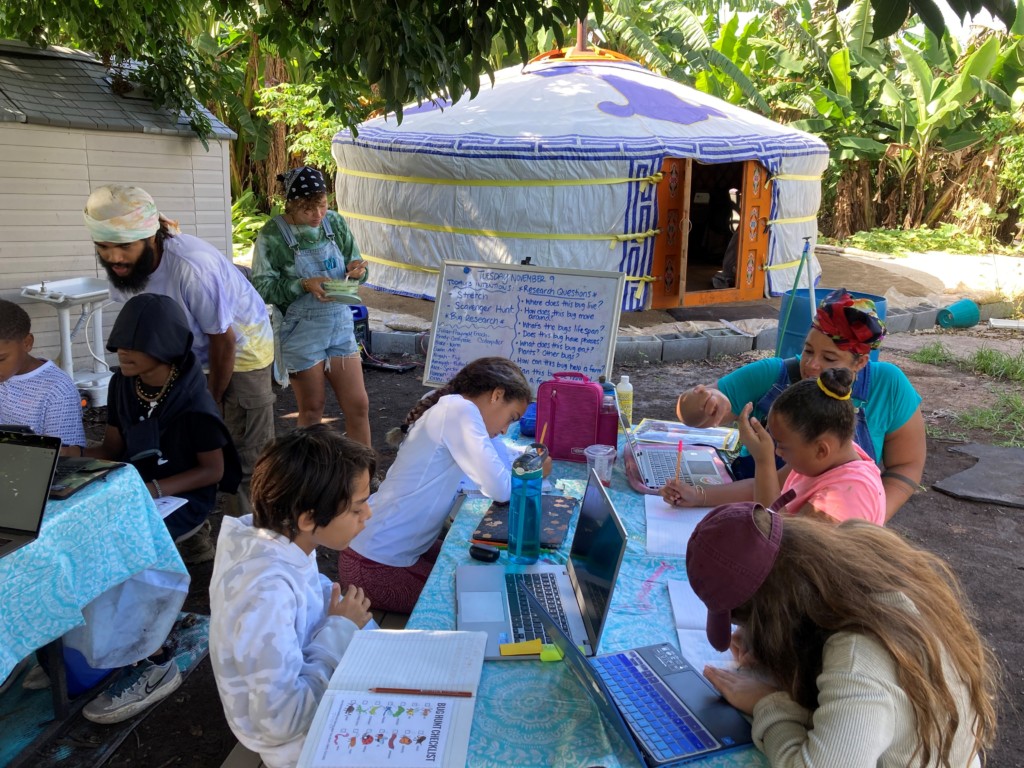
There’s no sign. Just a dirt road into the green. Follow it past the banana trees, the rows of callaloo, the clumps of sugar cane. Stop when you see 10 kids sitting with laptops in the shade of a bishopwood.
By 10 a.m. on this November morn, the multicultural group of middle-school students who attend Colossal Academy – that’s it, all 10 of them – have already workshopped with the Miami Compost Project and gone hunting for millipedes. Now they’re researching an insect of their choice for a presentation. In an hour, they’ll break for chicken curry whipped up by the Jamaican woman who manages the farm. But before they do, their teacher, Shiren Rattigan, will surprise them with a cacao pod – and the promise of a visit to a chocolate factory.
“This,” Rattigan said, as students washed their own bowls and forks after lunch, “is what education should be.”
“I’m making it up as I go, but I’m having so much fun doing it,” she continued. “And really, what was the choice?”
Rattigan started Colossal Academy in 2020. The daughter of a truck driver and a retired public-school teacher, she decided to take the plunge after a decade teaching in public and private schools, in models that, in her view, didn’t work for students or teachers.
To go big, she concluded, she had to go small.
Or, to flip back to the name, going small, she said, “would be colossal.”
Colossal Academy has won approval to participate in Florida’s choice scholarship programs, which will open its offerings to more families.
Rattigan’s eclectic creation is not a farm school. Students spend a few hours a day here three days a week. Yes, they’re growing everything from aloe to jalapenos. Yes, the first image on the website is a bunch of green bananas bobbing Zen-like in the breeze. But there’s so much more going on. How the farm came to be part of the school might help explain how Colossal Academy works.
Rattigan and her students were doing cooking lessons at their home base in Fort Lauderdale, which they share with another micro-school. Chats about ingredients led to chats about history, geography, culture, trade. As students became more immersed in food, they asked if they could grow their own. Rattigan checked with the parents. One of them suggested the hidden farm. Rattigan leased a plot.
The informally named Mack’s Farm has been part of Colossal ever since.
The farm doesn’t have restrooms, but no prob. The students figured out how to make compostable toilets.
Rattigan also bought a Mongolian ger in case it rains. Or if students want a cool, indoor space to work.
None of this fits into anybody’s box.
Colossal Academy is big on hands-on learning, project-based learning, student-led learning. It’s a little bit crunchy and, at the same time, serious about tech and entrepreneurship. Students take math and language arts classes through Florida Virtual School. They’re also part of Surf Skate Science, a home-school co-op that is a delight in its own right. As other micro-schools and co-ops emerge from Florida’s choice-rich soil, Rattigan said, more partnerships like this are inevitable.
The best thing about Colossal, though, is students, parents and Rattigan have the power to change it up whenever and however they want.
Interview a geneticist? Why not?
Grow and sell strawberries? Project underway.
Learn to take photos with drones? Rattigan landed a grant to do just that.
“I can just really customize and personalize,” she said. “I can meet the child where they’re at, and where the communities are at.”
Tara Johnson said Colossal Academy turned out to be perfect for her sons, Brody, 12, and Casey, 9. Brody experienced some bullying in prior schools, which led to him building a bit of a wall around himself, emotionally and academically. Johnson knew Rattigan from one of Brody’s prior schools, so when she heard Rattigan was starting her own, she signed her boys up. Colossal turned out to be a “10 out of 10,” she said.
“I call her Mary Poppins,” said Johnson, a stay-at-home mom. “It’s just fun and exciting, like education should be. This is our dreams manifested.”
Last year, when Covid-19 forced distance learning on most schools, Colossal Academy began participating in an online forum where students from multiple countries craft solutions to real-world problems. In one case, the problem was how to keep donkeys on farms from being so bored they hurt themselves. One of the students at Colossal proposed a device like the 1970s electronic game Simon, which allowed the donkeys to mash different buttons in return for food. Brody designed what Rattigan described as a “gobstopper meets a pinata,” a bag of carrots that would hang in front of the donkey until the donkey figured out how to chew through the bag and release them. The idea behind both potential remedies was to keep the donkeys’ brains engaged. “Brody loved it,” Johnson said. “He loves puzzles.”
Given Brody’s penchant for computers, Rattigan also steered Brody to online cyber security classes. He’s on track to earn enough credentials to be certified as a cyber security specialist by the time he is 14.
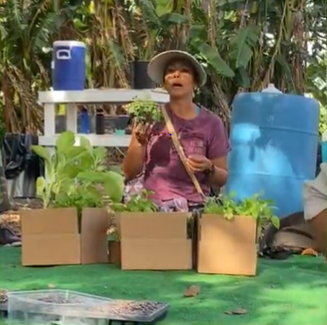
Colossal Academy students engage in their own education through hands-on learning experiences and project-based approaches.
Rattigan said three things led her down this path. A traditional school didn’t work for her when she was a student and struggling with dyslexia. It’s not what she wanted for her own kids. (Rattigan’s two youngest are in another micro-school, while her oldest, who has special needs, is in a district school.) And it didn’t work for her as a teacher.
In public school, “I was dealing with 150 kids,” she said. “How do you connect?”
Pay was a factor, too. Tuition at Colossal is, for now, $12,500 a year. That’s 15 percent more than the most recent estimate for district per-pupil spending statewide, but less than the $17,000+ the Broward district will spend this year. “All I needed to make my former salary,” Rattigan said, “was three students.”
Other pieces for Rattigan’s vision are coming into place.
Colossal recently won approval to participate in Florida’s choice scholarship programs, which means it will be accessible to an even broader set of families. “I want the school to be diverse and equitable,” Rattigan said. (Most of those programs are administered by Step Up For Students, which hosts this blog.)
The only downside may be a longer waiting list. Colossal has six students in line, and Rattigan is still thinking through how to grow.
On the flip side, Rattigan said, there’s no reason other teachers can’t do what she’s doing.
“If you want the freedom,” she said, “it’s there.”

