Florida Virtual School has the authority to sue to protect its trademarks, the state Supreme Court ruled Thursday.
The decision is the latest twist in a long-running legal battle between FLVS and online education company K12, Inc., Florida's two largest players in online education.
FLVS sued its rival provider for trademark infringement in 2011.
The suit argues K12 used names like Florida Virtual Academy and Florida Virtual Program, which were too similar to Florida Virtual School and caused "confusion" in the online education marketplace. As noted in this summary of the case by Education Week, however, K12 uses the name "virtual academy" in other states.
K12 argued the state virtual school did not have the authority to sue to protect its trademarks, since Florida law gives that authority to the Department of State. A federal appeals court asked the state Supreme Court to resolve that issue.
In Thursday's unanimous opinion, justices said Florida Virtual School has the power to sue to protect its trademarks and other intellectual property because, unlike some other government entities, state law gives FLVS all the powers of a corporation.
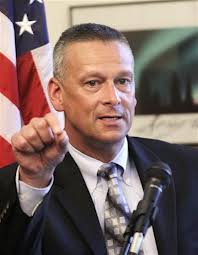
Indiana State Superintendent Tony Bennett
Indiana: The race for state superintendent is a referendum on the direction of education reform, including expanded school choice (Associated Press).
Florida: The state's teachers unions are among the weakest in the nation, according to a new Fordham Institute report (Orlando Sentinel). The Duval County school district agrees to settle with a proposed virtual charter school, run by online provider K12, that it had initially opposed (State Impact Florida).
Washington: Education leaders from around the state sign a letter saying they oppose the charter school initiative on Tuesday's ballot (Seattle Times).
Tennessee: Education Commissioner Kevin Huffman, also a member of Jeb Bush's Chiefs For Change, urges parents to use his state's latest education report card to ask questions and consider options (The Tennessean). Groups pushing for education reform and school choice spend heavily in campaign contributions (The Tennessean).
Michigan: Critics question the state's decision to okay new charters from companies whose existing schools are not performing well (Detroit News).
Wisconsin: One school district hopes to stem declining enrollment by expanding online offerings (Oshkosh Northwestern).
Maine: Five proposed charter schools apply to open next year (Kennebec Journal).
Georgia: A lawsuit claims language in the proposed charter school amendment is purposely misleading (Athens Banner Herald). Students from historically black colleges in Atlanta rally for the amendment (Atlanta Journal Constitution.)
Amendment 8 debate. Video at the Naples Daily News. Featuring Jim Towey, Ave Maria University president, and Howard Simon, Florida ACLU executive director. The Naples Daily News also runs this op-ed in favor of 8.
Drug-sniffing dogs. The U.S. Supreme Court considers arguments in two cases, including one in Florida, with potential implications for the use of drug-sniffing dogs in public schools, reports Education Week.
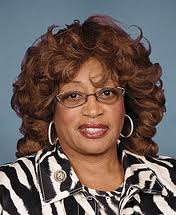
U.S. Rep. Brown
Request for investigation. U.S. Rep. Corrine Brown, D-Jacksonville, wants an investigation of online education provider K12, reports StateImpact Florida.
Online growth. Lake County appoints its first virtual school principal, reports the Orlando Sentinel.
Growth in tax credit scholarships. From redefinED (with speadsheet showing district-by-district growth over the past eight years). From Gradebook.
Vouchers and the Florida Supreme Court. Critics of the three justices up for a merit retention vote say their 2006 ruling on vouchers is evidence of liberal judicial activism, the Washington Post reports in a broader story about the campaign against the justices.
If it feels to the education reformer that The New York Times and The Miami Herald have made grand attempts to gore the growing presence of for-profit education providers, it's because they have. But there are many false assumptions that lead the critic to suppose these are the transgressions of the "liberal media." If choice advocates and education entrepreneurs want to overcome this adversity, it's important to know what factors lead to headlines like "Cashing In On Kids."
It first helps to survey a typical newsroom, and I don't mean a survey of the political inclinations of its inhabitants. In many ways, the liberal-conservative chasm is irrelevant to what sparks investigations like we saw of K12 Inc. in the Times. Consider the newsrooms that shaped Times reporter Stephanie Saul -- The Clarion-Ledger in Jackson, Miss., The Plain Dealer in Cleveland and Long Island's Newsday. The traditional "beat" structure of these newsrooms and their "City Desks" has remained largely unchanged for decades, and it is centered around the coverage of public institutions -- public schools, city councils, police departments and statehouses.
Now Saul is no "beat" reporter, but most daily and metropolitan newspapers employ an education reporter, and that means those reporters invariably cover their local school boards, whether they're in New York City or New Baltimore, Mich. These reporters generally spend many days of the week in school district offices, talking with superintendents and scanning the e-mail correspondence of school board members. If they're doing their job right, these reporters are applying a healthy dose of skepticism to every message they hear or read from these sources. But that is beside the point. They are immersed in issues and developments that are in the public interest and they are writing from public institutions.
In this world, for-profit education providers are nothing less than an insurgence into what is traditionally considered "public." Their operations are, naturally, opaque, whereas newspapers demand sunshine -- if not for their stories then for the public for whom they claim to write. This conflict informs a bias that is nearly absolute among reporters: A profit-making school or university is concerned primarily with making a profit; the education of its children is secondary.
I suffered from this bias myself when I was a reporter covering education for nearly 10 years at newspapers in Michigan and Florida. I was hardwired, just like all my colleagues, to examine any public policy or proposal that had the ultimate effect, however insignificant, of putting profits in someone's hands. So, of course, the burgeoning sector of for-profit higher education opened several avenues for inquiry: Who was attending these schools, and how were these colleges recruiting these students? How much of the college's revenues came from publicly backed student loans, and what was the institution's loan default rate? And, perhaps the juiciest question: What were these companies paying in campaign contributions to elected officials?
I chased stories of students who filed lawsuits against these schools because they couldn't transfer the credits they earned to more traditional institutions. I covered attorney general investigations that found heavyhanded recruitment of underqualified students and that these colleges overpromised the return on the students' investment. This is the prism through which I viewed for-profit education and its unprecedented growth. And I was not alone.
This does not condone the worst of Saul's reporting of K12. The Times story suffered from a striking lack of balance, and there was little that took the reader to the ideal path toward greater accountability and higher standards in online learning. But it does show that as for-profit companies increase the size of their footprint by investing in charter school management and online education, the scrutiny they face will be heightened for the ages of the children they serve and for the sweep they bring into primary and secondary education.
I have since left newspapering to help develop the policy and communications initiatives for a Florida program that administers a publicly funded private school option to 38,000 low-income children, and I have learned to exercise more nuance and sophistication in our expanded universe of public education. It is unfair to assume that children are being treated with malice by schools that keep one eye on the bottom line, especially when these schools must follow the regulations required of all private providers in any given state. But it is difficult to imagine that the culture in any newsroom will soon be superseded by one that considers how for-profit schools could help us find greater educational innovations with efficiency. So in the meantime, our education entrepreneurs would do well to understand what motivates an enterprising reporter. It may not be the partisan motivations we assume.

