
Does Sen. Bullard, a teacher and local union rep, have a conflict of interest too?
I was a news reporter for 20 years. I appreciate what good journalists do. But I’m often perplexed by the selective scrutiny that permeates so much education coverage in Florida, particularly when it comes to school choice issues.
The latest example: An “investigation” by an Orlando TV station into the "cozy connections" between Florida state lawmakers and rapidly expanding charter schools. WFTV-Ch. 9 raised conflict-of-interest questions this week about lawmakers who work for charter schools and who have backed legislation that generally promotes charter expansion. It singled out incoming House Speaker Will Weatherford, R-Wesley Chapel; Rep. Erik Fresen, R-Miami; and John Legg, R-New Port Richey, a state rep headed to the state senate.
First off, this is old news. The ties between all three lawmakers and charter schools have been well publicized. In fact, they were among a bigger handful of lawmakers cited last December in a front-page Tampa Bay Times piece on the same issue. Curiously, the TV station kicked off its story with the same anecdotal lead as the Times did, one involving Legg and the Pasco County School Board.
More important, the station neglected to mention that a number of other lawmakers have strong if not direct ties to school districts. Sen. Bill Montford, D-Tallahassee, heads the state superintendents association. Former state rep and now Sen. Dwight Bullard, D-Miami, is a public school teacher and local union rep. Two newly elected Democratic state reps, Mark Danish in Tampa and Karen Castor Dentel in the Orlando area, also teach in district schools. Should teacher-lawmakers be voting on state budgets that could affect how much they’re paid? Should they vote on legislation that could impact how they’re evaluated? (more…)
 Amendment 8 goes down. Coverage from Tampa Bay Times, Orlando Sentinel, Education Week, Associated Press.
More money for schools. In Miami-Dade, voters approve a $1.2 billion bond referendum for public schools, the Miami Herald reports. In Pinellas, they again approve a property tax increase aimed mostly at boosting teacher pay, reports the Tampa Bay Times.
Legislative races. In Central Florida, pro-school-choice Democrat Darren Soto wins a state Senate seat, while Democrat Karen Castor Dentel – a teacher targeted by that Jerry Sandusky ad – wins a House seat, the Orlando Sentinel reports.
Florida style reformer loses. Indiana state superintendent Tony Bennett, who championed Florida-like ed reforms and was a member of the Jeb Bush-backed Chiefs for Change, lost re-election in a stunner to Glenda Ritz, an elementary school media specialist. Stories here and here.
F-rated charter schools get another chance. Per unanimous votes Tuesday by the state Board of Education. Coverage from Orlando Sentinel, Gainesville Sun, Pensacola News Journal.
Jury awards charter principal $155 million. From the Miami Herald: “The ousted principal of an Aventura charter school has won a $155 million award in a lawsuit claiming her firing was not only without cause, but ruined her health and career prospects.” More from Education Week.
Criticism of tax credit scholarships. A mother complains about education quality at an Orange City private school that accepts tax credit scholarships, reports wftv.com.
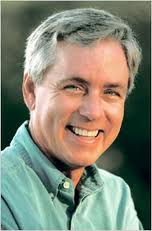 Carl Hiaasen on Amendment 8. He doesn’t like it, says it’s about vouchers. It’s hard to take exception with the legend who created Skink, but for what it’s worth, here again is our take.
A campaign ad that “sounds indefensible.” From the Orlando Sentinel: “A group supporting Republican state Rep. Scott Plakon’s re-election bid is sending last-minute advertisements that attempt to link Plakon’s opponent, Democrat Karen Castor Dentel, to convicted child sex predator Jerry Sandusky.” Castor Dentel, the daughter of former state education commissioner Betty Castor, is a public elementary school teacher who opposed the 2011 law overhauling teacher tenure. Plakon said the ad “sounds indefensible.”
Florida lags with mainstreaming. Students with disabilities, particularly those with autism and emotional problems, are less likely to be mainstreamed in Florida than their counterparts in most other states, the Orlando Sentinel reports.
Charter school applications in Duval. Six more are on the table for a board vote today. Superintendent Ed Pratt-Dannals is recommending four for approval, two for denial, the Florida Times Union reports.
Funding, fairness. In an op-ed for the Fort Myers News Press, Lee County Superintendent Joseph P. Burke says the state needs to restore education funding to 2006-7 levels and suggests charter schools should have to play by the same rules on class-size requirements.
Absentee voter fraud. A school board election in Madison County is behind the state's longest-running case of absentee voter fraud, the Tampa Bay Times reports.
Pity the parent trigger. Its political identity crisis never ends.
In Florida, the trigger erupted in a state House race this week, with a Democratic challenger accusing her Republican rival in an attack ad of voting last spring “to take control of our schools away from parents and teachers, and give it to out of state corporations instead.” This is no surprise, given how effectively Florida critics – including many Democrats – have portrayed the trigger as a spawn of the right.
 But meanwhile, one of the progressive Democrats most closely associated with the parent trigger indicated in an op-ed that he couldn’t support a trigger proposal in Michigan. Why? Because it doesn’t bar for-profit charter schools from being among the parent-picked turnaround options. Ben Austin (pictured here), who leads Parent Revolution, went even further, writing, “Parents must have power over the education of their own children. Profit has no place in that education.”
This guy is a wild-eyed privatizer?
Austin’s comments drew a swift rebuke from the ed policy director at the Mackinac Center for Public Policy, which many would consider conservative: “While the notion that schools should be ‘above’ self-interest and the profit motive has a certain raw populist appeal, a moment’s reflection reveals it to be ridiculous,” wrote Michael Van Beek. “Should schools also purchase only textbooks produced on charitable printing presses? Should their cafeterias only serve food grown on government farms?”
Beek also criticized the trigger because it’s limited to parents in the poorest performing schools. All parents, he wrote, should have access to this power. (more…)

