Tax credit scholarships. Creative Loafing gives Charlie Crist's "evolution" on tax credit scholarships some ink after the Miami Herald story about his refusal to denounce the FSBA/FEA suit to kill them.
 School choice. Private schools still serve the public good, writes William Mattox of the James Madison Institute, in an op-ed for Hernando Today. Watchdog.org notes that Fund Education Now's Kathleen Oropeza filed a motion to have the judge in the adequacy/funding/choice suit recuse herself because of Catholic ties, but doesn't note the judge granted the request.
Charter schools. The state Board of Education is moving ahead with creation of standard contracts for charter schools. Gradebook. Things are quiet in the simmering dispute between the Hillsborough County School District and Charter Schools USA. Gradebook. Duval County School Board members raise concerns about the performance of schools serving at-risk students, including several charter schools. WJCT.
Florida's progress. Florida gets A's in 3 of 11 categories in a new report from the U.S. Chamber of Commerce - in parental options, data quality and academic achievement for low-income and minority students.
School spending. StateImpact Florida writes up concerns that black-owned businesses aren't getting their fair share of contracts from the Miami-Dade County School District.
Testing. The Alachua County superintendent offers qualified support for the kindergarten teacher who refuses to administer a standardized test for diagnostic purposes. Gainesville Sun.
Teachers. Tension continues between the Pasco district and teachers union over planning time. Tampa Bay Times.
9/11. Middle school students in Manatee learn about victim advocate dogs. Bradenton Herald.
 Editor's note: This post first appeared as an op-ed in today's Tallahassee Democrat.
Florida is looking to let 5,700 more underprivileged children attend a private school on scholarship next year, and yet some of the opponents are making it sound like a form of educational Armageddon.
In her Wednesday My View, Fund Education Now co-founder Kathleen Oropeza, whose group plays an important role in pushing for genuine investment in public education, used the Tax Credit Scholarship expansion bill as a rhetorical punching bag. It is “an unprecedented, shameless raid on our most sacrosanct revenue stream — the Florida sales and use tax” or “the largest expansion of private religious-school vouchers in state history” or “sticking taxpayers with the $2 billion tab.” The scholarship program has “zero accountability” and “offers no proof the children are learning.”
These would be heady accusations if they were true. None is.
For the record, the bill that is headed to the House floor will increase the tax credit cap next year, $358 million, by 8.3 percent and by 3.5 percent in the fifth year. For each of the next five years, the cap increase possible under current law would be bumped up by $30 million. Add those all together and you get $150 million, not $2 billion. This bill certainly will help families that have been shut out under the current cap, but it by no means makes history.
The “shameless raid” on sales taxes speaks to a provision that added a sixth tax source against which corporations could claim dollar-for-dollar tax credits. The pool of potential sales tax credits is certainly larger than any of the existing five, but that’s immaterial because the sources are collectively governed by one tax credit cap. Here’s the kicker, though: The sales tax credit has been removed. No bill currently under consideration contains it.
The assertion that there is “no proof the children are learning” ignores the six annual testing reports issued to date by the state Department of Education. Students on the scholarship are required to take nationally norm-referenced tests, and the reports have consistently issued two findings: (1) The students who choose the scholarship are the lowest academic performers from the public schools they leave behind, and (2) scholarship students are achieving the same gains in reading and math annually as students of all income levels. Senate President Don Gaetz has raised a legitimate question about whether scholarship students should take a state, rather than national, test; but the state has plenty of proof about academic performance. (more…)
Critiquing the Florida Formula. Matt Di Carlo at the Shanker Blog is a critic to be taken seriously. In his latest post, he looks at the research that has evaluated different components in Florida’s reform effort, including the competitive pressures from vouchers, tax credit scholarships and charter schools. “As usual,” he writes, “it is a far more nuanced picture than supporters (and critics) would have you believe.”
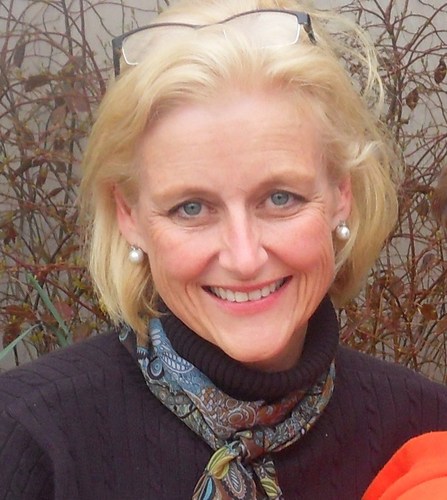
Oropeza
Legislative wish list. What do education groups want from the coming legislative session? Florida Voices asks Ruth Melton at the Florida School Boards Association; Patricia Levesque at the Foundation for Florida’s Future; Mindy Gould at the Florida PTA; and Kathleen Oropeza at Fund Education Now. Lawmakers, Oropeza writes, are out to “starve public education” and have been “intentionally bringing districts to the brink of catastrophe.”
StudentsFirst report card. Coverage from Florida Today, Orlando Sentinel, StateImpact Florida, Education Week, Fort Myers News Press. Sherman Dorn’s take here.
Online testing problems. They’re still affecting the DOE’s FAIR system. Gradebook.
Jeb Bush headed to Arkansas. He’s scheduled to visit for National School Choice Week, reports Arkansasmatters.com.
More Newtown reaction. Tampa Bay Times. Palm Beach Post. Lakeland Ledger. In Lake County, a school board member wants teachers and principals to carry district-purchased guns, reports the Orlando Sentinel. In Manatee, the interim superintendent wants local law enforcement to inspect every inch of every public school campus, reports the Bradenton Herald.
Delinquency. In public schools, a Florida Department of Juvenile Justice report finds it's down by nearly half over the last eight years, reports News Service of Florida. (more…)

Shirley Ford
The mom on stage described how she and other low-income parents rode a bus through the darkness - six hours, L.A. to Sacramento, kids still in pajamas - to plead their case to power. In the halls of the legislature, people opposed to the idea of a parent trigger accused them of being ignorant, of not understanding how schools work or how laws are made. Some called them a “lynch mob.”
Then, Shirley Ford said, there was this sad reality:
“I would have thought that the PTA would have been beside me,” Ford said. But it wasn’t. “I’m not PTA bashing when I say this,” she continued. “To see that the PTAs were on the opposite side of what we were fighting for was another level of awareness of how the system is.”
Ford is a member of Parent Revolution, the left-leaning group that is advocating for parent trigger laws around the country. She spoke last week at the Jeb Bush education summit, sharing the stage with former California state Sen. Gloria Romero and moderator Campbell Brown. Her remarks, plain spoken and passionate and sometimes interrupted by tears, touched on a point that is vital and obvious and yet too often obscured.
Parents are not a monolith.
The divides are as apparent as the different dynamics that play out in schools on either side of town. In the affluent suburbs, a lot is going right. There is stability in the teaching corps. The vast majority of kids don’t have issues with basic literacy. The high schools are stocked with Advanced Placement classes. And there, behind it all, are legions of savvy, wonderfully dogged, politically connected parents who know how to mobilize when their schools are shortchanged.
The view is starker from the other side of the tracks. A parent in a low-income neighborhood is more likely to see far more teacher turnover in her school – along with far more rookies, subs and dancing lemons. She’ll see far more students labeled disabled and far fewer AP offerings. Issues like these plague many high-poverty schools, yet they don’t get much attention from school boards or news media or, frankly, from established parent groups like the PTA. (more…)
 Florida public schools got another clear sign of progress today from a highly regarded, independent source.
Between 1999 and 2009, Florida’s graduation rate climbed from 52.5 percent to 70.4 percent, a 17.9 percentage point gain that puts the Sunshine State third among all 50 states in rate of progress, according to the latest "Diplomas Count" report released by Education Week.
Florida ranked No. 37 among states in 2009, up from No. 47 a decade prior.
The report also shows black and Hispanic students in Florida are graduating at higher rates than like students in other states. The rate for Hispanic students in Florida reached 72.6 percent in 2009, 9.6 percentage points higher than the national average. Black students in Florida came in at 62.0 percent, 3.3 percentage points higher than the average.
The latest numbers are more validation for education reformers in Florida, who have pushed the envelope on standards, accountability and expanded school choice since former Gov. Jeb Bush was elected in 1998. For them, the report’s timing couldn’t have been better. (more…)
 In Florida, we love the bizarre. We cultivate gator-eating pythons and face-eating zombies and transvestites who inject women’s derrieres with Fix-a-Flat. So maybe it makes complete sense that our education debates are so often detached from reality, too.
It’s strange but true: Some of the same people who say Jeb Bush and like reformers are out to trash public schools are the ones, in fact, who often trash public schools themselves. In their haste to throw stones, they put themselves in the position of dismissing the hard work of teachers and the hard-won gains of low-income students.
I know that sounds harsh. But the past few weeks have yielded some notably brazen examples.
In the wake of the FCAT writing fiasco, Fund Education Now, the Orlando-based parents group that has become a grassroots powerhouse, said the test results were “proof that Tallahassee’s ‘education reforms’ are an unmitigated disaster.” The group’s founders said “Bush’s policies have created the impression that Florida schools are failing,” according to StateImpact Florida, a group affiliated with National Public Radio. In an op-ed, co-founder Kathleen Oropeza argued that “fourteen years of unproven, expensive ‘reforms’ have not produced the rumored ‘Florida Miracle.’ “
Meanwhile, Roy Miller, president and founder of the Tallahassee-based Children’s Campaign, also took aim at ed reform in Florida, saying a new report “casts doubts on claims about the progress being made based on FCAT.” An Orlando Sentinel reporter, also inspired, used the report to sarcastically refer to “Florida’s much ballyhooed progress in student achievement.”
Here’s what all these statements have in common: a complete refusal to acknowledge that Florida students have made some of the most dramatic improvements in the nation in the past 14 years. NAEP results show this. AP results show this. Graduation rates show this. In the 1990s, one academic indicator after another showed Florida kids wearing dunce caps in the nation’s academic cellar. But in the last four years no less a respected arbiter of education quality than Education Week has ranked Florida No. 11, No. 8, No. 5 and No. 11, respectively, among all 50 states. It must be emphasized that the gains have been especially strong for low-income and minority students. Reform supporters have rightly lauded the trend lines, rightly noted there are miles to go, and, again and again, rightly thanked the talented, driven teachers who were essential to making it happen.
Some critics, though, act as if nothing has changed – or that things have gotten worse. The statements from Fund Education Now are richly ironic. This same organization has repeatedly painted a portrait of hobbled and dysfunctional public schools. In fact, Fund Education Now is the lead plaintiff in a pending lawsuit that charges the state with failing to live up to its constitutional duty to provide “high quality” schools. This detail wasn’t mentioned in the StateImpact story. (more…)

