From the News Service of Florida:
The State Board of Education could consider changes to the state's standards for student learning as soon as February, Education Commissioner Pam Stewart said Tuesday.
The changes could also result in a re-branding of sorts for what have until now been known as the "Common Core State Standards" -- part of a nationwide movement to set common education benchmarks that have angered conservative activists.
Stewart told the board at its meeting in Gainesville that nearly 19,000 comments had been received since Gov. Rick Scott ordered a fresh review of the standards in September. As part of that effort, three public hearings were held across Florida, and the state accepted comments online.
The Department of Education is working to reach an agreement with a Florida-based researcher to analyze the results of that outreach, with a report on the comments being released in January.
"I think that as we consider moving forward in rule development ... this will provide us the opportunity [so] that we can be moving along that direction with the public having the information available to them from those 19,000 comments," she said.
Common Core has become a political flashpoint in recent months, with tea party activists and others arguing that the standards amount to a federal intrusion in education, despite the fact that the development of the standards was spearheaded by governors and education officials.
The standards have been adopted in some form by almost four dozen states.
Stewart said a final draft of the benchmarks should be in front of the board by the spring, in February or March.
The new standards might also have a new name, said Joe Follick, a spokesman for the department. Given the input that the state has taken and the changes that are likely to be made, "it would be disingenuous to call them common core standards," he said.
Some supporters of the emerging benchmarks have begun referring to them as the "Florida standards." (more…)
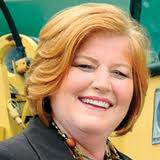
Shanahan
Three years into his term, Florida Gov. Rick Scott should get an “incomplete” grade on education, in part because he is seeking political cover rather than providing clear leadership on key issues, an influential member of the state Board of Education said Thursday.
“His clear and directional leadership is needed to continue to advance Fla’s success,” two-term BOE member Kathleen Shanahan wrote during a live chat on redefinED. “If he continues to seek political cover in creating more noise and not enough clarity he will not gain anyone’s support in his re-election effort.”
Shanahan’s criticism of Scott was not entirely surprising, but more direct than it has been in the past. An ally of former Gov. Jeb Bush, Shanahan has been increasingly critical in recent months of ed policy shifts under Scott, including a “safety net” for school grades and a decision to distance Florida from Common Core-tied tests developed by a respected consortium.
“The teachers are excited about Common Core, the parents need to be educated on why this is the best next step for their kids to succeed and Gov. Scott can lead that effort or sit back and listen his way to complete confusion,” Shanahan wrote.
On other topics, Shanahan said Florida, a national leader in education reform for more than a decade, is at a “tipping point.”
“We are the leader in choice and performance across many forums, we need to challenge ourselves to maintain that,” she wrote. “Having all this noise about we are FOR higher standards, but not clear as to why and what higher standards we support (aka Common Core) is creating and adding to the negative noise and parents are confused and questioning the facts.”
Shanahan also offered her take on what former Republican Gov. Charlie Crist would mean for ed reform if he were re-elected as a Democrat. (The Republican Crist appointed Shanahan to her second term on the BOE.)
“Charlie Crist has stated some regrets in his education selections made when he previously was in elected office. If he acts on those stated regrets, YES there will be a setback for Florida on ed reform,” she wrote. “A key part of Fla's leadership is the fullness of the system we offer, choice, tax scholarship programs, dual enrollment, Florida Virtual School and an excellent public system - all engaged with each other competing for the best education delivery for the kids to excel.”
“I do not think Charlie Crist if he is the Democrat nominee for governor, based on his supporters, would be able to support these programs in their entirety.”
To read the full transcript of Shanahan’s remarks, just check out the live chat below.
Shanahan
A close ally of former Gov. Jeb Bush, Kathleen Shanahan has been a leading voice for education reform and school choice in Florida, arguably the leading state for both. And coincidentally or not, as her second and final term winds to a close on the state Board of Education, she’s been increasingly critical of ed policy shifts under Gov. Rick Scott.
This week, Shanahan voted against another extension of a “safety net” for school grades, calling it “sad” the board was “voting on something that’s going to have no integrity.” She also lit into the Department of Education’s reticence to use the term “Common Core,” dubbing it “sort of mushy.”
What else does the outspoken Shanahan think about the past, present and future of education in Florida? Ask her. She’ll be our guest next week for a live, written chat.
As we’ve said before, the chat is like a press conference with a typewriter. We ask questions. You ask questions. Our guest types furiously. 🙂
To participate, come back to the blog on Thursday, Oct. 24. We’ll start promptly at 10 a.m., so click in to the live chat program – which you’ll find here on the blog – a few minutes before then. In the meantime, if you have questions for Shanahan that you’d like to send in advance, you can leave them in the comments section, email them to [email protected], tweet them to @redefinEDonline, and/or post them on our facebook page.
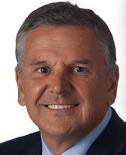
Chartrand
The wild debate about Common Core veered into unexpected territory Tuesday, with the board that governs education in the nation's fourth largest state having a lengthy debate about whether to actually use the term.
In response to mostly-Tea Party-driven objections, Florida Gov. Rick Scott directed the Florida Department of Education to take public input on the standards, both on its website and at three public forums. But the DOE doesn't refer to them as Common Core State Standards, instead describing them on the site as "Florida’s currently adopted English language arts and mathematics standards."
That's technically true. The Florida Board of Education adopted the standards in 2010. But board member Kathleen Shanahan raised objections to the term "Florida standards," saying it could create confusion with the public and "disenfranchise" thousands of Florida teachers who are already teaching Common Core State Standards.
At one point, Shanahan asked the department's communications director if DOE was going to use the term Common Core State Standards in its communications efforts. When she indicated she wasn't satisfied with the answer - "Is that a yes or a no?" - Commissioner Pam Stewart offered that until the department is finished getting public input and making recommendations to the board, "I don't know that we know what we're going to call it."
Shanahan, who has close ties to former Gov. Jeb Bush, continued to object: "We have instructional people in classrooms teaching (CCSS) and we're all of a sudden going to walk it back and be sort of mushy about it until we get more input."
Stewart then explained that technically, teachers in grades K-2 were teaching Common Core this year, but teachers in other grades were still teaching a blend of Common Core and the previous state standards.
Board Chair Gary Chartrand weighed in next: It's okay to say Common Core State Standards.
"We're doing the right thing" by getting public input, he said. "But until such time, I believe Common Core State Standards is not a dirty word. It's something people understand. And it is a lightning rod. I understand. There's a lot of emotion around it. But let's not back away from it."
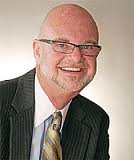
Andy Ford
Not the best fit. Andy Ford, president of the Florida teachers union, says in this Q&A with the Orlando Sentinel that Tony Bennett is “the best fit for the Jeb Bush power structure, but not the best choice for Florida's students, parents and school employees.” Board of Education member Kathleen Shanahan cites the PIRLS results in responding to a critical editorial about Bennett in the Tampa Bay Times.
Conflicts of interest? Three Board of Education members contributed to Tony Bennett’s campaign in Indiana. Gradebook.
Rick Scott is right to require students with vouchers and tax credit scholarships to take the same standardized tests as their public school peers, writes Adam Emerson at Choice Words.
In the wake of Newtown. Security beefed up at Florida schools: Tampa Bay Times, South Florida Sun Sentinel, Palm Beach Post, Lakeland Ledger. Beneath the surface, emotional scars, reports the Miami Herald. State Rep. Dennis Baxley, R-Ocala, and the author of the "stand your ground" law, says schools would be safer if teachers and principals could bring guns, reports the Sarasota Herald Tribune. More from Orlando Sentinel, Fort Myers News Press, Naples Daily News, Florida Today.
Remediation series. StateImpact Florida.
 A Florida Board of Education member proposed today that the state end its textbook adoption process, saying teachers and principals are best equipped to decide which materials are needed to help students.
Roberto Martinez of Miami said the time is right for that step, given Florida’s education reforms - tough standards, a tough accountability system and big changes to the teaching profession – as well as digital learning advances that are easing access to high-quality instructional materials.
“It seems we’re now at the stage - and certainly will be at the stage in the next couple of years - where the teachers and principals working with the districts should then be able to have the freedom to do as they deem appropriate, based upon the exercise of their professional judgment, to use whatever materials they want,” Martinez said at a board meeting this morning. “If they want to use textbooks, let them use textbooks. If they want to use primary source material, fine. Digital? Fine. Whatever it is. But I think we’re at that stage where we can give them that kind of freedom to accomplish the outcomes that we want.”
Martinez said he wanted the board to add elimination of textbook adoption to its legislative priorities for next year. He did not offer a timeline for ending the process, but in a letter to board members Monday he wrote that the Department of Education needed to work with school districts to develop “an effective transition plan.”
“These changes would get rid of the expensive and unnecessary burdens that impede the ability of our teachers and students from accessing the latest, most advanced, and best educational materials, many of which are, or will become, available through digital learning,” he wrote.
Martinez’s proposal isn’t entirely new; last year, the board discussed a plan to make Florida classrooms all digital within five years. Nevertheless, Tuesday’s comments drew an enthusiastic response from fellow board members and two superintendents in attendance. (more…)
 Gary Chartrand, a Jacksonville, Fla., businessman who helped bring a KIPP charter school to Florida and sits on its board of directors, was selected this morning as the new chair of the Florida Board of Education.
Chartrand (pictured here) replaces Tampa businesswoman Kathleen Shanahan, who said she was stepping down as chair to spend more time with her business but will continue to serve on the board.
"I do have a year and a little bit left on my term, but I think it might be time to bring in somebody new from the perspective of going through the search and bringing in a new commissioner," she said, referring to finding a replacement for outgoing Education Commissioner Gerard Robinson, who departed last week.
Shanahan, chairman and CEO of Uretek Florida, a soil stabilization company, added that being BOE chair "was a tremendous amount of time as a sidebar. And you know my little business, which when I first started a year ago was just Florida and now eight states and possibly growing to another six to eight states by the end of the year, it's a time constraint."
Chartrand has earned a reputation as an education reformer in northeast Florida. He led an effort to bring Teach for America to Jacksonville public schools. He and his wife also contributed $1 million to bring the highly regarded KIPP charter network to Jacksonville.
He and other board members praised Shanahan's leadership at this morning's meeting. But, he added, "If the board is looking for me to take the chairmanship job, I will do it, I accept. I take this seriously."
Patricia Levesque, executive director of Jeb Bush's Foundation for Florida's Future, released a statement immediately following the meeting.
“Kathleen has been a steady compass for the SBE during a pivotal point in Florida’s education reform story, ensuring student success was always at the forefront of board and department decisions," the statement said. "She held the Department of Education accountable as it underwent some of the most rigorous changes in more than a decade. Kathleen has dedicated herself to ensuring each Florida student has the tools needed to succeed in the 21st century, and she will remain a valuable member of the board. Gary Chartrand will be a great state leader, particularly as the board identifies and recommends a new education commissioner. We look forward to working with him and the entire board as Florida continues to improve the quality of education for its students."
 Florida’s top education official offered a strong pitch for continued expansion of school choice options Wednesday after visiting a Tampa charter school where a quarter of students are dually enrolled in community college classes.
“My message is that Florida is about choice in education,” Kathleen Shanahan, chair of the Florida Board of Education, told redefinED. The state board is “all for reform and we’re all for (school choice) options and we have to continue to be strong advocates for that.”
Shanahan’s comments come in the wake of heightened media scrutiny of charter schools in Florida, which now number more than 500 and enroll 180,000 students.
To be clear, there are some problematic charters that are underperforming and/or financially mismanaged. But the evidence suggests charter students as a whole are performing as well if not better than like students in traditional public schools. And there’s no doubt parents can’t get enough of them: In the last six years, enrollment in Florida charters has doubled.
“They’re exceeding their timeline of excellence and performance and impacting the overall system of education,” Shanahan said.
Shanahan visited the 300-student Brooks-DeBartolo Collegiate High School along with MaryEllen Elia, superintendent of Hillsborough County schools and Mike Kooi, executive director of the Florida Department of Education’s parental choice office. Other state Board of Education members also visited charters this week as part of National Charter School Week.
Tucked away in a gritty stretch of north Tampa, Brooks-DeBartolo was co-founded five years ago by Derrick Brooks, the former All-Pro linebacker for the Tampa Bay Buccaneers. (more…)

