Image from Wikimedia Commons
This is the latest in our series on the center-left roots of school choice, and the last part of a serial about a proposed voucher initiative in late ‘70s California. In Part III, libertarian choice supporters reject a ballot proposal pitched by Berkeley law professors, and offer their own.
The professors wanted Milton Friedman’s blessing. So did the libertarians.
Calling Friedman was the “first and natural thing to do,” Berkeley law Professor Jack Coons recalled in an interview. The two had known each other since the early 1960s, when both lived in Chicago. Coons hosted a radio show; Friedman was a frequent guest.
As luck would have it, Friedman was now based at the Hoover Institution at Stanford University, in nearby Palo Alto. He and Coons and their wives occasionally met for dinner.
Initially, Friedman was excited and encouraging about the ballot initiative, Coons said. Then he wasn’t.
The regulations spooked him, Coons said. Friedman never told him directly. But he heard as much from potential donors to the initiative campaign, and it wouldn’t have been surprising. Friedman’s biggest fear about school choice was government intrusion.
According to Coons, donors told him Friedman had been in contact with them and said the plan was wrong-headed. He convinced them to hold off on contributions, and to wait for better school choice proposals down the road.
***
The libertarians had better luck.
Activist Jack Hickey said he sent Friedman a copy of his "performance voucher" proposal, and talked to him by phone. He said Friedman liked it enough to give it a positive review in writing. As proof, he produced a letter from Friedman on Hoover Institution letter head.
Friedman wrote that he liked how the performance voucher would curb government’s role in education, but was bothered by heavy reliance on standardized testing. He concluded, though, that “any one of the three approaches (an unrestricted voucher, your approach, or an appropriately designed tax credit) would be vastly superior to our present system.”
Both David Friedman, Milton Friedman’s son, and Robert Enlow, president of the Friedman Foundation for Educational Choice, said the letter appears to be authentic.
***
For some, two competing choice proposals weren’t enough. In the summer of 1979, petitions began circulating for a third. (more…)
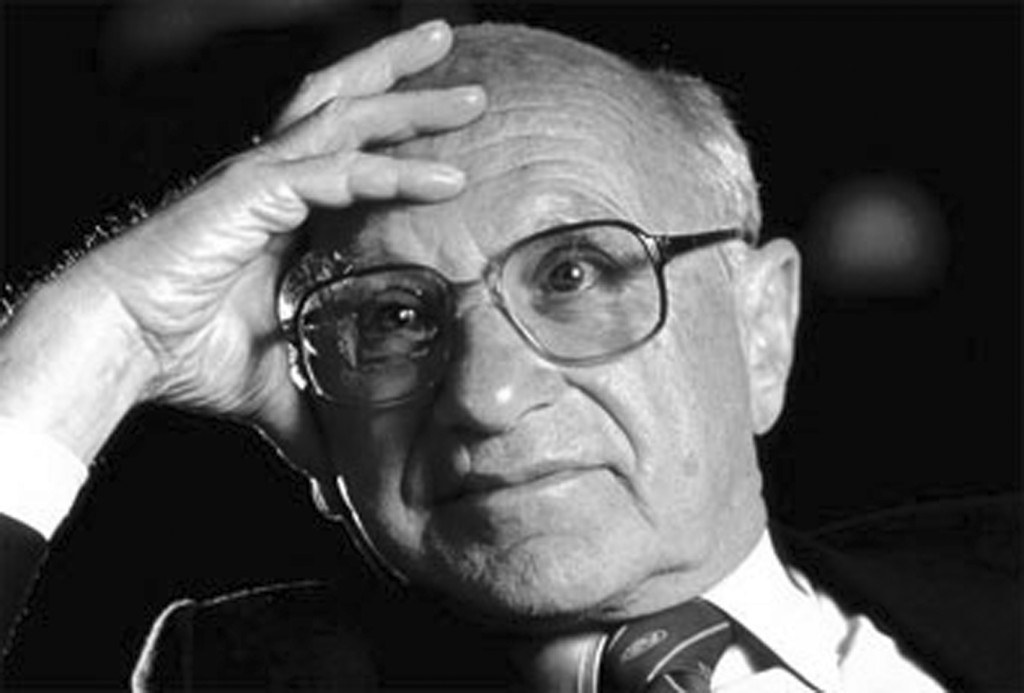
Milton Friedman
This is the latest installment in our series on the center-left roots of school choice, and Part III of a serial about school choice efforts in late ‘70s California. Part II included a closer look at U.S. Rep. Leo Ryan and the game-changing voucher plan he wants to push, while school boards and teachers unions came out swinging.
South of San Francisco, an electronics engineer and inventor in Redwood City read about the liberal-led California Initiative for Family Choice and thought: Disaster.
Not because it would kill the public school system. Because it would perpetuate it.
Jack Hickey saw too many regs, too little freedom, too much potential to “contaminate” private schools. He was certain the massive school choice plan engineered by Berkeley professors Jack Coons and Stephen Sugarman would curtail choice, not expand it.
“I looked at that and said, ‘That’s bad, that’s really bad,’ “ Hickey said in an interview.
Hickey wasn’t content to grump. The libertarian activist would eventually run for office 18 times, including for governor, U.S. Senate and U.S. House of Representatives. In this case, he nimbly sketched out a counter-proposal, something he called a “performance voucher.”
Then he and Roger Canfield, a police consultant in nearby San Mateo, began their own sprint to the ballot.
***
At the time of his meeting with Congressman Leo Ryan, Jack Coons was best known as one of the attorneys who changed how public schools are funded in California.
He and Stephen Sugarman were key players in a legal effort that began in 1968 with a widely publicized case, Serrano v. Priest. It charged that the way California financed public schools – by relying heavily on local property taxes, resulting in huge disparities between rich and poor districts – violated the Equal Protection Clause of the Fourteenth Amendment.
Over the course of a decade, Serrano led to three California Supreme Court rulings that spurred the state legislature to mitigate funding disparities between districts. It’s also credited with sparking school finance reform in other states, even though a ruling from a similar case in Texas was struck down in a 5-4 decision by the U.S. Supreme Court.
Coons’s embrace of school choice flowed, initially, from the funding inequities he saw. Ultimately, he and Sugarman, his protégé and intellectual partner, came to this conclusion: Giving poor parents more power to choose schools for their children best allowed them to rise above an entrenched education system blatantly rigged against them.
The professors first fleshed out their voucher idea in 1971, in a 118-page treatise for the California Law Journal. In the foreword, another Berkeley professor channeled a view about public schools that wasn’t uncommon for progressive thinkers of the era:
If a set of families enters a state park to go hiking, that group would be shocked indeed to discover that the scenic trails were reserved for its richer members and that only barren and rocky paths were held open for the poor. Nevertheless, our public schools operate in such a discriminatory way.
Not all choice enthusiasts looked primarily through that lens.
***
Like Coons and Sugarman, the libertarians wanted to end the old regime, not modify it.
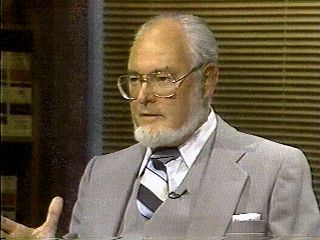
Libertarian Jack Hickey didn't like the Coons-Sugarman school choice proposal, and crafted a competing proposal for "performance vouchers."
Jack Hickey and Roger Canfield’s proposal would abolish government-run schools, end compulsory education and stop measuring academic progress merely by number of instructional days (wonks call that “seat time.”) Every parent would be given a voucher of equal value, $2,000 per year. (Per-pupil spending in California at the time was about $3,000 per year.) Through a contract with the state, the parents could spend the money on a school, on a teacher or teachers, on educational materials, or on any number of other things and combinations.
The performance voucher had, in the words of Hickey and Canfield, “divisibility.” In that respect, they, like Coons and Sugarman, foreshadowed today’s latest spin on vouchers – education savings accounts – years before think tanks fleshed them out.
But the performance voucher also had another irregular feature that made it distinct: It couldn’t be redeemed until the student showed progress, as determined by a standardized test.
No progress. No payment. (more…)

