 Texas: Recent political appointments show more stars lining up for vouchers in the next legislative session. (Houston Chronicle)
Michigan: Parent Revolution leader Ben Austin criticizes a parent trigger proposal in Michigan because for-profit charter schools would be among the options parents could select for a school turnaround. (Education Week)
Florida: School boards pass resolution after resolution against Amendment 8, which they think will open the door to more private school vouchers.
New Jersey: An Episcopal school in Newark becomes the first to convert to a charter school under a new law opposed by some Catholic leaders. (NJ.com)
Tennessee: Vouchers are an issue in legislative races, with some Republicans lukewarm about the idea (timesfreepress.com). Some charter schools in Memphis get rent-free school buildings, while others have to pay for their own space (Memphis Commercial Appeal).
Maine: The state's first charter schools open. (Associated Press)
Georgia: Some school board members complain the Georgia School Boards Association's opposition to a charter school ballot initiative has gone too far. (Atlanta Journal-Constitution) (more…)
From Patricia Levesque, executive director of the Foundation for Excellence in Education, in the Shreveport Times (H/T to EdFly Blog and Jay P. Greene's Blog):
The rhetoric surrounding parental choice often becomes apocalyptic in tone, despite very clear evidence that it improves public schools. Much of the Louisiana discussion has focused on the issue of accountability. Louisiana's statute provides for student testing and includes strong mechanisms to remove under performing schools. This is a higher standard of accountability for private schools than the standard that applies to school districts in Louisiana, and across the nation. The bottom-up approach created by empowering parents to vote with their feet if their child's school is not meeting their needs represents the ultimate form of accountability. No amount of regulatory compliance can hope to match a system of decentralized parental choice. Compliance models focus on school and grade level average results, while empowered parents focus on the particular needs of their child. Full op-ed here.
 Tennessee: A task force appointed by Gov. Bill Haslam leaves no doubt that a private school voucher program is under serious consideration (Memphis Commercial Appeal). More here and here.
Florida: Teachers unions, school boards and media outlets are distorting the aim of a proposed constitutional amendment, claiming it's about private school vouchers (redefinED). A charter school task force appointed by the state Legislature considers a proposal to allow local school districts to levy additional property taxes for charter school capital costs (Orlando Sentinel). The Palm Beach County school district - one of Florida's biggest - is beginning its public school choice application process for next year's seats this week (Palm Beach Post.)
Georgia: The NAACP, Southern Christian Leadership Conference and other civil rights groups are part of a coalition opposed to a charter school amendment on the November ballot. (Associated Press)
Louisiana: Private schools say their experience with the new voucher program has so far been good. (dailycomet.com)
Pennsylvania: Gov. Tom Corbett and Republican lawmakers want to address funding inequities for charter schools. (Harrisburg Patriot-News)
New York: A study finds charter schools are undermining enrollment at Catholic schools (Albany Times Union). Charter school applicants come under fire at a public hearing. (Utica Observer Dispatch) (more…)
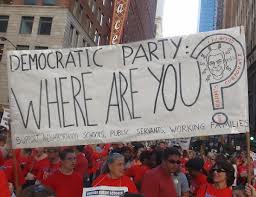 Chicago: Expansion of charter schools, which tend to employ non-unionized teachers, is a big undercurrent in the teachers union strike (New York Times). Media coverage of the strike puts charter schools in a positive light (redefinED). (Image from aei-ideas.org)
Florida: Khan Academy and Step Up For Students are partnering to bring cutting-edge technology to private schools that accept tax-credit scholarships (redefinED). The new chair of the state Board of Education says "the train has left the station" when it comes to expanding school choice (redefinED).
New Jersey: State lawmakers to take a closer look at online education. (NJSpotlight)
Rhode Island: The superintendent of the Providence school district and the president of the teachers union are working together to promote district-operated charter schools (Boston.com). State education leaders disagree about whether to close a low-performing charter school (Providence Journal).
Nevada: Lawmakers may consider parent trigger legislation in the wake of the Won't Back Down movie. (Las Vegas Sun)
Louisiana: In the wake of the state's new voucher program, the state's top education official offers a plan for closer scrutiny of private schools (New Orleans Times Picayune). About 5,000 students enroll in the new voucher program (New Orleans Times Picayune). A spokesman for a Louisiana teachers unions tries to explain why the group said a black school choice group supports "KKK vouchers" (Daily Caller).
New Hampshire: A Q&A with the head of the state's first tax credit scholarship funding organization. (Concord Monitor)
 Sad but true: The other day, one of Louisiana’s statewide teachers unions tweeted that the Black Alliance for Educational Options, the stand-up school choice group, supports “KKK vouchers.” It subsequently tweeted, “Tell everyone you know.” (Details here.)
Even sadder but true: This wasn’t an isolated event. In recent months, critics of school choice and education reform have time and again made similar statements and claims – trying to tie Florida’s school accountability system to young black men who murder in Miami, for instance, and in Alabama, trying to link charter schools to gays and Muslims.
But this is also sad but true: Reform supporters sometimes go way too far, too.
Late last week, the Sunshine State News published a story about two Haitian-American Democratic lawmakers in South Florida, both strong backers of school choice, who narrowly lost primary races to anti-choice Democrats. The story quoted, at length, an unnamed political consultant who sounded sympathetic to the arguments raised by school choice supporters. He made fair points about the influence of the teachers union in the Democratic Party; about racial tensions that rise with Democrats and school choice; about a double standard with party leaders when Dems accuse other Dems of voter fraud. But then he said this:
“It’s a kind of ethnic cleansing of the Democratic Party,” he said, according to the report, “centered on the interests of the teachers’ unions.”
School choice critics may often be wrong; their arguments may at times be distorted and inconsistent. But to brand their motivations with a term that evokes Rwanda and Bosnia is more than off-key. It’s repulsive. It’s also a distraction and counterproductive.
I’m floored by extreme statements from ed reform critics. In the past couple of months alone, a leading Florida parents group accused state education officials of using the school accountability system to purposely “hurt children”; a left-wing blogger described John E. Coons, a Berkeley law professor and redefinED co-host, as a “John Birch Society type” because of his support for parental school choice; and other critics used fringe blogs and mainstream newspapers alike to shamelessly tar Northwestern University economist David Figlio, a meticulous education researcher who is not only widely respected by fellow researchers on all sides of the school choice debate but is so highly regarded beyond the world of wonkery that he was cited as a prime example of this state’s “brain drain” when he left the University of Florida. I’m further stumped by how such statements are rarely challenged by mainstream media, and by how more thoughtful critics simply shrug and look the other way.
Attacks like these make me want to say, “At long last, have you left no sense of decency?” But then, at less regular intervals, statements like the ethnic cleansing quote come up and knock reformers off the high road. I’m left with a less satisfying response: “Can’t we all just get along?”
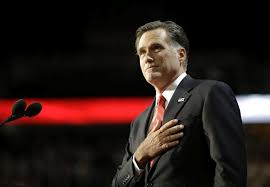 Choice at the RNC: Mitt Romney drops a line about school choice in his big speech, while Jeb Bush and Condoleezza Rice say more (redefinED). A former voucher student from Florida joins Jeb Bush on stage, saying in an interview later, "Because I had choice in my education, I was granted a better life (redefinED). (Image from minnesota.publicradio.org)
Louisiana: A statewide teachers union accuses the Black Alliance for Educational Options and other school choice groups of supporting a pro-KKK educational curriculum. (Choice Media)
Washington: The political landscape around charter schools has changed as voters get ready to vote on a charter measure for the fourth time. (Seattle Times)
Florida: A powerful lawmaker and school choice supporter is puzzled by charter schools that want to set up in one of the school districts in his legislative district. (St. Augustine Record)
Ohio: Hundreds of special needs students are benefiting from a voucher program. (Cincinnati.com) (more…)
 Number of the week: 87,062
That’s how many low-income Florida families began applications for tax credit scholarships this year, up from 69,000 last year. It’s another sign of fast-growing demand for the largest private school choice program of its kind in the country.
Demand is so high, in fact, that Step Up For Students, the Tampa-based nonprofit that administers the program (and is home to redefinED), had to close applications last week to new students for the 2012-13 school year. More than 50,000 scholarships have already been approved, and thousands more are in the pipeline.
Not all families who begin applications finish them. And not all students who are approved for scholarships take them. That’s in part because some families determine they can’t afford the difference between the scholarship amount ($4,335 this fall) and the private school’s tuition and fees. The scholarships are only available to students whose families meet the income eligibility requirements for free- or reduced-price lunch.
Last year, the tax-credit scholarships program served 40,248 students, according to a Florida Department of Education year-end report posted Monday. That's nearly double the 21,493 it served just five years ago. In the spring, the Legislature bumped up the program cap from $219 million to $229 million so about 9,000 additional students could be served.
A bigger problem for science in Louisiana
Two widely circulated stories recently noted the anti-scientific teachings of some private Christian schools that will be participating in Louisiana’s new voucher program.
The first, from the Associated Press, quoted a science advocate who lamented that public money will be used to finance creationism and other “phony science.” Meanwhile, Mother Jones headlined, “14 Wacky ‘Facts’ Kids Will Learn in Louisiana’s Voucher Schools.” Tops on the list: “Dinosaurs and humans probably hung out.”
From a scientific standpoint, such teachings are indefensible. But as I’ve written before, the poor track record of public schools in science instruction, particularly with low-income and minority students, can’t be defended either.
According to the latest NAEP results in science, Louisiana ranked 46th of 50 states. Twenty-two percent of its eighth-graders were deemed proficient.
And Florida's next education commissioner will be … (more…)
 Louisiana: State education officials set accountability rules for private schools participating in the state's new voucher program (Reuters). More from the New Orleans Times Picayune. The state deems a troubled private school ineligible to receive vouchers (Alexandria Town Talk). Meanwhile, a law firm representing a state teachers union sends letters to participating private schools, threatening them with litigation unless they opt out of the program until a lawsuit is settled (New Orleans Times Picayune).
Wisconsin: A Milwaukee charter school gets help from a national fund co-run by tennis legend Andre Agassi (Milwaukee Journal Sentinel)
Michigan: Speaking at the American Federation for Teachers convention, Vice President Joe Biden takes aim at vouchers and says teachers are under "full blown attack" from Republicans. (MLive.com)
Indiana: The state's year-old voucher program is becoming more diverse as it grows (Indianapolis Star). The mayor of Indianapolis tussles with parents over the future of a low-performing charter school (Indianapolis Star).
Florida: The school board in Pinellas County votes to allow an F-rated charter school to remain open after students and teachers plea for more time. (Tampa Bay Times)
Illinois: Charter school leaders in Chicago fear budget cuts because of uncertainty over the district's contract with teachers. (Chicago Tribune) (more…)
 Ideologues tend to exaggerate political debate, but Louisiana school superintendent John White reminded us Tuesday that rational policy is the key to integrating vouchers into a robust public education system. The accountability that White introduced, and the Board of Elementary and Secondary Education (BESE) adopted, represents a thoughtful balance of testing, regulation and market forces that ultimately will require vouchers to prove their value.
That's a formula for how private learning options will become mainstream.
Lawmakers have shown themselves to be particularly inept at writing policy framework for vouchers so, in expanding the New Orleans voucher program to the rest of the state, the Louisiana Legislature punted accountability to the bureaucrats. That left White, a former Teach For America administrator and New York City schools executive under chancellor Joel Klein, with a task that requires careful calibration in a volatile environment. (As if to reinforce the rhetorical excess, one BESE board member on Tuesday assured his colleagues they were about to bite into the forbidden fruit of Eden and could be assured that “evil is going to arise.”)
What makes accountability so difficult is that there is still no clear blueprint. Every state with a voucher or tax credit scholarship has a different iteration, and the loudest voices are usually at the extremes – the voucher critics who demand the private schools be held to precisely the same standard as a public school and the voucher advocates who argue that no regulation is necessary because the market will force schools to respond. So the chore is to find the right balance, one with academic and financial oversight that taps into the accountability that follows from a parent who can walk out the door. This is made all the more challenging by the fact that, in most states, the students who receive the scholarship or voucher represent a minority of the enrollment in the private school.
White navigated the academic maze this way: 1) Every voucher student takes the state test; 2) The results of every test are reported on a statewide basis; 3) Any school with at least 40 students taking the test is held accountable; 4) Those schools will be evaluated on a scale similar to that of public schools. If they fail three out of any four years, their students will be given priority to attend other schools. Furthermore, the failing school will not be allowed to take new students and could be dropped from the program.
The rule has been criticized because the accountability portion is projected to capture only about a fourth of the participating schools in the first school year and schools will not be banned after one failing year. But the small number of schools with at least 40 tested students is the very nature of this school landscape. The 5,600 Louisiana students who receive vouchers this fall will not generally be attending schools where every student receives public support. Instead, they will go to private schools with mostly private-paying students, and you can’t reliably measure a school’s fitness based on two or three or a dozen student test scores.
That said, there is nothing sacrosanct about the lines that are drawn in this new Louisiana accountability rule, and they will no doubt be amended and improved over the years. But the rule is a commendable start and one, similar to the approach in Indiana, that makes an important statement about private learning options. They are part of, not in competition with, the public education system, and they need to be properly held to account.
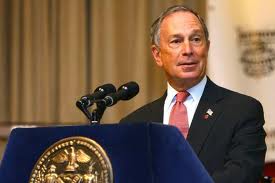 New York: For the third year in a row, New York City charter schools outperform traditional public schools, drawing praise from Mayor Michael Bloomberg, pictured here (New York Times). More from the New York Daily News.
New Jersey: The state teachers union fights new charters even as it attempts to unionize charter school teachers (NJ Spotlight). State education officials approve nine new charters, but reject 10 and postpone 13 (NJSpotlight), including a full-time virtual charter. (NJ.com)
Florida: State education officials reject appeals from three virtual charter schools seeking to open in the Miami-Dade school district. (Miami Herald) Education Commissioner Gerard Robinson defends charter schools at a town hall meeting (South Florida Sun-Sentinel). In a key Democratic primary in South Florida, state senate candidates differ over support for vouchers and tax credit scholarships. (Palm Beach Post)
Louisiana: Students and schools in the state's new voucher program are not likely to face the same regulatory accountability measures as public schools (Baton Rouge Advocate). A nonpartisan watchdog group recommends state education officials seek legislative guidance as they craft accountability rules (Associated Press). The state teachers union pans the academic results of the state's first all-grades, on-line charter school, but the school fires back with accusations of cherry picking (Baton Rouge Advocate).
Michigan: Democrats fear vouchers will be part of Gov. Rick Snyder's plans to overhaul school funding (MLive.com).
Washington: Gubernatorial candidates Rob McKenna and Jay Inslee agree on many aspects of education policy, but disagree on charter schools. (Seattle Times)
Elsewhere: Study finds students in K12 Inc. virtual charter schools are lagging behind their peers in traditional public schools. (Washington Post)

