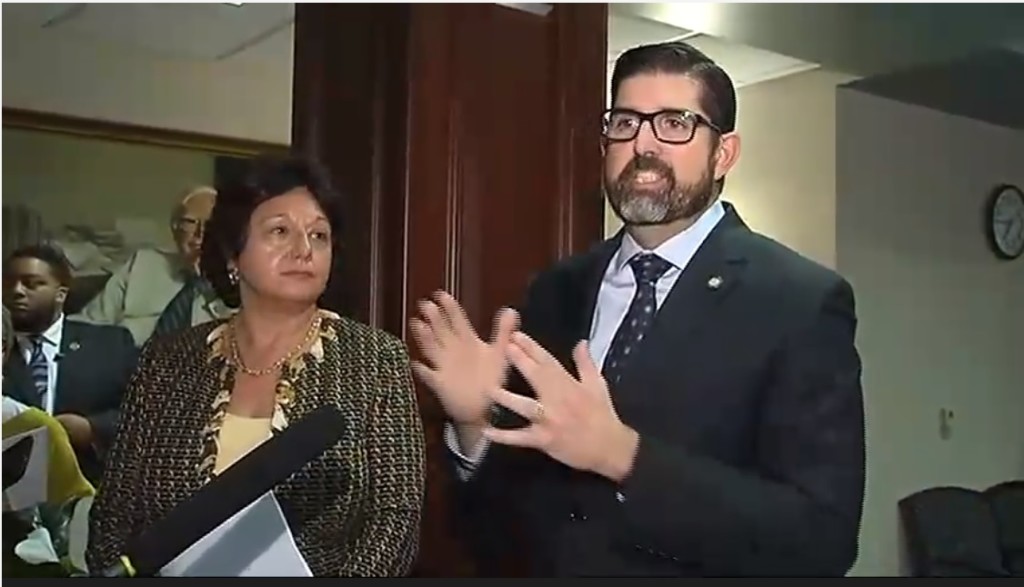
Sen. Kathleen Passidomo, R-Naples and Rep. Manny Diaz, R-Hialeah spoke to reporters after the first round of PreK-12 budget negotiations wrapped up Wednesday.
Florida House Speaker Richard Corcoran's signature Schools of Hope initiative would stick around for years to come under a plan agreed to by House and Senate budget negotiators. (more…)
Florida school districts could create networks of autonomous public schools in "innovation zones" under a new proposal in the state House.
It's the latest iteration of an autonomous-school concept in HB 7055. That bill awaits final action today by the Senate Appropriations Committee.
The Senate has proposed a different model. Its "franchise schools" proposal would allow top principals to create mini-networks that combine high-performing campuses with struggling turnaround schools. Those schools would remain under direct district control, rather than under independent oversight boards, as the House first proposed.
Rep. Manny Diaz, R-Hialeah, is a former public-school administrator and the House education budget chief. He added the new "innovation zone" proposal to HB 495, a separate education bill.
It would eliminate the independent boards, which created some controversy during previous House hearings. (more…)
A few years ago, the superintendent of the Broward County school district was willing to make a trade.
The approach advocated by Superintendent Robert Runcie went something like this. Give some of our district's struggling schools some the same freedoms charter schools receive in state law. We'll put some our best principals in charge, and we'll guarantee performance will improve.
Rep. Manny Diaz, R-Hialeah, turned the concept into legislation that created the Principal Autonomy Pilot Program. It allowed a few school districts to pick three low-performing schools that could enter charter-like, autonomy-for-accountability agreements with the state. (more…)
by Livi Stanford and Travis Pillow
A trio of lawsuits taking aim at last year’s major education law could pose tricky questions for lawmakers — if they succeed.
One Friday, a Leon County judge rebuffed one school district’s attempt to halt implementation the law, which is set to steer more than $91 million in local property tax revenue to charter schools on Feb. 1.
However, the underlying case is still proceeding, along with two others. That means a hard-won new funding source for charter schools is still in question.
Several key lawmakers who backed the new law, known as HB 7069, say they’re confident the state will eventually win the cases. But if it doesn’t, they said, it should try to make charter schools whole.
Right now, the state is providing approximately 544 charter schools with their share of $50 million in state funding. That’s down from $75 million the year before. But that's before factoring in the new law, which provides charters with an additional $91.2 million from school districts, according to a memo sent out last week by the state Department of Education.
Without the funding the new law provides, charter schools would absorb a facilities funding cut of about a third, and their lowest per-pupil capital funding since the state created its charter school capital funding system.
Friday's decision by James Shelfer means the lawsuits are less likely to change schools' budgets in the current school year. But it doesn't change the potential implications for charter and district finances in future years.
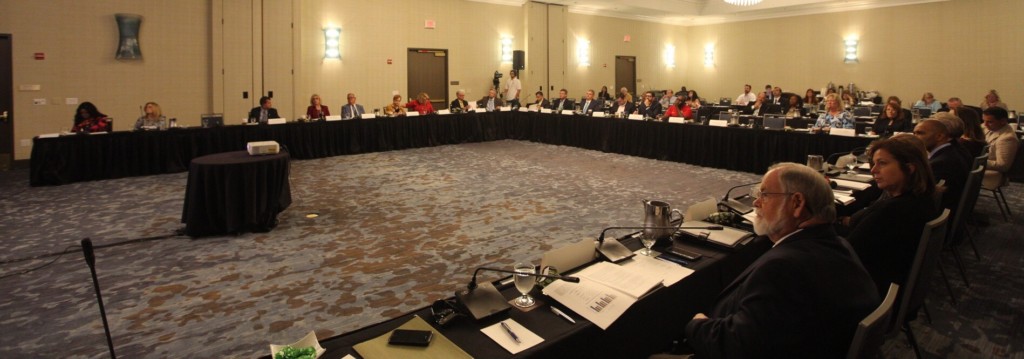
The Florida Consortium of Public Charter Schools hosted a forum Friday at a Fort Lauderdale hotel. Photo courtesy of the consortium.
FORT LAUDERDALE - Some of the charter school leaders gathered last week in South Florida reported tensions run high.
Districts are in court to fighting a new law intended to make charter school funding fairer. Many have cranked up the rhetoric or found ways to slight charter schools they authorize.
A delegation from Sarasota County highlighted a different approach. Led by new Superintendent Todd Bowden, they described how districts and charter schools can get along.
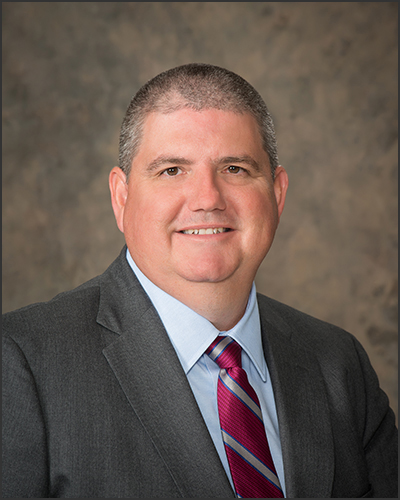
Bowden
Their school board declined to join the lawsuit over House bill 7069. It shared facilities funding with charters before the legislation passed. It also allowed charter schools to participate fully in Title I — a longstanding charter school complaint the legislation tried to address.
But the key might be the district's overall attitude toward the charter schools it sponsors.
"They're a part of our district," Bowden said. This is reinforced by a state law that includes charters in district-wide letter grades. He said that when he addresses community groups, he likes to tout the achievements of Sarasota charters alongside the schools the district runs itself. (more…)
Ever since Donald Trump became president, opponents of school choice have tried to tie charter schools, vouchers and scholarship tax credits to the polarizing politician.
A new public opinion survey suggests those tactics might not be working as intended.
Survey researchers with Education Next asked questions about two school choice policies two ways. Half the respondents answered basic questions about whether they supported tax credit scholarships or charter schools. The other half were asked the same questions, after being told Trump supports the policies.
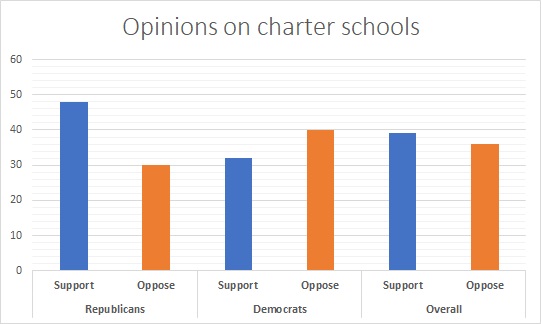
Even after a sharp drop, charter school supporters still outnumber opponents, according to the latest Ed Next poll.
Associating the policies with Trump didn't change overall support for either policy. But it did tend to polarize issues. Support among Democrats went down, while support among Republicans went up.
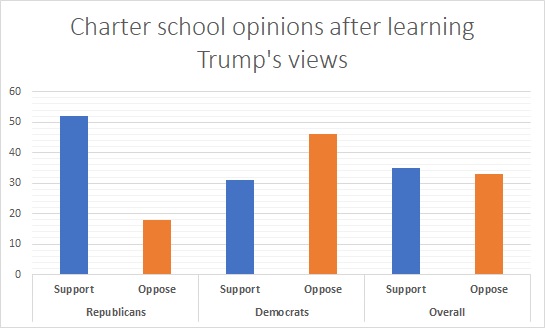
Hearing about President Trump's views doesn't change overall charter school support. But it widens the partisan divide.
The poll confirms something school choice advocates saw on the ground during last year's elections. (more…)
Simmons
The Florida Senate this morning has teed up debate on an overhaul of the school funding plan lawmakers approved last month.
Proposals on the agenda would strip all the funding out of House Bill 7069 — the wide-ranging, $419 million education measure that's been the center of controversy — except for one item: $30 million for Gardiner Scholarships, which provide education savings accounts to children with special needs. (Step Up For Students, which publishes this blog, helps administer the scholarships.)
And a key state Senator told reporters he hopes changes to the major education legislation won't end there.
Lawmakers returned to Tallahassee this week for a special session to meet three of Gov. Rick Scott's priorities. He wants them to steer more money into economic development, tourism promotion and public school funding. The governor freed up more than $400 million last week by slashing individual spending items out of the budget.
But the House and Senate are at odds over how, exactly, to fund the governor's priorities (and perhaps some priorities of their own). (more…)
Florida charter schools would have a greater authority over their federal education funding if a bill approved today by the state House finds a path through the Senate.
HB 7101 would increase charters' ability to form their own local education agencies, or LEAs in federal parlance. That would allow them to receive federal funds for training teachers and supporting low-income students directly, without going through their local school districts.
And districts would have to give all public schools, including charters, authority to decide how most of their federal Title I funding gets spent.
Those are two of many changes in the measure, which passed on a nearly party-line vote, with two Democrats joining Republicans in support.
Rep. Wengay Newton, D-St. Petersburg, opposed the bill, arguing charter schools are part of a "separate but equal" public education system. Rep. Shevrin Jones, D-West Park, questioned whether allowing charter schools to form LEAs would raise "constitutional" issues. (more…)
A plan to draw new charter school operators into academically struggling parts of Florida has ignited the biggest, most impassioned debate over public education in this year's state legislative session.
HB 5105 would accelerate the timetable for school districts to turn around schools that persistently struggle and create what sponsor Rep. Chris Latvala, R-Clearwater, called a "new set of standards for the best of the best charter school operators in the country to come into Florida."
It would make it easier for those organizations to set up shop in the vicinity of struggling schools. A related budget item would create a $200 million grant program to help them recruit teachers, provide wraparound services and extend their school days.
Legislative leaders spent weeks holding hearings and hinting at plans that laid the groundwork for "Schools of Hope" legislation unveiled last week.
Latvala called the measure "our best effort to bring hope to kids who do not have any." In a statement on the House budget, Speaker Richard Corcoran touted the package of "innovative programs to end failure factories."
The proposal spurred an intense, partisan debate before the House Appropriations Committee approved it.
"This bill, in my humble opinion, creates a separate but unequal system," said Rep. Kionne McGhee, D-Miami. He argued creating a special class of charter schools would run afoul of the state constitution. (more…)
Legislation unveiled this week in the Florida House — and tied to a new $200 million funding proposal — aims to move students from "persistently low-performing schools" to "schools of success" run by charter school operators with proven track records.
At the start of the legislative session, House Speaker Richard Corcoran vowed to eliminate "failure factories," struggling schools that borrow a moniker from a Pulitzer-winning series in the Tampa Bay Times.
Until now, it had been unclear exactly how his intention would translate into legislation.
The House Education Committee is set to hear the proposed bill Thursday morning. It would set more aggressive requirements for turning around academically struggling public schools. If schools earned Ds or Fs from the state, their districts would have to begin implementing turnaround plans immediately, submitting them to state officials in September, months after school grades were released.
If those schools didn't raise their grades to a C in a few years, districts would have to make bigger changes: Closing the school, converting it to a charter, or bringing in an outside operator.
As lawmakers heard during hearings earlier this year, those options are available to Florida school districts under the state's existing school improvement law. But they seldom take those measures on their own. An ultimatum from the State Board of Education recently led to the Jefferson County School board choosing a charter operator to take over its persistently struggling schools, but that district's actions are unprecedented.

