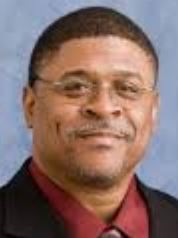
Rev. Sykes
If there's one thing Republicans have right, it's about the power of competition to shake up unresponsive bureaucracies, including those that oversee public school systems.
So says prominent African-American pastor Manuel Sykes, who had Tampa Bay political circles buzzing last week amid an announcement that he would be moving to the Republican Party. The move may have been precipitated by local issues like local Democrats' efforts to stifle his run for Congress, but it's also another indicator of political crosswinds that have buffeted left-leaning school choice supporters for years.
Sykes, the longtime pastor at Bethel Community Baptist Church in St. Petersburg, has long been a school choice supporter - and, until recently, an active Democrat. His church runs a school that caters to low-income students on scholarship programs, many of whom struggled in the schools they left behind.
"If the Democrats take a stand against vouchers, to me, that's too one-sided," Sykes says during a podcast with redefinED. "It shows a lack of analysis, because we have children that have been failing in school since I arrived on the scene back in 1993."
Back then, he says, he was working with a group of religious leaders who were trying to bring programs developed by the National Institute of Direct Instruction into public schools. After being rebuffed by school district officials, he saw the potential benefits of giving people options outside the traditional school system.
"Many times a bureaucracy has its own internal self-preservation instinct," he said, adding: "One thing that I truly believe that Gov. (Rick) Scott got right is that competition makes people do better. When they know that they're not the only show in town, they tend to do better if they want to stay in business."
But that doesn't mean he's all-in for unfettered free markets. He says people still need to be protected, and that he's going to continue to support social programs like Medicaid that can help improve life for poor people and help them transition into jobs. Drawing a contrast with fellow Republicans, he says, "When you are helping corporations to thrive, you also have to help people to survive."
Our interview also touches on his decision not to endorse Scott for governor, his dispute with the state NAACP, and the "sense of betrayal" in some quarters when news of his party change began to make the rounds. To understand some of his comments on political maneuvers related to his scuttled run for Florida's thirteenth congressional district, see more background here.
From the News Service of Florida:
In a move that highlights the political crosscurrents confronting Democrats on education issues, a coalition emphasizing the benefits of state-approved vouchers for low-income students called Wednesday for the Florida Education Association to drop a lawsuit challenging the program.
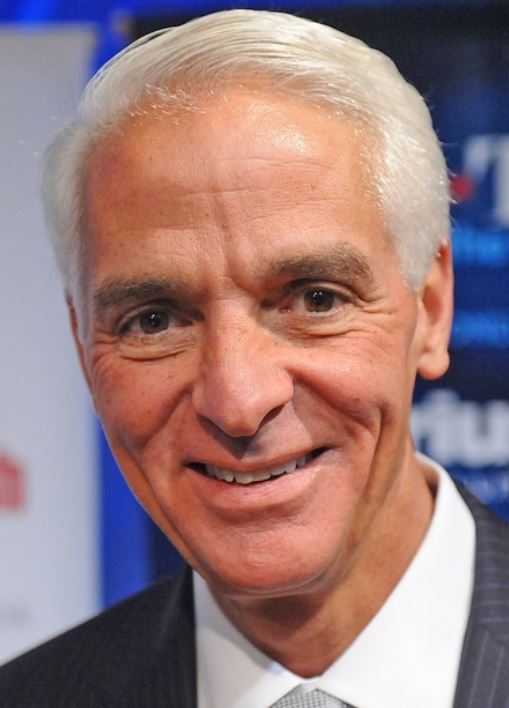
Charlie Crist
The Save Our Scholarships Coalition, which held a conference call with reporters to draw attention to the request, consists largely of African-American, Hispanic and Jewish leaders --- some of whom have constituents who are parts of key Democratic voting blocs in Florida. But the coalition is at odds with the state's largest teachers union, which often provides resources and organizational muscle for Democratic candidates.
The coalition's leaders are not exclusively Democrats by any means. For example, Julio Fuentes, head of the Florida Hispanic Chamber of Commerce and the Hispanic Council for Reform and Educational Options, often supports Republican causes and candidates.
But in remarks on the conference call Wednesday, he underscored the demographics of those who receive the 68,000 awards from the Florida Tax Credit Scholarship Program, as the voucher system is formally known,
"Many of these children are minorities and come from economically disadvantaged families," Fuentes said. "We have an army of motivated educators who are willing to roll up their sleeves and be part of the solution."
H.K. Matthews, a civil-rights leader, also joined the call to question the motives of Florida Education Association leaders fighting to undermine the program.
"I cannot for the life of me fathom why these educators are willing to jeopardize the well-being of the state's poorest students," Matthews said.
At the same time, the lawsuit filed in August to challenge the voucher program is supported by the Florida NAACP and a Jewish rabbi --- highlighting the complicated fissures within Democratic voting blocs over the tax-credit system.
The lawsuit says the $357.8 million program, which provides tax credits to companies that donate money to nonprofit entities that pay for children to go to private schools, violates constitutional limits on aid to religious institutions and the Legislature's responsibility to fund public education.
Without the scholarship program, the tax dollars businesses would otherwise owe the state could be used to help fund public education, voucher critics say.
Joanne McCall, vice president of the FEA, said Wednesday that her group didn't intend to back away from its lawsuit. She said lawmakers should instead provide the support necessary to build up the state's public schools.
"If they did all of those things, there would be no need to have any kind of scholarship programs," McCall said.
The dispute comes at an awkward time for Democrats, who are trying to beat incumbent Republican Gov. Rick Scott in next month's election. Scott wasted no time in flaying the FEA lawsuit when it was filed, but Democratic candidate Charlie Crist --- a former Republican governor who later became a Democrat --- has been more cautious about the program.
The section on Crist's website devoted to education policy doesn't address the voucher program beyond a promise that, if elected, Crist would "ensure that corporations receive the same tax incentives for investing in Florida's public schools as they do for investing in private schools." The Crist campaign did not respond to a question Wednesday about whether he believed the FEA should drop its lawsuit. (more…)
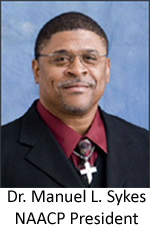
Editor's note: The Rev. Manuel Sykes is pastor of Bethel Community Baptist Church and president of the St. Petersburg NAACP, an active chapter on Florida's west coast. In this commentary, he responds to a recent Tampa Bay Times column that criticized a federal tax credit scholarship bill offered by U.S. Sen. Marco Rubio. The Times also published a letter to the editor from Rev. Sykes in today's editions.
 Florida offers the nation’s best lesson on whether private school options can help poor children, but the Tampa Bay Times seems uninterested in what these parents and students are telling us. Instead, it is busy pointing a distinctly partisan finger.
Argue if you want about whether the federal government should provide K-12 scholarships to low-income students, but the tax credit scholarship plan introduced by Republican U.S. Sen. Marco Rubio is not “bankrupt” or “craven.” It is instead a learning option that economically disadvantaged students wouldn’t otherwise have, and to label it as “money laundering” represents the kind of rhetorical excess that cheapens our public debate.
In Florida, more than 50,000 students are on a similar plan, and the results are encouraging to those of us who work with struggling children. The students who use the Florida Tax Credit Scholarship are truly poor – incomes barely above poverty and averaging less than $25,000 for a household of four – and more than two thirds of them are black or Hispanic. State research tells us they were among the lowest academic performers in the public schools they left behind, and testing results show they are making the same academic gains as students of all income levels nationally. Just as encouraging, the traditional public schools that are most impacted by students who choose the scholarships are themselves experiencing higher learning gains.
The educational results don’t seem to matter to those who prefer instead to dismiss scholarships as some kind of Republican conspiracy. Never mind that nearly half the Democrats in Florida’s Legislature also support this option, including a majority of the Black Caucus. Never mind those of us who work in disadvantaged communities in St. Petersburg and see children for whom these opportunities can make the difference between a diploma or a jail cell. Never mind that the Black Alliance for Educational Options, which represents elected black Democrats across the nation, has expressed its support for Rubio’s bill. (more…)

