Bellwether Education Partners, a national nonprofit focused on changing education and life outcomes for underserved children, has published an interesting new presentation on education in the American South.
Although I now live in a distant and pleasant patch of western cactus, I grew up in the South (Texas). My parents and siblings attended a Southeastern Conference university – Ole Miss, which may not win every game, but has never lost a party. My parents, in fact, were students at Ole Miss when President John F. Kennedy sent in the National Guard to allow for the enrollment of the first African American student.
Color me interested in how things are going in the American South, and nerdy enough to read all 114 slides of the Bellwether presentation.
To this day, people have very different readings on southern history. Mine goes like this: The American South’s pervasive practice of slavery in the antebellum period, followed by a reckless and destructive decision to go to war against the United States followed by a largely botched Reconstruction, left the South as a poor backwater by the mid-20th century.
The industrial revolution took deeper hold in states open to the waves of 19th century immigrants who did not flock to the South at the prospect of becoming sharecroppers. White Southerners held too tenaciously to the past, replacing slavery with sharecropping and Jim Crow. In the process, the world passed them by as they desperately held on to the past.
The South continued to grow more cotton but found itself increasingly being left behind as the economy advanced. A brilliant strategy of non-violent resistance to Jim Crow during the 1950s and 1960s, however, set the stage for social and economic progress in the region.
Obviously, the scars of this difficult history run deep, and the legacy of slavery and racial discrimination remain, including in the K-12 results, as many of the Bellwether slides demonstrate. But the news is not all bad. By the early 1990s, the South as a region had pulled into rough income parity with the rest of the country once controlling for the cost of living.
Education results, however, have yet to catch up.
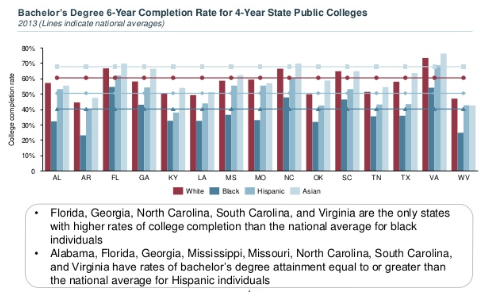
College completion rates for black and Hispanic students in the South are lower overall than national averages. Source: Chronicle of Higher Education
All of which leads to the above chart on six-year college competition rates. It’s difficult to read, but the chart shows college completion rates by ethnic subgroup (white, black, Hispanic and Asian) in the columns and compares those respective rates to the national average (the lines).
To keep from causing squint damage to your eyes, all four Florida subgroups exceed the national average for each subgroup in college completion. Stare long and hard at the chart and you’ll see some other interesting details: the six-year college graduation rate for Florida Hispanic students is higher than the national average for Anglo students. Florida’s black student graduation rate is not only above the national average for black students, it also is above the higher national average for Hispanic students. Florida’s black students have higher graduation rates than white students in Kentucky, Louisiana, Oklahoma, Tennessee and West Virginia.
More progress is needed, but …
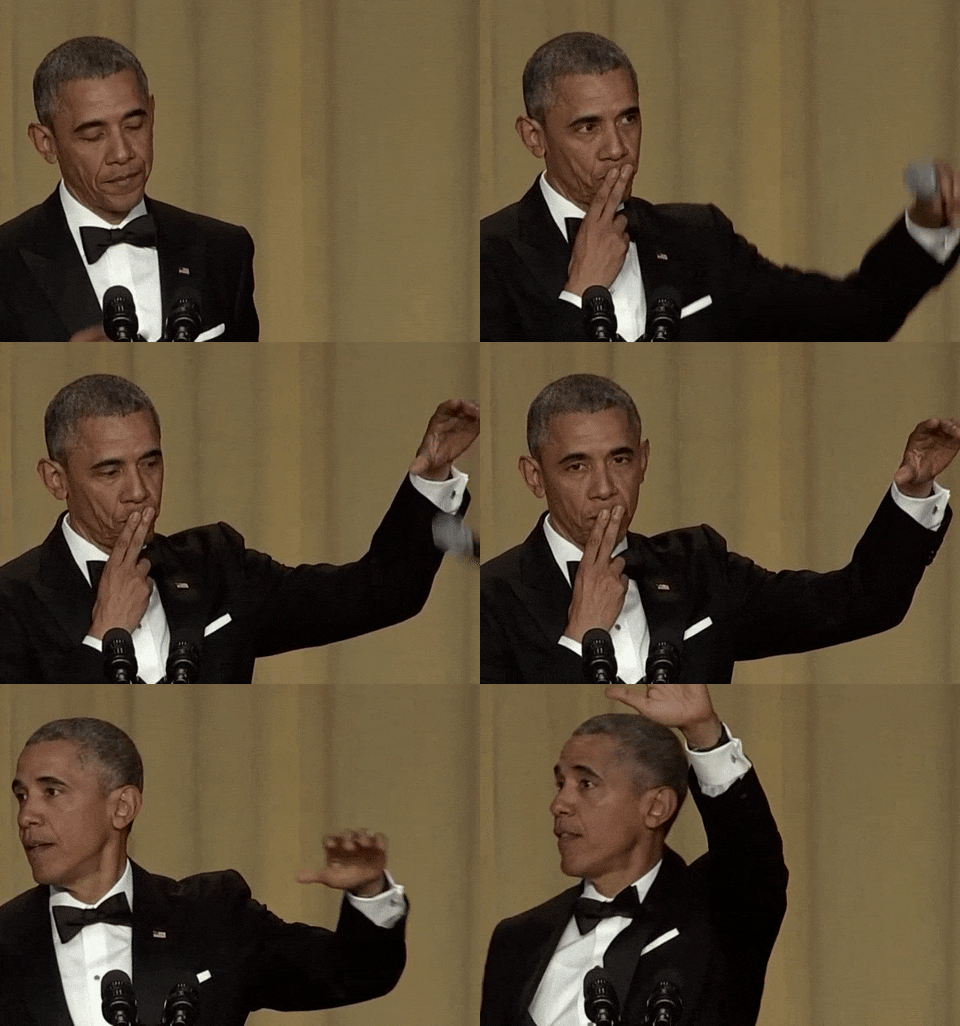
Bellwether rightly gives credit to a “first wave” of K-12 reform-minded Democrat governors like Mark White, Bill Clinton and Jim Hunt. This, of course, also is the case with Florida. Shifting partisan allegiances brought in a Republican K-12 reform wave during the 1990s featuring George W. and Jeb Bush.
A new wave is needed, as the region remains a long way from providing globally competitive education.
In a compelling 60-second video, Frederick M. Hess, resident scholar and director of education policy studies at the American Enterprise Institute, outlines the results of a study he co-authored with Jay P. Greene, distinguished professor and head of the Department of Education Reform at the University of Arkansas.
The study tracked the personal political contributions of the staffs of education reform organizations. Despite years of right-wing conspiracy accusations, it turns out the party education reformers overwhelming support has been the Democrats. Greene and Hess summarized their case in the Wall Street Journal:
Political homogeneity helps explain many of the setbacks the reform movement has suffered in recent years, including the collapse of Common Core, the abandonment of new teacher evaluation methods, and a national stall in the expansion of charter schools. It is losing its ability to forge new coalitions and find new converts. Those who care about the effectiveness of K-12 education should think about ways to inject some red—or at least purple—into a movement that has become monochromatically blue.
So: What should we make of these findings?
Hess used his Twitter account to provide a fair summary, from what I could tell, of the reaction to the findings of the study:
Two major public takes thus far –
It may be most productive here to focus on the phrase “school reform,” as it has had a very rough decade overall, and Democrats and Republicans alike should be learning. It seems clear to me that the ability of the capital (whether of the state or federal variety) to positively influence the quality of education delivered in the field (the vast system of public schools) is real, but so too is the ability to do harm.
If the capital is on its “A game,” it can get a few incentives pointed in the right direction, provide new opportunities for educators and families, provide some transparency, and stay out of the way. Attempts to micromanage the operation of the field, however, often fall somewhere on the pointless to counterproductive spectrum. If Republicans are bailing on that version of “school reform,” bully for them, and plenty of Democrats are joining them.
In my “Two Minutes Hate” post, I shared a deep concern with the revival of nativist rhetoric in our politics. You don’t have to be left of center to find the use of foreigner-bashing rhetoric dangerous, destructive and distasteful; I find it dangerous, destructive and distasteful. A combination of stepped-up enforcement on illegal immigration coupled with a substantial liberalization of legal immigration represents, to me, a plausible path forward on what has become a festering wound in our politics.
Our democracy is designed to create settlements of issues, and a great many Americans feel differently on the issue of immigration than I do. If our alleged Olympians in the U.S. Senate could spare a bit of time away from greeting themselves admiringly as “Mr./Madame President” when they look in the mirror in the morning, addressing the issue that’s tearing the country apart would be a fantastic idea. I do not, however, start with the presumption that those who have a different point of view on this issue are heathens. Rather, I view (most of) them as potential converts.
But I digress; back to K-12 reform.
There are very good people in both political parties passionate about expanding opportunities for families. Due in part to the current configuration of interest supporting the parties, the Republicans support such efforts at a higher rate per member than Democrats. So, dismissing Republican lawmakers as “Merchants of Hate” sadly but elegantly sums up the gist of the Hess and Greene report as broadly accurate. K-12 reformers depend heavily upon the support of Republicans in just about all states.
A genuinely bipartisan reform movement cannot afford to dismiss either of the major political parties and is at risk of obsolescence from the sort of groupthink that comes with a lack of political and intellectual diversity. Elected officials do not owe us their support any more than they owe it to our opponents.
We need to go out and earn the changes we support. Martin Luther King Jr. had less cause to worry about Lyndon Johnson’s long history as a racist once he signed the Civil Rights Act.

Matthew Ladner
The K-12 public education system is rigged in favor of the wealthy as much as the higher education system, but in Florida, things have changed for the better.
Wealthy families once enjoyed exclusive access to fancy neighborhoods zoned for high performing schools. Other families found themselves excluded from these schools. Wealthy families could also afford to pay private school tuition in addition to their school taxes. “Checkbook choice” used to be the privilege of the well to do, but today, choice programs have expanded opportunity.
Choice programs have changed things by expanding opportunities. Today, they give low and middle-income Florida families the opportunity to select the best school for the individual needs of their child regardless of where they live. An increasing number of Florida teachers have been founding new schools and using choice programs to intentionally include families from modest incomes as well as students with disabilities.
Florida needs more schools and more teachers. State projections foresee hundreds of thousands of new students on the way for Florida’s already often over-crowded public school system. The Florida Constitution guarantees funding for public education, and taxpayers have not only increased per-pupil funding, they also have footed the bill for expensive construction projects that are needed but which draw district resources out of the classroom.
Florida school districts have dramatically improved performance since the 1990s on national tests and always will be the indispensable base of Florida’s K-12 education system. District schools, however, will need all the help they can get in the years ahead.
Choice programs help taxpayers by expanding opportunities for families and teachers while relieving overcrowding and allowing districts to focus more funding on the classroom. A recent study by Florida Tax Watch found that Florida’s scholarship program for low and middle-income families produces better academic results with a 40 percent overall lower cost to taxpayers. Given the thousands of families on waitlists for the programs and the acute funding needs in other areas, expanding this program would be broadly beneficial to the public.
Florida families have exercised the opportunity to choose between a growing variety of public and private school options since 1999. The district system grew stronger, but no single system can be all things to all children everywhere. Each student is unique and deserves the opportunity to find a school which is the best fit for his or her aspirations and needs.
Research conducted by a state authorized academic evaluator has found academic benefits for both public and private school students from choice. Even families who choose their zoned district school benefit from having the option to find another school if they ever feel they need it.
Teachers benefit from these programs as well. Frustrated with bureaucratic systems, a growing number of teachers who once left the profession today have decided to become their own boss by founding a private school. This gives these teachers the opportunity to pursue their own vision of a high-quality education free from much of the red tape surrounding the current system. Many of these pioneering educators have utilized Florida choice programs so that they can create purposely diverse schools that include low-income students and students with disabilities. With hundreds of thousands of new students on the way and a shortage of both space and teachers willing to work in a district setting, this trend is a huge win for teachers, families and taxpayers.
Teachers and families need and deserve opportunities that will help them fulfill their promise.
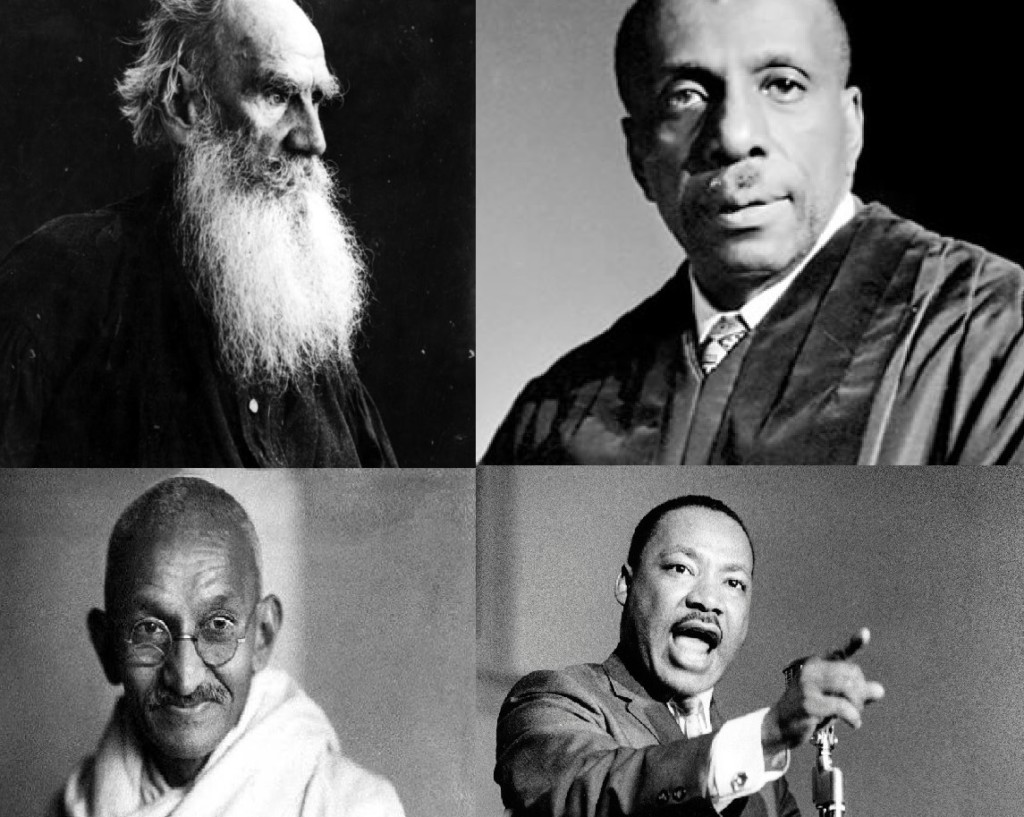
Four social justice advocates whose philosophy may be applicable to today’s education freedom movement
“That this social order with its pauperism, famines, prisons, gallows, armies, and wars is necessary to society; that still greater disaster would ensue if this organization were destroyed; all this is said only by those who profit by this organization, while those who suffer from it – and they are ten times as numerous – think and say quite the contrary.” – Leo Tolstoy, The Kingdom of God is Within You
The early years of the 20th century saw two incredibly significant events in the struggle for African Americans to achieve equal rights. Eventually, the positive development overcame the negative, but only with great sacrifice on two continents and decades of determined effort and inspired leadership. As we celebrate Black History Month, some time to reflect upon this magnificent record is in order.
Let’s get the negative event out of the way first. In 1910, a group of Progressive Republicans teamed with Democrats to strip Speaker of the House Joseph Cannon of the power to appoint committee chairmen. Chairmen came to be appointed by seniority, which not only decentralized power in the House, but enormously empowered Democrats from the old Confederacy. The Republican Party – the party of Lincoln – wasn’t competitive in the South once southern racists saw to it that former slaves couldn’t vote through Jim Crow laws. Intended or not, this “Cannon Revolt” enormously enhanced the power of segregationists for decades.
The Old Bulls, as the committee chairmen came to be known, ruled their fiefdoms with an iron fist. They decided which bills would get hearings and which would die. They said “Jump,” and the rest of the committee said, “How high?” Disproportionately, the Old Bulls were defenders of segregation.
Any change in American tax policy, for instance, had to begin in the House Ways and Means Committee. If you wanted to change something about taxes, and many people did, Rep. Kyle K. Klan, serving in his fifth term as chairman, decided which tax bills received hearings and which did not. If you already guessed that the Right Hon. Kevin K. Klux was biding his time waiting to replace Kyle when he finally went to pick cotton in Hell’s sharecropping plantation, give yourself a gold star, because that is essentially how things worked.
The Old Bulls ran the House for a mere 60 years and change, but in the end, a letter sent from a Russian to an Indian in 1908 ended their reign of error. This, in fact, is where the story gets really interesting.
Lev Nikolayevich Tolstoy was born into an aristocratic Russian family in 1828. An enormously successful author, Tolstoy experienced a moral crisis and a spiritual awakening in the 1870s. Tolstoy’s reading of the Sermon on the Mount left him with a unique Christian pacifist/anarchist perspective, reflected most notably in The Kingdom of God is Within You. In this book, Tolstoy made the case that the Sermon on the Mount commanded an end to all violence, even defensive violence. Tolstoy, noting the nonviolent teachings of the New Testament and the nonviolent resistance of the early Christian Church, called for non-violent resistance to oppression.
In 1908, Tolstoy wrote a letter to a young Indian lawyer living in South Africa laying out a path of non-violent resistance. In 1914, this lawyer, Mahatma Gandhi, returned to India and commenced a decades-long non-violent resistance for Indian independence from British rule.
During the struggle for Indian independence in 1936, the Christian Student Society of India sponsored a delegation of Black American ministers to tour South Asia. Howard Thurman gave dozens of lectures in India as part of this tour and met with Gandhi. During this meeting, Gandhi asked the Black ministers why they had adopted the religion of their oppressors. This was a statement filled with unintentional irony. As a lifelong Anglican, I’ve observed that Gandhi, although a Hindu, was closer to practicing the religion of his oppressors than his European colonial overlords.
Thurman then served as a key mentor to Martin Luther King Jr. and other leaders of the American Civil Rights Movement. As with Tolstoy and Gandhi, Thurman served as the vital theoretician in aid of the implementer of the strategy of non-violent resistance. Thurman assisted King in developing the non-violent resistance movement, which ultimately led to the successful passage of the Civil Rights Act in 1964. For all their power, fear and hatred, the Old Bulls stood defeated by a still greater power.
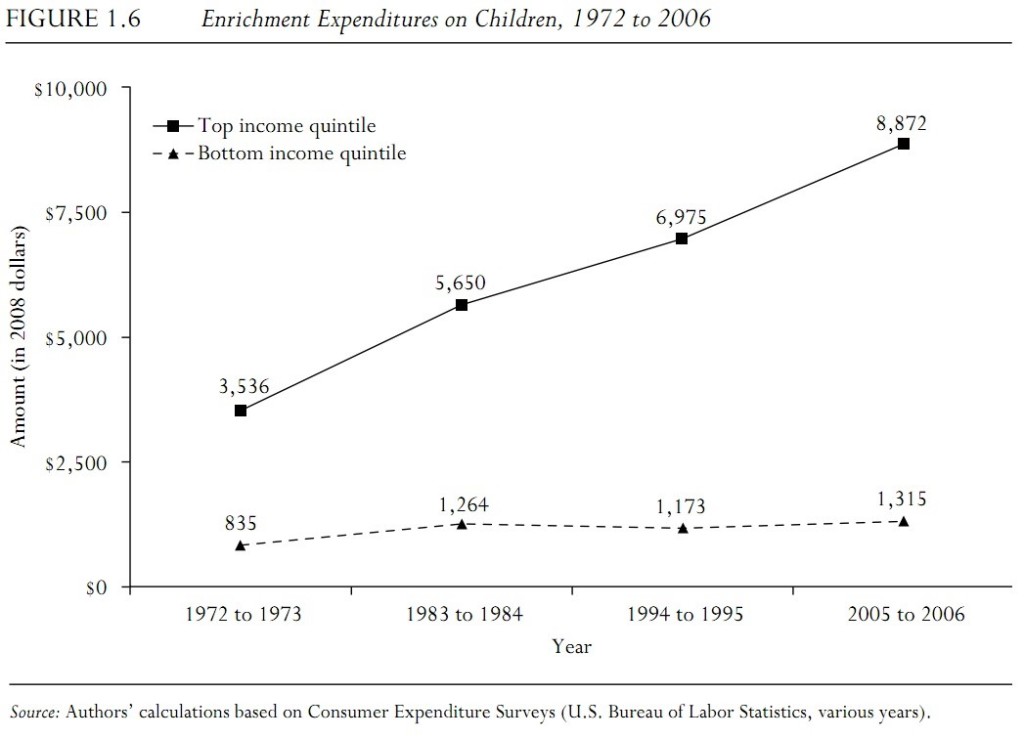
Sometimes it is said that the parental rights movement is the Civil Rights struggle of the 21st century. It is true that our case for equality of opportunity is rooted in justice and fairness. It is equally true that the status quo provides the least to the children starting with the least, and the most to the children starting with the most. I also believe that any attempt to address poverty without addressing a system that spends like Luxembourg but produces results for African American and Hispanic children closer to Mexico is doomed to bitter disappointment.
Black History Month is an appropriate time for the education freedom movement to consider how Tolstoy, Gandhi, Thurman and King would advise us today. What can we learn and apply from these and other leaders of the past? It took not only decades of tireless effort for Gandhi and King and their followers to defeat their oppressors, but also a willingness to feel compassion for their oppressors.
Can we muster that level of perseverance and wisdom? It may, in fact, be required.

A new study by the Urban Institute shows how much the Florida Tax Credit Scholarship helps students like Robert Crockett, pictured here.
A new study from the Urban Institute on college enrollment/completion rates of Florida Tax Credit Scholarship students represents both a triumph and a call for additional action. Let’s touch upon the triumph part first.
The analysis shows statistically significant benefits for students participating in the Florida Tax Credit Scholarship in both college attendance and degree competition compared to a matched sample of similar Florida public school students. Moreover, the study finds that the longer students participate in the program, the greater the size of positive effect.
Some context makes these findings all the more impressive: The average size of the Florida Tax Credit Scholarship is less than $7000 on average while the state of Florida spent $10,145 per pupil in 2015-16. Increasing the return on K-12 investment is precisely what Florida needs, and what the tax-credit program delivers.
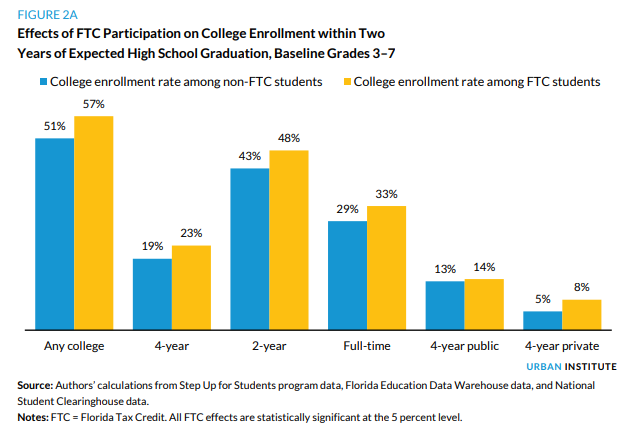
The Florida Tax Credit Scholarship program provides scholarships for low-income students to attend private schools. Florida is among those states with the highest degree competition rates in the country, and this includes very successful programs providing bonuses to public schools for students passing college credit by exam. We have reason to suspect, therefore, that the Florida “blue” columns in the Urban Institute chart above would rank competitively if we had similar data from the other 49 states. Nevertheless, the FTC students (“yellow” columns) show statistically significantly higher attendance rates across all attendance groups.
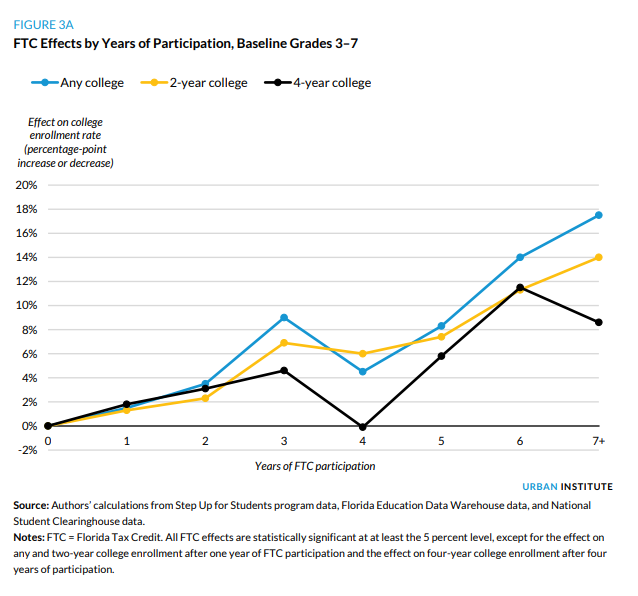
The progressively larger impact seen in the Urban Institute analysis sits comfortably with earlier random assignment studies of choice programs, which found modest but (crucially) cumulative year-by-year gains for choice students. Seeing significant long-term higher education benefits for disadvantaged students at a lower per-pupil cost represents an unambiguous triumph of policy innovation. This success should embolden further reform.
These results are great, but students need much more. Thus far, we only have scratched the surface of the potential to positively transform learning. It is vital to give families the opportunity to choose a good-fit school for their child, and there are a variety of benefits to such policies above and beyond those captured in the Urban Institute study. School, however, represents only part of the picture to learning, and what the country and Florida needs is a process to discover methods to substantially improve learning on a continual basis. In other words, American learning should constantly improve.
Status-quo defenders frequently lay the blame for the failings of public education at the feet of poverty. This school of thought struggles to explain why countries with far less money and far greater poverty manage to deliver a much higher bang for the education buck. Take a gander at the above chart and ask yourself: Just how much of the success in American learning can we attribute to our schools?
If history is any guide, we safely can conclude that a system of ZIP-code assigned schools governed by boards with visibility and turnout with few to no other choices is not likely to produce continual improvement. We’ve enjoyed some success with quasi-market mechanisms to allow educators to create alternative public schools and policies to allow select students to attend private schools. We should, however, view these policies as primitive prototypes in an evolutionary process.
In 2006, the New Commission on the Skills of the American Workforce, which included a bipartisan mix of the great and good including two former Secretaries of Education and an assortment of other grandees concluded, “We’ve squeezed everything we can out of a system that was designed a century ago. We’ve not only put in lots more money and not gotten significantly better results, we’ve also tried every program we can think of and not gotten significantly better results at scale. This is the sign of a system that has reached its limits.” Commissioner Jack Jennings told the Christian Science Monitor: “I think we’ve tried to do what we can to improve American schools within the current context. Now we need to think much more daringly.”
Some 13 years later, these assessments still ring true – and not just for public schools. School vouchers and charter schools were radical and state-of-the-art technologies in 1990 and 1991, respectively. We need new policies, new schools, new school models and more choice among methods of education in addition to schools and policies that will empower teachers to realize their own visions of a high quality education. Emboldened by the success of our prototype policies, we do indeed need to think much more daringly.

