
States that lead in providing varied choices to families with autism aren’t just doing the righteous thing. They also are making themselves a more desirable place in which to live and invest.
Anyone associated with the pursuit of “economic development” will tell you that the quality of local schools is a key factor in a community’s ability to attract high-paying jobs. Businesses are better able to recruit and retain employees if their children have access to a good education.
Academics are just one element in assessing schools. The availability of student services increasingly is a key consideration for families – especially with regard to autism.
According to the Centers for Disease Control and Prevention, autism is the fastest-growing development disability in the nation. The prevalence of autism in U.S. children jumped from 1 in 150 in 2000 to 1 in 59 in 2014. The reasons for that surge are the subject of much debate. It may be due to better diagnosis, increased awareness, and broader definitions of autism; the spectrum of disorders has expanded to include a wider range of language abilities and social behaviors.
Regardless of the causes, schools and communities are struggling to keep up with the increasing demand for autism services – and not just because they have a moral duty to do so. They also have a legal obligation. The federal Individuals with Disabilities Education Act (IDEA), first enacted in 1975, mandates that public school students with intellectual disabilities, including autism, are entitled to early intervention services and special education.
Alas, compliance with IDEA -- by districts and by entire states – has been uneven, to say the least. The Houston Chronicle in its 2016 investigative series “Denied” reported how Texas officials arbitrarily decided what percentage of students should get special education services, leaving thousands of children searching for assistance.
Parents need alternatives outside a system that not only may not be working for them, it may be working against them.
There is another incentive that cannot be ignored: Being an autism-friendly community can have economic benefits.
Research has found a correlation between autism and affluence -- upper-income parents are more likely to have children with autism. Again, the causes are uncertain. Perhaps it’s because parents with higher educations and higher-paying jobs have more resources than their less-educated and less-affluent counterparts to seek diagnoses and services for their autistic children. Nevertheless, many childhood developmental disabilities have an inverse relationship with socio-economic status – the poorer the family, the more likely a child is to have a developmental issue. Autism, however, appears to be the opposite effect.
A 2010 University of Wisconsin-Madison study found that affluent children were almost twice as likely as the poorest children to have autism. Poor neighborhoods did have lower rates of diagnosis. But even among children with no autism diagnosis, the richest children displayed signs of autism 39 percent more often than those in the poorest neighborhoods. This was true within all ethnic groups: Wealthier African-American or Hispanic parents were more likely to have autistic children compared to poorer people of the same ethnicity.
Is it because of lifestyle or other environmental factors? Or are certain traits of successful people – especially those involved in such fields as engineering and the sciences – passed on to their offspring? The search for answers continues.
Whatever the reasons, the statistical reality is that educated, affluent parents are more likely to have children with autism, and thus will seek to live and work where they have access to quality services. Communities have an obligation to provide such services to all regardless of socio-economic background, but the demographics of autism indicate there is a positive externality to adopting such policies: an influx of the kinds of educated residents and high-wage employers that areas compete with each other to attract.
A 2011 online survey by Autism Speaks found that nearly 75 percent of respondents were not satisfied with their community's resources and services for people with autism. Among those who said they are generally pleased with the availability of services and resources where they live, many cited satisfaction with the educational services their child receives.
It costs more than $8,600 extra per year to educate a student with autism. Federal grants can help defray costs, but they don’t cover everything.
Education choice can play an important role in bridging that gap and providing families more options.
Florida has two education programs that assist parents of children with special needs, including autism. The McKay Scholarship was the nation’s first such voucher program, providing eligible students the opportunity to attend a private school or transfer to another public school. It currently serves 31,000 students. The Gardiner Scholarship is an education savings account (ESA) that goes further by allowing parents to spend funds on a combination of programs – not just schools (including home schools), but also tutoring, specialists, curriculum and technology. It serves more than 11,000, making it the nation's largest ESA.
Several states, including Arizona, Mississippi and Tennessee, have adopted either vouchers or ESAs for special-needs students. In 2004, Ohio launched the nation’s first and only private school voucher program exclusively for students with autism. Unfortunately, Virginia Gov. Terry McAuliffe in 2016 vetoed a bill that would have created an ESA for students with disabilities.
ESAs offer families the most freedom. Parents can choose where to spend the money, specifically tailoring schooling and services to meet their children’s individual needs. That empowerment can also incentivize providers to offer a wider array of services, and at lower cost.
As the autism spectrum expands to include more diverse behaviors, it’s vital that students have as many education preferences as possible to find the best fit. That could be a traditional classroom setting, a charter or private school that specializes in autism, a homeschool network of parents of children with autism, or even a combination of those. Indeed, it’s unrealistic to expect all the possibilities to fit under one roof, within one paradigm.
States that lead in providing varied choices to families with autism aren’t just doing the righteous thing. They also are making themselves a more desirable place in which to live and invest. Ultimately, that will boost the quality of life for all.
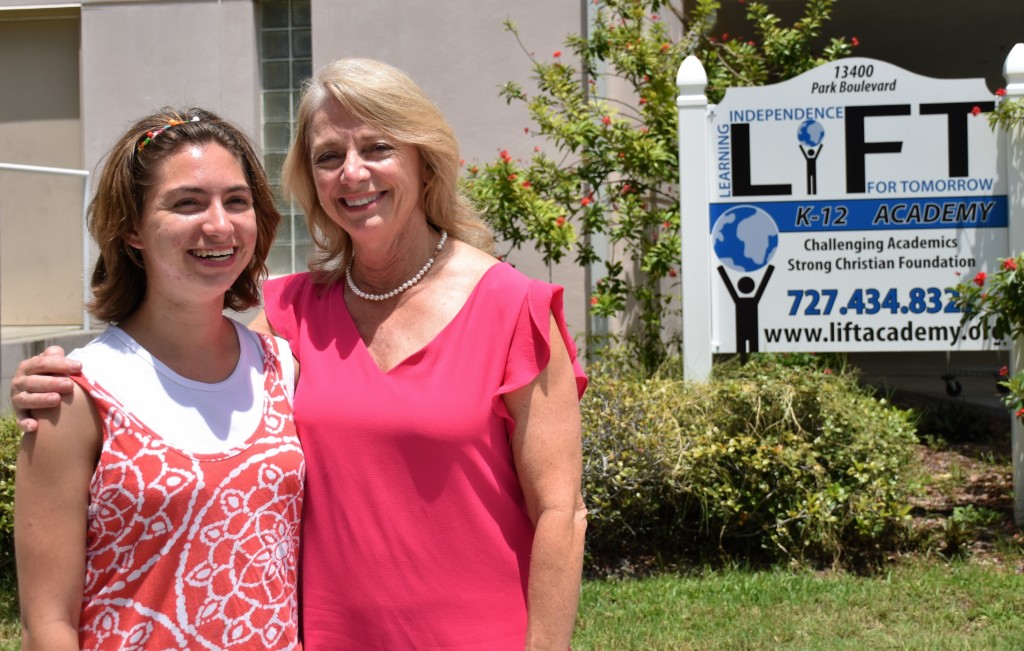
Kim Kuruzovich, an educator with more than 20 years experience in public, private and home schools, is executive director of LiFT Academy, a private school for students with special needs. Of 130 students, 124 attend with help from state-supported school choice scholarships.
SEMINOLE, Fla. – Kim Kuruzovich’s daughter Gina has moderate autism, speech apraxia and dyslexic tendencies. She began a suite of therapies at age 2, then, at age 4, saw a psychologist for an educational evaluation.
The expert wasn’t encouraging.
“He told us, ‘You can look forward to Gina putting pencils in a box,’ ” recalled Kuruzovich, who has more than 20 years of experience teaching students with disabilities.
She and husband Mike drove home in stunned silence. It took a couple of months, but they snapped out of the haze and chose to ignore that doctor. It was the start of Kuruzovich learning to trust her instincts as a parent as much as she trusted her instincts as an educator.
Now, 19 years later, Kuruzovich is executive director of a private school built on those instincts.
LiFT, which stands for Learning Independence for Tomorrow, opened in 2013 with 17 students and five unpaid teachers who wore every hat imaginable. Today, it operates on two spacious, tree-lined church campuses. They serve more than 130 students with special needs, 124 of whom attend thanks to state-supported school choice scholarships.
“I never, ever wanted to go into administration. Ever,” Kuruzovich said. “I only ever wanted to be a teacher. I love teaching. I love seeing the kid get it and feel good about themselves.”
“What I found is I still get it as an administrator, but I get it in a bigger way. Now it’s not just my classroom, it’s every kid in this school.”
Before LiFT, Kuruzovich had taught in public, private and home schools. Her passion and talents helped make LiFT possible.
So did school choice.
Three state-supported scholarships - the McKay Scholarship, a voucher for students with disabilities; the Gardiner Scholarship, an education savings account for students with special needs such as autism; and the Florida Tax Credit Scholarship for low-income and working-class students - allow many LiFT parents to access a school they wouldn’t have been able to afford otherwise. (The Gardiner and FTC scholarships are administered by nonprofits such as Step Up For Students, which hosts this blog.) But those scholarships also opened doors for Kuruzovich and her colleagues. It gave them power to create a school that could best serve those parents – and sync with their own visions of what a school should be.
In Florida, where school choice is becoming mainstream, more and more educators like Kuruzovich are walking through those doors.
***
It’s the first week of the school year, and Kuruzovich is in peak form – gliding through hallways and classrooms, a fast-talking, wise-cracking, blond blur of smiles and warmth.
The sheer number of inside jokes she shares with her students highlights how deep her connection runs with each of them. (more…)
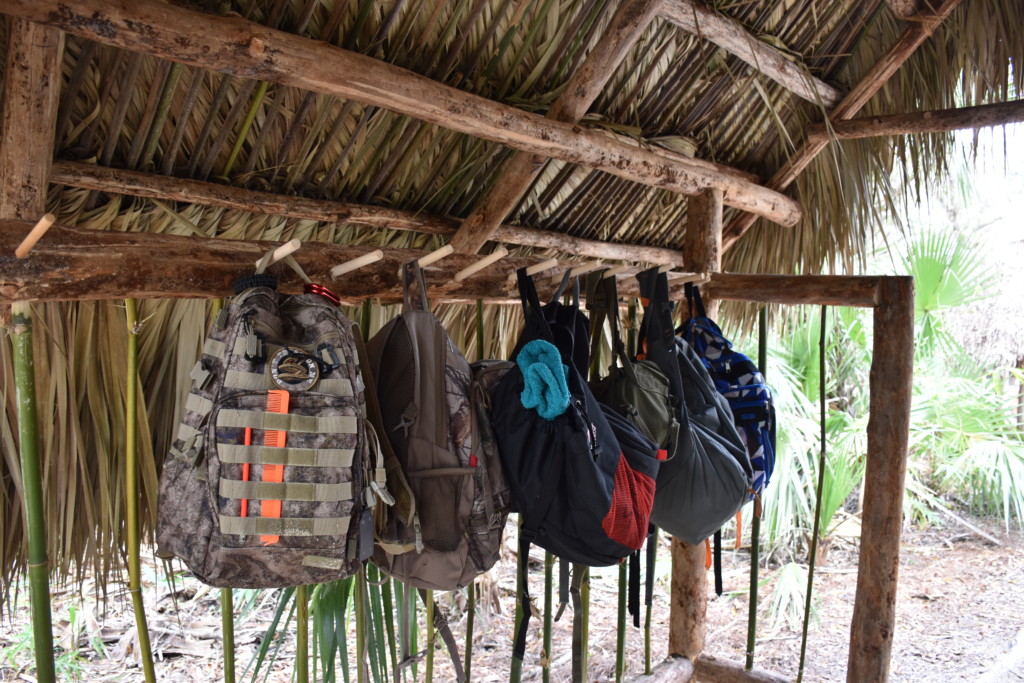
Every structure at the boys' camp site, including this tiki hut, has been built by the campers.
Editor's note: See a profile of Gator Camp student Ross Perkins here.
Fighting, skipping, smoking pot – Jake Clayton’s freshman year in a public high school was a disaster, with explosive anger issues leading to a school record 44 disciplinary actions. Most days, the skinny kid with the mischievous smile would walk off campus and hang at a friend’s house. He failed nearly every class.
After his expulsion, his older sister discovered an off-beat private school called Gator Wilderness Camp, where troubled boys live on 250 acres with cows and beehives and learn to find paths to success. Could this work for Jake?
Jake’s adoptive mom, Virginia Clayton, was desperate enough to give it a shot. And thanks to a McKay Scholarship, a type of school choice scholarship for Florida students with disabilities, she could afford it.
Today, Jake is 17, months from graduating from his virtual high school, and planning to go to college. “The anger never comes out anymore,” he said. “I’d be in a pretty bad spot if I hadn’t gone to camp.”
Since its founding in 2009, Gator Wilderness Camp has served 139 students – nearly all of them on school choice scholarships – and become another distinctive piece in Florida’s increasingly diverse mosaic of educational options. Most of the roughly 2,000 private schools that participate in the state’s scholarship programs could be described as “mainstream,” but there are plenty of niche schools like Gator Camp. State-supported choice programs allow them to cater to the more specific needs of individual students and parents, and the more specific visions of individual educators.
Greg Kanagy, director of Gator Camp, is one of them. The mild-mannered 50-year-old grew up loving the outdoors in Pennsylvania, and earned degrees in physical education and special ed. He liked the idea of combining the two. “But I didn’t relish the thought of spending 25-30 years inside of four walls,” he said.
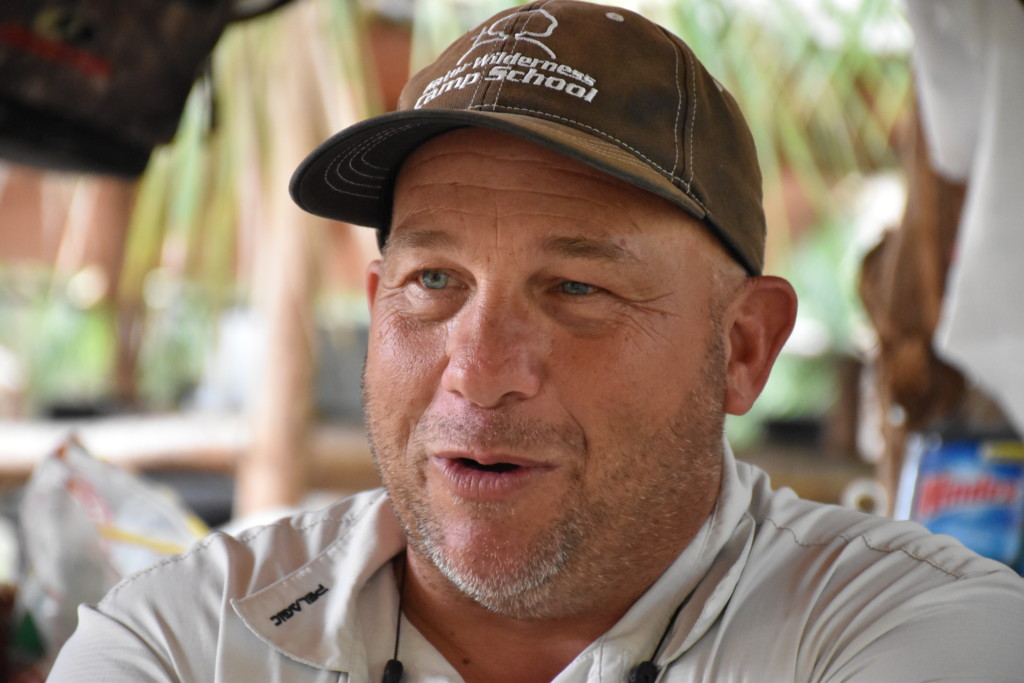
Camp director Greg Kanagy
In South Carolina, he worked for a similar school and found a passion for helping at-risk boys. The concept was inspired by a Texan named Campbell Loughmiller, who developed the first camp near Dallas in the 1940s and helped spread the idea around the country. After Kanagy got his master’s in education, the opportunity arose to move his family to the semi-tropical wilds of southwest Florida and start Gator Camp.
There is no sign on State Road 131 in Charlotte County when it’s time to turn off the paved road. That’s intentional. Isolation is key. A couple of miles down a dusty, white-sand road, the “school” sits, surrounded by vast tracts of farmland. The nearest visible neighbor is a sand and shell mine.
“I was a bit afraid of getting my hands dirty,” Jake said, “but I was up for giving it a try.”
The environment helped. It was hot and buggy, but also incredibly peaceful to hear nothing but animals and breezes making their way through the oaks, pines and cypresses.
The camp serves boys in three separate age groups between 10 and 15, with no more than eight campers in each. Most have special needs or disabilities. Many are deeply wounded. (more…)
 Opening addresses: The governor, speaker of the House and president of the Senate all outline their goals for the 2018 legislative session, which began Tuesday. Gov. Rick Scott makes a pitch for his $87.4 billion budget, which includes raising more money for K-12 spending by allowing rising property values to boost tax revenues. Tampa Bay Times. Orlando Sentinel. Sunshine State News. Palm Beach Post. Politico Florida. Associated Press. House Speaker Richard Corcoran, R-Land O'Lakes, takes direct aim at Scott's property tax plan, saying the House won't allow taxes to go up directly or indirectly. "We have taken this moral high ground, and we will not give it up," he says. Corcoran also vows to protect bullied students by offering them state scholarships to switch schools. Gradebook. Sunshine State News. WFSU. Sarasota Herald-Tribune. Politico Florida. WLRN. Senate President Joe Negron, R-Stuart, says he wants to expand Bright Futures scholarships for college students and K-12 school choice, address the opioid crisis and crack down on sexual harassment. Tampa Bay Times. Sunshine State News.
School choice bills: There are at least 10 school choice-related bills to watch as the Legislature begins its 60-day session. Among them are the scholarships for bullied students, an easing of state requirements for homeschooled children, expansion of a personalized learning program, and more access for special-needs students to use the state's McKay Scholarships. redefinED.
Homeschool bill moving: The House PreK-12 Innovation Subcommittee unanimously approves a bill that would limit the authority local school districts exercise on homeschooled students, and increase those students' access to dual enrollment and career education courses. The bill now heads to the House PreK-12 Appropriations Subcommittee. redefinED. Gradebook. Politico Florida.

