 Editor’s note: With this commentary, redefinED welcomes Julie Young as our newest guest blogger. Founding CEO and former president of Florida Virtual School, Young serves as vice president of education outreach and student services at Arizona State University and is managing director of Arizona State University’s Prep Academy and ASU Prep Digital.
As the world continues to work through the pandemic, teachers and students are back in school wading through the new realities of whatever “school” means these days. Among other things, the pandemic has certainly challenged any notions of a “typical” school model. Indeed, if there is any commonality among schools right now, it is that “typical” may no longer exist.
Where will things go from here?
As we wondered aloud about this, we landed on a few predictions, based on our view of the industry in this moment, and our look back at how trends in tech adoption have played out over the years. Here are a few thoughts:
The switch to tech-supported learning is permanent.
While our natural tendency to look at the past with nostalgia is strong, especially during such turbulent times, educators seem to agree that after this mass exodus to remote learning, things will never go back to exactly what they were. This is both good and bad.
On the negative side, no digital learning professional would have wished 2020 on any teacher. Instantly rolling into remote learning was truly a worst-case scenario. What ensued was more about patching holes and saving the ship than proactively building the ship in the harbor and preparing for launch. Teachers have heroically moved forward, but few will disagree with the idea that today’s version of remote learning is not a permanent landing spot.
Because of the rough transition, it’s not surprising that we have lost teachers in the process, especially those on the cusp of retirement or early in their careers. After weighing the frustrations versus the option to leave, some are opting for the exit, especially in light of the reality that once school is “normalized,” digital learning is highly likely to play a bigger role.
On the upside, some teachers who are willing to take on the task of learning both the tools and the strategies for working effectively within online environments have found the online or blended environment to be invigorating. One seasoned teacher told us recently that teaching online for the first time opened up a whole new world of learning to him, helping him to address his own stagnancy.
At our site-based locations, where classes are still largely remote, students and teachers alike are becoming accustomed to some of the new Web 2.0 tools they have adopted. As teachers use various online tools, they often find new ways to incorporate them into their instructional planning. Since many of the tools teachers are using are free or low cost, we expect the uptick in use of digitally supported learning tools is here to stay, even in brick and mortar schools.
Many students will stay online.
Right now, full-time online learning programs are seeing huge enrollments spikes. In fact, as the 2020 school year approached, here in the network of ASU Preparatory Schools, where ASU Prep Digital lives, we saw many parents hedging their bets – enrolling students in both site-based and the fully online school.
We expect that there will be some “leveling out” when parents have more options for a traditional face-to-face environment and want to go back to what is familiar. At the same time, we know there will be parents and students who may have formerly been averse to an online learning environment but are now seeing benefits that they don’t want to lose, particularly the greater sense of student agency.
Innovation and model experimentation will increase.
Now that teachers and administrators in traditional schools have had to build new models in the worst possible conditions, they will soon be able to take stock of their new knowledge and apply it in a much more proactive and strategic manner.
We expect to see more innovation arising from the pandemic once educators can catch their breath. Over the years, we have always found that when teachers have space to try something new, they become the best source of information on how to improve the innovation on behalf of students.
Alternative school ideas – ‘unschool,’ micro-schools, learning pods, homeschooling, ‘outschool’ – will continue to increase.
Years ago, homeschooling was considered a radical notion, a fringe idea for hippies or religious groups. Today, homeschool is mainstream, and similar ideas are taking form.
“Micro-schools,” which harken back to the one-room schoolhouse notion, were already seeing growth before the pandemic. Micro-schools could be seen as an alternative for those who like the creativity homeschools affords, but they either don’t want to teach their own kids or don’t have the option to do so.
Homeschooling and even “unschooling” models, where curriculum is determined by the student’s interests versus a pre-set curriculum, now have access to online material to enhance and support student learning.
The flexibility inherent in alternative programs like these may be something parents increasingly want to see. While having the kids at home is an untenable situation for some families, others have found themselves surprised by the joy of simply being able to watch their kids in the moment of discovery.
Which leads us to the last point.
Notions about how and when students progress will continue to change.
For some time now, we’ve seen signs that old ideas about how a student progresses through material and grade levels are changing.
At the college level, the trend toward incremental learning with shorter-term certifications and stackable credentials has taken hold. This “incremental learning” trend has moved into the high school and even lower grade levels, with students now able to receive badges and other forms of recognition for learning mastery.
We have always known that students don’t all progress at the same rate, and progression across disciplines and skill areas also varies from one student to the next. For years, though, the idea of building a K-20 learning environment where competency and mastery determine advancement versus age or grade levels was hard to imagine.
Today, digital content and data tools are making it easier to envision a time when students will work toward achieving more and more mastery along a competency pathway, versus a course or grade level. At ASU Prep Digital, we already offer glimpses of this model by pulling down college on/off pathways into the high school program.
Students can opt for in-course college paths to get college credit while still in high school. Our full-time students can potentially earn up to 48 college credits at no cost throughout their high school career at no cost to the families. ASU Prep Digital continually works with innovation centers throughout the university to identify university materials and assets that can be repurposed for learning and for college and career readiness for high school students.
The wholesale dive into remote learning was a worst-case scenario. With every crisis, though, innovations arise, and we expect the pandemic to yield a new cadre of newly equipped educators who are ready to implement new possibilities they wouldn’t have explored otherwise.

Among the remote learning options offered by Wonderschool, a company that matches families to child-care and micro-schools near them, is Base One, a space where students can focus on schoolwork and stay up to speed during the pandemic while receiving access to premium coding education and state-of-the art video gaming equipment they can use after school.
Editor’s note: This commentary from Michael B. Horn, co-founder of the Clayton Christensen Institute and executive director of its education program, first appeared on Substack.
As pandemic pods have spread around the country and reporters and families are trying to make sense of this moment in the sun for micro-schools, I’ve been talking to the different entrepreneurs supporting these experiences for students, families, and educators.
A central question on reporters’ and educators’ minds has been equity. With over 50% of school districts planning on remote learning in the fall, there’s concern that those with the most resources can find or create good solutions, whereas those with the least will be stuck without any suitable schooling and child-care options.
Given the existing opportunity gaps for students from low-income and minority backgrounds before the pandemic, and the assumption that many have suffered deep learning losses since March while those from relatively well-off families likely found learning opportunities through their home environment if not their school, there is heightened sensitivity around the question.
This feels right on the surface.
But a recent conversation I had with Chris Bennett, the founder and CEO of Wonderschool—a company that matches families to child-care and micro-schools near them, gave me pause (you can watch the interview here on YouTube).
Think of Wonderschool like an Airbnb for launching education programs. The company has been operating since 2016. Before the pandemic it was growing fast, as it helped people start infant and toddler programs and preschools out of their homes.
When I asked Chris about the equity question, he urged caution around making presumptions.
“It's really hard to get visibility into what's happening for families all over the country that are coming through this,” he said. “But my guess is [that low-income and middle-income families], they're figuring this out, just along with, you know, very wealthy families that are out there doing this.”
The son of immigrants from Honduras who grew up in Miami in a large family of 31 first cousins where he was the first to graduate from college, it’s a question Chris takes seriously. He credits his own success with having been enrolled in a great preschool program.
As he said, “It's something I think deeply about. You know, the mission of Wonderschool is to ensure every child gets access to the education they need to fulfill their potential. And so, we are very, very committed to every child getting access, especially when I share my story.”
That’s where the second point comes in. Low-income and minority parents are far more likely to prefer that their children do not return to school buildings until the pandemic has passed than their counterparts. For example, according to one survey, 64% of black parents want remote learning versus 32% of white parents. Most families making less than $50,000 want remote learning, whereas 27% of families making more than $150,000 feel the same way.
As Morgan Polikoff, co-director of the study, hypothesized, “These communities may have already been harder hit by the virus, and they have seen more of what the actual impact is on people's health.”
The findings, which have appeared in survey after survey, also suggest that these families do have child-care options in place.
The final thought also goes back to something Chris shared with me.
“What’s really exciting about this movement is this could potentially lead to funding for micro-schools from our school districts, from our state governments, from our from the federal government,” he said. “And if there's funding for micro-schools, just like there's funding for public school or funding for charter schools. Then, suddenly, you know, everyone gets access to a micro-school.”
As Chris observed there’s already a vehicle in some states to do just this: Education Savings Accounts (ESAs), which are funded with public dollars that allow families to spend the money on micro-schools and other education services. In Arizona, for example, ESAs allow students to attend micro-schools from Prenda, a hot startup in the micro-school arena.
“All I keep thinking is why isn't that available nationwide? If that's available nationwide, then the equity component is solved for,” Chris said. “Now the quality component is the next level, that's something that we're going to have to solve for, but that’s an issue about every type of micro-school, no matter how wealthy the parent is.”
Most public schools haven’t eagerly jumped in to support this trend Chris acknowledged, but given the funding exists, he’s bullish about the greater opportunity. And to be fair, there are some districts that have seized the moment to create learning pods themselves and ensure all their students have adequate options, such as the Adams 12 district north of Denver and others featured in this Chalkbeat article.
That resonates because although I’ve argued that disruptive innovation of schooling is unlikely in the United States, I’ve also long hypothesized that if it were to occur, it would come about in the form of an Airbnb platform making home-schooling and micro-schooling far more accessible to many more families who were over-served by the existing schools and just wanted a customized schooling option that fit their needs.
Stay tuned to what happens to Wonderschool. It was one of the hot startups before the pandemic hit, but in supporting micro-schools, it appears they are remaining relevant and will continue to grow. And in so doing, another part of the Wonderschool story is that they are enabling educators to earn significantly more money by pricing their services in the market. As Chris shared, one preschool teacher on their platform was able to earn the same salary that she earned in a year in just a month and a half by starting her own school.
To attract the talent in the teaching profession that children need to develop, that could also be a game-changer.
To continue reading this article and to learn why Horn believes community colleges shouldn’t be the answer to upskilling in America, click here.
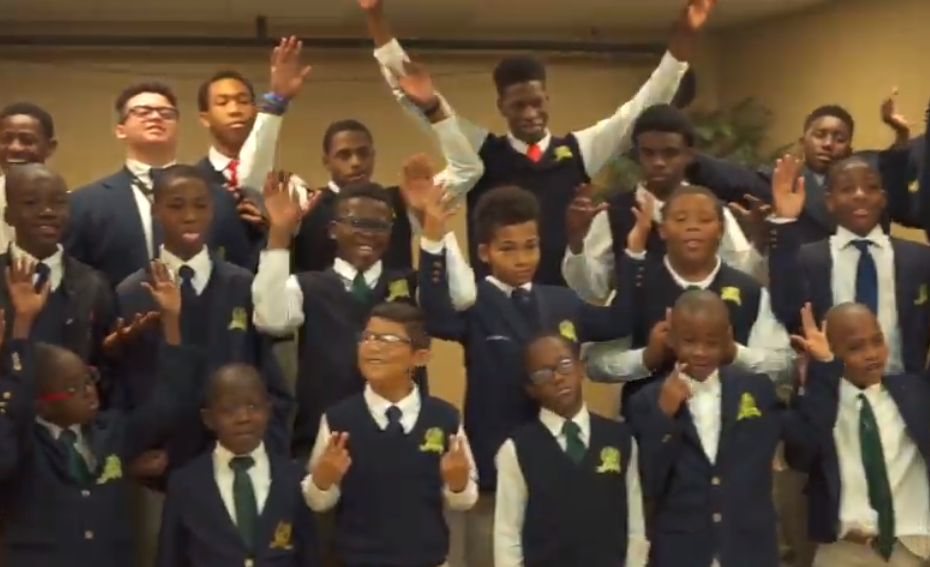
Piney Grove Academy in Fort Lauderdale, a college-preparatory school for boys from kindergarten through high school, is one of two Florida private schools that had an exploratory conversation with innovative education leader Prenda.
A network of non-traditional schools that has attracted nationwide attention from families seeking safe learning options during the pandemic could be part of Florida’s future.
Arizona-based Prenda, which launched in 2018 and now boasts more than 200 partnerships with private schools, public school districts and individual public charter schools, features online learning programs adaptable to individual students that are aligned with state learning standards. The Prenda learning model has been described as a cross between a school and a scout meeting, with students gathering in homes, community centers, libraries and other public spaces to work on individual lessons and group projects.
Prenda leaders recently held a call with a couple of Florida private school principals to gauge interest in starting partnerships here. No decisions were made, but school director Frances Bolden from Piney Grove Academy in Fort Lauderdale said she was impressed with Prenda’s model.
“When I hear about something new or innovative, I want to learn more about it,” Bolden said.
Faith-based Piney Grove serves boys in kindergarten through high school. Bolden, who started a one-room schoolhouse for a small group of U.S. military children in Bangkok while her husband served in the Air Force, acknowledged that finding a Prenda micro-school host location would be challenging in South Florida, one of the hardest hit places in the nation for COVID-19 cases, where most schools are re-opening online.
A bigger challenge is equity. In Arizona, education scholarship accounts give parents the flexibility to choose Prenda or other private options without having to pay tuition. Prenda founder Kelly Smith said the company is working on a low cost, private pay model for families in states that don’t provide school choice funding as more parents are seeking alternatives to district schools amid the pandemic.
Florida’s model for education choice has been to grant private school scholarships to lower-income families, with education scholarship accounts limited to students with certain special needs. Education choice advocates say that allowing all families to have flexible spending would allow innovation to not only flourish but also create more equity in education.
Jason Bedrick, director of policy at EdChoice, a national nonprofit that advocates for more private options in education, said the average per-pupil spending on education nationwide is $15,000. “If a portion of those funds … were to follow the child into the learning environment of their choice, that would allay a lot of equity concerns and provide more opportunities to lower income students,” Bedrick said.
Despite the challenges, it’s clear that school leaders nationwide are tempted by the model’s practice of pairing groups of eight or 10 students with an adult “guide,” a teacher, parent or another individual who has experience working with young people and has passed a background check. The guide leads students through projects such as building robots, staging theatrical productions, and hosting and judging their own debates. Students also create reports, artwork, videos, computer programs and dance routines. Lessons are self-paced, with students setting their own goals.
The Prenda micro-school model now spans 29 states, with a huge upsurge of interest since COVID-19 struck, as evidenced by website traffic: a whopping 737% increase in June compared to June 2019.
To listen to Step Up For Students’ president Doug Tuthill’s podcast with Prenda CEO Kelly Smith, click here.
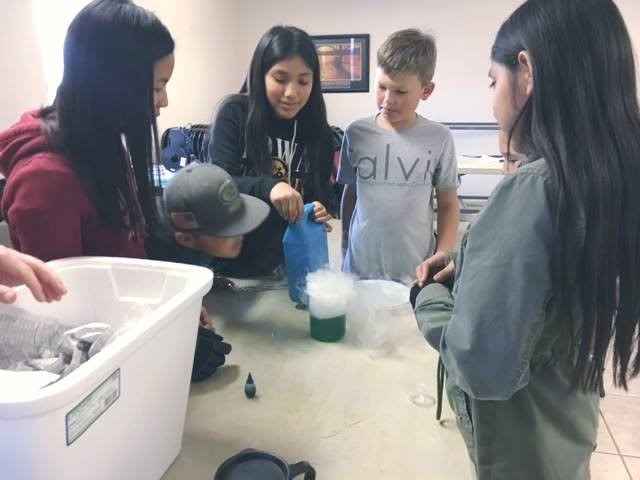
Students at Hadassah John’s school on the San Carlos Apache Reservation in Arizona participate in hands-on activities to spark curiosity. John opened the school to give families an alternative to their F-graded district public school.
I had the opportunity recently to visit a new, small private school on the San Carlos Apache Reservation in Arizona. The school illustrates an education trend that is providing a new avenue for addressing America’s largest achievement gap.
The United States has done very poorly by Native Americans, including but hardly limited to K-12 education. Starting in the late 19th century, a group of “Indian Schools” was established. Authorities forcibly separated families and attempted to forcibly assimilate students, even beating them for speaking their native language. In addition to being barbaric and illiberal, these and other federal efforts have left Native American students with the largest achievement gap in the country.
The opposite of foreigners creating schools and forcing children to attend them is to have the community create its own schools and give families the opportunity to enroll. Arizona’s suite of charter and private choice policies has been expanding these opportunities over the years, and there has been progress.
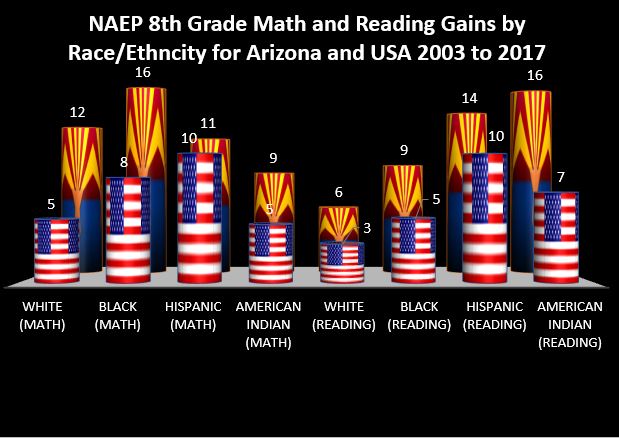
As the chart above shows, Arizona has been making greater academic progress across all student subgroups than the national average, including with Native American students. The challenges, however, remain daunting. Many reservation areas are rural and remote, making it difficult to launch and maintain charter schools. All Arizona racial/ethnic subgroups scored equal to or above the national average on eighth-grade math and reading in 2017 except Native American students. Despite the gains, these students have yet to catch up to their peers nationally, much less to those peers’ Anglo averages.
A new school on the Apache Nation, however, points to a new hope. A Democratic senator from Arizona’s Navajo Nation pushed legislation through years ago making residents of Arizona reservations eligible to receive an Empowerment Scholarship. In January 2019, a small group of these students began participating and created a new private school.
Hadassah John, the school’s teacher, attended Apache reservation schools. She became inspired to start a new school because public schools in the area were low-performing, and her students experienced bullying and a lack of academic challenge. The local school district spends well above the Arizona state average but earned a letter grade of F from the state. Parent reviews, and even a teacher review, on the Great Schools site are scathing. John felt the community needed an alternative.
“I believe a child cannot learn if, one, they do not feel safe; and two, if they are not understood. This alternative offers each child (a chance) to learn at their own pace. They do not have to feel insecure or inferior to the student sitting next to them,” John noted.
Students at John’s schools focus on hands-on projects. On the day of my tour, a visiting Stanford graduate student was assisting them with designing and printing 3-D objects. They obviously were having fun.
John, who runs the school from a church campus, has raised $5,000 to purchase supplies and technology. She hopes to add a second class of students in the fall, and despite many obstacles, may be on the forefront of a new teacher-led model of education.
In her words: “If there is no joy in what you do or believe, it is harder to carry with you. There are a lot of challenges I have faced since Day 1. I have used each challenge thrown at us as a brick to help build a bridge for students to cross from hopelessness over to success and education.”
When I shared with John that I recently heard a 44-year veteran teacher relate on a radio program that “the joy has been strangled out of the profession,” and that the problem in education is not a lack of money, she responded with a quote from Albert Einstein: “It is the supreme art of the teacher to awaken joy in creative expression and knowledge.”
From what I saw during my visit, it looks like joy is fully awake at this new school.
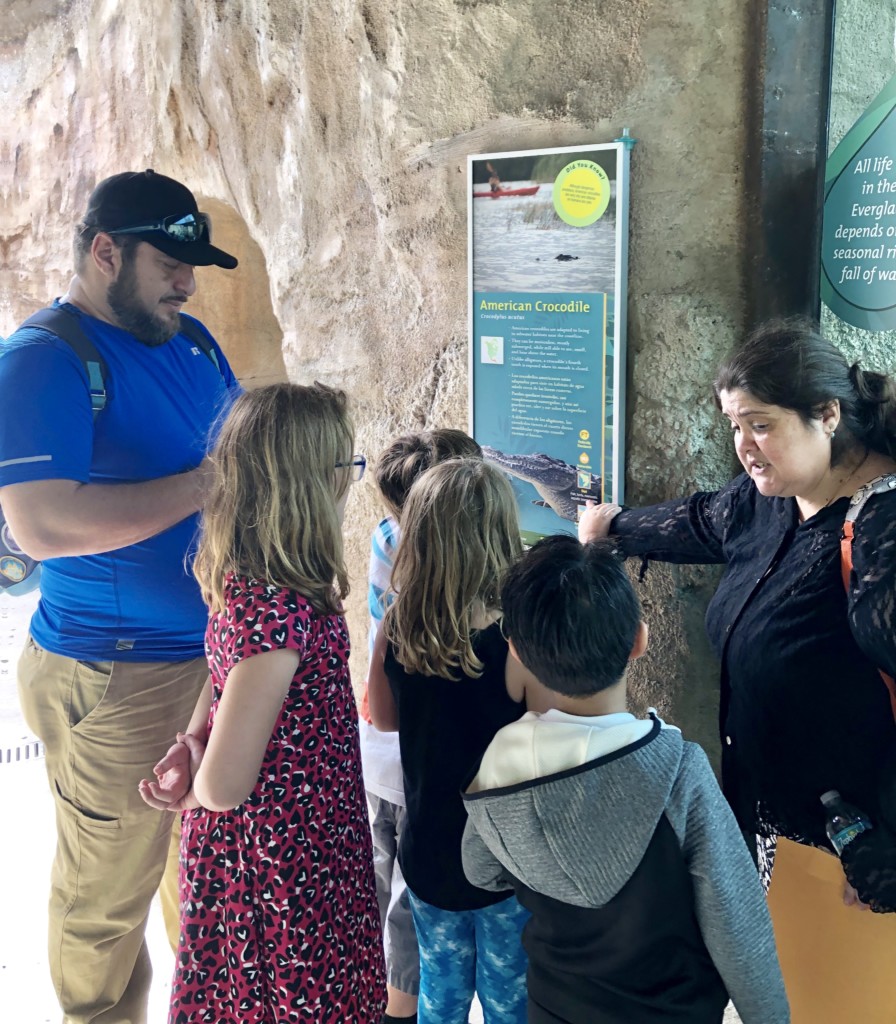
Each of Ana Garcia’s home education students has a personalized education plan, which she’s aligned with the state of Florida’s education standards. Garcia worked in public schools for 12 years as a middle school English teacher, curriculum specialist and school-level director for accountability and instruction.
The American film classic Aliens features a group of futuristic Marines who bite off more than they can chew when a distant colony they’re exploring turns out to be a lair of deadly space monsters. Private Hudson, played by the late, great Bill Paxton, melts down in a panic. Sigourney Weaver’s Ripley reminds him that a young girl they had rescued, Newt, had survived for weeks on the space station with no weapons and no training, prompting Hudson’s memorable question: “Why don’t you put her in charge?”
Well, why not indeed? As the film continues, it becomes increasingly clear that Newt was far savvier than any of the Marines, Hudson in particular.
 redefinED author Ron Matus recently reported from Miami, a K-12 education frontier, on former public schoolteacher Ana Garcia. “Miss Ana” rediscovered her calling by providing a group of special needs students with the education they need – in her home. An educator with a special needs son, she realized the system wasn’t working well for her as a teacher or as a mother.
Garcia is far from alone on either front.
She loved teaching in district schools. But over the course of a decade, her passion ebbed. Too many mandates. Too much violence. Too little help, in her view, for students with disabilities.
Her experience resounds throughout the research on public school teacher retention.
For years, teachers have cited working conditions as the primary reason for leaving the profession, outpacing compensation. Garcia didn’t lose her ability to serve children with disabilities, but she lost her willingness to operate in a broken and frustrating system. Her experience also is consistent with teacher shortage research. A universe of veteran teachers who love to teach have lost their willingness to function as a cog in a bureaucratic machine.
Garcia’s experience as the parent of a special needs child, sadly, also is not unique. Matus writes:
Frustrations began to mount for Garcia the mom, too.
In Pre-K, Kevin was happy and learning in his neighborhood school, in a class with five kids and two teachers. But for kindergarten, he was assigned to an inclusion class with 25 kids, one teacher and one “floating” teacher who toggled between multiple classrooms. Garcia said Kevin’s clothes weren’t being changed when he soiled himself. He wasn’t being fed.
Then Kevin began escaping from class and, somehow, running all the way to a parking lot before being stopped. The first time, Garcia was frightened. The second time, shocked. The third time, angry.
In 2014, after 12 years as a middle school English teacher, curriculum specialist and school-level director for accountability and instruction, Garcia called it quits.
An old expression holds that if you want something done right, you do it yourself. The Gardiner Scholarship has empowered Ana Garcia to educate not only her son, but other students as well.
Miss Ana is back, and this time, she’s the one in charge. Matus continues:
Off the grid, homeschoolers are DIYing into increasingly sophisticated co-ops and enrichment programs. Micro-schools, whether mini-chains or one-offs, are pushing the limits of what’s possible. In Florida, choice scholarships are giving a more diverse mix of parents the opportunity to go small or go home.
Garcia envisions a micro-school that can also serve home education students who want part-time services, combined with a center for Applied Behavioral Analysis. In the meantime, she’s the mutineer at the heart of her cluster, connected to a blooming constellation of other clusters.
A few months ago, I posed the question: How are Florida policymakers planning to provide the human and physical capital to deal with a large projected increase in the student population, Baby Boom teacher retirement and increased facility needs, and increased Medicaid and pension demands all at the same time. Is the plan to somehow money-whip potential public schoolteachers into actual public schoolteachers when the state lacks the money for whipping, and teacher exit surveys show other issues, some listed above, loom even larger than pay? If so, the state might need a new plan.
Florida, like every other state, can’t hire enough special education teachers for public schools, even as it spends $400 million on space for 14,500 children – which looks like about $27,500 per space by my Texas public school math. Garcia sounds like a fantastic special education teacher, and she teaches in her own home. Right about now, I’m hearing a psychic scream from a frightened person with somewhat reactionary K-12 policy preferences: “How are we going to hold her accountable?” Answer: Families will rate her online and other families with have access to the ratings. Elegant and delightfully lacking in bureaucracy.
Ana Garcia offers a solution that families need. Florida has many more potential solutions in the form of teachers who got fed up like Miss Ana. Why don’t you put her in charge by giving more families the ability to lure her back into education – this time as the leader of her own school?

