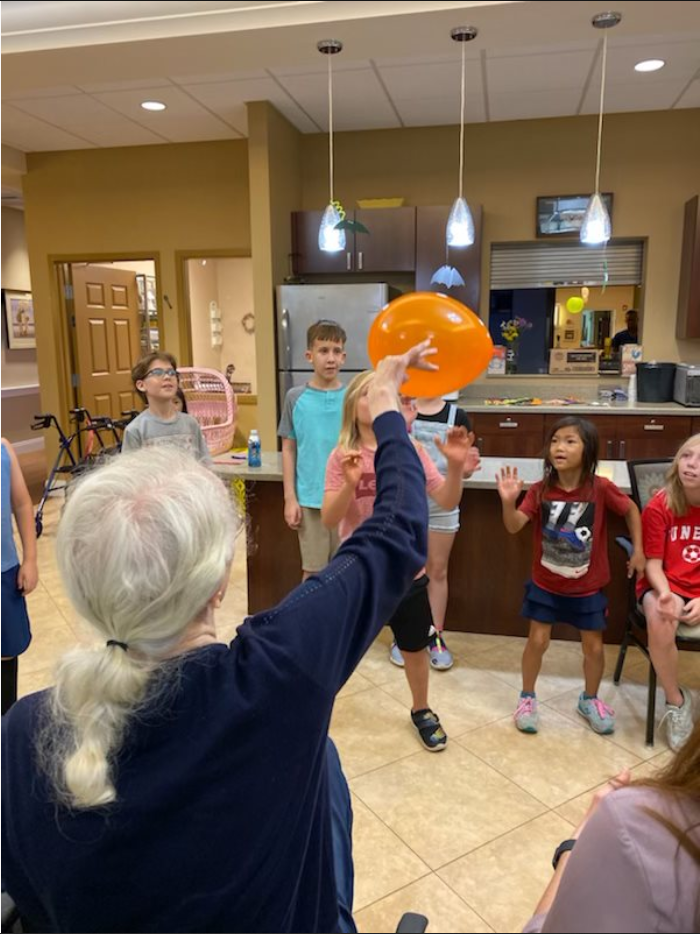
Educator-entrepreneurs at schools such as Service Learning Microschool in Clearwater, Florida, are establishing networks of trailblazers with similar backgrounds and goals who can provide members with emotional and practical support, yield mentors, and inspire the next wave of entrepreneurs.
Editor’s note: James Shuls, an EdChoice fellow, distinguished fellow in education policy at the Show-Me Institute, and former dean of the College of Education at Southeastern University in Lakeland, Florida, recently worked with Michael Q. McShane, director of national research for EdChoice, as an adviser on research conducted by Step Up For Students that culminated in a new report titled “How Can I Stay In It But Not Stay In It?” Shuls provides additional commentary here on the report, first published on the Show-Me Institute’s website. You can read the full report here.
Being an entrepreneur is hard work. Or so I’m told.
I’ve never actually been an entrepreneur. From what I gather, to become one you must have an idea of a product or service that other people want. And you must be able to produce that good or service for a price that other people are willing to pay.
Those two things are key. Without an idea, you’ve got nothing. Without customers, your business will flop.
We rarely use this sort of entrepreneurial thinking in education. For one, the vast majority of students—roughly 90%—attend a public school. Charter public schools are growing in this sector, but traditional public schools still enroll, by far, the most students of any school type.
Of the roughly 10% of students who attend private schools, most attend some sort of religious school. Catholics have historically served the lion’s share of private school students.
With public and church-sponsored schools dominating the landscape, there has never been much room for entrepreneurs. Even if someone had a great idea, they would struggle to compete with free public schools or church-supported private schools.
That is beginning to change.
In places such as Florida, where school choice programs allow students to attend private or microschools with publicly supported scholarships, we are seeing the start of something interesting—teachers becoming entrepreneurs.
I recently had the pleasure to serve as an advisor on a report conducted by Step Up For Students, a “state-approved nonprofit scholarship funding organization that helps administer four scholarships for Florida schoolchildren.”
Step Up conducted focus groups with former public school educators who left the public school system to start their own schools. These teachers thought they had a great idea to serve students, and thanks to the scholarship program, families had the means to pay tuition at the schools.
Check out the terrific slide deck or the video below to learn more about these teachers turned entrepreneurs.

Marie Echevarria, an Orlando district high school teacher, was one of several Florida parents who thanked lawmakers for their expansion of education choice during the recent legislative session.
In a May 24 Forbes piece titled, “Oh, what a year for school choice,” Mike McShane, director of national research at EdChoice and a redefinED guest blogger, references legislative outcomes in Florida not once, but three times.
What’s more, Forbes chose to illustrate the piece with an Associated Press photo of Florida Gov. Ron DeSantis celebrating the passage of HB 7045 at one of two schools he visited the day of the bill signing.
“It has been hard to keep up with the number of school choice programs state legislatures have created so far in 2021,” McShane writes. “As sessions across the country wrap up, it is worth pausing to underscore just how massive the wins for the educational choice movement have been this year.”
McShane points to Florida for converting one of its scholarship programs – the McKay Scholarship Program – into an education savings account program, allowing more students to have access to ESAs. He includes Florida in the list of states along with Arkansas, Georgia, Indiana and Maryland that expanded their voucher programs, allowing either broader eligibility, increasing the amount of money available for vouchers, or both.
He also names Florida, along with Arkansas, Indiana, Iowa, Kansas, Montana, Oklahoma and South Dakota, as a state that either created new tax-credit scholarship programs or expanded eligibility or funding for their existing programs.
In total, McShane writes, 13 states have created five new programs and expanded 13 existing programs, providing new opportunities that previously were financially out of reach for hundreds of thousands of families across the country.
The upshot? A majority of Americans, a super majority of parents, and increasing numbers of state legislators and governor seem to agree that education choice is a good thing – and that it’s here to stay.
You can read McShane’s full commentary here.

