David Osborne recently predicted academic doom for red states having recently passed universal private choice programs. “This will accelerate the process of the rich getting richer while the poor fall further behind,” Osborne asserted. Osborne problematically ignored our nation’s actual experience with universal choice programs, making his column more a litany of faith than a clear-eyed analysis.
Osborne predicts a bleak future for states with universal private choice programs, with poor families left behind. Osborne prefers a charter school model of choice, keeping choice within the public realm of regulation and accountability:
"Is there an alternative, other than the status quo of struggling public school systems? Indeed there is. States and school districts could reduce bureaucratic controls, empower educators and increase choice, competition and accountability for performance within the public school system, through the spread of charter schools. Cities that have done so, including New Orleans, Washington, D.C., Denver and Indianapolis, have produced some of the nation’s most rapid improvements in student performance."
Arizona lawmakers created the first universal private choice program in 1997, the nation’s first scholarship tax credit program. Decades passed before another state enacted a private choice law with equally expansive eligibility. Three years earlier, in 1994, Arizona lawmakers had created two de facto public universal choice programs in the nation’s most robust charter school law and a statewide district open enrollment statute. “Large” and “relatively lightly regulated” would accurately describe Arizona choice programs, both public and private. Arizona lawmakers expanded and supplemented scholarship tax credits repeatedly; the Arizona charter sector became the largest among states, and open enrollment between and within districts dwarfed both in combination. Arizona created the nation’s first education savings account program in 2011 and expanded eligibility several times before making it universally available to Arizona K-12 students in 2022.
Given Osborne specifically cites four jurisdictions with the sort of choice programs of which he approves- Denver, Washington D.C., New Orleans, and Indianapolis, it seems in order. The Stanford Educational Opportunity Project provides academic growth data by jurisdiction (schools, counties, and states) and student subgroups for the 2009-2019 period. Comparing the rate of academic growth for low-income students in each of these four jurisdictions with those of Arizona counties in Figure 1:

Academic growth is a very important academic measure. While raw scores are very strongly correlated with student demographics, growth is much less so. Scholars widely view academic growth as the best measure of school quality. Many years into exposure to universal choice programs, Arizona’s low-income students seemed to be too busy learning to suffer Osborne’s predicted calamities. Greenlee County is a rural and remote area of Arizona with approximately 1,500 students and (alas) no charter or private schools during the period covered by the data. In this measure, a “zero” basically entails having learned a grade level worth of material per year on average, so the performances for Denver, DC and Orleans Parish are respectable, Marion County (host county of Indianapolis) less so.
The Stanford Educational Opportunity Project also measures the gap in learning rates by subgroup, which is measured by subtracting the learning rate of poor students from that of non-poor students. The four jurisdictions lauded by Osborne ranked first, second, third, and fifth in comparison to Arizona counties in terms of the amount of learning rate inequality between poor and non-poor students. There was exactly one state that had a positive rate of academic growth for both poor and non-poor students and had a faster rate of academic growth for poor students. It is the state marked “1” and spoiler alert…it is Arizona, the host of multiple universal choice programs.

Osborne’s hypothesis held that what some would regard as wild, lightly regulated “let it rip” choice programs would prove to be a disaster for low-income students, and conversely, well-regulated choice programs should advantage the poor. In practice, however, we find evidence to support the opposite conclusion. These results would not have surprised Milton Friedman in the least:

The results in the above figure also sit comfortably with the diagnosis of John Chub and Terry Moe, who identified politics as the central flaw of the American public school system. The American public school system does not do a terrific job on average in educating students, but it does a fantastic job in maximizing the political power and revenue of employee unions and their associated fellow travelers. Attempting to set up a governance structure of politically disinterested technocrats who will give families just the right amount of freedom and just the right amount of regulation comfortable for technocrats is an appealing theory. In practice, the most powerful and reactionary forces in modern American politics hijack the project easily unless a powerful, supportive constituency rises to defend the programs.
Milton Friedman first proposed giving families control of their children’s public education dollars in his 1955 essay "The Role of Government in Education." Friedman argued that the best way to improve student learning was to make the public education market more effective and efficient, and this could happen only if families were empowered to choose their children’s schools. Friedman believed the quality and efficiency of schools would improve if they had to compete for customers (i.e., families) rather than the government assigning families to schools. He further believed that a market-driven public education system would be more equitable and especially benefit lower-income students.
Wisconsin state Sen. Polly Williams was a Black Democrat from Milwaukee who in the late 1980s wanted to help lower-income and minority students attending what Williams described as “failing schools.” Like Friedman, Williams’ solution was school choice, but her approach differed. While Friedman’s market solution was designed to improve the entire public education system, Williams’ focus was not systemic improvement. Her intent was to help lower-income and minority students trapped in failing district schools by giving them public funds to attend private schools.
Williams’ vision became reality in 1990 with the passage of the Milwaukee Parental Choice Program (MPCP), which became the nation’s first publicly funded school choice program. Willams’ approach, which became known as the social justice model of school choice, emerged as the prototype that most school choice advocates and state legislatures embraced for the next 20 years. A small and persistent group of school choice advocates continued to promote Friedman’s market solutions, but social justice remained the dominant school choice rationale.
The first steps toward the merging of the Friedman and Williams models of school choice began in 2011 when Arizona passed the nation’s first education savings account (ESA) program, and in 2014 when Florida began creating the country’s largest ESA programs.
ESAs are flexible spending accounts that families may use to pay for a variety of education products and services in addition to private school tuition and fees.
Jack Coons and Steve Sugarman were among the first to advocate for a voucher with ESA-type functionality when they called for "divisible vouchers" in their 1978 book, Education by Choice. Friedman also called for flexible spending vouchers in a 2003 interview with Education Next.
By enabling families to spend their public education funds on education products and services beyond schools, ESAs allow the supply side of the public education market to expand, which in turn encourages more families to use ESAs, which in turn causes further expansion of the market’s supply-side, which then causes even more families to use ESAs. This ongoing interaction between supply and demand and the information that is shared through this continuous exchange is key to how Friedman envisioned the public education market better serving all students. Particularly those students Polly Williams was most concerned about.
In 2021 West Virginia created an ESA program with no eligibility restrictions other than age and residency. Eight more states have followed West Virginia’s lead, and today Alabama, Arizona, Arkansas, Florida, Louisiana, Iowa, Ohio, Oklahoma, and Utah also have passed various types of ESA programs with universal eligibility. While these states are not all funding every eligible student who wants a scholarship, their ESA programs are growing the demand side of their public education markets. Florida funded over 405,000 ESAs in the 2023-24 school year.
Moving forward, the merger of Williams’ social justice vision with Friedman’s market-based approach for achieving this vision will accelerate as more states give all their students access to ESAs.
The nine states currently working to implement ESA programs with universal eligibility have work to do before their public education markets successfully address Friedman's and Williams’ social justice aspirations.
Determining the proper barriers to market entry for supply and demand is an ongoing challenge. For example, should ESA-funded tutoring be limited to state certified teachers, or is that too restrictive? Should ESA-funded tutors only be required to pass a background check, or is that not restrictive enough? Should homeschool parents who are teaching their children be able to pay themselves with their children’s ESA funds? If not, are we blocking lower-income families from participating in homeschooling?
ESA financial transactions present another challenge. In some states, they are cumbersome and costly. Requiring detailed documents for reimbursements and reviewing every reimbursement request regardless of the amount is expensive, time consuming, and delays payments to families, which puts undue financial pressure on lower-income families. States need to decide if the benefits of reviewing every ESA purchase, regardless of the amount, are worth the costs.
Information is the lifeblood of every market. Without access to the appropriate information, families cannot make good purchasing decisions and good purchasing decisions is how families teach educators (i.e., the supply-side of the market) what they need and want. States need to determine what information families require to help ensure they are purchasing the most appropriate educational services and products for each child. States should also ensure busy families can easily access this information.
These regulatory issues are challenging because of the magnitude of the transformation the public education market is undergoing in ESA states with universal access, and the contentious political environment in which these market improvements are occurring. But these challenges must be successfully addressed if the Friedman/Williams model for achieving greater equality of opportunity through a more effective and efficient public education market is to succeed.
From redefinED co-host Doug Tuthill: Milton Friedman and Jack Coons were intellectual giants in their respective disciplines (Friedman in economics and Coons in law) and strong school choice advocates. But their rationales differed and this led to many interesting - and often contentious - debates. Despite their differences, their debates were always courteous and civil. So when Dr. Friedman died in 2006, his foundation asked Jack to write a chapter in a book honoring Dr. Friedman’s memory, and he agreed. Today is Dr. Friedman’s 100th birthday, so we again asked Jack to share some thoughts on Dr. Friedman, and again he agreed.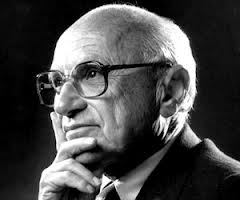
Milton Friedman was an economic libertarian of singular intellectual purity. I am less pure, and to me Friedman’s way of modeling the ideal educational triangle of parent, school and child has seemed a simplification limiting our perception of the social implications and, thus, of the politics of choice. I have said all this before. Why, then, do I gladly join this chorus of praise for what I have criticized?
It is not from mere personal fondness for the man. It is, rather, because it was Friedman’s specific application of free market dogma to schools at a particular historical moment that made it possible for a vigorous critique of the American model even to begin. His cry in the night may not have been the first; nor was it the sufficient cause of the great awakening—but it was probably necessary.
Our national mind had long been frozen in admiration of an arrangement comfortable to the middle class, but incapable of realizing education in a democratic way. There is no version of our historic district model of school assignment, even with charter schools, that can in practice achieve what the Europeans honor under the cumbrous but useful title “subsidiarity.” That word warns us to keep authority over the lives of persons either in their own hands or as close to the individual—and in as small a group—as possible. If bowling were our subject, few of us might prefer bowling alone, but neither would we wish to be directed by government to bowl with the people next door.
Left to themselves, humans cluster freely in diverse ways, most of which are innocent and some even creative; their clumps and hives are generally the better for having been chosen. And, if diversity and the smaller unit can serve the purpose, let us lodge the power there.
Subsidiarity could be realized only in a corrupted way by our old district systems. True, some of us can choose to bundle in Beverly Hills, but…and you know the rest of that story; it is daily thrust in our face by the media, and it is true. Many among us just can’t choose Beverly Hills. So at government command my child must learn whatever ideas happen to get taught and whatever behavior gets encouraged in Berkeley.
It was Milton Friedman who in our time rediscovered and announced that this fate of the have-not child was neither efficient nor necessary. A lot of people heard him. Most who did were at first shocked that this sacred cow of democracy, the public education system, had been labeled as a clumsy, self-defeating, anti-social monopoly. But some did begin to listen. And in spite of the system’s sputtering and posturing, they still do. Friedman’s defamation of the schools has begun to stick.
I think he actually underplayed his hand. (more…)

