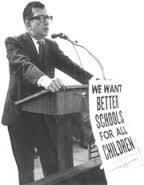
 Again on Sunday, the pages of the New York Times managed to confuse the nature and history of school reform. The op-ed by Richard Kahlenberg and Halley Potter credits the late Albert Shanker with "The Original Charter School Vision." Now, however one judges the weight of Shanker's nimble ideology, charters were not his baby until late in the game. Nor do the authors appear to grasp even what the idea of charters was - and is. They see this "vision" as "freeing up teachers and integrating students"; an apparition said to have been delivered to Shanker during a 1987 visit to Germany.
Charters, of course, do "free up" teachers, but only insofar as they free up parents to choose them. They are merely an obvious (and much older) suggestion of one legal form that "voucher" schools may take. They are, first and foremost, about lower-income families and the crying need to give back to them the authority and liberty enjoyed by the best of us. Charters are a way to privatize schools that nominally remain in the public sector and - so far - are forbidden to teach religion.
Schools that are privately owned and operated in the "public" sector were part of the discourse of the 1960s. Their specific terms and structure were exemplified in a 1971 volume by Stephen Sugarman and myself, published by the Institute of Government Studies. There ensued a sad story that is worth a brief telling.
Following the passage of California's Proposition 13, in the early summer of 1978, a Democratic congressman who had read our new volume, "Education by Choice," invited Steve and myself to dinner to discuss the political possibilities for school vouchers. That evening we agreed to draft a family choice initiative for the 1978 California ballot; he would do the necessary political stuff and raise the money after the campaign for the November elections. We completed the drafting. Leo Ryan did get re-elected. But then he was murdered in Jonestown.
Already deeply committed, we proceeded on our own, imagining that the libertarians at least would finance the effort. To our dismay, Milton Friedman effectively opposed our effort as being overregulated and our own initiative evaporated as a political possibility.
Who should care about such a scrap of history? (more…)
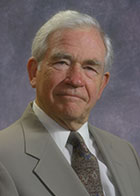
Coons: "The health of the lower-income family is under siege from many an enemy. But none is more insidious than the conscription of its children."
Arguments for subsidized parental choice date to the 18th century. Kept in check by the dominant political mystique that came to favor government schools, the idea lay largely dormant in the U.S. until the 1950s. The sadder realities of monopoly public schooling - especially for the poor - began at last to emerge after World War II, at the same time America was rediscovering the lure of the free market, temporarily obscured by war and depression. The possibility of profound structural reform brought many of us to give a fair hearing to Milton Friedman’s revival of the choice thesis. His prescription seemed simple; if society would subsidize the customers of schooling instead of monopolistic government providers, America would be smarter, and individuals would be freer and more self-satisfied.
To the mind of many hopefuls this looked a good idea, in part for its very simplicity. And, in an important sense, subsidized choice is, indeed, simple. Who needs school boards and their agents to decide where Susie learns her ABCs? As the consumer chooses soap, so the consumer would choose the formal educator.
But in fact school choice differs from the ordinary free market in important ways. And its champions’ own failure to confront these differences in public forums helped scar the rocky political path that choice would have to trudge until this generation. The irony is these very differences and complexities would largely cut in favor of the idea as a realistic political hope. In recent decades the debate happily has opened up, inviting a richer and more balanced discourse and - paradoxically - allowing us to illuminate at least one complexity whose neglect in choice politics had impaired our capacity to grasp implications of school choice far richer and more positive than the picture of the consumer getting her private druthers in a free market.
The central term in market discourse is freedom of the individual, which, properly understood, is a very important idea. And it is true that, for lower-income families, the present regime in schooling represents the antithesis of freedom. Bureaucratic strangers either decide the specific school for the child or closely limit parental choice to public charter schools. To this point the pure market argument was and remains correct. What its champions had failed to explore (and exploit) was their own peculiar twist on the term “freedom,” a concept which in market scripture denotes an act of pure self-determination by the individual who chooses. Choice of schools is hardly such an act, at least in respect of the person most affected - the quite un-free child. Some adult will decide for every boy and girl; the great and only question is: Will the adult be a parent or some complete stranger representing the state? The promotion of parental choice as policy obviously invites more than ordinary market justification.
To say this is in no way to denigrate the role of choice in the achievement of the parent’s own freedom. Indeed, at last it invites the parents’ deep immersion in the individual and social consequences of schooling. In contrast to blind assignment by government, choice of a particular school by fathers and mothers is an act of adult free expression. More, the parental delivery of this message to child and to society is a primary experience for that very adult who has done the choosing. In a vivid way, parents see themselves - perhaps for the first time - as civic actors and, equally important, as responsible players who - unlike the bureaucrats - must live with the consequences. (more…)
 Arizona: David Garcia, a Democrat and candidate for the open State Superintendent of Public Instruction seat, opposes private school choice so long as public schools are not "fully funded." Garcia says he is a supporter of public charter schools (Eastern Arizona Courier).
California: Rocketship charter schools expand and modify their blended learning model to empower teachers with more flexibility and control of their classroom (Education Next).
Florida: Step Up For Students will issue more than 60,000 scholarships to low-income students this school year, allowing many more parents to send their kids to private schools (Tampa Bay Times, Miami Herald). Meanwhile, school choice champion and education commissioner Tony Bennett resigns amidst a school grading controversy in Indiana (Tampa Bay Times, Miami Herald). Florida school choice supporters are disappointed to see him go ( redefinEd).
Kansas: Georgia State Rep. Alicia Morgan (D-Cobb County), a rising star in school choice and ed reform circles, visits Wichita, Kansas to discuss benefits of school choice (Kansas.com). A Kansas City charter school has been sued because it owes over $10.6 million to creditors, with much of the debt coming from buying, renovating and equipping the school building (Kansas City Star).
Louisiana: The state's new "Course Choice" online program now has more than 1,000 students on the wait list (Education Week). More than 3,000 students enrolled in it (Politico). The Louisiana Department of Education has received more than 8,000 applications to participate in the state school voucher program this fall, up from about 3,000 last year (WAFB 9).
Maine: Gov. Paul LePage says Maine needs more charter schools (Main Public Broadcasting Network) but the state senate president disagrees, saying traditional public schools are underfunded (Boston.com). The governor continues to defend charter schools from critics (Portland Press Herald). (more…)

I did not see any of these evil alien privatizers at the BAEO Symposium.
Only 76 miles separate the Step Up For Students office in Tampa and the Orlando hotel where the Black Alliance for Educational Options held its annual symposium last week. But my Corolla must have hit a black hole on I-4, because I landed on another planet.
I didn’t see anybody from the American Legislative Exchange Council on Planet BAEO. But at lunch, I did sit next to a sad-eyed woman from Kentucky whose grandson recently graduated from high school even though he can’t read.
I didn’t see anybody itching to privatize public schools. But I did learn about Papa Dallas, a black man whose eyes were burned out as a slave because he was caught learning the alphabet.
I didn’t see the Koch Brothers. But I did see, just minutes after arriving, an image of black men hanging dead from a tree while a crowd of white people loitered.
I learned as a reporter, years before joining Step Up, what BAEO was about. But it was still jarring to see, up close, how much reality clashes with “the narrative.”
The symposium drew 650 people from 20 states, including 50 current and former elected officials, the vast majority of them Democrats. All night Thursday and all day Friday, I heard them talking parental empowerment, black empowerment, achievement gaps, equal opportunity. I heard a lot of thoughtful, passionate people. I heard frustration and desperation too. If it was all a front for profiteers, then BAEO orchestrated more actors than a Star Wars flick.
Critics “call me a corporate reformer all the time,” said Sharhonda Bossier, a former public school teacher who helps lead Families for Excellent Schools, a school choice group based in New York City. “I’ve been told that I’m being duped. I’ve been told that I have an interest in undermining the black middle class. I’m like, ‘Are you looking at me?’ “ (more…)
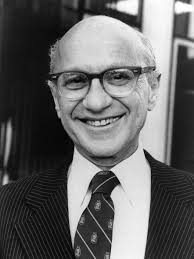
Milton Friedman
Colleagues in the American Center for School Choice have convinced me to add a more personal note to my recent 100th birthday blog about Milton Friedman. They ask that I describe my connections with - and occasional disconnections from - the great man. I am honored to be consulted and hope to contribute light sans heat. Though there is no avoiding one’s perceptions of human limits, correct or otherwise, my aim here will be neither to praise Caesar nor to pester him. Our 40-year acquaintance centered on a very public issue - that of subsidized school choice. The civic importance of this question justifies a story or two and, inevitably, a rough and rambling interpretation of our own relationship.
These stories could bear on the historic and continuing question of whether Friedman’s free market style of argument was the most efficacious to advance his own project. It is just possible that his prodigious contribution might best be honored today by considering a shift in the civic and moral mood music supporting our common pursuit of genuine authority and responsibility for less well-off parents.
Milton and I met a half-century ago in Chicago. He taught economics at UC; I taught law at Northwestern. He was maybe 18 years my senior. Milton became a frequent guest on my weekly (unsponsored, largely unheard) radio talk show. Over the air, the two of us would argue about appropriate government responses to the various challenges posed by the young and diverse civil rights movements.
In 1962, I had written what became a controversial report on racial segregation in Chicago public schools for the U.S. Commission on Civil Rights. My head was bursting with solutions for our educational calamities. These solutions included vouchers, but soon it was clear that I was bit more inclined than he toward government guardianship of equal access for poor and black families to schools that would participate in any subsidized system of choice. Milton was opposed to most of what seemed to me rather modest commitments by the school. He was confident that subsidy plus an unfettered market offered the best long-term protection for our civic values.
I think we liked each other. Milton was a tough guy and could be intimidating. Others may recall his classic trick of breaking into the middle of the opponent’s argument with “Excuse me,” and then proceeding to turn the conversation in whichever direction he preferred. But I never felt personally beset. When, later, he became a TV personality (the late ‘70s), Milton, to my glad surprise, invited me to represent the pro side in a TV debate on vouchers. The opponent was, like Milton, my sometime friend—the formidable Albert Shanker. It was fun and altogether coherent.
By then we had both moved to the San Francisco Bay area. I was pushing a popular voucher initiative that Steve Sugarman and I had designed; I was confident that my Friedmanic connection would generate financial support from business folk. We wined and dined with Rose and Milton and their admirers; we invested precious time and what was, for us, considerable capital in the campaign. In the end, to our surprise, Milton successfully urged our targeted business angels to wait for a more appropriate—i.e., less regulated—proposal. They took his advice. We bit the dust.
This turn of events was a bit difficult to digest. (more…)
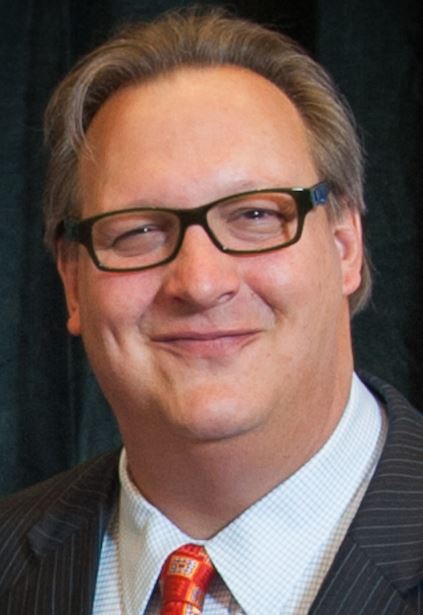
Robert Enlow
by Robert Enlow
States’ relationship with the federal government in education is like Gollum’s connection with the One Ring in “The Lord of the Rings”: They loves it, and they hates it. States either can “abide with the great pain” and continue with stagnating outcomes, or they can free themselves, their educators, and their families and achieve better academic results.
In 1966, through the adoption of the Elementary and Secondary Education Act, the federal government provided $2 billion for public education (using 2006 dollars). In 2005, that number increased to $25 billion. In 2010, total federal spending on K-12 education reached $47 billion. And in the American Recovery and Reinvestment Act alone, the feds dedicated $100 billion to public education.
This “free” money is what the states love. Who doesn’t love free stuff? But, as Milton Friedman so wisely said, there’s no such thing as a free lunch. With those federal funds come regulations on educators, debt for future generations and significant questions of whether those federal funds are spent on effective programs.
First, the regulations, which states and localities really hate: In 2007, Dan Lips and Evan Feinberg reported that although the federal government provided just 7 percent of overall funding for public education, it was responsible for 41 percent of the administrative burden placed on states. Those regulations inhibit educators, especially rural ones in small schools, from doing their jobs effectively. And they inhibit the ability of state education departments to be as effective and efficient as possible. According to the Heritage Foundation:
“After the passage of No Child Left Behind (an update to the Elementary and Secondary Education Act), several states released calculations comparing the administrative cost of compliance to the amount of federal money they receive under the law. In 2005, the Connecticut State Department of Education found, for example, that Connecticut received $70.6 million through Title I of NCLB but had to spend $112.2 million in implementation and administrative costs.”
The federal government’s involvement in education also is placing a burden on the unborn. The United States is broke! It is nearly $16 trillion in debt. Federal education funds expended to states are borrowed. That, along with the federal government’s other “investments,” is unsustainable and must be curbed. (more…)
From redefinED co-host Doug Tuthill: Milton Friedman and Jack Coons were intellectual giants in their respective disciplines (Friedman in economics and Coons in law) and strong school choice advocates. But their rationales differed and this led to many interesting - and often contentious - debates. Despite their differences, their debates were always courteous and civil. So when Dr. Friedman died in 2006, his foundation asked Jack to write a chapter in a book honoring Dr. Friedman’s memory, and he agreed. Today is Dr. Friedman’s 100th birthday, so we again asked Jack to share some thoughts on Dr. Friedman, and again he agreed.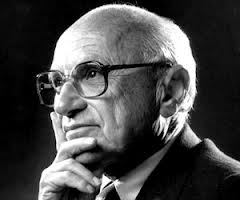
Milton Friedman was an economic libertarian of singular intellectual purity. I am less pure, and to me Friedman’s way of modeling the ideal educational triangle of parent, school and child has seemed a simplification limiting our perception of the social implications and, thus, of the politics of choice. I have said all this before. Why, then, do I gladly join this chorus of praise for what I have criticized?
It is not from mere personal fondness for the man. It is, rather, because it was Friedman’s specific application of free market dogma to schools at a particular historical moment that made it possible for a vigorous critique of the American model even to begin. His cry in the night may not have been the first; nor was it the sufficient cause of the great awakening—but it was probably necessary.
Our national mind had long been frozen in admiration of an arrangement comfortable to the middle class, but incapable of realizing education in a democratic way. There is no version of our historic district model of school assignment, even with charter schools, that can in practice achieve what the Europeans honor under the cumbrous but useful title “subsidiarity.” That word warns us to keep authority over the lives of persons either in their own hands or as close to the individual—and in as small a group—as possible. If bowling were our subject, few of us might prefer bowling alone, but neither would we wish to be directed by government to bowl with the people next door.
Left to themselves, humans cluster freely in diverse ways, most of which are innocent and some even creative; their clumps and hives are generally the better for having been chosen. And, if diversity and the smaller unit can serve the purpose, let us lodge the power there.
Subsidiarity could be realized only in a corrupted way by our old district systems. True, some of us can choose to bundle in Beverly Hills, but…and you know the rest of that story; it is daily thrust in our face by the media, and it is true. Many among us just can’t choose Beverly Hills. So at government command my child must learn whatever ideas happen to get taught and whatever behavior gets encouraged in Berkeley.
It was Milton Friedman who in our time rediscovered and announced that this fate of the have-not child was neither efficient nor necessary. A lot of people heard him. Most who did were at first shocked that this sacred cow of democracy, the public education system, had been labeled as a clumsy, self-defeating, anti-social monopoly. But some did begin to listen. And in spite of the system’s sputtering and posturing, they still do. Friedman’s defamation of the schools has begun to stick.
I think he actually underplayed his hand. (more…)
Editor's note: After redefinED posted Howard Fuller's comments about universal school choice, we asked the Cato Institute's Andrew J. Coulson for a response, which we published last week. To keep the debate going, we asked Matthew Ladner, senior advisor of policy and research at the Foundation for Excellence in Education, for his take. He generously offered the following.
 My friends Howard Fuller and Andrew Coulson started a needed discussion regarding the direction of the parental choice movement. Dr. Fuller has been quite outspoken in his opposition to universal choice programs in recent years, and Coulson raised a number of interesting and valid points in his redefinED piece. The parental choice movement has suffered from a nagging need to address third-party payer issues squarely. It’s a discussion that we should no longer put off. The example of American colleges and universities continues to scream a warning into our deaf ear regarding the danger of run-away cost inflation associated with education and third-party payers.
Howard Fuller and Andrew Coulson also indirectly raise a more fundamental question: where are we ultimately going with this whole private school choice movement? Dr. Fuller supports private choice for the poor and opposes it for others. He has concerns that the interests of the poor will be lost in a universal system. I’m sympathetic to Howard’s point of view. I view the public school system as profoundly tilted towards the interests of the wealthy and extraordinarily indifferent to those of the poor. We should have no desire to recreate such inequities in a choice system.
Andrew makes the case that third-party payer problems are of such severity that we should attempt to provide public assistance to the poor through a system of tax credits, and have other families handle the education of their children privately. Andrew’s proposed solution to the very real third-party payment issues is in effect to minimize third-party payment as much as possible, and to do it as indirectly as possible through a system of tax credits.
Despite the fact that Howard comes from the social justice wing of the parental choice movement and Andrew from the libertarian right, they agree that private choice should be more or less limited to the poor.
My own view is different from both Howard and Andrew’s. I believe the collective funding of education will be a permanent feature of American society and that it should remain universally accessible to all. I believe Howard’s real concerns over equity and Andrew’s real concerns over third-party payment can be mitigated through techniques other than means-testing. (more…)
Editor's note: After posting Howard Fuller's concerns about universal vouchers last week, we asked Andrew J. Coulson, director of the Cato Institute's Center for Educational Freedom, to offer his perspective.
 It’s not hard to see why Howard Fuller might be skeptical of universal government education programs. Public schooling is one such program and it has done an atrocious job of serving the poor. But is its universality the cause of its failure? Fuller believes that the poor are forgotten and given short shrift under universal programs and that the wealthy are favored by them. If that were the case in public schooling, we would expect schools serving the poor to receive less funding than those serving the wealthy. In responding to Fuller, Matthew Ladner contends that this is indeed the case: that public schooling “systematically distributes more money per pupil” to wealthier kids.
Actually, though, that doesn’t appear to be true. According to the federal Department of Education’s Condition of Education 2010, Indicator 36-1, districts with the poorest students are the highest spending. Public schools serving these students are not atrocious because they are underfunded, they are atrocious despite the fact that they are the best funded districts in the nation.
Having voted to raise public school spending relentlessly for generations, and having chosen to direct the highest level of per-pupil spending to the poorest children, it is hard to believe that Americans are indifferent to the education of the poor.
A more plausible explanation of the facts is that Americans would love to see their poorest countrymen thrive educationally but don’t know how to make that happen. For generations they have been told by the media, academics, and political leaders that the solution is higher spending. They have gone along with that recommendation and it has failed utterly. A few are finally beginning to realize that, but they still don’t know how to improve matters.
But the school choice movement believes it does know the cause of the problem: the lack of alternatives. Middle and upper income families find it easier to pay for private schooling or to relocate away from the worst public schools. They have alternatives that the poor do not. As a result, they get better service. The movement’s solution is thus to ensure that everyone has alternatives.
And this brings us back to Fuller’s claim: that the poor will be better served by a school choice program targeted exclusively at them. Is he right? In answering that question, it helps to consider a few facts and distinctions that are usually overlooked:
• First, there is a difference between universal access to the education marketplace and universal participation in a government program;
• Second, tiny markets are dramatically inferior to vast ones;
• And third, it actually matters who is footing the bill for a child’s education.
Saying that everyone should have educational choice is not the same thing as saying that everyone should participate in a particular government program. (more…)
by Alan Bonsteel
In 1954, the U.S. Supreme Court decision in Brown vs. Board of Education ended the "separate but equal" racial segregation of the south. In 1962, Milton Friedman's book, Capitalism and Freedom, for the first time advocated school vouchers.
Although the two events were separated by only eight years, hardly anyone at the time saw them for what they were -- two very different visions of achieving quality education for all, one through compulsion and coercion, and the other through freedom of choice, including the liberty to choose religious schools. In 1954, the conventional wisdom of the news media was that the Brown decision would, in time, mean equal education for our minorities. And in 1962, hardly anyone other than the visionary Friedman himself could foresee when many people throughout the U.S. would come to believe in school choice as a fundamental human right. Few people in those days would have bet on Friedman's vision emerging triumphant.
But consider where we are 57 years after Brown:
At a time when the public schools are widely perceived in areas as being overly segregated, and the black middle class has experienced a unique growth through those that are single and living alone rather than through families, the notion that our public schools are capable of achieving racial equality in education now seems almost quaint. By contrast, our schools of choice, whether private or charter, have greater opportunities for better integration and offer a superb education to minorities. Further, the racial integration in those schools exists on a far deeper level than a simple counting of whites versus minorities would suggest.
In 1998, researcher Jay P. Greene authored the study, "Integration Where it Counts." In it, he and his associates secretly observed whether students of various races in public and private schools sat next to each other in their lunch rooms. He found that in private schools, students of varying races were far more likely to sit next to each other than in public schools.
Further, private religious schools outperformed private non-religious schools. Greene hypothesized that the mission of the religious schools -- of teaching that we are all children of God -- played a role. To take this thought to the next higher plane, it is the difference between teaching that racial equality is endorsed by the local school board versus loving thy neighbor as thyself being God's will.
The American Center for School Choice, of course, has taken on a special guardianship of private religious schools, and the results of Greene's study, now more than a decade old, will come as no surprise to our members. Freedom of religion -- including the right to choose a religious school -- is a fundamental human right, even without any need to demonstrate tangible benefits. But it is certainly gratifying when religious freedom and tolerance can be shown to produce worldly benefits to our children and our communities.
The notion that the public school establishment, operating through compulsion and coercion when assigning most students to school, can bring about racial equality in education has now been decisively thrown on the scrap heap of history, and, in fact, no one is now advocating any credible way out of the damage that has been caused to minorities other than through school choice.

