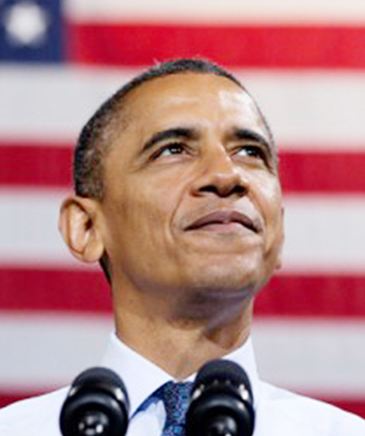
 President Obama has often called on us to be true to who we are as a people, as Americans. And in his second term, he has the opportunity to transform the education system back to our core - to where parents are primarily in charge of children’s educations.
We have paid a price for transferring authority and responsibility for educating children from parents to government entities. With mostly though not always good motives (remember Brown v. Board of Education), we allowed the dream of the government-owned and operated common school to live on despite overwhelming evidence that, in reality, it wasn’t working. A child’s educational destiny continues mostly to be a function of his/her zip code and the competence of strangers who sit on local school boards.
For more than three decades, a long, slow correction of this anomaly in American society has been underway. First, intradistrict and interdistrict transfers began to appear that allowed limited parental choice within some parts of the public school system. Then magnet schools surfaced, offering options such as vocational, talented and gifted, and language immersion programs, and responding to more demands. In 1992, charter schools emerged. Today they account for almost 6 percent of all public schools, approaching 6000 total, and the number grows steadily each year because the demand from parents so far is insatiable.
Thanks to my colleague at the American Center for School Choice, Gloria Romero, a new tool has appeared. The parent trigger empowers parents to make changes to their school when they are not satisfied. Already 20 states have considered the approach and seven have adopted laws.
Private school choice programs continue to gain support, too. And they have done so despite fierce opposition from forces that want to defend market share over a parent’s right to choose. Today, 32 such programs operate in the country. And in recent years, many school choice bills have either been passed by legislatures with Democratic majorities or signed by Democratic governors. Just as important, once enacted, these programs have only grown. No state has repealed a program or decided choice does not serve the public well. Moreover, the doomsday scenarios that opponents consistently forecast for public education systems have never happened.
It’s said you can’t argue with a river; it is going to flow. Parents are going to take back the authority and responsibility for educating their children. The river has been flowing for more than 20 years and the current is gaining speed. It’s time for more Democrats to stop arguing as families assert their fundamental and universally accepted American value that they know the best choice for their children. Democrats need to work in positive ways to transform our system. We need good schools and there’s plenty of room for all types - public, charter, and private.
President Obama has the life experience, as well as the political skills and credentials, to lead this transformation, and to make it less jarring and less confrontational. (more…)
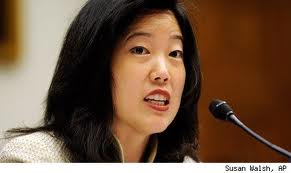 Fresh from Sean Cavanagh at Education Week, after interviewing Michelle Rhee at the DNC:
Rhee was skeptical of Republican challenger Mitt Romney's proposal to allow parents to use federal Title I and special-education money for private school vouchers.
While Rhee backs vouchers for impoverished students in academically struggling schools, she said there were far better strategies for large-scale school improvement than Romney's plan.
Universal voucher plans are not financially feasible, Rhee argued, especially given the state of the economy.
And a large-scale voucher plan like Romney is "only a sliver of what should be happen to fix the system," she said. "Unless you have a comprehensive set of policies, then that in and of itself is not going to have much of any impact.
Doug Tuthill's take on Michelle Rhee and her school choice evolution here. Researcher Matthew Ladner's take here.
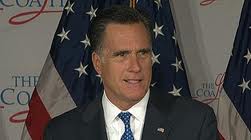 Mitt Romney is all in on school choice, at least according to the speech he delivered today at the Latino Coalition's Annual Economic Summit. Here's a piece of his prepared remarks:
First, I will expand parental choice in an unprecedented way. Too many of our kids are trapped in schools that are failing or simply don’t meet their needs. And for too long, we’ve merely talked about the virtues of school choice.
As President, I will give the parents of every low-income and special needs student the chance to choose where their child goes to school. For the first time in history, federal education funds will be linked to a student, so that parents can send their child to any public or charter school, or to a private school, where permitted. And I will make that choice meaningful by ensuring there are sufficient options to exercise it.
To receive the full complement of federal education dollars, states must provide students with ample school choice. In addition, digital learning options must not be prohibited. And charter schools or similar education choices must be scaled up to meet student demand.
Instead of eliminating the D.C. Opportunity Scholarship Program as President Obama has proposed, I will expand it to offer more students a chance to attend a better school. It will be a model for parental choice programs across the nation.
Romney came back to the D.C. program later in the speech. He used it as one of several examples where teachers unions blocked school choice programs and proposals. (more…)

