Ryan Wallace left his big, cliquish high school last spring for The Foundation Academy, a non-denominational Christian school with vegetable gardens and an aquaponic farm. “I wanted a chance to try something new,’’ said Ryan, now a 17-year-old junior planning a dodge-ball fundraiser for his class president campaign.
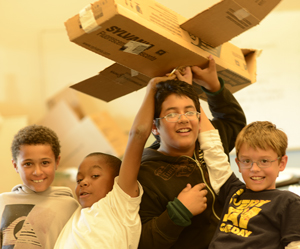
Boys in Aaron Unthank's single-gendered fifth- and sixth-grade class learn from each other, too. The setup gives Unthank more freedom to cater classes to meet boys' learning styles.
Twelve-year-old Marc’Anthony Acevedo came to the academy as a second-grader after being bullied at his old school. This year, he’s part of a single-gendered class of fifth- and sixth-grade boys. “Sometimes we have arguments, but we get over it,” he said. “We’re all friends.’’
For Cori Hudson, the Foundation was his last shot at a diploma. He messed up at the school district’s option of last resort. “I come to school every day now,’’ said the 16-year-old. “I feel like school is the most important thing to me.’’
These transformations are exactly what principal Nadia Hionides hoped for when she started the academy near Jacksonville Beach, Fla. nearly 25 years ago.
With a style that’s part Montessori, part Waldorf, the Foundation offers hands-on, project-based learning with a college-preparatory curriculum based on the philosophy that everyone learns differently.
The school has 280 students in kindergarten through 12th grade; 100 are in high school. They share a 23-acre campus that Hionides and her husband, a ship deck builder and painter, bought in 2008 for $600,000. The couple spent another $5 million for eight, prefabricated steel structures, which include a front-office foyer where the floor is made from vinyl records.
Tuition starts at $6,000 a year. But 81 students receive tuition assistance from Step Up For Students, the nonprofit that administers Florida’s tax-credit scholarship program for low-income kids and co-hosts this blog.
The academy separates students into groups of two grade levels - kindergarten and first-graders, second- and third-graders, etc.
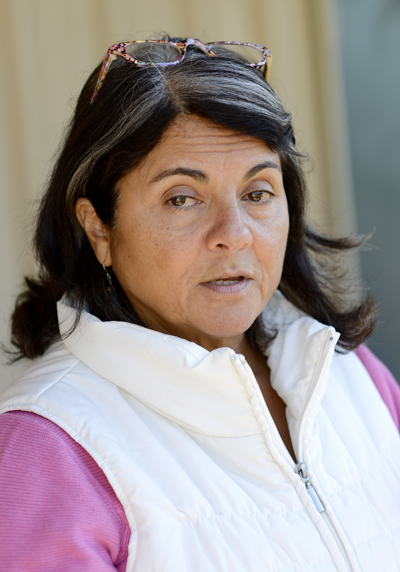
Hionides
“Because that’s real life,’’ Hionides said. Also, “they push each other to shine.’’
It seems to work in the fifth- and sixth-grade boys’ class – for the students and their teacher.
“It’s fantastic,’’ said Aaron Unthank, a longtime private school music teacher and baseball coach. “There’s a different kind of camaraderie as a class and there’s a lot more freedom I have as a teacher to talk about guy things.’’
The younger boys learn from the older boys, and the older boys gain confidence, Unthank said. He paraphrased Einstein: “You don’t know a thing well enough unless you can talk about it.” (more…)
Editor's note: In our third installment of "blog stars," we're shifting course slightly. We'll continue to highlight posts from ed blogs. But if we stumble on a thoughtful newspaper column now and then, we'll throw that in the mix, too.
Rick Hess Straight Up: The Culture of 'Can't' in American Schools
 When it comes to reforming our nation's public schools, we hear a lot about what educational leaders can't do. Contracts, laws, and regulations assuredly handcuff school and system leaders. But the ardent drumbeat for "reform" has obscured the fact that school and system leaders can actually do much that they often complain they can't, if they have the persistence, knowledge, ingenuity, and motivation. In truth, it's tough to know how much blame should be apportioned to contracts and laws and how much to timid school boards and leaders who prize consensus and stakeholder buy-in ...
The problem is that in selecting, training, socializing, and rewarding leaders, we do not equip or encourage them to lead. Traditional educational leadership counsels tell leaders that they should rely wholly on coaching and consensus -- while placidly accepting contractual, bureaucratic, or policy barriers. Meanwhile, would-be reformers divert attention from lethargic leadership by rushing to blame "the union." Full post here.
Hartford Courant: A Eulogy For New London's St. Mary's School
That the school hung on until 2012 may be a minor miracle. The nuns are gone, but like other Catholic schools it managed to attract talented lay teachers willing to work for less than they would make at a public school. I chatted with the church's pastor, the Rev. Robert Washabaugh, who said a foundation called The Compass Fund has been a godsend to the school, helping many youngsters from low-income families — the traditional constituency of Catholic schools — make the $2,600 tuition. Alas, the recession caused the fund to cut back on its support.
What is particularly sad is that the school had come up with a good pedagogical plan. The school's 115 students today are 60 percent Latino, 30 percent African American and 10 percent Caucasian. Last year the school developed a dual language initiative, a plan that would make it the first Catholic school in the state to teach classes in English and Spanish. It was an excellent idea for 21st century America; sadly, the fiscal realities stopped it barely out of the gate.
In New London, where the public schools have struggled, St. Mary's was a great option for many families. At the risk of offending my friends at the ACLU, a situation such as this cries out for school vouchers. Religion and ethics aren't the worst problems these kids face. Full column here. (more…)
The little school’s administrative office sits above a church garage, upstairs from a make-shift hallway lined with pink sheets. It’s sometimes cooled by a window-unit air conditioner. On a mid-May day on Florida's Gulf coast, the air conditioner is off, the windows are open and the office manager is explaining how fresh air jibes with the school's worldview. “We’re holistic,” she says.
 The school puts a fresh spin on modern education, too. No textbooks. No computers. No Capri Suns. In one classroom, no desks.
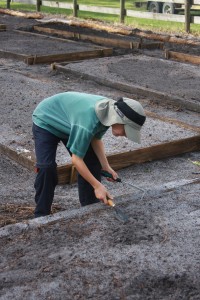
This is the Waldorf Sarasota. The distinctive, private school with 34 students in pre-school to fourth grade is one of about 160 such schools across the United States. The Waldorf approach defies easy labels, but it puts a premium on physical play, hands-on learning and creativity. Cooking, gardening and knitting socks are in. Testing is out.
The Waldorf way was forged by an idealistic, early 20th century vision that didn’t think it crazy to put the children of cigarette factory workers and world peace in the same sentence. Today’s Waldorf schools continue to intrigue because of how they approach curriculum and instruction and whole-child development.
They also stand out because they’re big fans of expanded school choice.
“Private school shouldn’t be elitist,” said Nikosha Orchard, enrollment director for Waldorf Sarasota. “We believe Waldorf is really wonderful elementary education, so if it becomes available to more children, that’s great.”
The fast changing landscape of public education is dotted with square pegs. (more…)

