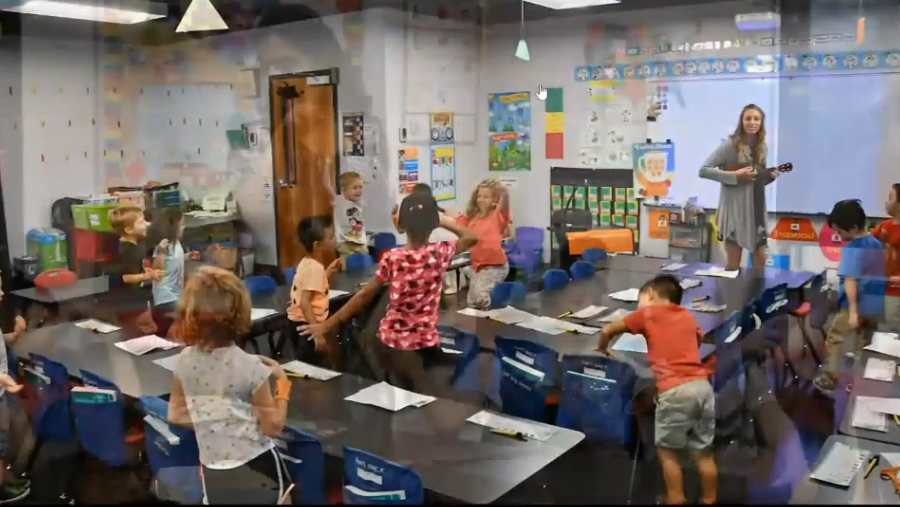
BASIS Flagstaff Charter School, which opened in 2011, consistently makes the list of Arizona’s top charter schools.
Preliminary data from a new state-level analysis from the National Alliance for Public Charter Schools indicates that public charter schools posted more enrollment growth in 2020-21 than they’ve seen in the past six years, even as traditional public school enrollment declined during the first full academic year of the COVID-19 pandemic.
Across 42 states included in the analysis, charter schools gained nearly 240,000 students – a 7% increase – from 2019-20 to 2020-21. Other public schools, including district-run schools, lost more than 1.4 million students, a 3% loss, during the same period.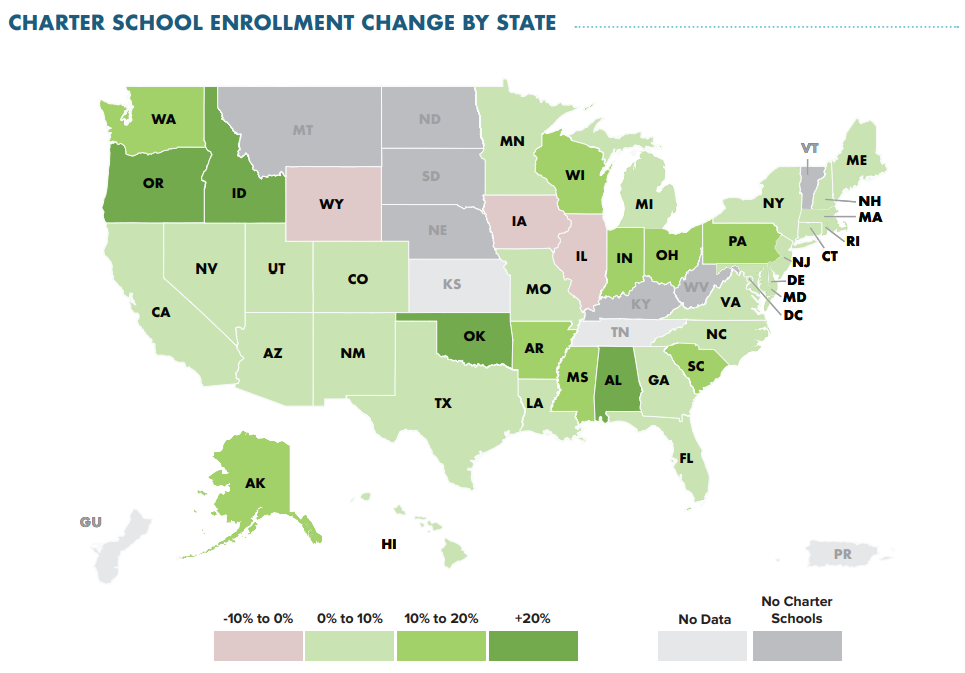
Increases for charter schools ranged from 49 additional students in Virginia to 35,751 additional students in Oklahoma according to the report. In terms of percentages, the increase in charter enrollment ranged from 0.19% in Louisiana to nearly 78% in Oklahoma. Only three states – Illinois, Iowa and Wyoming – saw declines in charter school population.
Virtual charter school enrollments figured into the increases, the study found, particularly in Oklahoma, Pennsylvania and Utah.
In Florida, charter school enrollment increased 3.86% over the last year, a little more than 3 percentage points less than the national average, while the state’s district public schools experienced a 3.16% enrollment decrease, close to the national average.
The National Alliance consulted state educational agency websites to gather enrollment data for the study. Researchers also spoke with parents, teachers, students and school leaders to gather anecdotal data.
The report notes that a similar increase in charter school enrollment hasn’t been seen since the 2014-15 school year, when the number of charter schools grew by 4.6%, creating a 7.5% enrollment boost.
While the report doesn’t offer details on whether overall growth was due to students leaving district schools or new schools opening, the authors conclude that many families, dissatisfied with the quality of what was available to their children during the pandemic, turned to other educational options, including the “nimbleness and flexibility” of charter schools that made them “the right public school choice.”
 Recently, I watched Liberty: the American Revolution. The documentary includes a dramatization of letters Abigail Adams wrote to her sister while her husband served as United States ambassador to Great Britain.
Abigail was less than impressed with “his Britannic majesty” and the other members of the British royal family, a family she noted to be “inclined to corpulence.” She observed that the English boasted of the beauty of the English princess, but it took more than a tiara to impress Abigail Adams.
“Your simple American girl is much prettier,” she noted, concluding, “There is a servility of manners here, a distinction between nobility and common citizens, which happily is foreign to Americans.”
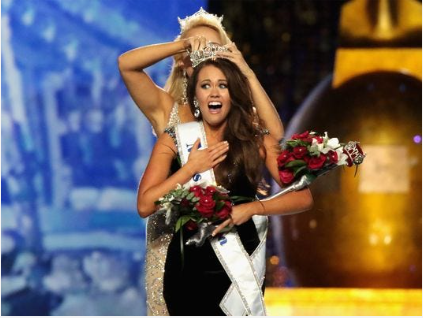
Abigail’s lack of deference and her inclination to judge beauty by her own standards came to mind when I saw a new ranking of state charter school laws. Back in 2018, I offered a light-hearted nudge to my friends within the national charter school organizations with a post titled It’s Time for Technocratic Beauty Pageant Charter Rankings to End.
The basic point I attempted to make is that the charter school movement has fallen into the habit of passing charter school laws that haven’t produced many actual charter schools. Ranking charter-lite charter laws highly in ranking exercises seems even more dubious. Alas, I failed to prove persuasive as the National Alliance for Public Charter Schools released a new ranking of charter school laws last week, again judging laws against a model bill.
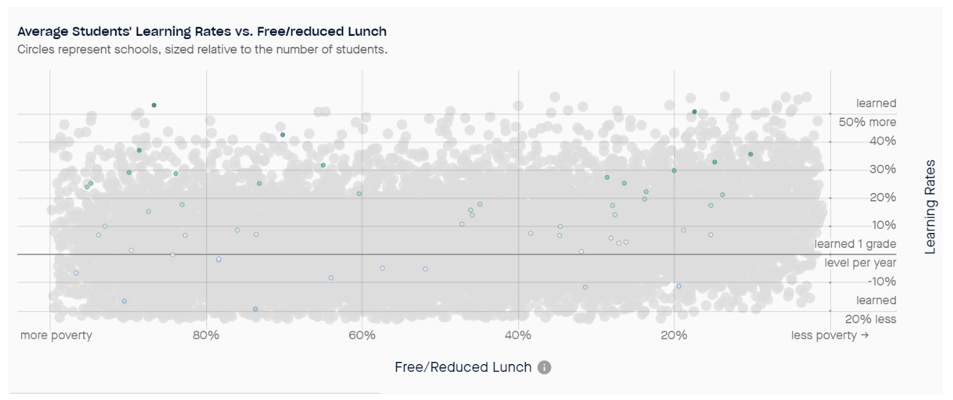 Stanford University’s Opportunity Project, however, has created a new tool that might help illustrate the point, so I’ll try again.
The chart above is drawn directly from the Opportunity Project’s data explorer and shows the academic growth scores for the charter schools in the state of Indiana. Indiana’s charter school law has placed first multiple years in a row in both the National Alliance and National Association of Charter School Authorizers (NACSA) rankings.
In these charts, green dots denote charter schools with above average rates of academic growth, blue dots below average academic growth. The grey dots in the background are the shadows of every other school in the country.
Academic growth isn’t the only criterion for judging schools, let alone a perfect one. New schools full of students who just transferred in, for instance, might be at a disadvantage; this would apply especially to youngish charters. Some of these schools also are likely alternative schools doing dropout recovery. With those caveats in mind, let’s proceed.
So, what to make of the Indiana charter sector’s outcomes?
There certainly are some high performing schools – four schools with a rate of academic growth 20% or more higher than the national average. Note, however, that an equal number have rates 20% below the national average. Counting the dots in Indiana reveals 21 high growth green dots, 22 lower growth blue dots, and one school right on the national average.
Like Abigail Adams, suffering through hours of Britannic court pomp, color me less than overwhelmed.
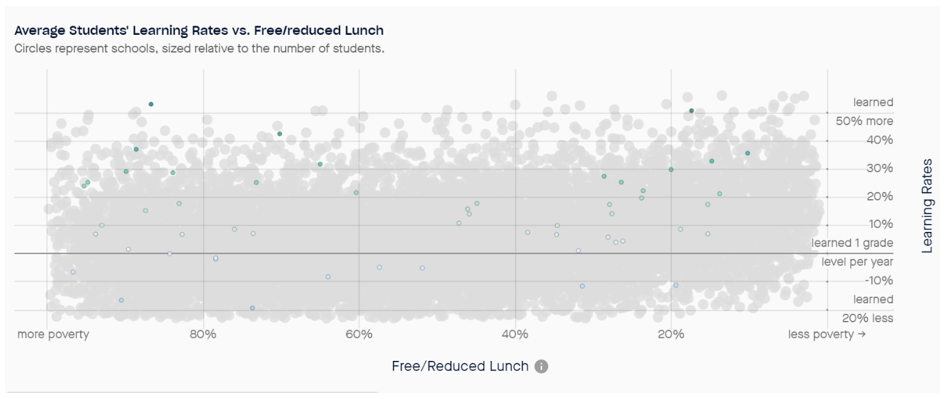 Next, let’s look at Indiana’s neighbor, Wisconsin. Wisconsin ranks 39th in the National Alliance rankings, which is near the bottom, as there only are 45 states with laws).
Wisconsin has a smaller population than Indiana but more charter schools. Wisconsin has five times as many charter schools showing academic growth 20% or more higher than the national average than Indiana. Wisconsin, moreover, has zero charter schools with a rate 20% below the national average.
Call me crazy – it’s been too long since anyone has – but by my way of thinking, Wisconsin has a better charter law than Indiana because it has created more high-quality opportunities for students.
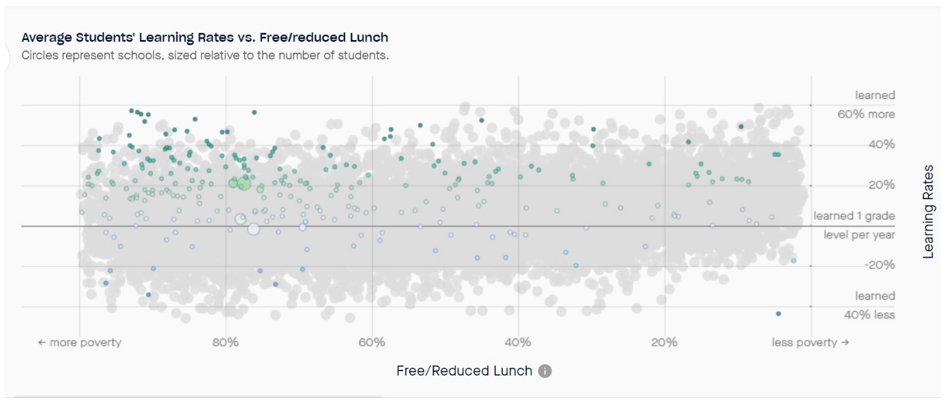 Now imagine you are working on charter schools in Texas, which came in 29th in the National Alliance ranking. Texas is a much larger state than Indiana, but note the ratio of dark-green schools to dark-blue dots in the Texas chart and compare it to the Indiana chart above.
How much servility of manners would we expect Texans to show towards the Indiana law? Texas appears to have approximately three times more charters with rates of academic growth 20% higher than the national average than Indiana has in total charter schools, after all.
In my opinion, we ought to judge the beauty of charter laws not by their adherence to a model, but rather by their outcomes. If the model law continues to coronate a law with a notable lack of seats, schools or academic growth, the tiara raises more questions about the model than it bestows glory.
 School security criticized: School districts across the state are "not moving fast enough" to comply with the law passed last year that requires specific measures to improve security in schools, says the chairman of the state commission that investigated the Parkland school shooting. Pinellas County Sheriff Bob Gualtieri told the House Education Commission that school districts have "no sense of urgency" to have an armed guard in every school or to prepare for a potential attack, as required by the law. He suggested that districts that are slow to comply should be penalized by the Florida Department of Education. Tampa Bay Times. Florida Politics. Politico Florida. The Broward County School District is struggling to create safe "hard corners" in 20,000 classrooms. Finding one safe spot in a room that's big enough for all students is one problem, and principals say they aren't the safety experts who should be choosing the safest corner. Sun Sentinel. The Broward County School District is named one of six American K-12 districts to watch this year. As the site of the 2018 Parkland school shooting, Broward is at the center of the discussion on security in schools. Education Dive.
DOE counsel named to court: U.S. Department of Education general counsel Carlos Muniz has been appointed to the Florida Supreme Court by Gov. Ron DeSantis. Muniz, 49, has no judicial experience but has been a lawyer for U.S. Education Secretary Betsy DeVos, former Gov. Jeb Bush and former Florida Attorney General Pam Bondi. This is DeSantis' third appointment to the court since he took office two weeks ago. Associated Press. News Service of Florida. GateHouse. Orlando Sentinel. Tampa Bay Times. Education Week. WPLG. Sunshine State News. (more…)
Immigrants and GED: The Miami-Dade County School Board has ordered a review of the way the district educates immigrant students. The review was approved about a month after newspaper reports detailed how arriving teens with limited English skills were often pushed into adult education programs, where they then prepared to get a high school diploma through the GED program. Critics of that process say those students are steered away from regular high schools because school officials think they'll have a negative impact on graduation rates. More than 1,000 of the 5,000 immigrant teens who arrived this year ended up in Spanish-language GED programs. Board members gave administrators until September to conduct the review and report back. Miami Herald. About 200 immigrant youths under the age of 19 who tried to enroll in Collier County schools were turned away and pushed toward a GED degree, online programs and workforce training sessions, according to a lawsuit filed on their behalf by the Southern Poverty Law Center. Here's the story of one, 17-year-old Nehemy Antoine, a Haitian immigrant who became a U.S. citizen. Teacher Project, Naples Daily News.
School security: A Palm Beach grand jury's suggestion that the school district dip into its reserves to pay for school resource officers is dismissed by school officials as a simplistic and unrealistic solution to a complicated problem. They say the reserve fund as a percentage of the annual budget is already lower than that of most Florida districts, and that reserves should not be used for everyday expenses like new employees and higher salaries. Palm Beach Post. While Sanibel, Fort Myers or Cape Coral city officials have agreed to contribute financially to place resource officers in schools in their cities, officials in Estero and Bonita Springs are still questioning whether it's their responsibility. They think school protection ought to fall under what they already pay the county for the sheriff to police their cities. Naples Daily News. Marion County Sheriff Billy Woods drops the cost to supply resource officers for schools, and if the city of Ocala can't do the same the school board is likely to contract with the sheriff. The board meets Monday to finalize its decision. Ocala Star-Banner. Officials from the St. Johns County School District and sheriff's office talk about how the county will comply with the state's school security mandate. St. Augustine Record. (more…)

Bill Kurtz, CEO of DSST Public Schools, second from left, was awarded the Broad Prize for Public Charter Schools. Standing with him to the far right is Nina Rees, president of the National Alliance for Public Charter Schools.
AUSTIN, Tex. - A Denver charter management organization was chosen Monday as the recipient of this year’s Broad Prize for Public Charter Schools.
The announcement was made at the annual National Alliance For Public Charter Schools conference.
DSST Public Schools serves 5,330 students in Denver, Colorado. For 10 consecutive years all students have been accepted to four-year colleges or universities, according to a press release from the National Alliance For Public Charter Schools. In 2017, its schools achieved the highest SAT results in the state for low-income, black and white students, the press release also stated.
Denver School of Science and Technology joined two other finalists, Achievement First and Uncommon Schools, competing for the prize. (more…)
Students march: Survivors of the shootings at Marjory Stoneman Douglas High School in Parkland on Valentine's Day lead a march of thousands to the state Capitol, then meet with state lawmakers to call for a ban on assault-style weapons. They say the response from legislators was discouraging, but they vow to continue to fight. Sun-Sentinel. Associated Press. Miami Herald. Palm Beach Post. Politico Florida. Gatehouse Media. Tallahassee Democrat. News Service of Florida. The 74. More than 40 survivors of the Parkland, Columbine and Sandy Hook school shootings and parents plead with President Donald Trump to make students safe during a meeting Wednesday. "How many children have to get shot?" asked Andrew Pollack, whose daughter Meadow was killed in Parkland. Trump vowed to bolster background checks and mental health screenings, and supported the idea of allowing teachers and staff to carry guns at schools. Associated Press. New York Times. Education Week. Politico Florida. Why arming teachers is highly unlikely to happen. Politico Florida. Parkland students have raised $3.5 million to finance a national gun-control movement. Miami Herald. Sun-Sentinel. Florida Sen. Marco Rubio is jeered at a town hall meeting held by CNN. Sun-Sentinel. Palm Beach Post. High school students around Florida walk out of classes and take part in marches Wednesday as a show of support for Douglas High students. Sun-Sentinel. Sun-Sentinel. Miami Herald. Orlando Sentinel. Palm Beach Post. Gradebook. WFTV. Fort Myers News-Press. WFTX. WESH. Florida Today. TCPalm. Naples Daily News. Sarasota Herald-Tribune. Key West Citizen. Associated Press.
Returning to Douglas: Broward County school officials detail the plan to reintroduce students to Marjory Stoneman Douglas High School. Counselors and an added police presence will greet the students when they return Tuesday for a half-day of classes. Sunday, the school will hold a "voluntary campus orientation" with a variety of support services available. Miami Herald.
School funding formula: Two Republican state senators are calling for a study of the Florida K-12 school funding formula. Sen. Dorothy Hukill, R-Port Orange, and Sen. Travis Hutson, R-Palm Coast, say the current formula shortchanges smaller districts because larger districts get a bigger portion of state funding to help make up the difference for a higher cost of living. The senators want the study to see if the formula should be “kept, modified or eliminated.” Volusia County, Hukill's home district, has been pressing for changes. School officials there say the formula has cost the district $140 million since 2004. News Service of Florida. Politico Florida.
H.B. 7069 lawsuit: School boards in Lee, Volusia and Bay counties vote to join the lawsuit against the state over the new education bill, H.B. 7069. They join Broward and St. Lucie counties in the challenge over the bill, which forces districts to share local property tax revenue with charter schools and provides financial incentives for charter companies to set up schools in areas with persistently low-performing traditional public schools. The bill also strips local officials from approving charter schools in their districts. Other districts are considering joining the suit, which has not yet been filed. Palm Beach County is expected to file suit individually. Fort Myers News-Press. Daytona Beach News-Journal. Panama City News Herald. Naples Herald. The Miami-Dade County School Board could decide as early as today if it will join other districts in suing the state over the education bill. The district has already spent almost $10,000 researching the constitutionality of the bill. Miami Herald. The Polk County School Board is considering joining the suit. Board attorney Wes Hodges believes the bill is vulnerable because it violates the state’s constitutional single subject requirement for bills, but there could be a political backlash for those districts that sue. Lakeland Ledger.
Charter schools: Charter schools are in line to receive about $146 million this year from state and local governments, or twice as much as they received last year. They get about $50 million from the state, and they expect to collect about $96 million from local schools property taxes thanks to the new education law. Todd Ziebarth of the National Alliance for Public Charter Schools says Florida's law is one of two major advancements toward funding equity for charter schools in the United States. redefinED. The NAACP is expected to release a report today calling for a moratorium on the creation of new charter schools. The report, to be released at the group's national convention, says charter schools lead to segregation and divert money from traditional public schools. The 74.
This week, charter school advocates are gathering in the nation's capital in a turbulent political climate.
Some luminaries of the movement have called out the Trump administration for proposing cuts to federal programs that support public education. Others see unprecedented political opportunities for the school choice movement — and specific initiatives like the federal Charter Schools Program.
Nina Rees, the head of the National Alliance for Public Charter Schools, helped set the stage in The 74.
Democratic supporters of charter schools are understandably concerned about voicing support for President Trump’s proposed increase in CSP funding. They don’t want to be associated with his agenda, much of which they find repugnant. And yet it would be irresponsible to ignore the impact that $500 million in annual CSP funding could have on our ability to give more students access to a great public education.
Republicans, meanwhile, may be tempted to put charter schools on the back burner as they pursue their mission to reduce federal funding and control of education, devolve power to school districts, and promote access to private school choice options. And yet we know that charter schools are doing more, right now, to empower local communities and bring real choices to families in nearly every state in the country. Anyone who takes local control and choice seriously must make charter schools a priority.
There's no shortage of Floridians present for this year's national charter schools conference. Many of them will add breadth to an event whose agenda goes well beyond national politics. Here are a few notables. (more…)