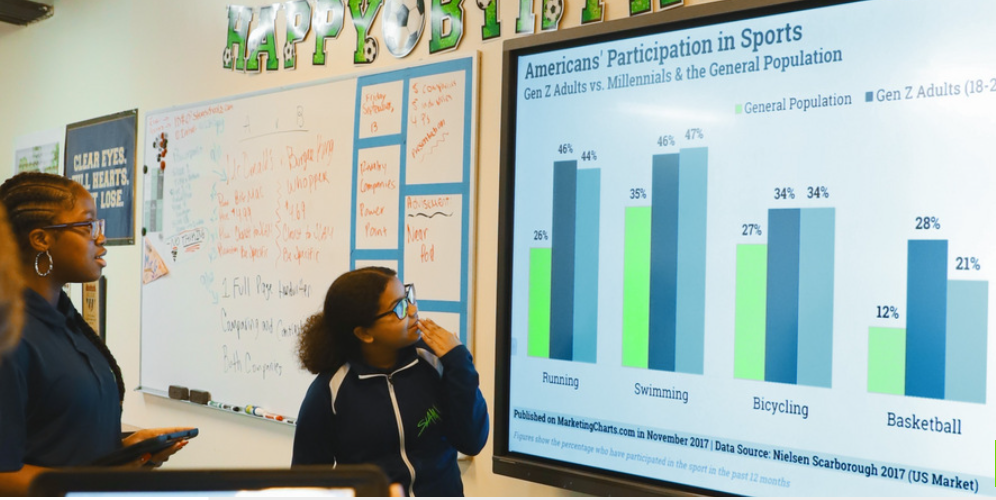
 Cielo Acosta, a teacher at SLAM! Miami, is among seven winners of this year’s Changemaker Awards, which recognize outstanding charter school educators. SLAM! Miami prepares students for careers in sports medicine, television and media production, sports marketing, and entertainment and management.  Cielo Acosta Cielo Acosta, an eighth-grade language arts teacher at SLAM! Miami, is among seven winners of the National Alliance for Public Charter Schools 2023 Changemaker Award, given annually to charter school teachers or founders who make an outsized difference in their communities.
In addition to serving as a teacher at SLAM! Miami, Acosta, an alum of the school, sponsors several clubs. When she is not in the classroom with students, she is pursuing a graduate degree in school counseling with the aspiration of continuing to help support the emotional and social well-being of her students.
She believes it is essential for educators to teach students more than academics, also instilling the importance of kindness, compassion, and self-growth.
SLAM! Miami was founded in 2013 in Little Havana for students in grades 6-12. At SLAM, students prepare for post-secondary careers through academies in sports medicine, television and media production, sports marketing, and entertainment and management.
Students have access to mentors and internships through partnerships with Telemundo/NBC Universal, Major League Baseball, the National Basketball Association, the Miami Marlins, the Miami HEAT and others.
They can earn college credit through SLAM’s dual enrollment and Advanced Placement programs.
Changemaker Awards honor individuals who are making an exceptional difference in their charter schools, going above and beyond expectations to shape their students’ lives for the better. The educators selected each year are deemed unique in their communities as well as representative of the educator who thrives in public charter schools: one who can personalize teaching and act autonomously to meet the differing needs of the students in their classroom, according to the National Alliance of Public Charter Schools.
“We are humbled to honor these exceptional and hardworking teachers and leaders who do the vital work of educating and supporting rising generations of students,” said Nina Rees, CEO and president of the National Alliance for Public Charter Schools.
“Teachers are the backbone of education and deserve our support, encouragement, and recognition for continuing to serve students even in the face of ongoing challenges.”
The seven winners, including Acosta, will appear on a panel on Capitol Hill next week as part of National Charter Schools Week, which runs from May 7 to May 13. They will share why they chose to become educators, how the charter school model supports the teaching profession, how the teaching profession can be better supported by leaders, how schools and leaders can work to attract more teachers of color to the profession, and their passion and dedication to their students.
Here are the other winners:
Nathaniel Dunn III (i3 Academy, Birmingham, Alabama)
Dunn is a third-grade teacher and was recognized as the Henry Nelson Teacher of Excellence by the Alabama Charter School Commission in 2021. In addition to teaching third grade, he is a baseball coach, mentor, and EdFarm Teacher Fellow. His fellow teachers say he is relational, inspiring, innovative, and a team player.
Tiffany Ortego (One City Preschool, Madison, Wisconsin)
Ortego is a kindergarten lead teacher known for going above and beyond to help her students create the tools they need to reach their full potential. In her time at One City, Ortego helped create the Preschool Garden Space and created the school’s 4K Volunteer Reading and Early Literacy program. Students are known to feel at home in her classroom.
Jermar Rountree, 2023 National Teacher of the Year Finalist (Center City Public Charter - Brightwood Campus, Washington, D.C.)
Rountree is the district teacher lead and teacher of the health and physical education departments. Rountree was recognized as D.C.’s 2023 Teacher of the Year and was a finalist for the 2023 National Teacher of the Year, the nation’s highest honor. In addition to sports, he teaches students about their social, emotional and mental health. He has established in-school, after-school, and weekend partnerships with local organizations to help kids grow in all facets of life.
Alissa Russell (Life High School Oak Cliff, Dallas, Texas)
Russell is a master teacher and math department head. She inspires students of all backgrounds and abilities to learn using Socratic Seminar, differentiated group modeling, and peer partnership grouping as innovative instructional practices to meet her students’ differentiated needs. Russell was recently appointed to an advisory council convened by Texas state Sen. Royce West and has served on a Texas Education Agency think tank.
David Singer (University Prep, Denver, Colorado)
Singer started his teaching career 20 years ago as a high school math teacher but became passionate about early education and the ability to help more children at an early stage in their academic careers. In 2011, Singer founded University Prep with 100 kindergarten and first graders. The school has since grown into a network of two public charter schools serving nearly 700 children and was approved in 2021 to open its third campus.
Andrea Thomas (Dream Diné Charter School, Shiprock, New Mexico)
Thomas is a third and fourth grade teacher, a TeachPlus Fellow, and a community leader from the Diné tribe. In addition to teaching, Thomas is vice president of the Navajo Nation Board of Education and empowers her local teachers and parents to advocate for improved public education in New Mexico. She recently was recognized by the New Mexico House of Representatives for significant achievements to the community. |
|
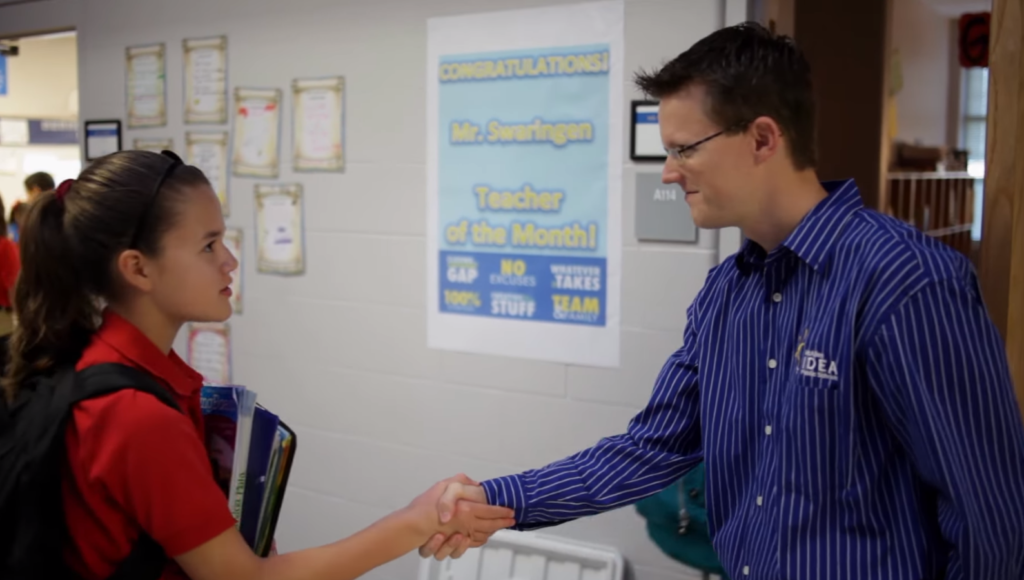
Starting with a single charter school in Miami in 1996, the charter school movement has gained momentum in Florida and is now the state's most popular school choice option, with nearly 700 charter schools serving 330,000 students.
Editor’s note: Today’s commentary comes from Nina Rees, president and CEO of the National Alliance for Public Charter Schools, the leading national nonprofit organization committed to advancing the charter school movement.
Nina Rees
In 1991, Amazon and Google didn’t exist. Neither did smart phones. The internet was a fledgling idea, and a small band of teachers and school leaders in Minnesota were about to change America’s education landscape forever.
The state passed the first charter school law in the country, creating a new type of public school independent of the school district, focused on the individual needs and interests of students and propelling them to academic success. With the law’s passage, Minnesota became the model for flexible, student-centered, innovative public education options.
Fast forward 30 years to today, and 44 states have public charter school laws serving 3.3 million students. Nearly 220,000 dedicated teachers deliver education at 7,500 charter schools. Now that’s something to celebrate.
This month, National Charter Schools Week 2021 was a time to reflect on those 30 years of work to close the opportunity gap and deliver an excellent education to every student. The innovation that charter schools bring to education lies within the built-in flexibility and autonomy to design and implement classroom instruction. Simply put, teachers and leaders have the freedom to do whatever it takes. They can meet students where they are and provide the best learning methods for them to gain the knowledge and skills needed to be successful in college, career and life.
That model works. Millions of students and thousands of teachers and schools make up the dynamic charter school community. Some schools focus on college prep, some follow a STEM curriculum, and others integrate the arts into each subject. All are focused on students and their unique learning needs.
Again this year, U.S. News & World Report released the 2021 Best High Schools ranking which included data on nearly 24,000 public high schools. And once again, charter schools outperformed. Charter schools made up 10% of public schools in the ranking, but they made up 24% of the top 100 best high schools.
Charter schools in Arizona, Arkansas, California, Delaware, Florida, Louisiana, Massachusetts, Minnesota, New Mexico, North Carolina and Texas were represented on the top 100.
Charter schools overwhelmingly serve underserved students: urban students and those who are Black, Latino or come from low-income families. And they do it exceptionally well. Students in urban charter schools gained 40 additional days of learning in math and 28 additional days of learning in reading per year as compared to their district school peers. Low-income Hispanic students gained 48 additional days in math and 25 additional days in reading, while low-income Black students gained 44 additional days in reading and 59 additional days in math per year.
And four or more years of enrollment in an urban charter school led to 108 additional days of learning in math and 72 additional days of learning in reading per year.
While it is important to look back at how far charter schools have come in three decades, it is even more important to look ahead. The pandemic has shown us that now more than ever, American families want more high-quality public education options.
Education is not a fixed place, a person, or a system – it is a right. Charter schools are a critical part of public education, and our movement to bring better options to more families who need it is growing. New schools are opening and enrollment is increasing, signaling that parents and communities want and need the educational options that charter schools provide.
Charter schools are born out of a community need for more and better, with passionate educators and parents who are committed to giving more kids the opportunity to have a great education, taking up the mantle and making it a reality. It is common to see charter schools led by former teachers who wanted to take the lessons they learned in the classroom and apply those lessons to an entire school. And that’s the beauty of the chartering model.
Charter schools across the country have the strong support of their local communities and people across the political spectrum. In Florida, the Legislature this year passed a law allowing Florida’s colleges and universities to issue charters, making the process easier, but not less accountable, to start and expand charter schools. This will lead to more education options and learning opportunities for Florida students.
What started with one law and one school in Minnesota has blossomed into a nationwide movement.
Student-centered, tuition-free, and always public, charter schools have changed the American public education landscape for the better. The celebration this month of National Charter Schools Week has been a time for everyone to highlight and celebrate the schools, students, education leaders and advocates that have demonstrated the strength and promise of the charter school movement over the last 30 years.

