 Ohio lawmakers may have saved the best for last in a remarkable year for parental choice programs. School Choice Ohio ran down all the private school provisions here but briefly Ohio lawmakers created an afterschool enrichment Education Savings Account. They also created a new private choice scholarship tax credit, and expanded the funding and eligibility of existing voucher programs.
The new Ohio budget also created a small tax credit for home-schooling expenses, eliminated a statewide cap on the number of EdChoice scholarships, and phased out prior public attendance requirements for EdChoice scholarships. Also charter schools, which had been limited to certain challenged districts, can now operate in any Ohio district.
Florida, Indiana, New Hampshire, Ohio and West Virginia enacted school choice reforms that in any “normal” legislative season likely would have been the biggest move of the year. New states like Missouri and Kentucky passed the first programs in their states. Pennsylvania lawmakers increased the cap on their state’s tax credit by $40 million. Lawmakers in Arkansas, Arizona, Georgia, Iowa, Kansas, Montana, South Dakota, Nevada and Oklahoma all either improved existing programs or created new ones.
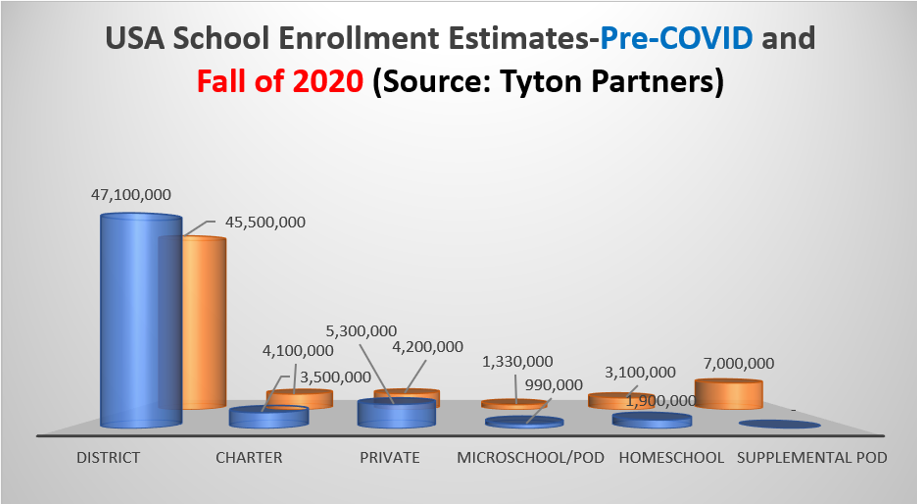
The 2020-21 school year also saw a large increase in charter school enrollment, a large to gigantic increase in home-schooling (estimates vary) and the emergence of a micro-schooling sector.
Not everyone however seems to have got the message:
And…
The Centers for Disease Control is allowing COVID-19 vaccines for children the age of 12 and older. While vaccinating children for COVID-19 would contribute to herd-immunity, it is worth recalling that children have been more likely to die from the normal flu than COVID and that school staff were among the first groups to access COVID-19 vaccines. The mere suggestion of disrupting another school year on such spurious grounds is a vulgar display of entitlement.
 What is thy bidding my master?

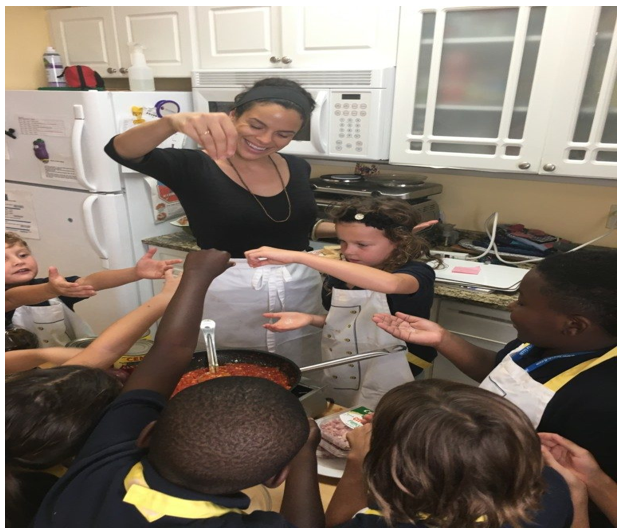
I have felt it.

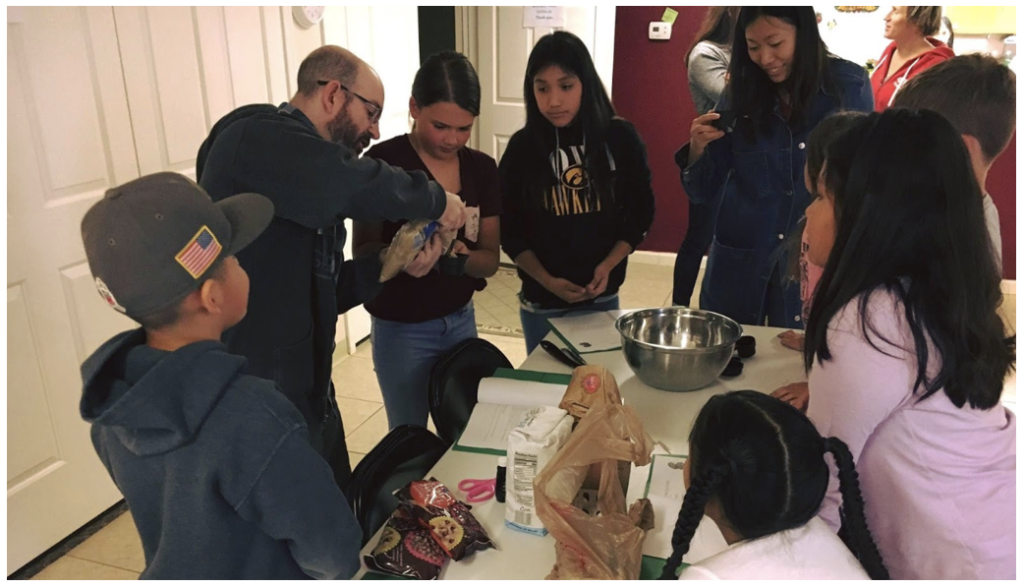
It will be very difficult to conceal, but if we would agree to reopen the large schools …
Yes, my master…

What about the organizations that are providing devices and public funding for instructors? The ones addressing the equity issues rather than merely talking about them?

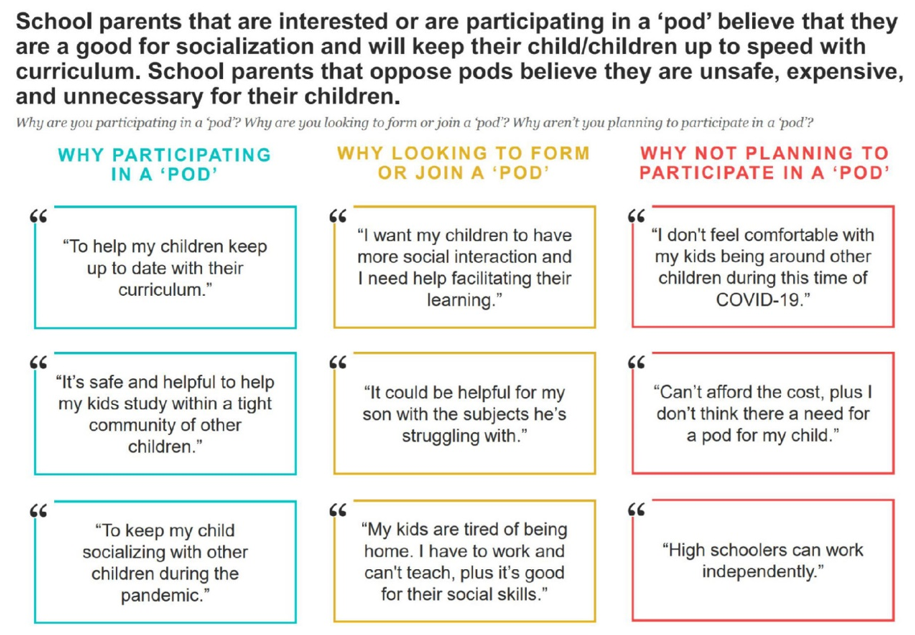
A recent EdChoice poll found that about one-third of parents who responded to its survey are participating in pandemic pods, and that a majority – 53% – either are participating or looking to form a pod. The following graphic accompanied poll results, providing parents’ explanations for why they are participating, why they’re wanting to begin participating, or why they are not planning to participate in the practice.
Last week, Arizona Gov. Doug Ducey hosted Secretary of Education Betsy DeVos in Phoenix. Districts, charter and mico-school leaders and parents spoke about innovative school models, one of which was a school formed by members of the Black Mother’s Forum in cooperation with Prenda, an Arizona-based micro-school organization.
The Wall Street Journal noted an opposition report to micro-schools delivered to the National Education Association concerning these types of schools in general and Prenda in particular.
“The Opposition Report has documented widespread support for micro-schools,” it read. The NEA opposition report cites an expert who thinks micro-schools can “address some of the structural limitations of homeschooling,” such as parents’ work obligations, and — this is Prenda’s innovation — take advantage of school choice programs to “alleviate some equity issues” posed by the cost of hiring your own teachers. The combination could make home education feasible for millions more families.
The NEA opposition report goes on, predictably, to raise concerns about pods increasing achievement gaps. The Wall Street Journal sagely notes this view goes beyond the nonsensical.
It’s a strange pitch from the teachers union: micro-schools are dangerous — they help their students learn more! This seems like a reason to broaden access, not restrict it. And that’s what Prenda has done by eliminating tuition: make micro-schools accessible to low-income families.
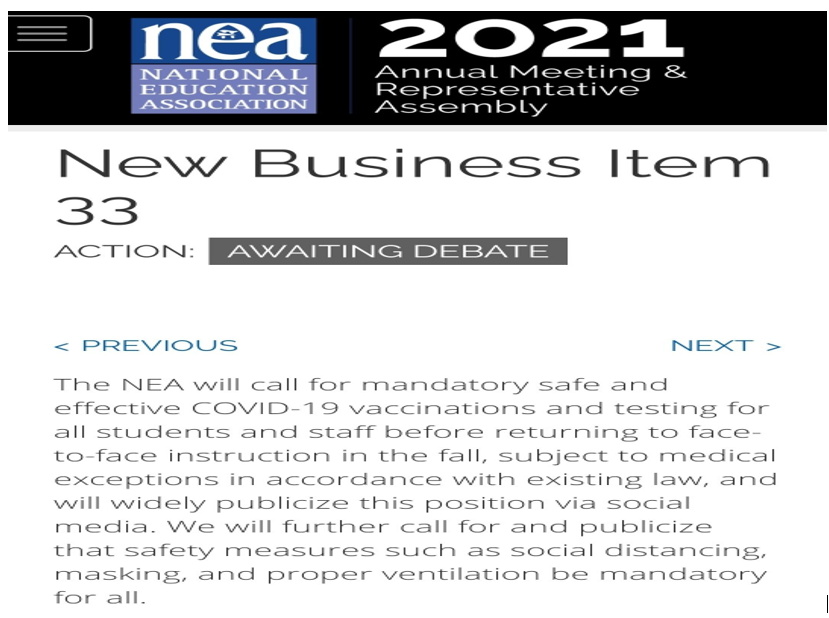
So, if you are scoring at home, the NEA opposes public schools reopening. It also opposes parents innovating to provide their children with in-person instruction and socialization due to equity concerns. If someone actually addresses equity concerns by paying the in-person instructor, providing computer and internet access, they are really against it.
If parents are watching all of this, including the harm it is doing to the education of their children, I can imagine their reaction might look something like this:

At the conclusion of one of the most criminally underappreciated very bad movies of all time, the 90210 kids-turned-space-marines of “Starship Troopers” capture a “brain bug.”
Neil Patrick Harris as Col. Carl Jenkins uses his mind-reading powers to intuit the thoughts of the hulking killer space roach monster. As luck would have it, this alien from the other side of the galaxy thinks in English.
“It’s afraid…” Jenkins says softly at first. “IT’S AFRAID!!!!” he then exclaims triumphantly to the cheers of the gathered troopers.
(You can watch this masterpiece of cinema here.)
Evidence of pandemic pod fear among the K-12 traditionalist left is everywhere. Listen to this Soho forum debate for instance. Or read this Arizona Republic article that interviews a single parent as representative of a micro-school organization with thousands of parents. This single parent admits being dissatisfied with public and private schools and is a known associate of an anti-choice activist group, a small detail that went unmentioned.
“While pandemic pods may seem relatively harmless, they are part of a growing trend towards education privatization that undermines public education and democracy” another critic asserts.
So, what to take away from this?
If there is a nefarious plot out there to damage public education, one need look no further than the decisions of NEA affiliates like the Florida Education Association to find the most effective practitioners. The FEA has been in court trying to prevent the reopening of schools that a large percentage of Florida families clearly desire.
Any ability of villains such as myself to promote micro-schools simply are dwarfed by the far grander efforts of the Florida Education Association to encourage their adoption. Those of my tribe should simply pull up a couch, eat some popcorn and wonder at the bizarre choices being made by the opponents of educational freedom.
Teachers, after all, have a great deal to gain from this trend. A small but growing number of teachers who didn’t find operating in huge impersonal bureaucracies their personal cup of tea have found joy in running their own small schools. There is a large pool of potential teachers out there unwilling to teach in big-box schools but who might return to the profession if they get to be in charge of their own school.
This trend seems popular among both families and teachers, which I find thrilling, and alas, the education tradionalists find fearful.
“The only good bug is a dead bug!” is a catchphrase from the dystopian, quasi-fascist world of “Starship Troopers.” It is a shame these folks apparently view it as inspiration for what seems to be their guiding philosophy:
“The only good school is a zoned, unionized school!”
 According to the Wall Street Journal, the Securities and Exchange Commission is examining the for-profit business practices of Florida’s teacher unions and their for-profit business partners.
The Journal reported recently that teacher union leaders are pushing teachers to purchase retirement investments from union-owned, for-profit companies that charge unusually high management fees. These higher fees are increasing the unions’ profits at the expense of teachers’ retirement funds.
The Journal writes: “The setup is one of an array of similar deals in which unions and other groups get income from endorsements of investment products and services — often at the expense of teachers … The ties help explain why many local-government workers continue to pay relatively high retirement-plan costs, while fees in corporate-based retirement plans are often lower and have been falling for years.”
I was first informed about the for-profit business ventures of teacher unions when I became a local union president in 1978. I had questions, but I was 22, and my mentors assured me our profits benefited our members and the union. Forty years later I still use a credit card that is managed by a for-profit joint venture involving the National Education Association (NEA), MasterCard, and Bank of America, even though I haven’t been an NEA member since 1997.
Given how critical teacher unions often are of for-profit businesses operating in public education, it’s ironic that these same unions operate a variety of for-profit businesses themselves. But the unions are selective in their criticisms. They only criticize for-profit businesses they perceive as competition, such as the small number of for-profit charter schools that aren’t unionized. For-profit contractors, bus companies, furniture vendors, teacher training providers and hardware and software companies, among others, are fine.
I do not object to teacher unions, or anyone else, operating for-profit businesses in public education. Without profit there would be no credit. Without credit there would be no scalable innovation. And without scalable innovation, we’d all be living in caves.
I also don’t object to teacher unions using their influence with the Democratic Party and the media to maximize their profits, provided it’s done legally and with transparency. All multimillion-dollar corporations, including teacher unions, work the media and lobby government to enact policies that advantage their businesses. I do object to teacher unions promoting their business interests in ways that hurt our most vulnerable and disadvantaged children. While the SEC is investigating the legality of the unions’ business practices, my concern is with the morality of their business practices.
In Florida, teacher unions have used their profits to help fund lobbying and lawsuits to take away education options from our state’s highest-poverty, lowest-performing students. Their goal is to protect their market share and revenue even though these actions hurt disadvantaged children and are inconsistent with the values of most teachers. Instead of attacking our most vulnerable children, teacher unions need a new business model that allows them to find common ground with these children and their families.
The future of public education is customization. Soon every child will have access to a customized education. Teacher unions need a business model that aligns with and supports customization. They will go out of business if they continue insisting that public education can only take place in government-managed schools covered by one-size-fits-all collective bargaining agreements. This 1970s model of public education, and the early 1900s model of industrial unionism that accompanies it, doesn’t work for many children and is going away.
There is a positive role for teacher unions in public education if they will adopt a new unionism that puts people above profits and empowers teachers and families to have more control over how each child is educated.

While the reasons for Democratic presidential candidate and leading anti-charter stalwart Elizabeth Warren’s nearly 13-point polling plummet are multifaceted, a recent public confrontation with school choice supporters and the revelation that she sent her son to a $17,000-a-year private school likely contributed to the decline.
Warren’s strong anti-school choice stance probably isn’t working in her favor if education choice polls are any indication. A RealClear Opinion Research survey conducted this fall reported that 68 percent of Americans now support the concept of school choice.
The poll, sponsored by the American Federation for Children, included 2,014 registered voters. Forty-two percent identified as Democratic, 31 percent as Republican, and 28 percent as Independent.
Fully 70 percent of respondents said they support a federal tax credit scholarship program similar to the Florida Tax Credit Scholarship administered by Step Up For Students (which hosts this blog) that serves more than 100,000 lower-income students.
According to the American Federation for Children, the strongest support for a tax credit scholarship – 74 percent – came from respondents 45 to 54 years old. Meanwhile, 71 percent of black voters, the highest level of any racial demographic, were supportive. Latino voters also showed strong support with 69 percent favoring school choice.
In terms of political party, about 76 percent of Republicans and 64 percent of Democrats supported school choice options overall.
While 53 percent of respondents said they currently send their children to district-run public schools, given a choice, 70 percent would choose another educational option; 39 percent specifically identified their first choice as a private school.
The National Education Association, the nation’s largest teacher union and most vocal opponent of school choice vouchers and charter schools, has yet to endorse a presidential candidate for 2020. Though the union is expected to contribute millions of dollars to the presidential campaign, it remains to be seen if its endorsed candidate will be able to maintain an anti-education choice stance given public sentiment in favor of it, compounded by the fact that several swing states including Arizona and Florida have large education choice populations.
Other swing states, such as Michigan and Pennsylvania, have large charter school populations, and Pennsylvania also offers tax credit scholarships to thousands of lower- and middle-income students.
 Reading test results: The state's 3rd-graders posted slightly lower scores on the Florida Standards Assessments reading tests this year, according to results released by the Florida Department of Education. Twenty percent of the state's 3rd-graders - more than 44,000 students - post a Level 1 score, which puts them at risk of repeating the grade. Last year it was 19 percent. About half of the affected students are promoted using the state's retention law exemptions or by attending summer reading camps. Fifty-seven percent of the 3rd-graders posted a Level 3 score, which is considered at or above grade level, down from 58 percent last year but up from the 53 percent in 2015. The test scores also factor into the formula for school grades, which come out later this summer. Orlando Sentinel. Gradebook. Ocala Star-Banner.
Housing for teachers: Suggestions in Miami-Dade, Broward and Monroe counties that affordable housing for teachers be built on school campuses is getting a chilly reaction from teachers. “I mean, who wants to live where they work?” asks Karla Hernandez-Mats, president of the United Teachers of Dade. Other teachers union officials agree, and suggest a better solution would be to pay teachers more so they could afford mortgages or rents in south Florida. WLRN. (more…)
Teacher prep rules: The U.S. Education Department issues guidelines for states to rate colleges' teacher preparation programs on an annual basis. The ratings would track teachers after graduation and show how they perform, which is intended to help aspiring teachers decide on which college to attend and to improve the colleges' programs. The states will rate the programs as effective, at-risk, or low-performing. Washington Post. Education Week.
Scholarships appeal: The groups challenging Florida's public education adequacy continue to focus on school choice, and are targeting the state's McKay scholarship program for children with special needs in their appeal. The program helps 30,000 Florida children with special needs pay private school tuition. The groups call the program unconstitutional. redefinED.
Hiring freeze: A hiring freeze that is requiring reshuffling of some educators back into empty classrooms will affect success coaches hired by the Hillsborough County School District to work closely with at-risk students, according to a district memo sent to employees. Gradebook.
Contract negotiations: The proposed contract between Pinellas teachers and the school district includes a guarantee of renewal for teachers on annual contracts who are judged to be effective or highly effective. Gradebook. (more…)

