Editor's note: Blog stars is our occasional roundup of compelling, provocative or just downright good stuff from other ed blogs (although sometimes we throw in op-eds from newspapers and magazines, too). Enjoy.
Geoffrey Canada: Death to Education Reform
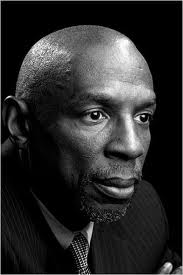
Canada
To know me is to know that no one feels more strongly than I do about the importance of transforming our current absurd, destructive educational system.
But the way education reform advocates are going about it is wrong. The problem is that you’re never going to get people motivated to be awesome teachers if they’re part of a giant bureaucracy. The only way you’re going to get people to be motivated to be awesome teachers is, yes, if you give them enough money, but also if they are part of a STRUCTURE and a CULTURE that breathes this kind of achievement and rewards it–rewards it not only financially, but also through an environment that encourages it every day. Why do small startups kick the ass of giant technology companies every day? It’s because, yes, these startups have payoffs, but anyone who knows them will tell you that what really makes them tick is the fact that they are small, tight-knit, and everyone is extremely focused. Information loops close really fast. It’s also what made Harlem Children’s Zone a success. It’s what makes neoliberal attempts to “reform” schools centrally via spreadsheet fail.
The only way you’re going to get good schools, in other words, is if you have a system where the people who have the biggest stake in the education, also have a very direct say in how things are run.
To put it another way, you need radical decentralization and a radical shift to power to parents and children in how schools are run. This can be accomplished through vouchers or through other means. (I actually have my misgivings about vouchers, for a bunch of complex reasons, but I’ve come to believe decentralization really is the key.) You could have a 100% public system if it was also structured so as to enable choice and competition. But the crucial thing is to let a thousand flowers bloom. Full post here. (Image from the thebestschools.org)
Andrew J. Coulson: Uh ... the 'Quality Controlled' Schools Are Worse
Sunday’s Washington Post ran a story titled “Quality controls lacking for D.C. schools accepting federal vouchers.” These are the particular failings chosen for the story’s lede:
schools that are unaccredited or are in unconventional settings, such as a family-run K-12 school operating out of a storefront, a Nation of Islam school based in a converted Deanwood residence, and a school built around the philosophy of a Bulgarian psychotherapist.
It is remarkable that more serious transgressions were omitted. Why not mention the schools in which current and former staff brawl in the parking lot, or students start vicious fights at sporting events? Why not discuss the schools spending nearly $30,000 per pupil annually and yet graduating barely half of their students on time?
The reason the WaPo didn’t mention them is that they are not voucher schools. (more…)
 Editor’s note: This is the third installment of “A Choice Conversation,” an ongoing dialogue between Doug Tuthill, president of Step Up for Students and a redefinED host, and John Wilson, a former NEA leader who writes the Unleashed blog at Education Week.
Doug Tuthill: John, it’s fascinating to see the new opportunities customization is providing teachers. In Florida, it’s increasingly common for teachers to teach at a district school in the morning, at a private school in the afternoon, and for an online school in the evening. The opportunities provided by technology are particularly intriguing. Three years ago my son’s Florida Virtual School teacher lived in Portland, Oregon, where she was a stay-at-home mom. Many online teachers are at home raising young children while teaching full time.
Recently, I’ve been wondering how customization will impact the services teacher unions provide their members. Given teachers will increasingly have multiple employers in the future, perhaps a key union service could be helping teachers manage the complexity that comes with multiple employers. For example, maybe teachers would prefer to be employed by their union and contracted out to various providers. That would reduce employment hassles for teachers and strengthen their relationship with the union. Unions could also provide financial and administrative support for teachers wanting to open their own schools, and form collaborative networks of teacher-owned schools. You’ve been much closer to internal union discussions in recent years than I have. How do union leaders think customization will affect the services they provide teachers?
John Wilson: Doug: You raise some very interesting points. Every teacher that is treated in a collective manner needs a union to leverage the unity of the group for fair wages and benefits, excellent learning and teaching conditions, and job security for being a good teacher. Customization can be bargained to accommodate those uniquenesses. I have heard some horror stories from virtual teachers as it relates to their employee status. They need a union. Those that are employees of a district have a union to represent them. Unions need to do a better job with those that are in a different configuration. Some of our state affiliates like Pennsylvania are reaching out to virtual teachers.
The challenge is not that teachers in virtual schools need a union. That is evident. The challenge is building the trust in unions to advocate policies that sustain their job. NEA supports a blended approach as the best method for virtual education. That may not be possible in every situation. There is a "chicken and egg" challenge here. If virtual educators joined the union and became activists, they would influence the policies. I have seen charter school educators do that in some state affiliates. It makes a difference, but virtual educators must join first and work from within.
Doug Tuthill: John: In this age of customization, teacher unions should use their collective power to ensure every teacher is treated as an individual. One-size-fits-all is as ineffective for teachers as it is for students. (more…)
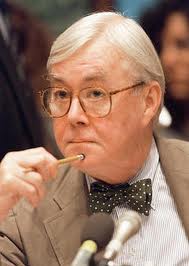 Editor's note: Adam Emerson, who writes the Choice Words blog at the Fordham Institute, wrote a lot about the progressive roots of school choice when he was editor here at redefinED. Here is his latest piece on the subject.
The 2012 Democratic Party platform released this week calls for the expansion of “public school options for low-income youth,” a position that has appeared in varying language in every Democratic platform since 1992. But as Marc Fisher of the Washington Post reported this week, the Democratic platform historically has been “a jagged series of experiments” that once made room for more than just public-school choice.
Today, the national party fervently rejects vouchers for private and parochial schools, but that wasn’t the case thirty years ago. In 1972, Democrats sought to “channel financial aid by a Constitutional formula to children in non-public schools,” a position that reflected not only the influence of the Catholic Church at the time but also the drive, the values and the persistence of the late Daniel Patrick Moynihan.
Moynihan, who also crafted education planks for the Democratic platforms of 1964 and 1976, followed the party’s (and his own) guidance. Soon after his election to the U.S. Senate in 1976, he proposed a tuition tax credit for families with children in private and parochial schools. That bill was co-sponsored by an almost even number of Republicans and Democrats, and, as Moynihan defiantly wrote in Harper’s Magazine at the time, “Why should the anti-Catholicism of the Grant era be given a seat at the Cabinet table of a twentieth-century President.” But that president, Jimmy Carter, had come into office with the support of the National Education Association, which worked with H.E.W. Secretary Joseph A. Califano, Jr. to kill the bill.
Since then, the NEA and the American Federation of Teachers have exerted ever greater influence over the Democratic Party while the Catholic Church has wielded less. Full piece here.
 The battle for the soul of the Democratic Party, at least in the area of public education policy, was on full display yesterday at two panel discussions organized by Democrats for Education Reform. (Full disclosure: I am DFER’s Florida coordinator.)
The first panel consisted of Democratic state legislators from Colorado, Indiana, New Jersey, North Carolina and Ohio discussing their legislative efforts to improve public education by changing teacher evaluation, tenure and compensation systems. These initiatives, generally opposed by teachers unions, are designed to make the current factory model of public education more effective and efficient by giving management more control over personnel decisions.
The second panel included the presidents of the two national teachers unions (Dennis Van Roekel of the National Education Association and Randi Weingarten of the American Federation of Teachers), two educational entrepreneurs with strong technology backgrounds (John Katzman from 2tor and Noodle.org, and Joel Rose from New Classrooms Innovation Partners), and Joe Reardon, the mayor of Kansas City, Kansas. They discussed what a post-factory model of public education might look like. There was broad agreement among these diverse panelists that customized learning is the future of public education. They all emphasized the importance of innovation and entrepreneurship, and the economic and moral imperative of more effectively overcoming the achievement gap related to family income.
The fault lines within this second panel, and in the Democratic Party as a whole, appeared when the moderator, Jonathan Schorr from the NewSchools Venture Fund, asked about the role private providers should play in public education. After acknowledging that private, for-profit companies provide buildings, desks, buses, textbooks, computers, pencils and electricity for district schools, both Weingarten and Van Roekel opposed allowing nongovernment employees to teach in public education, arguing that the essence of public education would be undermined if nongovernment personnel received public funds to teach children.
Katzman and Rose, the entrepreneurs/innovators on the panel, seemed agnostic about who employs teachers. They cared about the freedom to innovative and customize. Katzman in particular stressed that learning providers needed to be agile. Weingartner responded that teachers unions could provide this agility through collective bargaining contracts if only management would agree. She asserted that school districts were the impediment to flexibility and innovation, not teachers unions.
The teachers unions’ current business model is tied to teachers being public employees, so I understand why that’s a must-have for them. No business voluntarily gives up market share, but asserting that only public employees can further the mission of public education defies logic and common sense. (more…)
After going 56 years without attending a national political convention, I’m headed to Charlotte for my second convention in a week. For school choice advocates, the Democratic National Convention will be a somewhat hostile environment, unlike last week’s Republican National Convention in Tampa, where all forms of school choice were enthusiastically embraced.
As we’ve discussed previously on redefinED, the political left, including wide swaths of the Democratic Party, was supportive of giving parents - especially low-income and minority parents - access to more diverse schooling options in the 1960s and throughout most of the 1970s. That support began eroding when the National Education Association gave Jimmy Carter its first-ever presidential endorsement in 1976, and was mostly gone by 1980.
President Clinton’s support of charter schools marked the beginning of a renewed interest in school choice within the party, and pro- and anti-school choice forces have been battling ever since. After two decades of struggle, the momentum today is clearly on the side of the pro school choice Democrats, which has caused anti-choice Dems to become more desperate and strident. American Federation of Teachers’ President Randi Weingarten’s recent attack on the new teacher/parent empowerment movie, Won’t Back Down, was so disingenuous and hyperbolic I was embarrassed for her.
Both Weingarten and NEA President Dennis Van Roekel will be participating in a town hall meeting tomorrow sponsored by Democrats for Education Reform. Four years ago, at the Democratic convention in Denver, DFER burst on the scene at a similar event, and, with close ties to the Obama Administration, immediately became a majority power center within the party. I’m anxious to see what issues predominate tomorrow, and how Weingarten and Van Roekel position themselves.
Unlike Kelly Garcia, fresh out of college I knew a lot about unions.
I grew up in a union household. My mom worked on a factory assembly line and was a member of the United Auto Workers. My dad was a fireman and a member of the International Association of Firefighters.
I started teaching in the fall of 1977, and by the spring of 1978, I was president of our local teachers union and a member of our state union’s board of directors. I moved to Pinellas County, Fla. in 1984 and joined their teachers union, where I was elected vice president in 1988 and president in 1991.
As my term was winding down in 1994, I thought about what I had experienced and learned over the previous 16 years and became convinced we needed a new model of teacher unionism.
Unions are always a reflection of the larger industries in which they reside. A union of freelance software engineers functions differently than a union of Ford autoworkers, or a union of independent truckers. Since today’s public education system took form during the industrial revolution, in the mid-to-late 1800s, today’s teachers unions operate much like the blue-collar unions that were spawned in those early factories.
New organizational structures were developed during the industrial revolution to efficiently manage the increased productivity generated by new machinery, and a rapidly growing public education system soon adopted many of these new structures and management systems. By the late 1800s, public schools increasingly began to resemble factory assembly lines with centralized, command-and-control management systems to generate greater efficiency and productivity through standardization. By the early 1900s, most public school students were moving along educational assembly lines in batches with teachers adding the prescribed knowledge and skills at each grade level.
Since children are not widgets, this production system was ineffective - and at times harmful - for many students. But as bad as these early school systems were for students, they were worse for teachers. They were controlled by politicians who were often more interested in accumulating and using power than educating students, and teachers were often the victims of their political manipulations. Increasingly, teachers rebelled against this unchecked political power, and began to fight back by organizing unions.
Adopting a union model similar to that used by the steel and auto workers made sense for teachers, given schools were organized like factory assembly lines. Teachers embraced centralized collective bargaining to respond to centralized management, and started bargaining for one-size-fits-all rules to counter the one-size-fits-all management practices.
By 1994, I understood the strengths and weaknesses of our blue-collar unionism. While we had blocked management’s ability to abuse their power, we had not empowered teachers and addressed their core desire to be more effective with students. We had turned school districts into unmanageable bureaucracies in which teachers and students were increasingly frustrated and alienated. And, under the guise of protecting public education, we had become the primary defenders of these bureaucracies. In essence, we had become an extension of management. (more…)
Editor's note: This is the second installment of "A Choice Conversation," an ongoing dialogue between Doug Tuthill, president of Step Up for Students and a redefinED host, and John Wilson, a former NEA leader who writes the Unleashed blog at Education Week.
 Doug Tuthill: John, in our last exchange you called “for a new contracting arrangement for providers to serve the unique educational needs of targeted student populations and innovation.”
Floridians have heeded your advice and are expanding options for educators and families through innovative public-private partnerships. For example, the Okaloosa school district contracted with Embry-Riddle Aeronautical University to run Florida’s best aeronautics high school institutes. The Florida Virtual School contracts with Connections Academy to operate its K-5 program, and last year the Duval County school district contracted with local churches to implement programs for suspended students. The Pinellas County teachers union has a corporate subsidiary that contracts with its school board to tutor students; career academies throughout Florida contract for services from a plethora of businesses and trade associations; and the state’s charter schools, Voluntary Pre-K program, McKay Scholarships and tax credit scholarships are all implemented through public-private partnerships, as are many magnet schools.
Managing all these public-private partnerships is challenging, and you’ve suggested using the “institution of public schools” as the oversight entity. I’m curious what you mean by the term “institution of public schools.” I’m also interested in your criteria for distinguishing between acceptable and unacceptable public-private contracts.
John Wilson: Doug, I guess you could say I am a traditionalist when it comes to describing the institution of public schools, but I am an innovator when it comes to expanding the providers of customized education for targeted students and innovation.
I see the district board of education as the "traffic cop" for assuring that all providers, whether charters, private, or public-private, operate within a contract signed by the board of education and the provider. The "traffic cop" should assure that providers meet their fiduciary responsibility, improve student achievement, and adhere to the relevant laws and regulations as well as the contract that was signed with the board of education. I think the community needs to know these arrangements are cost-efficient and effective with their tax dollars and that their children are receiving a high-quality education. Let me add that I am not so naive as to know that we will need to build, and in some cases rebuild, trust and a shared vision with all parties that provide education opportunities. (more…)
Editor's note: For those new to redefinED, "blog stars" is our occasional roundup of good stuff from other education blogs.
Jay P. Greene's Blog: The Way of the Future: Coursera
Watch this video from start to finish from Coursera co-founder Daphne Koller as in right now:
I’m calling it- I think that we’ve passed Clayton Christensen’s inflection point where the disruptive technology (online learning) is better than the dominant technology (traditional universities). The required mastery element that Koller describes in the video seals the deal by itself. I’m willing to bet that it is simply a matter of performing high quality evaluations and getting the results for documentation.
Second while most of the commentary on these developments naturally focuses on higher education, which is in for a major disruption, we need to start thinking about the implications of these developments for K-12. Coursera courses are available for free to anyone. K-12 students can take these courses, and other courses suited to various educational levels will certainly be developed. Full post here.
Jay Mathews' Class Struggle: Let charters bloom. Let teachers be creative.
Petrazzuolo says if a charter doesn’t offer innovative programs, that is one reason not to approve it. ... Successful charters have exposed the weakness of that argument.
When the KIPP DC: KEY Academy began in a Southeast Washington church basement in 2001, it offered a standard curriculum of math, science, English and social studies, plus two hours a day of homework and strict discipline, very old school. Before long, despite the lack of innovation, its students were performing far above the level of their neighbors in regular D.C. public schools.
What is the secret for success? The best charters and regular schools are careful about whom they pick to supervise and teach. Most schools say they have the best principals and instructors. They say they give them strong support. The best schools actually do that. Full post here. (more…)

