 Center for Reinventing Public Education
The Center for Reinventing Public Education (CRPE) is an education research and policy analysis think tank at the University of Washington, Bothell. The organization’s research finds statistical support for charter schools and for reforming the way public education is operated and funded.
Back in August, CRPE released a working paper on the impact of charter schools on student achievement. Its meta-analysis of high-quality studies found charters tend to have a small but positive impact on student achievement in math, but no additional impact in reading.
 By the end of September, the National Education Policy Center released a review of CRPE’s analysis, calling CRPE’s conclusion “overstated” and “exaggerated” and concluding the report offers “little value for informing policy and practice.” (Readers of this blog may already be familiar with NEPC’s reflexive bias against charter school and school choice studies).
Well, get out your popcorn because CRPE just released a devastating counter-critique. CRPE accuses NEPC of quoting selectively, implying arguments not present, inaccurately presenting the research and several serious technical errors. In total, CRPE counts 26 errors within NEPC’s 9-page analysis.
 Yogi Berra once quipped, “It’s tough to make predictions, especially ones about the future.” While true, it doesn’t stop political pundits from attempting to predict the future based on (sometimes unreliable) exit poll data. Following the drubbing Democrats (and the once powerful education unions) received in the mid-terms, many of those pundits began wondering if education choice would lead minorities, especially African Americans, over to the Republican camp.
Just check out some of the speculation (Exhibit 1, Exhibit 2, and Exhibit 3) about how the school choice issue hurt Democrats and helped Republicans (at least in Florida).
But whether Republicans can use education and school choice to win over black voters isn’t the right question. The better, and more important, question is whether the school choice movement can finally win over more Democrats…
 Last week Diane Ravitch warned her readers not to trust the findings of the latest Center for Research on Education Outcomes (CREDO) report highlighting student achievement in charter schools. To make her case, she cited a review of the CREDO study written by the National Education Policy Center (NEPC). Diane Ravitch citing NEPC struck me as humorous for a very good reason.
As the CREDO study results changed direction in favor of charter schools, both Ravitch and NECP took a u-turn of their own.
Now there is nothing wrong with changing your mind. In fact, I applaud people who review research and reassess their previous held beliefs, because it takes considerable courage to change your mind or admit you were wrong. However, the CREDO research methods didn’t change and neither did the concerns raised by NEPC. The only thing that did change was the CREDO results, and it no longer supported Ravitch’s or NEPC’s professional opinion.
Back in 2009, the CREDO report concluded, “Despite promising results in a number of states and within certain subgroups, the overall findings of this report indicate a disturbing — and far reaching — subset of poorly performing charter schools.”
When Ravitch accepted the National Education Association's “Friend of Education” award in 2010, she cited CREDO findings stating, “five out of six charters will get no different results or worse results than the regular public schools.” Ravitch was still highlighting CREDO findings as late as the summer of 2011, but today she attacks CREDO as part of a corporate education reform plot to privatize education.
Like Ravitch, the NEPC had nice things to say about CREDO back in 2009. Despite very little change in NEPC’s own concerns, or even in the CREDO methodology, the organization’s opinion turned decidedly negative in 2013 when the CREDO results shifted in favor of charter schools. (more…)
Civility and respect are core values we promote at redefinED, so we were pleased to read the well-mannered exchange between Jason Bedrick and Kevin Welner about the pros and cons of tax credit scholarships. Readers who missed their back and forth can get caught up beginning here, and continuing here, here, here, here and here.
Unfortunately, their exchange was motivated by a column by Washington Post blogger Valerie Strauss, which was a collection of false assertions and hyperbolic rhetoric. After Bedrick rebutted Strauss’ attacks, she had the good sense to step back and let Professor Welner take over.
Welner has chosen to build his career around opposing tax credit scholarships, and, while some of his previous writings have also suffered from over generalizations and unsubstantiated assertions, his rhetoric has become more measured in recent months, as my colleague Jon East noted last December.
I can’t add much to Bedrick's outstanding rebuttals, but I do wish the parents’ voices could be included in these exchanges. I spend hours every week talking with parents, grandparents, and foster parents about the extraordinary challenges they face raising low-income children. For them the tax credit scholarships are not about ideology or politics; they’re about another tool they can use to keep their children alive, out of jail and on the path to becoming a successful adult.
I suspect Welner would be a lot slower to condemn these scholarships if he spent more time talking to the parents and children who are using them.
Charter schools. Brooksville's first charter school, one with a STEM focus, will open this fall, reports the Tampa Bay Times. Competition from charter schools is forcing the Palm Beach County school district to think harder about its needs and priorities, reports the Palm Beach Post. Charters are also sparking debate among Palm Beach school board members about how much help they should give struggling charters, the Post also reports. An op-ed in the Miami Herald raises concerns about charter schools' diversity and financial incentives. The Sarasota Herald-Tribune profiles the principal of the Imagine charter school that is trying to break free from the parent company.
Magnet schools. The Tampa Tribune applauds the Hillsborough school district for creating a magnet tied to the maritime industry.
Alternative schools. Troubled girls get a fresh start at a sheriffs' youth ranch in Polk County. Orlando Sentinel.
 Tax credit scholarships. Great back-and-forth between scholars Kevin Welner at NEPC and Jason Bedrick at Cato, with Florida's program a big part of their debate. Cato at Liberty.
School choice. It's often partisan. Sunshine State News.
Parent trigger. Education Commissioner Tony Bennett raises a constitutional question. The Florida Current. (more…)
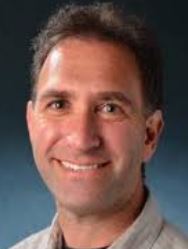
Welner
Give Sean Cavanagh at Education Week credit for a relatively balanced report on tax credit scholarship issues that have been raised in several states, though not all of his sources displayed a similar rigor. The story offers us a snapshot into how one noted academic researcher draws financial conclusions, and the picture is not pretty.
In 2008, in fact, Welner raised a legitimate question about a state agency report that concluded the Florida Tax Credit Scholarship saved taxpayers $38.9 million in 2007-08. He criticized the agency, called the Office of Public Policy Analysis and Government Accountability (OPPAGA), for using what amounted to an educated guess that 90 percent of low-income students who chose the scholarship would have otherwise attended public schools. This is one among many factors that are critical to the evaluation because students who would otherwise have attended a private school save the state no money. Welner focused on this 90 percent figure and went so far as describe it as a form of “smoke and mirrors.”
Fast forward four years. Four different independent organizations, including highly regarded OPPAGA and the nonpartisan Florida Consensus Revenue Estimating Conference, have now issued seven different reports that all conclude the program saves money. In both the second OPPAGA report, issued in 2010, and an estimating conference projection issued in March (page 36), fiscal analysts turned to the U.S. Census for some answers. OPPAGA used the 2000 U.S. Census, the year before scholarships were enacted, and analyzed the Public Use Microdata Sample to determine that the 90 percent estimate was actually too low. The actual percentage of families in the relevant income category who attended public schools that year was 94.6 percent. The estimating conference went even further, combining American Community Survey data from 2005-09 with private school enrollment data to make projections about the actual number of low-income students enrolled in each grade level in private schools in 2012.
The results: The second OPPAGA reported found savings of $34.6 million in 2008-09, and the estimating conference projected a savings of $57.9 million for 2012-13.
Asked to respond to this new analytical consensus in Florida, though, and Dr. Welner largely reprised his 2008 remarks. (more…)

