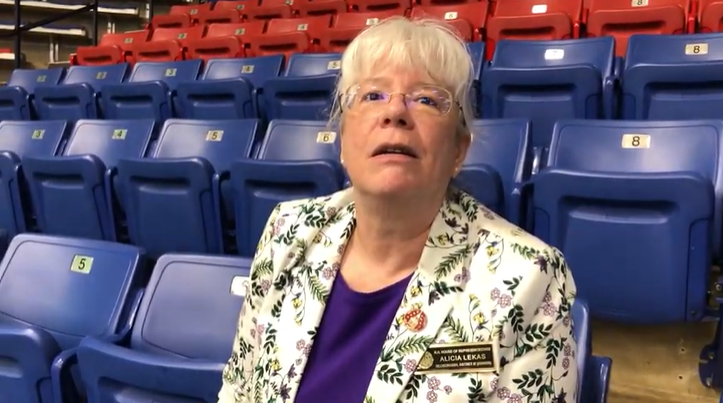
New Hampshire Rep. Alicia Lekas has filed a bill that would raise the cap on the state’s Education Freedom Account program from 300% to 500% of the federal poverty level, increasing the limit for a family of four to about $139,000.
Editor’s note: This article appeared today on newhampshire.bulletin.com.
Nearly two years after creating the “education freedom account” program, a growing number of New Hampshire Republicans are looking toward expanding who can access it.
During an Oct. 25 Bulletin/NHPR debate, Gov. Chris Sununu said he would support raising income caps on the program. In a Tuesday WMUR debate, he repeated that position. And one Republican lawmaker has already filed two pieces of legislation to do it.
“I would be open to expanding it if (lawmakers) want to do that,” Sununu said at a press conference Wednesday. “It’s because there’s such a high demand. We’ve created a product – we’ve created an opportunity for families, and more families than we anticipated want it.”
Any increase in income limits would be a transformative expansion for the program. And any effort to do so will likely reignite fierce ideological debates over the program – regardless of who controls the State House.
Created in 2021 as part of the two-year budget, the EFA program allows parents to access a portion of public education funds and use them toward nonpublic school expenses such as private school and home-schooling costs. Families that participate receive the per-pupil adequacy grant that would have been given to their local public school, which averages around $4,600 per student.
The program is currently targeted toward lower-income families: Families must demonstrate that they make below 300 percent of the federal poverty level in their first year. This year, that level is about $83,000 for a family of four.
Now, after a higher-than-expected initial take up, Republicans are proposing raising that income cap. A bill filed by Rep. Alicia Lekas, a Hudson Republican, would raise the cap from 300 percent to 500 percent of the federal poverty level – increasing the limit for a family of four to about $139,000.
To continue reading, click here.

St. Paul’s Episcopal School in Concord, New Hampshire, is one of 285 private schools in the state serving more than 27,000 students. Learners from 36 states attend school on the 2,000-acre campus and benefit from a 5-to-1 student-teacher ratio.
New Hampshire’s education savings account program, hailed by school choice advocates for dramatically expanding education choice options in the state, continues to be popular with families seeking the most appropriate educational setting for their children.
Data released by the New Hampshire Department of Education show 3,025 students are now enrolled in the New Hampshire’s Education Freedom Account program, double the number enrolled in its first year. Created by the Legislature in the 2021 budget, the program gives state money to moderate and low-income families to pay for non-public school expenses including private school tuition, supplies, tutors, and home education programs.
Qualifying families – those who make below 300% of the poverty level, or $79,500 for a family of four – can access the state’s annual per-pupil education funding grant, which traditionally goes to public schools. Those grants average $4,600 per year.
Supporters of the EFA program, who include Gov. Chris Sununu and Department of Education Commissioner Frank Edelblut, have said it levels the playing field for lower-income families who are not satisfied with their public school by providing state money for different educational methods.
Unlike other states that offer education savings account programs such as Arizona and Tennessee, New Hampshire’s program does not limit the funds to students who are leaving public schools. Any student whose family meets the income requirements can participate.
About 89% of New Hampshire students using the EFA program did not attend public school in the past year, according to the Department, despite concern that the program would result in an overflow of students leaving district schools. A town-by-town breakdown released by the Department last spring shows most school districts have lost only one or two students to EFAs, allaying claims that the program would cause an exodus of students from public schools.
Under New Hampshire’s program, districts that lose students are compensated using “phase out” grants that give them a shrinking percentage of grant money for the lost student each year for three years. Based on the number of students that have left public schools and taken on EFAs so far, the state is poised to pay out $477,000 in grants in the 2022-2023 school year and $715,781 in the 2023-24 school year.
In a unanimous voice vote in May, the Senate approved House Bill 1135, which would require the state’s legislative budget assistant to examine how well the Department of Education is monitoring who gets access to the program, what the funds are spent on, and how public schools are reimbursed.
The audit must examine how well public schools are reimbursed with the program’s “phase-out grants,” which provide limited relief to school districts for the first few years after a student leaves and takes an EFA, according to the bill.
The bill also requires auditors to review the demographics of the students using the program and compare their circumstances the year before and after the program launched.
 Months after passing a program to allow state education funding to go toward private school tuition and homeschooling costs, a New Hampshire state representative wants to expand that model.
House Bill 607 would create an opt-in, local version of the state’s education freedom accounts program that was approved last summer. Under the proposed law, parents in participating towns could access thousands of dollars of a town’s portion of public school tuition and use it for private school or homeschooling expenses.
Under the terms of the bill, which would require local approval, residents in school districts would need to opt into the program. A three-fifths vote in a district’s annual meeting would create the localized savings account program.
“I’m optimistic that there are communities that will take this up and run the experiment,” said the bill’s architect, Rep. Kevin Verville. “You know, don’t forget the United States is based on federalism, and the states are supposed to be the laboratories of democracy. And so, when a state gets it right, those are the things that you share out to the rest of the country. And this program is one of these little experiments in democracy.”
The bill drew heated debate during a committee session last week. It would allow parents to access 80% of the locally raised tuition amount that goes to public school children, minus the amount the district spends on special education – between approximately $5,000 to $20,000 per year, depending on how much the district spends.
Families who already participate in the statewide savings account program would not be eligible.
Read more about the proposal here.

Prenda launched in 2018 with seven students. The network had grown to more than 400 microschools by fall 2020.
Editor’s note: To learn more about education choice in New Hampshire, check out SUFS president Doug Tuthill’s podcast with New Hampshire state Rep. Glenn Cordelli here.
Signaling its continued support for education choice and parental empowerment, the New Hampshire Department of Education has announced that four districts – Bow, Dubarton, Fremont and Haverhill – have been awarded Recovering Bright Futures Learning Pods grants from the state to address learning loss due to the pandemic.
The Department has partnered with Prenda, a tuition-free network of microschools, to create small, in-person, multi-age groupings where students can learn at their own pace, build projects and engage in collaborative activities. Prenda will utilize the grant funds on a per-pupil basis to serve Learning Pod enrolled students, who will remain enrolled at their district school.
Each learning pod will be supported by a certified learning guide and will follow a project-based learning model. All families can access the learning pods as space allows.
The concept of learning pods may be new to many, New Hampshire Education Commissioner Frank Edelblut said, but they’ve already served more than one million students across the country.
“Learning pods are particularly helpful to students who have experienced learning loss and will thrive with more individualized attention,” Edelblut said.
Learning programs in district learning pods have been aligned with New Hampshire Academic Standards and adapted to individual students. Prenda will be responsible for providing quarterly updates to the district on student performance criteria and attendance will follow district practices.
All New Hampshire school districts, including traditional and public charter schools, as well as home education families, are eligible to participate in the District Learning Pod program. The Department expects additional school districts in the state to sign on for the program.
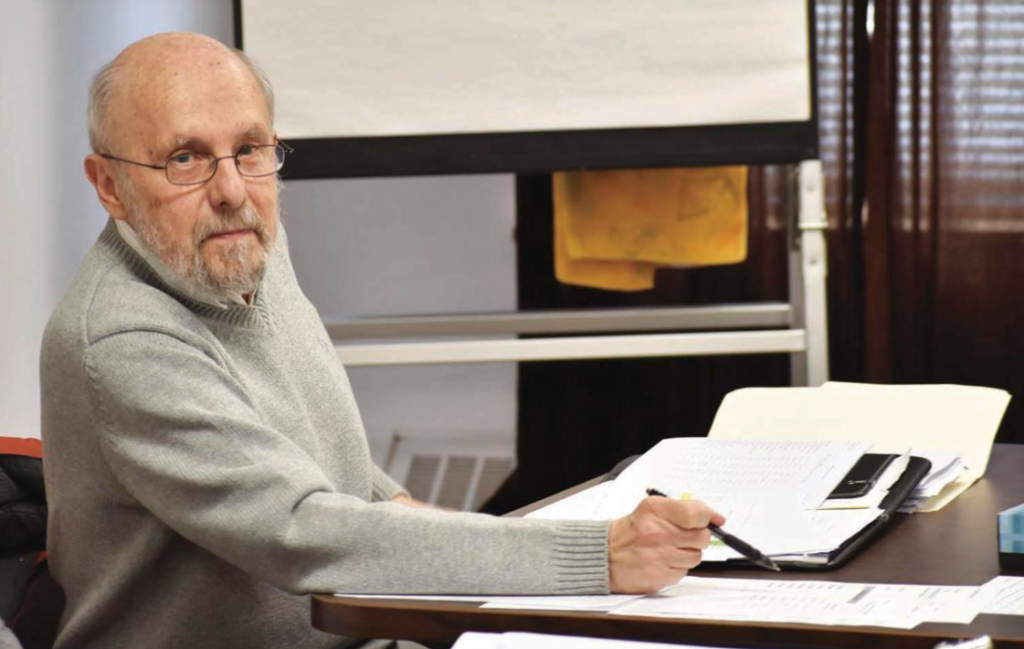
 On this episode, Tuthill talks to the vice chair of the Granite State’s House Education Committee about the Education Freedom Account Program, which was approved during the last legislative session. The program allows students in low- and middle-income households to receive education savings accounts that can be used for private school tuition, tutoring, textbooks, curriculum, educational therapies and other education-related expenses.
Cordelli reflects on the multiyear legislative process that led to the passage of the program and what the future holds for education choice in New Hampshire, including creation of new community learning pods in cooperation with organizations such as Prenda.
"We have seen a wildfire across the country of education freedom. I think the momentum is with choice and parents ... Education freedom is going to keep expanding in New Hampshire.”
EPISODE DETAILS:

Maria Brown of Manchester, New Hampshire, center, is among families interested in the new Education Freedom Account. She pulled two of her five children from Manchester public schools and began homeschooling them because she was frustrated with the instability of remote learning the schools offered.
Editor’s note: Be sure to visit reimaginED this Wednesday to listen to a podcast with Step Up For Students president Doug Tuthill and New Hampshire state Rep. Glenn Cordelli.
Interest in a new school choice option in New Hampshire is running high after more than 1,000 families submitting inquiries to the New Hampshire Department of Education before the program came online Aug. 27.
The Education Freedom Account, proposed during the recent legislative session in Senate Bill 130, provides parents an education savings account of, on average, $4,600 per pupil that can be used for private school tuition, public school tuition for out-of-district placement, homeschool curriculum, educational supplies and educational therapies. Families who earn no more than 300% of the federal poverty level, or $79,500 per year for a family of four, qualify for the program.
Additionally, students who have never attended public school and already are enrolled in a private school qualify, as well as low-income students who receive tuition assistance through the state’s Education Tax Credit Program. Once families enroll, they can remain in the Education Freedom Account program even if their income level increases.
Passage of the bill, considered one of the most expansive of its kind in the country, was a major victory for Republican lawmakers this year.
“We have great public schools here,” said New Hampshire Gov. Chris Sununu. “But there are one, two, three, four percent of the population where it’s not ideal, and giving them that opportunity is huge. This isn’t about the traditional school choice battle. If you’re thinking about it that way, you’re way behind.”
Education choice advocates dismiss arguments from the state’s largest teachers union that the program lacks critical oversight, noting government-run schools receive funding regardless of student outcomes.
“The highest form of accountability is when schools are directly accountable to families who are empowered to choose their child’s school,” said Jason Bedrick, director of policy at EdChoice.
The Children’s Scholarship Fund New Hampshire, which will administer the program, says it has received about 600 applications from families so far. Some already have been sending their children to private schools. Others have been homeschooling their children during the pandemic, either because they have been unwilling to send their children to in-person schools due to health concerns or because they have been unhappy with online learning available at their schools.
Sarah Scott with Americans for Prosperity New Hampshire said the pandemic is a big reason some parents need this new choice option.
“The past year has shown the need for families to have more options and greater control over their children’s education,” Scott said. “We’re excited that thousands of Granite State students will be able to access an education that works for them and will continue working to empower every family with the ability to customize their student’s education experience.”

Included in a proposed two-year state budget for New Hampshire is a provision that would expand the state’s tax credit program which provides scholarships for public school students who want to attend private schools or be homeschooled.
Those who advocate creating “education freedom accounts” say the state’s current education choice program doesn’t satisfy the demand and only covers a portion of expenses. Under the new plan, families with maximum incomes of three times the federal poverty level could use the accounts to pay for a variety of learning experiences including tuition, materials and educational programs.
Five states have similar programs: Arizona, Florida, Mississippi, North Carolina and Tennessee.
Public school dollars essentially would follow K-12 students if they decided to attend private schools, authorizing annual grants ranging from $3,700 to $9,000 per student. The state currently spends about $3,800 per student. Most cities and towns supplement that spending with local property tax revenue.
The state Department of Education projects the expansion will save the state between $360 million to $393 million over the next decade. An estimated 700 students would likely take advantage of the program in the next two years, which would cost the state about $3.2 million, the agency says.
Greg Moore, of the conservative Americans for Prosperity New Hampshire, is among those urging the House to approve the spending package.
"Not only does this budget help students and families by recognizing our education system should be built around the individual needs of every student, but it includes tax relief that is needed to help small businesses and employers get back up to full speed after the past year of economic hardship," Moore said in a statement.
A recent EdChoice poll indicates 71% of New Hampshire families support education freedom accounts.
 Alabama: Applications for the state's new tax credit scholarship program are now open (Alabama Opportunity Scholarship Fund, WTVY)
Arizona: Three charter schools will be shut down for poor performance (Arizona Business Journal).
California: The L.A. metro area has the largest number of students attending charter schools in the nation (LA School Report). Charter school growth booms in L.A. and San Diego (San Diego Union Tribune).
Georgia: NPR asks "what is school choice?" (WABE). Hall County ranks No. 1 in the nation for charter school enrollment growth (Access North Georgia). Charter school enrollment grows in the state as more schools request permission to convert to charters (Atlanta Journal Constitution).
Florida: If Catholic schools were a district, they'd be the 9th largest in the state (redefinED). 80,000 students attend charter schools in Miami-Dade, making it the 6th largest (numerically) metro charter area in the nation (Miami Herald). A virtual charter school is approved to set up shop in Pinellas County (Tampa Bay Tribune). Across the bay in Hillsborough, a school board votes down a charter school request by MacDill Air Force Base (redefinED). The number of students using "opportunity scholarships" to leave poor-performing schools doubles in Duval County (Florida Times Union). Florida Virtual School offers students flexibility (Townhall.com).
Indiana: Gov. Mike Pence wants vouchers for pre-k students (Indianapolis Star, Greenfield Reporter). Pence thinks charter school networks should be allowed to operate more like school districts (Courier-Journal). Public school districts will have to hold lotteries for public school choice if demand exceeds supply (Education Week). Gary ranks 5th in the nation for charter school enrollment (Post Tribune).
Louisiana: The Louisiana Association of Business and Industry is the most influential organization on education reform, according to a Brookings Institute study (Times Picayune). New Orleans has the largest percentage of students attending charter schools of any city in the nation...for 8 years in a row (Times Picayune). (more…)
 Editor's note: "Blog stars" is our occasional roundup of thoughtful stuff from other ed blogs and sometimes a newspaper or two.
Don't forget course choice
From a Shreveport Times op-ed: Nearly all of us have had an experience where we were stuck in a class in which no matter how many times the teacher explained a concept, we just couldn't grasp it. Our friends around us may have understood, but it just didn't make sense to us. The class whisked along, we fell further behind, and the frustration mounted. What if we had had the chance to take the class online, at our own pace, with concepts explained multiple ways until we grasped it?
Louisiana students now have that option.
Thanks to Act 2, a law that Gov. Bobby Jindal signed into law in the spring of 2012, a student attending one of the state's lowest performing schools — those with a grade of C, D, or F — now has the right and the funding to take courses from any of the 45 state-approved high-quality course providers, so long as the student takes at least one course in her "home" district school. Students at schools graded an A or B will also have the right to take any online course that their local school does not offer, thereby expanding a student's course options, and a district could also decide to allow a student to take any online course through the program. ...
As every parent knows, every child has different learning needs at different times. If we hope to have all children succeed in school and life, then we need a system that can personalize for their different needs. While the world has changed, however, our schools have not. Instead we have an education system that mandates the amount of time students spend in class but does not expect each child to master her learning. The result is that students don't receive the support they need to master each subject before they move on to the next one. This creates gaps in every child's learning — gaps that haunt them later in their schooling. Full op-ed here.
Private schools funded through students jobs
From Jay Mathews' Class Struggle blog: Twelve years ago, I stumbled across a story that seemed too good to be true. A Catholic high school in Chicago ensured its financial survival by having students help pay their tuition by working one day a week in clerical jobs at downtown offices.
This was a new idea in U.S. secondary education. New ideas are not necessarily a good thing, because they often fail. But the creator of Cristo Rey Jesuit High School was an educational missionary named John P. Foley who had spent much of his life helping poor people in Latin America. I was not going to dump on an idea from a man like that without seeing how it worked out.
Now I know. The Cristo Rey network has grown to 25 schools in 17 states, including a campus in Takoma Park, where more than half the students are from Prince George’s County and more than a third are from the District. It is blossoming in a way no other school, public or private, has done in this region. ...
More than 90 percent of the students at the original Cristo Rey school were from low-income families. Few had been subjected to the pressures of big-city offices. But they received proper training for their clerical assignments. As the experiment proceeded, they realized the writing, reading and math skills they were learning in school were relevant to their new jobs — and their work experience would help them find jobs to pay their way through college. Full column here.
Revolution hits the universities
From Thomas L. Friedman at the New York Times: LORD knows there’s a lot of bad news in the world today to get you down, but there is one big thing happening that leaves me incredibly hopeful about the future, and that is the budding revolution in global online higher education. (more…)
Gov. LePage
New Hampshire: The ACLU and Americans United for Separation of Church and State file suit against the state's new tax credit scholarship program (New Hampshire Public Radio). More from Associated Press.
Maine: State Education Commissioner Stephen Bowen points to problems in the process after the state charter school commission rejects four of five applicants (Bangor DailyNews). Gov. Paul LePage tees off on the commission and the teachers union after the rejections (Portland Press Herald). Supporters of virtual charter schools are also upset (Portland Press Herald). The teachers union blasts LePage for wanting to lift the cap on charter schools (Portland Press Herald). Public school administrators say charters should have to feel effect of education budget cuts too (Bangor Daily News).
Kansas: Vouchers, tax credit scholarships and an expansion of charter schools are all expected to be part of the legislative discussion this year (Wichita Eagle.)
Kentucky: A bill is filed to allow a limited number of charter schools to open in the state for the first time (Kentucky Public Radio).
California: Parents at Desert Trails Elementary School finally succeed in using the parent trigger law to get a charter school to take over their school (Los Angeles Times). More from Hechinger Report and Education Week.
Georgia: A state representative is planning to file a parent trigger bill for the session that begins today (Associated Press).
Mississippi: Business leaders are backing the legislative push for charter schools (Associated Press). Racial divisions and mistrust are at play in debate over charter schools (Hechinger Report). (more…)

