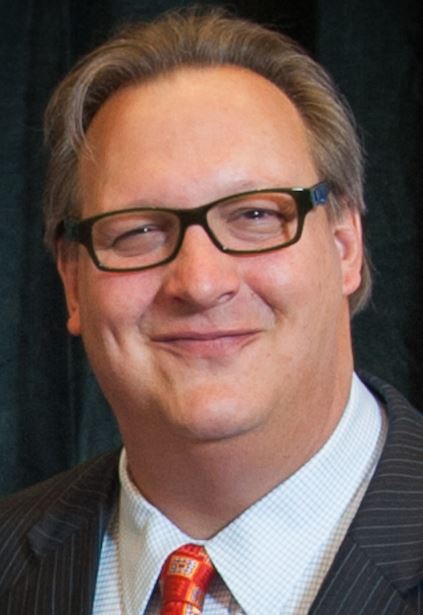
Robert Enlow
by Robert Enlow
States’ relationship with the federal government in education is like Gollum’s connection with the One Ring in “The Lord of the Rings”: They loves it, and they hates it. States either can “abide with the great pain” and continue with stagnating outcomes, or they can free themselves, their educators, and their families and achieve better academic results.
In 1966, through the adoption of the Elementary and Secondary Education Act, the federal government provided $2 billion for public education (using 2006 dollars). In 2005, that number increased to $25 billion. In 2010, total federal spending on K-12 education reached $47 billion. And in the American Recovery and Reinvestment Act alone, the feds dedicated $100 billion to public education.
This “free” money is what the states love. Who doesn’t love free stuff? But, as Milton Friedman so wisely said, there’s no such thing as a free lunch. With those federal funds come regulations on educators, debt for future generations and significant questions of whether those federal funds are spent on effective programs.
First, the regulations, which states and localities really hate: In 2007, Dan Lips and Evan Feinberg reported that although the federal government provided just 7 percent of overall funding for public education, it was responsible for 41 percent of the administrative burden placed on states. Those regulations inhibit educators, especially rural ones in small schools, from doing their jobs effectively. And they inhibit the ability of state education departments to be as effective and efficient as possible. According to the Heritage Foundation:
“After the passage of No Child Left Behind (an update to the Elementary and Secondary Education Act), several states released calculations comparing the administrative cost of compliance to the amount of federal money they receive under the law. In 2005, the Connecticut State Department of Education found, for example, that Connecticut received $70.6 million through Title I of NCLB but had to spend $112.2 million in implementation and administrative costs.”
The federal government’s involvement in education also is placing a burden on the unborn. The United States is broke! It is nearly $16 trillion in debt. Federal education funds expended to states are borrowed. That, along with the federal government’s other “investments,” is unsustainable and must be curbed. (more…)
by Joe Williams

Williams
I spend a lot of my time navigating the tumultuous internal conflicts and ideological inconsistencies within my party, the Democratic Party, when it comes to public education. In fact, that’s more or less my job description. So I have to admit that it is somewhat pleasurable to watch the emergence of similar tensions on the other side of the aisle amongst my Republican allies, especially when it comes to ed reform and school choice. Maybe pleasurable is not the right word. Perhaps it’s perplexing. Even a little depressing.
Nearly a year ago, we watched with great interest as a fascinating left-right alliance formed in Washington between the teachers unions (who didn’t like the concept of federal accountability in schools) and the Tea Party (which didn’t like the idea of any kind of federal involvement in schools.). Together, this alliance wound up shaping proposed changes to existing federal law that would let states and districts off the hook for improving the academic performance of millions of disadvantaged children. Historically reasonable folks like poor John Boehner started looking like the helpless, powerless substitute teachers we used to torment back in middle school.
I don’t intend this to kick a speaker while he is down, but to point out the obvious as Republicans consider their path on education issues: they have to figure out whether they are Boehner Republicans (willing to cut a deal involving a federal role in school choice and accountability issues) or Tea Party Republicans (who would seem happiest if there were no schools, let alone taxpayer-supported public schools). They need to figure out who among them is willing to let the federal government act as a catalyst for some key needed policy changes, and who among them oppose any federal education policy whatsoever just as a misguided point of principle.
I don’t mention this glibly. The tremendous pull that the Tea Party has had on domestic policy issues, including education, has folks on our side of the aisle looking back longingly at the groundbreaking work that President George W. Bush and Boehner were able to accomplish with liberal icons like Senator Teddy Kennedy and Rep. George Miller. You know, back in the good old days where at least both parties agreed that government could be an enabler of good, rather than just an overpriced agent of evil.
So, understanding that tips from a Democrat will be taken with a grain of salt at the RNC, I nonetheless offer these nuggets for consideration:
1. Throw the Tea-Baggers under the bus: If you don’t do it for issues of substance, do it for the politics alone. (more…)
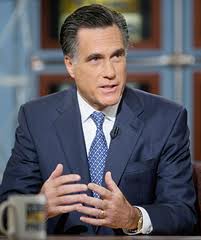 Mitt Romney’s white paper on education, “A Chance for Every Child,” offers laudable support for increased parental choice and for other changes, such as tenure reform, that must occur to improve education in America. Like Obama, Romney wants to leverage federal dollars to move states in the right direction on public school choice, especially the removal of charter school caps and the adoption of open enrollment policies. He also advocates for private school choice “where permitted by state law.”
But is his plan viable? And will he lead to implement it?
Romney would remove most of No Child Left Behind’s accountability standards in favor of expanded reporting on how schools are different. He would allow states to set their own standards and tests, but print the state’s National Assessment of Educational Progress (NAEP) outcomes on school and district report cards. NAEP brings much value to the discussion of education performance in America, but none to how an individual school district or school is performing because it does not test sufficient numbers or in every school and district. Implicit in this move - away from accountability by achievement measures towards improved information about schools - is that such information is lacking today. But parents are actually quite knowledgeable about local schools’ pluses and minuses and can access sites such as www.Greatschools.org for more detailed information.
So, for this information to be vastly more empowering than it is today, Romney recognizes that school choice would have to be dramatically expanded. That’s especially true for public school choice where, frankly, most of the schools will be for the foreseeable future.
The Romney plan seeks to expand choice primarily in two ways. First, he would convert Title 1 and federal special education (IDEA) funds that go to schools serving economically disadvantaged students. They would become vouchers that the eligible Title 1 and special ed students could take to any other school, including a private school, or even to a tutoring provider or digital school. Second, he would require states, as a condition for receiving these funds, to adopt open enrollment policies and eliminate caps on charter and digital schools.
The Title 1 and IDEA proposal is worthy of consideration. (more…)
Editor's note: Gloria Romero is a former Democratic senator from California and the California director of Democrats for Education Reform. She serves on the board of the American Center for School Choice. Peter H. Hanley is the center's executive director.

Gloria Romero
Only in education have we empowered strangers and geography rather than parents to make choices as to what is best for children. Essentially, parents and children are tied to the land -- much like peasants under feudalism. Five digits, known as ZIP code, continue to allocate and segregate students. We use handy phrases like “neighborhood schools” and “local control.” But we don’t dare try that in housing, or healthcare, or places of worship. Racial discrimination was barred long ago, freeing us to live in any neighborhood. It’s unthinkable that a local health department official could look at your address and assign your child to a doctor or dentist. You are free to worship at the church or temple of your choice.
Yet in American education, someone in your local school district, who does not know you or your child, orders you each fall to send the child to a school based on these five digits regardless of whether its programs fit your child’s and family’s needs or delivers strong academic outcomes.
The best thing about the No Child Left Behind (NCLB) law is that it opened our eyes -- real data revealing a widening achievement gap for students of minority and low-income parents. We also learned that, too often, bargained contracts give highly effective teachers the choice to “opt-out” of schools where they are most needed. Further, many charter and independent schools have demonstrated that children in poverty can perform at high academic levels.
But, the times they are a changin’!
Gradually, ZIP code is being challenged and replaced with choice. Forty states have authorized public charter schools, which operate without many of the bureaucratic requirements of traditional schools, but with high accountability expectations. Between 1993 and 2007, the percent of families who were able to choose their child’s school, either within the public school system or at private schools, has increased from 20 percent to 27 percent.
Progress, however, has been uneven as the National Center for Educational Statistics (NCES) found that families with low incomes, composed of a single parent or of parents with only a high school diploma or less, and Latino families have not been increasing their ability to make educational choices.
This year, 42 states have introduced legislation, most targeted for the underserved, to create or expand school vouchers or tax credit scholarship programs. The latter allow businesses and individuals to receive a tax credit for a donation to a nonprofit organization that in turn provides scholarship money, mostly to low-income families. Already this year, 12 states and the District of Columbia enacted programs to permit parents to choose schools, including private schools, which best serve their children. Moreover, 15 states have introduced legislation modeled on California’s landmark Parent Trigger Act, which empowers parents to force change in persistently underperforming public schools.
NCES also found that parents who are "very satisfied" with multiple aspects of their children’s school rose dramatically as their ability to exercise choice grew. Data consistently shows at least a 10-percentage point difference for those that had public school choice and a 25-point difference for those that had private school choice over parents that did not have choice.
Americans value freedom and like choices in their lives, so these trends are not surprising. Indeed, some parents are willing to be arrested and even go to jail for trying to enroll their children in schools which they know can better serve their children. Parents will challenge ZIP code controls, sign petitions, and form turnaround movements when their “neighborhood” school is chronically failing. Yet opposition to expanding parental choice to all schools -- including private schools -- persists. These schools, especially religious schools, have served urban communities for decades, but have been closing at alarming rates. Aside from the strong academic credentials of most of these schools, a recent Notre Dame Law School analysis found that in Chicago “the presence of a Catholic school in a police beat appears to suppress crime.”
America needs more good schools, traditional public, charter, and private, which serve families well. We need an honest and forthright debate over parental responsibilities and choice in public education, especially whether five digits should continue to be the most powerful five degrees of separation from the American Dream. Whether it’s Johnny or Juanita, it’s time to make parents the architects of their children’s future.
Accountability in public education is comprised of customer choice and government regulations, but since consumer choice in K-12 has historically been rare, most accountability discussions today focus exclusively on regulations. These lines from a recent editorial in The New York Times about the proposed reauthorization of No Child Left Behind illustrate my point:
The revised No Child Left Behind Act that passed out of the Senate education committee last week goes too far in relaxing state accountability and federal oversight of student achievement ... Lawmakers are right that No Child Left Behind needs to be overhauled. But Congress needs to do this carefully, without retreating from core provisions that require states to do better by children in return for federal aid.
The core provisions the Times is referring to are all regulatory since the NCLB legislation assumes better government regulations are the key to improving student learning. A proper regulatory environment is necessary for a high-performing public education system, but regulations alone are insufficient. Empowered consumers are also necessary, which is why accountability in public education needs to include the proper balance of both.
Finding this healthy balance will be more challenging in public education than it’s been in areas such as food, housing, medicine, and finance because these other sectors have a history of consumer choice. Beginning in the mid-1800s, public education began phasing out consumer choice until by the early 1900s only the wealthy had choice. Had we decided to manage food in the mid-1800s the same way we decided to manage education, every local community today would have an elected food board that would assign each family to a neighborhood food center where they would eat their approved food each day. The only exception would be families wealthy enough to pay food taxes and still purchase food from private providers. Accountability in the food centers would be regulatory only since no choice would exist.
The parental choice movement is expanding rapidly across the country, which means the dialogue around what constitutes accountability in public education should increasingly include consumer choice. To help accelerate this transition, those of us who support full parental choice need to be more explicit and consistent about including consumer choice in our accountability discussions.
In his Washington Post commentary today on reauthorizing the Elementary and Secondary Education Act, U.S. Education Secretary Arne Duncan is still offering a narrow definition of flexibility and an unnecessarily limited set of options to reduce the achievement gap.
Duncan lauded the bipartisan support in Congress for “providing more flexibility to schools, districts and states,” but failed to mention the importance of providing more flexibility for teachers and parents. We are over-regulating our classroom teachers and undermining their ability to innovative and be entrepreneurial. Empowering teachers to create and manage their own schools will give them the same opportunities as professionals in law, medicine, accounting and architecture, and the diverse schooling options they will create will provide more schooling options for parents and other teachers to choose from. Unfortunately, when Secretary Duncan writes of greater local control, he means more power for school boards and not for teachers or parents.
Duncan also applauds the progress states and local communities are making in reducing the achievement gap, writing that, “School districts and their local partners in inner cities and rural communities are overcoming poverty and family breakdown to create high-performing schools, including charters and traditional public schools.” But this statement ignores the tremendous contributions being made in high-poverty communities by other publicly-funded education institutions, including private schools serving students on publicly-funded scholarships. (more…)

