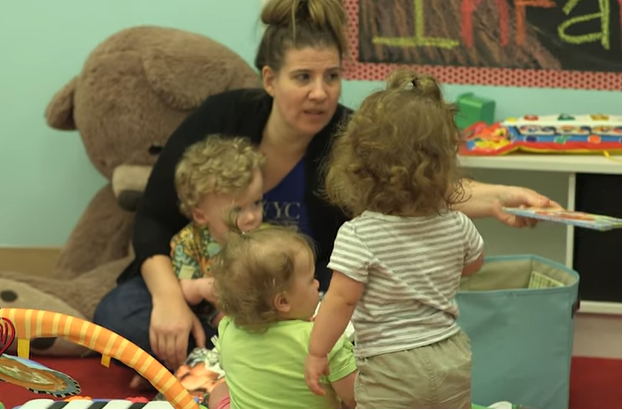
Special Care in Oklahoma City, Oklahoma, serves children with and without special needs, offering a 4-to-1 student-teacher ratio and 12 therapists as well as onsite occupational, physical, speech and behavioral therapies divided into three components: Early Childhood Education, Specialized Care, and Onsite Therapeutic Services.
Editor’s note: This first-person essay from Oklahoma mother Kelli Bruemmer was adapted from the American Federation for Children’s Voices for Choice website.
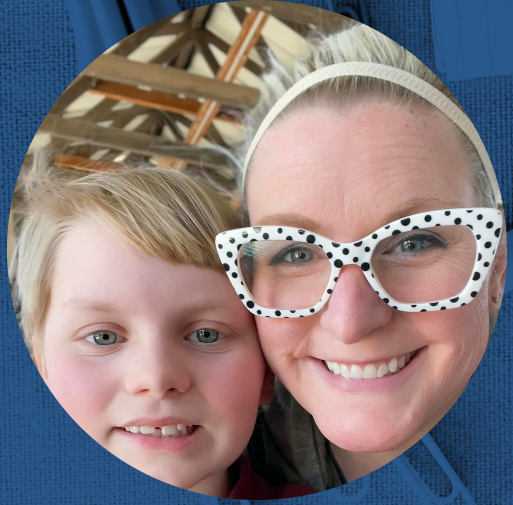
Kelli Bruemmer and her daughter, Maevyn
From a very young age, our daughter, Maevyn, struggled to communicate with others and had a difficult time understanding and processing the messages and information she received from them. When she was ready for preschool, we enrolled her in Special Care, an accredited daycare in Oklahoma City that serves children with special needs as well as children who are considered “typically developing.”
We fell in love with Special Care right away. We were impressed that Special Care’s program is accredited by the National Association for Education of Young Children. Each classroom has a lead teacher who holds at least a bachelor’s degree in early childhood education or special education, as well as two assistant teachers. The average student-teacher ratio is 4-1, so we knew Maevyn would get plenty of attention.
Maybe even more important was that at Special Care, Maevyn could see that it was okay to have a friend in a wheelchair, one in leg braces, and one like her who didn’t talk a lot. She learned that every student was special even though they were different from each other.
Then, when Maevyn was 4, she was diagnosed with autism and expressive/receptive language disorder.
We had been paying for her tuition out of pocket, which was tough, but we made it work. After her diagnosis, we became eligible for a Lindsey Nicole Henry Scholarship, a state-backed program for parents of children with special needs.
Our state’s Lindsey Nicole Henry Scholarship Act authorizes the parent or guardian of a public school student with a disability who is served under the Individuals with Disabilities Education Act and who spent the prior school year enrolled in an Oklahoma public school to exercise his or her parental option and request to have an LNH Scholarship awarded for a child to attend a participating private school approved by the State Board of Education.
The average scholarship amount is approximately $6,900. Approximately 125,000 Oklahoma children are eligible to apply. As of September 2022, 83 private schools were accepting Henry scholarships to help pay for tuition.
The financial support the scholarship provided was a big deal because we had a lot of additional costs for therapy and medication related to autism treatment.
Maevyn is 9 years old now, and the best fit we’ve been able to find for her is a public school in Oklahoma City that is not our zoned school. Once again, we are thankful to education choice policies that allow us to send her there because of the state’s open transfer laws.
Looking ahead, my husband and I are hopeful that we will find a private school option for middle and high school that will address Maevyn’s unique learning style. It’s a blessing to know that the Lindsey Nicole Henry Scholarship program will be part of that equation, enabling us to find the right school without worrying about the financial aspect.
Our ability to find the right educational environment for our daughter has been greatly enhanced by Oklahoma’s education choice policies and opportunities. It is our hope that our state – and others – will continue to put children first and provide families with the resources they need to do what they know is best.
 Last week, I documented the sad decline of charter school laws passed since 2000 if you actually want laws to produce charter school seats. If you prefer to mostly go through the motions of having a “charter law” without many actual schools, or in Kentucky’s case any charter schools, then the post-2000 laws have been a rousing success.
Mistakes are not, however, limited to initial laws and a rediscovery of some guiding principles for charter schooling seems long overdue.
Adam Smith wrote: “People of the same trade seldom meet together, even for merriment and diversion, but the conversation ends in a conspiracy against the public, or in some contrivance to raise prices.”
He went on to explain that these conspiracies cannot succeed without the use of government. Thus, charter schooling fell under the sway of a Baptist and Bootlegger coalition and has been ailing ever since.

The Baptist and Bootlegger coalition aims not just to limit competition for district schools, but also competition for preexisting charter schools. Let’s simply observe that some charter organizations have a legal department to cut and paste sections of their last 800-page application into a new 800-page application. They can then assert, without any backing evidence mind you, that such an ability is an indicator of “quality.”
The charter movement, if vitality is to be regained, must rediscover a dedication to competition. Currently, parents are clamoring for new private school legislation and seem relatively indifferent to charter school legislation. Given that decades have passed since a state passed a charter law creating more than a mere smidge of charter school seats, one can hardly blame them.
Multiple sources of authorization constitute a key design feature of charter legislation, and one that charter advocates have inadequately communicated to legislators. For example, Oklahoma legislators are currently considering revamping their charter authorization practices. The legislation creates an alternative to school district authorization (which is good) but only creates one such alternative, which is not so good.
Oklahoma lawmakers will have to think deeper if they are to avoid the fate of lawmakers in Alabama, Kentucky, Mississippi, Washington and others who passed charter legislation only later to ask: Where’s the seats?
 Originally, the thought behind multiple authorizers was to stop the Baptists (in this case unions and their fellow travelers) from cutting off authorization. Now, charter advocates must guard against this and Bossy McBootleggerpants from undermining charter authorization.
It’s been two decades since a state passed a charter school law that managed to somewhat thwart the B/B coalition. Let’s hope Oklahoma will consider starting a new trend.
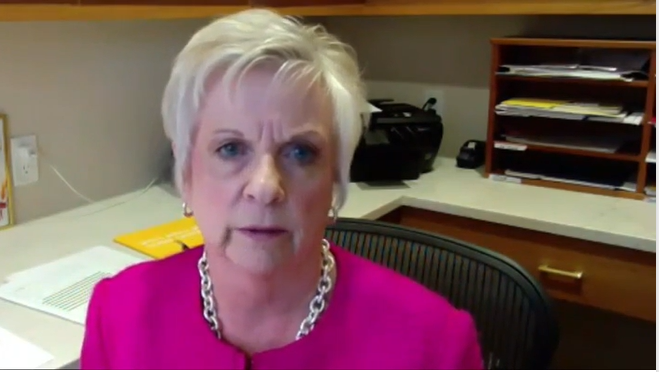
Oklahoma Sen. Julie Daniels, who filed the Education Freedom Act, said it’s time the state started thinking about individual children and their families, moving beyond the semantics of education savings accounts versus vouchers.
Editor’s note: This article appeared Saturday on Oklahoma’s ktul.com.
During the upcoming legislative session, Oklahoma lawmakers could take up SB 822, the Education Freedom Act, which aims to allow parents to set up education savings accounts for their children.
State Superintendent of Public Instruction Ryan Walters (R) is supporting the measure. In a statement, Walters shared that, "I will fiercely advocate as state superintendent Oklahoma’s students are our first priority. Every option is on the table to make our education system better. We must innovate and advocate for change at all levels in education."
Piedmont resident Brent Backus also spoke in favor of the legislation. He asserted that he had limited education options growing up — and wants more school choice for current students. In his view, "The RINO's, and the liberals, and the labor unions won't support free choice for the parents. And they should be ashamed of themselves."
The act would allow parents to set up accounts with the Oklahoma State Treasurer and use the money for education services, including tuition. The available amount would be based on the yearly per-student education expense from the state.
To continue reading, click here.

Oklahoma officials are considering Oklahoma Empowerment Accounts, a form of education savings account available in nearly a dozen states, that help families leverage education choice opportunities for their children.
Editor's note: In keeping with our year-end tradition, the team at reimaginED reviewed our work over the past 12 months to find stories and commentaries that represent our best content of 2022. This post from reimaginED guest blogger Jonathan Butcher is the first in our series.
 Oklahoma parent Kelly Shank says that if her youngest son had anything to say about it, he would not socialize at all.
Now in sixth grade, her son has been diagnosed with autism. She knows that he cannot go through his life without interacting with other people, despite his unique needs.
“I wanted to make sure he knew how,” Shank says.
Yet Shank and her husband had to pull their three children out of the private school they had selected for them—“Life happens,” she said—and now they homeschool their autistic son. Shank had to leave a job she loved and homeschool all three children for a period during the COVID-19 shutdown.
One less job in the house changes the family budget, which means transitions and adjustments to everyone’s daily routine, all of which are hard for a family of five.
“Why are some kids able to have a choice and some are not?” Shank asks, frustrated that her children’s school options have had to change. “Every child is just as important as the next.”
Oklahoma lawmakers are considering a proposal to give more education options to children across the state, a proposal that, after the adjustments the COVID-19 pandemic forced on parents like Shank, would be welcome to families from all walks of life.
State officials are considering Oklahoma Empowerment Accounts. These accounts would be a form of education savings accounts, which are learning options available to students in nearly a dozen states, including Oklahoma’s neighbors in Missouri. Parents can use the accounts for spending that lawmakers set aside for K-12 needs, purchasing education products and services for their children.
In states offering these accounts, families can find a personal tutor for their child, pay for education therapies, choose a private school, educate a child at home, or even customize their student’s learning experience with a combination of these and other learning options.
Research conducted on families using the accounts in Arizona, Florida, and North Carolina finds that families are discovering unique education solutions to meet their children’s needs.
Some families choose a new school for their children, while others design a school day that includes in-person tutoring, online classes, and independent work. Approximately two-thirds of North Carolina’s account holders are customizing their child’s school day, all while using less spending per child than what taxpayers send to traditional schools.
During the pandemic, families using accounts in Mississippi and North Carolina reported that they were able to continue to receive services from an education therapist because of their account’s flexibility. Meanwhile, children in assigned public schools, including children with special needs, found their services were interrupted when traditional schools were closed to in-person learning.
Oklahoma Gov. Kevin Stitt created account-style solutions during the pandemic to help a limited number of children from low-income families access K-12 private school scholarships, along with textbooks, tutoring, and other education expenses. Now, lawmakers have the chance to give children across the state these great opportunities with the Empowerment Accounts and should consider broad provisions that offer options to more families, not fewer.
The accounts can help children from a variety of backgrounds succeed in school and in life. In Arizona, children living on tribal lands are eligible for the accounts, along with students assigned to failing schools and children in the foster care system, to name a few eligible categories.
In West Virginia, where lawmakers adopted an education savings account proposal last year, nearly all public school students can apply for an account, and lawmakers have made plans to increase eligibility to include children who are learning at home or attending private schools.
During the pandemic, Shank says her daughter told her, “I don’t want to look forward to anything because every time I do, I get disappointed.” At every turn, circumstances surrounding COVID-19 stalled plans for the future. Shank feared for her autistic son’s future at the same time she worried about how her daughter was missing “a real high school experience.”
“As a parent,” Shank said, “who wants to take that away from their kid?”
Some students and families are happy with their assigned schools, but lawmakers can help those who are not. “[All students] should all have the same opportunity to succeed in life,” Shank said.
Now that would be something to look forward to.
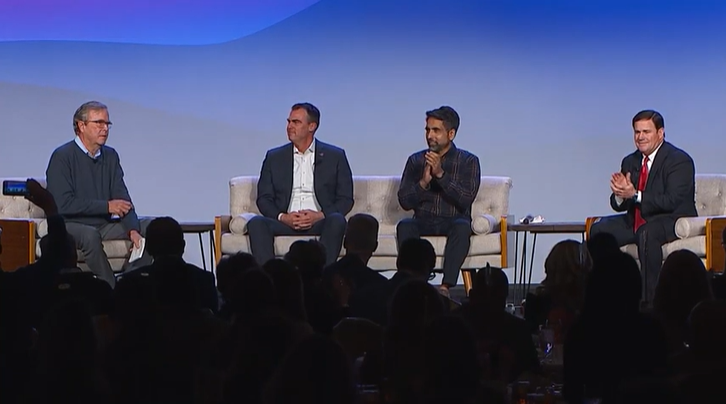
Former Florida Gov. Jeb Bush, far left, with Oklahoma Gov. Kevin Stitt, Kahn Academy CEO Sal Kahn, and Arizona Gov. Doug Ducey
Editor’s note: Former Florida Gov. Jeb Bush leads a discussion with Arizona Gov. Doug Ducey, Oklahoma Gov. Kevin Stitt, and Kahn Academy CEO Sal Khan for an inside look at the education innovations unfolding across the country.
In this video recorded as the keynote session at ExcelinEd’s recent education summit, Bush shines a light on Kahn World School’s groundbreaking partnership in Arizona with ASU Prep and the policies that can foster such innovations.
(You can read reimaginED senior writer Lisa Buie’s story about the partnership here.)
Bush also prompts Ducey and Stitt to discuss policy innovations unfolding in their states, how they overcame political obstacles, and their take on what the future holds for students and families.
You can watch the video here.
 Editor’s note: This article appeared Friday on oklahoman.com.
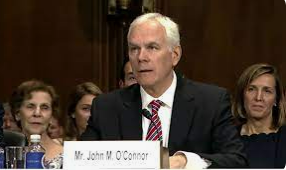
Oklahoma's law barring public charter schools from being run by sectarian or religious organizations could be a violation of the First Amendment, according to an opinion from Oklahoma Attorney General John O'Connor.
O'Connor cites recent Oklahoma and U.S. Supreme Court rulings to argue that the state can't allow some private entities to receive state funds for charter schools, but bar others based on their religious status. The opinion states it is advisory only until determined binding by an Oklahoma federal district court.
The opinion was in response to Rebecca Wilkinson, executive director of the Statewide Virtual Charter School Board, who had asked the attorney general's office if her board should continue to enforce the nonsectarian requirements in light of the Supreme Court ruling in three different states that it's unconstitutional to exclude religious entities from benefiting from public benefit programs relating to pre-K, primary or secondary schools.
“Under Trinity Lutheran, Espinoza, and Carson, it seems obvious that a state cannot exclude those merely ‘affiliated with’ a religious or sectarian institution from a state created program in which private entities are otherwise generally allowed to participate if they are qualified,” O'Connor and Solicitor General Zach West said in the opinion. “And that is exactly what this provision does.”
To continue reading, click here.
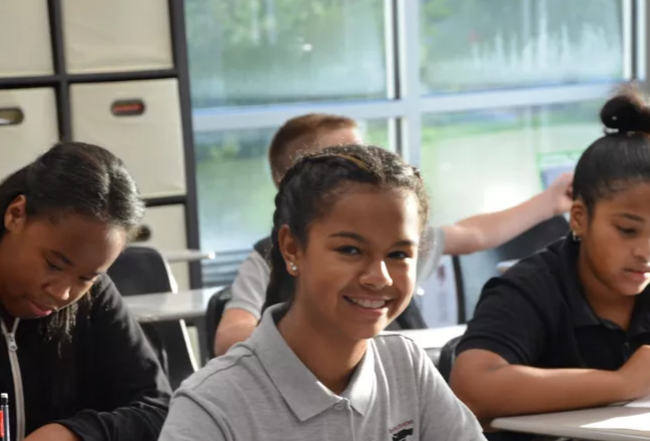
Destiny Christian School in Oklahoma City, Oklahoma, is one of 209 private schools in the state serving more than 37,700 students. Destiny is an interdenominational school with an emphasis on fundamental biblical principles, developing a Christian worldview and Christian character.
A new survey of likely Republican voters in the Sooner State revealed that 73% of those polled support the concept of school choice.
Local media outlet News 9/News On 6 conducted the statewide poll of 383 Republicans, including voters who have changed their party affiliation to the GOP, asking:
“Thinking about education in Oklahoma, school choice gives parents the right to use tax dollars associated with their child’s education to send their child to the public or private school which better serves their needs. Generally speaking, do you support or oppose the concept of school choice?”
Seventy-three percent of respondents said they support school choice, with 50% “strongly” supporting school choice. The findings mirror a recent EdChoice poll conducted by Morning Consult that showed most Oklahomans – Republicans, Democrats, and Independents – would choose something other than a “regular” public school for their children if given the option.
EdChoice also queried those surveyed on education savings accounts, asking:
“An education savings account in K–12 education—often called an ESA—establishes for parents a government-authorized savings account with restricted but multiple uses for educational purposes. Parents can then use these funds to pay for school tuition, tutoring, online education programs, therapies for students with special needs, textbooks or other instructional materials, and save for future college expenses. In general, what is your opinion of education savings accounts?”
Seventy-seven percent of respondents who identified as parents and 68% of respondents overall indicated support for education savings accounts in the EdChoice poll.
 Editor’s note: This article appeared Wednesday on the Oklahoma Council of Public Affairs’ website.
For more than a decade now, the state’s Lindsey Nicole Henry Scholarships for Students with Disabilities (LNH) program has been helping children with special needs thrive by paying for them to attend private schools that better serve them.
For many children and families, the program has been life-changing. Candace Cronin’s six-year-old daughter is among them.
“She can communicate,” Candace Cronin said. “She understands. She is awesome at reading. I mean, she is like one of the top five in her class in reading. And just two years ago, the girl couldn’t even talk.”
The Cronins’ daughter was diagnosed with sensorineural hearing loss and enlarged vestibular aqueducts (EVA). She was also born with torticollis, a condition affecting the neck that also affects hearing. Because her hearing is so compromised, the child struggled to learn to speak.
Throughout much of her young life, the Cronins’ daughter has been involved in occupational therapy, physical therapy, and speech therapy. And while she has made dramatic strides, most of her progress occurred after becoming an LNH scholarship recipient and attending a private school where she received much more personal attention.
“When she started (private school), she couldn’t even say, ‘Daddy,’” Candace Cronin recalled. “That didn’t come until later.”
The Cronins’ experience is typical of many LNH families. But the LNH program, and efforts to create similar school-choice opportunities for other children across Oklahoma, continue to face strong resistance.
Among the opponents is the Oklahoma State School Boards Association (OSSBA), an organization whose national affiliate famously urged the Biden administration to prosecute parents under anti-terrorism laws when families began speaking out about their education concerns at school board meetings.
On its website, the OSSBA claims that programs like LNH “erode public school funding and harms the 700,000 students who attend public schools”—even though the state actually spends less money per student on LNH recipients than what would be spent on those same students in the public school system.
The OSSBA also states that the LNH program “has shifted more than $38 million away from public schools to private schools over the last decade.”
However, state financial records show that figure represents a tiny fraction of total school spending during that time.
To continue reading, click here.

Oklahoma Christian School in Edmond, Oklahoma, is one of 210 private schools in the state serving nearly 38,000 students. The school’s mission is to partner with families in educating the whole person to glorify God.
Editor’s note: This commentary from Don Parker, a former charter school board member who served three Oklahoma department of education administrations in various advisory roles, appeared in the Spring 2022 issue of Education Next.
A bill to create a school-voucher program in Oklahoma failed earlier this year to win passage in the state legislature. Oklahoma is a state where 68% of those surveyed favor school choice, and yet this small school-choice bill, which was sponsored by the state senate’s president pro tempore and supported by the governor, was defeated.
In 2020, I was the executive director of an Oklahoma charter school authorized by the local public-school district. The district retained 5% of our public funding each year as its authorizing fee. When the state passed a law capping charter authorizing fees at 3% of public funding, the authorizer raised our rent in an amount equal to the fee reduction.
Both events highlight the critical flaw in the current K–12 education-reform movement: it underestimates the system’s hostility to innovation.
Even in a school-choice-friendly state like Oklahoma, even the narrowest of reforms only occasionally survive the challenge mounted by the traditional system. When they do survive, the system easily counteracts them. Our public-education system is a bureaucratic monopoly controlled by special-interest groups and, for all intents and purposes, immune to change.
The U.S. compulsory-education system works for no one. It is expensive, achievement lags internationally, teachers are leaving the profession, and parents feel powerless. Despite 60 years of increasing costs and disappointing results, almost nothing has been done to fix the system. Adults argue and point fingers while kids and society pay the price for inaction. Progress in education has stagnated.
To continue reading, click here.

Cristo Rey OKC Catholic High School in Oklahoma City is one of 37 Catholic college- and career-preparatory schools serving 13,000 students across 24 states that integrate four years of rigorous college preparatory academics with four years of professional work experience through the Corporate Work Study Program.
Editor’s note: This commentary from Frank Keating, governor of Oklahoma from 1995-2003, and Bill Price, a former U.S. Attorney for the Western District of Oklahoma, appeared Sunday on oklahoman.com.
One of the most important legislative debates underway this year is whether Oklahoma will fund students, not systems or buildings, as embodied by the language of Senate Bill 1647.
For us, the answer is simple: Oklahoma government should fund students. This legislation has the power to change the lives of thousands of parents and children in Oklahoma by giving them alternatives to schools that do not meet their needs.
The program enables innovative schools such as Cristo Rey to serve more lower-income kids and Positive Tomorrows to serve more homeless kids, as well as enabling the 124 mostly low-cost, non-public schools scattered across the state to serve a critical role in educating our Oklahoma youths — all at a much lower cost to the taxpayer and without doing harm — and in fact enhancing — the critically important public education system.
Let us dispel three false myths about the proposal.
First is the myth that this reform takes money from public education. In reality, every single penny now designated to educate children will continue to pay to educate children if this measure becomes law. And the bill only involves money from the state funding formula for education, not local property taxes or federal funds.
To continue reading, click here.

