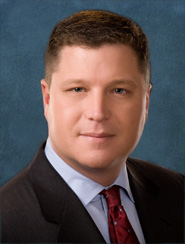
Sen. Jeff Brandes (R- St. Petersburg)
If you ask Florida Sen. Jeff Brandes (R-St. Petersburg) what he thinks the education world will look like in the year 2040, he’ll tell you it will be going back to the past.
“I see us moving back to the one-room schoolhouse where we have students of different capabilities working with each other to help everyone rise,” Brandes says.
The Pinellas County lawmaker pushes innovative education policies every year in the Florida Legislature, but new leadership more focused on education choice appear to be giving his ideas more traction.
His signature education bill this session, SB 226, would expand a mastery-based education pilot program from the three Florida counties currently testing the concept to any district in the state that wishes to participate. The bill wasn’t heard in committee last session but is on track to pass this year with wide bipartisan support. A similar bill is currently awaiting passage in the House.
Brandes firmly believes that the flexibility of mastery-based education and the wide array of options it provides will expand opportunities for students.
“Our goalposts cannot simply be you got an education or degree,” Brandes said. “A job is the goalpost. How do we focus everything that we're doing to line up to professions that are out there for people who complete their education?”
SB 226 is not a mandate. Districts would have to opt in to participate, and there are unanswered questions about implementation, funding and state-mandated testing. But testing certainly would change under a mastery-based education system.
Brandes says this is a good thing.
“The upside is that we get to take the temperature of each individual student in real time … Why do we need to take the temperature once a year if we’re taking it every day?”
Listen to the full interview below or on iTunes.
A bill that would allow teachers and students to focus on mastery of grade-level skills rather than grades cleared the House Education Committee Tuesday.
The bill, HB 401, would expand an existing “competency-based” pilot program to any school district that wants to participate. The program allows students to earn credits based on mastery of content and skills regardless of how much time they spend in the classroom.
The bill’s sponsor, Rep. Nick DiCeglie (R-Indian Rocks Beach), said it will allow educators to “meet students’ unique, strengths, interests and needs, while allowing students to play a greater role in their learning.”
“This mastery-based principle is fairly new, but it’s been successful in districts that have implemented it,” DiCeglie said. “It is innovative and thinking outside the box. Students in the state deserve that.”
Pinellas, Palm Beach and Seminole County school districts, as well as the University of Florida’s P.K. Yonge Development Research School, have been participating in competency-based learning since 2016, when the Florida Legislature permitted them to apply to the Florida Department of Education for waivers from state testing regulations.
The bill would allow participating schools to develop an alternative grading system in grades 6 through 12 if they continue to utilize a 4-point scale to determine grade point averages for college and scholarship applications.
The Senate Education Committee passed a similar measure, SB 226, last week.
Sen. Jeff Brandes
A bill that would allow teachers and students to focus on mastery of grade-level skills rather than grades unanimously cleared the Senate Education Committee Tuesday.
Filed by Sen. Jeff Brandes (R- St. Petersburg), SB 226 would expand an existing “competency-based” pilot program to any school district that wants to participate. The program allows students to earn credits based on mastery of content and skills regardless of how much time they spend in the classroom.
A similar bill already has cleared one subcommittee in the House chamber.
Pinellas, Palm Beach and Seminole County school districts, as well as the University of Florida’s P.K. Yonge Development Research School, have been participating in competency-based learning since 2016, when the Florida Legislature permitted them to apply to the Florida Department of Education for waivers from state testing regulations.
Testifying Tuesday in support of the bill, P.K. Yonge director Lynda Hayes spoke about the school’s success, stressing that removing time requirements is a necessary step for schools in preparing students for graduation.
“If we are to really personalize and customize for our students, we need flexibility of time during the school day,” Hayes said. “Some students need more time in some classes and less time in others.”
Hayes pointed to P.K. Yonge’s more than 98 percent graduation rate and the fact that 96 percent of its students pursue postsecondary opportunities as proof of the program’s success.
The bill would allow participating schools to develop an alternative grading system in grades 6 through 12 as long as they continue to utilize a 4-point scale to determine grade point averages for college and scholarship applications.
Brandes filed a similar bill during the 2018 legislative session, which failed to get a hearing in the Senate Education Committee.
Committee chair Manny Diaz (R-Hialeah), an ardent supporter of educational choice, praised Brandes for re-introducing the bill this year.
“Thank you for helping bring us out of this agrarian calendar we seem to be stuck in,” Diaz said.
The bill received support at the committee hearing from both the left-leaning League of Women Voters and right-leaning Americans For Prosperity.
“Anytime you have the League of Women Voters and Americans For Prosperity on the same side of a bill, it may be a sign of the apocalypse,” Brandes said.
There will be at least one more committee stop for the bill before it is heard on the Senate floor. With full legislative approval, the expansion would go into effect for the 2019-20 school year.
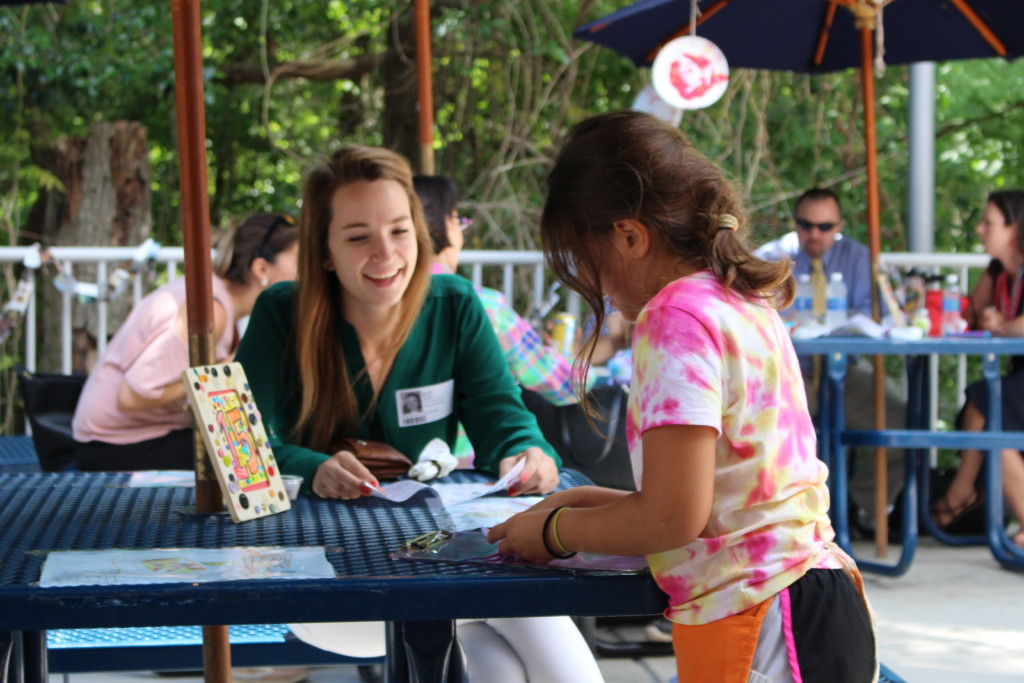
K-1 Learning Community Student Cameron Indarawis takes part in Pizza by the Creek, a six-week project based on personalized learning. Credit: P.K. Yonge
The University of Florida’s K-12 laboratory school has seen promise in a new learning method where students learn at their own pace.
Competency-based learning gives students the opportunity to advance to higher levels of learning based on their mastery of the topic rather than the amount of time they spend in class.
P.K. Yonge Developmental Research School joins three districts in Florida that are test driving the concept.
A 2016 law created a pilot program for Pinellas, Palm Beach, Seminole County school districts, as well as P.K. Yonge, to experiment with competency-based learning, which dovetails with personalized learning. It allows them to apply to the Florida Department of Education for waivers from state regulations that might stand in their way. A fourth district, Lake County, has backed away from the initiative.
Lynda Fender Hayes, director of P.K. Yonge, Christy Gabbard, program development and outreach specialist and communications director Julie Henderson answered several of our questions on the implementation of competency-based learning. We made some minor edits to their written responses for clarity and length. (more…)