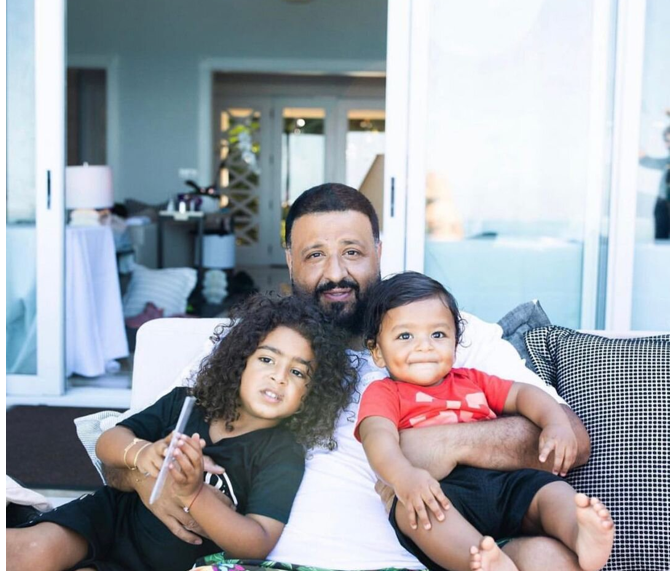
Music producer DJ Khaled with his children, Asahd, 4, and Aalam, 10 months
DJ Khaled, who has produced 18 Top 40 hits and eight Top 10 albums, earned a feature in the Dec. 2 issue of People magazine for starting a pandemic pod for his 4-year-old son and his son’s classmates.
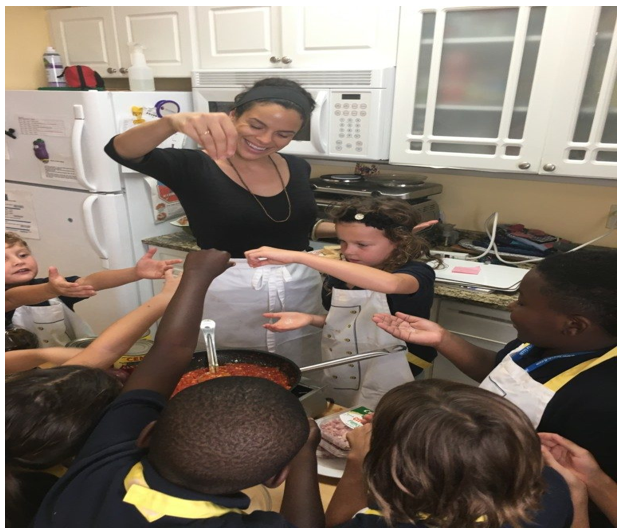
“In March, when Asahd's preschool sent everybody home, I was doing the Zoom classes with him every single day,” the article quotes Khaled’s wife, Nicole Tuck. “I thought to myself, 'This cannot be the best we can do!’ So, I organized a learning pod at our house with other quarantined families. We have seven kids and two teachers, and it's absolutely amazing.”
Having a seven-child school with two teachers in a guest house may strike some as being a bit out of reach of the average American family. Phillip II of Macedon created a one-to-one pod for his son with Aristotle, and that worked out great for Alexander, but alas, it isn’t easily replicated. Public policy, however, can make education like Khaled and Tuck are providing broadly available.
Many families would struggle to hire one, much less two teachers, using their own funds. But in Arizona, micro-school genius Prenda partners with districts, charters and families who use education savings accounts to form micro-school communities. When the pandemic hit, 700 students were learning through Prenda, but in the ensuing months, that number has greatly increased.
District, charter and ESA enrollment allows students to access their K-12 funds to pay an in-person guide and provide both in-person and distance learning. A growing number of school districts, cities and philanthropies have been helping to create small learning communities around the country as well. The Center for the Reinvention of Public Education has started keeping a tally of these efforts, which you can view here.
Khaled is hardly alone in his enthusiasm for micro-schools. A recent survey of parents conducted by Ed Choice found that 35% were participating in a pod; another 18% reported interest in either joining or forming a pod. Meanwhile, a recent parent poll conducted by the National Parents Union found almost two-thirds of those surveyed said they want schools to focus on new ways to teach children as a result of COVID-19 as opposed 32% who said they want schools to get back to normal as quickly as possible. Fifty-eight percent said they want schools to continue to provide online options for students post-pandemic.
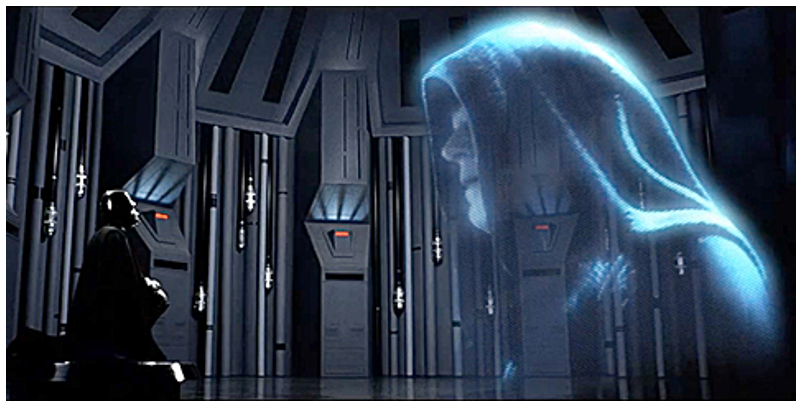 What is thy bidding my master?

I have felt it.

It will be very difficult to conceal, but if we would agree to reopen the large schools …
Yes, my master…

What about the organizations that are providing devices and public funding for instructors? The ones addressing the equity issues rather than merely talking about them?

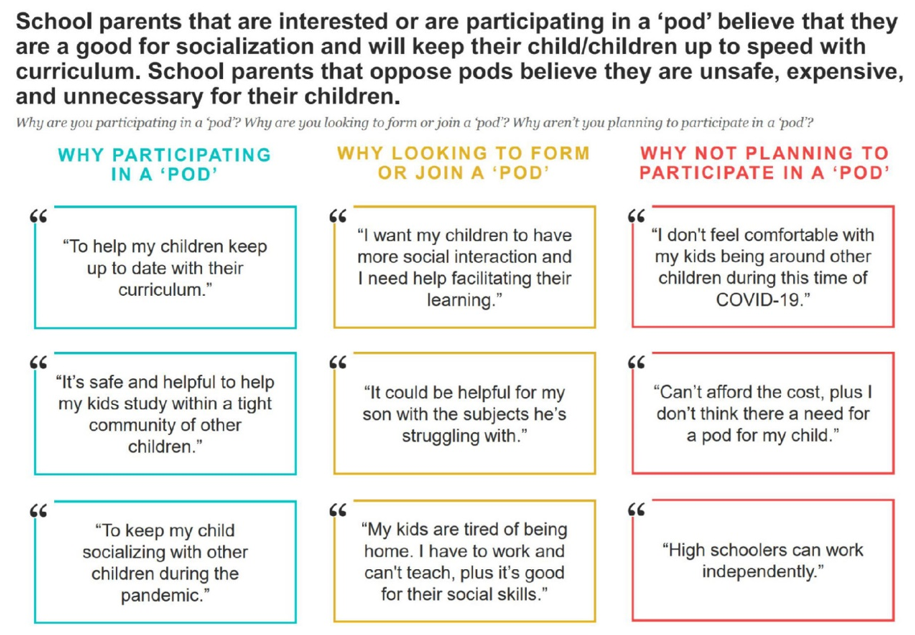
A recent EdChoice poll found that about one-third of parents who responded to its survey are participating in pandemic pods, and that a majority – 53% – either are participating or looking to form a pod. The following graphic accompanied poll results, providing parents’ explanations for why they are participating, why they’re wanting to begin participating, or why they are not planning to participate in the practice.
Last week, Arizona Gov. Doug Ducey hosted Secretary of Education Betsy DeVos in Phoenix. Districts, charter and mico-school leaders and parents spoke about innovative school models, one of which was a school formed by members of the Black Mother’s Forum in cooperation with Prenda, an Arizona-based micro-school organization.
The Wall Street Journal noted an opposition report to micro-schools delivered to the National Education Association concerning these types of schools in general and Prenda in particular.
“The Opposition Report has documented widespread support for micro-schools,” it read. The NEA opposition report cites an expert who thinks micro-schools can “address some of the structural limitations of homeschooling,” such as parents’ work obligations, and — this is Prenda’s innovation — take advantage of school choice programs to “alleviate some equity issues” posed by the cost of hiring your own teachers. The combination could make home education feasible for millions more families.
The NEA opposition report goes on, predictably, to raise concerns about pods increasing achievement gaps. The Wall Street Journal sagely notes this view goes beyond the nonsensical.
It’s a strange pitch from the teachers union: micro-schools are dangerous — they help their students learn more! This seems like a reason to broaden access, not restrict it. And that’s what Prenda has done by eliminating tuition: make micro-schools accessible to low-income families.
So, if you are scoring at home, the NEA opposes public schools reopening. It also opposes parents innovating to provide their children with in-person instruction and socialization due to equity concerns. If someone actually addresses equity concerns by paying the in-person instructor, providing computer and internet access, they are really against it.
If parents are watching all of this, including the harm it is doing to the education of their children, I can imagine their reaction might look something like this:
 Policymakers have a knack for finding private endeavors they presume still need fixing. The latest example? Learning pods.
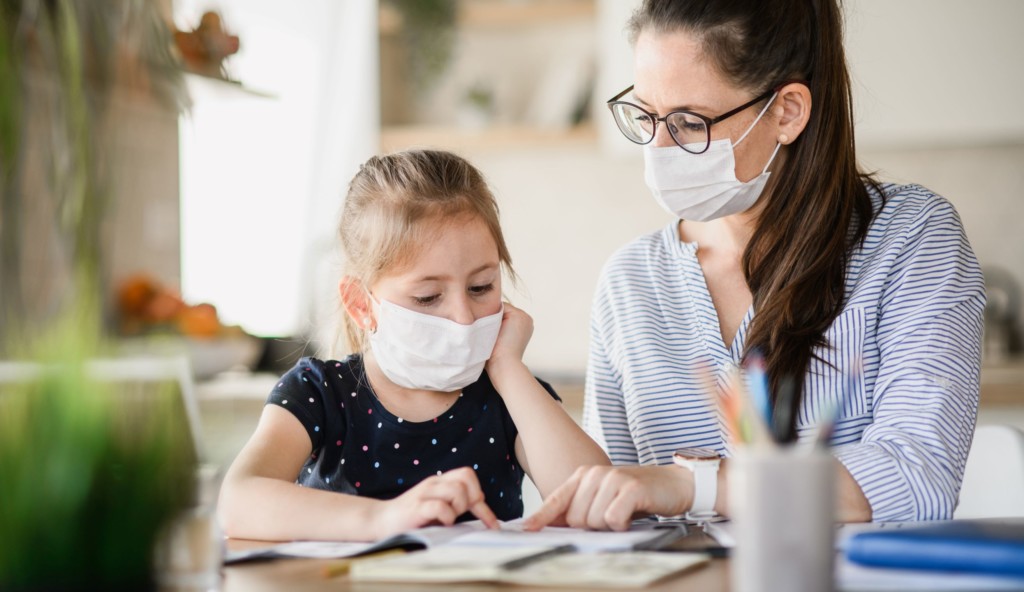
With many schools closed to in-person instruction this fall, many parents have quickly adapted, developing the pods to continue their children’s education. Now policymakers are catching up with rules and regulations.
Learning pods are loosely defined as small groups of children who gather in a parent’s home for K-12 instruction. If this sounds like homeschooling, that’s because homeschool co-op arrangements like this have existed for decades, allowing parents to hire teachers or share their own subject matter expertise with groups of children who are not attending a public or private school full time.
In the pandemic, these pods are attracting families that had not considered educating their child at home before but are doing so now because of dissatisfaction with district online learning platforms. Parents have reason to be skeptical of district offerings this fall: District e-learning systems crashed or otherwise malfunctioned at the beginning of the new school year in Hartford, Houston, Virginia Beach, Philadelphia, across North Carolina, and during a practice session for families in Seattle.
At a Detroit school, a teacher expecting 14 students to attend online only had one student login, and his headphones were not working.
Carrie Limpert-Bostrom, a Minnesota parent, said in an interview, “You are able to fit it [a pod] to your specific needs. In our case, we wanted somebody who could speak French and speak to our children.”
She says she does not blame her school district because information regarding the pandemic is changing all the time. But, she says, “I knew I wanted something as stable as possible for my child,” adding, “I’m taking control of my daughter’s education during this time.”
Yet in some states, the question of who, in reality, is in control is one for the bureaucrats.
In Pennsylvania, state officials issued regulations stating that families involved in pods with six or more children must "notify" a state agency. While the groups do not need to be licensed, pod families must have evacuation plans in case of an emergency, as first reported by Reason, as well as create their own “health and safety plans.”
South Carolina officials are requiring that pod families serving more than six children apply for a family childcare home license. According to Charleston media, “local zoning regulations could limit that number further.” These reports also say at-home visits will be required. By the end of August, Connecticut companies helping parents form pods area ware of the potential for regulations (with the state department of education having released guidance for at-home learning) and have already scheduled “inspections” for homes hosting pods in West Hartford and Ellington (located north of Hartford).
In Oregon, where lawmakers blocked virtual charter school enrollment at the beginning of the pandemic, officials said they may regulate pod families in the same way as childcare providers. Such restrictions would include requiring background checks, CPR training and safe sleep training.
Governors in Colorado and Massachusetts have announced waivers for traditional childcare regulations to allow the formation of pods, but these executive orders still limit the size of each pod. The Massachusetts waiver will help organizations offering after-school programs, but parents are prohibited from paying each other for either their time or the use of a home.
Many state legislators will not return to session until the beginning of next year. This fall, state agencies should not be allowed to apply restrictions on learning pods — including in-home visits. Governors should look for ways to waive regulations and licensure requirements that would limit parent attempts to provide an education for their children. Public and private school educators can determine ways of measuring student progress if students choose to return to schools, but policymakers should not regulate pods like daycare centers in the meantime.
Next year, state lawmakers can align state policies on homeschooling, private schools, and other private learning options such as education savings accounts or K-12 private school scholarships with pods and micro-schools so that parents can make informed choices about the best learning option for their child.
Until then, parents should be encouraged to customize their child’s learning experience while district plans remain in flux.
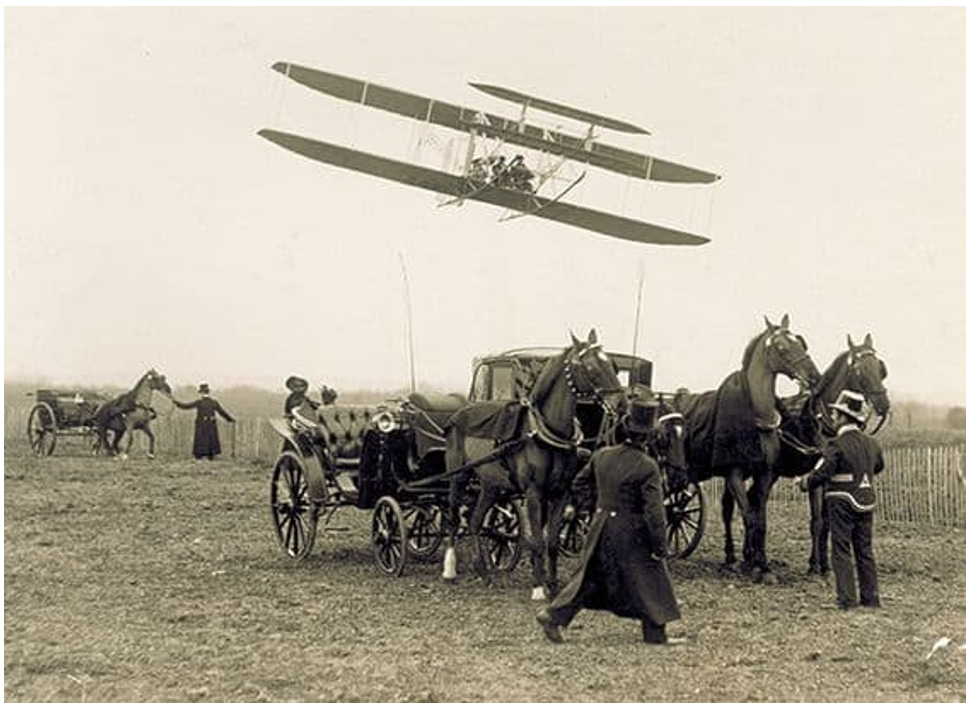
The fact that Orville Wright did not have a pilot’s license speaks volumes about the concept of permission-less innovation.
“Man is born free,” Rousseau wrote, “but everywhere he is in chains.”
Adam Thierer, a Mercatus Center scholar focused on innovation, sounds a similar note when he says industries are either “born free” or “born in captivity.” The difference, Thierer says, lies in the amount of regulation involved in the industry. There are no Departments of Artificial Intelligence or Gene Therapy in the federal government for instance, but many industries (like education) are not so lucky.
Thierer has written a book about entrepreneurs in industries “born in captivity” engaging in what he describes as “evasive entrepreneurialism” and the freedom to innovate. Think of sharing-economy efforts like Uber and Airbnb, but also do-it-yourself groups like 3D printer enthusiasts (who swap print designs) or groups with a shared interest in medical therapies.
Or Matthew McConaughey in his Academy Award-winning portrayal of Ron Woodroof, an early victim of AIDS, who was harassed by the Food and Drug Administration for attempting to survive the disease in The Dallas Buyer’s Club.
“Some evasive behavior could even be considered ‘technological civil disobedience …’” Thierer writes, “…in the sense that many innovators behave in this fashion because they find many rules to be offensive, confusing, time-consuming, expensive, or perhaps just annoying and irrelevant.”
Economist Russ Roberts recently interviewed Matt Ridley for his podcast EconTalk in which a simple but crucially important observation was made: Orville Wright did not have a pilot’s license. That short sentence speaks volumes about the concept of permission-less innovation. We are quite fortunate that the Wright brothers didn’t ask for a license to fly. They just went and did it.
By the 1970s, however, the airline industry found itself so hopelessly entangled in federal micromanagement that federal officials decided both routes and rates. Fortunately, maverick Southwest Airlines managed to engage in a bit of “evasive entrepreneurialism” by flying only in the state of Texas, thereby demonstrating the benefits of price competition to consumers.
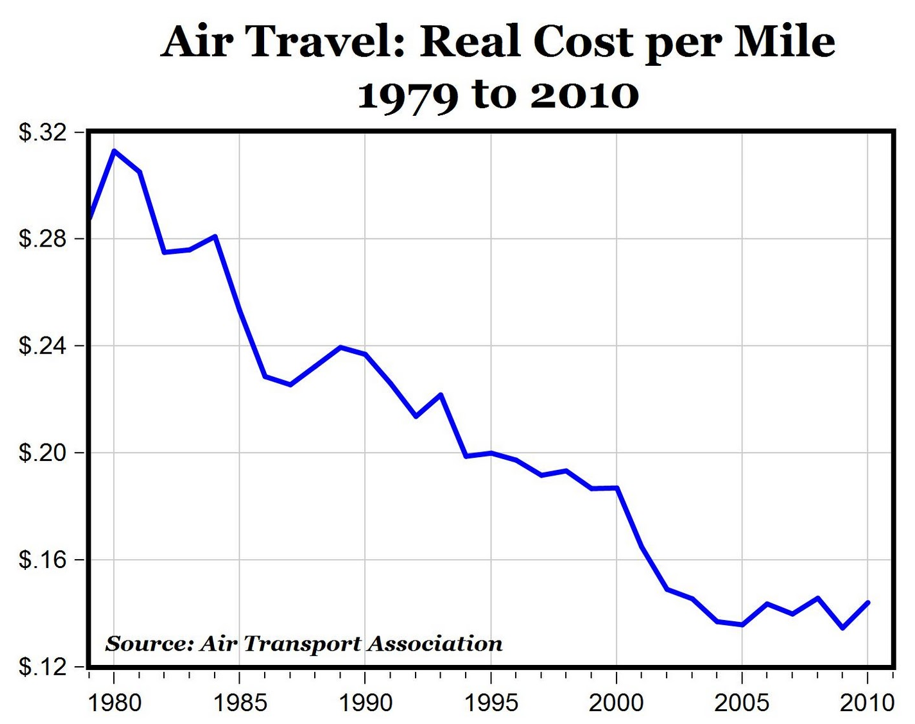 The Carter Administration wisely deregulated the airline industry and the inflation-adjusted price per mile flown steadily fell, placing air travel within reach of ordinary Americans as a result, as American Enterprise Institute economist Mark Perry illustrated in the chart to the right.
Multiple generations of would-be American educators have entered a captive K-12 industry. In fact, it is difficult to think of an industry more regulated than K-12 education. Educators today face a complex web of local, state and federal regulation. If regulation were the key to high quality education, we would be set.
Maybe we will finally get it right next time?
If, of course, we had waited for federal officials to regulate the airlines industry the “right way” as opposed to deregulating it, many people reading this would likely have never set foot on an airplane. Any chance that many of these rules and regulations are either “offensive, confusing, time-consuming, expensive, or perhaps just annoying and irrelevant” in education?
So, hats off to a new generation of evasive entrepreneurs operating in the K-12 space creating “pandemic pods.” Like the founders of ridesharing, Ron Woodruff, Orville Wright or Southwest Airlines, pandemic pod parents decided it was better to ask for forgiveness than for permission.
The only way to learn is by having people try new things, and I suspect what we learn about education will be one of the silver linings in what is a truly awful pandemic. Americans were born free and should have a great aspiration to stay that way.
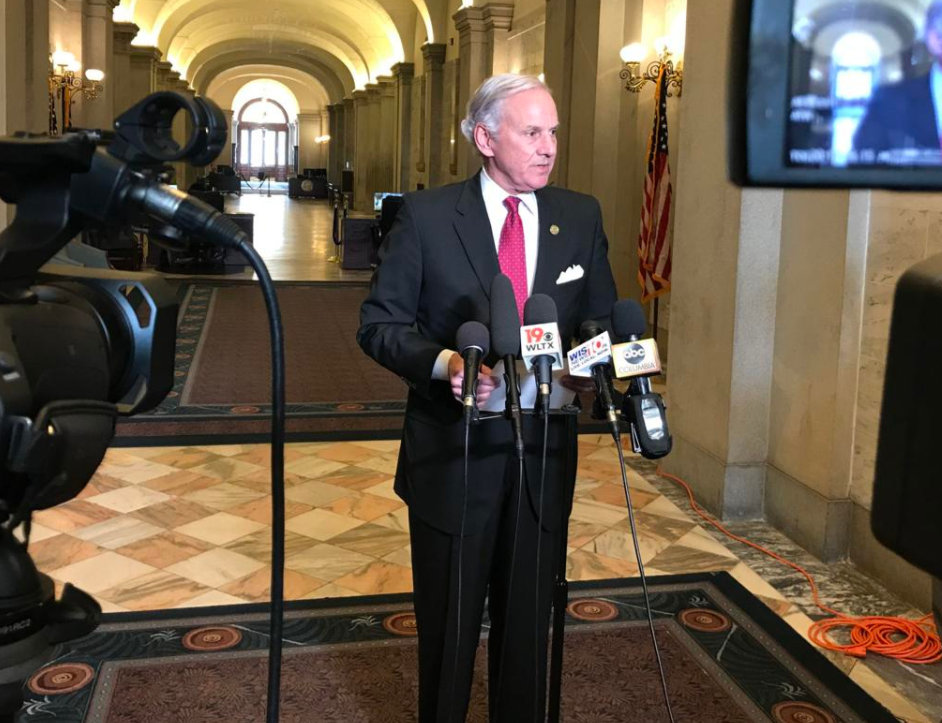
South Carolina Gov. Henry McMaster announced in July the allocation of $32 million from the Governor's Emergency Education Relief (GEER) fund to create one-time grants to help parents pay tuition for their children at the state's private schools.
Editor’s note: This commentary from Katherine Kellett Bathgate, a senior policy adviser for State Policy Network and CEO and co-founder of SchoolForward, first appeared on The 74.
The American Federation of Teachers recently made headlines when it passed a resolution expressing support for any chapter that wishes to strike over schools reopening. Since then, there have been increased rumblings about possible strikes in several states.
I sympathize with teachers who are afraid to return to work, especially those who are not using the threat of strikes to achieve political goals, as some unions have done. I feel for school administrators having to make tough decisions about student and staff safety.
But if schools don’t reopen, whether because of a strike or a state or district decision, the taxpayer money that funds those schools should go to the impacted students and families.
A recent nationwide poll of 1,000 parents of K-12 children commissioned by State Policy Network showed that in the spring, during school shutdowns, families spent on average $200 total and 10 hours a week supporting their children’s education. It also revealed that 40% of parents believe their children are behind academically because of those school closures.
America cannot afford to have children fall further behind as we ride out this pandemic, and families can’t afford to continue subsidizing their children’s education like they did this spring.
Districts are announcing new closures and delayed starts every day, and parents are still grappling with whether they feel safe sending their kids back to their schools (the same poll showed only one-third to be comfortable under current conditions). As a result, some parents have turned to ideas like learning pods, where a handful of families team up to hire a teacher together or share the responsibility of homeschooling.
As this entrepreneurial idea has taken hold, and as mom Facebook groups are exploding with ideas about pods and requests to join, some have rightly questioned how equitable this is. What happens to students whose parents don’t have the financial means to hire a teacher? Or who have working parents who can’t help homeschool?
The answer has been around for nearly 10 years. It’s been tested and implemented, and all we need to do is act.
Education savings accounts, first passed in Arizona in 2011, allow families to spend a portion of their child’s state education funding on qualifying education expenses. This could be used for homeschooling, online tutoring or even chipping in to hire a teacher for a neighborhood learning pod.
Support for this idea is high, with 63% of parents in the poll saying they support passing “emergency” or “pandemic” ESAs and 35% saying they would be very or extremely likely to use a program like this if available in their state.
The challenge will be how to make ESAs a reality fast enough for families. Historically, states have taken a year or more to implement these programs once they’re passed into law. Families don’t have that kind of time right now.
But there are other ways. One example is using CARES Act funding. In South Carolina, Gov. Henry McMaster recently announced a $32 million SAFE Grants program to give low-income families up to $6,500 to fund their child’s education. As every governor has discretion to use education funds under the CARES Act, there’s no reason other states could not follow suit and direct this money to families as an ESA instead of a grant program.
States could also use special sessions to pass one-time emergency or pandemic ESAs to give a portion of each student’s funding back to the families.
Every parent of school-age children in the country has tough decisions to make as we head into the fall. As a working mom with two kids and another on the way, I empathize greatly with what parents are going through right now. We must adjust public policy to meet these needs and lighten the burden families are facing.
Now is the time to be bold and act quickly, lest we lose another year of education for millions of students.
And as someone who works in education policy, I know that we cannot afford to lose another year — or even a half year — with our children’s learning. Achievement gaps will widen further and too many kids will fall behind, especially in low-income and underserved areas. Every family, regardless of their means, should have the ability to choose the education path that is right for their child, especially this year.
So, teachers unions: Go ahead and strike. School districts: Go ahead and decide not to open. You may have legitimate health reasons for doing so. But don’t be surprised when there’s a groundswell of parents asking for their money back.
 Editor’s note: This commentary from Bruno V. Manno, senior adviser for K-12 Education at the Walton Family Foundation, explores the myriad ways the global pandemic is birthing impressive innovations and alternatives so learning can continue.
The COVID-19 calamity is motivating families to seek alternatives to their child’s current school and inspiring entrepreneurs to start new enterprises that help families manage this unique situation.
As luck would have it, public and private school choice policies enacted in many states over the last 30 years advance this innovation and invention. Meanwhile, some governors are using their state’s new COVID-19 federal dollars to give parents financial support when needed as they move to these new education programs.
Three of the newer innovations parents are choosing are micro-schools, family PODS and virtual charter schools.
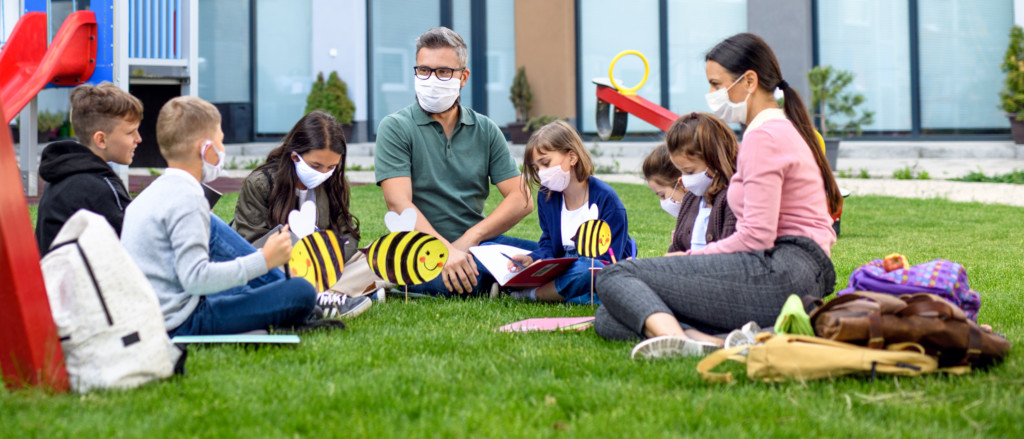
Micro-schools are one-room schoolhouses, typically mixed-age groupings of 15 students or less that meet in homes, churches, community centers or workspaces. They often use today’s technology to support instruction, with teachers — or other learning guides — using different instructional approaches, including place-based and experiential learning.
Some micro-schools are private and charge tuition, though 29 states (plus the District of Columbia and Puerto Rico) have school choice polices that allow families to use public dollars to pay for private school expenses. Other micro-schools are tuition-free public schools; they are created using some aspect of a state’s charter school law.
Arizona-based Prenda, a network of micro-schools, has grown from seven students in one neighborhood in 2018 to more than 200 schools. Its website traffic increased 737% in June compared to activity for June 2019. The organization works with public charter schools to provide tuition free micro-schools. It also accepts funds from Arizona’s Education Savings Accounts program, which allows families to use public dollars for private school costs, tutoring, online learning and other educational expenses.
Another innovation is the now much-discussed Parent Organized Discovery Sites, or PODS, typically engaging three to six families who employ one teacher for their kids. Alternatively, parents teach, hiring a college student or other adult to assist. Some PODs provide scholarships for low income families. And in some states, educational expenses associated with PODs can be paid for with public dollars.
Pandemic PODS combine tutoring and childcare so students socialize and learn with friends. A Facebook post documents how “within 48 hours … thousands of parents [created] Facebook groups to form … PODS.” The San Francisco school district will open 40 district PODS in libraries and community centers this school year.
In Columbus, Ohio, the YMCA is offering PODS for students ages 5 to 16 who are attending school virtually. Students can arrive as early as 6 a.m., with learning sessions starting at 8 a.m.
Public charter schools are another option, coming in many forms, including online learning. Families are choosing virtual charters as “brick and mortar” schools remain closed or because they’re wary of sending kids into school buildings.
Oklahoma’s Epic Charter Schools is a virtual school enrolling 38,026 students. It’s the largest school system in the state — surpassing Oklahoma City’s and Tulsa’s districts — adding up to 1,000 students a day. Students who enroll in Epic’s online program have access to a $1,000 “learning fund” to use for everything from karate lessons to art classes. The school manages the money and parents must choose from approved vendors.
Meanwhile, Florida Virtual School is a tuition-free school that works with public, private, charter and homeschool families and school districts nationwide. It has seen an increase of 64,107 course requests in its Flex program since July 1, representing an increase of 93 percent. Full-time applications have increased by 5,738, or 177%, over the prior year since registration opened in March.
New enterprises are also being founded.
SitterStream is a startup created at the beginning of the pandemic. It offers on-demand babysitting and tutoring to students, individually or in PODS. It has partnerships with small and large businesses who provide these services to employees, with Amazon one of their corporate clients.
Transportant, a high-tech school bus company, makes “school buses as smart as your phone.” With the onslaught of the pandemic, it began working with school districts to make buses rolling Wi-Fi hotspots. It now provides high speed internet services for an entire street or apartment building to students who lacked access.
During the pandemic, states also are providing financial support for families seeking new education options for their children. The federal CARES Act provides discretionary funds for governors to support innovative education programs and services, fostering creativity and enterprise.
Oklahoma Gov. Kevin Stitt is using $30 million from the CARES Act’s Governor’s Emergency Education Relief Fund to create a $12 million “Learn Anywhere Oklahoma” program so students can access online content with a teacher; an $8 million “Bridge the Gap” digital wallet program offering $1,500 to more than 5,000 low income families to purchase curriculum content, tutoring, and technology; and a $10 million “Stay in School” fund providing up to $6,500 to over 1,500 low income families with a pandemic-related job loss so their children remain in their current private schools.
Governors Henry McMaster of South Carolina, Chris Sununu of New Hampshire and Ron DeSantis of Florida announced similar programs for low-income families wanting to enroll their child in a private school.
COVID-19 has turned school re-openings into disarray. But creative and determined parents, entrepreneurs and policy leaders are responding with impressive innovations and alternatives so learning can continue.

Among the remote learning options offered by Wonderschool, a company that matches families to child-care and micro-schools near them, is Base One, a space where students can focus on schoolwork and stay up to speed during the pandemic while receiving access to premium coding education and state-of-the art video gaming equipment they can use after school.
Editor’s note: This commentary from Michael B. Horn, co-founder of the Clayton Christensen Institute and executive director of its education program, first appeared on Substack.
As pandemic pods have spread around the country and reporters and families are trying to make sense of this moment in the sun for micro-schools, I’ve been talking to the different entrepreneurs supporting these experiences for students, families, and educators.
A central question on reporters’ and educators’ minds has been equity. With over 50% of school districts planning on remote learning in the fall, there’s concern that those with the most resources can find or create good solutions, whereas those with the least will be stuck without any suitable schooling and child-care options.
Given the existing opportunity gaps for students from low-income and minority backgrounds before the pandemic, and the assumption that many have suffered deep learning losses since March while those from relatively well-off families likely found learning opportunities through their home environment if not their school, there is heightened sensitivity around the question.
This feels right on the surface.
But a recent conversation I had with Chris Bennett, the founder and CEO of Wonderschool—a company that matches families to child-care and micro-schools near them, gave me pause (you can watch the interview here on YouTube).
Think of Wonderschool like an Airbnb for launching education programs. The company has been operating since 2016. Before the pandemic it was growing fast, as it helped people start infant and toddler programs and preschools out of their homes.
When I asked Chris about the equity question, he urged caution around making presumptions.
“It's really hard to get visibility into what's happening for families all over the country that are coming through this,” he said. “But my guess is [that low-income and middle-income families], they're figuring this out, just along with, you know, very wealthy families that are out there doing this.”
The son of immigrants from Honduras who grew up in Miami in a large family of 31 first cousins where he was the first to graduate from college, it’s a question Chris takes seriously. He credits his own success with having been enrolled in a great preschool program.
As he said, “It's something I think deeply about. You know, the mission of Wonderschool is to ensure every child gets access to the education they need to fulfill their potential. And so, we are very, very committed to every child getting access, especially when I share my story.”
That’s where the second point comes in. Low-income and minority parents are far more likely to prefer that their children do not return to school buildings until the pandemic has passed than their counterparts. For example, according to one survey, 64% of black parents want remote learning versus 32% of white parents. Most families making less than $50,000 want remote learning, whereas 27% of families making more than $150,000 feel the same way.
As Morgan Polikoff, co-director of the study, hypothesized, “These communities may have already been harder hit by the virus, and they have seen more of what the actual impact is on people's health.”
The findings, which have appeared in survey after survey, also suggest that these families do have child-care options in place.
The final thought also goes back to something Chris shared with me.
“What’s really exciting about this movement is this could potentially lead to funding for micro-schools from our school districts, from our state governments, from our from the federal government,” he said. “And if there's funding for micro-schools, just like there's funding for public school or funding for charter schools. Then, suddenly, you know, everyone gets access to a micro-school.”
As Chris observed there’s already a vehicle in some states to do just this: Education Savings Accounts (ESAs), which are funded with public dollars that allow families to spend the money on micro-schools and other education services. In Arizona, for example, ESAs allow students to attend micro-schools from Prenda, a hot startup in the micro-school arena.
“All I keep thinking is why isn't that available nationwide? If that's available nationwide, then the equity component is solved for,” Chris said. “Now the quality component is the next level, that's something that we're going to have to solve for, but that’s an issue about every type of micro-school, no matter how wealthy the parent is.”
Most public schools haven’t eagerly jumped in to support this trend Chris acknowledged, but given the funding exists, he’s bullish about the greater opportunity. And to be fair, there are some districts that have seized the moment to create learning pods themselves and ensure all their students have adequate options, such as the Adams 12 district north of Denver and others featured in this Chalkbeat article.
That resonates because although I’ve argued that disruptive innovation of schooling is unlikely in the United States, I’ve also long hypothesized that if it were to occur, it would come about in the form of an Airbnb platform making home-schooling and micro-schooling far more accessible to many more families who were over-served by the existing schools and just wanted a customized schooling option that fit their needs.
Stay tuned to what happens to Wonderschool. It was one of the hot startups before the pandemic hit, but in supporting micro-schools, it appears they are remaining relevant and will continue to grow. And in so doing, another part of the Wonderschool story is that they are enabling educators to earn significantly more money by pricing their services in the market. As Chris shared, one preschool teacher on their platform was able to earn the same salary that she earned in a year in just a month and a half by starting her own school.
To attract the talent in the teaching profession that children need to develop, that could also be a game-changer.
To continue reading this article and to learn why Horn believes community colleges shouldn’t be the answer to upskilling in America, click here.

Hedge fund analyst Sal Khan began making math tutorials for his cousins in 2004. By 2016, Khan Academy had more than 42 million registered users from 190 countries with tutorials on math, economics, art history, health, computer science and more.
Last week, Lindsey Burke authored an interesting piece for redefinED titled, “Do pandemic pods represent disruptive technology?” A different question could be: Do pods represent the incremental improvement to digital learning that will bring that type of learning into disruptive territory?
Typically, a disruptive technology starts as what is perceived to be an inferior but more accessible product or service “competing against non-consumption.” A classic example from the early computer era featured mainframe computers as the dominant technology and personal computers as the disruptive technology. Early personal computers weren’t great, but access to mainframe computers was a very scarce commodity. Thus, personal computers were better than nothing.
The key comes with the flip: Personal computers got better over time, and at some point, people realized they were just as good or better than mainframe access. Personal computers displaced mainframe computers as the dominant technology.
Rather than thinking of pandemic pods as a disruptive technology, they may fit in the disruption model better as the incremental improvement to digital learning. Digital learning, in other words, may have been advancing in a “pre-flip” disruptive technology until innovators improved it sufficiently for many people to see it as a better form of learning.
Digital learning often competes against non-consumption by serving students who, for a variety of reasons, would otherwise drop out of school. It serves other student niches as well. Most people, however, view education as an inherently social activity – with classmates, group activities and in-person instruction. Pods can scratch all these itches in ways that purely digital learning will struggle to do.
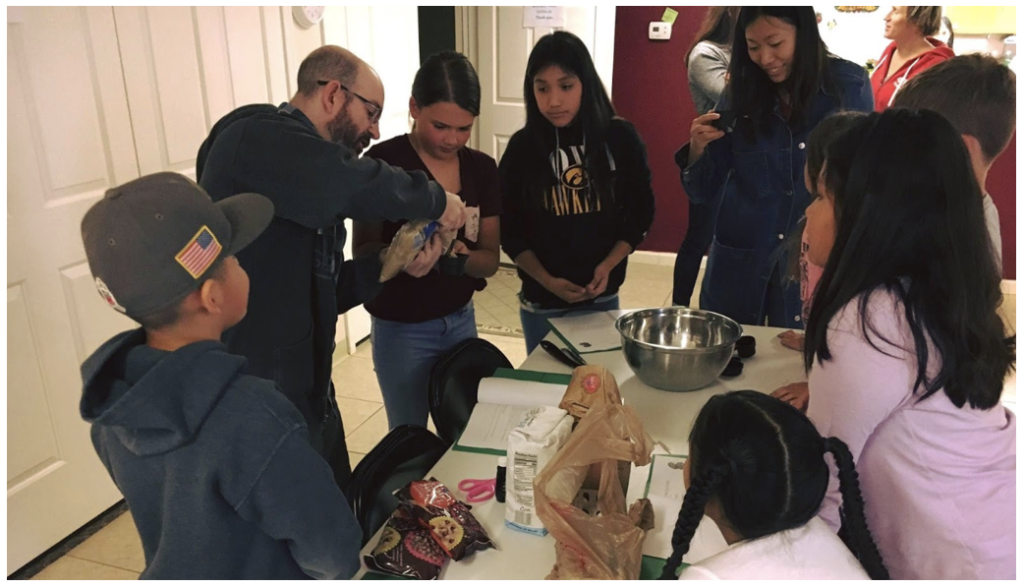
It is too early to know much about the combination of digital learning and pods in terms of academic outcomes. It is obvious walking in the door of a school taking advantage of both that the teachers and students are having fun, a quality often lacking in large, impersonal schools. As I discussed in a recent column, I had the opportunity to observe at group of students engaged in 3-D printing at a Prenda micro-school on the Apache Nation in San Carlos, Arizona. The thought that would not leave my head was, “Scout troop meets Sal Khan = fun school model!”
The very impressive digital learning techniques developed by Success Academy, for instance, could have a significant staying power after the pandemic. We see hints of South Korean super-star instructors in dividing teachers into digital lecturers and small group leaders. Nothing screams “impersonal” louder than a district (NYC) which numbers rather than names its schools, and the digital version of Success Academy could be offered to waitlisted students.
If, however, Success Academy organized students into pods and enrolled them in its distance learning program, something truly disruptive could emerge. The pod leader would take on the role of the small group leader in this scenario, leading discussions and facilitating group projects in scout troop leader fashion. Digital learning would provide real-time instruction and access to Success Academy’s finest lecturers from its entire network of schools. It would not be necessary to battle Bill de Blasio to follow the laws of New York and provide space.
Pods are small enough to meet in informal spaces, and equity concerns, such as money to pay guides, provide devices and academic transparency, all could be addressed.
I suspect that combining the in-person element of pods to digital learning is something that a many families and educators will find appealing long after the pandemic has faded. Big-box schooling already was set to struggle to replace retiring Baby Boom teachers in Florida and around the country. Just guessing, but those eligible may be retiring at a faster rate given the pandemic.
A new school model that is fun and empowering to teachers just might be the solution we need, when we need it.
 Editor's note: With this commentary, redefinED welcomes education policy expert Lindsey Burke, director of the Center for Education Policy at the Heritage Foundation, as our newest guest blogger.
Education policy scholars, especially proponents of school choice, have long referenced the late Clayton Christensen’s work on disruptive innovation. Christensen, along with his colleague Joseph Bower, detailed the concept of disruptive innovation in the Harvard Business Review in 1995.
The idea of “disruption” in a sector “describes a process whereby a smaller company with fewer resources is able to successfully challenge established incumbent businesses,” wrote Christensen, Michael Raynor, and Rory McDonald in 2015 in a follow-up Harvard Business Review article refining the theory.
Disruptive innovation theory posits that dominant incumbent businesses may ignore a segment of their consumer base as they focus on improving products for their most profitable customers. Scrappy new market entrants then target neglected customers with early, cheaper versions of their product, and then begin growing market share as the product improves. The new business then begins capturing more customers, improving product performance while maintaining affordability, and eventually becomes mainstream.
Christensen and his colleagues caution against over-application of the theory to phenomena that do not actually represent disruptive innovation, but rather sector transformation. For example, they note that Uber, despite its incredible impact on the taxicab industry, represents sector transformation rather than disruption in part because of Uber’s large market share. This is also the case because Uber wasn’t competing with the absence of a vehicle transportation market, just a crummy one.
To be appropriately described as “disruptive,” a new entrant into the market must be enabled by one of two conditions: 1) “low-end footholds” or 2) “new-market footholds.” “Low-end footholds” emerge when existing businesses ignore “less-demanding” customers because they are overly focused on their more “profitable and demanding” customers. “New-market footholds” emerge when there isn’t a market for a good or service, turning “nonconsumers into consumers.”
As Christensen and his colleagues explain, the bottom line is this: Genuine disruption happens by market entrants “appealing to low-end or unserved consumers” and then capturing the “mainstream” market.
So, does the new phenomenon of pandemic pods unfolding across the country qualify as disruptive innovation in the K-12 space?
They certainly check some of the initial boxes.
Pods are a “new-market foothold” competing with non-consumption. Pandemic pods arose this summer after the widespread school shutdowns that occurred during the spring showed no sign of stopping. Parents, concerned about the prospects for their children’s education this fall, began teaming up with other families in their neighborhoods or social circles to hire teachers for their children. Some families unenrolled their children from their district school completely, registering in their state as homeschoolers and then joining a pod.
With pods, families work together to recruit teachers that they pay out-of-pocket to teach small groups — “pods” — of children. It’s a way for clusters of students to receive professional instruction for several hours each day. Families pool resources to pay tutors who may serve as a full-time teacher for the pod of students or may only teach on a part-time basis.
With many school districts around the country planning not to reopen classrooms this fall — or, at best, planning to offer some combination of virtual and in-class instruction — pods are competing with non-consumption, establishing themselves through a “new-market foothold.”
But time will tell whether pods remain a permanent facet of the education landscape. Disruptive innovation theory also holds that “innovations don’t catch on with mainstream customers until quality catches up to their standards.” Rather than making improvements to existing products in a market (such as increasing the computing power of a laptop or the cooking consistency of a microwave), disruptive innovations are “initially considered inferior by most of the incumbent’s customers.”
So, here’s where the ground is a little shakier for pods as a disruptive innovation. According to Christensen’s work on the subject, disruption also has a second qualifying condition: The new product must be inferior to the product offered by the incumbent.
Parents may consider some, but not all, of the components of a pod inferior to the existing education model. They may find the academics to be more rigorous, but the custodial component less competitive if it doesn’t provide the same length of coverage. Pods also are on shakier ground vis-à-vis disruption because some families join as a supplement to the crisis online instruction their children are still receiving through their district school. In that way, they could end up complementing the incumbent rather than disrupting it.
A third marker of disruption: The eventual improvement of quality. But there are already promising developments in the realm of pod quality. Education researcher and redefinED executive editor Matthew Ladner describes what a marriage between pods and established charter incumbents like Success Academy could entail. As Ladner explains, taking the Success Academy (COVID-era) model of "most skilled math instructor in the network [giving] live internet broadcast lectures" and coupling that with teachers and tutors working in small pods across the country to assess student learning and provide individual instruction could lead to high-quality pods at scale.
Finally, to truly qualify as a disruption, pods also will have to eventually serve a broad segment of the K-12 market. This will only happen through policy changes that can enable widespread participation in the model on the part of lower-income consumers.
For parents who cannot afford to pay out-of-pocket to contribute to a neighborhood pod, providing resources through education savings accounts (ESAs) will be a crucial support moving forward. With an ESA, currently available in Arizona, Florida, Mississippi, Tennessee, and North Carolina, eligible families whose children exit the public education system can receive approximately 90% of what the state would have spent on that child in her public school directly into their ESA. These restricted-use, parent-controlled accounts can then be used to pay for any education-related service, product, or provider of choice, including private school tuition, special education services and therapies, online learning, and private tutors.
Unused funds can even be rolled over from year to year. They enable families to completely customize their child’s education and are the perfect education financing policy to support families of all economic levels enrolling their children in pods. The pandemic has made it clearer than ever that every state needs to provide education choice – ideally through an ESA model – to all children, yesterday.
Universal ESAs would enable pods to serve a broad segment of the K-12 market, competing with, and potentially disrupting, the district school model.
Currently, district schools are mostly closed to in-person instruction, creating a clear case of non-consumption with which pods can compete. But even when the public education “product” is on the market as usual, it’s not a product that is serving consumers particularly well. Just one-third of students across the country can read and do math proficiently, and in some of the largest school districts in the country, like Detroit, those figures fall into the single digits.
Just as the pandemic is reshaping so many aspects of our lives, it also is reshaping education. Although the extent to which this transformation is permanent is yet to be seen, some non-trivial percentage of families is likely to continue their children’s education in something other than a district public school even when the pandemic subsides.
Pods could be what they choose. Pods are a “new-market foothold” that are competing with non-consumption (closed public schools), and could, at present, be considered an “inferior” product. But that will change as families and service providers refine the pod product. At that point, coupled with changes to policy providing ESAs to as many students as possible, they could fundamentally change the education marketplace.
As such, pods are a strong contender for what could be disruptive innovation in the K-12 space.
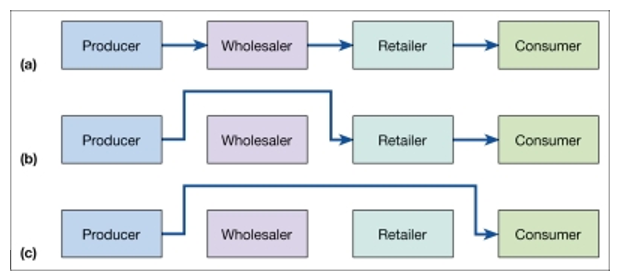 Disintermediation: (noun), the elimination of an intermediary in a transaction between two parties
Those of us working in K-12 education policy should familiarize ourselves with this concept, often described as “cutting out the middleman.” Wikipedia helpfully explains:
Disintermediation initiated by consumers is often the result of high market transparency, in that buyers are aware of supply prices direct from the manufacturer. Buyers may choose to bypass the middlemen (wholesalers and retailers) to buy directly from the manufacture, and pay less. Buyers can alternatively elect to purchase from wholesalers. Often, a business-to-consumer electronic commerce (B2C) company functions as the bridge between buyer and manufacturer.
Well hello there, pandemic pods!
This trend has been going on for a long time with regard to enrichment educational activities. The pandemic has accelerated this trend into core academic instruction. If policymakers want low-income children and those with special needs to have the opportunity to participate, public policies allowing dollars to follow children will be necessary.
In the absence of such policies, already gigantic achievement gaps between the well-to-do may widen further still. The Denver school district among others recently essentially cautioned parents against forming pods expressing equity concerns. This is exactly the wrong approach. Rather, the district should be assisting interested disadvantaged families in the formation of pods of their own.

