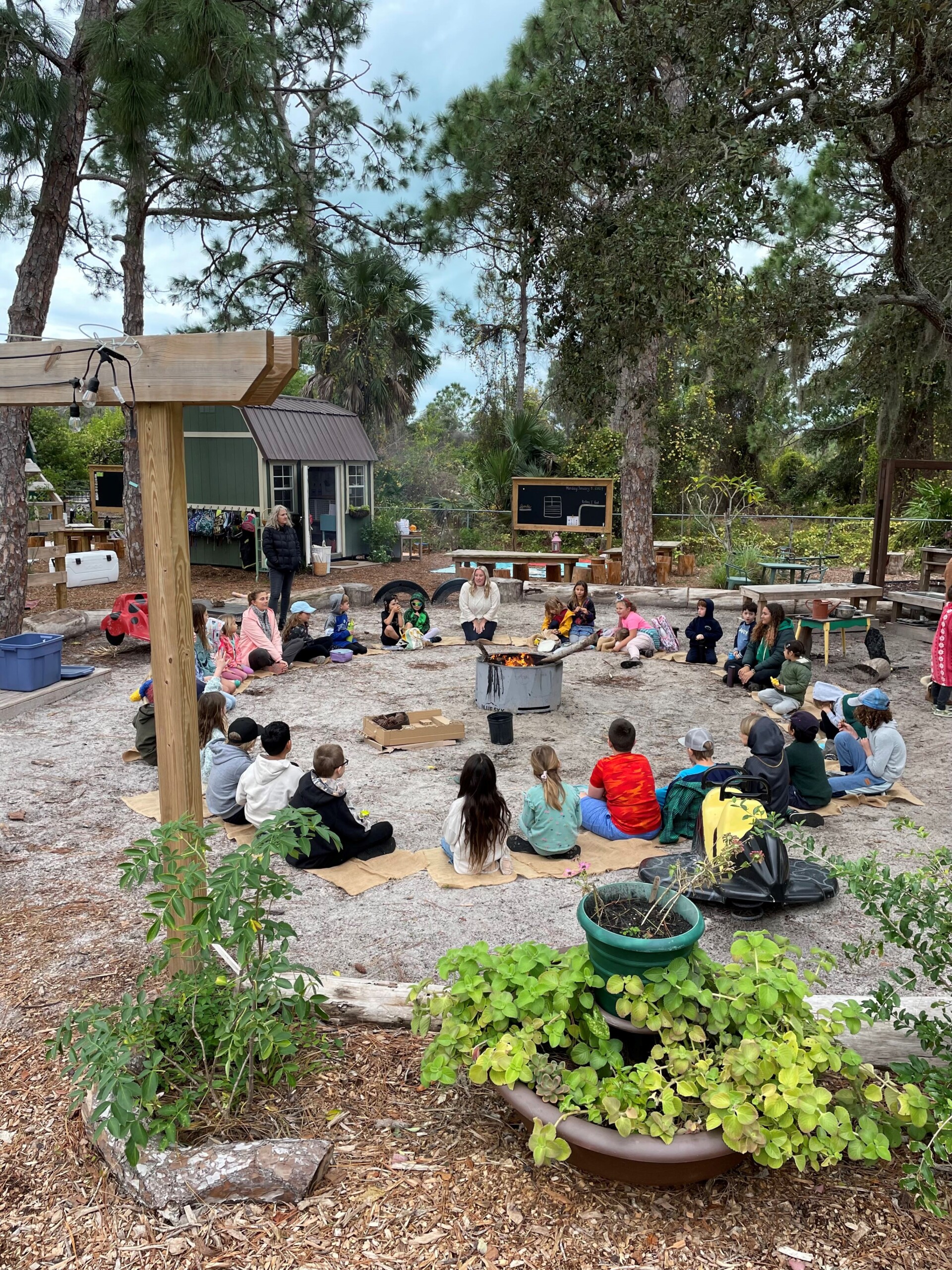
Roots Academy in Sarasota lets students spend much of their time outdoors to learn amid nature while still offering a rigorous core academic program. Photo courtesy of Roots Academy
SARASOTA, Fla. – When Briana Santoro and her family moved to Florida in 2021, she set out to find the perfect school for her two young sons. She wanted a school that would be nature immersed, Montessori influenced, and academically rigorous. She found good ones that offered pieces of what she wanted, but none that put the whole puzzle together. So Santoro did what an accelerating movement of education entrepreneurs, including parents, are now doing all over Florida:
She created her own school.
“I just got to the point where I thought, ‘I’m going to solve my own problem,’” said Santoro, who has a background in business strategy consulting.
Roots Nature and Leadership Academy bills itself as “thoughtfully rooted in nature.” It serves 60 students in grades Pre-K through six, up from 25 when it opened two years ago. Nearly all of them use state-supported choice scholarships.
Santoro’s detailed vision includes fully engaged citizens.
As the second half of the school’s name suggests, creating future leaders is mission critical. There’s a big emphasis on problem solving, emotional intelligence, and entrepreneurship. From the earliest ages, the students literally get their hands dirty working on sophisticated science projects that touch on some of the most pressing environmental challenges.
First- and second graders recently learned how monoculture lawns and pesticides hurt pollinators, then created informational brochures and wildflower seed packets to hand out in their neighborhoods. Third- and fourth graders studied regenerative farming, then got a demonstration from scientists, via Zoom, on how soil samples can reveal the chemical differences between organic and inorganic approaches. Fifth- and sixth graders, meanwhile, learned how to make a vermiculture composter from a University of Florida extension agent, then shared their knowledge in a presentation to a community group.
“They’re learning skills that are going to be incredibly useful in how they live their lives,” Santoro said. “Appreciation for nature is going to set this generation up to solve the problems we’ve created.”
Roots rents space from a church. It has multi-age classrooms devoted to music, yoga, and projects. But clearly, its heart isn’t inside.
Santoro was inspired by Richard Louv’s “Last Child in the Woods: Saving Our Children from Nature-Deficit Disorder.” She wanted to ensure her school honored children and “the essence of their childhood.”
To that end, the students spend 70 percent of their time outdoors, either on a whimsical campus where poodle chickens strut and peck under oaks and pines and a dozen varieties of fruit trees, or in an adjacent pine forest where they build forts, track animals, and otherwise range free for hours at a pop.
This is going to sound too good to be true, but bald eagles built a nest nearby and are frequently visible to students going about their day.
“The school is magical,” said Sarah Love, whose sons Harper, 9, and Carey, 12, attend Roots. “Children are laughing while butterflies are flying, and eagles are soaring overhead. I see kids learning academics while they’re on a mat on the ground with the sun shining on them. It just fills my heart.”
The school’s nature-inspired learning opportunities don’t end there.
Roots includes a “hen hotel” the students maintain themselves; learning “barns” full of Montessori materials the students use outside; and plans for a “special skills area” that will include everything from pottery and woodworking equipment to an outdoor fire cooking kitchen.
Gardening and archery are part of the curriculum. So are deep lessons about “gut health.” Beekeeping is on the horizon.
“They’re going to be better citizens if they know how to grow their own food, if they know how to care for the planet,” Santoro said.
Roots is as good an example as any to highlight one of the most underappreciated story lines to emerge as education choice has become the new normal in Florida:
Choice offers something for everyone.
This year, more than 500,000 students are using choice scholarships in Florida. As more and more parents signal their preferences for learning options, and more schools and other education providers emerge to serve them, more families and educators alike are realizing they can have exactly what they want. The evolving education landscape is increasingly dynamic and diverse.
By 2026, Roots expects to serve 75 students in Pre-K through eighth grade. In the meantime, it has 30 students on a wait list.
“Education is changing drastically,” Santoro said. “There’s a freedom of expression in education that’s never been there before.”
Santoro grew up in Canada. After a successful stint in business consulting, she went back to school to study nutrition. She became a certified nutritional practitioner, wrote a best-selling cookbook, and co-founded a company that specialized in high-end food supplements for kids.
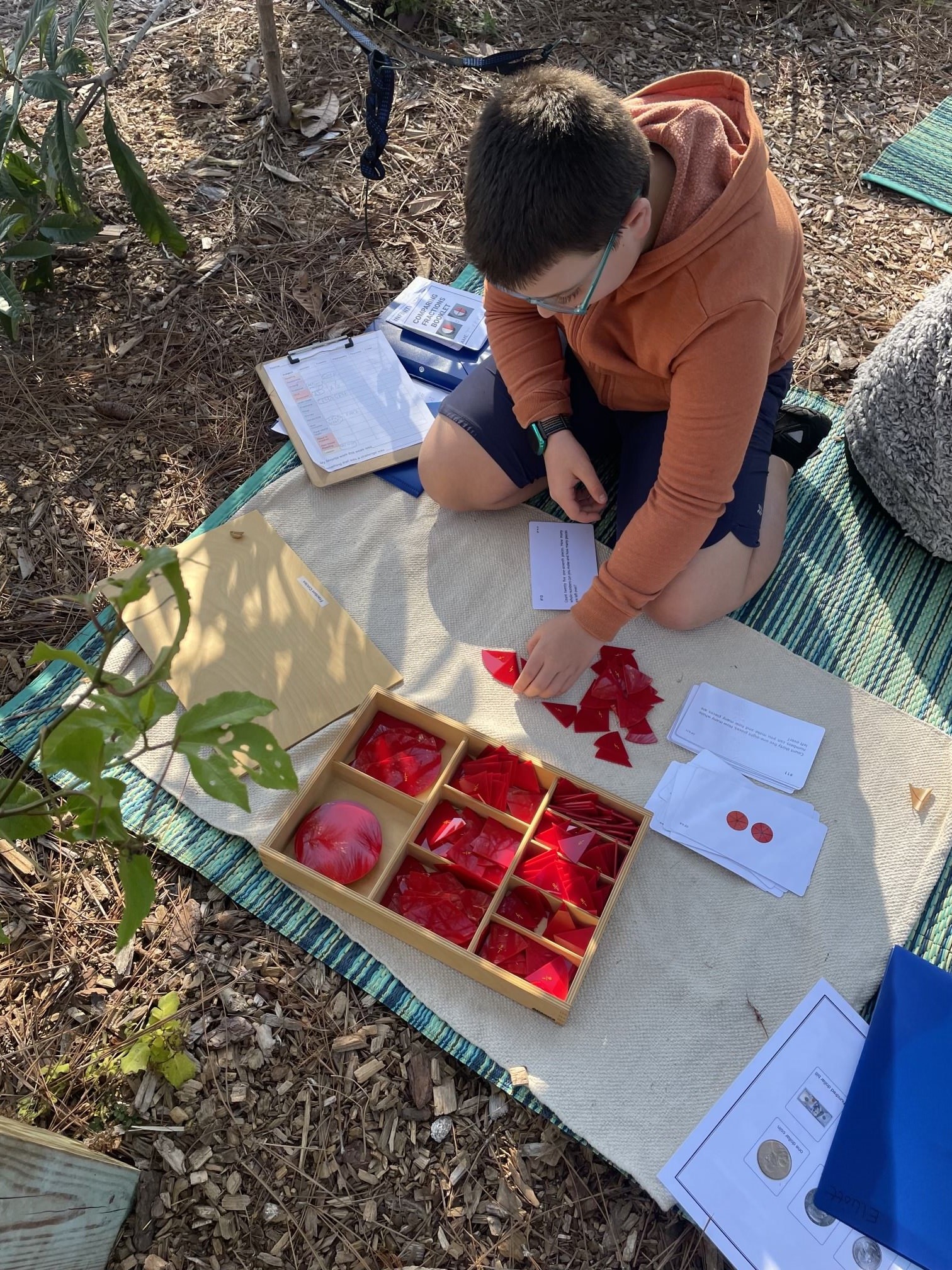 With Roots, she wanted not only a top-notch program, but one that could be accessible to families regardless of income and could pay teachers well so she could attract the best.
The Roots staff is eclectic, talented, and all in on the mission. Several formerly taught in public schools.
On the school’s website, one of the teachers quotes famed environmental writer Rachel Carson. Another notes she was raised in a family of environmental activists who traveled the world with iconic oceanographer Jacques Cousteau. Yet another embraced organic farming and permaculture while living in Thailand.
“I was looking at, who is going to be breathing life into my children?” Santoro said. “If children don’t have a deep compassion for the earth … it’s just not sustainable. What better way to teach that than to live it every day?”
Parent Corbyn Grieco said there is a lot more going on at Roots than green vibes.
Her daughter is climbing trees, building pollinator gardens, and making homemade elderberry syrup. But the school also focuses on core academic standards, Grieco said, and constantly communicating with parents about how their kids are faring with them. Her daughter is reading several grades above grade level and digesting serious knowledge about health, science, and business development.
That’s the sweet spot, Grieco said: Roots is able to achieve academic success while honoring the magic of childhood.
“To this day,” she said, Roots “is the greatest choice we’ve ever made.”
Last week I had an opportunity to speak in Boise, Idaho, on school choice and the Arizona experience. In an interview on NPR, I addressed claims by choice opponents that Idaho “already has school choice.” I guess you could say I went full Depeche Mode in responding. I’ll explain why here, and I challenge you to try to keep that synthesizer music out of your head while you read on.
Families benefit from schools that are meaningfully diverse, proximate, and that have seats available in the grade levels appropriate for their children. The existence of choice schools is necessary but not sufficient: schools must be close enough to access and have seats available in the grade levels needed. The more schools you have, the more proximate schools you have, the less transportation challenges your families face.
The idea that Idaho, or for that matter anyone else, has “enough” K-12 choice seems highly questionable; in a demand-driven K-12 system families and educators continuously mold the clay of the education space. Educators develop new school models, such as microschools, and families sort through them.
The greater the meaningful diversity of schools proximate to families the better. Consider the Brookings Institution charter access map, showing the percentage of students with one or more charter schools operating in their ZIP code of residence:
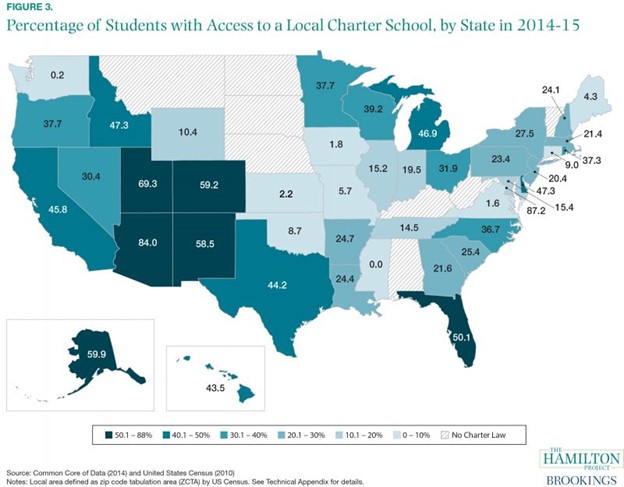
In the 2014-15 school year, 47.3% of Idaho students had one or more charter schools operating in their ZIP code. This means 52.7% of Idaho students did not have a charter school operating in their ZIP code. Having a charter school in your ZIP code represents a minimalist measure of choice. Given the many types of charter schools and families’ needs for a good-fit school with seats available at their child’s grade level, having a nearby charter is not much more than a start. Moreover, charter schools themselves do not capture the full diversity of schooling.
Arizona began creating mechanisms for educators to create meaningfully diverse schools 31 years ago. The quasi-market revealed demand for a wide variety of schools. We learned that parents wanted classical education, rigorous math and science college preparatory schools, and schools focused on a great many things from the arts to the equine arts.
More recently, several charter and private schools focused on the education needs of students with unique needs have emerged. The private choice programs increase access to private schools. Far from having “enough” choice in Arizona, every school waitlist should be viewed as a policy failure.
Modern choice programs have expanded the possibility set for families. Under Arizona’s ESA law, high school students can use their accounts to attend community colleges and simultaneously obtain a high school diploma and an associate degree. Families sometimes team up to hire their own teachers. Families have only begun to scratch the surface of the possibilities.
And then there is this polling research to consider from EdChoice:
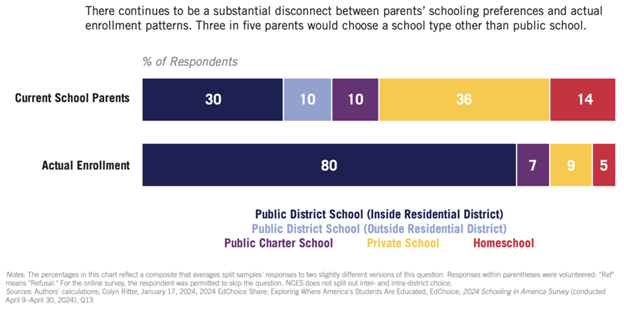
These polls indicate that certain types of schools are oversupplied, but it’s not the type that will become accessible if Idaho lawmakers pass a private choice program. Variety is the spice of life, and no state has yet come close to getting enough.

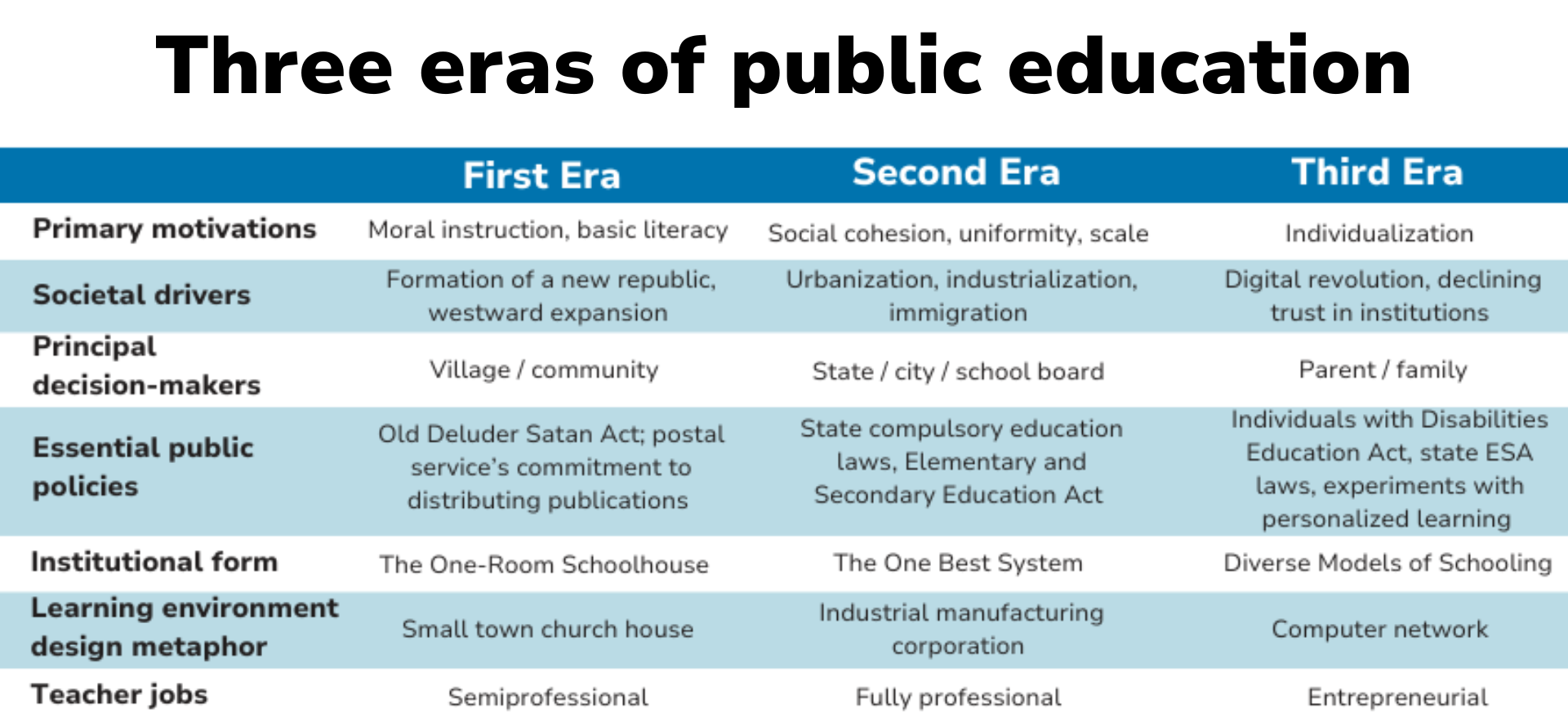
Public education in the United States is transitioning from its second to third paradigm.
Paradigm shifts in public education occur when larger societal changes force public education to change to meet these new conditions. Current technological advances and the accompanying social changes are pushing public education into a new paradigm and a third era.
To best meet society’s current and future needs, this third paradigm aspires to provide every child with an effective and efficient customized education through an effective and efficient public education market.
A paradigm: The lens through which communities do their work
In his 1962 book, “The Structure of Scientific Revolutions,” Thomas Kuhn described a paradigm as the lens through which a community’s members perceive, understand, implement, and evaluate their work. A paradigm includes a set of assumptions and associated methodologies that guide how communities construct meaning and determine what is true and false and right and wrong.
A paradigm shift occurs when inconsistencies, which Kuhn called anomalies, begin to occur, and some community members begin to question their paradigm’s veracity and effectiveness. As these anomalies accumulate, community members begin proposing new ways of understanding and implementing their work and a prolonged contest emerges between the existing paradigm and proposed new paradigms. If a majority of the community ultimately decides a new paradigm enables them to resolve the anomalies and better understand their discipline, this new paradigm is adopted. In scientific communities, Kuhn calls these paradigm shifts scientific revolutions.
Paradigm shifts are disruptive and revolutionary because they require community members to reinterpret all their previous work and adopt new ways of conducting and evaluating their future work. Senior community members are particularly resistant to changing paradigms because their status comes from applying the existing paradigm over many years. Consequently, paradigm changes are rare and require several decades to complete.
Albert Einstein’s General Theory of Relativity (GTR) was a new physics paradigm that challenged Newtonian mechanics and Newton’s law of universal gravitation (i.e., the dominant physics paradigm at the time). It took over 40 years before GTR gained wide acceptance among physicists. Einstein never won a Nobel Prize for GTR because the Swedish physicists on the Nobel committee refused to accept his new paradigm.
Although Kuhn’s work focused on the role of paradigms in scientific communities, his description of how paradigms function and change is relevant for all communities, including public education. The struggle in U.S. colonial times to transition from a monarchy to a democracy was a paradigm shift. It was a revolutionary change in how government works, was fiercely resisted by those in power, and took decades to complete.
Public education’s first paradigm
Public education’s first paradigm began before the United States was a country, when the Massachusetts Bay Colony enacted the “Old Deluder Satan Act” to ensure the colony’s young people learned scripture. As the name of that early legislation implies, this first era prioritized basic literacy and religious instruction. Most children were homeschooled, and formal instruction tended to be ad hoc, improvised, and organized around the agricultural calendar.
Religious organizations provided most of the structured instruction outside the home in the 1700s and early 1800s. Children and adults attended Sunday schools, and communities organized what today we would call homeschool co-ops, which allowed rural children to receive instruction when their chores permitted.
The federal government supported public education through the U.S. Postal Service by subsidizing the distribution of magazines, pamphlets, books, almanacs, and newspapers, and establishing post offices in rural communities. By 1822, the U.S. had more newspaper readers than any other country.
Public education’s first paradigm started failing in the early 1800s as innovations in transportation and communications began connecting the country and promoting more industrialization and urbanization. About 90% of Americans lived on farms in 1800, 65% in 1850, and 38% in 1900.
This transition from rural to urban created childcare needs. Increased industrialization necessitated a more highly skilled workforce. And concerns about social cohesion grew as the growing country welcomed immigrants from Ireland and later from Southern and Eastern Europe. These were demands the informal, decentralized, and family-driven first public education paradigm was ill-equipped to meet.
Public education’s second paradigm
In 1852, Massachusetts passed the nation’s first mandatory school attendance law. This accelerated public education’s shift from its first to second paradigm.
The massive influx of European immigrants beginning in the 1830s was a primary reason Massachusetts decided to make school attendance mandatory. The U.S. experienced a 600% increase in immigration from 1840 to 1860 compared to the prior 20 years. Most of these immigrants were illiterate, low-income, and Catholic. Massachusetts’ mandatory school attendance law was intended to help turn these new immigrants into “good” Americans, meaning they needed to be literate, financially self-sufficient, and well-versed in Protestant theology.
Protestant hostility toward Catholic education in the U.S. continued deep into the following century and included the infamous Blaine Amendments that many states adopted in the late 1800s to forbid public funding of Catholic schools, and the 1922 constitutional amendment in Oregon that required all students to attend Protestant-controlled government schools.
The U.S. Supreme Court ruled the Oregon amendment unconstitutional in its 1925 decision Pierce v. Society of Sisters, ensuring every American family had the right to choose public or private schools for their children. This ruling would later help make public education’s transition to its third paradigm possible.
By 1900, 31 states had passed mandatory school attendance laws. While these laws were not initially well enforced, they did significantly increase school attendance, which created management challenges.
As David Tyack chronicles in “The One Best System,” a history of how this first paradigm shift unfolded in America's cities, a new class of professional administrators, known as schoolmen, set out to modernize public education practice and infrastructure. One-room schoolhouses serving students were no longer adequate, so public education began adopting the mass production processes that enabled industrial manufacturers to create large numbers of products at lower costs. The most famous example was the assembly line that Henry Ford created to mass produce affordable Model Ts.
This new industrial model of public education replaced multi-age grouped students with age-specific grade levels that functioned like assembly line workstations. Just as Ford’s assembly line workers were taught the skills necessary for their workstations, public school teachers were trained to teach the skills associated with their assigned grade level, and children were moved annually from one grade level to the next en masse.
Mississippi became the last state to pass a mandatory school attendance law in 1918. By then the bulk of multi-aged one-room schools were being replaced with larger schools that reflected the best practices of 19th century industrial management. This was the paradigm through which government, educators, families, and the public were now seeing and understanding public education. This change marked U.S. public education’s second paradigm.
Ford famously told customers they could have any color of Model T they wanted provided it was black. Public education adopted this one-size-fits-all approach to increase efficiency. Car consumers began demanding more diverse options over the next several decades, and so did public education consumers. The auto industry diversified its offerings much quicker than public education because it faced competitive pressures the public education monopoly did not. But in 1975, President Gerald Ford signed the Education for All Handicapped Children Act, which required all school districts to begin adapting instruction to serve special needs students. This was the first instance of government requiring public education to provide a large group of students with customized instruction.
Public education’s third paradigm
This expansion of instructional diversity accelerated in the late 1970s and early 80s as school districts started creating magnet schools to encourage voluntary school desegregation. The school district in Alum Rock, California even experimented with a short-lived voucher program that fostered an ecosystem of small, specialized learning environments that today would be called microschools.
Most of the beneficiaries of early magnet schools were white middle-class and upper middle-class families who were attracted by the additional resources and high-quality specialized instruction. But magnet schools created for desegregation could serve only a limited number of students. In response to political pressure from influential constituents, school districts began creating magnet schools unrelated to desegregation, which expanded and normalized specialization and parental choice within school districts and accelerated the transition to public education’s third era.
Florida added significant momentum to this transition with the passage of its 1996 charter school law, the founding of the Florida Virtual School in 1997, and the 2001 creation of the nation’s largest tax credit scholarship program.
Two decades later, the COVID-19 pandemic further hastened public education’s current paradigm shift. Magnet schools, virtual schools, charter schools, homeschooling, open enrollment, homeschool co-ops, and tax credit scholarship programs were already expanding nationally when COVID arrived in March 2020. The pandemic turbo charged the growth of these options and newer options such as microschools, hybrid schools, and education savings accounts (ESAs).
Just as 19th century innovations in communications, transportation and manufacturing led to public education’s first paradigm shift, the rise of digital networks, mobile computing, and artificial intelligence are transforming all aspects of our lives, including where and how we work, communicate, consume media, and educate our children. These technical and societal changes are driving a decline of trust in institutions that no longer enjoy a monopoly on public information. They are also driving increased demand for flexibility to determine when, where, and with whom teaching and learning happen. Public education has begun to adopt a paradigm more aligned to 21st century demands, which include parents gaining more power to decide how their children learn.
Government’s changing role
Government’s role in public education will be impacted by a new public education paradigm that reflects these ongoing technical and cultural changes. Under the second paradigm, government had a near-monopoly in the public education market. This quasi-monopoly undermined public education’s effectiveness and efficiency because it failed to take full advantage of the knowledge, skills and creativity of students, families and educators.
In public education’s third era, government will regulate health and safety and help facilitate support services for families and educators but will no longer be the dominant provider of publicly-funded instruction. This regulatory and support function is like the role government currently plays in the food, housing, health care, and transportation markets. Most of the responsibility for how children are educated will shift from government to families and the instructional providers families hire with their children’s public education dollars.
Shifting government’s primary role from instructional monopoly to market regulator and supporter will require operational changes. Families will be able to choose from a plethora of instructional options and will need access to information that allows them to make informed decisions, as well as education advisers who can help them evaluate their child’s needs and develop and implement customized education plans to meet these needs. Government will need to ensure data accuracy and truth in labeling – much as it currently ensures food labels accurately describe what’s in the package.
Third paradigm issues
Providing each child with a high-quality customized education through a more effective and efficient public education market will require public education’s stakeholders to rethink all aspects of how it operates. Here are some issues we will need to address.
Public education’s third paradigm has old roots
In 1791, Thomas Paine proposed an ESA-type program for lower-income children in “The Rights of Man.”
“Public schools do not answer the general purpose of the poor. They are chiefly in corporation towns, from which the country towns and villages are excluded; or if admitted, the distance occasions a great loss of time. Education, to be useful to the poor, should be on the spot; and the best method, I believe, to accomplish this, is to enable the parents to pay the [sic] expence themselves.”
Paine’s recommended funding method was, “To allow for each of those children ten shillings a year for the expence of schooling, for six years each, which will give them six months schooling each year, and half a crown a year for paper and spelling books.”
Over 150 years after Paine’s proposal, Milton Friedman proposed a similar but more comprehensive plan in 1955. Many of the third paradigm’s core ideas existed in the 1700s prior to the industrial revolution. But they were not technically or politically feasible.
Thanks to modern technology and a growing acceptance of families’ rights to direct their children’s education, these ideas are viable today. We can now provide every student with an effective and efficient customized public education. While all students will benefit from customized instruction in a more effective and efficient public education market, lower-income students will benefit the most because they have historically been the most underserved by the current government monopoly. Underserved groups always benefit greatly when the markets they rely on for essential goods and services are more effective and efficient.
Public education’s transition to its third paradigm is happening faster in Florida than in other states. Over 500,000 students using ESAs is rapidly improving Florida’s public education market. Floridians are seeing in real time the creation of a virtuous cycle between supply and demand. More families using ESAs is encouraging educators to create more innovative learning options, which in turn is causing even more families to use ESAs, which in turn is causing even more educators to create more learning options. These rapidly expanding options increase the probability that all students, but especially lower-income students, can find and access learning environments that best meet their needs.
Public education’s first paradigm shift took about 100 years to complete (1830-1930). This second transition began around 1975 and will likely also take about 100 years to complete nationally. Like all paradigm changes, this one is proving to be a long slog. But larger societal changes will help ensure this transition’s success.
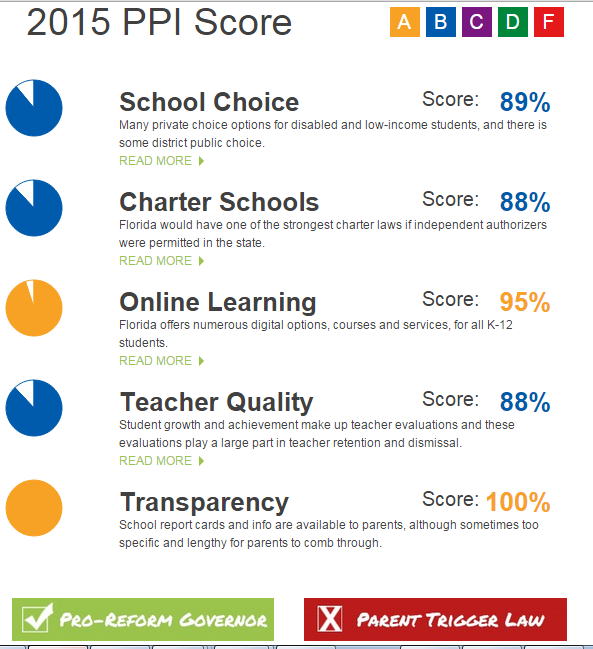
The Center for Education Reform gives Florida's "parent power" policies high ratings.
When groups rank states based on a range of education reforms — school choice, charter schools, teacher quality, transparency, digital learning — it's not surprising Florida lands near the top.
But Indiana continues to eke its way into the no. 1 spot in the Center for Education Reform's "Parent Power Index," despite an ongoing political struggle over education policy in that state.
The latest version of the index, released today, gives Florida high marks for supporting digital learning, giving parents access to school report cards and information about their options, having one of the stronger charter school laws in the country, and embracing private school choice. The main knocks against it include the lack of a "parent trigger" law and the inability to create independent charter school authorizers.
It's worth keeping in mind that giving students more options doesn't lead to improved student performance by itself. Democrats for Education Reform drove that point home in an analysis last year. It lined up advocates' rankings of state charter school laws with charter school performance in each state, and found there wasn't much correlation. "School choice alone does not guarantee success," policy analyst Marianne Lombardo wrote at the time, "but can create the potential for success."
Editor's note: Utah state Sen. Aaron Osmond raised eyebrows and sparked debate last month with a provocative post on the senate blog that called for ending compulsory education and, essentially, expanding school choice options to include no school at all. The post drew coverage from Fox News to the Huffington Post (see here, here, here, here and here) and a fair bit of commentary, too (see here, here, here and here). On a related note, a fascinating case in Virginia - involving that state's broad religious exemption for school attendance - prompted the Washington Post to weigh in with this editorial over the weekend.
Here is Osmond's post in full:
Sen. Osmond
Before 1890, public education in America was viewed as an opportunity - not a legal obligation. Prior to that time, the parent was primarily responsible for the education of their children. The state provided access to a free education for those that wanted to pursue it. The local teacher was viewed with respect and admiration as a professional to assist a parent in the education of their child.
Then came compulsory education. Our State began requiring that all parents must send their children to public school for fear that some children would not be educated because of an irresponsible parent. Since that day, the proverbial pendulum has swung in the wrong direction.
Some parents completely disengage themselves from their obligation to oversee and ensure the successful education of their children. Some parents act as if the responsibility to educate, and even care for their child, is primarily the responsibility of the public school system. As a result, our teachers and schools have been forced to become surrogate parents, expected to do everything from behavioral counseling, to providing adequate nutrition, to teaching sex education, as well as ensuring full college and career readiness.
Unfortunately, in this system, teachers rarely receive meaningful support or engagement from parents and occasionally face retaliation when they attempt to hold a child accountable for bad behavior or poor academic performance.
On the other hand, actively engaged parents sometimes feel that the public school system, and even some teachers, are insensitive to the unique needs and challenges of their children and are unwilling or unable to give their child the academic attention they need because of an overburdened education system, obligated by law to be all things to all people.
I believe the time has come for us to re-evaluate what we expect of parents and the public education system, as follows:
First, we need to restore the expectation that parents are primarily responsible for the educational success of their own children. That begins with restoring the parental right to decide if and when a child will go to public school. In a country founded on the principles of personal freedom and unalienable rights, no parent should be forced by the government to send their child to school under threat of fines and jail time. (more…)
 The American school system was, from its inception, a product of intolerance for human difference. Grounded in 19th Century religious and cultural prejudice, it was artfully designed to assure no government resource would end up supporting the teaching of religious or cultural notions that were uncongenial to the Protestant majority. Carefully limited by the constitutions of various states, the curriculum was centralized and sanitized in each of the 50 school systems to favor the beliefs and values of the dominant group. Further, students were confined to their own school districts - indeed to their own neighborhoods - assuring (at least in the cities) that children of different social classes and races would see little of each other within government schools.
One overall effect was and is a quasi-market for the affluent; well-to-do families choose admission to the government school of their preference. By contrast, for the ordinary family, government schools are a compulsory monopoly. There are, of course, private schools, and we know from survey research and direct experience that they are very attractive to the poor. Nevertheless, though most such schools are relatively inexpensive, they can scarcely compete with the “free” government alternative. It is, therefore, remarkable that the private sector is still able to attract nearly 10 percent of the total student population; equally impressive is the proportion of these students who come from poor families who make enormous sacrifice to pay tuition. I suppose Justice Sotomayor’s story suggests this reality.
The tragedy is 19th Century America, a new country exploding with creativity, decided to hobble the minds and souls of its children with a system of finance and assignment that for ordinary families was, and remains, oppressive. Americans spend $800 billion each year in state-owned schools; I suspect they constitute the largest socialist enterprise outside of China.
The effects of this government monopoly upon the ordinary family have been what one would predict: The family is put under the most destructive pressures. At age five the child is taken from the parent who has been both friend and advocate. The child now discovers the parent is impotent to intervene. The parent learns self-contempt and withdraws from responsibility.
Whatever one’s philosophical starting point, schools in the U.S. pose a moral issue of crisis proportions. Intellectual monopoly by The State is especially peculiar in a culture as diverse as ours. Where there is no consensus about values, it is on its face ludicrous for an ephemeral regime of bureaucrats to impose its own favorite curriculum upon everyone. The case against monopoly, however, need not rest upon pluralism. Monopoly control over value content is unjust and, in the end, will be destabilizing even in a society with a common culture. The idea of a social consensus itself rests upon an underlying conception of human freedom. That is, consensus is a clustering of beliefs that are voluntarily held. We value these ideas not simply for the numbers who profess them, but out of respect for the individual human persons who freely believe them. Consensus can, of course, be one among other principles of policy, but it is a very weak principle. A just government never opposes value diversity as such, but only those rare forms of diversity that threaten social order. To say diversity itself is socially destructive is merely to beg the question. It may be quite the opposite. That very issue seems to me at the heart of the problem.
In the end it boils down to this question: Whom do we trust to choose the ideas the child of the ordinary family will study - the family or the government? Society needs a theory of the best decider - the one who decides best for the good of individual children and for the common good. (more…)
Parent power. Gov. Rick Scott signs into law a bill that gives parents of disabled students more say over their kid's education. Orlando Sentinel, Associated Press.
 Virtual schools. Scott also signs the digital learning bill into law. Florida Current.
Charter schools. The Lakeland-based Achievement Academy, a charter for students with disabilities, plans to double enrollment to meet demand. Lakeland Ledger.
Career academies. A new firefighters academy is opening at Wellington High School next fall. Palm Beach Post.
Schools and religion. Atheist materials censored by the Orange County School District contained criticisms of the Bible. Orlando Sentinel.
School grades. The state again considers revision to the system in the face of concerns that the results will be too harsh. Tampa Bay Times. Add Treasure Coast districts to those warning parents about a drop in grades. TCPalm.com. A new task force should retract the most "onerous" changes to the grading system. Miami Herald. Or "trash" the system altogether. Palm Beach Post.
School technology. New technology in the Miami-Dade district is boosting education for students with disabilities. Miami Herald.
School spending. The state approves Manatee's financial recovery plan. Bradenton Herald. Bay plans to remove 22 old portables this summer. Panama City News Herald.
School districts. Pinellas needs to be more transparent with public records. Tampa Bay Times. (more…)
Parent power. Florida gets high marks from the Center for Education Reform. Jacksonville Business Journal.
 Common Core. Andy Ford's take on Common Core. StateImpact Florida.
Teacher evaluations. Don't shield the data from public scrutiny. Florida Times Union.
Rick Scott. Talks with superintendents about teacher pay, teacher evals, Common Core - and gets kind words from Sen. Bill Montford, D-Tallahassee. Coverage from The Buzz, News Service of Florida, Tallahassee Democrat.
School reform. Pinellas Superintendent Mike Grego is taking a more thoughtful approach to struggling schools than the state has, writes Tampa Bay Times columnist John Romano.
Career education. It's good the Legislature is expanding opportunities here, writes Tampa Tribune columnist Joe Henderson. (more…)
Charter schools. Tampa Bay Times: "Stop the giveaway to charter schools." A charter school company is interesting in buying property at one of more of the three schools that the school board recently voted to shut down next year, reports Florida Today.
Will Weatherford. StateImpact Florida talks to him about his education views - and his own nontraditional education background.
Parent power. Lawmakers are showing strong, bipartisan support for legislation that would give the parents of special needs students more say in their children's education, but groups like Fund Education Now are opposed. Miami Herald.
Testing. Valerie Strauss's Answer Sheet devotes space to a Florida case involving the FCAT and a student who is profoundly disabled.
Teacher pay. In a meeting with the Tampa Bay Times editorial board, Gov. Rick Scott stands by his across-the-board pay plan.
Teacher conduct. Florida Times Union: "An Atlantic Beach Elementary School teacher who used depictions of minstrel caricatures of African-Americans, blackface and a lynching for a second-grade coloring assignment last month said she has used the material for the past three years." (more…)

