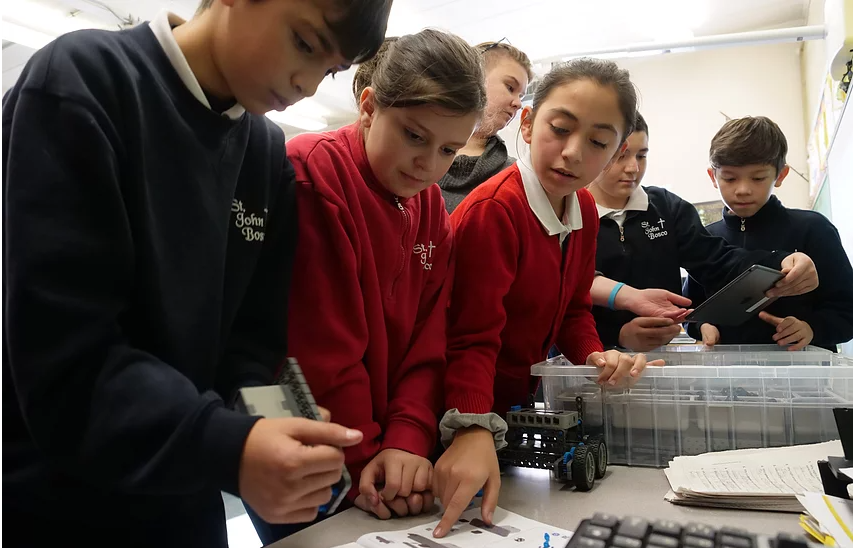
St. John Bosco School, which serves children from kindergarten through eighth grade in Hammond, Indiana, is one of 20 schools in the Catholic Diocese of Gary upon which education choice advocate Dan Kozlowski is focused.
Editor’s note: This article about Dan Kozlowski, regional director for the Northwest Indiana Initiative of the Big Shoulders Fund, appeared Sunday on nwi.com.
As Sister Mary Jo Sobieck took the field to throw the ceremonial first pitch at a Chicago White Sox game, the world watched.
And those who didn’t catch her opening pitch live that summer day of 2018 likely saw it after the video of her throwing the pitch down the middle went viral. No one was prouder than Dan Kozlowski — the person behind the video, which eventually led to a nomination at the 2019 ESPY Awards for “best viral moment.”
Kozlowski, who considers himself the “biggest” White Sox fan, worked in fundraising at the time, serving as vice president of advancement at Marian Catholic High School. As part of the school’s 60th anniversary celebration, he collaborated with the White Sox to have someone representing the school throw the first pitch before the game.
The rest is history.
Although the pitch seen around the world is one of Kozlowski’s most visible career moments, it’s just one of many impactful moments the now 35-year-old Winfield resident has had while working to better the lives of students in Northwest Indiana.
Kozlowski, who currently serves as regional director for the Northwest Indiana Initiative of the Big Shoulders Fund, collaborates with the leadership of the Diocese of Gary to ensure that the 20 Catholic schools in Northwest Indiana have the resources they need to be successful.
The goal, he says, is to elevate the quality of Catholic schools and improve their long-term viability through access to technology, curricular resources and instructional and data coaching.
“I work directly with the principals at all 20 schools — 17 elementary and three high schools — on any support they need,” he said.
To continue reading, click here.
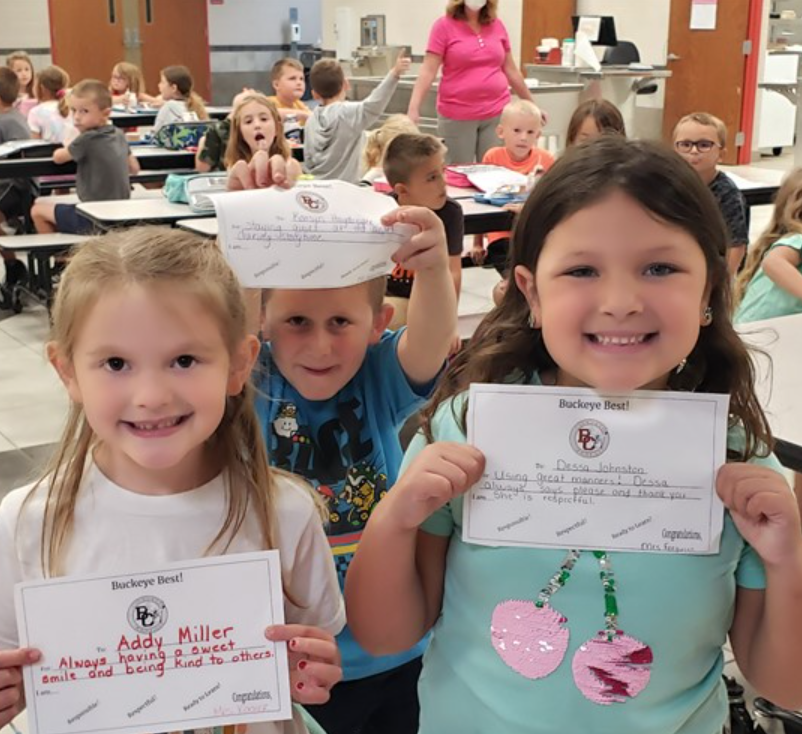
Buckeye Central Schools, a school district in Crawford County, Ohio, that serves more than 600 students in prekindergarten through twelfth grade, is among districts in that state that participate on open enrollment.
Jay Greene and James D. Paul gathered data for a new study for the American Enterprise Institute released Sept. 22 demonstrating that Democrats in state legislative chambers have only rarely made the difference in passing original private choice legislation nationwide.
The authors make the case that choice supporters have erred in seeking constrained and overly regulated programs in search of Democratic support which failed to meaningfully materialize. While they note that the choice movement needs all the support it can get, they fear Republican votes are being taken for granted. Ultimately, Greene and Paul call for private choice bills with universal eligibility and moderate levels of regulation.
My preferences also run toward universal programs with moderate levels of regulation. I think the Greene-Paul case deserves consideration, debate and reflection.
Whether or not one agrees with Greene and Paul’s conclusions, I believe there is an alternate case to make: Constrained and overly regulated private choice programs have only a limited ability to achieve policy goals that liberals, libertarians and conservatives tend to share.
Americans want public schools to teach necessary academic knowledge and to prepare students to exercise the responsibilities of citizenship as adults. Americans also want public schools to serve as engines of social mobility. They’ve been getting too little of any of that for decades. The unions want to max out the number of district employees to expand their membership, money, influence and power. There has been plenty of that going on for decades and too little to show for it.
K-12 choice is a tool which can give the public more of what they want from the education system. It also is respectful of pluralism. Once you get past the broad academic and civic goals, agreement about education quickly falls apart in the abstract. Individual children vary wildly in their interests and needs and thus can benefit from access to a diverse and specialized set of schools.
Ohio Republicans have passed multiple choice programs since 1995 and focused their efforts on the areas of greatest academic need: Cleveland students, students in failing schools, students with special needs, charter schools with geographic limits. Each of these were entirely worthy efforts.
This year, however, they embraced a number of more inclusive measures, in part, I believe, because the Fordham Institute found and documented the fact that students in every major urban district in Ohio find themselves surrounded, or nearly surrounded, by suburban districts that will not accept open enrollment transfers.
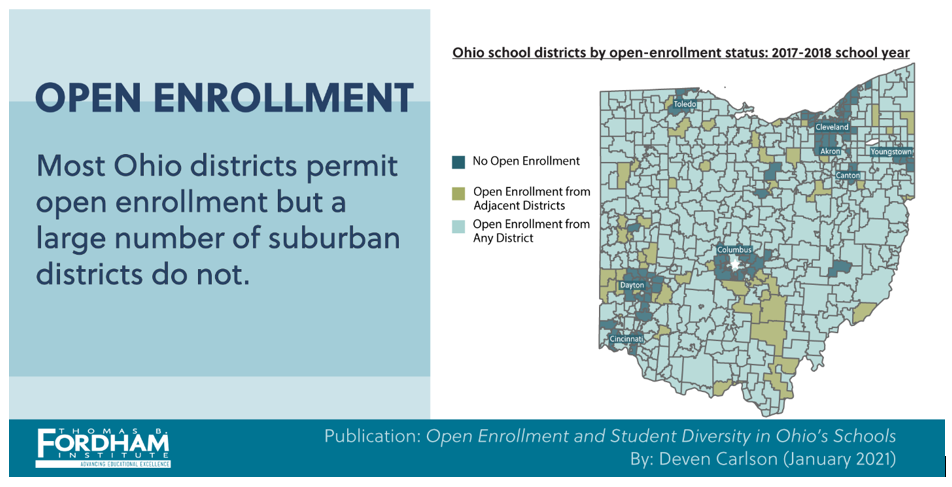
Whether you are a conservative, a liberal, a libertarian or a vegetarian, this map should disgust you as an American.
It apparently disgusted Ohio lawmakers, who took away geographic limits on charter schools, passed a new universal choice program, and improved existing choice programs. If suburban districts want to continue to deny open enrollment opportunities, they will have to do it with fewer students in the future.
K-12 choice deserves bipartisan support, and as Greene and Paul demonstrate, has received too little of it. We should include suburban and rural students in choice programs. They pay their taxes, they have unmet needs.
Our egalitarian desire to give advantage to the poor should be reflected in funding levels rather than in eligibility. No one would ever dream of denying a student access to a university because his or her parents paid too much in taxes. Levels of financial aid routinely vary, however. We should be worried about the sustainability of Republican support if our programs do not include their communities. Those communities pay for the programs; they should have the opportunity to participate.
We should most of all seek inclusive and diverse programs because (ironically) those are the programs that can best serve the interests of the poor. If you want to serve the interests of poor and urban students, yes, give them charter schools. Yes, give them education savings accounts, vouchers and/or education tax credits. It ultimately is untenable to ask suburban and rural voters to pay for such programs and then have them find themselves excluded from participation.
You also, however, want to create incentives necessary to give them access to suburban public schools. Limited, targeted programs won’t be equal to such a task.
The school choice programs that have passed to date usually did not need bipartisan support. A much stronger, impactful, inclusive movement can, however, achieve this and much more.
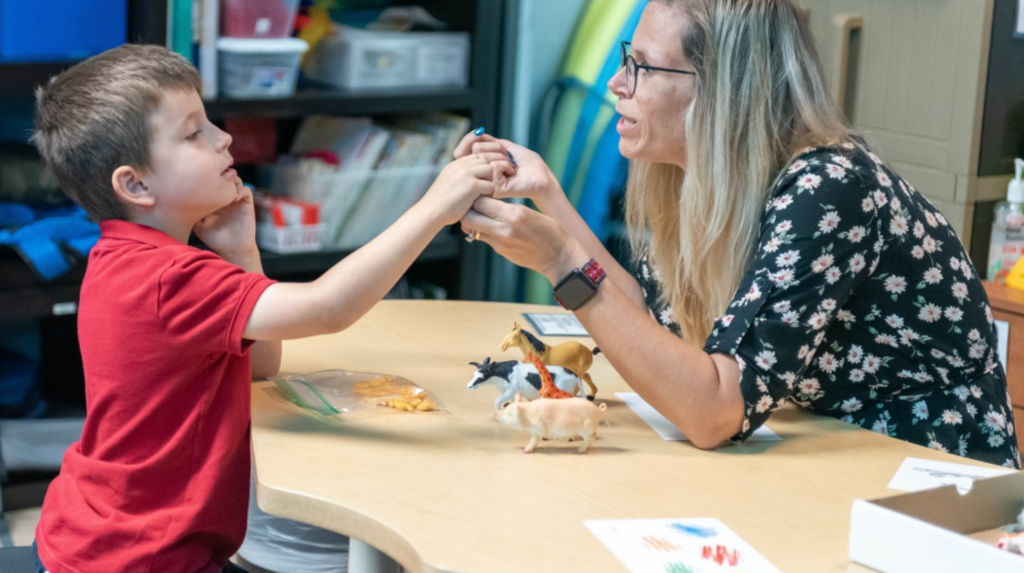
Autism Inspired Academy is an education-based nonprofit in Clearwater, Florida, that applies character education and social-skill development as the foundation of student growth. The school’s mission is to empower children with autism to have lives of meaning, purpose and joy.
CLEARWATER, Florida – Inside the walls of a sky-blue building surrounded with shade trees dwells a story of hope and inspiration and the shared dream of two women determined to help a special population of children.
For Liz Russell and Cher Harris, co-founders of Autism Inspired Academy, the school offers an opportunity to pour out their passionate commitment to helping children cope, grow, and one day make their way in the world. For their students, it’s a chance to face daily challenges and make slow yet measurable progress.
“When we were thinking of a name for the school, we started with Austism Aspiration, and then we changed it to Special Needs for Life,” Russell said. “But as we were going through the process, it dawned on me – the name needed to be Autism Inspired Academy because we are inspired by these kids every single day.”
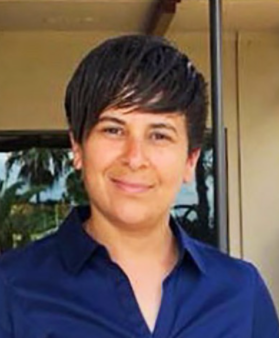
Principal Cher Harris
The story of how she and Harris teamed up is as unique as the school they've created.
Harris, who serves as principal, had always loved working with kids and eventually found her calling in the area of exceptional student education at a Tampa Bay area elementary school.
“My first year I worked as one-on-one assistant to a child with many medical needs, but it wasn’t what I was looking for,” she said. “So, my supervisors came to me and said, ‘Why don’t you try working in a classroom for kids with autism?’ I really knew nothing about autism at the time. But after a few weeks in class, I was like, ‘I love this. I need to learn everything and know everything there is about it.’”
Harris delved into this new world, researching and reading books about autism, driven by a desire to become a teacher. She earned a bachelor’s degree at St. Petersburg College, which led to her first full-time teaching job. She quickly developed a natural gift for communicating with children for whom communication can be difficult.
In 2017, the local Council of Exceptional Children named her exceptional student education teacher of the year. She went on to become ESE teacher of the year for the state of Florida. By that time, she had earned a master’s degree in special education with a focus in autism from the University of South Florida.
When she started thinking of opening her own school for children with autism, she went back to college and completed a master’s degree in administrative leadership to learn how to run a school.
“I knew the behavior part and the autism part, but I wanted to learn the budget, the finance and business side of things,” Harris said.
Meanwhile, Russell’s journey was taking shape some 2,500 miles away. After earning a bachelor’s degree in political science from the University of Nevada Las Vegas, she completed a master’s degree in elementary education and another in counseling. She taught writing to eighth graders for five years, then went to work for a national faucet manufacturer, eventually becoming national sales manager.
During that time, her son, Gavin, was diagnosed with autism, and Russell, then a single mom, became his advocate. She attended conferences to learn all she could about the latest therapies and made sure Gavin’s school met his needs, visiting regularly with the principal and teachers.
“He was my ‘why,’” she said.
About a decade ago, Russell relocated to the west coast of Florida, and while searching for the best learning environment for Gavin, heard about an amazing teacher working wonders with children with autism – Cher Harris. Russell attended a few conferences where Harris was leading parent trainings and decided to enroll Gavin at the school where Harris worked.
“My gift is in finding excellence in people and then getting out of the way,” Russell said. “And I saw that excellence in Cher.”
Russell suggested they meet to talk about their shared love for children with autism. The seeds for Autism Inspired Academy were about to be planted.
***
Harris talked about her grand vision for a school at their first meeting, but Russell, drawing on her business acumen, suggested an interim step – a camp that would empower children with autism and provide summers filled with fun and purpose.
They agreed it was a sensible way to start, and Russell proceeded to visit youth centers throughout the area to find a site. The plan changed when a local youth center official suggested they look at the expansive, kid-friendly acreage of the Florida Sheriff’s Youth Ranch in the city of Safety Harbor, about 20 miles west of Tampa.
Many meetings later, the camp became a reality, with six children attending the first year. Three years later, with support from community partners, that number grew to 25.
“We learned early on that we had complimentary skills,” Harris said. “Liz brings the business and sales knowledge and I have the educational experience. And we are both passionate about helping children with autism.”
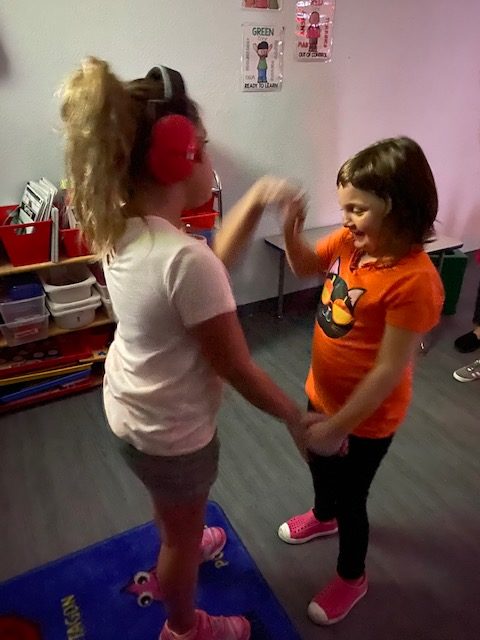
Autism Inspired Academy’s low teacher-student ratios allow for small group and individualized instruction, along with focused learning opportunities.
As their venture flourished, the idea for a starting a school continued to percolate. Russell had remarried after moving to Florida, and both she and her husband, an attorney, were committed to providing the resources needed to get the project off the ground. They scouted possible locations, fell in love with a property in nearby Clearwater that housed a pre-school and after-care program, and bought the place.
They knew it would take time and effort to transform the buildings into a fully functioning school. Fortunately for Russell and Harris, they crossed paths with the chief executive officer of a private school program specializing in serving the needs of children with various challenges, including autism.
He believed in what Russell and Harris were trying to do and told them about the Drexel Fund, a nonprofit venture philanthropy group based in Milwaukee, Wisconsin, that seeds new school models, scales up existing schools, and works to create the market conditions necessary for new private schools serving low-income students to thrive.
Russell and Harris applied for a grant and were awarded $100,000. The money was a godsend, allowing Harris to leave her job and begin planning the new school with Russell full time. It also allowed Harris to visit schools across the country for children with autism to learn what worked well for them.
Construction of Autism Inspired Academy began in 2019. While the work was under way, the CEO who had told Russell and Harris about the Drexel Fund invited them to bring a group of 11 students to his school for a pilot program, so Harris began driving the students and a teacher there every day in a van, two hours roundtrip. Then the pandemic hit in March 2020 and construction came to a screeching halt. The students had to transition to online instruction like students all over the country.
“Basically, in two weeks, Cher developed a program for the kids and involved all their parents,” Russell said. “And two of our teachers, Toni Salvatore and Chloe Hoffman, implemented it beautifully. I was in awe.”
The new school was halfway completed by January 2021 and opened to 29 students as construction continued on the other half. In August, 55 students in kindergarten through eighth grade embarked on a bold new learning experience.
***
One month into the new school year, Autism Inspired Academy is filled with students, about 40% of whom are from lower-income families. All of those students attend on state scholarships for children with unique abilities administered by Step Up For Students, which hosts this blog. Meanwhile, occupational and language therapists and committed teachers and staff support the mission of the co-founders: to help autistic children lead lives of meaning, purpose and joy.
That’s a formidable task considering autism covers a wide array of issues, which, according to the Centers for Disease Control, affect 1 in 54 children in the United States. Autism impacts social skills, verbal and non-verbal communication and behavior, with functioning ranging from highly skilled to extremely challenged.
The academy customizes instruction and support to meet each child’s needs. Students work on reading, do sensory exercises, and learn to stay in control of their emotions and reactions. Color-coded “zones of regulation” are marked with red and green tape to help students learn how to regulate their actions. Behavior that lands a child in a red zone is addressed so he or she can return to a green zone. Students are taught there are no “bad” zones, just learning opportunities for better choices.
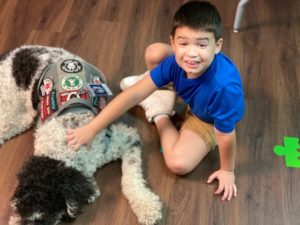
Muted lighting, alternative seating options and limited visual distractions are just a few ways Autism Inspired Academy maintains a flexible space where students feel comfortable and safe so they can focus on learning.
Classrooms feature muted lighting and soothing music. Some areas are sectioned off to allow students to work quietly, reinforcing their ability to work independently. Behavior specialists, hired from among a half-dozen companies that support the school, accompany some students. In one middle school class, a fluffy Bernedoodle support dog named Frankly – a cross between a Bernese mountain dog and a poodle – engages with students. After the children complete their assignments, they are entitled to 15-minute “brain breaks” to give them a chance to play with other kids or by themselves.
A common thread that runs through each day is an emphasis on encouraging social interaction.
“Social skills are taught in every class and at every level,” Harris said. “That’s one of the big things – how to focus, share with a friend, stay seated in a chair.”
Among the children who are finding success at the academy is Jacki Craig’s son, Noah, who was a student of Harris’ at her former school. Craig credits Harris as being the best teacher her son ever had. She and her husband had relocated to Georgia for a job opportunity, but when they heard about Harris’ new school, they decided to move back to Florida.
“We came back so Noah could be here, and he’s thriving,” Craig said. “That’s how much Ms. Harris means to us and so many parents and students.”
It’s all part of the magic that Harris and Russell have created at their growing academy, inspiring students who, in turn, inspire them.

 Unique Florida learning option offers families safety, choice, peace of mind
Like a school, but better. That’s how Ali Kaufman, founder and CEO of Space of Mind, describes a revolutionary program that engages students, families, educators and the larger community in experiential learning. Kaufman’s brainchild, launched in 2004, is not a traditional school. Nor is it a tutoring center. It’s not even a learning pod. READ MORE
 podcastED: Formerly homeless family finds a lifeline in education choice scholarships
On this episode, reimaginED senior writer Lisa Buie talks with Juliette Harrell, an Orlando, Florida, mother of three children, two of whom attend private school thanks to the Family Empowerment Scholarship Economic Options program. Lacking education in financial literacy, Harrell and her husband, Allen, experienced homelessness as teenage parents. Their bills piled up, and Harrell and Aiden, now 10, and Amar’e, now 6, had to relocate to a local shelter while her husband moved in with his mother until they could get back on their feet. The couple was able to settle Aiden and Amar’e into a private school that also helped them learn how to manage their finances. They became fiscally stable and eventually bought their first home. READ MORE
 Hispanic students need options – now
The White House on Sept. 13 issued an executive order to advance educational equity, excellence and economic opportunity for Hispanics. Included in the text of the order is the fact that Hispanic students continue to be underrepresented in advanced courses in math and science, and that they can face language challenges in the classroom. Only 40% of Hispanic children participate in preschool education programs compared to 53 percent of their white peers, so they’re already behind when they start kindergarten. A lack of creativity in the K-12 traditional education system READ MORE
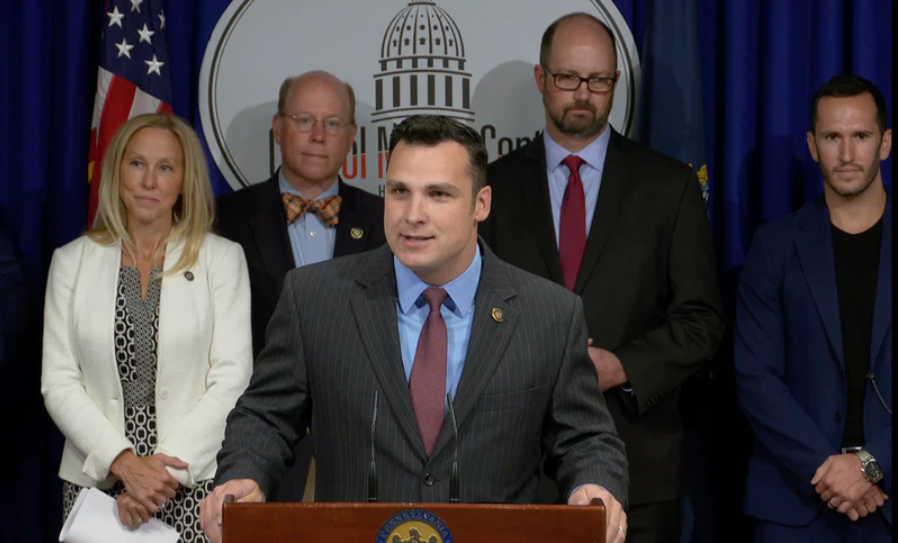
Pennsylvania state Rep. Andrew Lewis discusses his Excellence in Education for All Act that would expand school choice opportunities to a new level in his state at an August news conference.
Editor’s note: For related news, click here to listen to Step Up For Students president Doug Tuthill’s podcast with Pennsylvania state Sen. Scott Martin.
Lowman S. Henry, chairman and CEO of the Lincoln Institute, a nonprofit public affairs foundation based in Harrisburg, Pennsylvania, has a message for the citizens of his state.
Public education at both the K-12 and university levels is badly broken, Henry wrote in an opinion piece for his local news outlet, The Mercury. It’s broken, he believes, because taxpayers “continue to pour ever-increasing amounts of money that gobble up funds, fail to yield improved outcomes, and then demand even more money.”
What’s worse, he says, is that at the very moment when racial equality couldn’t be more important, Pennsylvania’s K-12 education system is failing to provide the necessary resources for minority youth and relegating them to under-performing schools.
These challenges have given rise to what Henry describes as a unique coalition of school choice advocates, uniting Pennsylvania’s conservatives and Black leaders around the idea that a quality education is the main ingredient for leveling the playing field for all children.
The most direct path toward achieving a level playing field, Henry believes, is a proposal sponsored by Pennsylvania state Rep. Andrew Lewis that would create Excellence in Education for All Act. The legislation would allow families to use the roughly $6,000 per student the state sets aside for tuition at private schools. It also would smooth the way for charter school growth and bolster the state’s tax credit scholarship programs.
Lewis called the legislation a game changer for families across the state at an August news conference where he unveiled the bill’s provisions, saying it will ensure that every child, regardless of his or her ZIP code or personal learning needs, will be guaranteed access to an excellent education.
You can read Henry’s full commentary here.
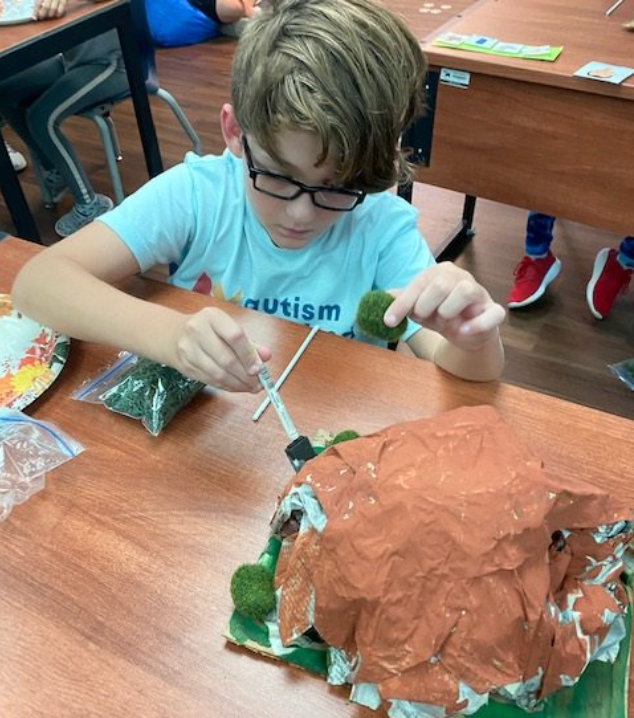
About 40% of the students at Autism Inspire Academy in Clearwater, Florida, attend on Florida scholarships for students with special needs. The school’s popularity among families has spurred plans for the K-8 school to add a ninth-grade class in 2022-23, and to become a K-12 academy within seven years.
Editor’s note: This commentary from Gina Lynch, chief operating officer and executive vice president for information technology at Step Up For Students, appeared today on heraldtribune.com.
Bob Dylan wrote that you don’t need a weatherman to know which way the wind blows. In Florida, the winds of change in public education clearly are favoring parental choice – and it's not necessary to put a moist finger in the air to detect the trend.
Just look at the following numbers as of Sept. 18 via Step Up For Students, the nonprofit for which I work that manages Florida's four K-12 scholarship programs:
To continue reading, click here.
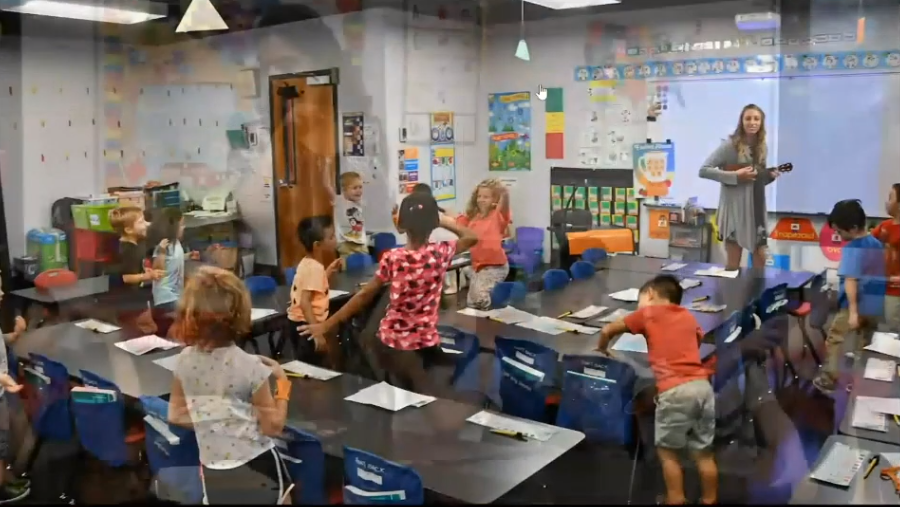
BASIS Flagstaff Charter School, which opened in 2011, consistently makes the list of Arizona’s top charter schools.
Preliminary data from a new state-level analysis from the National Alliance for Public Charter Schools indicates that public charter schools posted more enrollment growth in 2020-21 than they’ve seen in the past six years, even as traditional public school enrollment declined during the first full academic year of the COVID-19 pandemic.
Across 42 states included in the analysis, charter schools gained nearly 240,000 students – a 7% increase – from 2019-20 to 2020-21. Other public schools, including district-run schools, lost more than 1.4 million students, a 3% loss, during the same period.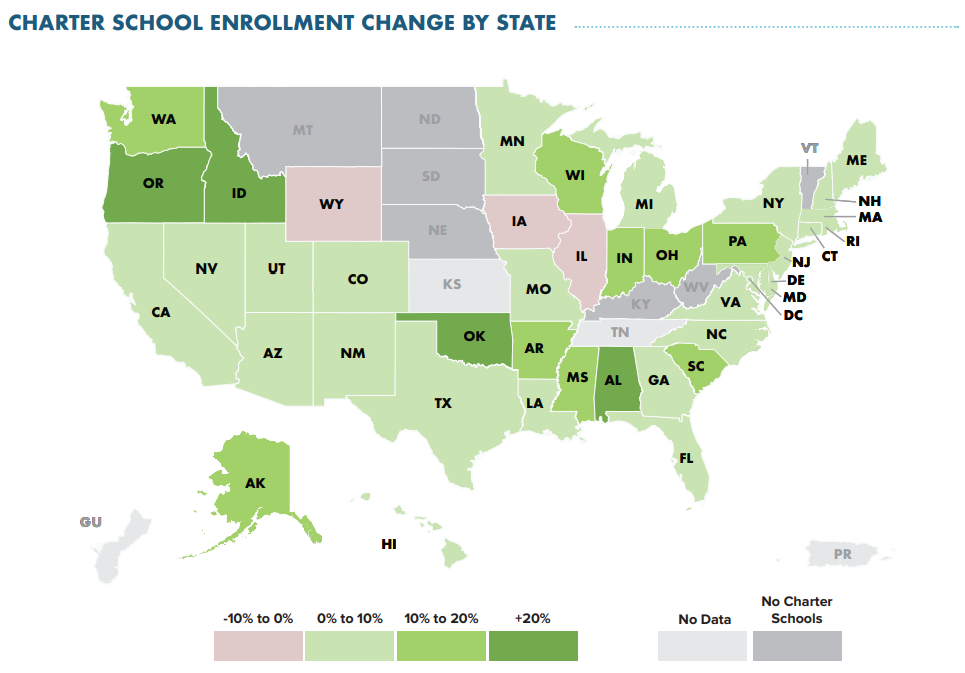
Increases for charter schools ranged from 49 additional students in Virginia to 35,751 additional students in Oklahoma according to the report. In terms of percentages, the increase in charter enrollment ranged from 0.19% in Louisiana to nearly 78% in Oklahoma. Only three states – Illinois, Iowa and Wyoming – saw declines in charter school population.
Virtual charter school enrollments figured into the increases, the study found, particularly in Oklahoma, Pennsylvania and Utah.
In Florida, charter school enrollment increased 3.86% over the last year, a little more than 3 percentage points less than the national average, while the state’s district public schools experienced a 3.16% enrollment decrease, close to the national average.
The National Alliance consulted state educational agency websites to gather enrollment data for the study. Researchers also spoke with parents, teachers, students and school leaders to gather anecdotal data.
The report notes that a similar increase in charter school enrollment hasn’t been seen since the 2014-15 school year, when the number of charter schools grew by 4.6%, creating a 7.5% enrollment boost.
While the report doesn’t offer details on whether overall growth was due to students leaving district schools or new schools opening, the authors conclude that many families, dissatisfied with the quality of what was available to their children during the pandemic, turned to other educational options, including the “nimbleness and flexibility” of charter schools that made them “the right public school choice.”
 On this episode, reimaginED senior writer Lisa Buie talks with Juliette Harrell, an Orlando, Florida, mother of three children, two of whom attend private school thanks to the Family Empowerment Scholarship Economic Options program.
Lacking education in financial literacy, Harrell and her husband, Allen, experienced homelessness as teenage parents. Their bills piled up, and Harrell and Aiden, now 10, and Amar'e, now 6, had to relocate to a local shelter while her husband moved in with his mother until they could get back on their feet. They heard about Florida’s state scholarship programs for lower-income families and applied.
The couple was able to settle Aiden and Amar’e into a private school that also helped them learn how to manage their finances. They became fiscally stable and eventually bought their first home.
EPISODE DETAILS:
 Editor’s note: This commentary from Aaron Smith, director of education policy at the Reason Foundation, characterizes Florida as “the nation’s school choice bellwether.” It appears today on the National Review.
As public-school battles over masks, vaccinations, and critical race theory continue, one thing is for certain this year: The demand for school choice will be stronger than ever.
Yet misconceptions about school-choice programs draining funding from public schools still abound. As students head back to the classroom and state legislators get back to session this fall, it’s critical we understand where education dollars are really going.
The reality is that spending on school-choice programs pales in comparison to recent increases in employee- and retiree-benefit costs for education systems across the country. Today, state spending on school-choice programs such as vouchers, education savings accounts, and tax-credit scholarships accounts for less than 0.4% of total U.S. K–12 public-education expenditures.
To put this in perspective, if school choice were defunded in, say, Maryland, Utah, and Mississippi, the states’ savings could boost public-school funding by less than $10 per student in each state — and that’s before accounting for the costs of absorbing private school students back into district schools.
Even Florida, the nation’s school-choice bellwether, could save only an extra $405 per student if choice programs were cut — a small fraction of what it spends on public schools each year.
To continue reading, click here.
 Tiana Kubik has a message for parents who are venturing into homeschool waters for the first time:
“Others’ judgment of how you educate your child is not your problem. Let the school, teachers, and other parents have their thoughts. The burden and the beauty of homeschool is that you are the principal, lead teacher, and guidance counselor. You get to decide.”
Kubik, who earned a bachelor’s degree in family community services from Michigan State University and a master's in early childhood education from the Erikson Institute in Chicago, worked for nearly a decade as a pre-kindergarten teacher. She now runs a Chicago-based photography company with her husband. Together, they have been homeschooling their children, ages 3 and 7, since 2018.
Kubik has more good news for homeschool families who are unsure if they’re getting it right: There are no deadlines or requirements that you have it figured out on Day 1. Operating under that assumption can be a disservice to the entire family, Kubik says.
Among the perks of homeschooling, Kubik notes that a family’s schedule can be completely up to its members, with vacations planned around work schedules. Field trips can be taken whenever the mood strikes. Children can work on their own schedules, sleeping in late if that suits them. Perhaps most important, they can learn at their own pace rather than being pigeon-holed into a grade level based on their age.
Kubik expresses all this and more in a recent article for Project Forever Free. To read her take on what she considers a parent’s ultimate adventure, click here.

