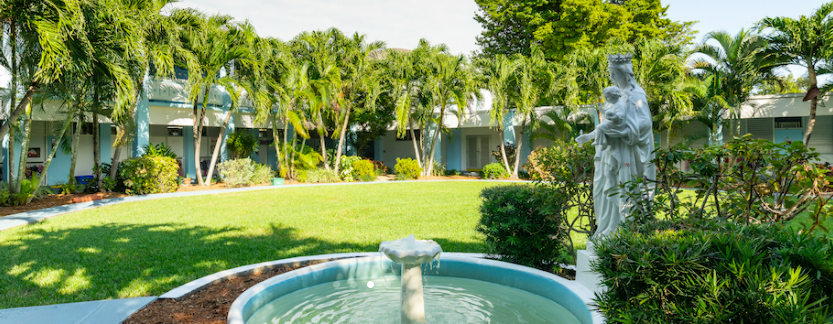
The Basilica School of St. Mary Star of the Sea, serving 154 students in prekindergarten through Grade 8, will expand to serve high school students for the 2022-23 school year.
Jim Rigg likes to call the latest Catholic school enrollment trends “the Great Registration.”
Modifying the catchphrase “the Great Resignation” about the large numbers of workers leaving their employers, Rigg, who serves as superintendent of schools for the Archdiocese of Miami, was describing the increases in the number of students enrolling in Catholic schools, reversing years of declines nationwide.
The Miami archdiocese saw one of the largest percentage increases in Catholic school students among the nation’s largest dioceses. With 34,892 students this year, that represents 5.4% increase over last year.
Now, the trend can continue, much to the delight of parents in the Lower Keys who say they don’t want their children’s access to a Catholic education to end after middle school. The Basilica School of Saint Mary Star of the Sea, the only Catholic school in Key West, has announced plans to add a high school to its pre-K through grade 8 program.
It’s a return of sorts. Mary Immaculate High School, which opened in 1886 and merged with several other Catholic high schools in the 1960s, closed in 1986 due to declining enrollment, leaving the Basilica School, which stopped offering instruction after middle school, the area’s only Catholic school for the past 40 years.
Principal Robert Wright said the expansion was driven by enrollment that had increased 100% between 2013 and 2019.
“We have been at capacity with a waiting list since then,” he said.
During the most recent accreditation process, Basilica School parents were asked what improvements or enhancements they needed for the well-being of their child. The overwhelming response was for the addition of grades 9 through 12.
Archbishop Thomas Wenski responded by giving administrators permission to begin a feasibility study. After determining the school’s enrollment model, facilities, and financial position, Wenski authorized the expansion on March 3.
The school is expected to open for grades 9 and 10 for the 2023-24 academic year in the school’s 17,500-square-foot auditorium, which will be renovated with funds from a capital campaign that will soon be launched.
Wright said the fully accredited high school will offer students dual enrolment and advanced placement courses, the latest technology, and popular extracurricular activities, clubs, and sports programs.
“With an anticipated/expected enrollment of approximately 180 students by year three, the vision is to keep classes small, and to do small well,” Wright told the Keys Weekly.
“As valued in Catholic tradition, our new Basilica High School will continue to provide academic excellence to our community’s adolescents, while encouraging intellectual curiosity and the pursuit of truth, goodness and beauty,” Wright said.
The Basilica School currently serves 154 students who attend on the state’s income-based tax credit scholarship or the Family Empowerment Scholarship. Twenty students attend using the Family Empowerment Scholarship for Students with Unique Abilities.
(Step Up For Students, which hosts this blog, manages these scholarship programs.)se
Rigg said he is thrilled that the Basilica School is expanding to include high school.
This will be the only Catholic high school in Monroe County, and I know it will provide a rigorous, faith-based education to the people of the Florida Keys,” Rigg said. “Much of this growth is fueled by the expansion of state scholarship programs, such as those supported by Step Up for Students. The future is bright for education throughout Florida.”
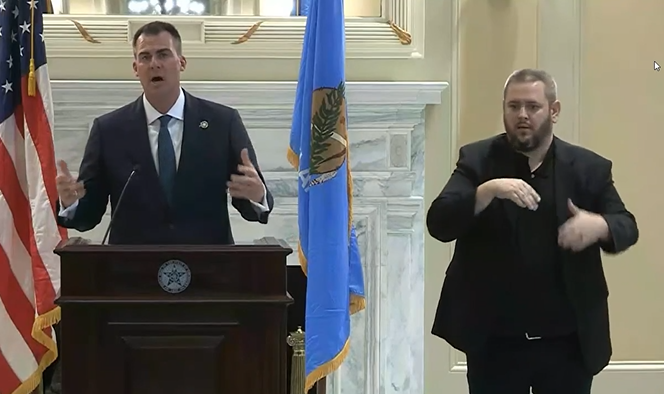
Oklahoma Gov. Kevin Stitt thanked Senate president pro tempore Greg Treat for his efforts to gain more school choice for families, adding that “it is deeply concerning” that so many of his colleagues voted against the proposed legislation.
Editor’s note: This article appeared Thursday on oklahoman.com.
A polarizing Oklahoma bill that would dedicate $128.5 million in taxpayer dollars for private school costs failed in a late-night vote on the Senate floor last week.
In a 24-22 vote, a majority of senators nixed Senate Bill 1647, called the Oklahoma Empowerment Act, effectively defeating the bill for this legislative session.
One of the most high-profile pieces of legislation this year, the bill stalled after two hours of debate and two more hours of waiting as Senate president pro tempore Greg Treat, the bill’s author, tried to flip a few Republican holdouts in a last-ditch effort to advance the measure.
Although the bill is dead, Treat told reporters Thursday he hopes to keep the concept alive in the coming weeks of negotiations.
“I don't know if I'll be successful this session or not,” Treat said. “The deck is stacked against me obviously right now. But the kids deserve it, and I'm going to use everything in my power to try to get it done.”
The defeat deals a blow to Gov. Kevin Stitt’s legislative agenda. The governor pledged to sign the bill and any others that would expand school choice.
To continue reading, click here.
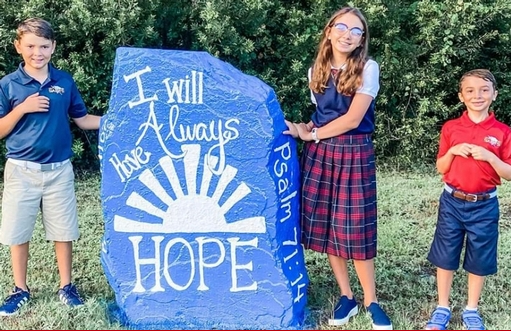
Nationally K-12 STEM certified Christian Academy of Myrtle Beach, whose mission is to develop young Christian leaders through partnering with parents and to fuse Christian faith with academics, athletics, and fine arts, is one of 419 private schools in South Carolina. Head of school Katherine Cannon says while the school offers tuition assistance, the education savings account program would expand eligibility to more low-income families.
Horse racing, teacher raises, and a budget flush with cash. South Carolina lawmakers have plenty to debate before the legislative session ends June 15. But parents hope legislators don’t bolt for home before finally offering K-12 students more quality learning options.
Recently, the S.C. House of Representatives flew through budget negotiations, completing the process in a matter of hours. They approved a proposal containing billions in new federal taxpayer spending, along with provisions that boost teacher pay and give bonuses to state employees.
Lawmakers in both chambers are also considering legalizing gambling on horse racing as yet another way to increase state revenue. But while they debate the merits of racetrack betting, South Carolina parents and K-12 students are left sitting in the stands, waiting for state officials to wager that families know what is best for a child’s future.
Lawmakers are considering proposals to allow students to use education savings accounts to choose how and where they learn. As readers of reimaginED will know, some residents in neighboring North Carolina can already use their child’s portion of state education spending to meet a child’s unique learning needs. Those funds, deposited in individual accounts, may be used to purchase textbooks, hire a personal tutor, find an education therapist, pay private school tuition, and more.
The education savings accounts allow families in North Carolina (and 10 other states, including Florida, with similar account options) to customize their child’s learning experience. Parents and students can choose a new school and get help with challenging coursework and pay for textbooks and learning materials to challenge their student or help them catch up to their peers.
While S.C. representatives finished the budget in record time this year, they have continued to drag their feet in bringing education savings accounts to state families. Since 2017, lawmakers in North Carolina, Kentucky, Missouri, New Hampshire, West Virginia, and Indiana have managed to enact the accounts for their constituents. Florida, Tennessee, Mississippi, and Arizona lawmakers had already made the accounts available to thousands of students.
Despite all this progress elsewhere, movement in the South Carolina legislature has stalled over the years.
Currently, South Carolina lawmakers are considering two proposals—one in each chamber—that would give families and their students quality education opportunities similar to the accounts in these other states.
The proposal before state senators, in particular, would give students a range of choices, like the accounts described in North Carolina, Florida, and elsewhere. The Senate proposal would let students choose a new school and/or a set of services, including personal tutors and computer hardware to help with online course delivery. Lawmakers in both the House and Senate have the chance again to complete what can only be considered unfinished business for state families.
South Carolina students need help now. In one of the state’s largest cities, Greenville, the number of students earning failing grades reportedly tripled in 2020. Student achievement among those attending schools along the I-95 corridor--the subject of much discussion in recent years due to litigation over South Carolina education spending—still trail statewide averages, according to Palmetto Promise Institute research. Statewide, there is a 30-point difference between white students and black students in 4th grade reading.
The need for action, for viable education options, is urgent.
State families should not have to wait another year to see how many other states create account options for K-12 students before South Carolina acts. Lawmakers showed they can move quickly to formulate a budget. They should apply the same urgency to helping students.
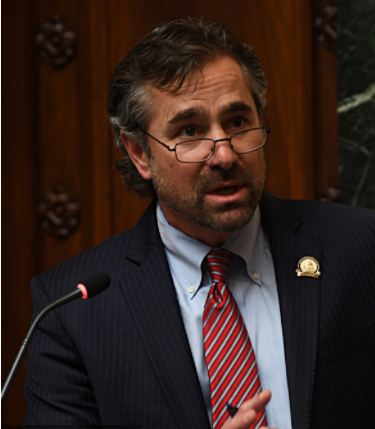
Kentucky House Majority Whip Chad McCoy presented House Bill 9, which would make changes to the appeal process if a charter school application is denied by a local school board. Kentucky's Republican-led legislature authorized charter schools in 2017 but none have been created because lawmakers did not provide a permanent funding mechanism.
Editor’s note: This article appeared Tuesday in U.S. News & World Report
After years of inaction, charter schools would gain a foothold in Kentucky and be supplied with a permanent funding stream under a bill that won passage Tuesday in the state House.
The bill calling for initial charter school openings cleared the House on a 51-46 vote after a nearly three-hour debate, on the same day the measure barely emerged from a House committee.
Twenty-two Republican lawmakers aligned with Democrats to oppose the proposal, but the measure mustered enough support to advance to the Senate. Republicans have supermajorities in both chambers. Only a handful of days are left to pass the bill in time to ensure lawmakers could take up a promised veto by Democratic Gov. Andy Beshear.
The bill had a bumpy journey through the House, reflecting the hot-button status of charter schools in the Bluegrass State. The measure was removed from one House committee and reassigned to the Education Committee, which underwent a couple of last-minute membership changes before the crucial vote that helped push the bill through committee.
Opponents put up a spirited fight in the full House. During the long debate, Democratic Rep. Angie Hatton said: “You can cut the tension in this room with a knife today.”
Kentucky's Republican-led legislature authorized charter schools in 2017 but none have been created because lawmakers did not provide a permanent funding mechanism. The new measure would set up a long-term funding method for charter schools. Public charters, like traditional public schools, would receive a mix of local and state tax support.
To continue reading, click here.
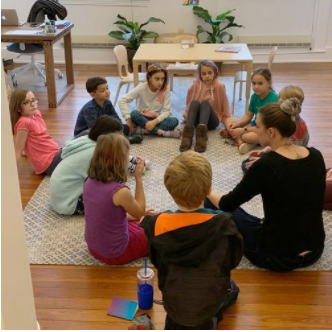
Acton Academy of Washington, D.C., is a Montessori preschool and student-centered elementary and middle school and one of 72 private schools serving close to 15,000 students in the District of Columbia.
Sixty-six percent of voters support reauthorization of one of the founding programs of the school choice movement according to a new poll released by a Maryland-based custom research firm.
Beck Research reports that when respondents were asked Feb. 23-27 via wireless or landline phones or text-to-web, “Based on what you know, would you say that you favor or oppose the D.C. Opportunity Scholarship Program,” only 22% said they opposed the program, while 12% were undecided.
When asked the broader question, “Generally speaking, would you favor or oppose school vouchers that allow lower-income families to send their child to any school they deem best?” 65% of respondents said they supported vouchers and 31% said they were opposed.
Tommy Schultz, CEO of the American Federation for Children, said the organization was not surprised at the poll results.
“Despite what detractors may suggest, there is strong bipartisan support for school choice and the Opportunity Scholarship Program in D.C. and Congress should listen and support this program with increased funding to meet demand and a permanent authorization,” Schultz said.
The DC Opportunity Scholarship Program, launched with bipartisan support in 2003, allows lower-income families to receive funding for their children to attend a participating District of Columbia private school. The only federally funded voucher program in the country, the program was enacted by Congress as part of a three-sector approach to improve educational outcomes in the District of Columbia.
According to the DC Opportunity Scholarship-Serving Our Children website, which provides information about the scholarship, nearly 40,000 District of Columbia children have applied for the Opportunity Scholarship since 2004-05 and more than 10,000 students have been awarded.
Currently, 95% of participating children are African American and Hispanic from families with an average annual income of less than $27,000.
 Editor’s note: This article appeared Tuesday on wdtv.com.
State Treasurer Riley Moore announced on Tuesday his office has awarded more than 1,000 West Virginia students the Hope Scholarship education savings account for the upcoming 2022-2023 school year.
“Since launching this program on March 1, we have seen an overwhelming response from the public with more than 1,000 students approved within the first three weeks to receive these funds,” Moore said.
“We began working to implement this program immediately after the Legislature passed the Hope Scholarship Act last year, and I’m proud that we’ve been able to launch it seamlessly while meeting the strong public demand.”
The application period for the upcoming 2022-2023 school year opened March 1 and will remain open through May 15. As of Monday, March 21, Treasurer Moore’s Office had awarded the Hope Scholarship to 1,043 West Virginia students.
To continue reading, click here.
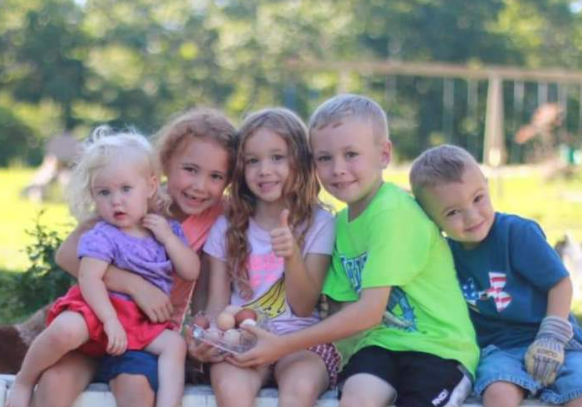
The Slee children of Missouri, ages 3 through 10
Editor’s note: This feature story appeared Tuesday on The Lion, a publication of the Herzog Foundation.
Shannon Slee may not have known she would end up being a homeschooling, homesteading mom of five children – but she did know that her family someday would look different from the cultural norm.
“When it came time to start formally educating my children, I wanted the best of all worlds: the ability to speak into their lives spiritually, emotionally and intellectually according to each of their unique gifts and challenges, as well as to be able to oversee the influences that they are exposed to every day.
“Ultimately, I decided that no one cares about the wellbeing of my children more than I do, and that makes me the most qualified to pour into their lives through their education.”
Shannon and her husband, Jordan, live on 39 acres in rural Ewing, Missouri, in a home they designed and built themselves. Jordan owns and operates his own construction company. Besides the house project, the couple has designed and built a workshop, chicken coop, children’s playhouse and an enclosed deer stand.
The Slees have five children ages 3-10. The family has embraced homeschooling even though both parents grew up in the traditional public school system. For Shannon, homeschooling started as an exploratory area of interest and has blossomed into a lifelong passion.
Homeschooling may not be easy, but she says the family has no regrets: “Here we are, still homeschooling six years later, and wouldn’t give it up for anything.”
To continue reading, click here.
 The global pandemic may have caused a decline in graduation rates among Florida’s scholarship students, according to a recently released report from Step Up For Students. Graduation rates for seniors on the Florida Tax Credit Scholarship fell 3.2 points during the first pandemic school year.
In school year 2020-21, 4,344 tax-credit scholarship students entered their senior year at 586 private schools. Among those seniors 3,744, or 91.7%, graduated. Though still a respectable graduation rate, it is the lowest reported since the scholarship funding organization Step Up For Students, which administers state scholarships, began tracking graduation rates in 2015.
Step Up For Students uses a senior graduation method which counts the percentage of students who began the year as a senior and graduated. Graduates are defined as students who received a standard diploma, special education diploma, or certificate by the end of the school year.
Students who dropped out or did not complete 12th grade are counted as not graduating. This graduation rate cannot be used to compare with public school graduation rates, which use a four-year cohort method.
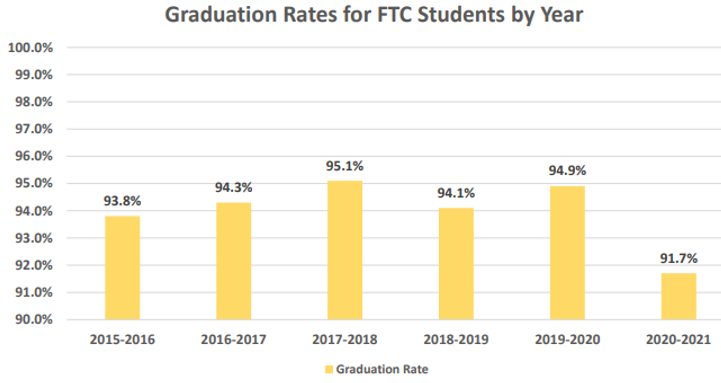
Graduation rates among scholarship students varied by race, income, and religious denomination of school where the student attended.
Catholic schools saw the most success, graduating 99.3% of seniors, while non-denominational schools graduated 90.2% of students.
Black students had the lowest graduation rate at 85.4%, compared to 95.5% of white students and 98% of Asian students.
Students eligible for the free or reduced-price lunch program, a proxy for the lowest-income students, graduated at a rate of 90.4% compared to 95.3% of students who were not eligible for the program.
For the 2020-21 school year, Step Up For Students awarded tax-credit scholarships to 103,985 students who attended 1,931 private schools across the state. A total of $645.6 million in scholarships was awarded, with the average scholarship worth $6,646.
 On this episode, Tuthill talks with Marty Leuken, co-author of a new study on the spending habits of families that use Florida’s education savings account program for students with unique abilities.
Leuken’s research shows that the longer families participate in the program, the greater they diversify their spending on items such as curriculum, specialized services, and tutoring. Leuken and Tuthill also discuss another report finding: the benefit of ESAs on rural communities, and the fact that families in those communities are more likely to use their funding in flexible ways than families in urban areas.
"A lot of rural legislators are saying they oppose ESAs because they do not think rural families will benefit. And this research shows the opposite: In rural communities, there's a tremendous appetite to diversify and customize education, and ESA funds allow those families to do that ... There's a narrative going on around the country that's inconsistent with the data."
EPISODE DETAILS:

Two of Juliette and Allen Harrell’s children attend private school thanks to the Family Empowerment Scholarship Economic Options program.
Editor’s note: You can listen to a podcast reimaginED Senior Writer Lisa Buie recorded with Juliette Harrell at https://nextstepsblog.org/2021/09/podcasted-formerly-homeless-family-finds-a-lifeline-in-education-choice-scholarships/.
Juliette Harrell was 17 when she told her mom she was pregnant. She was promptly kicked out of her house.
A single mother herself, Juliette’s mom painted a bitter picture of Juliette’s new world.
“My mom told me my life was over. You got to take care of your kids. You can’t do anything,” she said.
Juliette agreed with only one part: She would take care of her baby. But she felt her life was not over, and she was determined to realize her dreams of completing her education, starting a business, owning a home, and raising a family in a nuclear household.
Now, 10 years after Aiden was born, Juliette has realized all but one of those goals. Her childcare business is still in the planning stages. But it will operate out of the home Juliette and her husband, Allen, own at the end of a cul de sac in Orlando, where they live with Aiden and his brothers Amar’e, 6, and Asht’n, 2.
The path to the present wasn’t easy for the Harrells, who found themselves homeless at one point. They remained on course through an unwavering belief in themselves and an education choice scholarship. The scholarship relieved some of the financial burden and allowed the Harrells to exercise their right to school choice and send Aiden and Amar’e to a private schools located within walking distance of their home.
To continue reading, click here.

