 Editor’s note: This commentary from Patricia Levesque, chief executive officer for ExcelinEd, appeared recently on the ExcelinEd website.
In the span of just a few years, more than a dozen states have gone from nibbling at the edges of school choice to a full-throated embrace of universal education scholarship accounts or targeted ESA programs. These life-changing opportunities offer families the ability to customize a child’s education in ways we policy wonks could only dream of when the parental choice movement first began to take shape decades ago.
With unencumbered choice policy sweeping the nation, there’s no turning back: Families who have access to K-12 options will not have to accept a school that’s assigned to them based on where they live.
For those new to the most flexible form of school choice: Universal ESAs empower parents to pay for myriad educational expenses, including tuition, textbooks, therapies, exam fees, technology and other educational materials.
Universal choice means students can attend a private school, supplement their education with tutoring or technology, participate in a home education program or enroll in public school part-time to access their courses of choice. Unlike traditional voucher programs—which historically were designed to serve low-income families, students with special needs or families with children in failing schools—universal choice programs, including ESAs, are available to all families, regardless of income or school district.
But as we know from states like Florida, Arizona and Indiana, where public and private school choice have been the law of the land for some time, passing a program is just the beginning. I was pleased to recently join advocates from those states for a podcast exploring what comes next for states as they set up their educational choice programs.
The answer is simple: Implementation is everything, and implementation is so much more than setting up an initial framework.
For parents to use ESAs effectively, they must first know that the program exists. There also must be a clear and streamlined process for setting up the scholarship accounts, a user-friendly approach for managing funds and a comprehensive list of eligible schools and providers from which parents can choose.
And beyond these basics, lawmakers and public officials in states that have universal ESAs will likely need to tackle several big policy issues as their implementation of universal school choice moves forward:
SUFFICIENT FUNDING FOR ALL ESA STUDENTS: Is there sufficient funding for the program, especially when it comes to funding that follows low-income students, students with special needs and other at-risk students?
FUNDING AT ALL LEVELS OF GOVERNMENT: Is local funding, not just state funding, following the student? States may need to make up for the local share or require local funds to follow the student to make that student financially whole.
TRANSPORTATION: Are parents able to access the educational options that work best for their children? The physical act of getting to a provider can be an enormous barrier for many families.
PRIVATE SCHOOL SUPPLY: We know that parent demand is growing for private and nontraditional schooling, but in many states the supply side is not keeping up. States might need to consider some supports similar to those created in the charter school space, such as revolving loan funds for school construction, low-interest state-supported financing and access to unused public school facilities.
LOCAL INTERFERENCE: Whenever choice expands, those who wish to maintain the status quo react. Opponents are finding less success with traditional legal challenges lately, as courts continue to find in favor of school choice programs. So, choice opponents are getting creative and turning to the local level, where interference can be less obvious, such as misuse or modification of zoning policy or health code provisions to prevent providers from serving families. States need to be on the lookout for attempts to thwart choice using local rules that were never intended to apply to K-12 education.
NAVIGATING CHOICE: States like Florida are thinking ahead to provide parents, especially low-income families, with navigation services to help them figure out how a program works so they can obtain the outcomes they seek for their children.
The passage of universal ESA programs across the nation means millions more students will be able to access customized learning options. However, in order for these programs to be as effective as possible, policymakers must continue to ensure seamless and smooth implementation that centers on parents, educators and service providers and allows for continued refinement as the program matures.
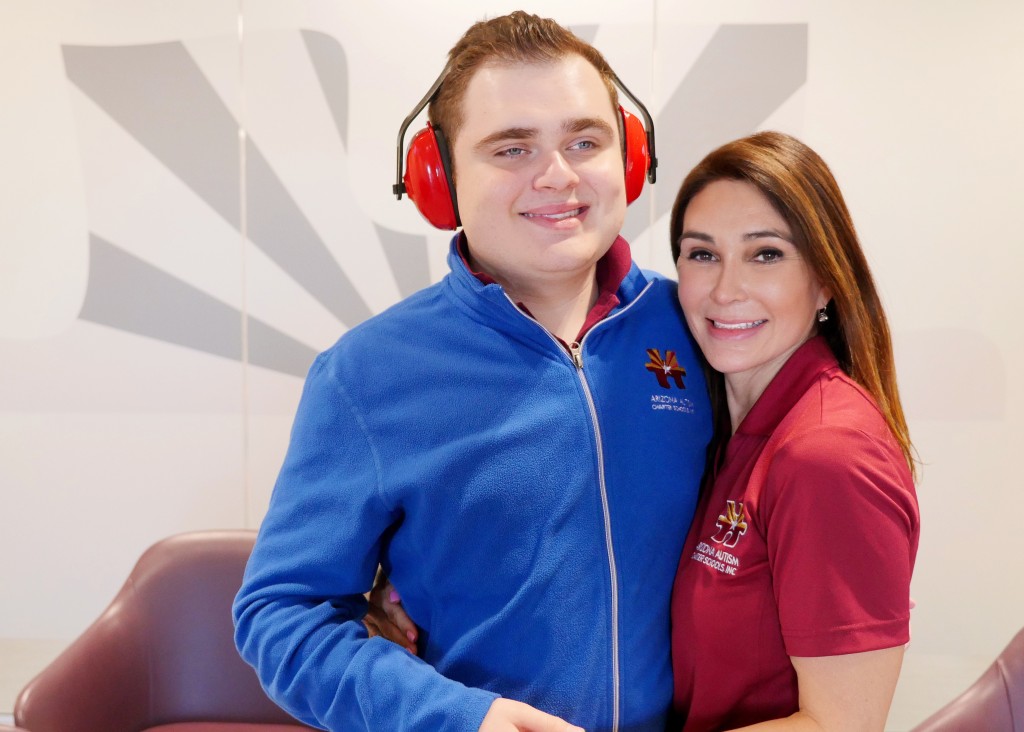
Diana Diaz-Harrison and her son, Sammy
On this episode, senior writer Lisa Buie talks with Diana Diaz-Harrison, a former teacher, television journalist and founder at Arizona Autism Charter School in Phoenix, the Southwest region’s only tuition-free school specializing in best practices for students who are on the autism spectrum.
Diaz-Harrison started the school in 2014 after her son, Sammy, who was diagnosed with autism at age 2, began attending kindergarten. The arrangement wasn’t working well for Sammy and others who have ASD, she explains, noting that while federal law requires that exceptional students receive “free and appropriate” education in district schools, it’s no guarantee it will be the best education.
“I think that the stigma that is associated with an autism diagnosis, it's kind of fading … people don't think of it as a death sentence anymore. We are offering so much hope, along with other agencies in the community, that children with autism can learn. They can thrive.”
Sammy attended a private program for a couple of years, and while that was a better environment, the costs were not sustainable. Private programs can cost $40,000 to $50,000 per year.
So, she and other parents opened Arizona Autism Center with 90 students with the mission of using best practices such as applied behavior analysis. The school now serves 700 students on four campuses, including a high school and a virtual program. Another high school will open in Tucson this fall.
The founders’ efforts were rewarded last year when the school took the top $1 million award in the Yass Prize competition, which seeks to recognize and aid education programs that are “sustainable, transformational, outstanding and permissionless.”
In seeking to replicate its model, the school partnered with South Florida Autism Charter School in Miami-Dade County to start a National Autism Charter School Accelerator with the goal of getting at least one autism-focused charter in every state.
EPISODE DETAILS:
RELEVANT LINKS:
South Florida Autism Charter School
Autism and Applied Behavior Analysis
CDC Community Report on Autism
 Editor’s note: This commentary appeared last week on the website of the Independent Women’s Forum, iwf.org.
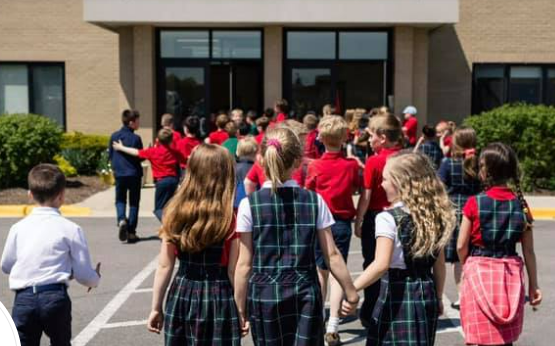
This week, the House Subcommittee on Early Childhood, Elementary, and Secondary Education held its first hearing in the 118th Congress on “School Choice: Expanding Educational Freedom for All.”
In his opening remarks, Subcommittee Chair Aaron Bean (FL) expressed optimism that school choice could be “the topic that can bring our body together.” He went on to say, “If I’m wrong, or [the ranking member is] wrong, let’s try to win each other over with the facts and debate as we go forward.”
Unfortunately, ranking member Suzanne Bonamici’s subsequent remarks showed that Chair Bean’s hope was unrealized: “The majority has decided to use our first subcommittee hearing of the 118th Congress not to focus on how we can strengthen public education, but rather to promote school privatization programs disguised as school choice.”
Bonamici supports “families having a voice in where and how they educate their children,” but she believes that vouchers, tax credits, scholarships, education savings accounts, and charter schools are “antithetical” to the goal of “improvement and advancement of a public education that benefits all students.”
The hearing consisted of a member panel and a witness panel. The member panel featured Rep. Warren Davidson (OH-08), Rep. Mark Pocan (WI-02), and Rep. Adrian Smith (NE-03).
Rep. Davidson praised H.R. 5, also known as the Parents Bill of Rights Act, passed by the House. He commented on his failed amendment to the bill that, if adopted, would have required local school districts that receive federal funds under Title I and Title II to hold an open enrollment period for children inside and outside of that school district.
Overall, he encouraged legislators to fund students through parents rather than schools because every child’s needs are different.
The “second all-star panel”—in the words of Chair Bean—featured the Hon. Luke Messer, former member of Congress and president of the Invest in Education Foundation; Derek Black, law professor and Ernest F. Hollings Chair in Constitutional Law at the University of South Carolina; Denisha Allen, senior fellow at the American Federation for Children; and Lindsey Burke, director of the Center for Education Policy at the Heritage Foundation.
To continue reading, click here.
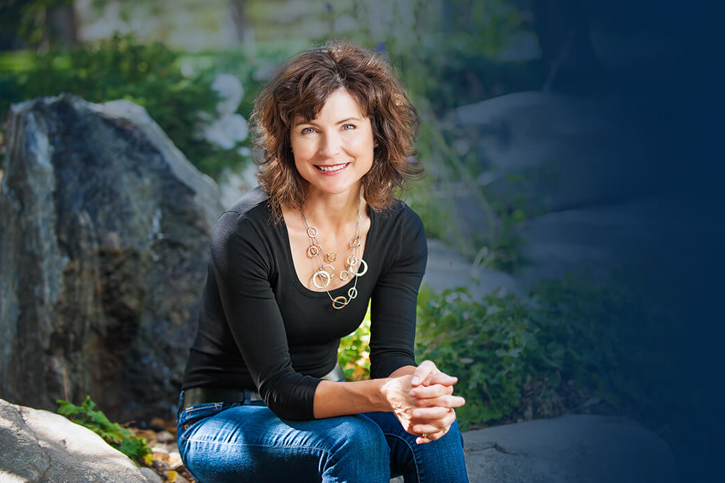
Nevada Sen. Heidi Seevers Gansert introduced SB 220, which would have expanded the state’s Opportunity Scholarship program and increased eligibility for 400% of the federal poverty line, children with disabilities and children o first responders.
This commentary from Valeria Gurr, a senior fellow for the American Federation for Children and a reimaginED guest blogger, appeared last week on thenevadaindependent.com.
During his State of the State address, Nevada Gov. Joe Lombardo pledged to increase funding and eligibility for Opportunity Scholarships, expand charter schools, create the Office of School Choice, and increase funding for public schools at a record number.
Legislators such as Sen. Heidi Seevers Gansert went to work introducing SB220, which would expand the Opportunity Scholarship program to serve approximately 6,000 students who cannot afford another educational option to attend schools of their choice if their current assigned public school is not working for them.
SB220 would also increase eligibility for 400% of the federal poverty line, children with disabilities and children of first responders. However, because Democrats in Nevada have control of both chambers and are vehemently against educational choice, SB220 was never set to get a hearing.
As a matter of fact, Democrats in the Silver State have continuously denied the Opportunity Scholarships a hearing and use education as a political pawn incessantly pointing at school choice as a way to defund public education — a talking point that could not be further from the truth.
Giving families 5% of options won’t defund public schools. Instead, it will bring opportunities to those who need them.
Enter Lombardo, a leader not afraid to go against the grain and willing to expend political capital for the children instead of accepting the status quo.
To continue reading, click here.

Texas Christian School in Houston, one of about 900 accredited private schools in Texas serving approximately 250,000 students, was established as a college preparatory school with an advanced curriculum to challenge eager minds based on a character development program.
Editor’s note: This article appeared Tuesday on Texas’ spectrumlocalnews.com.
With just about six weeks to go in the Texas legislative session, tensions are running high, and the gloves are coming off for two big issues dominating debate at the Capitol.
The House and Senate are split over how best to provide property tax relief to Texans and whether the state should use public money to let parents send their kids to private school.
During an interview on Capital Tonight Tuesday, Lt. Gov. Dan Patrick threatened to force a special session over the issues.
“I can’t call a special session, but I can create one by not passing a key bill that has to pass,” he said when asked about school vouchers. “If we don’t get some major priorities that people want us to pass because [the House] acted very slowly in the session, then I think we ought to finish the job. I’ll leave it at that.”
Only Gov. Greg Abbott can call a special session. But Abbott’s spent the past several months touring the state to build support for a voucher-like proposal.
The Senate passed legislation that would establish an education savings account program that would give parents up to $8,000 per student each year. The measure also makes an appeal to rural Republican lawmakers who have been reluctant to back vouchers since public schools are often the backbone of their community.
The Senate plan includes a provision for districts with fewer than 20,000 students to receive $10,000 each year for five years for every child who enrolls in the savings account program and leaves their district.
But the same day the Senate passed that measure, the House took a key vote during its budget debate to ban state funding for “school vouchers or other similar programs.” Still, a House committee has since considered proposals on the subject.
“I’m optimistic we’ll get a bill through. We’ll see what they send us,” Patrick said.
To continue reading, click here.
 Editor’s note: This commentary from Michael J. Petrilli, president of the Thomas B. Fordham Institute and a research fellow at Stanford University’s Hoover Institution, appeared Thursday on the Fordham Institute’s website.
Let me state at the outset that universal education savings accounts are not my cup of tea. I don’t love handing over taxpayer money to rich people who don’t need it. Like my colleague Chester Finn, I’m skeptical that states will exert effective quality control over the schools and vendors that participate in such programs.
I suspect that “hybrid homeschooling” and the like will remain a niche sector in American education, given how much work it creates for us (already overworked) parents. And I doubt the lowball amounts states are spending on these available-for-everyone ESAs will be enough to create a robust supply of high-quality options in the disadvantaged communities that need them most (and which I worry most about).
In my dream world, we’d instead take the school choice movement’s mojo and focus it on expanding high quality charter schools, bringing religious charter schools into the mix, and creating enrichment savings accounts with new money to help low-income and working-class families access afterschool and weekend opportunities for their kids, including intensive tutoring (along the lines of this federally-funded Ohio initiative).
Yet I’m still rooting for the universal ESA programs that are sweeping the nation. And that’s because I believe the odds are good that these initiatives will lead traditional public schools to improve.
If that logic sounds off, it’s because the “public school argument” is usually made to oppose such programs. The worry—and this is nothing new—is that such policies will enable the most advantaged students with the most clued-in parents to escape public schools, taking their tax dollars with them and leaving a more disadvantaged population of students behind in schools with fewer resources (financial and otherwise) than ever.
All of us should take such concerns seriously. Education is not a simple commodity, like a widget traded in the free market. What makes it complex, first and foremost, is the importance of students’ peers. Scholars have long found that “peer effects” matter—that kids learn more when certain types of students are in their classrooms and others are not.
We all understand this intuitively, too. It’s why we worry about segregation, celebrate “mainstreaming” students with disabilities whenever possible, and debate endlessly about various forms of grouping and tracking in our schools.
To continue reading, click here.
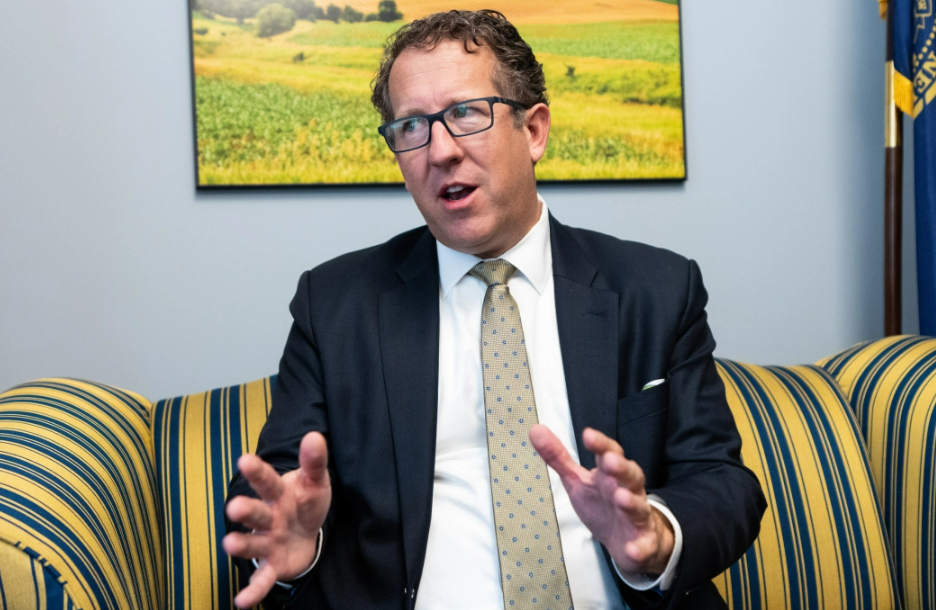
Rep. Adrian Smith, R-Nebraska, is a staunch supporter of the Educational Choice for Children Act, which would establish a tax credit scholarship program for students whose families make under 300% of their state’s median income.
Editor’s note: This article appeared Tuesday on edweek.org.
Republicans in Congress are pushing for school choice policies that allow parents to direct public funds to private schools, as education savings accounts, vouchers, and tax-credit scholarships gain momentum in GOP-dominated state legislatures.
Republican lawmakers in the U.S. House advocated for a slate of school choice policies throughout a two-hour Early Childhood, Elementary, and Secondary Education subcommittee hearing titled “School Choice: Expanding Educational Freedom For All” on April 18.
The push for expanded school choice goes hand in hand with a parallel Republican push for state and federal “parental rights” policies that allow parents a greater say in school curriculum, school library book selections, and more.
One of the policies touted at the hearing, the Educational Choice for Children Act, which Sen. Bill Cassidy, R-La., reintroduced in January alongside Reps. Adrian Smith, R-Neb., and Burgess Owens, R-Utah, would establish a tax credit scholarship program for students whose families make under 300 percent of their state’s median income.
The federal government would set aside $10 billion annually to fund tax credits for charitable donations to nonprofits that provide scholarships to K-12 students. That funding level would make it one of the largest federal education programs, behind Title I at $18.4 billion and special education at $15.5 billion.
Families could use the money to pay for private school tuition and tutoring programs, Smith said during the hearing.
“Parental involvement leads to better outcomes for students,” Smith said. “As legislators, we have a responsibility to encourage more parental involvement in education, not less. School choice is one way to do that.”
To continue reading, click here.
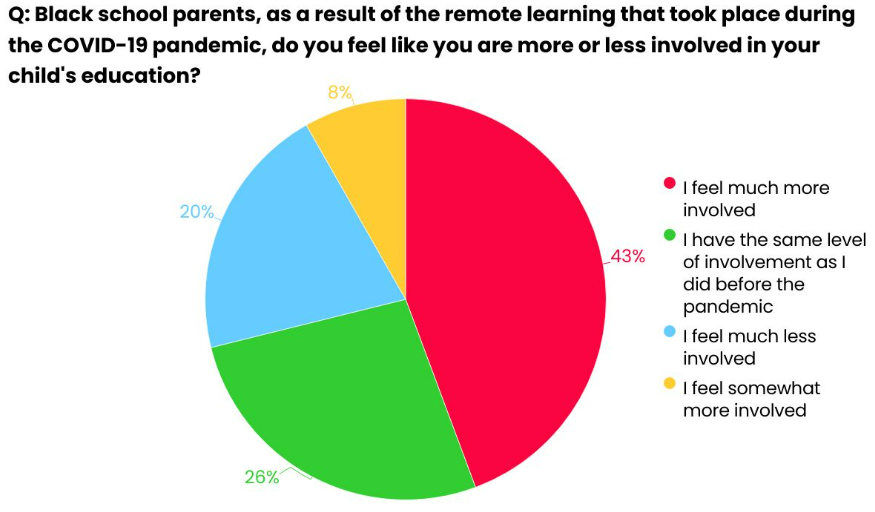 Editor’s note: This analysis appeared Monday on the74million.org.
Black parents say they play a much more active role in their children’s education than they did before the pandemic, according to a new poll released this month. Large majorities look favorably on policies like private school vouchers and education savings accounts, and comparatively few want the K-12 experience to remain the same.
The results come from a survey of African American parents of school-aged children conducted by the research and polling company Morning Consult. Its findings, while capturing only a moment in time, may reflect educational preferences that have shifted significantly away from traditional public schools in the COVID era.
Morning Consult’s survey was administered to roughly 1,300 respondents across January and February on behalf of EdChoice, an Indianapolis-based advocacy group that backs school choice. During the pandemic, the organization has maintained tracking polls of parents and teachers on general perceptions of K–12 education. Black adults, including parents, have been included both in those ongoing efforts and in separate surveys as districts adjusted to the demands of remote instruction and virus mitigation.
Overall, 57% of respondents said they supported education savings accounts — a financial vehicle that offers families money to spend on educational costs of their choosing — even without being provided a description of their function. Even higher proportions supported school vouchers (62%), open enrollment of public schools (66%), and charter schools (68%).
Paul DiPerna, EdChoice’s vice president of research and innovation, said he found it notable that families’ attitudes toward such policies have remained “fairly stable” even as the circumstances surrounding schools have changed dramatically. In a similar poll conducted in the fall of 2021, for example, two-thirds of African American parents said that COVID had made them more open to the idea of homeschooling; 65% said they were supportive of homeschooling today.
“At the time [of the previous poll], the pandemic looked a lot different for parents and schools,” DiPerna said, invoking the Omicron wave that closed or severely disrupted schools in early 2022. “But some of these levels of support are still high for other modes of learning besides the traditional district school.”
To continue reading, click here.

Renaissance Classical Christian Academy in Fayetteville, North Carolina, is one of 845 private schools in the state serving more than 123,000 students. Renaissance Classical Christian’s curriculum, known as the Trivium, is known for helping children learn and grow with measurable results comprised of three phases: the grammar stage, teaching young children knowledge; the logic stage, teaching teens understanding; and the rhetoric stage, teaching young adults wisdom.
Editor’s note: This article appeared Monday on carolinajournal.com.
Republicans have introduced a bill this session that would create education savings accounts in North Carolina. Here is a quick primer on what ESAs are, what other states are doing on this issue, and what could be on tap here in the Tar Heel State.
What are ESAs?
Education savings accounts are government-funded accounts controlled by parents that can be used for approved education expenses. ESAs shouldn’t be confused with a Coverdale ESA or a 529 account, both of which allow parents to fund education accounts using their own after-tax dollars and allow the investment to grow for tax-free withdrawals if the funds are used to pay for approved education expenses.
ESAs are one of the most ambitious forms of school choice because they exemplify the belief that education dollars should follow the child, not just fund a system.
What other states are doing
Six states have passed a universal ESA to date — Arizona, Arkansas, Iowa, Utah, West Virginia, and Florida. Here is more detail on the specifics of each ESA plan.
Arizona: This state’s Empowerment Scholarship Accounts are available to all students and are valued at around $7,000 each. Arizona became the first state to pass a universal ESA in 2022.
Arkansas: The Children’s Education Freedom Accounts were signed into law in March. The accounts will be phased in over two years until eventually becoming universally available to all students. The value of each account is based on 90% of the prior fiscal year’s per pupil allotment, which for the most recent year is around $6,600.
Iowa: This state’s ESAs became a reality in January and will fully kick in for all students by the 2025-2026 school year. The value is tied to the state’s per pupil allotment for public school students — around $7,400 for the current fiscal year.
Utah: The Fits All Scholarship account are valued around $8,000 per year. Although they are available to all students, priority is given to families to lower-income families before wealthier families have access to an account.
West Virginia: The Hope Scholarship is worth less than what other states offer — around $4,300 for the 2022-2023 school year.
Florida: The Sunshine State became the most recent state to enact a universal ESA after Gov. Ron DeSantis signed a bill into law in late March. Each ESA is worth around $8,700 a year, making Florida not only the largest state to enact an ESA, but also the most generous in the amount provided.
Several other states are either poised to pass ESAs or are on the cusp of expanding special-needs ESAs to all students.
To continue reading, click here.
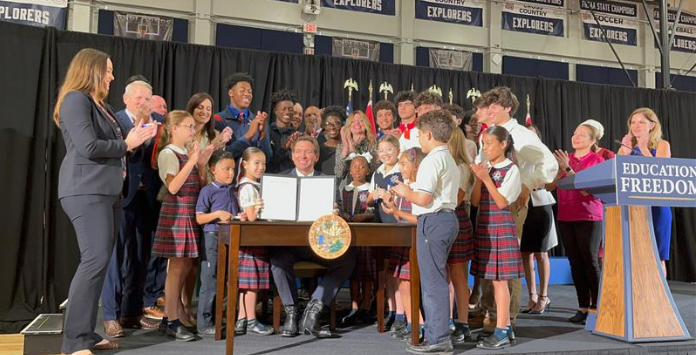
On this episode, reimaginED senior writer Lisa Buie talks with Doug Tuthill and Amy Graham of Step Up For Students, the nation’s largest K-12 education choice scholarship funding organization. Tuthill is president of Step Up, and Graham is vice president of policy, innovation and empowerment for the Florida-based organization. Step Up For Students administers most of the education choice scholarships in Florida and hosts this blog.
“The fantastic thing about (education savings accounts) is they're very flexible, and we're all about customization. And this whole ed choice movement is about giving families more flexibility to be able to customize an education for their child. And I think the ESA piece, as well as universal eligibility, are really game changers.” – Doug Tuthill, president, Step Up For Students
Tuthill offers an overview of the 40-year history of education choice in the Sunshine State and how district magnet schools gave rise to more options such as charter schools, virtual schools and scholarship programs that allowed parents to decide the best learning environment for their children. Tuthill also discusses the details of the newly signed law HB 1 and how the conversion of traditional scholarship to education savings accounts will give families even greater flexibility in customizing their children’s education. He also clears up misinformation about the expanded program regarding eligibility, costs and equal opportunity. Tuthill also talks about how HB 1 will open up opportunities for educators to start their own innovative programs, further expanding options for students.
Graham discusses regulatory accountability and guardrails built into the bill as well as a new personalized education plan classification for homeschool families who choose to use state funds to completely customize their child’s education. (The law exempts homeschool families who do not wish to accept state funds from certain accountability rules that apply to those in the personalized education program.)
Graham offers details on the new purchasing guide under development that will list pre-approved goods and services to make it easier for families to manage their funds. She also discusses how HB 1 will simplify the evaluation process for non-public school students to qualify for funding through the state’s education savings account program for students with unique abilities. That program also received expanded funding through HB 1 to eliminate a wait list.
Graham also outlines how HB 1 is intended to aid school districts by providing relief from some of their most burdensome regulations so district schools can be competitive options.
EPISODE DETAILS:
RELEVANT LINKS:
https://www.fldoe.org/schools/school-choice/k-12-scholarship-programs/fes/
https://www.stepupforstudents.org/

