 In the American film classic Jurassic Park, the villainous Dennis Nedry shuts down park security to steal cloned dinosaur embryos. While making his escape, he runs off the road and meets up with an escaped dinosaur.
 The dinosaur at first seems innocuous. Nedry attempts to order the dinosaur about as if it were a domesticated house pet by getting it to fetch a stick. The dinosaur ignores the stick and stares intently at Nedry, who claims to not have any food.
Nedry chose poorly.
His sad demise holds a lesson for us in the education policy business. The public-school system isn’t a trained poodle, nor is it ours to command. It isn’t stupid and it won’t go fetch the stick.
Over the last 50 years, education reformers keep trying to get the dinosaur to fetch the stick, and each time it ends … poorly. The system is marked by deep levels of inertia, regulatory capture, and elaborate public sector job security.
Your stick would be increased literacy and numeracy, civic knowledge, etc. It stares at you curiously as you make your demands. But it wants to max out dues revenue by increasing public school employment.
GAGHGHHHHH!
Growth in Education Staffing Has Far Outpaced Student Enrollment
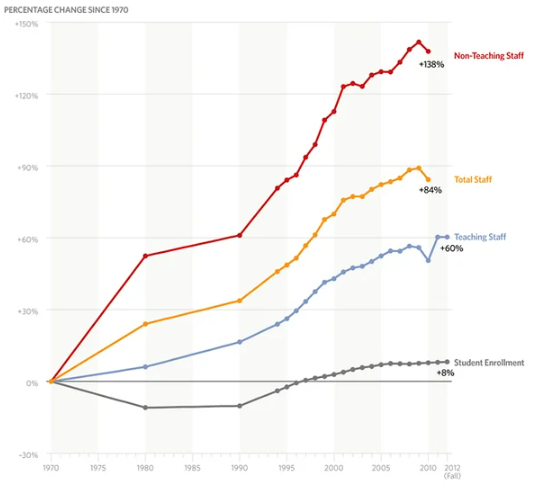
Since 1970, total student enrollment in public schools increased by 3.7 million, or 8%. During that same period, total education staffing rose by 2.8 million, or 84%. Most notable was the growth in non-teaching staff, which increased by 138%.
American parents would prefer to be at the table rather than on the menu. Dynamic schooling systems could accomplish this over time. The trick is to align the interests of adult service providers with those of families. Systems will need dignity and autonomy in order to realize this goal.
Approximately 5% (and counting!) of American students will have access to universal or nearly universal private school choice next fall. The state count currently stands at four: Arizona, Iowa, Utah and West Virginia.
The percentage could go substantially higher by the time the smoke of the 2023 legislative sessions clears. That’s good.
Dinosaurs have ruled the earth long enough.
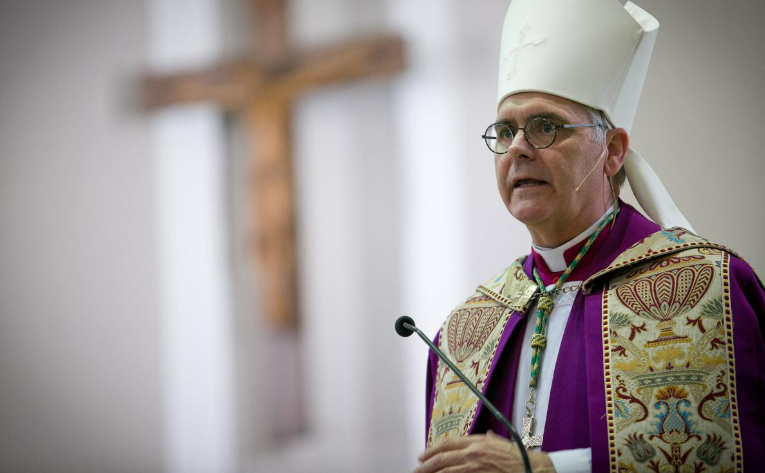
Oklahoma City Archbishop Paul S. Coakley wrote to the Statewide Virtual Charter School Board in November 2021, asking: “Before the Archdiocese undertakes the necessary time and expense to prepare a charter school application, I request confirmation that such an application will not be denied because of our religious affiliation or because of the integration of religion into our schools’ operations and programs.” Photo courtesy of Chris Porter
A meeting of an obscure state board set for Tuesday could swing open the door to religious charter schools nationwide.
Members of the Statewide Virtual Charter School Board in Oklahoma are expected to consider an application by the Archdiocese of Oklahoma City and the Diocese of Tulsa to open an online charter school that would include religious instruction among its offerings. If approved, it would be the nation’s first religious charter school.
So far, the two Catholic organizations in Oklahoma have been the only ones pursuing charter school authorization, said Shawn Peterson, president of Catholic Education Partners, a nonprofit that supports education choice efforts across the nation.
However, if Oklahoma gets authorization, which is not expected to be announced for a couple of months, look for other states to follow, he said.
“I think it may become a reality in Oklahoma in the short term, although I suspect that it will be challenged in court,” he said.
The two organizations began planning to apply for permission to open the virtual charter school in November 2021, when Archbishop Paul Coakley sent a seven-page letter to the board outlining the case for allowing a religious organization to open a charter school.
“The Archdiocese is enthusiastic about sponsoring a virtual charter school to improve educational opportunities for children and families in the state,” he wrote. “Yet we cannot ignore the reality that, regrettably, the discriminatory and unlawful exclusion of religious schools remains at least formally on the books of the state’s Charter School Act.”
Coakley cited the 2020 U.S. Supreme Court ruling in Espinoza v. Montana Department of Revenue that found that exclusion of religious schools from participating in a tax credit school choice scholarship program because of their religious status was unconstitutional. In his letter, Coakley also referenced Carson v. Makin, then a pending case that involved Maine’s ban on religious schools’ participation in “town tuitioning” programs that give private school scholarships to students in towns without public high schools.
Shortly after the archbishop’s letter was written, the U.S. Supreme Court agreed to hear Carson. On June 21, 2022, the justices ruled in favor of the plaintiffs, who had been barred from using the scholarship to send their daughter to a private Christian school.
The archbishop also references a case that the U.S. Supreme Court is considering hearing that involves a conservative North Carolina charter school whose dress code required that girls, whom it describes as “fragile vessels,” wear skirts to promote a traditional of “chivalry” and “respect.”
A group of parents who sued argues that the public school’s policy violated their daughters’ constitutional rights. In its defense, Charter Day School argues that charter schools were not “state actors” but essentially private schools, with only broad state oversight. In its ruling for the plaintiffs, the Fourth Circuit Court of Appeals, however, called charter schools public schools and therefore subject to state and federal anti-discrimination laws.
The high court has asked the solicitor general, the Biden administration’s top Supreme Court lawyer, for guidance before deciding whether to consider the case.
Meanwhile, Oklahoma Attorney General John O’Connor issued an opinion that says a state law that prohibits religious organizations from operating a public charter school likely violates the First Amendment of the U.S. Constitution and therefore “should not be enforced” because of rulings from the Oklahoma Supreme Court and U.S. Supreme Court.
In the Dec. 1 opinion, O’Connor cited three U.S. Supreme Court rulings: Trinity Lutheran v. Comer, in which the court ruled that religious organizations can’t be barred from participation in general benefit programs based on their status, as well as school cases Espinoza and Carson.
“As the U.S. Supreme Court emphasized in Carson, ‘a neutral benefit program in which public funds flow to religious organizations through the independent choices of private benefit recipients does not offend the Establishment Clause.’ … No student is forced to attend a charter school—it is one option among several for parents. … The Establishment Clause therefore provides no cover for a clear Free Exercise Clause violation here.”
The opinion drew praise from the American Federation for Children, a national education choice advocacy group.
“We applaud Attorney General John O’Connor’s opinion that underscores the right of families to access the best educational options for their kids,” Jennifer Carter, senior adviser for the American Federation for Children -- Oklahoma, said in a statement. “Today’s AG opinion is entirely in keeping with the spirit of what charter schools are meant to be: free public schools that offer tailored experiences to students in addition to those available in traditional public schools.”
However, not all education choice advocates share that view.
“Specifically, we take issue with the Attorney General’s assertion that charter schools are private entities/contractors that are not bound by the First Amendment’s Establishment Clause,” said Nina Rees, president and CEO of the National Alliance for Public Charter Schools. “The legal precedent cited in the Oklahoma Attorney General’s opinion (Trinity Lutheran, Espinoza, and Carson) are cases dealing exclusively with private schools, not charter schools, and we believe the precedent simply does not apply to public charter schools.”
Rees went on to say that her organization “believes there is no such thing as ‘private religious charter schools’… All charter schools are public schools. Public schools have never been able to, and cannot now, teach religion, require attendance to religious services or condition enrollment or hiring on religious beliefs. While a sectarian organization may be permitted to operate a charter school, that school must remain a nonsectarian, open enrollment, non-discriminatory public school.”
Other education choice advocates have raised questions the possible fallout if the religious charters are allowed.
Kentucky Christian Academy in Campbellsville, one of 352 private schools in the state serving more than 67,000 students, partners with parents to help children grow academically and spiritually as affordably as possible.
Editor’s note: This article appeared Thursday on messenger-inquirer.com.
Hoping to rebound from a recent legal setback, school-choice advocates mounted a more ambitious effort Wednesday to allow public dollars to support students who aren't attending public schools.
Advocates proposed a constitutional amendment that would allow state lawmakers to “provide for the educational costs of students” outside the public school system.
School-choice supporters want to place the proposal on the 2024 statewide ballot for voters to decide if it wins approval from the General Assembly.
The measure reignited a fierce policy battle over school choice in the GOP-trending Bluegrass State.
Last year, the Republican-dominated Legislature passed a measure that would have allowed a form of scholarship tax credits to start supporting private school tuition.
The bill — opposed by many public school advocates — was limited in scope to apply to several of the state’s most populated counties. The measure was struck down in December by the state's Supreme Court.
Now school-choice supporters are starting over with a more far-reaching effort. This time, the measure would apply statewide, unlike the restrictions of last year's measure, supporters said.
“So the Kentucky Supreme Court opinion, while a temporary setback, is actually going to be a really good thing for Kentucky students and Kentucky families going forward,” said Rep. Jason Nemes. "Because we’re going to have school choice in Kentucky, and it’s going to be mighty robust.”
To continue reading, click here.

Riverview Charter School in rural Beaufort County, South Carolina, is one of 298 schools in the state designated as rural fringe, which means they are 5 miles from an urban area of at least 50,000.
Editor’s note: This commentary from Jason Bedrick, a research fellow in the Center for Education Policy at the Heritage Foundation, and Matt Ladner, director of the Arizona Center for Student Opportunity and reimaginED executive editor, appeared Thursday on thetanddd.com.
“All children in South Carolina should have access to the highest quality education possible.” So declared Gov. Henry McMaster in recently proclaiming School Choice Week in South Carolina.
To that end, the South Carolina legislature is currently considering a proposal to give families greater freedom to choose learning environments that align with their values and meet their children’s individual learning needs.
The proposal would create education savings accounts (ESAs), letting families access about $6,000 in state funds to pay for private school tuition, tutoring, textbooks, online courses, special needs therapy and numerous other educational expenses. Ten states have already adopted ESA policies, including five in the last two years.
It’s not hard to understand why.
The pandemic — and especially district schools’ response to it — awakened parents to the need for education choice. Unnecessarily long school shutdowns, mask mandates and concerns over the politicization of the classroom have propelled public support for education choice policies, like ESAs, to all-time highs.
A recent poll of likely voters in South Carolina, conducted by the South Carolina Policy Council, found six in 10 supported the ESA proposal. Support among African American voters was even higher, at 68%.
But not everyone is on board. The teachers’ unions and their allies are doing everything they can to block families from accessing alternatives to the district school system.
In an effort to peel away votes from South Carolina legislators representing rural areas, ESA opponents are arguing that choice policies either don’t benefit rural areas or are harmful to rural district schools.
For example, state Sen. Nikki Setzer, D-Lexington, argues that students in rural areas can’t benefit from the ESA proposal because they supposedly lack private options. “What real option are we giving them? Are we gonna let Johnny in Bamberg drive to Richland County?” he asked recently, “Give me a break.”
Meanwhile, Carol Corbett Burris, executive director of the Network for Public Education, frets that education choice policies would supposedly create a “death spiral” for district schools, “especially in rural areas” because when “kids leave the system, they leave behind all kinds of stranded costs.”
These two claims — that there are no schooling options in rural areas and that rural schools are imperiled because so many students will leave for those options — are mutually exclusive. They cannot both be true, but they can both be — and indeed are — false.
To continue reading, click here.
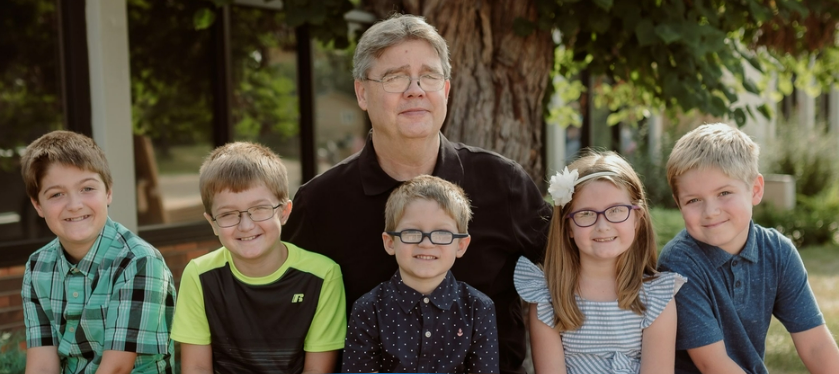
Isaac Newton Christian Academy in Cedar Rapids, Iowa, is one of 237 private schools in the state serving nearly 46,000 students. The school’s mission is to develop Christlike character and academic excellence through consistent and comprehensive incorporation of biblical principles.
Editor’s note: This commentary from Ellie Krasne, a visiting fellow at Independent Women’s Forum, appeared Sunday on desmoinesregister.com.
Gov. Kim Reynolds on Jan. 24 signed into law Iowa’s school choice bill, the Students First Act, expanding school choice for all of Iowa’s children and families.
As someone who grew up in rural Iowa and attended public elementary school, I was thrilled to see my home state make the right choice for Iowa’s students. I live far away now, but many of my friends and my extended family live in Iowa.
Prior to the bill passing, school choice debates heated up, and like with all policy debates, myths were being spread. Now that the bill passed and was signed into law, I want to debunk three harmful myths about Iowa’s Students First Act.
The first myth is that the bill “destroys rural schools” because rural areas often don’t have private schools, and rural schools could lose funding. First, this is in and of itself a contradiction. The rural areas either have private schools and risk losing students, or they have no private schools for students to attend.
Fortunately, under Iowa’s Students First Act, neither of these scenarios are likely. Iowa’s school choice bill leaves money for public schools. The bill proposes $7,630 of per-student funds for private schools, home schools, micro-schools, instructional materials, and online learning — many of which are accessible from all rural areas.
And estimates suggest that public schools will keep about $1,205 per pupil for each student who resides in their district but attends a private school. In sum, the Students First Act gives rural families more education freedom and ensures that rural schools will continue to receive taxpayer-funded financial support.
To continue reading, click here.
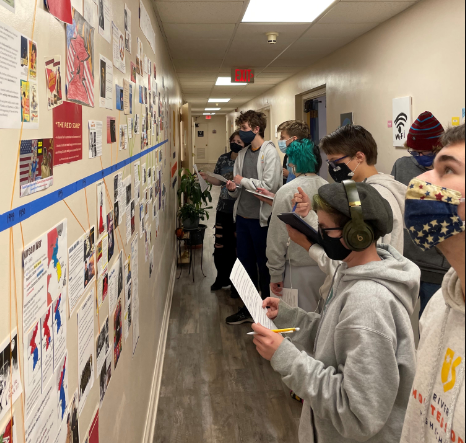 On this episode, senior writer Lisa Buie talks with Eric Oglesbee, director of the Founders Program for the Drexel Fund. A Founders Program alumni, Oglesbee co-founded River Montessori High School in South Bend, Indiana, during the COVID-19 pandemic.
Oglesbee describes the application process, which has multiple, rigorous rounds that are beneficial regardless of whether an applicant is accepted.
“Just getting out of the first round of the Founders Program, a person should really feel good about themselves. Just applying for the program I felt moved me forward in the process of thinking about my school because just the questions they asked made me go, ‘Oh, I need to think about that’…I feel like the Drexel Fund very seldom says ‘no’ to people; more often it’s ‘not yet’ and you can learn what to do next.”
Launched in 2015, the Drexel Fund is a national nonprofit venture philanthropy fund that seeds new school models and scales networks of existing schools with a track record of academic and operational excellence. It also strengthens the educational ecosystems needed to create market conditions necessary for new private schools serving low-income students to thrive.
The Founders Program provides a salary and support to entrepreneurs so they can start successful new schools.
The application deadline for this year’s Founders Program is Feb. 15. However, it will be extended to Feb. 22 for those attending an in-person informational session in Tampa on Feb. 16. . To register for it and other upcoming sessions, go here.
Episode Details:
Relevant links:
https://rivermontessorihs.org/
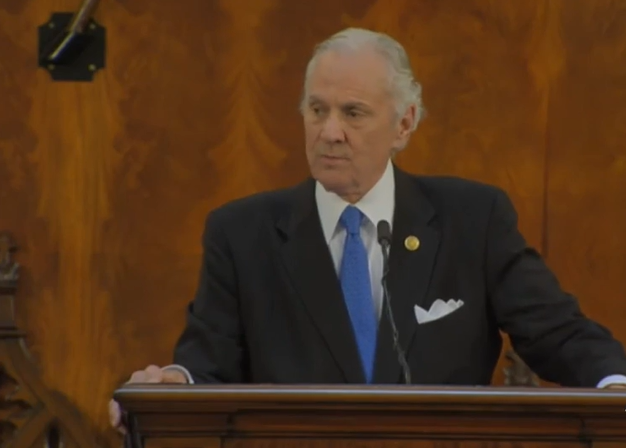
In his recent State of the State address, South Carolina Gov. Henry McMaster said that until last year, the state’s system for funding K-12 education was “archaic and confusing, a piecemeal system” with 29 separate line-item appropriations. Now, McMaster said, a consolidated formula ensures that funding follows each student.
All education committee hearings in South Carolina should open with staff placing flags on a map marking the states that adopted new choices in K-12 education since the last meeting. It likely would add a sense of urgency to lawmakers’ deliberations.
There has even been activity since Gov. Henry McMaster’s State of the State address at the end of January, where he called specifically for the creation of education savings accounts. Since then, lawmakers in both Iowa and Utah have approved flexible account-style options for every student in their states.
Over the last two years, lawmakers in states such as Indiana, Missouri, New Hampshire, and West Virginia also have created accounts. Legislators in Texas, Oklahoma and Florida, to name a few, are now considering similar proposals, with Rep. Byron Donalds, a Republican, representing Florida congressional District 19 in southwest Florida, and former Education Secretary Betsy Devos among those signing an open letter to Florida lawmakers in support of a proposal to expand the state’s existing private learning options.
South Carolina lawmakers entered the session with momentum from last year after a proposal nearly crossed the finish line. But they need to make sure the details that helped derail last year’s proposal do not stall the current proposals.
For example, lawmakers need to specify that the new “education scholarship trust fund” refers to the state’s office that will operate the new accounts, while “education savings accounts” refers to individual student accounts. Technical details like this in the proposal may mean the difference between well-functioning accounts and language that gets mired in litigation (or stalls before implementation).
The proposal’s provisions should clarify that, while parents must sign a contract with the state to use an account, they are then free to choose providers for their children. Parents do not need a contract saying they will follow state rules governing private education providers.
Students should be allowed to access individual public education services such as classes or extracurricular activities, but students should not be allowed to attend a public school full-time and receive an account to use for other education expenses. This would result in taxpayers paying twice for each account student, once for the cost of a public school and then again for the account.
To date, lawmakers have appropriately included criminal background check requirements for participating education vendors, but these requirements should apply only to individuals in schools, tutoring centers, and other educational settings who deal directly with students or have access to student information.
Lawmakers should not put new requirements such as background checks on companies that build computer hardware or print books as these may steer these vendors away.
Account programs that have operated for many years elsewhere in the country can offer best practices for South Carolina: state policymakers should create a rolling application period that allows families to apply throughout the year; student eligibility can be verified using existing state procedures without creating new requirements; and families should be able to use account funds to pay for services related to diagnosing a child with special needs.
Lawmakers have still another alternative: Since 2013, South Carolina has been home to a small private school scholarship program that has strict limitations on student eligibility and the number of scholarships that can be awarded each year.
Yet similar education options funded through charitable donations to scholarship organizations in states such as Florida and Arizona now serve some 200,000 students between them. These are some of the largest choice programs in the country thanks to inclusive rules around student participation and program size.
South Carolina policymakers are considering a new tax credit scholarship opportunity for students. Lawmakers should allow every child to participate and offer families the chance to pay for a variety of education products and services outside of private school tuition, a feature in the current education savings accounts proposal. Students could use the tax credit accounts to choose a private school or families could customize their child’s learning experience.
And the need has never been greater. Research from the state’s Education Oversight Committee during the pandemic noted lower student scores in reading and math. A more recent analysis showed that the percent of middle and high schools labeled “below average” or “unsatisfactory” increased from 2019 to 2022. Every child deserves the chance for a great education, so every South Carolinian should be concerned with these results.
All these things should encourage lawmakers to straighten out the details in education choice proposals this year so they can add South Carolina to the list of states that prioritized student needs in 2023.
 Editor’s note: This commentary from Travis Pillow, an innovation fellow and senior writer at the Center on Reinventing Public Education, appeared Monday on the Thomas B. Fordham Institute’s website.
From 2015 to 2018, the start of spring meant I could expect to hear from parents across Florida. At the time, I worked for Step Up Students, the Florida-based organization that administers the nation’s largest education scholarship (i.e., voucher) program. My job was not in customer service. I was the editor of a blog focused on school choice issues.
But because my name, phone number, and email address were prominently displayed on the website, desperate parents would track me down with questions about where to enroll their students for the next school year:
“My daughter receives a voucher for special education students. I think she needs a hearing aid, but the district won’t prioritize her for an evaluation because we attend a private school.”
“I hear charter schools don’t take kids like mine. Is that true?”
“Can you recommend a school in the Jacksonville area for my son who has autism?”
I would try my best to help—often forwarding parents along to a colleague with relevant expertise.
The experience seared two facts into my brain. First, for parents across Florida, having meaningful choices in where their children learn has been life changing. Second, they often feel alone navigating this growing array of options.
An under-appreciated provision contained in recent draft legislation in Florida would make history by codifying a new role in our state’s educational ecosystem to solve that problem: “choice navigators.”
As its bill number implies, HB1 is a top priority of House Speaker Paul Renner. It’s making headlines because it would dramatically expand educational options, converting the state’s existing school choice scholarship programs into education savings accounts that, within five years, would be available to all students.
Recently, school choice advocates—nationally and in Florida—have dramatically increased their ambitions. Legislatures have shifted away from small-bore programs available to targeted populations, like low-income families or students with disabilities, toward sweeping programs that offer scholarships to all, or nearly all, students in their states.
And by expanding choice via education savings accounts, policymakers are opening the door to an “a la carte” approach to education. Parents can choose schools for their kids—but they can also choose tutoring programs, enrichment activities, summer camps, and more.
In the new choice-for-all landscape, navigators will play a critical role ensuring all students—not just the privileged—are able to take advantage of the options these new and expanded programs make available.
To continue reading, click here.
 Editor’s note: This commentary from former Florida Gov. Jeb Bush appeared Friday on wsj.com.
It shouldn’t surprise anyone: I’m a proud Floridian.
It’s the state I’ve long called home, where I raised my family and gratefully served two terms as governor. It’s also why I’m proud to boast about a new bill introduced by the Florida legislature to scale and improve school choice in the Sunshine State.
Last month, Speaker Paul Renner introduced House Bill 1, which will make Florida’s school choice program the most expansive, inclusive and dynamic in the country and will accelerate Florida’s leadership in reimagining education.
Since I signed Florida’s first statewide school choice bill into law 25 years ago, we’ve largely led the nation in education freedom. Since then, 31 states, as well as Washington and Puerto Rico, have enacted school choice policies, dramatically expanding the power of parents to exercise control over how their child’s education is provided.
Yet despite having the nation’s largest school choice program, we are beginning to trail other states in offering the most innovative solutions to students.
First, Arizona and West Virginia started nipping at Florida’s heels. Even as Florida made important improvements and expansions to its programs, both of these states enacted universal education savings account programs, or ESAs, surpassing Florida’s reach by delivering educational freedom to all families.
ESAs are a game changer. They empower families to personalize their children’s education. Want to purchase an online math course? ESAs cover that. Extra books? ESAs allow for that. Tutoring to close learning gaps? That’s an allowable ESA expense. Maybe your student needs a blended approach that includes private school tuition and educational therapies. An ESA has your back.
With these flexible and powerful accounts, education dollars are no longer exclusively used to fund systems. Instead, ESAs enable education funding to focus on helping to individualize each student’s learning experience, giving every child his best shot at a great education and lifelong success.
There’s a bona fide movement for educational choice and flexibility sweeping the nation. On Jan. 24, Iowa Gov. Kim Reynolds signed the Students First Act into law, making Iowa the first state this year to enact a school choice bill and becoming the third state in the nation to provide universal ESAs to families.
And only a few days later, on Jan. 28, Utah Gov. Spencer Cox signed school choice legislation into law. All told, bills to establish universal choice are moving in more than a dozen states, including Indiana, Ohio, New Hampshire, Texas and Virginia.
In Arkansas and Nevada, newly elected governors Sarah Sanders and Joe Lombardo have spoken boldly about ensuring their respective states will soon offer or expand school choice.
Oklahoma Gov. Kevin Stitt and newly elected State Superintendent Ryan Walters are committed to creating a universal ESA program for Sooner State families. In South Carolina, Gov. Henry McMaster and newly elected State Superintendent Ellen Weaver have committed to fighting to expand educational opportunity.
With the right leadership, a 21st-century vision and the resolve to put families first, these states in all parts of the nation are moving this student-centered movement into high gear. Even before the pandemic, parents were demanding more autonomy and greater control over their children’s education.
The pandemic accelerated that by shining a light on deficiencies in our education systems. A February 2022 Real Clear Opinion Research poll found that more than 72% of parents supported school choice, including 68% of Democrats, 82% of Republicans and 67% of independents.
Educational choice is popular and empowering parents is the right thing to do. Pennsylvania’s newly elected Democratic Gov. Josh Shapiro has said that traditional public schools can be funded alongside school choice. And he’s right.
Nearly 200 years ago, when the industrialized school system we know today first emerged, it made sense to build massive schools that focused more on “averages” than individuals. For its time, assembly-line education mirrored the successful assembly lines of the unfolding industrial age. And aside from a few private schools, there weren’t many available alternatives.
Today, the U.S. economy is far more advanced, and new options for education abound. So rather than accepting an education system designed to teach to the average, parents are rightfully demanding a system that is individualized and empowers each student to achieve his full potential.
For too long, public-education funding has worked primarily for the special interests that run school systems for their own benefit. Florida’s HB1 is a game changer. Not only will it create the nation’s largest ESA program, it will supercharge flexibility.
Best of all, this student-centered movement is the product of competition among states, free from the grips of special interests, bureaucrats and top-down federal mandates.
This benefits everyone by finally making public education work for the students and families it exists to serve.
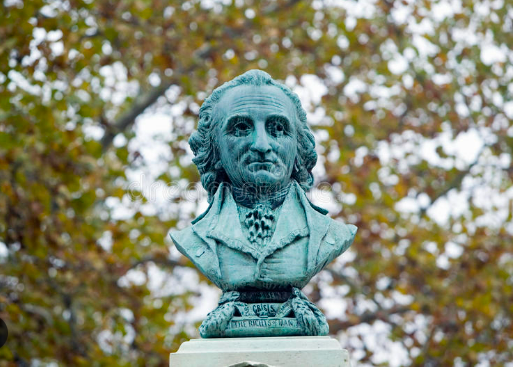 In honor of 2023’s National School Choice Week, the Cato Institute published one of the first comprehensive timelines of school choice. Because opponents still seek to delegitimize school choice by accusing the movement of having nefarious origins, it's more important now than ever to establish its true history, one that extends back to the country's founding.
But beyond the timeline’s stated purpose, to show that “empowering families to choose has a long history, both as an idea and in practice,” it also inadvertently makes a vital contribution to the history of political and educational thought by including Thomas Paine as a key figure in the early development of school choice.
Indeed, it is one of few sources I’ve seen (beyond my own work) to recognize that the first proposal for what we would now call an education choice scholarship program was made in 1791 by the Anglo-American rabble rouser.
Paine is a controversial figure; his prickly personality and attacks on organized religion earned him censure in the United States for hundreds of years. As a result, even the most historically-inclined school choice advocates have ignored Paine’s contributions, with Milton Friedman or occasionally John Stuart Mill getting all the credit.
They certainly deserve some recognition, but in the wake of School Choice Week, let’s join the Cato Institute in giving ol’ Tom Paine’s intellectual contributions the respect they deserve. Moreover, by considering his stance on education, school choice supporters can address some of the movement’s most glaring shortcomings.
Paine’s justification for his school choice proposal was not terribly dissimilar from the arguments school choice advocates make now. More specifically, Paine was concerned with education’s usefulness as well as how efficiently schooling could be provided. He wrote that “education, to be useful to the poor, should be on the spot, and the best method, I believe, to accomplish this is to enable the parents to pay the expenses themselves.”
Seems familiar, doesn’t it? Whether we know it or not, when school choice advocates argue that microschools can provide a valuable homeschooling-adjacent option for a local community of families, or that education savings accounts allow parents to cultivate an educational paradigm that is tailored to their children’s needs, we are echoing Thomas Paine.
Will this knowledge alter legislative battles or create new policies? Probably not. But anyone who advocates for a cause should understand that cause’s historical development, and that knowledge can allow us to dispel common nonsensical critiques.
One of the most common aspersions cast on school choice advocates is that we have it out for teachers. Of course, such criticisms are unfounded. Fortunately for us, Tom Paine was worried about teachers, too.
He observed that a wide variety of community members are capable of being educators, and that his ideal stipend to families would not only provide poor children with the education needed to prosper but would provide those teaching them with income and economic flexibility in their own right. Paine declared that “to them [children] it is education — to those who educate them it is a livelihood.”
Some contemporary school choice advocates, like Daniel Buck, formerly of Chalkboard Review, have made the argument that expanding education choice would actually benefit teachers. This line of reasoning remains criminally underutilized. Teachers all over America feel stuck and powerless in their current jobs, but despite widespread (but generally false) claims of a nationwide teacher shortage, most educators have many options but few real choices.
Turning back to Tom Paine really could make a dramatic difference, as education choice would offer teachers numerous additional learning models in which they may feel more fulfilled.
School choice advocates have done well to explain the real reasons why millions of parents around the country are pushing for more options for their children. But one chapter in school choice’s history must still be written.
By turning back to Tom Paine, school choice advocates can not only expand their potential audience, but also correct any historical misunderstandings before they reach the public square.

