 Editor’s note: This commentary from Ben DeGrow, a policy director for education choice at ExcelinEd, appeared last week on the organization’s website.
In recent years, 10 states have introduced education microgrant programs, providing small sums of money to parents to spend on supplemental educational services like educational therapies or tutoring to support their child’s learning.
The concept blossomed as a creative way for states to use a portion of their vast federal COVID aid. In some cases, these programs were so successful and popular with parents that states allocated their own money to keep them going.
Microgrant programs operate like education scholarship accounts, in that they give parents access to flexible education spending. Yet they differ in providing families with comparatively smaller sums of money, intended to supplement formal schooling. And in many states, the funds are available only for students enrolled in a public school.
Microgrants in Texas
Texas has a noteworthy program that’s worth highlighting. The Lone Star State offers parents of children with disabilities a Supplemental Special Education Services (SSES) microgrant, which is a $1,500 stipend to spend on approved goods and services of their choice. To date, the program has funded 75,000 students who have special needs, most of whom come from low-income families.
Texas launched the program two years ago, in early 2021, to help many of the students most deeply affected by disruptions to regular school services during the early phase of the pandemic. Texas Gov. Greg Abbott touted SSES as an option to provide “crucial academic resources to students with cognitive disabilities [that] will help close the educational gap caused by the COVID-19 pandemic.”
Of the first $66 million spent by parents across the state, 97% was used to pay for tangible items like digital tablets and curricular materials. Parents largely chose these rather than tutoring or therapeutic services from any of more than a thousand approved providers, possibly perceiving greater value in purchasing discrete goods with the limited amount of funds provided.
For rural families especially, their choice may also indicate a lack of access to qualified service providers in the vicinity.
While there are real limitations to connecting SSES microgrants directly with improvements in student achievement, parents report being overwhelmingly satisfied with the program. After a family has spent $1,000 from their account, the Texas Education Agency sends out a survey to each family. All but 2% of respondents agree that the items they spent money on “helped their children progress toward learning goals.”
To support the program, local private groups like Families Empowered help parents figure out if they qualify, how to apply and what options might be available to them. SSES funds enable real families like this one to purchase curriculum, supplies and services help their children overcome special learning challenges.
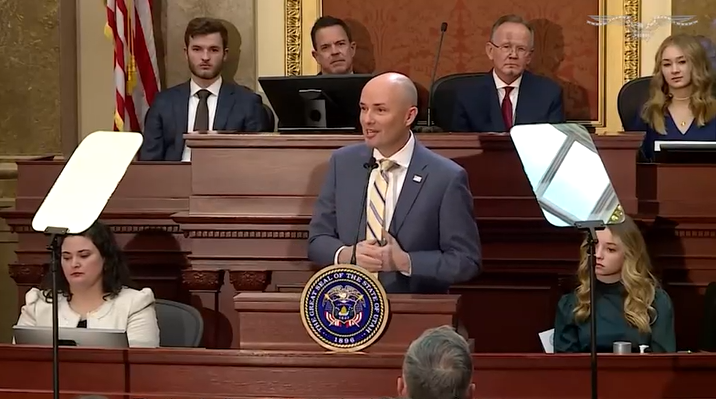
Utah Gov. Spencer Cox signed a sweeping education choice bill into law, which will provide students with state funds for private school tuition and other education-related expenses, joining Arizona and Iowa in enacting universal school choice legislation.
Editor’s note: This article appeared Monday on foxnews.com.
Utah Gov. Spencer Cox, R., on Saturday signed a major school choice bill, giving parents more options for their child’s education.
H.B. 215 provides established the "Utah Fits All Scholarship Program" and provided funding for the program as well as boosted teacher pay.
Scholarship accounts were established on behalf of all Utah K-12 students to pay for "approved education goods and services" starting in the 2024-2025 school year.
"School choice works best when we adequately fund public education, and we remove unnecessary regulations that burden our public schools and make it difficult for them to succeed. We are especially appreciative of our teachers and education leaders who helped push for more accountability measures which were not included in the original bill," Cox said in a press release.
Utah became the second state to sign a major school choice bill this year, trailing shortly behind Iowa Gov. Kim Reynolds who signed a similar bill last week.
As Utah is keeping up with the major school choice legislation being pushed in red states, American Federation For Children Corey DeAngelis said to look out for "Arkansas, Florida, Nebraska, Oklahoma, South Carolina, and Texas."
"A universal school choice revolution has ignited. Utah is the second state this year to go all-in on empowering families with education freedom, and it's only January. Red states are now engaging in friendly competition to fund students, not systems. Iowa already passed universal school choice this year," DeAngelis said.
To continue reading, click here.
 Editor’s note: This commentary from William Mattox, director of the J. Stanley Marshall Center for Educational Options at The James Madison Institute and a reimaginED guest blogger, appeared Thursday on tallahassee.com.
The Florida Legislature’s 2023 session will begin in early March, soon after Major League Baseball pitchers and catchers report to spring training camps in Florida. But incoming House Speaker Paul Renner has already signaled his interest in being the “closer” in Florida school choice policy.
Last week, Speaker Renner announced that the Florida House’s No. 1 legislative priority – HB1 – will be passage of a highly-innovative flexible scholarship program that will make every Florida student eligible for school choice assistance. Renner’s initiative is notable because it closes some existing gaps in scholarship eligibility – and because it closes out the Florida Legislature’s two-decade-long march towards universal school choice coverage.
Importantly, the Speaker’s initiative also gives greater flexibility to all Florida families participating in the Family Empowerment Scholarship (FES) program. Currently, most FES recipients receive a one-time tuition voucher that they can use at the private school of their choice.
But HB1 would give all families the freedom to purchase “unbundled” education resources – such as curriculum, tutoring, or online courses – from multiple providers.
This flexibility means that interested families would be able to select the educational equivalent of “a la carte” courses – rather than a “combo” platter – for their children. And it means that new education providers are apt to arise, as people with specialized expertise develop individual courses for K-12 students.
Could Florida History courses taught by scholars at the Museum of Florida History be around the corner? How about Hebrew classes taught by a local rabbi? Or a marine biology course taught by a local aquarium?
To continue reading, click here.
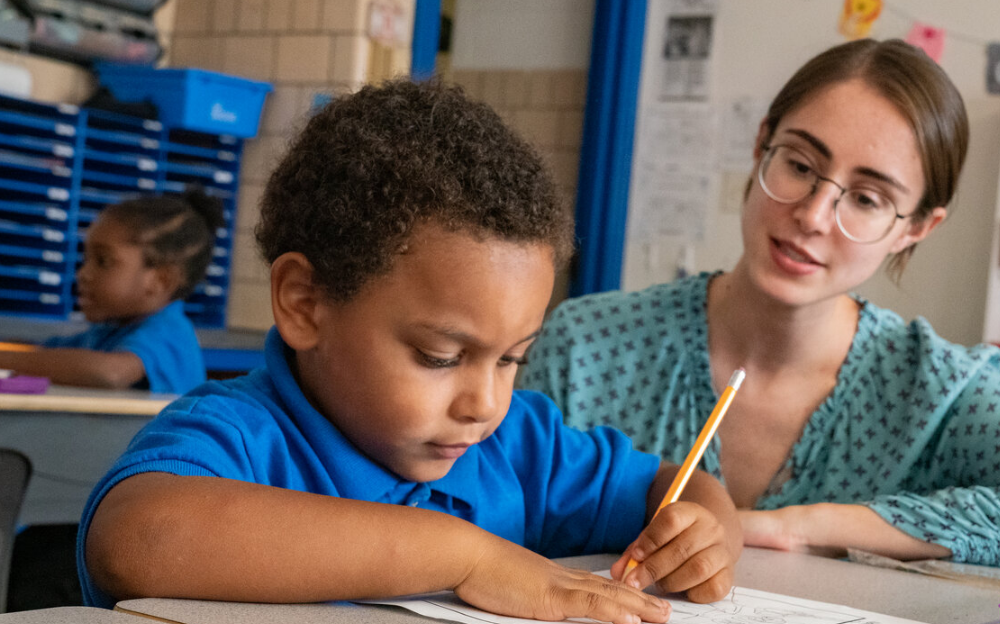
United Preparatory Academy in Columbus, Ohio, with a minority student enrollment of 85%, is one of 375 charter schools in the state that serve an estimated 132,000 students.
Editor’s note: This analysis appeared last week on the74million.org.
Home to a sizable charter school sector and a host of private academies, Ohio is one of the friendliest environments for school choice anywhere in the country. Now, as courts and politicians decide the future of the state’s school voucher program, a study released in December indicates that private school choice hasn’t had the damaging impact that many of its detractors claim.
In fact, its author argues, racial segregation of students tended to decline in school districts where more students were eligible to receive vouchers from the state.
The report was commissioned by the Thomas B. Fordham Institute, a reform-friendly think tank with a special focus on research and advocacy in Ohio. Its arrival could help shape the debate over the effects of school vouchers and the course that the state’s ambitious choice agenda will take in 2023, though voucher critics may contest its findings on school funding.
Alleging that the public funding of private schools is unconstitutional, and that the current system “discriminates against minority students by increasing segregation in Ohio’s public schools,” a coalition of school districts sued the state last year. A Columbus judge rejected an effort by the government to dismiss the case just a few weeks after the Fordham report was issued.
At the same time, Republican lawmakers have revived an effort to massively expand the voucher program, known locally as EdChoice, to all of Ohio’s K–12 students after a similar move stalled in December.
Roughly 60,000 kids statewide receive EdChoice scholarships ($7,500 for high schoolers, $5,500 for younger children) to defray tuition costs at private schools, including religious institutions. That number has increased dramatically over the last decade, leading supporters of public schools to complain that their enrollment, finances, and academic offerings have been harmed by the rapid movement of families and funding from districts.
But study author Stéphane Lavertu, a political scientist at Ohio State University, argued that his research didn’t support those claims. The report shows that vouchers’ effects on student achievement and per-pupil funding in public schools are ambiguous, but not obviously negative — and far from increasing racial segregation in affected schools, he argued, EdChoice seems to actively decrease it.
“What we can say with some level of certainty is that segregation did not go up in district schools,” Lavertu said. “In fact, we can say with some confidence that it went down. That’s the only finding where I would say that there’s a clear direction, and it’s down.”
To continue reading, click here.
 In the film Honeymoon in Vegas, Nicolas Cage jumps out of a plane with the Flying Elvises-Utah Chapter! The Flying Elvi are still donning the rhinestone suits and jumping out of planes today.
Irreversible momentum Utah chapter!
Back in the Dark Ages (2021) and before the nation had effectively no private choice programs with broad (universal or near universal) and funded eligibility. Then in 2022 advocates successfully concluded wrangling over two such programs in Arizona and West Virginia. Now, at the close of the first month of the 2023 state legislative season, the map looks like:
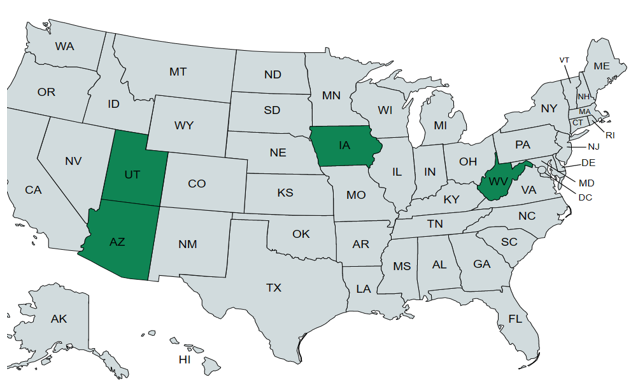
Utah joined the fun last week when Governor Spencer Cox signed legislation creating the Utah Fits All Scholarship Program. Utah had the fastest rate of population growth in the 2020 Census at 18.4, well over twice the national rate, and as a regular visitor to the Beehive State I can tell you that folks report population growth going even faster during the pandemic. Bravo to Utah’s indefatigable school choice advocates.
Now: Four down, 46 to go. Which state will be next to end K-12 conscription?
 Editor’s note: Nina Rees is the President and CEO of the National Alliance for Public Charter Schools. reimaginED shares this commentary from Rees as National School Choice Week 2023 comes to a close.
 Happy National School Choice Week! This week is an opportunity to celebrate the 3.7 million students, 7,700 school leaders, and 240,000 teachers who make charter schools the shining star of America’s education landscape.
Since 1991, more than 12.3 million students have attended these unique public schools, a powerful testament to parents’ desire to find the best learning environment for their children. Yet there are still far too many students who are stuck in schools that may not fit their needs. Every student deserves a school where they feel inspired, motivated, safe, and loved. National School Choice Week is about making that promise a reality for more children.
The school choice movement is fueled by the passion and power of parents. A recent survey by The Harris Poll found that 86% of parents want more school options – even if they are satisfied with the school their children are attending. This is why so many politicians made education a priority in the recent elections.
We believe parental choice is not only a winning political issue, but also a unifying force capable of bridging differences and reducing polarization by putting the best interests of students squarely at the center of education policy. We also know that access to high-quality schools—particularly high-quality public schools that are free and open to all—is essential to increasing economic mobility, reducing inequality, and expanding social equity.
As we look across the country, we see game-changing momentum around efforts to boost parental choice – in all its forms – and to remind lawmakers that charter schools are the best vehicle to expand public school choice.
Charter schools provide flexibility and autonomy in exchange for results, and they must be hyper-responsive to the needs of students, parents, and communities. They inject new energy and innovation into education, make learning more personalized, and elevate the overall quality of our public education system.
As we celebrate National School Choice Week, we call on the lawmakers who championed parental choice on the campaign trail to translate their promises into action – by fighting to fund charter schools equitably (our students are worth no less than those attending district public schools), by including facilities funding in every state charter law (so money meant for the classroom doesn’t have to be spent maintaining the school building), and by ensuring that charter schools continue to have the freedom and flexibility to be responsive to students’ needs.
This is a week to celebrate the importance of school choice, to express gratitude to those who make these choices possible, and to recommit to fighting for educational opportunity for all. Let’s make it happen for our kids and families!
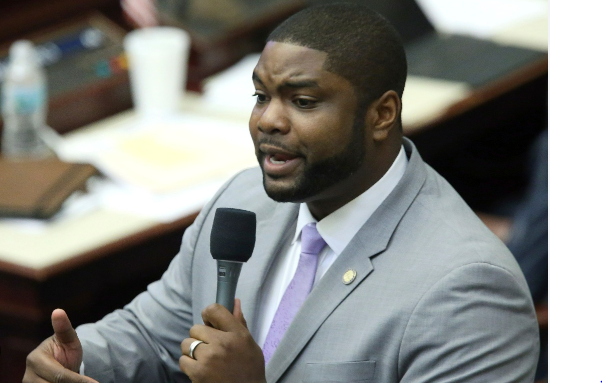
U.S. Rep. Byron Donalds, a Republican who represents Congressional District 19 in southwest Florida, says he’s “living proof” that claims that school choice hurts minorities, steals public funds from public schools and hinders academic success are wrong. PHOTO: Steve Cannon/AP
Editor’s note: This article appeared Monday on foxnews.com.
A coalition of school choice proponents signed a letter that urges Florida lawmakers to pass an unprecedented education savings account bill.
Florida House Bill 1, which the state's House Speaker described as the "largest" school choice measure, would provide access to education savings accounts and expand eligibility to all Sunshine State students.
Those who signed the letter include 11th U.S. Secretary of Education Betsy DeVos, Rep. Byron Donalds, R-Fla., Moms For Liberty, Libs of TikTok, Karol Markowicz, Parents Defending Education President Nicole Neily, Young Americans For Liberty, and many more.
"In the interest of students in Florida and across the country, we urge Florida’s lawmakers to adopt these policies, to further empower parents and expand school choice, and set the roadmap for an education system to befit the Free State of Florida," the Educational Freedom Institute said.
The letter cited a survey stating that school choice can address "parental wishes." According to the survey, 78% of Florida parents support education savings accounts that can be used for education options such as school tuition, tutoring, online education programs, save for future college expenses, and others.
To continue reading, click here.
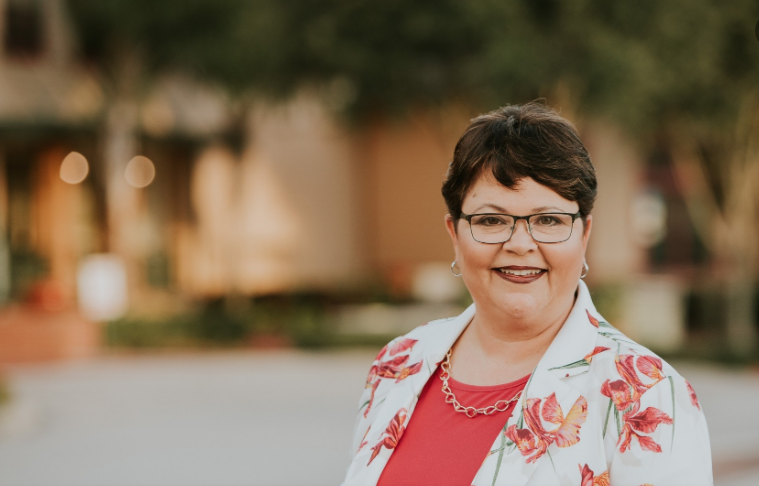
State Rep. Susan Plasencia, R-Winter Park, applied for state education choice scholarships for her three children so they could attend “a great private school, one that I was otherwise not able to afford.” She described the opportunity at today’s hearing on HB1 as a game-changer for her family.
A bill that would extend eligibility for flexible spending accounts to all K-12 students cleared its first hurdle today on the way to becoming the largest expansion of education choice in Florida’s history.
Members of the House Choice and Innovation Subcommittee voted 13-4 to move HB 1 forward to its next committee stop. Rep. Thad Altman, R-Indian Harbour Beach, was out with an excused absence. The vote was mainly along party lines, with Rep. Lisa Dunkley, D-Lauderhill, joining the Republicans in voting yes on the bill.
Rep. Susan Valdes, D- Tampa, who got two of her proposed amendments approved, voted no on the bill but signaled to committee members that she plans to keep an open mind as the legislative process continues.
“I feel we still have time to collaborate,” said Valdes, who has supported previous education choice bills. “If we talk about students, I think we can all agree that we want the best for all of our babies in the state of Florida. I’m looking forward to continuing the conversation.”
The bill’s primary sponsor, who also serves as chair of the subcommittee, Rep. Kaylee Tuck, R-Lake Placid, described it as “transformational” and said subcommittee members’ support would allow Florida to maintain its top spot among the states as the leader in education choice.
“For decades, Florida has been a national leader in providing high-quality options for our students and our parents,” she said in introducing the bill. “I hope you’ll join me in making history today. Today, we will keep parents in the driver’s seat, and today we will fund students, not systems.”
If approved in its current form, HB 1 would remove income limits from all the state’s two major income-based programs, the Florida Tax Credit Scholarship Program, and the Family Empowerment Scholarship for Education Options. Families whose income is at or below 185% of federal poverty line, about $55,500 for a family of four, would still receive priority.
The bill also would convert traditional scholarships, in which money goes directly to a private school for tuition and fees, to education savings accounts. Also known as ESAs, these funds allow parents to direct funds toward other approved uses such as private tutoring, instructional material, including digital and internet resources, curriculum, a virtual program or online course that meets state requirements, and tuition and fees associated with homeschooling.
(The number of homeschooled students using the formerly income-based programs will be capped and increased each year until 2027.)
The bill would let families bank up to $24,000 in the ESA of each child receiving the educational options scholarship to put toward approved uses. Choice navigators would be available to help parents determine the best options for their child.
The expanded programs would be administered by state-approved scholarship funding organizations. Step Up For Students, which hosts this blog, is one of two nonprofit organizations that manages these programs.
Current law limits eligibility to lower- and middle-income families and students who meet certain criteria such as children of active-duty military members, law enforcement officers and children who are in out-of-home or foster care.
In addition to converting the two traditional scholarship programs to ESAs, the bill would also eliminate this current waitlist for the Family Empowerment Scholarship for students with Unique Abilities, which Tuck said currently stands at about 9,500.
Lawmakers approved two amendments to the bill. The first requires the state Department of Education to notify each school district about the number of full-time equivalent students in the Family Empowerment Scholarship program.
The second requires each applicant to be notified that participation in the scholarship program does not guarantee enrollment in a particular school or program.
The room was packed with audience members seeking to speak about the bill, requiring lawmakers to extend the meeting by 20 minutes to accommodate everyone.
Members of national education choice advocacy groups, including Americans For Prosperity, the American Federation for Children, and yes. every kid spoke in support of the bill, which a day earlier won the endorsement of the Florida Council of 100, a private, nonprofit group of the state’s top business leaders.
A representative from the Foundation for Florida’s Future, the nonprofit founded by former Gov. Jeb Bush, who also endorsed the bill, attended the meeting and waived in support of the bill.
“Florida has long been the leader for providing myriad education options,” said Tiffany Barfield, government affairs director for yes. every kid. She said Iowa recently approved an education choice bill, and Arkansas Gov. Sarah Huckabee Sanders named it a top priority at her swearing-in speech.
“It’s time for Florida to take the lead yet again,” she said.
However, the most moving testimony came from those who have personally benefited from Florida’s education choice programs.
“I have five children and three of them are on scholarship programs,” said Alkesha Williamson of Tallahassee. “Our family has lived in three different states and the public-school systems in all of them were not built for my children.”
All three children learned at home during the height of the pandemic, but Williamson applied for the scholarships soon after learning about them.
Her two sons receive Family Empowerment Scholarships to attend private schools “that work well for them,” while a Family Empowerment Scholarship for students with Unique Abilities allows her to customize her daughter’s education.
“If all the scholarships had this flexibility, we would consider going back to homeschooling,” she said. “I would love for our family to be in that environment learning all together.”
One lawmaker spoke about how education choice had improved their children’s lives.
State Rep. Susan Plasencia, R-Winter Park, said she applied for scholarships for her three children after district school officials decided to put her middle child into special education.
“I didn’t like this path for my son,” said Plasencia, a co-sponsor of the bill. “I knew he could achieve so much more, so I pulled all of my children out of school, all three of them. I was able to put my three children into a great private school, one that I was otherwise not able to afford. So this was game changer for my family.”
Plasencia said that her children grew up to be successful. Her daughter wanted a traditional high school experience and returned to public school, where she graduated and went on to attend the University of Central Florida. One of her sons got his high school equivalency and trained to become a diesel mechanic who “wakes up every day loving what he does for a living.”
Her middle child, the one destined for special education had he stayed at his district school, graduated at the top of his private school class and went on to study computer engineering.
“The reason I tell you my story today is because every child learns differently, and every parent understands the needs of their children.”
The bill’s next stop will be the House Pre-K-12 Appropriations Subcommittee before heading to the House Education & Employment Committee. HB 1 has no companion bill in the Senate, but Senate President Kathleen Passidomo has expressed her support for the House bill.
 A statewide group of top business leaders has endorsed landmark legislation that would extend education choice to all K-12 students in Florida.
The Florida Council of 100 issued the following statement on Wednesday in support of HB 1, which is scheduled for a hearing Thursday before the House Choice and Innovation Subcommittee.
“Research shows that the performance of all schools is enhanced by providing educational opportunities beyond traditionally zoned neighborhood schools. Florida’s families deserve to have options that best meet the needs of each child.
This is critical to prepare future generations of Floridians to compete and win in the modern economy. We applaud the Speaker and the legislature for considering options that expand school choice and lead to greater opportunity for all of Florida’s students.”
The Florida Council of 100 is a private, nonprofit, nonpartisan organization of business leaders, which exists to promote the economic growth of Florida and improve the economic well-being and quality of life of its citizenry. It represents more than 140 companies and more than 1.3 million employees. In addition to CEOs at top companies, the group also includes some state and national political heavyweights.
Council officers include its chairman, Eric Silagy, who is chairman, president, and CEO of Florida Power and Light; former U.S. Sen. George LeMieux, board chairman at Gunster; Ignatio B. Felix, treasurer and managing partner of McKinsey & Associates; and Sydney Kitson, the council’s immediate past chairman and chairman and CEO of Kitson & Partners.
Board members include former Florida House Speaker Will Weatherford, a businessman who is now chairman of the board of trustees at the University of South Florida; John Couris, president and CEO of Tampa General Hospital; Rhea Law, president of the University of South Florida; and Todd Jones, president of Publix Super Markets, Inc.
The endorsement comes at a key time for the bill, which goes before its first committee on Thursday. The bill would remove income limits from all the state’s two major income-based programs, the Florida Tax Credit Scholarship Program, and the Family Empowerment Scholarship for Education Options.
Families whose income is at or below 185% of federal poverty line, about $55,500 for a family of four, would still receive priority.
The bill also would convert traditional scholarships, in which money goes directly to a private school for tuition and fees, to education savings accounts. Known as ESAs, these funds allow parents to direct funds toward other approved uses such as private tutoring, instructional material, including digital and internet resources, curriculum, a virtual program or online course that meets state requirements, and tuition and fees associated with homeschooling.
(The number of homeschooled students using the formerly income-based programs will be capped and increased each year until 2027.)
The bill would let families bank up to $24,000 in the ESA of each child receiving the educational options scholarship to put toward approved uses.
Sponsored by state Rep. Kaylee Tuck, R-Lake Placid, and co-sponsored by Rep. Susan Plasencia, R-Winter Park, the bill is one of the top priorities of House Speaker Paul Renner. It has no Senate companion bill; however, Senate President Kathleen Passidomo has expressed her support.
The bill also has received support from former Florida Gov. Jeb Bush and his Foundation for Florida’s Future.
Oklahoma Sen. Julie Daniels, who filed the Education Freedom Act, said it’s time the state started thinking about individual children and their families, moving beyond the semantics of education savings accounts versus vouchers.
Editor’s note: This article appeared Saturday on Oklahoma’s ktul.com.
During the upcoming legislative session, Oklahoma lawmakers could take up SB 822, the Education Freedom Act, which aims to allow parents to set up education savings accounts for their children.
State Superintendent of Public Instruction Ryan Walters (R) is supporting the measure. In a statement, Walters shared that, "I will fiercely advocate as state superintendent Oklahoma’s students are our first priority. Every option is on the table to make our education system better. We must innovate and advocate for change at all levels in education."
Piedmont resident Brent Backus also spoke in favor of the legislation. He asserted that he had limited education options growing up — and wants more school choice for current students. In his view, "The RINO's, and the liberals, and the labor unions won't support free choice for the parents. And they should be ashamed of themselves."
The act would allow parents to set up accounts with the Oklahoma State Treasurer and use the money for education services, including tuition. The available amount would be based on the yearly per-student education expense from the state.
To continue reading, click here.

