TAMPA, Fla. — A half-century ago, John and Cindy Ingram built a strong reputation emphasizing family.
Besides their children, their children’s spouses, and their grandchildren, that definition also includes the thousands of students who have bowed at the door of Ingram’s Karate dojos since 1977.
Each evening, these spaces, which some treat like holy ground, spring to life. Crisp white uniforms snap as students kick, punch, and shout, “kiai!”
Soon, a different type of energy will be seen before dark, when homeschoolers come to sharpen their core academic skills and participate in some “old-fashioned P.E.”
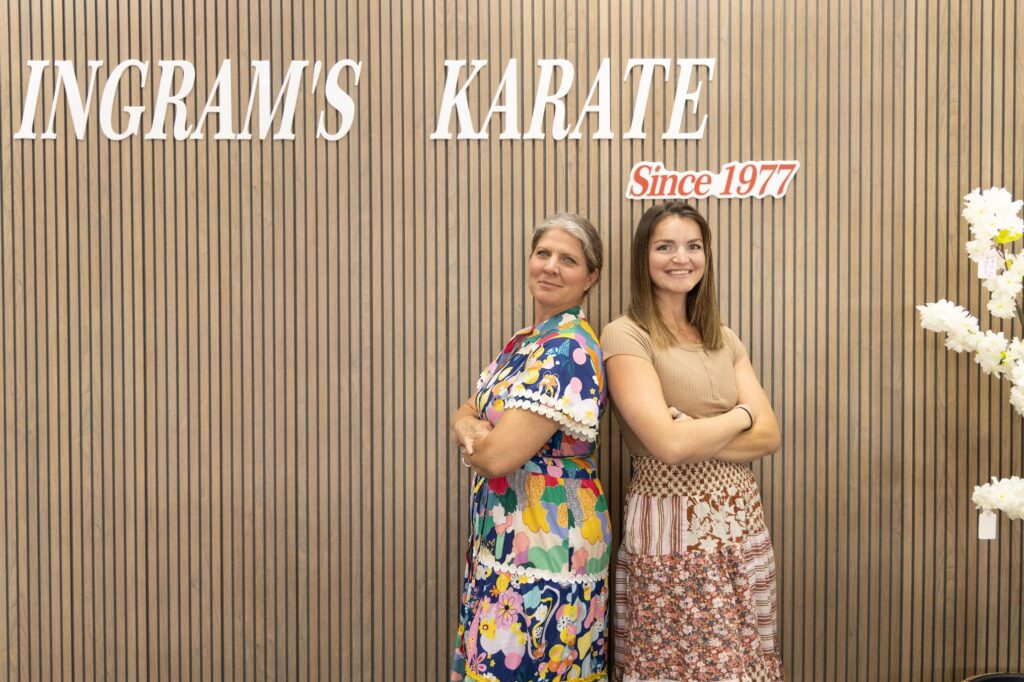
Ingram’s Balanced Path Learning will open in September as a homeschool co-op two days per week at two of its three dojos in the Tampa Bay area.
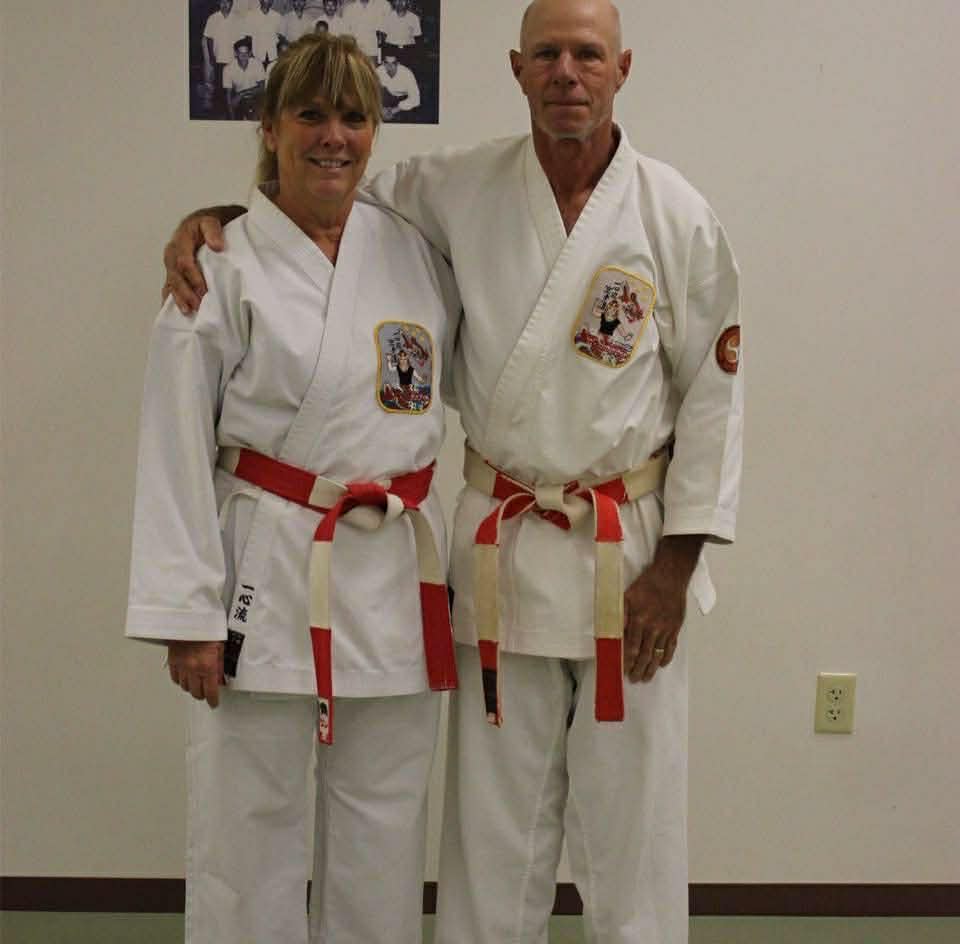
“We have these beautiful facilities that are only used in the evening. It's like everything just lined up,” said Sheri Ingram-Angwin, a former homeschool mom and seventh-degree black belt. A daughter of John and Cindy Ingram, she owns the Carrollwood and New Port Richey dojos. Both accept direct payment for karate fees from education savings accounts administered by Step Up For Students.
“I don’t know how we didn’t think of it for so long.”
According to Step Up For Students, almost 50 martial arts providers across Florida accept direct payment for participation in their programs, either as P.E. or enrichment. That does not include providers for which parents receive reimbursements after up-front, out-of-pocket payments. These providers are part of the state's rapidly growing number of à la carte learning options. In 2024-25, Florida had 4,318 non-school education providers offering à la carte courses, tutoring, extracurriculars, and more, which was more than double the number from the year before.
By opening an academic co-op alongside its karate program, the founders of Balanced Path will take things a step further. Angwin’s daughter-in-law, Leanna Angwin, and sister, Ashley Bache, will teach classes in math, reading, history, and science. Both hold state teaching certificates. Bache and Leanna have teaching experience at a classical charter school and a district middle school.
Most recently an eighth-grade math teacher, Leanna originally studied to become an accountant. But she realized after a couple of internships that “I really didn’t like it.”
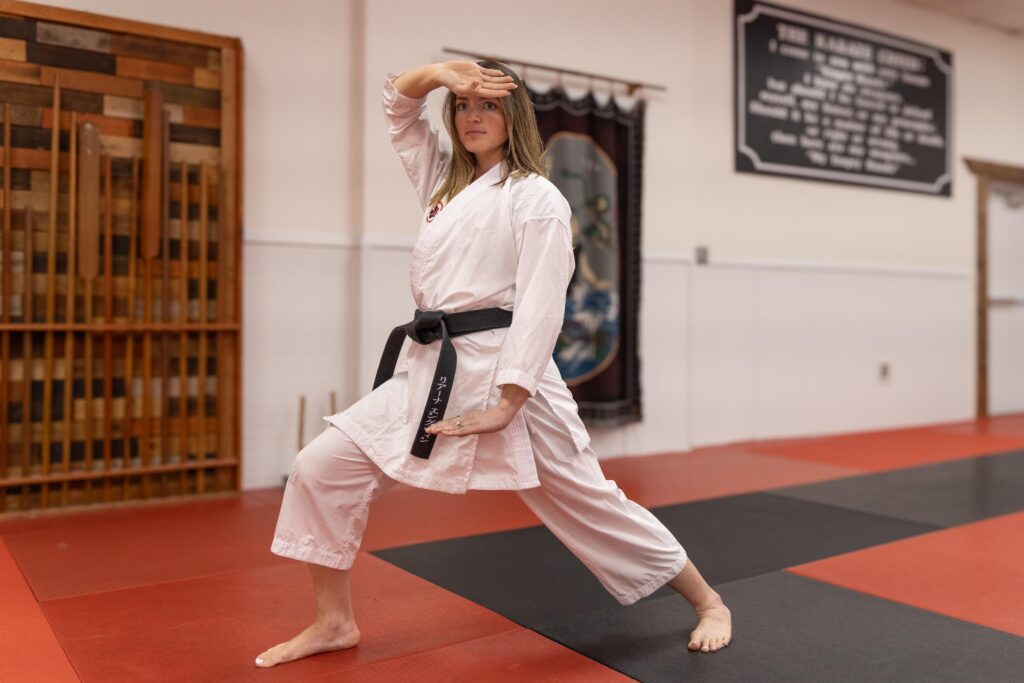
During her search for her true calling, she recalled how she had enjoyed helping people with homework. Now training for her second-degree black belt, Leanna also found fulfillment at the dojo in helping kids learn fundamentals. She joined Ashley, whom she affectionately calls her "aunt-in-law," at the charter school before the two headed to the public school for better pay and state benefits.
After a while, Leanna found herself wanting something that felt more rewarding, like the private tutoring she was doing on the side. She also found herself wanting to homeschool her future children.
“My mom was a stay-at-home mom, and I got to spend a lot of time with her, and my dad worked from home,” she said. “So, I see the importance of kids being at home with their parents.”
For Ashley, a former horse anesthetist, tragedy led her to a career in teaching. A car accident left her husband paralyzed from the neck down. A mother of three young children, Ashley needed a job that offered financial support for her family and the flexibility to care for her husband.
She started as a P.E. aide at the classical charter school before being promoted to run the program. She later became a classroom teacher.
She fell in love, not only with helping the kids, but also with a hands-on teaching style.
“I know I learn better with hands-on,” said Ashley, who will teach math and science at Balanced Path Learning. “It’s so easy to bring in all the manipulatives and the tools for teaching because we already have a lot of them.”
One day after school, Leanna saw a homeschool co-op flyer. They were hiring. During her interview, she found out the positions she was interested in had been filled. Afterward, she headed straight for the dojo to talk with her mother-in-law about possibly starting their own program.
She was like, ‘We should do that,’” Leanna recalled.
They shared their vision with Ashley. She was all in. Balanced Path Learning was born.
The three say it offers students the best of both worlds: the chance to be with family and work with a professional educator who can help keep them on track and accountable.
“I’ve watched how the status quo isn’t necessarily good enough anymore,” said Sheri, who homeschooled her two sons before education savings accounts existed. “All these years, everybody just always thought this is how you have to do it.
“And then COVID really changed that because everyone realized we don’t have to do it the way we’re told; we can do it on our own terms. I feel like there are a lot of parents who want to homeschool their kids. But they’re nervous about it, or maybe they don’t have the time.”
Sheri was one of those parents. In the beginning, she felt overwhelmed by the number of curriculum choices, which at the time seemed like “8 million.”
“I cried the day all the books showed up at my door,” she recalled.
But after becoming acclimated, she began to see and love the benefits.
“When it came time for history, when my kids were little, we went to Savannah, and we learned while we were there, and they learned things and experienced things that you can't really do unless you’re homeschooling,” she said.
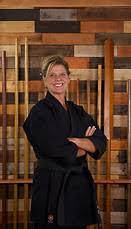
At Balanced Path Learning, a typical day for those in kindergarten through fifth grade will start at 9 a.m. with lessons in science or history, depending on the location. Students in middle and high school can attend and work independently during lesson times.
Lesson blocks are 50 minutes long and followed by breaks for movement, which might be a game of freeze tag or learning new dance moves. Students transition to reading and math groups at 10 a.m.
Students take a 10-minute snack break at 10:50 a.m.
Afterward, the groups switch subjects, with those in reading starting math and those who were in math going to reading.
After a second active brain break, they can do optional electives from noon until 1 p.m. when the day ends. Electives include physical education, with fitness drills, relays, and games. Optional karate is also offered one day a week at each location. Students do not have to participate in any karate programs to attend Balanced Path Learning.
Co-op locations are closed on Fridays, with optional field trips offered one Friday a month for an extra fee.
Parents are already signing up. Rachael Martinez said her three kids, who are entering fourth, third, and first grades, will transfer from a charter school to Balanced Path with the help of state education savings accounts.
“I kept begging her to do it,” said Martinez, who said Leanna tutored her oldest child and taught the second one at the charter school.
Small class sizes and the opportunity for self-paced learning drew Martinez to the co-op.
“They’re not rushed to meet somebody else’s standards versus their own needs,” she said.
One is on an individualized education plan for speech issues and thrives with one-on-one instruction. Another gets everything on the first try. The youngest is “a little spitfire,” finishing kindergarten.
“They’re all 100% different,” said Martinez, a preschool teacher.
Leanna, who will teach reading, said she and her partners made a list of the most important things they felt were missing from traditional schools. At the top: Opportunities to be active.
“Collectively, we feel like sometimes they expect too much of kids, to sit still and be quiet for too long.”
That’s the reason for the “active brain breaks.”
Sheri continues to view the project with a sense of awe. She said she has seen things come together and barriers easily fall away, just like the plywood boards that snap in two if students use the proper technique. She calls it “a God thing.”
But she also sees it as very much a family thing, an extension of the dojo her parents opened in 1977.
“We have been working with kids for 50 years, and our family knows how to work with kids and how to make them thrive, and then I have two teachers who are the most beloved teachers in the whole school, and I'm like, why did this take so long to come to us, but it's just perfect.”
Maxwell “Max” Johnson knows something about you. Maybe you know it, too. Maybe not. Either way, Max wants you to know this:
You are smart.
He’s so sure you are that he wrote a book about it.
Published last December, “Let Me Help You … BE SMART: A Kid’s Guide to Confidence, Focus, and Smart Choices” is a self-esteem book aimed at children ages 8-13 and is available on Amazon.
“My goal is that every reader finishes this book feeling more confident, more smart, and more prepared for life,” Max said.
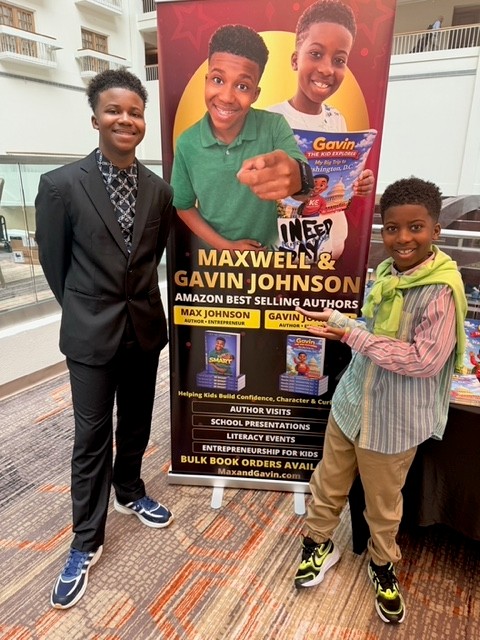
Max, 14, lives with his family in Lake Mary. He and his younger brother, Gavin, 11, receive Florida education choice scholarships managed by Step Up For Students, which their father, Stephen, said has put them in environments that allow them to succeed.
“Their ideas and their ability to learn at a high level are because of Step Up,” Stephen said.
Max, who once attended a private school, is home-educated, learning both at home and through a hybrid program at a private school, which he attends two days a week. His Education Savings Account covers both his home-education curriculum and a portion of his tuition for the private school.
“The Step Up scholarship is important to us, because Max was an honor roll student in private school and takes honors courses now, but because of his desire for entrepreneurship, the scholarship works better for him, because he can still do things like get into business, work on his books, and also find school a priority,” Stephen said.
“I love the fact that he still participates in school, still has school relationships, still goes and gets a dose of school, but also gets to come home and focus on the things that he really cares about.”
Gavin attends a private school.
“We like that environment for Gavin,” Stephen said. “He loves a full day, and it's cool for him to go to school. He comes home, and then when he has time, he works on his stuff, maybe on the weekends. So, the week is all about school. The weekend is his time to do other things. I just want him to focus on school, do everything else on the weekend.”
Like Max, Gavin is also a published author.
“Gavin The Kid Explorer: My Big Trip to Washington, D.C.” is a travel guide for children ages 4-9 and is available on Amazon.
“These kids, they're fearless. I love it,” Stephen said. “They really believe that they can do anything. They believed they could write a book, and then they actually did it.”

Belief is a big part of the brother’s makeup.
Stephen works in video production for a motivational speaker, and their mom, Erin, is an entrepreneur who started her own cleaning service as a college sophomore.
As long as they can remember, the boys have joined their parents at motivational seminars. Those forums are for adults, but Max was able to take what he learned and translate it into messages children can understand.
When he was 8, Max made motivational wristbands for his peers that contained messages like “You can do it,” “You’re smart,” and “I’m a winner.”
Max keeps a journal where he wrote about how he sometimes felt in school. There were times when he didn’t understand the lesson. Other times, he felt confused.
Sometimes he didn’t feel smart.
The success of his wristbands taught him that his confusion and lack of self-esteem are normal parts of growing up. He began to address those in his journal, which in turn started to read more like a self-help book than a diary.
And just like the motivational messages he heard when his dad was working, Max felt he needed to share his message.
“The reason why I wrote this book is because I wanted to help kids learn lessons that they don't really learn in school, things like making smart decisions, working hard, treating people with respect, managing money, and building good habits,” Max said. “I wanted a book that was under 100 pages for young people to understand, but powerful enough that they can use the lessons for the rest of their lives.
“I wanted to show them that, really, they are smart. Anyone can be smart. It depends on how you think about yourself.”
Meanwhile, Gavin took notes during a family trip to Washington, D.C., with the idea of turning it into a book. This way, he could bring young readers along on his adventure. He detailed each place they visited, sites like the Washington Monument, the Smithsonian, the Jefferson Memorial, and added three notes of interest for each.
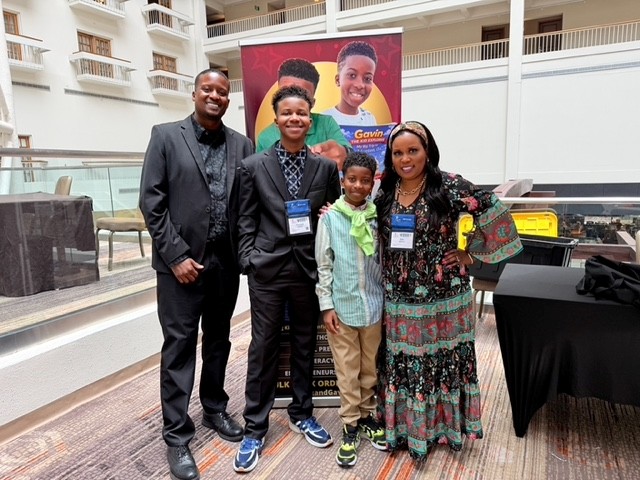
Erin and Stephen turned the journals into books and presented them to the boys on Christmas morning.
“Surprised and amazed” is how Gavin described the feeling of seeing his journal become a book.
He was even more surprised and more amazed when his book was mass-produced and made available on Amazon. Within a week, it was Amazon’s top-selling travel guide.
“I love motivating kids and teaching them things that they haven't thought of before,” Gavin said. “It's so fun and surprising that they love the topics that I choose, like traveling to D.C., and they love the character that I picked and how I illustrated the book.”
Max’s book reached No. 3 on Amazon’s list of social skills books.
“That was just surreal,” Max said.
He’s currently finishing his second book, which addresses confidence. It is set to be released Nov. 27 -- Black Friday.
Gavin is hard at work on his second, as well – a travel guide of New York City.
The brothers spent part of their summer promoting their books and speaking at camps around Central Florida. It’s a prelude to what they hope to be doing as adults – motivational speaking.
“I feel so empowered,” Max said. “I feel I can empower kids to become better versions of themselves, and then they can pass it on for generations.”
For years, critics of education choice have been saying it will unleash an educational apocalypse in Florida. But what’s unfolding isn’t an apocalypse. It’s a renaissance.
“For 25 years we’ve been hearing that the sky’s going to fall,” said Ron Matus, director of research and special projects at Step Up For Students, the nation’s largest education choice scholarship funding organization, which manages 98% of Florida’s K-12 programs. “They have said forever that school choice was going to ruin everything, and instead the exact opposite has happened.”
Matus made his comments when he recently sat down with Ginny Gentles at the Defense of Freedom Institute to share the Florida story and discuss the Sunshine State’s historic influence on family-driven education choice.
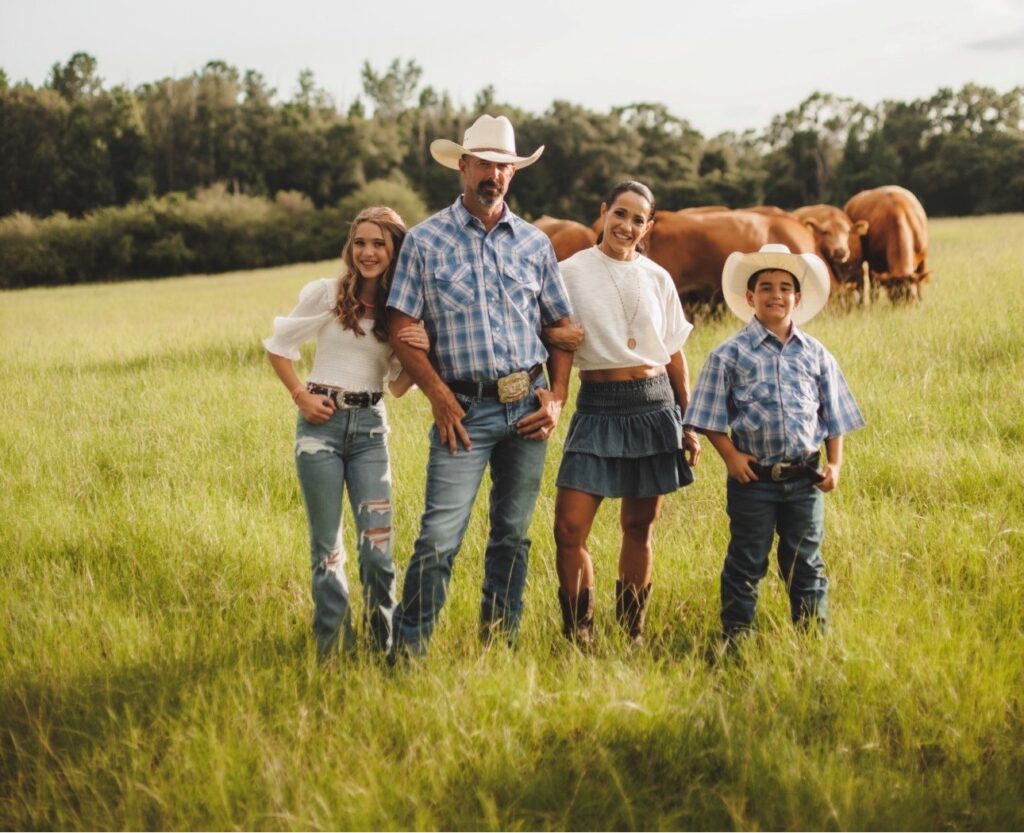
The podcast covers everything from teacher entrepreneurs to à la carte learning to innovative options springing up in rural areas, where many opponents say choice can’t succeed. Matus also cited several schools and providers as examples of thriving innovation happening across the state.
“I think people have these really searing images of Florida in their head. They’ll think of Miami and Orlando and Disney or think about the beaches but don’t realize that between all that there are vast stretches of heartland. There are amazing choice schools throughout all of that.”
When it comes to education, Matus said, surveys show many families want the same basic things, such as safety, academic rigor, and character-building instruction that can be faith-based or secular.
“After that, there are a million different things they want slightly different,” he said. “They may want old-school school — they don’t want any bells and whistles. Others may want a forest school or an outdoor school. That’s where pluralism should come into play.”
All of these are possible in Florida, Matus said, thanks to robust policies that empower families. “In every possible way, public education in Florida has gotten better. So many people did the right thing and moved the ball down the field to build a system where parents have the power to determine the best education for their kids.”
Editor’s note: Harvard University Program on Education Policy and Governance devoted its annual spring research conference to helping policymakers assess education choice: What is and is not working, the trade-offs involved in different programs, and the long-term effects. John F. Kirtley, the founder and chairman of Step Up For Students, the nation’s largest nonprofit scholarship funding organization, told attendees in a keynote address about his home state of Florida, where 30 years of robust education choice across the district, charter, and private sectors are not only working but have set a national standard for the other states taking their first steps on the journey. His remarks are summarized below. You can read the entire speech here. To learn more about Harvard’s Emerging School Models conference, scheduled for Sept. 17 and 18, go here.
Redefinition of public education
Growth of choice programs
Supply-side developments
Impact on rural and district schools
Educational outcomes and research
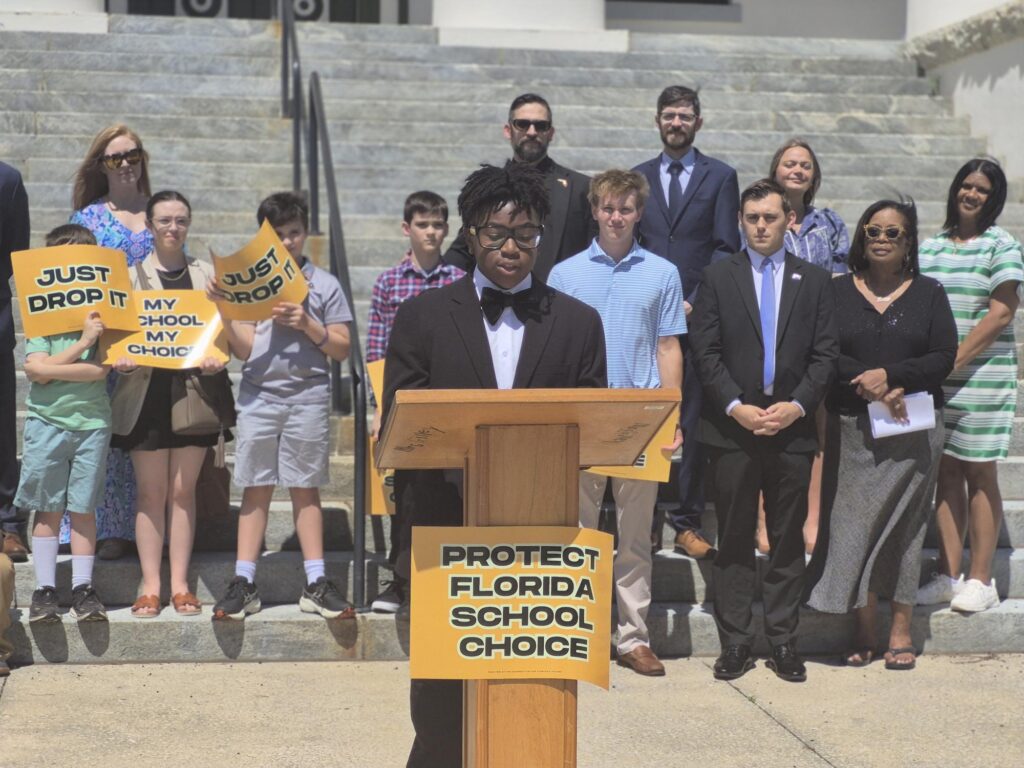
Nine days after the state teachers union sued to strip Florida families of the right to choose their children’s education, the pushback began when supporters of state K-12 scholarships and charter schools gathered in Tallahassee on the steps of Old State Capitol to protest.
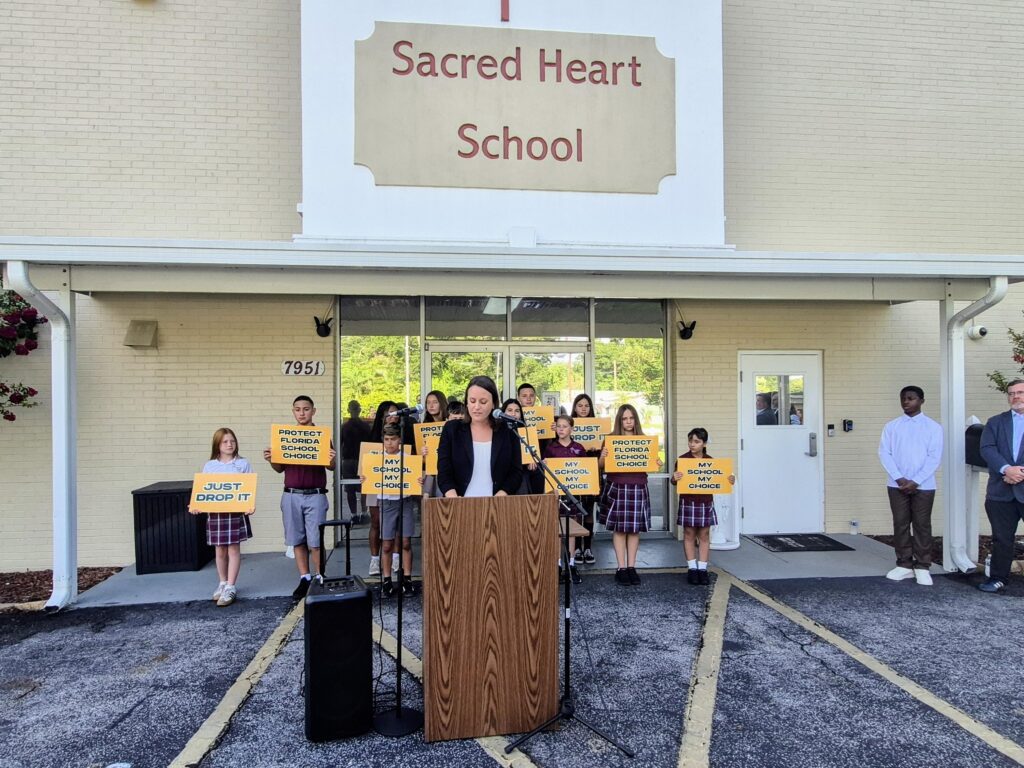
Two weeks later, choice supporters stood outside Sacred Heart Catholic School in the Tampa Bay area holding signs with the slogans, “My Child, My Choice” and “Just Drop It.”
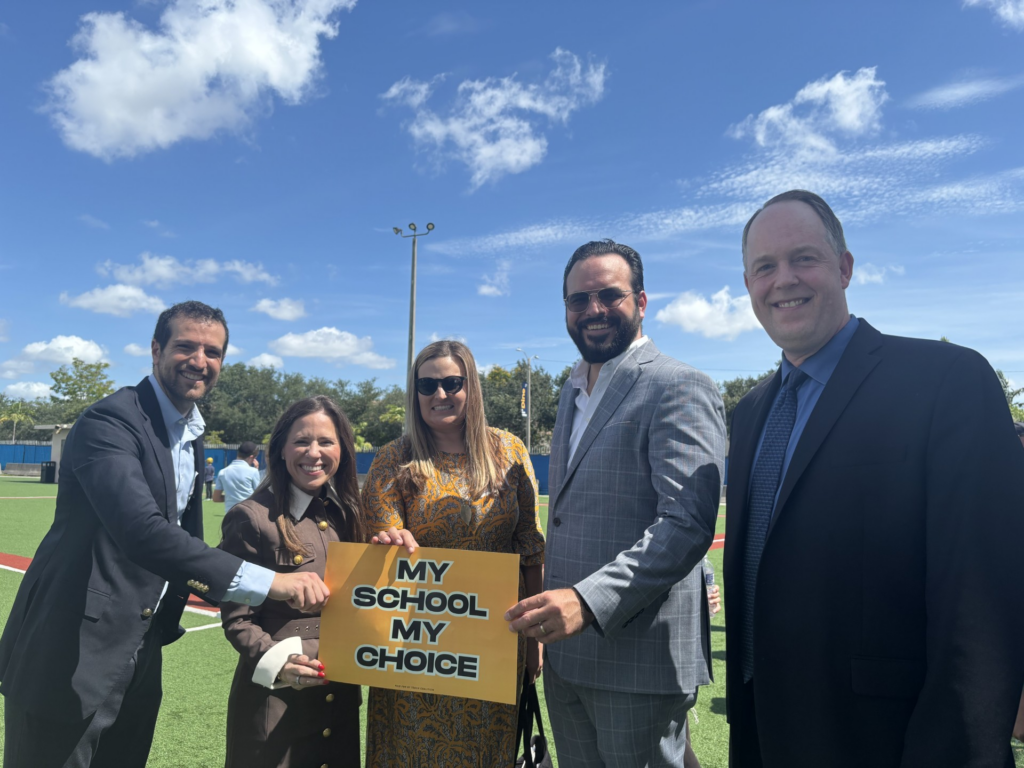
This week, the protests got louder. Students, parents, charter, and private school leaders stood outside Lubavitch Educational Center, the state’s largest Jewish day school, on Thursday and pledged to defend the decades-old policies and programs that have empowered families to choose the best educational fit for their children from a rapidly growing number of options.
“It’s not easy to pay private school tuition,” said Ailyn Weisleder, whose three sons are thriving at a Jewish day school. “But universal school choice has made that possible for our family. It gave us, and thousands of other families across Florida, the ability to choose the education that fits our children, not just the school assigned to us by a ZIP code.”
Audrey Maman Bensoussan said her family can’t afford to give her four children a Jewish education without the scholarships. She said the school feels like “a second home” to her children.

“If this lawsuit succeeds, it will not hurt politicians or special interests. It will hurt families like mine. It will hurt children like mine. It will take opportunities away from parents who simply want the freedom to choose the school that best meets their children's needs.”
Yonah Schwartz, 11, said at the news conference that if the lawsuit succeeds, then he won’t be able to afford to transfer to a school that better suits his learning needs.
“Not every kid learns the same way,” he said. “For me, changing schools means getting the chance to learn in a place that’s a better fit for me.”
The lawsuit, filed May 5, asks a judge to eliminate the state’s education choice scholarship programs based on the Florida Constitution, which says the state “shall make adequate provision for a uniform, efficient, safe, secure, and high-quality system of free public schools.” The lawsuit also seeks to end state funding of charter schools.
Faith leaders, charter school and private school leaders, as well as former Florida Gov. Jeb Bush’s Foundation for Florida’s Future, have supported the news conferences. Step Up For Students, the nation’s largest education choice scholarship funding organization, led the Tampa Bay area event. Teach Florida, a nonprofit school choice advocacy organization for Jewish education, organized and led the Miami event.
“The lawsuit brought by the Florida Education Association threatens everything these programs have made possible,” said Melissa Glaser, Teach Florida’s executive director. “This is about protecting families, protecting opportunity, and protecting a parent’s fundamental right to choose the best educational path for their child.”
She said more than $130 million annually in state scholarship funding helps ensure that Jewish children throughout Florida receive “the education they deserve — in schools that reflect their values and strengthen our communities.”
Their comments echo those made at the previous news conferences, where families described how scholarships had changed their lives. A charter school leader also spoke about how tuition-free charter schools ( which, like district schools, are public) have benefited students, including many from low-income households. Faith leaders also described how their schools uplift communities and welcome students with special needs.
Jim Rigg, superintendent of schools for the Archdiocese of Miami, said the lawsuit could damage “a thriving educational ecosystem in South Florida that attracts people from all over the world.” That includes the 37,000 students who attend Catholic schools in the diocese’s three counties. He said each school is accredited, gives standardized tests, complies with applicable state requirements, and employs highly qualified and certified teachers.
“But at its heart, the issue is not about institutions. It’s about children and families. Everyone wins with meaningful school choice, ultimately making our state the ideal place to raise and educate a child.”
LAUREL HILL, Fla. – Bryan and Laine Baker didn’t set out to start a school. They were focused on their kids and their up-and-coming cattle operation. But then Laine met a woman at a business conference in 2023 who was creating a hybrid homeschool 20 miles from the Bakers’ ranch.
The pair kept in touch, and one day, the woman asked if the homeschoolers in her orbit could do a “ranch day” at the Baker place. The next thing the Bakers knew, 50 to 75 kids at a pop were being driven from up to two hours away, from all over the Florida Panhandle and even South Alabama, so they could learn how to ear-tag cows, drive tractors, and use compasses in the woods.
“We were like, ‘What is going on?’ “ Laine said.
What’s going on is education freedom in Florida, which is happening at a scale America’s never seen.
Now the Bakers are part of the movement, too.
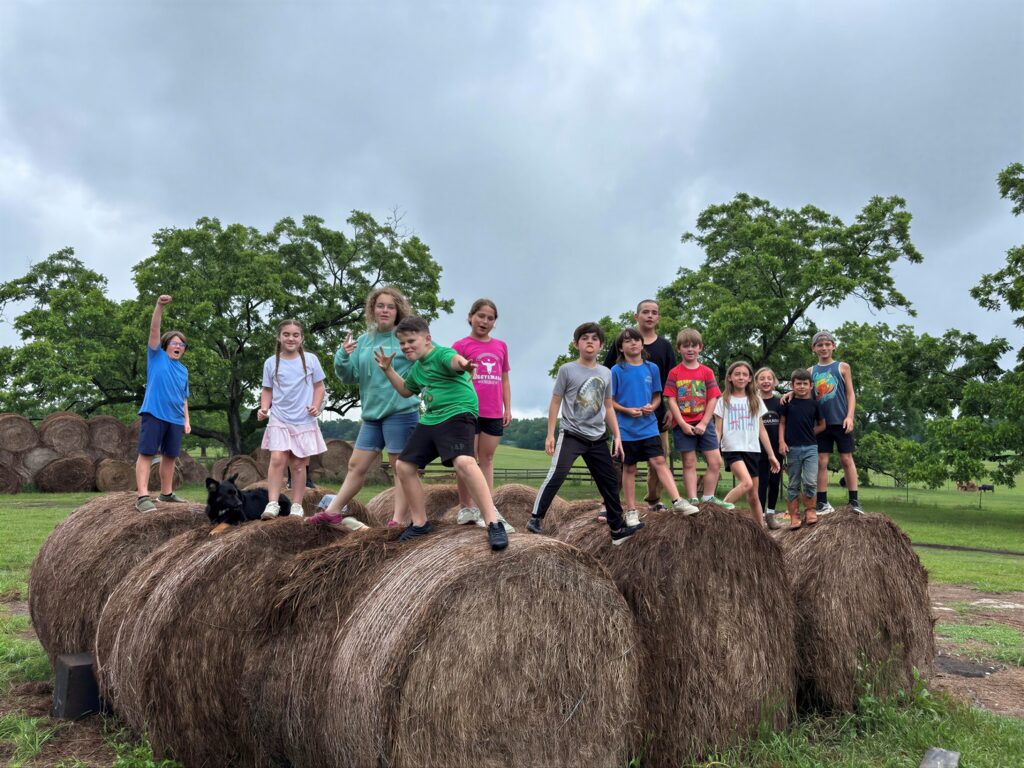
Their experience with those adventurous homeschoolers planted a seed that’s now spilling over with fruit. The Bakers’ Wagyumama Schoolhouse sits on 140 acres of woods and pasture, framed by hay rolls and pecan trees just shy of the Alabama line. For Florida, it’s pretty remote.
And yet, what the Bakers started last year with seven students in a barn now serves more than 100 students in two locations, almost all of them using state choice scholarships.
The demand “tells me you’re trying to fit yourself in a shoe that doesn’t fit,” said Laine, who struggled with dyslexia as a child and became a fitness trainer and entrepreneur. “There is a place for everyone to learn. In public school, it’s one way. Here, it’s many ways.”
Students can attend “ranch school” two to four days a week, for three hours a day. And/or come for “ranch day,” a two-hour à la carte experience on Fridays. And/or sign up for electives like building, cooking, or entrepreneurship, which are offered on an à la carte basis Monday through Friday.
The school’s second location, an hour south, is more focused on nature than agriculture, but has similar scheduling options.
The students learn core academics and so much more. At the ranch, they dehorn cattle, bottle feed calves, and do blood tests on cows to check for pregnancies. They also maintain a big garden, care for the chickens, and frequently cook the food they grow.
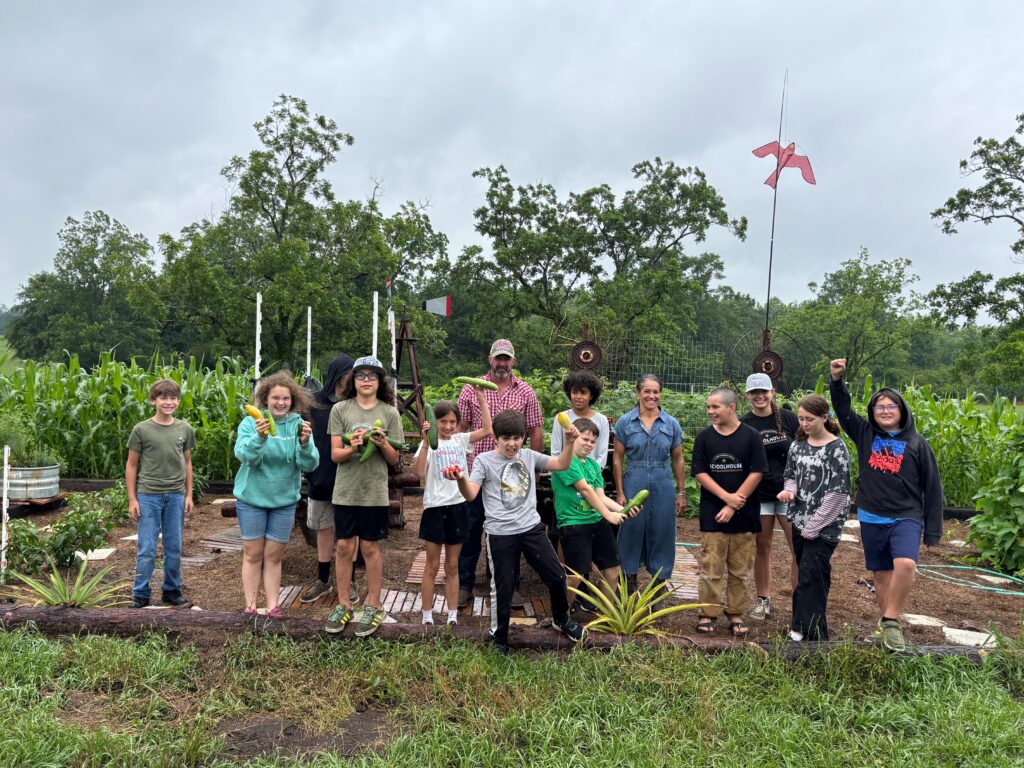
Along the way, life sometimes administers a pop quiz.
A couple of months ago, a cow was having trouble giving birth. The calf was stuck. Both were at risk of dying. A ranch hand tried pulling the calf out, but no luck. Some of the students suggested tying a rope to the calf and using a golf cart to pull it free. It worked.
“This place here, you never know what you’re going to learn,” Bryan said. “The kids saved that calf.” Today, both mother and baby are doing okay.
The families who access Wagyumama Schoolhouse also pick and choose from a menu of other providers.
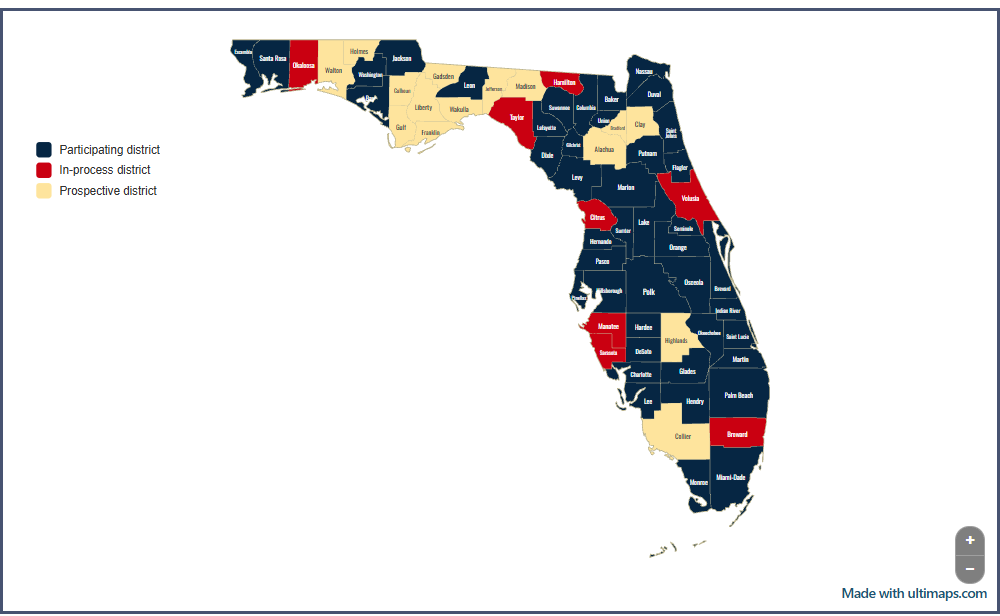
Florida now has more than 150,000 à la carte students and 7,000+ à la carte providers, making it far and away the leading state when it comes to “unbundled education.”
As more families choose this path, even more providers will emerge.
The Sunshine State already has more than 40 learning operations on farms and ranches. Most of them formed in the past three years, after Florida expanded eligibility for choice scholarships to all students.
“This is way crazier than I ever expected,” Bryan said about the school’s growth. Choice scholarships “literally opened the door wide open.”
Bryan is a retired Marine and former gym owner whose ties to Sunshine State soil go back 150 years. His family sold the Central Florida farm he grew up on, which left him longing for that lifestyle not only for himself, but he and Laine’s two children, Koa, 17, and Kai, 11.
In 2019, the Bakers bought an old cotton farm near the tiny town of Laurel Hill, 70 miles northeast of Pensacola. After they painstakingly converted 80 acres into pasture, they bought a small herd of Akaushi Japanese Red Cattle.
Now they have 50 cows, a top-tier wagyu operation, and, for them, the perfect place to raise a family.
“I don’t need to worry about where (Kai) is. He’s in the field, or with the cows and dogs, or picking blackberries,” Bryan said. In some urban areas, “kids can’t even ride their bikes in their neighborhoods because it’s too dangerous. Here a snake might be the biggest worry.”
The Bakers briefly sent their kids to schools in the area. But classroom disruptions and other issues led them to homeschooling. That, along with what they saw from those homeschoolers on ranch day, is what inspired Wagyumama Schoolhouse.
The Bakers’ approach to education is impossible to put in a box.
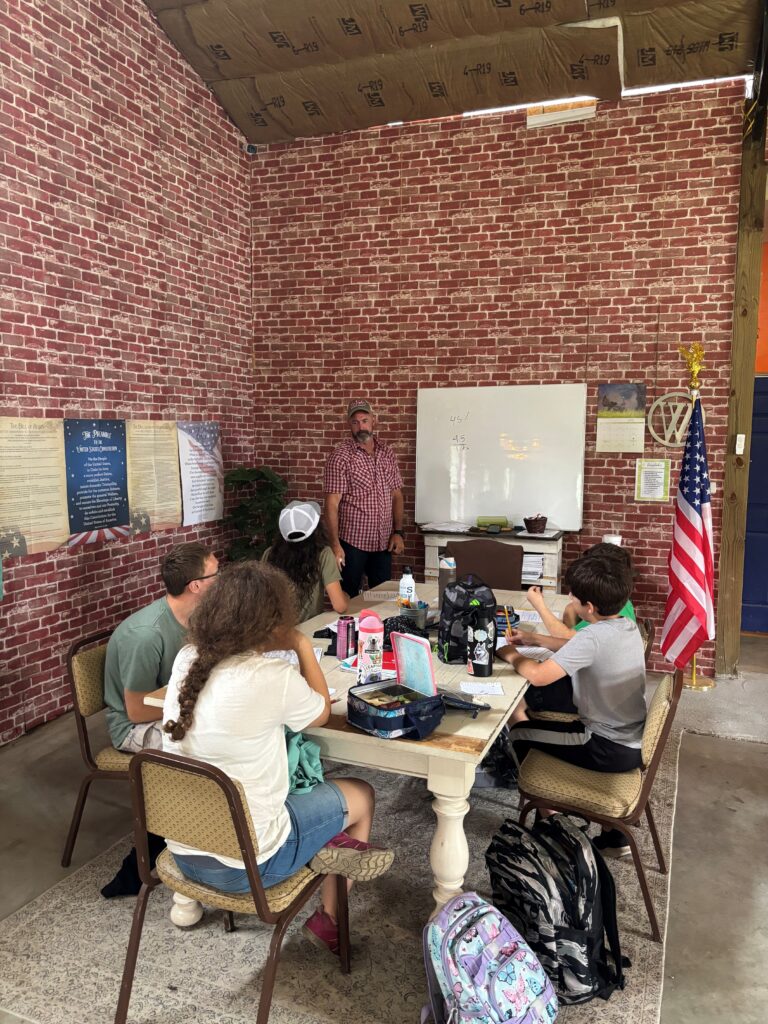
It’s heavily hands-on and place based. There’s a strong focus on building a solid foundation in literacy and numeracy. There are echoes of Waldorf, Montessori, and Charlotte Mason. Recently, the school began using the Orton-Gillingham approach to reading instruction, reflecting a belief that the structured, multisensory method originally developed for students with dyslexia benefits many kinds of learners.
Wagyumama’s 10 teachers are diverse, too. Some taught in traditional schools, including one who was a literacy coach in the local public school system. Some learned as they homeschooled their own children.
To track academic growth, they use NWEA’s MAP assessment, a nationally respected standardized test.
As the school’s growth would suggest, plenty of families think the ranch school strikes the right balance.
Lexi Franklin and her family moved to the area a few years ago when her husband, who’s in the Air Force, was assigned to a base about an hour away.
Their son Will, now 6, began attending a local school with a good reputation. But with so many hours sitting at a desk and plugged into screens, he felt out of place. “That isn’t the way he learns,” Lexi said. “My kids are used to being outside.”
By contrast, Will and his classmates at Wagyumama are sometimes taught reading lessons while sitting on hay bales. They learn about the water cycle by measuring how much rain evaporates from cups they’ve placed outside the barn.
Lexi, who works as an executive assistant, said her family would not have been able to access the school without the choice scholarship. Still, she wanted to be sure about Will’s progress, knowing the family might get re-assigned again and not wanting Will to start behind in whatever school might be next.
Wagyumama doesn’t issue report cards. But the standardized test results showed Will made strong progress this year and is now performing above grade level in reading and math.
Meanwhile, there are other encouraging results.
“He has gone from very shy, very quiet … to his confidence growing by leaps and bounds,” Lexi said.
Two of Mollie Allen’s kids, Samuel, 11, and Sarah, 9, attend Wagyumama’s other location, at a nature park affiliated with an environmental center.
Their prior schools veered from one extreme to another. The first was high performing but pressure packed, with only 15 minutes for lunch and 20 for recess. The second had bigger classes – and bigger challenges with classroom management.
Mollie, a speech language pathologist, discovered Wagyumama last fall after deciding to homeschool.
Compared to the prior schools, she said, there’s far more outside time and hands-on learning. When her kids learned a science lesson about buoyancy, for example, they built little boats out of popsicle sticks and tin foil and tested them in the nature park.
Meanwhile, if Samuel finishes his work early and wants to get up, he isn’t told to sit like he was before. Instead, he’s asked to organize PE activities for the younger kids. “He’s become a leader,” she said.
“Wagyumama Ranch has a setup that’s aligned with how kids are meant to learn,” Mollie said. Samuel and Sarah have “gone from not wanting to go to school … to not wanting to miss school. Huge, drastic difference.”
ORLANDO, Fla. — As public education has evolved from a one-size-fits-all system to one where families are empowered to choose the environment that best fits their child, everyone has been a winner: Students, parents, educators, entrepreneurs, and even public school districts.
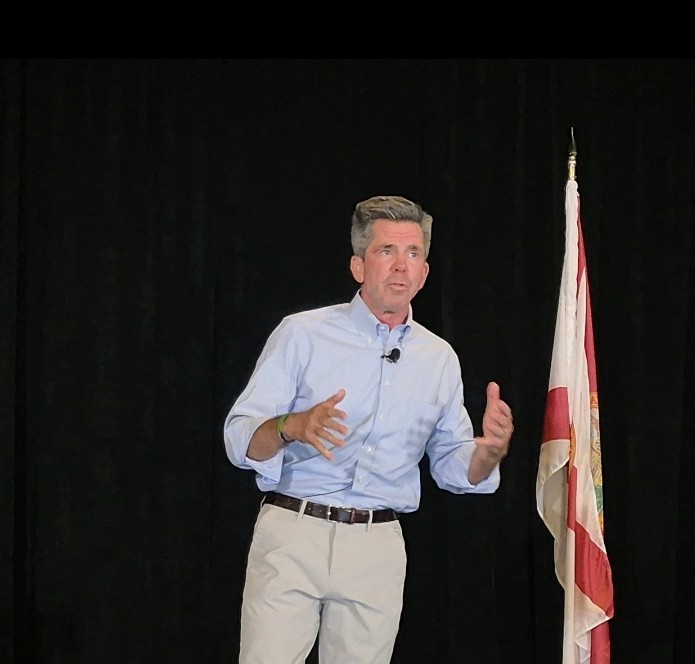
That was the message of John F. Kirtley, founder and chairman of Step Up For Students, to the roughly 1,000 people who attended the non-profit’s Navigating New Horizons conference this week.
In a closing speech that at the end brought the audience to its feet, Kirtley began by describing the state of education before the 1990s. Everyone paid taxes, and students were assigned to schools by their ZIP codes.
“It was, it could be said, a definition that emphasized ‘uniformity,’” he said, referencing but not naming the state teachers union’s recent lawsuit to eliminate Florida’s robust education choice programs, including all scholarship programs and charter schools.
Kirtley said he didn’t realize it at the time, but since overall graduation rates in Florida were, until the mid-1990’s, around 60% overall and less than 40% for black males, it’s likely that many of his friends on the football team who crossed the stage did not get real diplomas. They likely received certificates of completion. The second group probably included a classmate who regularly got in trouble for dozing during early morning courses and was uninspired by classic literature. Yet he could take apart an entire car and rebuild it by himself, when Kirtley couldn’t change his car’s oil.
“But there was no specialized program for him…No, uniformity didn’t serve him well.”
Today, Kirtley said, his classmate could sleep in, take core classes online in his pajamas, then head over to the district automotive technology program in the afternoon, where he would be the star student.
“When he graduated, he’d be hired by the local Mercedes dealer and make over $100,000 two years out of school,” Kirtley said. “So, yeah, he’d be better off.”
Not only are students better off, but so are educators who can start their own schools, including microschools, and even school districts, including many that now offer specialized magnet schools and individual courses to education choice scholarship students who attend school part time.
“I close by saying don’t fear the New Definition. Embrace it. Thrive in it. You can thrive in it whether you are a microschool, an à la carte provider, or one of nation’s largest school districts,” he said. “And when you thrive in the New Definition, all students will thrive along with you. And shouldn’t that really be the ultimate goal?”
His remarks echoed the message given the day before by Gretchen Schoenhaar, Step Up’s chief executive officer, who gave the conference’s opening speech.
“Families today seek learning environments that reflect their children's unique strengths, needs and goals,” Schoenhaar said. “What's really inspiring is how this demand has sparked innovation across the education landscape.”
Schoenhaar said she hoped the two-day event would offer attendees a chance to be “inspired by the conversations you have, encouraged by the stories you hear, and energized by the collective passion in this room.”
Schoenhaar said Florida is home to the nation's largest parent-directed education marketplace today, with more than half of all K-12 students participating in some form of education choice, including many district schools, private schools, charter schools, homeschools, online schooling, or some combination of those.
“The spirit of innovation and possibility is exactly what this conference is all about,” she said.
The event, whose theme is Facing the Future Together, featured nearly 100 session speakers and 100 exhibitors displaying everything from a la carte learning to transportation options, tutoring, and curriculum.
Organizers said this year’s goal was to provide educators with information and resources based on best practices that also reflect the bigger picture. That included information about the rise of microschools and how to use AI efficiently and responsibly.
“Over the next two days, we hope you'll be inspired by new ideas, meaningful connections and innovative strategies that will help shape the future of education,” Paula Nelson, Step Up’s vice president of school and provider services, told the audience during her welcome.
Breakout session topics included school safety, a la carte education, navigating AI, the future of public education, the benefits of applying for the Yass Prize, how public schools are offering individual courses to scholarship students and how to create and sustain microschools. Four sessions on the upcoming federal Education Freedom Tax Credit program drew standing-room-only crowds.
The federal program, which launches in January 2027, allows individual donors to divert up to $1,700 of federal tax liability to support scholarships for students in public and private schools. The federal government is expected to announce rules that cover program specifics soon. Florida Gov. Ron DeSantis is among the governors who have opted their states into the program.
At the end of the conference, Schoenhaar broke some news: The conference will return June 14 and 15 of 2027.
This à la carte learning provider uses woodwork to instill deeper lessons
JACKSONVILLE, Fla. — Alex Knott began to gravitate toward woodworking in 2021, first as he was remodeling he and his wife’s fixer-upper, then as he was teaching his friend’s kids how to build birdhouses. His interest led him to the classic PBS show, “The Woodwright’s Shop.” He watched, rapt, when the series re-aired a segment about “sloyd,” an approach to education through woodworking that originated in Scandinavia in the late 1800s.
A year later, The Sloyd School was up and running.
Alex’s wife, Lindsey, tapped their homeschool connections for an initial cohort of 21 students. That turned out to be more than enough for Alex, then a gainfully employed mechanical engineer, to realize he wanted to do this full time.
“The kids didn’t use a lot of words, but you could see it in the smiles on their faces. They’d say, ‘This is so cool’ and ‘This is so satisfying,’ “Alex said. “And their parents would say, ‘It’s nice that they’re using their hands to make things, and they’re off the screens.’ “
Demand, too, signaled the Knotts were on to something. Today they serve 91 students across 13, 90-minute classes. The students range from 8 to 20 years old.
Alex’s full-time job now is being their instructor.
They’re “not doing it because they’re necessarily going to be a woodworker someday,” Alex said. “They’re doing it because they want to learn, and they want to make stuff, and they just love planing and sawing and the way they’re bodies move.”
“If they take satisfaction and pride in their work,” he continued, “that’s going to carry forward.”
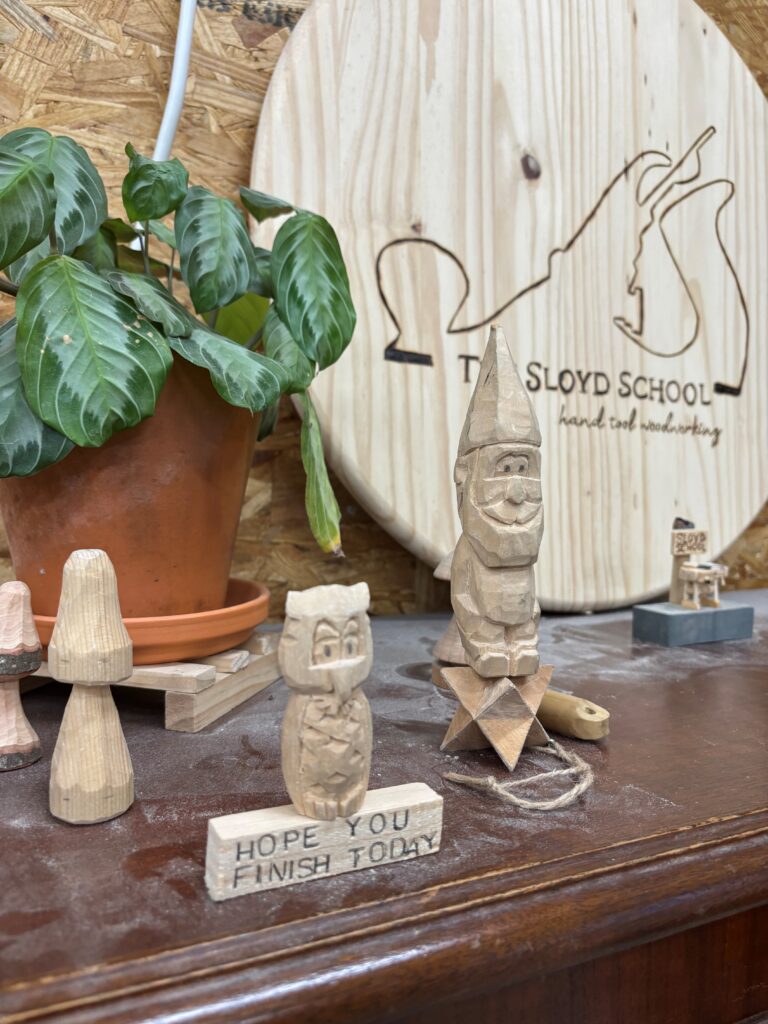
The Sloyd School is another bloom on the most diverse and dynamic education landscape in America.
In Florida, where school choice and education choice are the new normal, it’s easy to find former public school teachers behind new schools and à la carte providers. But it’s also not hard to find other talented people creating compelling options, like this marine biologist … this neuroscientist … this building contractor …
Alex worked as a design and process engineer. Lindsey taught literature in a hybrid homeschool. Now their fledgling operation is one of roughly 8,000 à la carte providers that, in just a few short years, are already part of Florida’s choice-driven education system. With 150,000+ à la carte learners and more than $1 billion in à la carte spending this year, Florida is setting the pace nationally when it comes to unbundling education.
Classes at the Sloyd School are aimed at cultivating “skilled hands and wise hearts.”
The magic happens in a spacious workshop next to the Knotts’ home. It’s sweet with the smell of sawdust and alive with the bang and scrape of wood being transformed.
Most of the students use either the Personalized Education Program scholarship or the Family Empowerment Scholarship for Students with Unique Abilities. Both are education savings accounts that can be used for parent-directed learning.
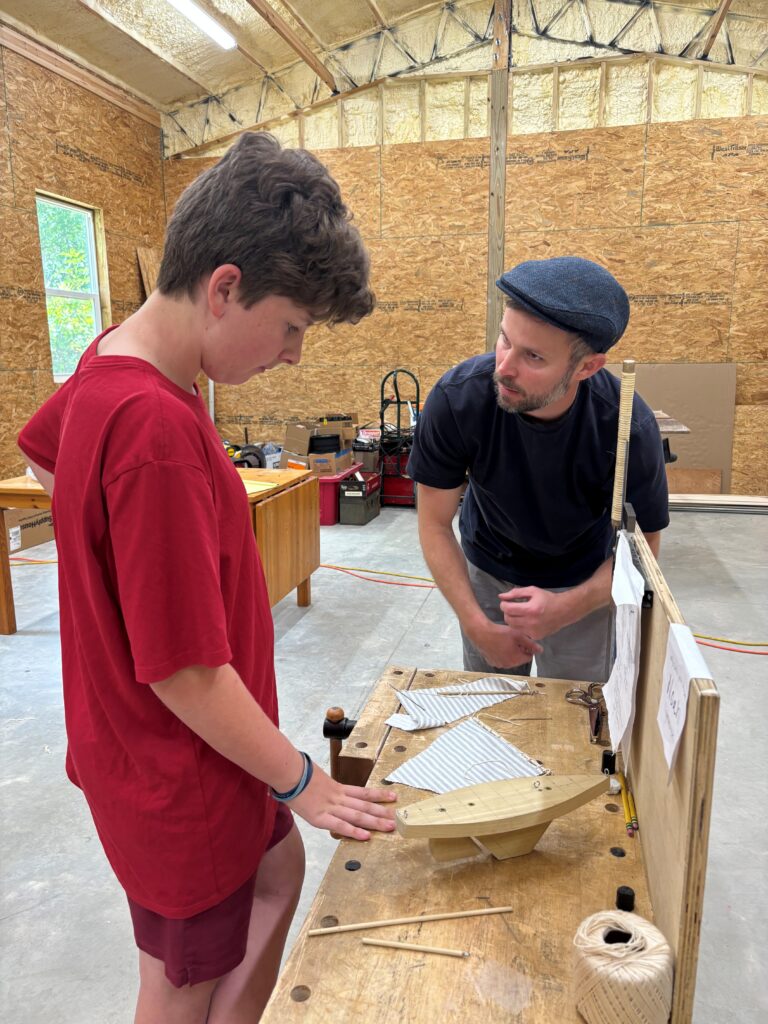
The students fashion their projects at individual work benches, arranged in two rows against a backdrop of walls made from oriented strand board and wood scraps stacked neatly on shelves. With planes and files and a variety of other hand tools, they make everything from yo-yos and hat racks to toy sailboats and crossbows.
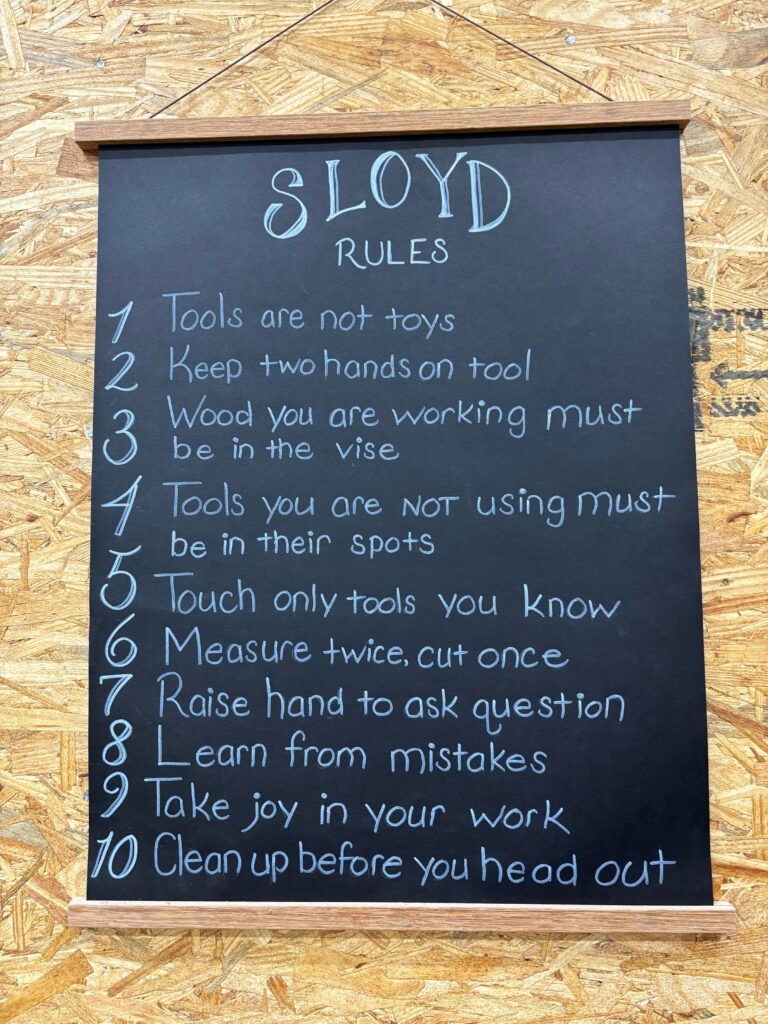
Power tools are not in the mix. The school website explains why, in terms that should be savored:
“Because hand tools function as an extension of the hand, rather than reducing the hand to a manipulator of buttons or mechanical arm, they immerse us in the full benefits of handwork; they bring the world close enough to experience its spectacular range of textures and scents and hues, to feel the difference between working with rather than against its grains and currents and patterns, to move from knowing about the world as a fact to knowing it as a friend.”
Alex scaffolds his lessons, starting with the simplest exercises, then adding new skills class by class. The students follow written instructions for their projects. But Alex offers guidance as he makes the rounds with a newsboy cap on his head and a pencil perched on his ear.
“This side looks really, really tight,” he told a student making a stool, referring to where a leg fit into the socket on the underside of the seat. “But this side’s got a little gap.”
Another student was making a helicopter-on-a-stick toy that’s propelled by spinning the stick between the palms and abruptly stopping. “I’ve found that if you make these a little thinner,” Alex said of the blades, “it’ll fly better.”
Both students listened and nodded, then got back to work.
Sloyd is about way more than the practical skill of making things with wood.
The lessons are deeper: Pride in work. Problem solving. Persistence …
Laura Flaherty enrolled her oldest son Matthew after hearing about the class in 2023. Her father, a civil engineer whose hobby was woodworking, unexpectedly died five years ago just as he had begun to teach Matthew the basics.
“We were all happy to have someone with as much skill and knowledge as Alex teach our boys,” said Laura, a former veterinarian who’s now a stay-at-home mom of four. “He’s a calming presence too. He’s so good with how he explains things.”
Matthew, now 12, likes the challenge. His favorite projects are the toughest ones, like the windmill he finally finished after breaking several blades.
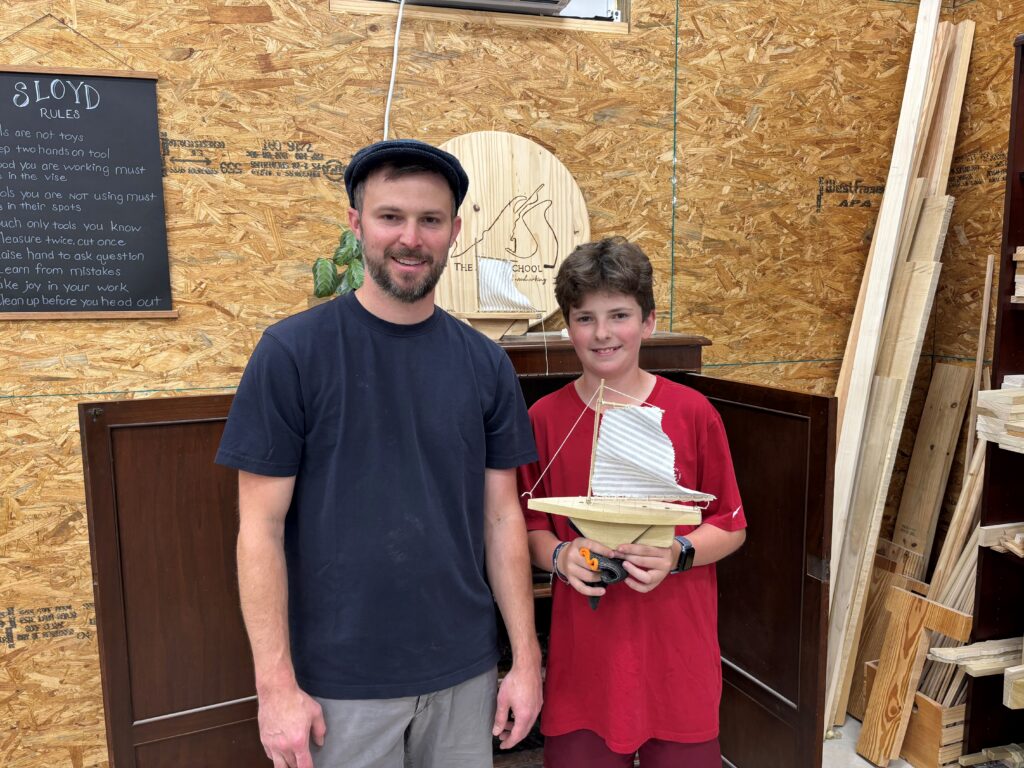
“There were several projects he told me were frustrating, but he kept at it,” Laura said. “If you make mistakes, you keep moving and eventually you’ll get it.”
The Sloyd School feels like a bridge, not only between past and present, but between different educational camps. It evokes other threads in alternative education, like the “common arts” idea that surfaces in some classical education circles, and the “handwork” from Waldorf education.
The school website nails the deeper connections.
“To shove a plane across a pine board is to work in the pattern of countless others across time and place, and to join hands with them in sustaining and shaping a facet of human culture,” it says. A few sentences later it adds, “Yet over above all this, we delight to work with wood because it is a living material, individual, intriguing, and lovely.”
Piece by piece, The Sloyd School and other à la carte providers are re-shaping public education into something more individual, intriguing, and lovely, too.
GLEN ST. MARY, Fla. – Baker County is in a piney corner of North Florida that hugs the Georgia line near the Okefenokee Swamp. It’s part of metro Jacksonville, but on the country side, not the coastal side, still more small town than sprawl. Its biggest town, Macclenny, boasts 7,304 people. One of its top employers is a Walmart distribution center.
Places like Baker County aren’t often associated with school choice and innovation, but it’s not because those things aren’t happening there. They are. In fact, in the mega-state with the most diverse and dynamic education system in America, it’s Baker County that’s home to one of the biggest and most intriguing hybrid homeschools.
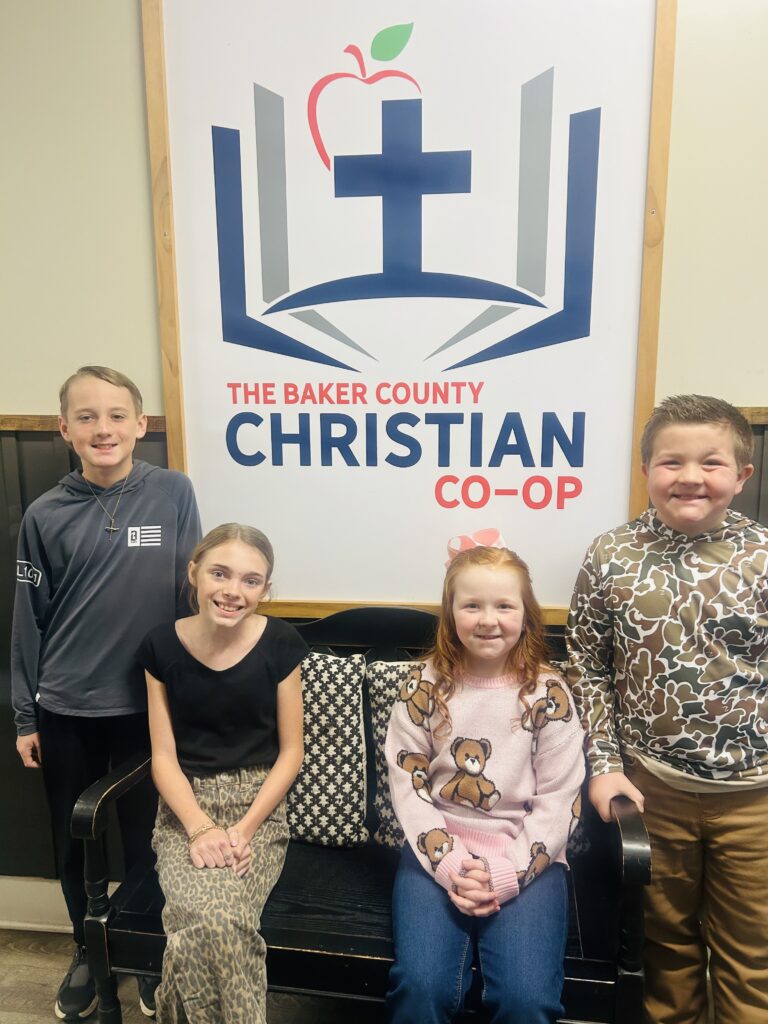
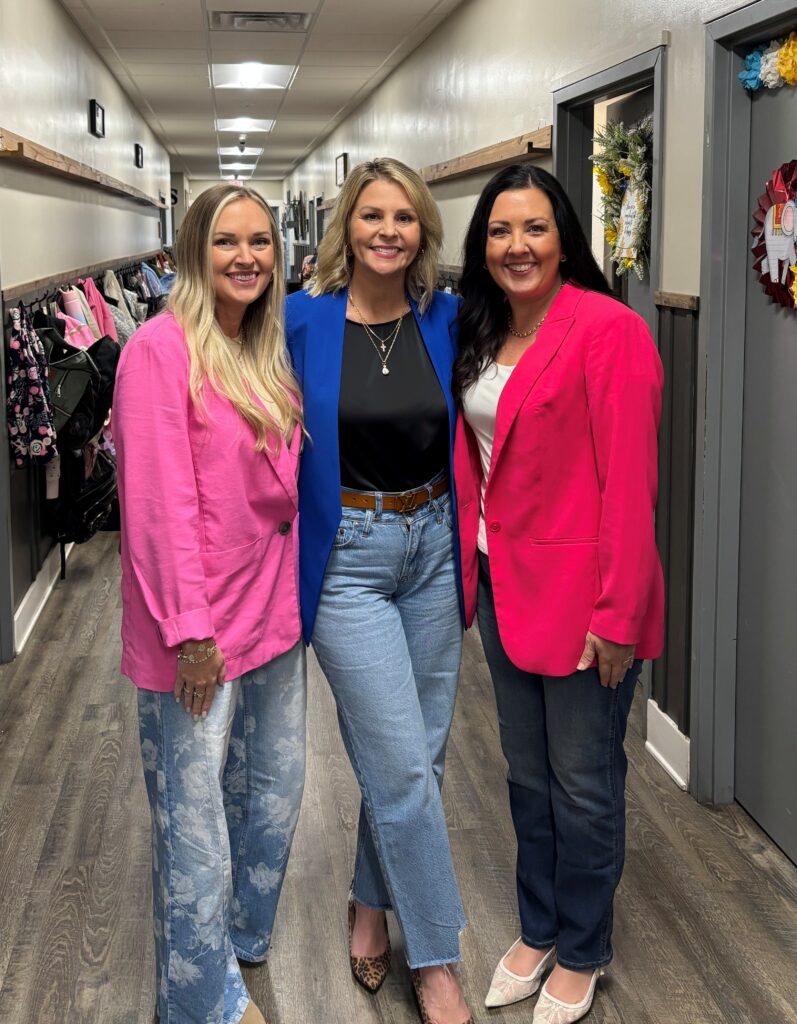
Nine years ago, three former public school teachers, Tara Rhoden, Katie Wilford, and Amy Blankenship, said goodbye to nearly 40 years of collective experience in the local public schools and went all in on the Baker County Christian Co-op.
Their four-day-a-week creation started with 45 students in grades K through six – and no plans to grow beyond grade eight.
But now BCCC has nearly 300 in grades K-11 – and 600 more on a waitlist.
That’s not a typo. SIX HUNDRED MORE ON A WAITLIST.
In a school district with 4,000 students.
“I joke that it’s the Disney World of education,” Katie said. “Everybody is happy. They want to be here.”
“There weren’t really choices in Baker County,” Amy said. “But we provided a choice.”
BCCC is another example of what’s possible when education choice is the new normal, as it is in Florida.
Its existence shoots down multiple myths.
School choice isn’t good for teachers? BCCC’s co-founders are among hundreds of former public school teachers in Florida who’ve created their own schools. Meanwhile, 16 of the co-op’s 17 teachers previously worked for public schools. (The one exception is Tara’s daughter, a product of local public schools, who started her teaching career at BCCC.)
School choice can’t work in rural areas? Baker County is one of Florida’s 30 rural counties; it has a grand total of 30,000 residents. Yet nearly every student at BCCC uses a flexible, state-supported choice scholarship, better known as an education savings account. It’s not hard to find other cutting-edge, choice-fueled learning options all over rural Florida.
Education innovation is a city thing? BCCC sets its pricing at $1,000 less than the value of the ESA, so parents can use their funds for other state-approved educational uses. “Incentive to hunt for value” is what ESA designers were aiming for when they were fine-tuning the concept two decades ago, and here it is happening in a county with more interstate rest stops (2) than Starbucks (1).
At BCCC, each co-founder had good reasons for wanting options for her own children.
Amy’s daughter had a tough time socially in elementary school, so Amy considered homeschooling her. But she worried that might leave her daughter in a situation where she wasn’t getting enough social interaction.
Katie’s daughter was in a faith-based preschool, and Katie appreciated how faith and academics were intertwined in a way they could not be in a public school.
Tara’s son, meanwhile, had health complications that made a full-time school difficult.
Tara and Katie, who were also curriculum coaches in the public schools, had thought about starting their own school. Years ago, Tara visited the school in Atlanta founded by legendary educator Ron Clark. That kept the dream alive, even if she never acted on it until co-founding the co-op.
“He just made learning fun,” Tara said. “I wanted to be that teacher.”
When the trio finally decided to go for it, they needed 30 students right off the bat to make the finances work. After the co-op’s first parent night, 31 students signed up.
For the most part, BCCC’s curriculum is aligned with the state’s academic standards. Even though those standards were designed for public schools, it’s not hard to find private school educators who value them.
At BCCC, students in kindergarten through fifth grade study the core academic subjects and the Bible every day.
Students in sixth through 12th grade follow the same regimen, but with electives like health, home economics, and agriculture in the mix, too.
About half of BCCC’s high school students (the co-op will be fully K-12 next year) also take dual enrollment classes through a nearby state college.
“We’re going to give you what you need to be successful,” Amy said. “For those four days, it’s jam packed. We push these students.”
It’s what happens beyond academics, though, that makes the founders especially grateful they followed their hearts.
When Amy’s daughter was sick, for example, Katie’s daughter and her friends made a video for her, a compilation of 10 other students wishing her well and offering her prayers. No one asked these girls to do that; they just knew it would help their friend.
“This is why we did what we did,” Amy said.
“We’re not fighting the school system. We’re fighting the world,” Katie said. “We take faith very seriously.”
BCCC has always been four days a week. The founders decided from the start that they would not offer classes on Fridays because “it’s such a good family day,” Katie said.
BCCC has additional flexibility because it’s a co-op, not a private school. Attendance is not mandatory.
The founders said they never thought much about school choice before starting the co-op. With few options beyond public schools in Baker County, the idea seemed irrelevant.
That changed in 2023. That’s when the Florida Legislature and Gov. Ron DeSantis made every student in Florida eligible for choice scholarships and created the Personalized Education Program scholarship, which gave families of general-population students more flexibility with the funds.
Suddenly, more families could access what BCCC offers.
Jennifer Franks’s family was among them.
Jennifer enrolled her daughter, Jencee, 8, and son, Cutler, 10, after they attended the neighborhood school for several years. Her kids had good experiences and great teachers, she said. But BCCC offered features her family considered vital: smaller classes, a Christian education, and that family day on Fridays.
Academically, she said, her children are accelerating. And meanwhile, her family gets more time together.
Jennifer is a hair stylist. Her husband is an electrician. Both adjusted their work schedules to have Fridays off and long weekends with the kids. BCCC’s schedule syncs with that perfectly.
“That was a big selling point for us,” she said. “You just don’t get that time back. Your kids are only little once.”
BCCC isn’t sure how to accommodate all the families who want in. But there are plans for another building that can hold additional students. If all goes well, it’ll be in place by the start of school in 2027.
Meanwhile, word has gotten around about BCCC’s success.
Educators in other rural counties have reached out to learn how they can start their own operations. BCCC’s founders say there’s no reason they can’t.
With choice, Katie said, “all communities can come together and create something like this, to do what’s best for all children.”
PINELLAS PARK, Fla. — Surrounded by students in crisp school uniforms, a group of educators, faith leaders, and families urged Florida’s teachers union to drop a lawsuit that seeks to end the nation’s largest K-12 education choice programs.
“I am not anti-public school. Public schools work for many children. But they don’t work for every child, including my sons,” said Leslie Coker, a stay-at-home mom whose two school-age sons have radically different unique abilities and who have benefited from the learning options the programs provide. The scholarships made it possible for a single-income household like hers to afford to send one child to a hybrid school and homeschool the other son full time. Both boys are thriving in learning environments that best fit their individual needs.
“For me, this lawsuit is not political. It is personal. If it succeeds, the impact will hit my family hard, as well as many others," the Bradenton area mom said. We are living proof that education choice is working in Florida. I urge the teachers union to respect our choices and drop the lawsuit.”
Mrs. Coker made her plea on Wednesday at a news conference at Sacred Heart Catholic School, which serves more than 200 students in preschool through eighth grade. Florida Catholic schools have increased their enrollments over the past decade in contrast to their counterparts in other states, which have seen declines. They credit Florida’s robust state scholarship programs, which have made the Sunshine State the national leader in empowering parents to choose the best learning options for their children.
“Ultimately, this debate comes down to one simple question: Who is best equipped to make educational decisions for these children? A bureaucrat sitting in an office hundreds of miles away? Or the parents who know, love, raise and sacrifice for that child every single day?” said Christopher Pastura, schools superintendent for the Diocese of St. Petersburg. He called the lawsuit “misguided and wrong” and urged the union to withdraw it.
“We cannot go backward,” he said.
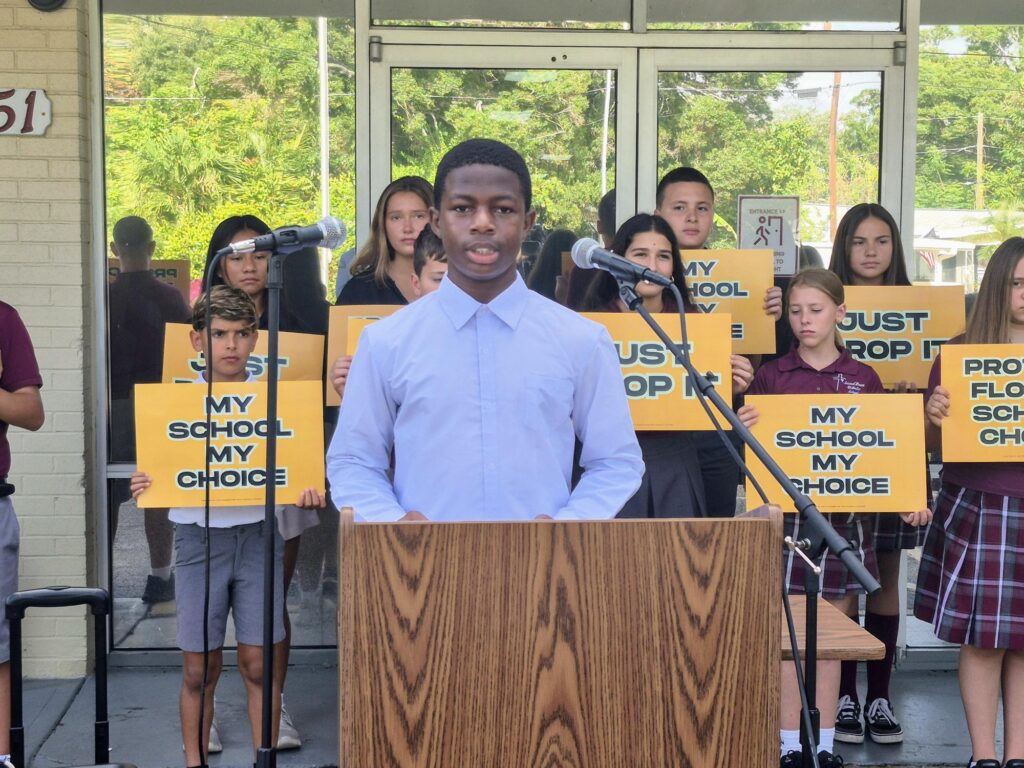
Supporters began speaking out within weeks after the Florida Education Association and others sued the state on May 5 over its three-decade-old private school scholarship and charter school programs. The latest figures from the Florida Department of Education show that 1 million Florida K-12 students are now educated outside of district schools. A news conference, organized by former Gov. Jeb Bush’s Foundation for Florida’s Future, was held May 14 outside the Old State Capitol in Tallahassee. Step Up For Students, which manages virtually all the state’s K-12 scholarship programs, organized Wednesday’s event.
James Hartman, executive director for IDEA Public Schools in the Tampa Bay area, noted that Florida charter schools, which the law established in 1996, now serve nearly 400,000 students on more than 700 campuses.
“Charter schools are not opposed to public education,” he said. “Charter schools are part of public education.”
Hartman said he hopes that as the lawsuit makes its way through the courts, the focus can stay where it belongs — on students.
For the low-income families who live in the part of Tampa served by Faith Action Ministry Alliance (FAMA), the scholarship programs are not a luxury but a lifeline.
Students who attend the FAMA-owned Grant Park Christian Academy share what they learn at home, said the Rev. Alfred Johnson. That elevates the educational level of an entire community.
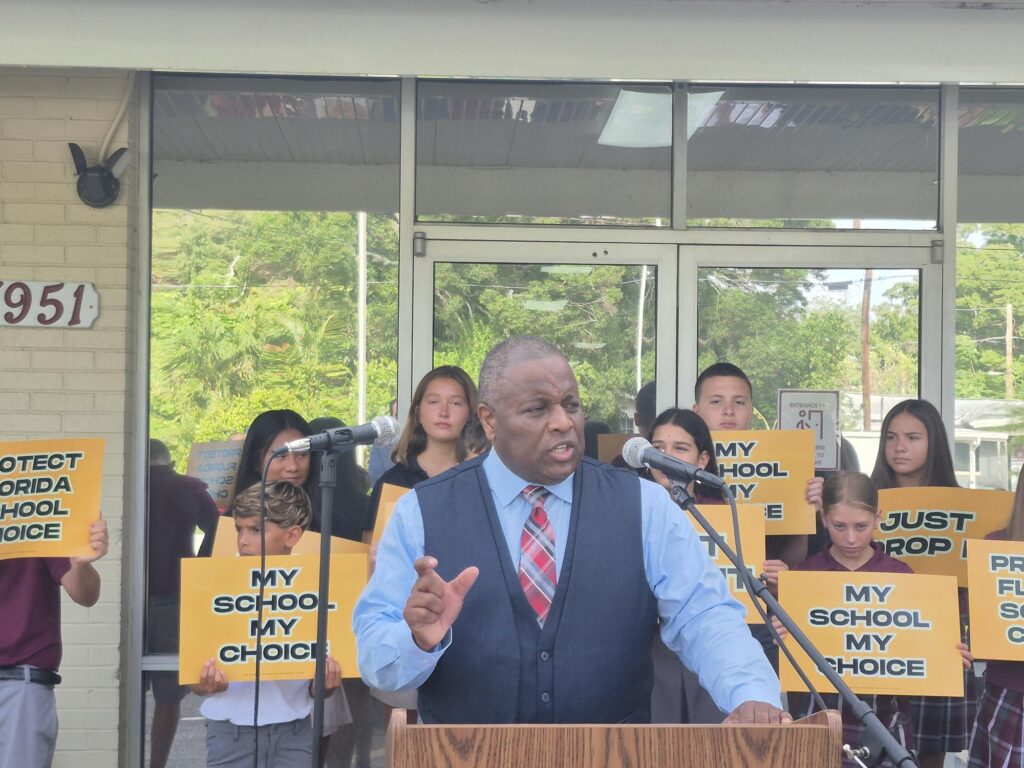
“I remember one mother telling us through tears, ‘My children are learning things at school that we didn’t even know in our home. They’re bringing it back home — and it’s changing our family.’”
Johnson said county commissioners tell him that more programs like his are needed to help those living in low-income communities.
“So how can we say we want to save neighborhoods while simultaneously attacking the very programs helping to save them?” he said. “I urge the teachers union to abandon this lawsuit — so that we do not abandon our children.”

