Recently I attended the American Federation for Children’s policy summit in Washington, D.C. This event was an exciting, informative, two-day conference filled with panel discussions, keynote speakers such as Lisa Leslie and Mike McCurry, and networking opportunities with education reformers from all over the country. I left D.C. feeling similar to when I left the Foundation for Excellence in Education conference this past November. Invigorated. Energized. Hopeful.
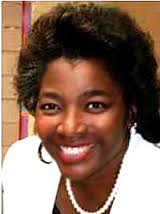
Alberta Wilson: "Parents should be involved. They are the stewards of their children. If we continue to do things as we are doing them, we won’t be successful."
But I also kept thinking these events should be experienced and enhanced, a thousand times over, by one very important, and missing, demographic.
Parents.
My background is important, but not necessarily the reason, why I want to see more parents at education conferences throughout the country. I have been a Democratic activist and community organizer for the last 25 years. I now organize parents for Step Up For Students. Perhaps that does influence my thoughts and opinions.
However, I remember suggesting more parental involvement after attending education conferences as a teacher. I simply expect more now. I expect parents to be included in every substantive event, conference, policy discussion, roundtable, and town hall meeting, and I’m routinely disappointed when they aren’t anywhere to be found.
Of course, many of the participants are parents as well as education reformers. We bring that passion for school choice from personal experiences. I can talk about years spent driving my children out of county to put them in a public school that worked for them and then utilizing scholarships a few years later when a private school better fit their needs.
But we should hear more stories from a diverse population of moms and dads.
At the AFC Conference, Dr. Alberta Wilson, president and CEO of Faith First Educational Assistance Corp. and consultant for Capstone Legacy Foundation, shared my concerns. At several sessions, she spoke from the audience to implore that more parents be included – at every level.
I caught up with her recently and asked her to elaborate. (more…)

Does Sen. Bullard, a teacher and local union rep, have a conflict of interest too?
I was a news reporter for 20 years. I appreciate what good journalists do. But I’m often perplexed by the selective scrutiny that permeates so much education coverage in Florida, particularly when it comes to school choice issues.
The latest example: An “investigation” by an Orlando TV station into the "cozy connections" between Florida state lawmakers and rapidly expanding charter schools. WFTV-Ch. 9 raised conflict-of-interest questions this week about lawmakers who work for charter schools and who have backed legislation that generally promotes charter expansion. It singled out incoming House Speaker Will Weatherford, R-Wesley Chapel; Rep. Erik Fresen, R-Miami; and John Legg, R-New Port Richey, a state rep headed to the state senate.
First off, this is old news. The ties between all three lawmakers and charter schools have been well publicized. In fact, they were among a bigger handful of lawmakers cited last December in a front-page Tampa Bay Times piece on the same issue. Curiously, the TV station kicked off its story with the same anecdotal lead as the Times did, one involving Legg and the Pasco County School Board.
More important, the station neglected to mention that a number of other lawmakers have strong if not direct ties to school districts. Sen. Bill Montford, D-Tallahassee, heads the state superintendents association. Former state rep and now Sen. Dwight Bullard, D-Miami, is a public school teacher and local union rep. Two newly elected Democratic state reps, Mark Danish in Tampa and Karen Castor Dentel in the Orlando area, also teach in district schools. Should teacher-lawmakers be voting on state budgets that could affect how much they’re paid? Should they vote on legislation that could impact how they’re evaluated? (more…)
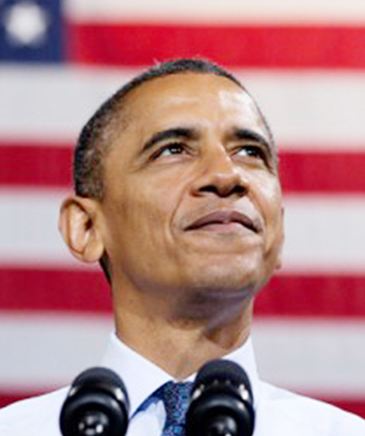 President Obama has often called on us to be true to who we are as a people, as Americans. And in his second term, he has the opportunity to transform the education system back to our core - to where parents are primarily in charge of children’s educations.
We have paid a price for transferring authority and responsibility for educating children from parents to government entities. With mostly though not always good motives (remember Brown v. Board of Education), we allowed the dream of the government-owned and operated common school to live on despite overwhelming evidence that, in reality, it wasn’t working. A child’s educational destiny continues mostly to be a function of his/her zip code and the competence of strangers who sit on local school boards.
For more than three decades, a long, slow correction of this anomaly in American society has been underway. First, intradistrict and interdistrict transfers began to appear that allowed limited parental choice within some parts of the public school system. Then magnet schools surfaced, offering options such as vocational, talented and gifted, and language immersion programs, and responding to more demands. In 1992, charter schools emerged. Today they account for almost 6 percent of all public schools, approaching 6000 total, and the number grows steadily each year because the demand from parents so far is insatiable.
Thanks to my colleague at the American Center for School Choice, Gloria Romero, a new tool has appeared. The parent trigger empowers parents to make changes to their school when they are not satisfied. Already 20 states have considered the approach and seven have adopted laws.
Private school choice programs continue to gain support, too. And they have done so despite fierce opposition from forces that want to defend market share over a parent’s right to choose. Today, 32 such programs operate in the country. And in recent years, many school choice bills have either been passed by legislatures with Democratic majorities or signed by Democratic governors. Just as important, once enacted, these programs have only grown. No state has repealed a program or decided choice does not serve the public well. Moreover, the doomsday scenarios that opponents consistently forecast for public education systems have never happened.
It’s said you can’t argue with a river; it is going to flow. Parents are going to take back the authority and responsibility for educating their children. The river has been flowing for more than 20 years and the current is gaining speed. It’s time for more Democrats to stop arguing as families assert their fundamental and universally accepted American value that they know the best choice for their children. Democrats need to work in positive ways to transform our system. We need good schools and there’s plenty of room for all types - public, charter, and private.
President Obama has the life experience, as well as the political skills and credentials, to lead this transformation, and to make it less jarring and less confrontational. (more…)
Actress Viola Davis is great as a teacher/parent in “Won’t Back Down,” the potent movie about parental empowerment that’s hitting theaters Friday. But as a spokeswoman for school choice, she’s even better in real life. Here’s what she said the other night on “The Tonight Show,” to huge applause, after Jay Leno asked her why the movie is being called controversial:
I am a parent. And as a parent, I have a child and I know that the only way she’s going to get a part of the American Dream is through education. And so if that great education is a public school, I’m going to send my kid to the public school. If that great education is a charter school, I’m going to send my kid to a charter school. If it’s a private school, I’ll send her to a private school.
I think that it’s about wanting do what’s best for your kid.
It’s a common refrain in ed reform debates: If only more parents would do the right thing, schools would be a lot easier to fix. Especially, it seems, black parents.
Whenever I wrote a newspaper story about struggling black students, it was guaranteed to make the web site’s “most commented” list. Scores of angry people would write in to berate and belittle black parents, often in blatantly racist terms. Bill Cosby makes similarly hard-line arguments in a tough-love kind of way. So do some media personalities, like nationally syndicated columnist Bill Maxwell.
In his column last Sunday, Maxwell takes on a faith-based group in Pinellas County, Florida called FAST, which stands for Faith and Action for Strength Together. FAST recently made headlines for urging the Pinellas County School Board to do something about abysmal reading scores in 20 high-poverty schools, many of them with predominantly black student populations. In a public meeting, 3,000 members of the group called on the board to adopt a “direct instruction” approach.
As he has done before, Maxwell called for more accountability from black parents. He suggested it was a waste of time to focus on what schools may or may not be doing. He said the district’s web site had plenty of good tips.
Maxwell is right to stress how much parents matter. Nobody in their right mind disagrees. But like many things in education, this isn’t a case of either-or. (more…)

