
Bethlehem Christian School in Bethlehem, Pennsylvania, one of 2,417 private schools in the state serving more than 284,000 students, is a nondenominational, “Bible-believing” school that offers a complete educational program committed to equipping students for Christian living.
Editor’s note: This commentary from Nathan Benefield, senior vice president of the Commonwealth Foundation, appeared Wednesday on Pittsburgh’s post-gazette.com.
Flooding public schools with more money won’t deliver educational opportunity for every student. Equitable opportunity requires that every student has access to the educational environment that best meets their needs. And the best people to decide the environment that best meets their needs are their parents.
This isn’t a distant ideal. It’s already a reality for an increasing number of students across the nation.
In March, Florida became the fourth state this year, following Arkansas, Utah, and Iowa, to create universal education savings account programs for students. ESAs provide educational resources to families, allowing parents to decide how best to spend funds (typically $7,000 to $8,000) on expenses, including private school tuition, home school curriculum, or special needs tutoring.
ESAs deliver opportunity for students who otherwise only have one option: their zip-code-assigned institution. In states with ESA programs, education funding follows students to the environment of their choice, rather than constraining students to a one-size-fits-all system.
Pennsylvania should join the rest of the nation in passing ESAs. Our state has an education crisis, but it’s not for lack of funding. Pennsylvania education funding far exceeds national averages, with public schools spending almost $20,000 per student, or $4,000 more than the national average.
To continue reading, click here.
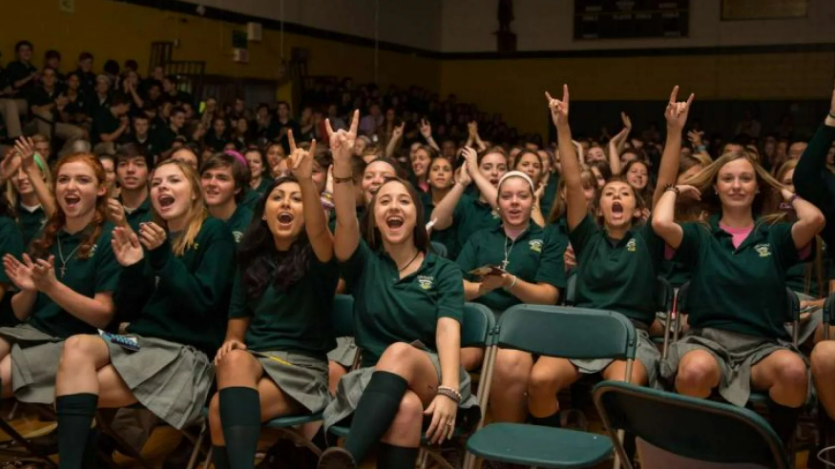
Landsdale High School in Landsdale, Pennsylvania, one of 1,814 private schools in the state serving more than 260,000 students, offers 44 honors and 36 college preparatory courses to encourage critical thinking and problem-solving skills.
Editor’s note: This commentary appeared Monday on inquirer.com.
After a more than eight-year slog, the Pennsylvania Commonwealth Court affirmed what the Pennsylvania Constitution has said all along: Kids deserve their education to be about a “meaningful opportunity,” not a flawed and antiquated system.
The ruling is a victory, especially for school-choice advocates, many of whom are parents of color, looking to help their children get out of failing district schools. When Commonwealth Court Judge Renée Cohn Jubelirer issued her ruling last week, she gave our most vulnerable children a path forward. The only way to ensure adequate and equitable funding to schools is to have education funding follow the child, not the school district.
The Pennsylvania education system is flawed — that much we can all agree on. The 2014 lawsuit alleged that the state’s system of determining school funding deprives students in poorer districts of opportunities and resources. The court agreed.
In doing so, the court made a critical point that deserves praise; it stopped short of massive judicial overreach and instead rightly highlighted what the state constitution has stated since 1873 — that the power to fix this problem rests with the legislature.
And in directing the people’s elected representatives to fix the problem, Judge Jubelirer took a bold stance, writing: “The options for reform are virtually limitless. The only requirement, that imposed by the Constitution, is that every student receives a meaningful opportunity to succeed academically, socially, and civically.”
The Pennsylvania Constitution calls for an “efficient system of public education.” Nothing is more efficient than the free market, and that’s what we would be creating in Pennsylvania if we follow the judge’s ruling.
If our state really wants to empower communities of color, then it should give money directly to parents and caregivers. By putting money directly into the hands of families — rather than into government schools run by bureaucrats, where funding tends to benefit administrators rather than students — parents have more options and children have more opportunities.
To continue reading, click here.
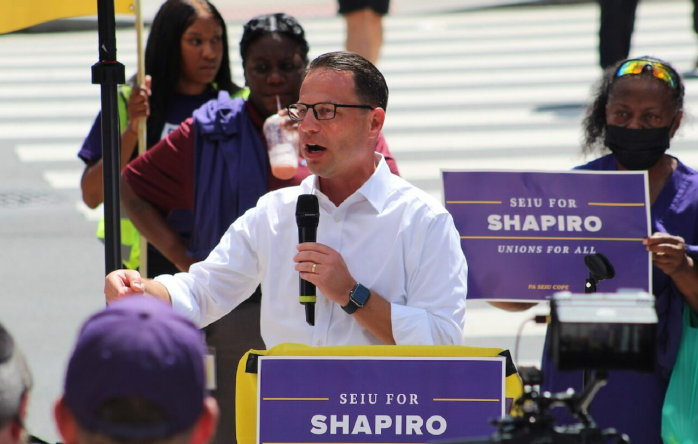
Service Employees International Union workers gathered in August to voice support for Pennsylvania Attorney General Josh Shapiro in his bid to become governor. PHOTO: Cory Sharber/WHYY
Editor’s note: This article appeared Tuesday on thecentersquare.com.
Support for more education funding isn’t a rarity among Democrats nationally, but Pennsylvania gubernatorial nominee Josh Shapiro is standing out – for his support of school choice.
On the campaign trail, Shapiro has emphasized his support for a “strong education system” and plans to make “critical investments” in teachers, buildings, and technology. Less emphasized until recent news stories has been his support for letting parents choose the schools their children attend.
“Josh believes parents deserve to be empowered to ensure their kids receive a good education and that every child has access to quality learning,” according to Shapiro’s campaign website. “That requires boosting funding for education and innovating to ensure children in our most challenged schools receive the education and care they deserve.”
While standard for Democratic candidates, what follows is less so.
“Josh favors adding choices for parents and educational opportunity for students and funding lifeline scholarships like those approved in other states and introduced in Pennsylvania,” his website reads.
That support aligns Shapiro with state Republicans, who advanced a school choice bill in the House in June and awaits Senate action.
The Center for Education Reform, a pro-school choice organization, called Shapiro’s support “an unprecedented move for a Democratic candidate for governor in Pennsylvania.”
“Whether if elected he would maintain that resolve remains to be seen,” Jeanne Allen, founder and CEO of the Center for Education Reform, said in a press release, “but we are incredibly optimistic when politicians recognize the importance of giving parents the right to direct the education of their children.”
To continue reading, click here.
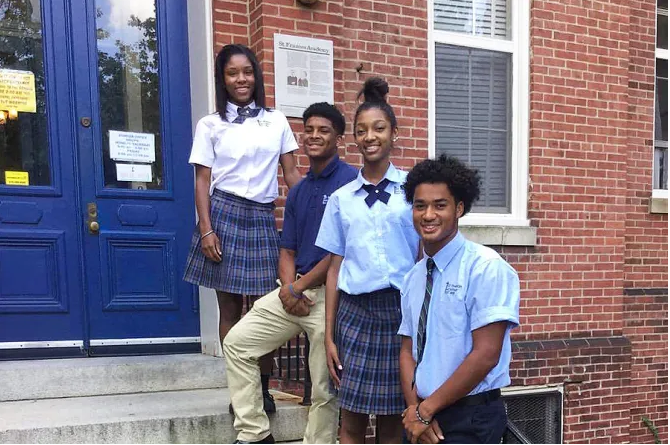
St. Francis Academy in Bally, Pennsylvania, is one of 1,845 private schools in the state serving more than 262,600 students. The academy boasts a student-teacher ratio of 10 to 1.
Editor’s note: This commentary from Nathan Benefield, senior vice president of the Commonwealth Foundation, appeared Sunday on pennlive.com.
Pennsylvania’s new state budget includes a historic $125 million expansion of two successful scholarship programs—the Educational Improvement Tax Credit (EITC) and the Opportunity Scholarship Tax Credit (OSTC). This expansion will provide 31,000 more students with scholarships to the academic environment that best fits their needs.
These vital programs are a drop in the overall $44 billion 2022–23 state budget—which included an additional $1.6 billion in public school funding.
Tax credit scholarship programs have a long track record of success. The EITC engages the business community in education, as businesses donate to scholarship organizations, providing educational opportunity to low- and moderate-income students.
As a result, more than 200 scholarship organizations have awarded 767,000 scholarships since the program’s inception in 2001, with an average scholarship amount of $2,200. They represent a tiny fraction of the nearly $20,000 per student spent by school districts, which, despite massive funding increases, have lost students and seen performance drop.
Because of this disparity, tax credit scholarships have saved taxpayers more than $4 billion in averted costs. And an economic impact analysis found scholarship expansion in Pennsylvania would generate billions of dollars from increased lifetime earnings and reduced criminal justice costs.
To continue reading, click here.
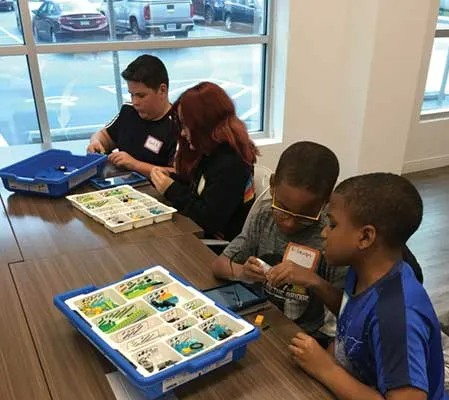
Pennsylvania Cyber Charter School, headquartered in Midland, Pennsylvania, is one of the largest and most successful online public schools in the nation, offering personalized instruction for students in kindergarten through 12th grade.
Editor’s note: This first-person essay from Pennsylvania mother and founder of Pennsylvania Families for Education Choice Sharon Sedlar was adapted from the American Federation for Children’s Voices for Choice website.
Sharon Sedlar
In kindergarten and first grade, our daughter Virginia was energetic, fearless, quick-witted, and smart. But in second grade, something changed.
At six weeks into the school year, what started as dragging her feet in the morning quickly transitioned to stomach aches, nightmares, and nights of lost sleep. We suspected that the issue was rooted in the relationship (or lack of it) with her teacher, but our request for a classroom transfer was outright denied. A Student Accommodation Plan was presented as our only option.
While the SAP seemed to help somewhat in getting her to school on a daily basis, the increase in emotional needs at home was noticeable, especially on weeknights when she knew the school day was to come – sleeping in Mom’s bed, nightmares, fear of going to sleep, and many more tears and physical manifestations of anxiety.
The SAP needs increased, and in-district art therapy was provided. Soon the Christmas holiday thankfully came upon us and Virginia was able to unwind, relax and rejuvenate; but sadly, her improvement was short-lived.
Virginia’s symptoms worsened – calling us to come to school to calm her or begging us to bring her home. She even had taken to bringing a necklace with a picture of her family so she could be “close”. The school became impatient with Virginia and her needs and insisted that the plan be changed. I regrettably agreed to a stricter approach. It only made things worse.
One morning in April, after seven months of hard work on her part, Virginia stubbornly, fearfully, and tearfully told me “I just can’t go Mommy. Please don’t make me go there,” and she wouldn’t budge. The range of emotions on this child’s face was heartbreaking – she was crumbling right before my eyes.
This was the end of our public district school journey. I pulled Virginia out and enrolled her in a cyber charter school within days.
Fast forward to now – four years later – and Virginia still contends with profound after-effects from her experience; but the 504 plan she was able to obtain through her cyber charter school allows her the safety and security she has come to desperately need.
Virginia’s story is just one of the reasons that I founded Pennsylvania Families for Education Choice. I believe no child should have to suffer in an environment that isn’t right for them. Now I fight for all children in my state to have education choice.
The current education system fails children every single day – emotionally, physically, psychologically, environmentally, and academically. For some of us, we never know how important education choice is until it touches our family. Education choice, for the children of today and tomorrow, is a necessary pursuit we must all undertake.
Parents are the best qualified to make education decisions for their children. We are there when they are hurt, scared, discouraged, or distressed. We are also there when they are happy, energetic, fulfilled, secure, and healthy.
We know what works for our family and individual children.
Children are unique and special. They have preferences and needs, strengths and weaknesses. We parents build our lives around our children, and we freely make a myriad of decisions on a daily basis on their behalf. Education should be no different. We should have education options to suit, and as diverse as, every child – so that they can be successful.
Children’s educational lives are short, and we have no time to waste. We should not be asked to “hang in there” while the education system continues to fail our children and limits their choices to succeed based on financial status or zip code.
Our children’s barriers must be demolished – now. It’s time for the adults to step up and put them in the center of the conversation and remake education around them.
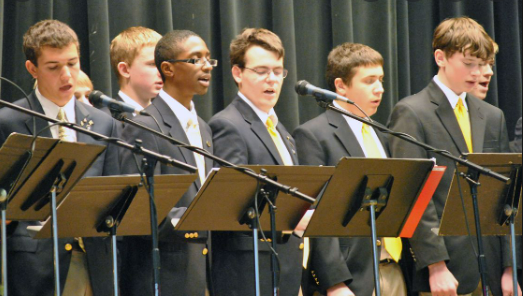
Devon Preparatory School, one of more than 1,800 private schools in Pennsylvania serving nearly 260,000 students, is a private, Catholic college prep school serving grades 6-12, focused on holistic education of young men.
Editor’s note: This article appeared Thursday on thecentersquare.com.
The Pennsylvania General Assembly has moved another step closer to creating a scholarship program for students in underperforming schools to transfer elsewhere.
House Bill 2169, which narrowly passed in the House in April, would grant a $6,800 Lifeline Scholarship to students in the bottom 15% of the lowest-performing schools and allow them to use the money on tuition, tutoring, and other educational expenses.
This week, the Senate has considered the bill twice and was referred again to the Appropriations Committee to await its third consideration.
Funding for the scholarships would come from already-existing education funds; about one-third of the money would attach to the student enrolling in a different school, and two-thirds would stay with the school district from which the student leaves.
“The Pennsylvania Senate now has the opportunity to take the next step and ensure every child has access to an excellent education,” said Nathan Benefield, senior vice president of the Commonwealth Foundation, which supports educational voucher programs. “No student should be trapped in a failing school just because of their ZIP code. Lifeline Scholarships provide education opportunities to the families that need it most.”
In a Senate Education Committee hearing on the bill, the committee approved an amendment from Sen. Michele Brooks, R-Greenville, that would require the auditor general to audit every lifeline account once every two years.
To continue reading, click here.
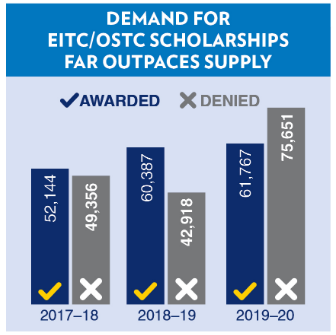
Arbitrary program caps denied more than 75,000 Pennsylvania K-12 student applications and turned away $116 million in business donations in 2019-20, prompting the Commonwealth Foundation to recommend that the state implement an escalator that allows credits to automatically grow in proportion to student need.
Editor’s note: This article appeared Monday on City & State Pennsylvania’s website. You can read the Commonwealth Foundation’s full plan here.
A Harrisburg free-market think tank unveiled its 2023 legislative agenda this week, which proponents say is backed by polling data and could help revitalize the commonwealth – if lawmakers adopt its recommendations.
The Commonwealth Foundation’s “Better Pennsylvania” plan proposes a raft of reforms to how the state approaches education, tax policy, criminal justice and labor unions, among other topics.
“It’s a 23-point agenda that equips lawmakers and state officials with a very practical roadmap to get Pennsylvania back on the right track, restore hope to our citizens across the Commonwealth, and set us on a better path that allows all Pennsylvanians to flourish,” said Jennifer Stephano, the Commonwealth Foundation’s executive vice president.
The policy plan includes a slate of recommendations that have become hallmarks of the think tank’s work in state government. The plan calls for an expansion of the state’s tax credit scholarship programs, the creation of restricted-use Education Opportunity Accounts, and a report card-style grading system for public schools.
The Commonwealth Foundation also calls for the implementation of spending limits on state government, replacing certain tax credits with broader business tax cuts and pulling the state out of the Regional Greenhouse Gas Initiative, a multistate carbon pricing initiative.
To continue reading, click here.
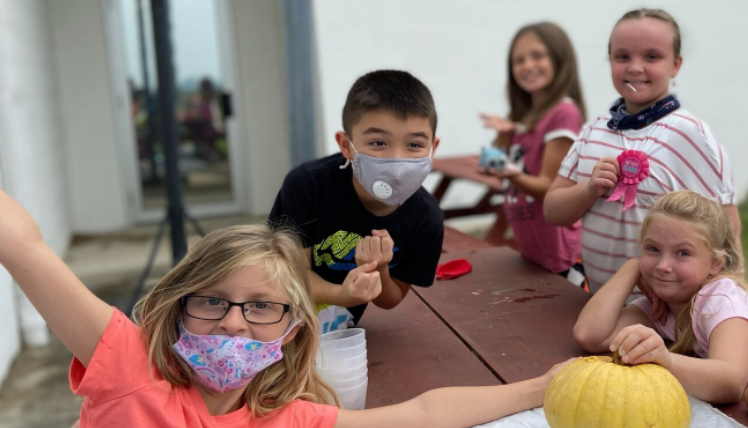
Adams County Christian Academy in Gettysburg, Pennsylvania, is one of 1,877 private schools in the state serving 266,828 students. Adams County students in grades preK-12 learn to view the world through the lens of scripture, cultivating faith, commitment, excellence and service.
Editor’s note: Myles Slade-Bowers is a student at High Point University in North Carolina and a Future Leaders Fellow with the American Federation for Children. He benefited from a school choice tax credit scholarship in Pennsylvania and now fights to expand those opportunities to students like himself.
When I was growing up in Steelton, Pennsylvania, my assigned public school district was not able to accommodate my learning style. As a result of an eye condition, my reading speed was significantly slower than the average student’s speed. I needed a different education environment but moving or paying private school tuition was not an option for my family.
Because of Pennsylvania’s Opportunity Tax Credit Scholarship Program, I was able to access the education I needed to succeed. I was able to graduate from high school, attend High Point University, a private university in North Carolina, and now share my school choice story with world leaders. Without school choice, none of that would have been possible.
Students across the country have a K-12 story similar to mine and are benefiting from the response of a historic number of states over the last few years that have expanded education options for families.
Pennsylvania legislators have the chance to give more students the same opportunity I had via HB2169, which would establish the Lifeline Scholarships Program. This bill will empower families with the ability to choose an educational environment that best serves their children’s needs.
The program would create educational opportunity accounts that families could use for a variety of pre-approved education expenditures, including tuition, curriculum, or other supplementary learning materials, tutoring, or technology like internet connectivity infrastructure. These accounts, which give each family better access to individualized education resources, would be life-changing for families that like mine, struggled to afford private school tuition.
Parents in Pennsylvania are tired of one-size-fits-all solutions. Not every student learns the same, and they have different needs. Despite continuous increases in funding and promises made by school administrators, academic outcomes in Pennsylvania are appallingly low. Philadelphia public school children, for example, test at 30% proficiency in reading and 15% in math.
Something needs to be done, and families are pleading for Lifeline Scholarships to rescue their students.
Eligible students must come from a school in the bottom 15% of performance metrics based on state testing. This program would directly help the thousands of students across Pennsylvania who are most at risk of being left behind.
People want more school choice. A 2021 national poll revealed that support for school choice is at an all-time high, with 74% of registered voters in favor. School choice is popular on the political right and left, with 83% of Republicans and 70% of Democrats either strongly or somewhat supporting school choice. Specifically, in Pennsylvania, a Rasmussen poll showed that 66% of Pennsylvanians support school choice.
The Lifeline Scholarship Program will empower families with the ability to make choices about the future of their children's academic success. No one knows or understands their kids as parents do, and Pennsylvania should expand access to education freedom to everyone who wants it.
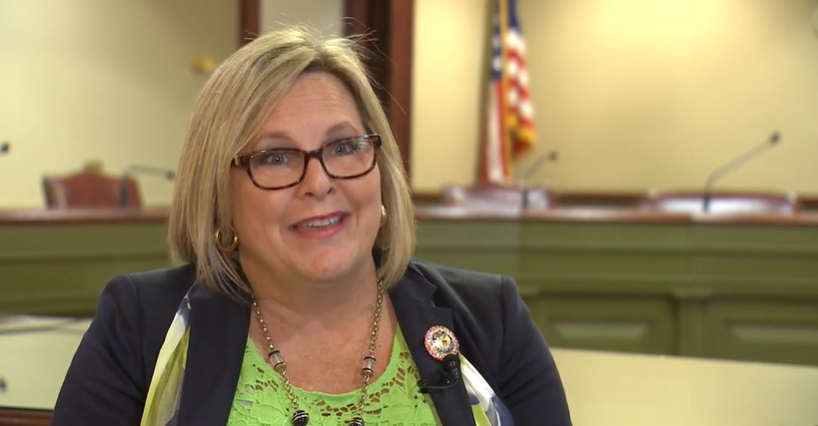
Pennsylvania Sen. Judy Ward introduced Senate Bill 733 in June to create a Keystone Scholarship Program for Exceptional Students to provide scholarships for students in kindergarten through grade 12 with special needs, including those designated as gifted.
Editor’s note: This article appeared Tuesday on The Center Square.
A Pennsylvania state senator is proposing a new school-choice program for students who live in the commonwealth’s poorest-performing public school districts.
Sen. Judy Ward, R-Hollidaysburg, penned a memorandum to her colleague, soliciting co-sponsors for legislation to create new Lifeline Scholarships for students struggling in the commonwealth’s lowest-achieving school districts.
“Under this legislation, parents with children in grades 1-12 who reside within the attendance area of a district school in the bottom 15% of performance metrics based on state testing would be eligible to receive a scholarship,” Ward wrote Monday. “This scholarship will offset costs associated with choosing an alternative academic setting that meets their child’s individual learning needs.”
The Lifeline Scholarships would allow parents to use state funds for qualified expenses that would include tuition at alternative schools, textbooks, curriculum, tutoring or services for students with special needs.
“The accounts would be administered by the Pennsylvania Treasurer, much like the existing Pennsylvania 529 Plan that allows parents to save for college,” according to the memo.
To continue reading, click here.

Community Academy of Philadelphia, a charter school launched in 1980, describes itself as a multi-racial, multi-ethnic, and multi-religious family that holds camaraderie and cooperation as essential values.
Editor’s note: This commentary from Lexi Boccuzzi, a University of Pennsylvania sophomore from Stamford, Conn., studying philosophy, politics and economics, appeared Monday on The Daily Pennsylvanian.
The term “school choice” is defined as “a program or policy in which students are given the choice to attend a school other than their district's public school.”
Typically, this results in school districts broadening the types of schools they have, which manifests itself in an expansion of the types of schools available to most students, which often include magnet, charter, or private schools.
While I would imagine this to be a fairly uncontroversial definition, Republicans and Democrats have remained divided on this issue for decades.
In light of increasing conversations surrounding parental involvement in education, school choice issues have grown in national prominence over the past election cycle. As a tutor with the West Philadelphia Tutoring Project, I’ve been able to get a glimpse into the lived experience of Philadelphia public school students. Combined with work on Board of Education races in my own city, it’s caused me to reflect on my own 13 years as a public school student.
These realities, juxtaposed with that of many of my Penn peers who attended private schools, led me to an interesting question: Why should the quality of education your child receives be based on your income?
The School District of Philadelphia poses a unique example on the implementation of school choice policies. In a city with one of the largest school districts in the country, the Philadelphia Board of Education is appointed, rather than elected, creating accusations of little transparency. This poses accountability red flags, making it difficult for parents to express their concerns at the ballot box.
The district also has seen increasing disparity in achievement among racial and socioeconomic groups, with only 32% of children in the third grade meeting the appropriate reading levels.
Philadelphia, unlike many other urban centers throughout the country, also has an expansive charter school system. In Philadelphia, charter schools receive district and state funding while also operating outside various city and state restrictions.
A 2015 report from the Center for Research on Education Outcomes at Stanford University that looked at urban charter schools found that, in Philadelphia, socioeconomically disadvantaged students at charter schools learned more than their comparable peers at district schools in the city.
To read more, click here.

