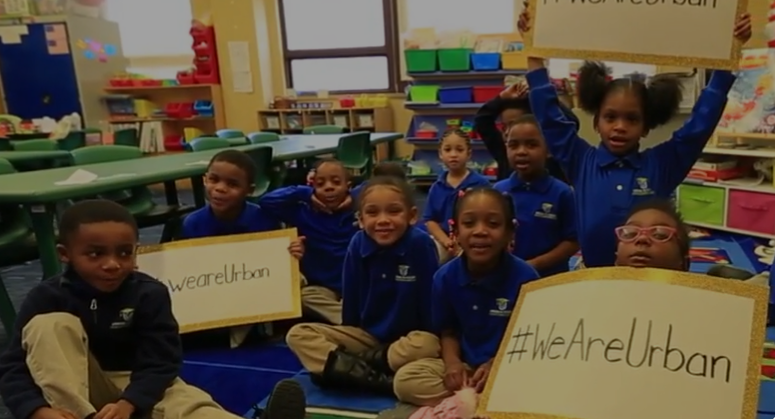
Urban Academy in the greater Pittsburgh area offers a rigorous course of study that is innovative, flexible and individualized.
Editor’s note: reimaginED guest bloggers Walter Blanks Jr. and Nathan Cunneen, who serve as press secretary and communications associate, respectively, for the American Federation for Children, recently had the chance to see the inner workings of several charter, private and virtual schools in Pennsylvania. Their visits came courtesy of an AFC partnership with the Pennsylvania Coalition of Public Charter Schools, the Commonwealth Foundation, and Harrisburg Families United. In this post, Cunneen reports on what he saw at one of those schools during the “Stronger Together Tour.”
You can see Cunneen’s other school tour posts here and here.
Along the route of our Stronger Together Tour was Urban Academy of Greater Pittsburgh Charter School, the oldest charter school in the region. Serving local families for more than 20 years, the school was founded by a consortium of community organizations led by the Urban League of Greater Pittsburgh.
These groups came together to create a high-quality option for families in the community, an emphasis that remains a guiding focus today. The school’s traditions are deeply rooted in the founders’ belief that all children, specifically Black children, deserve to be immersed in a high-quality, rigorous, and culturally relevant and responsive learning environment.
Under the leadership of talented and dedicated educators, the school has become a model of academic excellence for Black students in the greater Pittsburgh region. As a charter school, Urban Academy can offer families a curriculum that reflects the individual needs of its student body. Urban maintains a commitment to excellence in traditional subjects, while continually seeking out ways to ensure curriculum is at the cutting edge.
Staff and administrators place great importance on creating an environment in which students are excited to participate. This is a school where everyone, from front-office workers to teachers, knows every student’s name – something rarely possible in large schools where children can get lost in the crowd.
The students may be too young to realize they’re getting an individualized education, but the results of that care and attention are clear. When asked what they want to be when they grow up, the answers came swiftly and confidently: chef, doctor, athlete.
While many students across the United States struggle with the “why” of education, especially asking why they should pour their efforts into learning, Urban Academy seems to have found an answer to that question. It’s expressed in the school’s mission:
To provide a superior education that will develop students’ academic excellence, leadership skills and social values to enable them to ultimately become positive contributors to the community in which they live and to society as a whole.
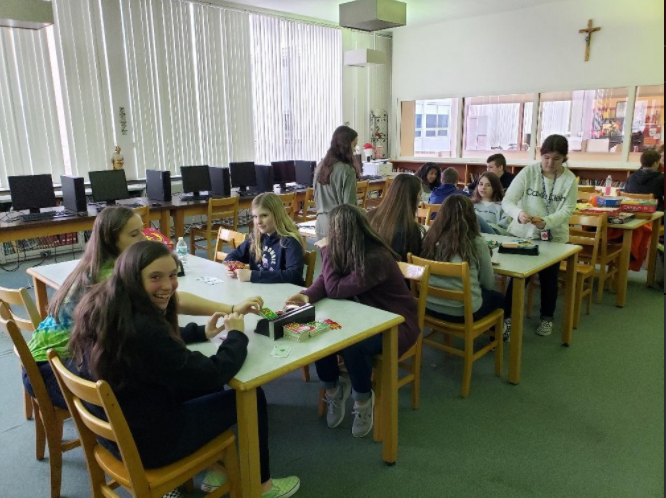
Bishop McCort Catholic High School in Johnstown, Pa., offers one of the best college preparatory programs of study in the area in a unique academic environment.
Editor’s note: reimaginED guest bloggers Walter Blanks Jr. and Nathan Cunneen, who serve as press secretary and communications associate, respectively, for the American Federation for Children, recently had the chance to see the inner workings of several charter, private and virtual schools in Pennsylvania. Their visits came courtesy of an AFC partnership with the Pennsylvania Coalition of Public Charter Schools, the Commonwealth Foundation, and Harrisburg Families United. In this post, Cunneen reports on what he saw at one of those schools during the “Stronger Together Tour.”
Bishop McCort Catholic High School is located roughly 300 yards from one of the worst school districts in Pennsylvania and one of the poorest areas in the state.
The district down the road, which remained closed for the entirety of last year, receives approximately $16,000 per pupil from the state. Meanwhile, Bishop McCourt educates nearly 400 students at a $7,000-a-year rate, inside a 100-year-old building.
The school has a 100% graduation rate over the last five years.
Most of the students are recipients of the Pennsylvania Educational Improvement Tax Credit, which helps them afford to attend McCort; otherwise, they couldn’t afford to do so.
This example just goes to show – money isn’t everything.
Bishop McCort has the highest private school transfer rate in the state of Pennsylvania. More than 70 students seeking a high-quality, in-person education experience transferred in last year. McCort has room for more students, but Pennsylvania’s hesitancy to expand school choice options further makes it increasingly difficult for families to exercise that option.
Walter and I had the opportunity to address the student body at McCort, along with the school’s CEO Tom Smith; Harrisburg Families United CEO Naijimah Roberson; parent Andrea Jaber; and two students, Ean Jaber and Kiersten Way. We took a few moments to share our personal education choice stories and explain why school choice is so important.
It was clear that no one at McCort takes education choice for granted. Everyone, from students and families to teachers and administrators, know they are receiving and providing a top-notch education, and they want that for other kids. In fact, during the assembly, principal Smith asked everyone if they knew someone who wanted to attend Bishop McCort but couldn’t afford it.
Nearly every student raised his or her hand.
It was moving to hear the students talk about their school. Ean, during his address, explained the joy he felt to transfer from another school. He told his audience: “I wish I’d started here earlier.”
Perhaps more Pennsylvania students will have that opportunity thanks to the advocacy of engaged students like Ean and their families.
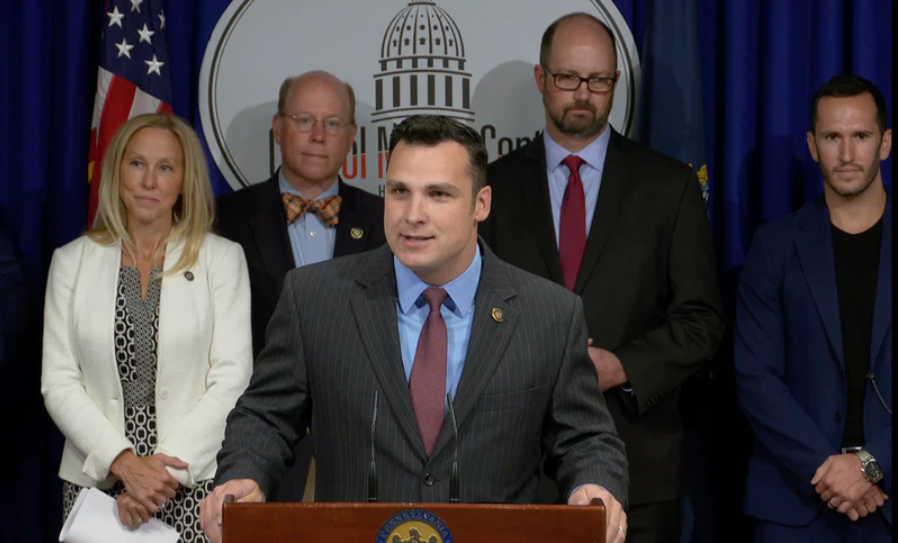
Pennsylvania state Rep. Andrew Lewis discusses his Excellence in Education for All Act that would expand school choice opportunities to a new level in his state at an August news conference.
Editor’s note: For related news, click here to listen to Step Up For Students president Doug Tuthill’s podcast with Pennsylvania state Sen. Scott Martin.
Lowman S. Henry, chairman and CEO of the Lincoln Institute, a nonprofit public affairs foundation based in Harrisburg, Pennsylvania, has a message for the citizens of his state.
Public education at both the K-12 and university levels is badly broken, Henry wrote in an opinion piece for his local news outlet, The Mercury. It’s broken, he believes, because taxpayers “continue to pour ever-increasing amounts of money that gobble up funds, fail to yield improved outcomes, and then demand even more money.”
What’s worse, he says, is that at the very moment when racial equality couldn’t be more important, Pennsylvania’s K-12 education system is failing to provide the necessary resources for minority youth and relegating them to under-performing schools.
These challenges have given rise to what Henry describes as a unique coalition of school choice advocates, uniting Pennsylvania’s conservatives and Black leaders around the idea that a quality education is the main ingredient for leveling the playing field for all children.
The most direct path toward achieving a level playing field, Henry believes, is a proposal sponsored by Pennsylvania state Rep. Andrew Lewis that would create Excellence in Education for All Act. The legislation would allow families to use the roughly $6,000 per student the state sets aside for tuition at private schools. It also would smooth the way for charter school growth and bolster the state’s tax credit scholarship programs.
Lewis called the legislation a game changer for families across the state at an August news conference where he unveiled the bill’s provisions, saying it will ensure that every child, regardless of his or her ZIP code or personal learning needs, will be guaranteed access to an excellent education.
You can read Henry’s full commentary here.
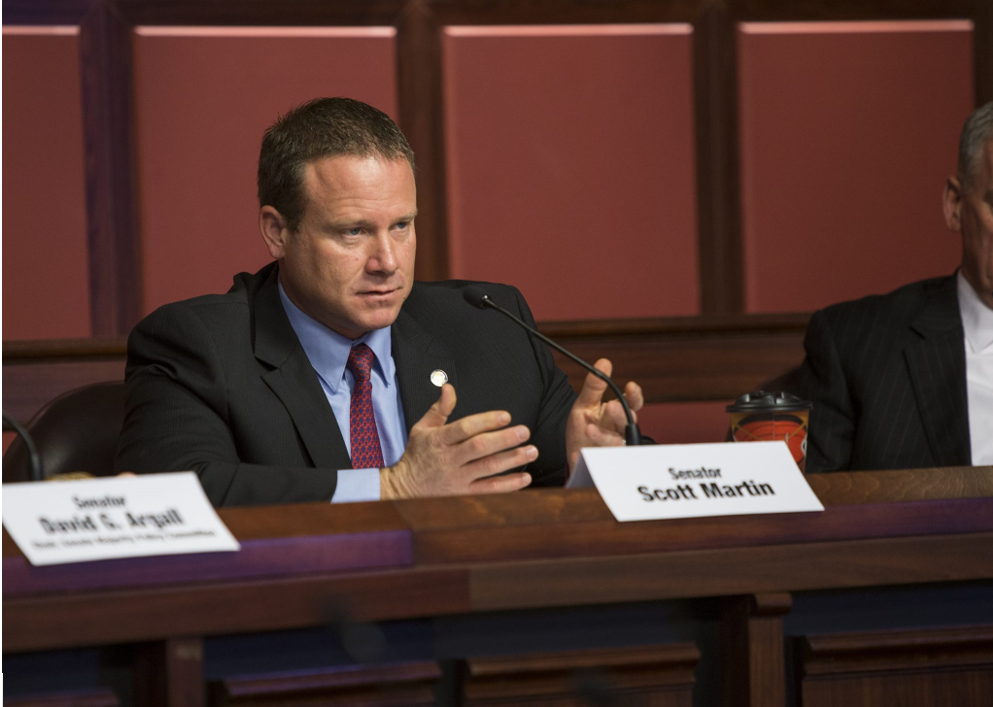
 On this episode, Tuthill talks to the chair of the Pennsylvania Senate Education Committee about education choice in the Keystone State and the outcome of the 2021 legislative session. Despite a divided government, Pennsylvania created new charter school authorizers and increased its Educational Improvement Tax Credit program funding by $40 million, bringing total funding to $225 million.
Tuthill and Martin discuss how Martin’s upbringing as the oldest of seven children influences his ambition to expand education choice to all those who want it. They also discuss the politics of trying to expand choice with a Democratic governor as well as legislative plans for additional choice options in Pennsylvania.
"There's all different reasons family may want to seek a different education opportunity beyond just whether a school might be failing. The environment may not be right for them (socially), or for a disability. That often gets lost in these conversations."
EPISODE DETAILS
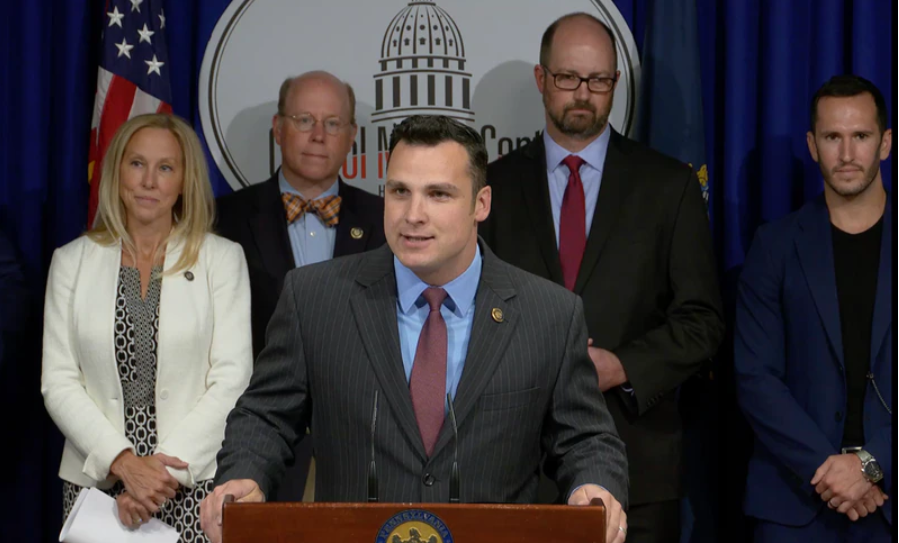
Pennsylvania state Rep. Andrew Lewis answers questions at a news conference Thursday about legislation he introduced to expand education choice in his state. Choice researcher and advocate Corey DeAngelis is pictured at far right.
A Pennsylvania lawmaker has introduced legislation that would establish a state-funded education savings account that families could use to cover the cost of private school tuition or homeschooling.
Rep. Andrew Lewis’ Excellent Education for All Act would create Keystone Hope Scholarships, increase funding for the state’s tax credit program for businesses that fund scholarships, propose changes to the state’s charter school law and exempt learning pods from state regulations and monitoring.
“The time has finally come to break down the barriers to an excellent education and focus in Pennsylvania on funding students, not on unaccountable systems,” Lewis said at a news conference Thursday at the state Capitol, calling the bill a “game changer” that will guarantee all families access to an excellent education regardless of their ZIP code or their children’s individual learning needs.
The bill drew immediate opposition from the Pennsylvania State Education Association, which insisted it will divert state funds from public schools. Lewis maintains the financial harm from the scholarship program to most school districts would be modest since districts would retain all the local revenue they generate from property taxes.
School choice proponents in Pennsylvania have tried for two decades to expand options for families. Their biggest success has come via an increase in the amount of money for education-related tax credit programs. This year, the Educational Improvement Tax Credit program saw its biggest expansion with a $40 million increase, boosting its funding to $225 million.
State Rep. Dawn Keefer pointed to the experience of other states that have private school choice programs in increasing parental satisfaction and involvement, providing better occupational opportunities for lower-income children, and incentivizing school districts to better meet the needs of students.
“The bottom-up approach of a market-based education system means that parents are education providers,” Keefer said.
Corey DeAngelis, national research director for the American Federation for Children, attended the news conference and expressed his support for the legislation.
“Education funding is supposed to be about educating children, not for propping up a particular institution,” he said. “That’s why we should fund students directly as opposed to funding systems.”
 Despite achieving the single biggest boost in the history of Pennsylvania’s tax credit scholarship program, state lawmakers already are pledging to keep working toward further expansion of education choice for families.
In addition to a $300 million increase to basic education funding, lawmakers last week approved an annual budget that will provide the educational improvement tax credit program with a $40 million infusion to provide an extra 13,000 scholarships for students seeking a private education.
Senate Education Committee chairman Scott Martin, R-Lancaster, praised the commonwealth for “placing the focus on children, not on any one educational model,” but said there is more work to be done.
“EITC is important because as I have said many times, we need an education system that allows parents to put their children in the kind of environment that suits their needs and helps boost student achievement,” Martin said.
Martin drafted a proposal that grew the caps for the $185 million EITC program and the related $55 million Opportunity Scholarship Tax Credit (OSTC) program to $300 million and $100 million, respectively, with increases of 25% each year, depending upon demand. The programs offer businesses tax credits in exchange for donations that fund tuition for students opting out of their assigned public school.
Martin said existing funding levels meant more than 40,000 students were turned away from the schools of their choice.
Committee Democrats said the automatic escalation of funding was troubling, noting that the programs could surpass $8.5 billion over the next 15 years, and expressed concern about what they perceived as a lack of transparency measures to ensure money “is getting to where students need it the most.”
The state’s largest teachers union, the Pennsylvania State Education Association, also was critical, stating the provision exceeds the 2-3% increase public school districts receive each year.
Meanwhile, Charles Mitchell, president of The Commonwealth Foundation, a free-market policy group, agreed with Martin that even more can be done to assist families seeking choice options for their children.
“With 40,000 to 50,000 applications for scholarships getting denied each year, demand will continue to outstrip supply”, Mitchell said.
Texas: Sen. Dan Patrick's school choice bill makes an ambitious attempt to expand charter schools, lifting the statewide cap on the number of charters and requiring school districts to sell or lease underutilized classrooms or other facilties to charter operators (The Texas Tribune). More on the bill, including possible concessions by Patrick on the charter cap ( American-Statesman). Patrick cries in committee as he advocates expansion of school choice (Associated Press).
 Louisiana: A $5 million federal training program offers $50,000 grants to teachers to help turn around failing schools. The program will serve either as a stop-gap while more charter schools ramp up to provide students with better learning options, or as an alternative approach to fix a failing system with the selected district schools operating similar to charters (Education News). A mother's struggle to find a quality school for her sons points to a key failure in New Orleans’ lauded choice-based system: options abound, but they're not always reputable ones (The Lens).
Arkansas: A Senate committee votes down a proposal for a tax credit scholarship program (Associated Press).
Florida: A parent trigger bill clears a third House committee and heads for a House floor vote (redefinED). Charter school lobbyists focus this legislative session on winning state money for maintenance and facilities, or, the right to use empty space in traditional public schools free of charge (Tampa Bay Times).
Tennessee: A voucher bill forwarded as a broader alternative to Gov. Bill Haslam's proposal is withdrawn (Associated Press). But the debate continues over how many children the program should serve (Memphis Commercial Appeal). Pressed with the need for charter operators in his district, one state lawmaker is considering a proposal to allow for-profit charters; Rep. John DeBerry says the idea is to help well-meaning operators with the business-side of running charter schools (The Tennessean). The Walton Family Foundation is investing $1 million to help create four new charter schools in Memphis (Memphis Business Journal).
Georgia: A parent trigger bill is pulled amidst concerns from Republican lawmakers (Atlanta Journal Constitution). Proposed legislation could force school districts to consider parent petitions to turn non-failing public schools into charters (Atlanta Journal-Constitution). A proposal to expand the state's tax credit scholarship program clears a key House committee (Atlanta Journal Constitution). (more…)
 Florida: Incoming Florida Education Commissioner Tony Bennett talks about the idea of voucher students being required to take the same standardized tests as their public school peers (Tampa Bay Times' Gradebook blog).
Texas: Lt. Gov. David Dewhurst sees expanded school choice as part of a legislative agenda that aims to make Texas the most conservative state in the country (Associated Press). The pending fight over vouchers highlights a difference over the best way to fund schools (Dallas Morning News).
Tennessee: A possible school voucher program will be a top issue for Gov. Bill Haslam and state lawmakers next year (The Tennessean).
New Hampshire: The state's new tax credit scholarship program will again be the subject of debate - and potential legislative action - next year (New Hampshire Public Radio.)
Indiana: The state's school districts turned to marketing efforts in 2012 to compete with private school vouchers (Evansville Courier & Press). Charter school administrators say they have the flexibility to quickly respond to make improvements (Evansville Courier & Press).
Massachusetts: A new Pioneer Institute report opens a debate over the value of school choice options, specifically tax credit scholarships and education savings accounts, for Jewish day schools (Masslive.com)
Louisiana: Education reform,including creation of a statewide voucher program, ranks as one of the year's biggest stories (Houma Comet). Gov. Bobby Jindal's education reforms have reliable backing from the state education board, including its elected members (Baton Rouge Advocate).
Ohio: A long-troubled charter school moves again (Cincinnati Inquirer).
Washington D.C.: Fewer than half of the city's charter schools employ nurses (Associated Press).
Pennsylvania: Charter schools aren't just small, independent operations any more (Pittsburg Post Gazette). The western part of the state is seeing a rapid increase in charter school enrollment (Trib Live).
Delaware: Three charter schools delay opening next year, citing start-up costs and problems securing locations (Delaware Online).
 Washington: Supporters of a charter school ballot initiative raise $5 million in six weeks, including another $2 million from Bill Gates (Associated Press).
California: A judge rules that parents who won a parent trigger battle can open a charter school next fall (Los Angeles Times).
Florida: A new initiative to put more students into STEM fields taps students in traditional, magnet and charter schools (redefinED). A long-troubled Imagine charter school continues to test the patience of the school board in Pinellas County (Tampa Bay Times). In Palm Beach County, thousands of parents and students show up for a school choice showcase that includes magnet and charter schoools (Palm Beach Post).
Pennsylvania: Republican lawmakers postpone discussion on a proposed statewide authorizer for charter schools (Pittsburgh Post Gazette). The U.S. Department of Education questions how state education officials revised rules to gauge whether charter school met academic standards (Philadelphia Inquirer). A bill to toughen oversight of charter schools dies in the state House (Associated Press).
Georgia: State senate candidates are divided over charter schools and a charter school ballot initiative (Douglas County Sentinel).
New Jersey: Charter schools tied to the highly regarded KIPP network are gearing up to expand (NJSpotlight.com).
Louisiana: An effort to recall lawmakers who supported the state's new voucher program fizzles (Associated Press). (more…)
Pennsylvania: A budget deal expands the state's existing tax credit scholarship program and creates a new one aimed at helping students in struggling schools. (Philadelphia Inquirer)
 Washington: Bill Gates chips in $1 million for a ballot initiative to bring charter schools to one of the last states without any. (Associated Press) It appears supporters gathered enough signatures to get the initiative on the ballot. (Associated Press)
Florida: Former Gov. Jeb Bush endorses a local school board member who openly supports vouchers, tax credit scholarships and other forms of expanded school choice. (Tampa Bay Times) The incoming state House speaker also backs the board member. (Tampa Bay Times)
New Jersey: The state-appointed superintendent in Newark overrules a local advisory board and moves ahead with plans to lease empty buildings to charter schools. (NJ Spotlight)
Louisiana: State Superintendent John White continues to face criticism for his handling of a questionable private school that is seeking to participate in the state's new voucher program. (New Orleans Times Picayune) A state lawmaker now says she regrets voting for the program because she fears it will promote Islam. (Huffington Post)
California: The teachers union at Green Dot charter schools pushes for performance pay and evaluations tied to test scores. (Contra Costa Times)
Tennessee: A charter school operator vows to appeal to the state after a local school board rejects its plan to open charter schools in wealthy West Nashville. (The Tennessean)
Oklahoma: Online learning is growing more popular in Oklahoma, with supporters seeing it as an equalizer between districts that are big and small, rural and urban. (Tulsa World)
(Image from businessweek.com)

