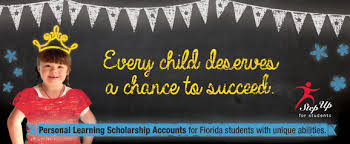
 Parents can now apply for the second year of Florida's newest parental choice program for students with special needs.
Applications opened this week for parents who want to use Personal Learning Scholarship Accounts during the 2015-16 school year, more than six months earlier than in the first year of the program.
The program was created by 2014 legislation, which recently survived a legal challenge. The accounts are intended to help parents of special needs children pay for a customized set of learning options.
The accounts are available to K-12 students with conditions such as autism, Down syndrome, cerebral palsy and five other categories of special needs. They can be used to reimburse parents for private school tuition, fees, textbooks, supplies, education software, computers, therapies, full-time tutors or even college savings.
In the first year, the state Department of Education, the Agency for Persons with Disabilities and the non-profits that administer the accounts — including Step Up For Students, which co-hosts this blog and employs the author of this post — launched the new program in a matter of months. Applications for the first year opened in August, and the first round of funding started in October.
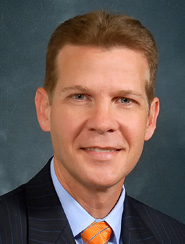
Florida Senate President Andy Gardiner
Florida's experiment with personalized accounts that help parents meet the educational needs of their special needs children is only beginning. In coming years, it could support a key priority for the incoming president of the state senate: Helping more of those children gain access to a college education.
Senate President Andy Gardiner told a room full of education advocates and pro-reform lawmakers in Washington D.C. Thursday that he wants to work with colleges and universities to expand higher education options for special needs students. He hopes parents who use Personal Learning Scholarship Accounts for special needs students will be better able to take advantage of those options.
The accounts, created by legislation signed into law this year, allow parents of students with specific special needs to use state education funds to pay for a mix of private school tuition, therapies, home-school curriculum, and other educational expenses. They can also use the accounts to start saving for college. The program is administered by organizations like Step Up For Students, which co-hosts this blog.
Gardiner, who is the father of an 11-year-old with Down syndrome, said college often seems out of reach for parents of special needs students. They must overcome a belief that "in the eyes of society, they're not going to be able to get to that point."
He said he wants that to change. Some Florida colleges are already creating programs aimed at special-needs students, and Gardiner, who eschews the term "disabilities," hopes to create more of them.
"We'll come forward with a plan for a post-secondary option for individuals — not with disabilities, but unique abilities," he said during a panel discussion at the Foundation for Excellence in Education's annual summit.
 The annual American Federation for Children conference is one of the country’s largest gatherings of school choice advocates. So it was notable, during the most recent conference in Orlando, that speakers regularly used the terms “parental choice” and “educational choice,” but not “school choice.”
This shift in semantics reflects an emerging trend that’s a game changer – the expansion of choice in publicly-funded education is increasingly including learning options beyond schools.
Florida’s new Personal Learning Scholarship Account program, for students with special needs such as autism and Down syndrome, is a good example. In the PLSA program, public funds go into a bank account that parents can use for numerous state-approved educational options, including private school tuition, a suite of different therapies, curriculum materials, instructional technology, and postsecondary education and training.
This ability to use public funds to pay for learning options beyond schools allows parents to customize an education that is most appropriate for their child. To that end, there’s no doubt that in coming years, parent-controlled educational spending accounts will become more and more common. This shift from state control of education funds to parental control, combined with the movement toward customized teaching and learning, is going to revolutionize public education.
It’s also going to complicate many of our current education reform debates, and maybe make some of them moot.
For example, our current regulatory accountability systems assume students receive instruction from a single provider. But increasingly, parents are using public education funds to access instruction from a variety of providers at the same time. So, to take one hypothetical, future example, how do we assign school grades when children are simultaneously receiving instruction from a charter school, a virtual school, a magnet school and a personal trainer? When four instructional providers contribute to a child’s yearly learning gains, accurately assigning responsibility to each provider is challenging.
This same challenge extends to using yearly standardized test scores to evaluate teachers. If a child receives language arts instruction from several teachers over a 12-month period, which teacher should be held accountable for this student’s standardized test score in language arts?
Our current testing debate also feels dated. (more…)
One of the nation’s newest parental choice programs is shifting into higher gear.
 Families of hundreds of Florida students with significant special needs, including autism, Down syndrome and cerebral palsy, have been given the green light to begin using Personal Learning Scholarship Accounts for the 2014-15 school year.
So far, parents of more than 1,200 students have been awarded PLSAs, which give them the resources and flexibility to access a range of educational services, including private schools, tutors, therapists, curriculum and materials. The Florida program is the second of its kind in the country, and some education policy experts see it and a similar program in Arizona as models for a new wave in parental choice.
Last week, the parents of 616 students were notified that they can begin using the accounts, which are administered by nonprofits such as Step Up For Students (which also co-hosts this blog and administers Florida’s tax credit scholarship program for low-income students). Parents of 298 more are expected to get the same notification in a few weeks.
The PLSA program was passed by the Legislature last spring and signed into law by Gov. Rick Scott on June 20. The scholarships are available to students in kindergarten through 12th grade with one of eight diagnosed disabilities. The state set aside $18.4 million for the first year of the program – enough for an estimated 1,800 students awarded an average of $10,000 each. To date, the parents of more than 4,500 students have started applications.
The scholarship accounts allow participating parents and service providers to be reimbursed for a wide range of state-approved educational services and materials. For expenses that are not pre-approved, parents can submit requests for consideration prior to incurring the expense. There is also a payment process for parents with special circumstances who cannot make purchases out of pocket.
Parents and providers can track invoices and payments electronically. Funds that aren’t used roll over to the next year. They can continue to be used for education-related expenses until the student graduates from a post-secondary education institution, such as a college or technical institute, or has gone four consecutive years after high school with no further education. At that point, the account is closed and any remaining money reverts to the state.
The application process for the new scholarships opened on July 18, two days after the Florida teachers union filed suit against SB 850, the bill that created the PLSA program. A Leon County circuit judge dismissed the suit on Sept. 24, ruling the plaintiffs did not have standing to bring the case. The teachers union filed an amended complaint on Oct. 22.
Parents of students with special needs have welcomed the program, and several PLSA parents are intervenors in the union lawsuit. See here and here for other recent coverage.
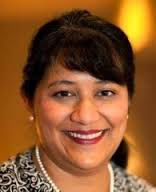
Levesque
A prominent figure in Florida's education reform movement has been tapped to help oversee the largest private school choice program in the country.
Patricia Levesque last month was elected unanimously to the governing board of Step Up For Students, the non-profit that administers tax credit scholarships and Personal Learning Scholarship Accounts for more than 70,000 students (and co-hosts this blog).
Levesque is CEO of the Foundation for Excellence in Education, which Jeb Bush founded before he was elected Florida's governor.
Before joining the foundation in 2007, she was a key member of the legislative staff that helped enact Bush's first-term education agenda. She then joined the governor's office as an education policy adviser in 2002.
Doug Tuthill, president of Step Up, said Levesque was recruited for the position because she's "one of the country's leading thinkers when it comes to personalized learning," which he believes is important terrain for the future of education policy.
This year, she was an outspoken advocate for legislation creating the scholarship accounts, which gives families of students with significant special needs a way to pay for a mix of educational expenses, from therapies and private school tuition to curriculum and private tutoring.
"A more customized approach – whether choosing the school, supports or services that meet a child’s needs – is a good thing," Levesque said in a statement. "It breaks down barriers to success and gives parents the power to help their children reach their full potential.”
Florida is the second state to create a personal scholarship account program. Many advocates view similar programs as part of the next wave of parental choice.
Levesque joins an eight-member, all-volunteer governing board, which last year added former Democratic state Sen. Al Lawson.
The Florida Board of Education paved the way Monday for hundreds of families to start receiving money through the state's newest educational choice program, which is aimed at students with significant special needs. Board members also said the state should try to make sure funding for the program keeps up with demand.
The board quickly signed off on rules implementing the Personal Learning Scholarship Accounts program during its meeting in Tampa.
Adam Miller, who leads the Department of Education's choice office, told the board he expects parents of about 650 students to receive funding for their accounts "within the next couple of days," with more to follow.
So far, more than 1,000 students have been approved for the program, which is available to students with autism, Down syndrome, spina bifida and five other special needs categories. It allows parents to pay for a wide array of education-related expenses, including private school tuition, tutoring and therapies. More than 3,700 have started applications.
It's not clear how many applicants will wind up being awarded by the program, which may still face a legal challenge from the state teachers union (though that challenge hit a roadblock last week). The amount of funding for scholarships in future years will be based in part on the number of parents who apply before March 1.
One member of the state board, Marva Johnson, said "it would be good to know, at the end of this process, if there was greater need than we have funds to support."
Board chairman Gary Chartrand said after the meeting that if demand for the scholarships outstrips the number funded by the state, the board should be prepared to go to the Legislature and "explain the demand that was there and see if we can get the amount increased."
Lawsuits. Watchdog.org writes up the latest in the legal battle over Florida's school choice legislation.
 Charter schools. Backers of a proposed charter at MacDill Air Force Base are waiting on the base commander to weigh in. Tampa Bay Times.
PLSA. The state Board of Education is set to approve rules for Florida's new special needs scholarship accounts. Gradebook.
Learning. An active learner program in Pasco schools lets students shape their own lessons. Tampa Bay Times.
Testing. Gradebook catches up with the Lee County School Board member leading the charge against testing in Florida schools.
Health. Duval schools officials investigate a case of tuberculosis. Florida Times-Union.
Sunshine. The Manatee School Board faces a a transparency lawsuit over its hiring of security guards. Sarasota Herald-Tribune. Bradenton Herald.
Labor. Manatee schools plan on a 2 percent raise for support staff. Bradenton Herald. Pasco's superintendent rejects teachers' complaints over training time tied to professional learning communities. Tampa Bay Times.
Security. A student who brought a gun to a Duval school faces expulsion. Florida Times-Union.
Parent involvement. The Hernando school district starts a parent academy to increase involvement at Title I schools. Tampa Bay Times.
Lawsuits. A judge dismisses a lawsuit challenging school choice legislation, but gives lawyers for the teachers union a chance to rework their case. redefinED. Times/Herald. Orlando Sentinel. News Service of Florida. Associated Press. Tampa Tribune. A Palm Beach Post editorial backs a separate lawsuit challenging the constitutionality of tax credit scholarships.
Charter schools. The Hillsborough school board appears poised to reject a proposed charter at MacDill Air Force Base. Tampa Bay Times.
Teacher conduct. Two Hillsborough teachers are expected to face consequences for drug arrests. Tampa Tribune. The state Board of Education plans to set rules defining teacher immorality outside the workplace. Gradebook.
Testing. The Fort Myers News-Press follows up on the local school board's decision to scale back district assessments. More here. A Lee school board member will lead an anti-testing lobbying push. Naples Daily News.
Security. The Manatee school district plans to ask the Attorney General's office if arming its new security guards is legal. Bradenton Herald.
A lawsuit challenging Florida's newest school choice legislation hit a roadblock Wednesday, as a Leon County circuit judge found the plaintiffs did not have standing to bring the case.
Judge Charles Francis dismissed the case from the bench after a brief hearing, but gave the people challenging the law 15 days to rework their arguments.
The plaintiffs, including a public-school history teacher from Lee County, could not show they were harmed by a law that created new Personal Learning Scholarship Accounts and expanded access to the state’s tax credit scholarship program, along with a number of other education-related measures.
As a result, they had to argue SB 850 fell under an exception, which allows taxpayers to challenge laws that violate constitutional limits on the Legislature's authority to tax or spend.
Ramya Ravindran, one of the plaintiffs' attorneys, argued parts of the new law, including the creation of new school choice accounts for special needs students, "arise under the Legislature’s taxing and spending power."
But Jonathan Glogau, a lawyer for the state, argued if that rule applied to SB 850, it would apply to just about any legislation, since most bills that create new programs have some bearing on the state budget.
Francis agreed.
A judge should leave Florida's newest school choice legislation intact, lawyers for the parents of special needs children argue in court papers filed Friday.
The parents are intervening to defend the state's new Personal Learning Scholarship Accounts program from a lawsuit challenging the legislation that created it.
The suit, backed by the statewide teachers union, argues lawmakers violated the "single-subject" rule in the state constitution by inserting multiple education issues into one bill on the last day of this spring's legislative session.
The parents' legal filing argues that passing last-minute legislation with multiple provisions tacked on is a common practice. Their lawyers estimate that since 1997 the state has passed some 27 pieces of legislation that - like SB 850 - were described simply as "an act relating to education" and in many cases included a wide range of education-related provisions.
"The single subject rule does not provide a vehicle to second-guess the Legislature’s broad power to provide opportunities to Florida students," their brief argues. "A judicial action nullifying this law would not only arrest the Legislature’s ability to address the complexities and challenges of education in the 21st Century, but also would deprive thousands of Florida schoolchildren of the opportunities provided by this law."
The brief was part of a barrage of recent filings in the case, which will be argued Wednesday in a Tallahassee circuit court.
The state has questioned whether the lead plaintiff, a Lee County public school teacher, can even bring the case, arguing he can't show how the new law causes him any harm. The plaintiffs responded to those arguments Friday, and the state also filed a separate defense of the school choice legislation, which notes among other things that "the Legislature routinely enacts legislation with numerous sections."
The Personal Learning Scholarship Accounts for special needs students are administered by organizations like Step Up For Students, which co-hosts this blog.

