Over the past decade-plus, Florida has pursued multiple policy initiatives designed to free school districts from stifling bureaucracy and unhelpful rules.
Each was well-intentioned. Some of them led to better learning opportunities for students. But on the whole, they were ultimately too narrow, or came with too many strings attached, to usher a new era of dynamism into public schools.
As state leaders launch a new effort to reduce regulation on school districts, part of a legislative package that expanded education savings accounts, it's worth reviewing some of this recent history.
One deregulation effort came in 2013, when Gov. Rick Scott announced plans to purge piles of outdated public-school rules from state law. These relieved districts of outdated paperwork requirements, like mandatory reports on recycling, but its impact on teaching, learning and school administration was ultimately limited.
That same year, lawmakers authorized District Innovation Schools of Technology. The concept was simple. Districts could designate schools to receive most of the same freedom from state regulations enjoyed by charter schools, if they also agreed to charter-like performance contracts.
There was one problem: The legislation required participating schools to employ one of several blended learning models, like the "flipped classroom," that were au courant in 2013 but feel outdated now. This gesture toward regulatory freedom sits dormant and unused in statute.
Another pilot program designed to offer charter-like flexibility, the Principal Autonomy Program, emerged in 2016. A few districts around the state signed up for this program, and empowered leaders at a handful of campuses to make meaningful changes.
But the legislation never led to widespread transformation. One of its most promising provisions, which would have allowed district leaders to form "innovation academies and zones"—networks of public schools like those in South Texas or Springfield, Mass. that give administrators more flexibly respond to their students' needs—also lies dormant.
One reason: The autonomy program is tied to the state's school turnaround law, which means it's mostly aimed at low-performing schools that need to improve quickly or face consequences. This limits the number of schools that can participate. It also makes taking the helm of one of these schools a risky proposition for an innovative school leader, since their job would be on the line immediately.
Florida law offers another path to principal autonomy. The state's Schools of Excellence program offers similar freedoms for schools with consistently high letter grades. But this measure is limited to high performers, and a school can lose this flexibility if its academic rating drops.
A third pilot program, designed to encourage personalized learning, allowed districts to test approaches that let students progress based on their mastery of academic material, rather than the amount of time they spent in class. Some teachers and administrators embraced this flexibility but struggled to spread the promising practices beyond individual campuses. One participating district, Lake County, abandoned the initiative. While other efforts are still going strong, the seven-year pilot program created in statute is nearing expiration.
Creating truly enduring freedom for district leaders may require a different approach.
The year before it became the first state to pass universal education savings accounts, Arizona enacted a more open, opt-in opportunity for public schools that wanted more flexibility.
Any district that wanted to free itself from ordinary rules governing the time students were required to spend in traditional classrooms simply had to come up with a plan for assessing their progress based on mastery of the material and bring that plan before its board for approval. No extra hoops to jump through or potentially confusing eligibility limitations.
Across the country, states are embracing universal education savings accounts. Compared to the school choice programs of yesteryear, these programs offer more flexibility, broader eligibility and less paperwork for families. They're big, bold and simple. Perhaps it's time for the era of big, bold and simple to extend to school district flexibility.
To that end, Florida's school superintendents' association has made a provocative suggestion: Give charter-like flexibility to every public school in the state. If district schools also embrace charter-like open enrollment (allowing students to attend regardless of where they live and admitting them into over-enrolled schools by lottery) and the same charter-like performance accountability, that could be a compelling bargain.
Alternatively, Florida could consider the path charted by Arizona. Rather than small-bore pilot programs that offer limited autonomy to a select number of schools and districts that meet specific requirements and jump through multiple bureaucratic hoops, what would a big, bold and simple approach to district flexibility look like?
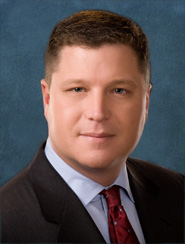
Sen. Jeff Brandes
A bill that would allow teachers and students to focus on mastery of grade-level skills rather than grades unanimously cleared the Senate Education Committee Tuesday.
Filed by Sen. Jeff Brandes (R- St. Petersburg), SB 226 would expand an existing “competency-based” pilot program to any school district that wants to participate. The program allows students to earn credits based on mastery of content and skills regardless of how much time they spend in the classroom.
A similar bill already has cleared one subcommittee in the House chamber.
Pinellas, Palm Beach and Seminole County school districts, as well as the University of Florida’s P.K. Yonge Development Research School, have been participating in competency-based learning since 2016, when the Florida Legislature permitted them to apply to the Florida Department of Education for waivers from state testing regulations.
Testifying Tuesday in support of the bill, P.K. Yonge director Lynda Hayes spoke about the school’s success, stressing that removing time requirements is a necessary step for schools in preparing students for graduation.
“If we are to really personalize and customize for our students, we need flexibility of time during the school day,” Hayes said. “Some students need more time in some classes and less time in others.”
Hayes pointed to P.K. Yonge’s more than 98 percent graduation rate and the fact that 96 percent of its students pursue postsecondary opportunities as proof of the program’s success.
The bill would allow participating schools to develop an alternative grading system in grades 6 through 12 as long as they continue to utilize a 4-point scale to determine grade point averages for college and scholarship applications.
Brandes filed a similar bill during the 2018 legislative session, which failed to get a hearing in the Senate Education Committee.
Committee chair Manny Diaz (R-Hialeah), an ardent supporter of educational choice, praised Brandes for re-introducing the bill this year.
“Thank you for helping bring us out of this agrarian calendar we seem to be stuck in,” Diaz said.
The bill received support at the committee hearing from both the left-leaning League of Women Voters and right-leaning Americans For Prosperity.
“Anytime you have the League of Women Voters and Americans For Prosperity on the same side of a bill, it may be a sign of the apocalypse,” Brandes said.
There will be at least one more committee stop for the bill before it is heard on the Senate floor. With full legislative approval, the expansion would go into effect for the 2019-20 school year.
A new study has found personalized learning is strongly supported by teachers, but often lacks an innovative environment to succeed.
For two years, Betheny Gross and Michael DeArmond at the Center on Reinventing Public Education (CRPE) studied schools, districts and external organizations that received grants from the Bill and Melinda Gates Foundation to implement personalized learning in their classrooms.
Two of those districts — Lake and Pinellas Counties — are in Florida.
CRPE researchers surveyed 4,508 teachers, observed classrooms in 39 schools and conducted more than 450 interviews with superintendents, principals, teachers and office staff. (more…)
A bill’s death in the waning days of Florida’s legislative session could slow the progress several public schools are making to help students learn at their own pace.
The legislation would have allowed districts leading Florida's foray into "mastery-based" learning to start replacing conventional A-F grades with a new grading system based on students' mastery of standards.
However, an influential Senate committee chair slowed the bill's progress, and dealt it a death blow during the session's final week.
At the same time, supporters say misunderstandings about the bill and its intent caused the measure to lose support.
P.K. Yonge Developmental Research School is leading Florida’s foray into personalized learning. It's developing a "mastery-based" grading system. The goal is to define where a student is in their learning process, rather than simply give them a letter grade tied to a percentage score.
Right now, the law requires schools to award course credit to students who receive 135 hours of bona fide instruction and earn a passing grade. It also defines letter grades for all public middle and high school students.
Competency-based learning efforts at P.K. Yonge and school districts participating in a state pilot program, including Seminole County, would have benefitted from changes to those parts of the law.
The bill's failure means some lawmakers are hoping for help from the Department of Education, while some school officials are holding out hope for next year. (more…)
Bills expanding a state initiative to help students learn at their own pace fell by the wayside late in Florida's legislative session.
The House approved its version of the "mastery-based learning" bill. But Sen. Jeff Brandes, R-St. Petersburg, was stymied in multiple attempts to advance the proposal in the Senate.
In a last-ditch effort, Rep. Heather Fitzenhagen, R-Fort Myers, attached a version of the proposal to SB 88 — a bill creating a high school financial literacy course. The amendment also would have made the financial literacy course optional, watering down a longtime priority of Senate Education Chairman Dorothy Hukill, R-Port Orange. (more…)
The Florida House approved legislation this afternoon that would expand a state initiative to give students choice and help them learn at their own pace.
The bill would open a personalized learning pilot program to every district in the state and give participating school districts more flexibility to decide how they award course credit to middle and high schoolers.
Rep. Jennifer Sullivan, R-Mount Dora and sponsor of HB 1035, said previously it is intended to promote a shift toward “mastery-based learning” in public schools. The idea is that students should advance to higher levels of learning based on their mastery of a topic, rather than the amount of time they spend in class. And instruction should cater to individual students’ needs.
The bill passed 101-13, with opposition from some Democrats.
Sen. Brandes
New legislation will make way for the next step in the evolution of education, according to a Florida senator who filed it.
The bill would expand a personalized learning program. It would allow educators across the state to develop "mastery-based" programs in which students advance when they master a topic or take extra time if they struggle.
“Students in any class are all at different levels on the topic, and oftentimes we are trying to educate to the middle,” said Sen. Jeff Brandes, R-St. Petersburg. “It is best if we can work with each individual student and create an education plan that meets their individual needs.”
Brandes filed SB 968, which would expand a personalized learning program to any school district that wants to participate and let participating districts try new approaches to awarding course credit to middle and high schoolers. A Florida House education panel last week approved similar legislation filed by Rep. Jennifer Sullivan, R-Mount Dora.
P.K. Yonge Developmental Research School is leading Florida’s foray into personalized learning. School districts in Palm Beach, Seminole and Pinellas Counties have begun experimenting with the concept. Representatives from those districts have spoken in favor of the bill.
Brandes said it's important for districts to carry out the program at their own pace. In some places, like Lake County, it may not work out right away. But he predicts that by 2030, most districts would use mastery-based learning in some form.
Educators participating in the pilot program say it is already transforming their schools, and that the legislation would give them much-needed flexibility.
“Some students need more hours, some need fewer to achieve mastery,” said Lynda Fender Hayes, director of P.K. Yonge. “A change in the law that disconnects the definition of the mastery from the number of hours spent in a classroom would be very helpful.” (more…)
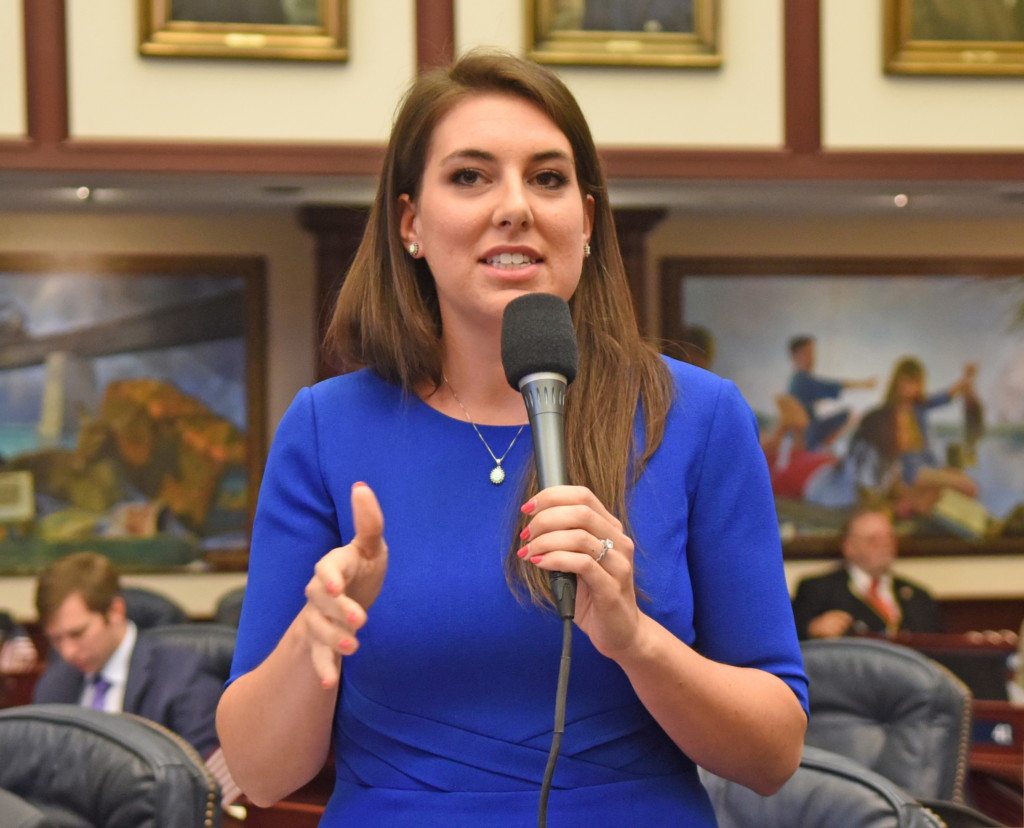
Sullivan
A Florida House Education panel approved legislation this morning that would expand a state initiative intended to help students learn at their own pace.
The bill would open a personalized learning pilot program to every district in the state and give participating school districts more flexibility to decide how they award course credit to middle and high schoolers.
Rep. Jennifer Sullivan, R-Mount Dora and sponsor of HB 1035, said it would give districts more freedom to innovate.
“We know that currently in our classroom, in the good parameters that we have in place, we are failing many of our students with the learning gaps that they" {develop}, she said. “Students that are graduating without the skills needed to go straight to work.”
The bill is intended to promote a shift toward "mastery-based learning" in public schools. The idea is that students should advance to higher levels of learning based on their mastery of a topic, rather than the amount of time they spend in class. And instruction should cater to individual students' needs.
Sullivan said teachers often have to focus on the average student, which doesn't meet the needs of every student in a class. (more…)
Rep. Jennifer Sullivan
Two Republican lawmakers have filed legislation that would expand a state initiative intended to help students learn at their own pace.
A 2016 law created a pilot program for school districts in Pinellas, Palm Beach, Lake Seminole counties, as well as P.K. Yonge Developmental Research School to experiment with "competency-based learning."
The pilot program offered flexibility to schools that wanted to let students advance to higher levels of learning based on their mastery of a topic, rather than the amount of time they spend in class. (more…)
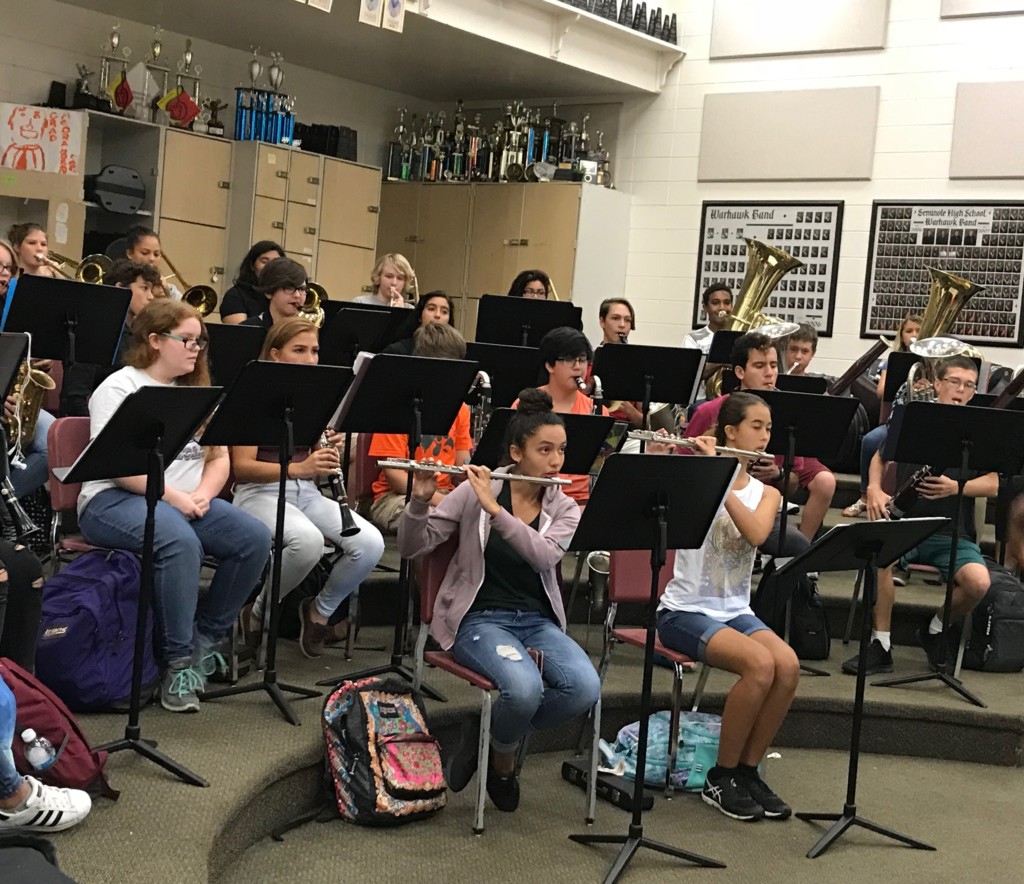
Members of Seminole High School Band practice during a rehearsal. The music program is now part of the school's Academy for Advancement in the Arts.
In 2014, graduate rates surged throughout Florida, continuing years of growth. But numbers at Seminole High School were going in the opposite direction.
Once an A-rated school, it had slipped to a C. In 2007, Newsweek recognized it as a top high school in the country. But in the years that followed it faced mounting competition from within the Pinellas County school district. A nearby fundamental program at Osceola High School and an International Baccalaureate program at Largo High were drawing high-achieving students.
Jane Lucas, Seminole High's assistant principal, said at the time, she identified the crux of the problem. Students were disengaged.
"We want to be the high school that wouldn't let any child fall through the cracks," she said.
Thomas Brittain, principal at Seminole High, had just become the principal. He agreed something had to change.
Administrators began working on a plan to transform their high school from the bottom up. Lucas described the ensuing changes as "de-institutionalizing the institution."
Seminole High wound up throwing out some old-school conventions, like bell schedules. It started offering new programs tailored to students' career aspirations. It now includes seven in-house academies, built around themes from theater to engineering to sports. The new structure held on to core classes but gave students a variety of projects outside the classroom based on real-life concepts such as business and engineering. Rather than penalize students who struggle, they look for ways to help them succeed.
Lucas said Brittain, who joined the district in 2013, took the helm at just the right time.
“I remember his first meeting with our faculty and staff," she said. "He put forward his vision talking about how students need to be engaged and cared for."
At the time, officials across the Pinellas school district were starting to talk about personalized education. They were preparing to apply for a grant from the Bill and Melinda Gates Foundation to support a new approach.
Flash forward a few years, and people who visit Seminole High School find a more humane learning environment. The school tries to treat students with respect and expects them to take ownership of their learning.
“No bells seems to bring a sense of calmness,” Lucas said. “We are treating people the way they want to be treated.”
Seminole High, home of the Warhawks, is home to more than 2,000 students.
Brittain said it all comes down to giving students choices.
"The larger the school, the more rules people tend to make. It doesn’t have to be that way," said Brittain. "We have taken a lot of rules away and asked students to be responsible.” (more…)

