Pre-school is hot – again. It has been so, off and on, since ancient Greece. Plato’s ideal state would have imposed full-time boarding school starting at day one for all newborns, keeping them permanent strangers to their parents – those natural enemies of his perfect Republic.

Does NYC Mayor de Blasio's vision of pre-K include parental school choice?
The spirit of Plato has played a larger role in American public schooling than often we recognize. Still, contra Plato, our imperfect Republic still allows parents to keep their children home until age five or six, then lets those who can afford it to choose among all schools, public and private. But for the less fortunate family, it is difficult or impossible to avoid their child’s conscription for seven hours, five days a week. To that extent, Plato wins, they lose.
Many now propose extending public schooling to younger children. Would this new deal in education be undertaken in the platonic spirit? For whom, and at what age? Would lower-income families be subsidized in order to make their own choices among public, private, and religious providers? Or would pre-K school be designed as the government strong-arm long familiar to post-K families, especially those forced into public schools in the cities? Exactly what is the intention of government enthusiasts, such as the new mayor of New York City?
We just don’t know; if Mr. de Blasio wants to replicate for infants the income-based conscription of K-12, he has not yet told us. And one full-length recent article and three New York Times’ editorials on pre-K in one week never touch the issue. Does government aim to frustrate even further the exercise of responsibility by the low-income family; or to the contrary, will Mr. de Blasio respect, for these few early years, the authority of such families to exercise in practice the role that their middle-class fellow citizens take for granted? (more…)
I am more politically incorrect than your average guy, so when I heard President Obama call for universal pre-K for 4-year olds in the State of the Union, I cringed. With all the raucous enthusiasm ringing around this issue since the speech, adapting Warren Buffet’s investment approach to public policy might be wise: when everyone is bold, it’s time to be cautious.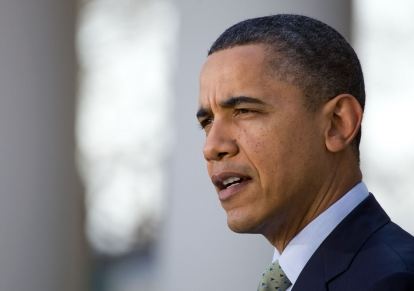
In 2006, when I was with California Parents for Educational Choice, we were part of a coalition of organizations that defeated Rob Reiner’s ballot initiative to bring universal pre-K to the state. It was introduced to widespread public approval, but by Election Day garnered only 39 percent of the vote. The electorate came to understand three major elements they did not like:
* Expanding pre-K to everyone, including middle class and upper income families, is hugely expensive and precious little, if any evidence, supports much educational value added for the middle class and wealthy.
* The initiative vastly expanded the existing public school monopoly, which hardly has a resounding record of educational success, especially with poor and minority students. It also mandated collective bargaining, swelling the ranks and economic power of the California Teachers Association, an organization that systematically stands in the way of innovation and reform.
* The academic outcomes were questionable. A Reason Foundation analysis found from 1965 to 2005, 4-year old participation in preschool programs had grown nationwide from 16 percent to 66 percent, but we had virtually no evidence of increased student learning on the National Assessment of Educational Progress (NAEP) by fourth grade. Oklahoma, with a universal program since 1998, finished dead last on the 2005 NAEP, actually losing four points.
But that was close to seven years ago and admittedly, I haven’t followed the pre-K issue regularly. So I spent the last few days reviewing some studies and data. The key word in the Obama proposal is quality.
We likely can justify a highly targeted effort on kids in failed families or families that simply have no resources - financial, social, emotional, or cultural - to allow their children to mature and develop normally. But when Obama declares, “We know this works,” he overstates and simplifies our experience. (more…)
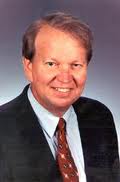 Former Florida House Speaker Jon Mills (pictured here) will now get his day in court, representing a group that has sued the state over both the funding and quality of public education. But the state Supreme Court’s decision on Tuesday to let the suit move forward also invites a more enticing legal debate: Does the constitutional requirement of “a uniform, efficient, safe, secure, and high quality system of free public schools” mean that every school must look the same?
That question may sound facetious, but unfortunately has judicial grounding. In 2006, the state high court invalidated Opportunity Scholarships by rejecting “separate private systems parallel to and in competition with the free public schools.” And the court didn’t stop there. It went further, arguing that “uniformity” calls for consistency in school accreditation, teacher certification and education qualifications, background screening for employees, academic standards, and curriculum in reading and history.
The question of school variety and choice might not sound like fodder for a case that’s primarily about money, but give Mills credit for being open to all interpretations of high quality. “The mission,” he said when the case was first filed in 2009, “is for students to have a good educational opportunity and to succeed, and it seems to me we need more options and not less.”
That is clearly the direction in which Florida is moving. (more…)

