Editor's note: This post is shared by our sister organization, Step Up, Step Further Scholarship Fund, a new federal scholarship program launching in 2027 to support students in public and private schools.
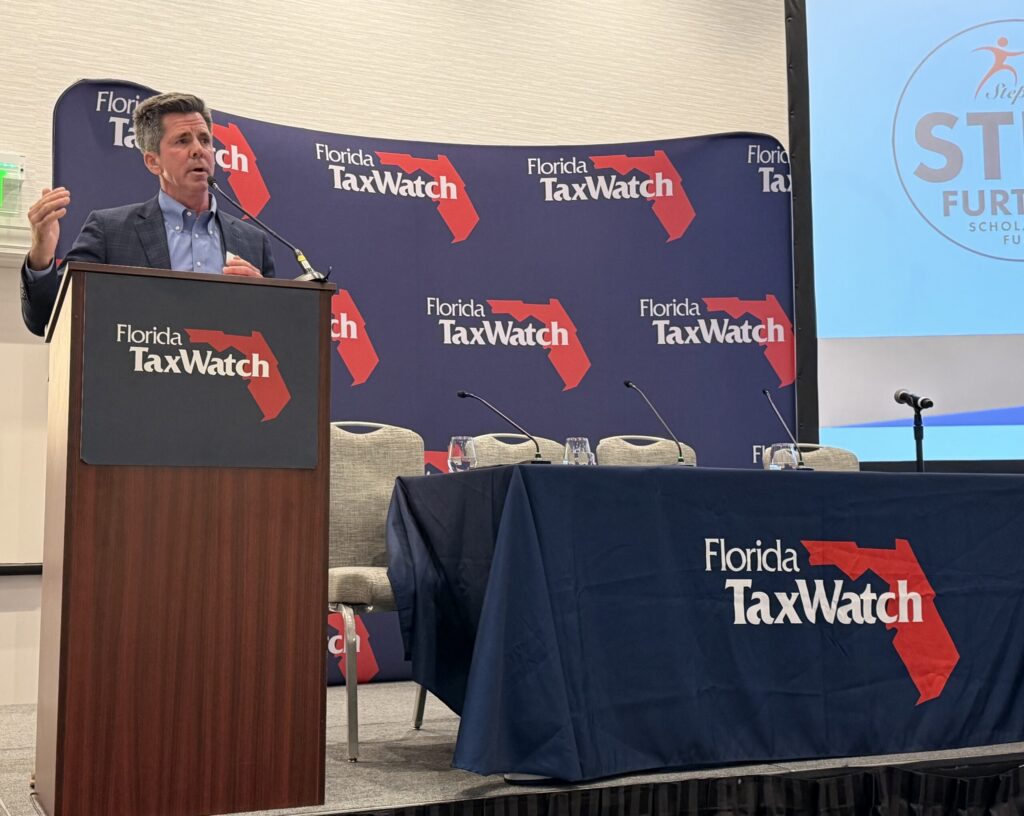
At Florida TaxWatch’s policy forum, Step Up For Students Founder and Chairman John Kirtley shared how the new federal Education Freedom Tax Credit will help expand opportunity for K-12 low income district school students. “The income levels that the federal law allows are, in my opinion, pretty generous,” Kirtley said. “They’re 300% of the area’s median income, which in Florida will be anywhere up to probably $250,000. However, a scholarship organization can set its own income limits.”
The new tax credit will continue to allow Step Up, Step Further, sister organization of Step Up For Students, to focus on serving the lowest-income students in Florida.
Kirtley went on to illustrate how Florida school districts have seen a dramatic increase in graduation rates since 1981, when the graduation rate hovered under 50%. He noted that a statewide push for greater accountability in schools and grading them has resulted in a graduation rate of over 90%.
“That’s an incredible improvement, and we should all be very proud of that. A great example of how the districts have responded is very close to home for me. My high school, Fort Lauderdale High School, when schools were first graded back in 1999, my high school was an ‘F.’ And it was an ‘F’ for several years,” Kirtley said.
Read the full article at Florida Politics > https://floridapolitics.com/archives/791109-john-kirtley-makes-case-for-choice-encouraging-use-of-education-savings-accounts/
Less than two months after the application season began, record-breaking interest continues with more than 500,000 students applying for Florida’s K-12 education choice scholarships.
Step Up For Students, the nonprofit organization that administers 98% of the state’s scholarships, opened applications for the 2026-27 school year on Feb. 1. A record 200,000 applied during the first three days.
By midday Feb. 10, a total of 300,106 students had applied for scholarships, which represents an 11.7% increase over the same 10-day period last year. By Friday morning, Feb. 27, a total of 401,507 students had applied.
Applications reached the 500,000 mark on March 30, which was 22 days earlier than in 2025.
Step Up For Students CEO Gretchen Schoenhaar said last week that the organization’s team and systems were ready for the surge of interest. Step Up’s technology systems processed 15% more applications on the first day this year than at the same time last year. Of the families who called for assistance, more than 90% reported being “satisfied” or “very satisfied” with the support they received.
“Florida continues to set the pace for the nation in education choice,” Schoenhaar said. “Families have become accustomed to seeking options in their children’s education and Step Up For Students is proud to support them every step of the way.”
Since its inception in 2002, Step Up has administered more than 3 million scholarships.
During the 25-26 school year, more than 525,000 students have been funded on Florida’s K-12 scholarship programs to access learning options of their choice. If these students were counted as a single school district, it would be the largest in the state and the third largest in the country. That makes Florida the national leader in education options.

However, not all families end up using their scholarships. Top reasons include: Their preferred private school lacked capacity; they were on a waitlist for a charter school and were accepted; they chose to attend a district school, etc.
Step Up is on track this school year to have 2.75 million transactions on MyScholarShop, its online marketplace, for over $425 million. Step Up is on track to process over 4.5 million reimbursement requests this year, worth over $595 million, four times what it had just two years ago.
Current scholarship families have until April 30 to renew their scholarships for the next school year. All families who want a PEP scholarship must also apply by April 30.
Applications and more details are available here.
We will continue to update the numbers in this post until applications close.
TALLAHASSEE, Fla.– Amanda Thompson said she will be the president of the United States.
Not wants to be or hopes to be but will be.Amanda Thompson said she will be the president of the United States.
Not wants to be or hopes to be but will be.
Just like she will be the attorney general of Florida, the governor of Florida, and the United States attorney general before reaching the Oval Office.
“That’s the plan,” she said. “I’m going to get there.”
Of course, there is some prep work to be done before she begins a career of service to her state and country.
First, Amanda, 17, is set to graduate this May from St. John Paul II Catholic High School (JPII), where she will be class valedictorian. She attends the parochial school in Tallahassee with the help of a Florida education choice scholarship managed by Step Up For Students.

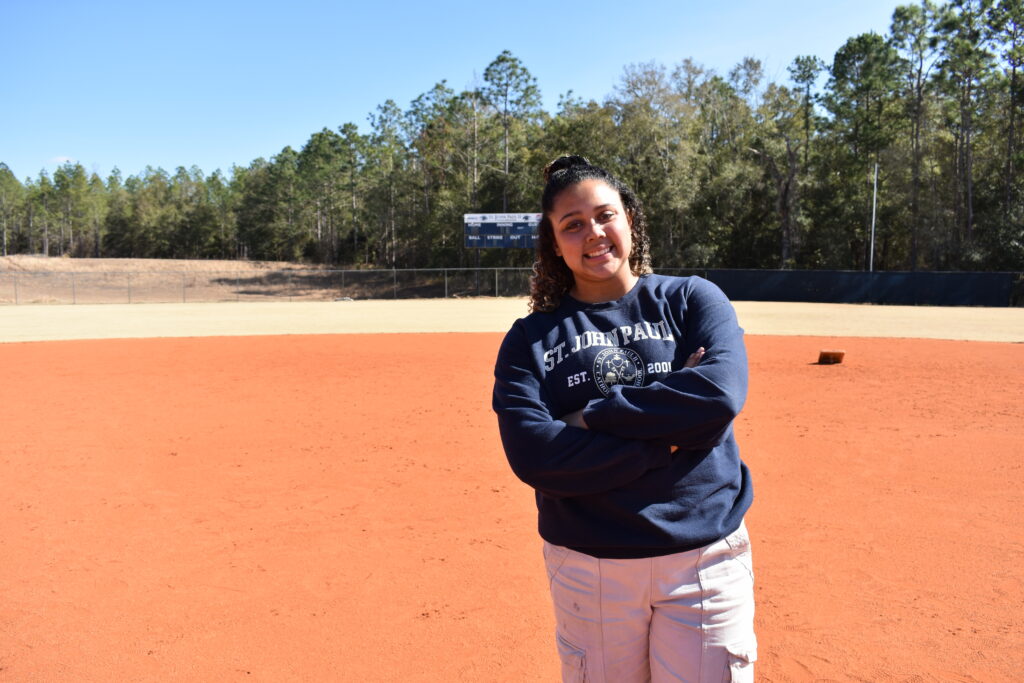
Then it’s off to Harvard University, where she plans to double-major in government and history and earn a degree from its prestigious law school. Along the way, Amanda will pitch for the Crimson softball team with designs on leading the program to its first appearance in the Women’s College World Series.
As that unfolds, Amanda is determined to play softball in the Olympics. She has attended tryouts for Team USA and is a member of the United States Virgin Islands national team.
Taken separately, any one of her goals is ambitious.
But combined?
“She has very, very high expectations,” said JPII Principal Luisa Zalzman. “She’s a go-getter, a high achiever. She has a drive that is very mature for her age.”
“She's done everything she's ever put her mind to,” said Amanda’s mother, Ashley Williard. “She said she wanted to be valedictorian, and I said, ‘OK, go be valedictorian.’ And she did it.”
Amanda is a bundle of energy and confidence. On the softball field, she has a running dialogue with everyone – teammates, opponents, coaches, umpires. In the classroom, she’s involved in every class discussion.
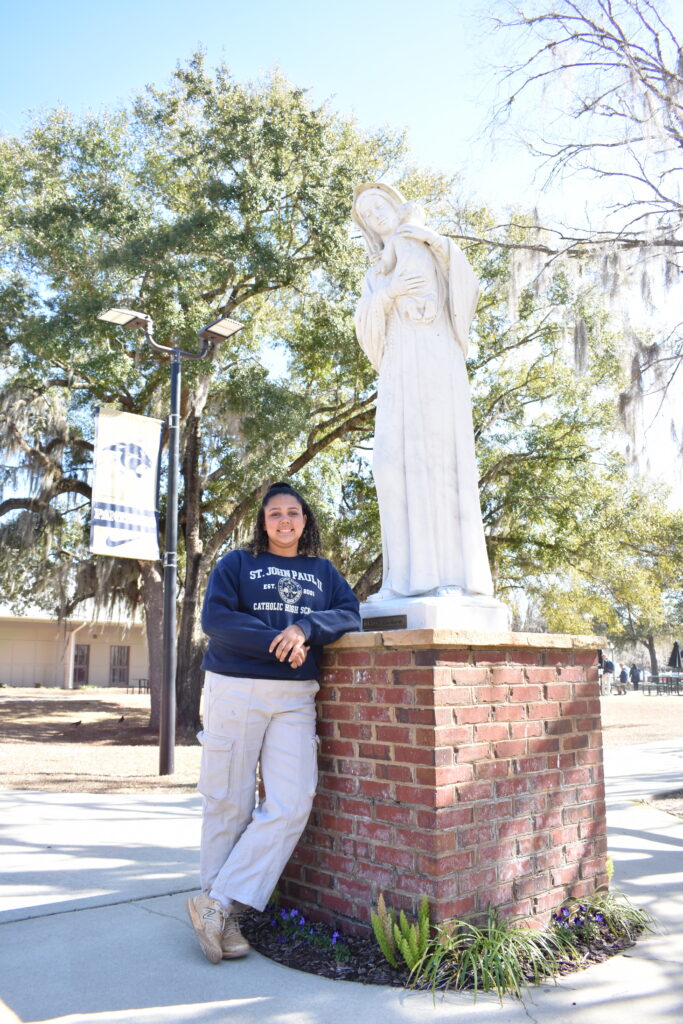
If you had approached her in August 2022 as she took the initial steps of her high school journey and told her she would graduate first in her class and be a member of Harvard Class of 2030, she would have been stunned.
“I would have said, ‘You got the wrong person.’ The difference between me then and me now is astronomical, and I think it’s because I attended this school,” she said. “It has to be.”
Amanda was a star as she rose through the ranks of the Tallahassee youth softball programs. Her parents, Ashley and James Thompson, envisioned their daughter earning an athletic scholarship to college. They were thinking of a high-end academic university like Duke or Notre Dame. That’s how Amanda, who attended her district schools until eighth grade, landed at JPII.
“We wanted a high school that was college-focused,” Ashley said. “Education is what we were looking for, and we could not have done it without Step Up For Students. No way could we afford to put her in that situation.”
There were “little things,” Amanda said, that shaped her academic future.
Her freshman English teacher encouraged her to write outside the margins during tests and essays.
“He said, ‘You don’t have to stay within this box. If you know more, write more on the paper.’ That stuck with me,” Amanda said.
Her freshman world history teacher announced to the class that Amanda scored the highest on the first test of the year.
“He congratulated me,” she said. “I thought that was insane.”
Midway through that semester, Amanda realized she had A’s in all her classes. That’s when she began to believe in herself as a student. Future valedictorian?
“Why not?” she said.
Amanda took AP World History as a sophomore and aced the AP test.
“That’s the class where I learned to learn,” she said.
Also, her love of history and government was born in that class, Amanda said. She can name all the countries of the world, tell you where they are located, and identify the flags.
“I’m working on my capitols,” she said. “It’s my hobby.”
Amanda took Spanish I and II in middle school and passed each, but not with grades that would stand out on a high school transcript. Sara Bayliss, JPII’s college advisor, suggested that Amanda retake those courses.
“She said the grades weren't good enough, that I could do better,” Amanda said.
Amanda retook both classes. She asked Principal Zalzman, a native of Venezuela, for tutoring help. The result was a pair of grades that fit proudly on the transcript Amanda sent to Duke. Duke was her dream school for education and softball.
And then Harvard called.
At midnight on Sept. 1 of her junior year – the first day college coaches can contact 11th graders – Amanda received a phone call from the Harvard softball coach.
“I didn’t even know they had a softball program,” Amanda said.
Intrigued, Amanda accepted a recruiting visit to the university located just outside of Boston. That trip marked the end of her Duke dreams.
“I want to make a difference in this world, and I think Harvard is the perfect school for me,” she said.
Terrence Brown, JPII’s softball coach, has watched Amanda emerge as an Ivy League student and a Division I softball player good enough to attend Team USA tryouts and earn a spot on the national team of a small territory with Olympic ambitions.
“She’s goal-oriented, and she doesn’t let anything get in the way of achieving those goals,” he said. “She’s worked very hard to get to where she’s going.”
Ashley and James are proud parents, but Ashley said they won’t take too much credit for Amanda’s success.
“We have nothing but pride,” Ashley said. “She is self-driven, self-motivated. We try to provide motivation. She’s missed proms and dances because of softball travel and schoolwork, and that was all her decision.
“There are a lot of sacrifices made to go along with this. She’s not afraid of hard work. She says she’s going to do something, and she goes out and does it.”
TAMPA, Fla. — The words on the trophy read “Future Philanthropist,” and Mrs. Finley, who taught fifth grade that year, cried when she presented it to Andrew Weber during graduation.
Andrew smiled at the memory.
“It was one of the highlights of my elementary school career,” he said. “Mrs. Finley said I was one of her favorite students. That meant a lot to me.”
So did receiving the trophy, which still holds a place of honor on his nightstand.
“It made me realize my potential and how I can help others,” Andrew said.
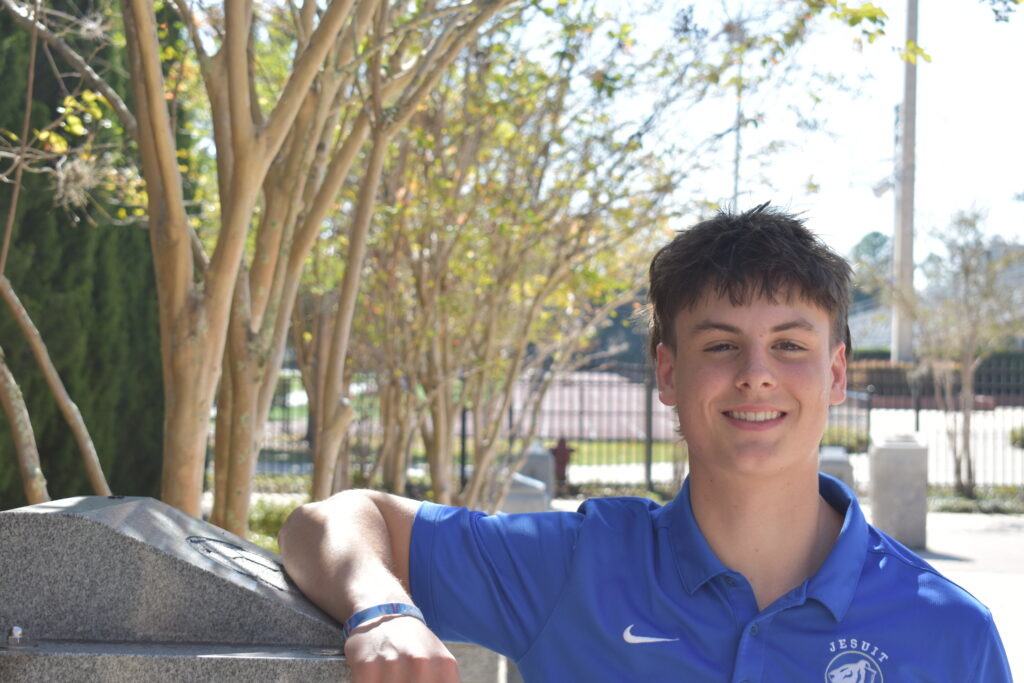
Almost seven years later, Andrew, a 17-year-old senior, is nearing another graduation, this time from Jesuit High School, the Catholic school in Tampa he attends with the help of a Florida education choice scholarship.
The altruistic nature Mrs. Finley saw in Andrew when he was in elementary school blossomed during the ensuing years.
Jesuit’s mantra is “Men for Others,” and Andrew embodies that.
“He does 100%,” said Andy Wood, Jesuit’s athletic trainer and track and field coach, and the school’s former director of community service. “Andrew is one of our top students. And when you talk about a total package, including his community service work, being a student athlete, he's what we envision our seniors being at graduation.”
Andrew volunteered for eight service organizations while in high school.
He made two trips to an orphanage in Guatemala with his Jesuit classmates, feeds people at Metropolitan Ministries, and delivers Meals on Wheels with his mother, May.
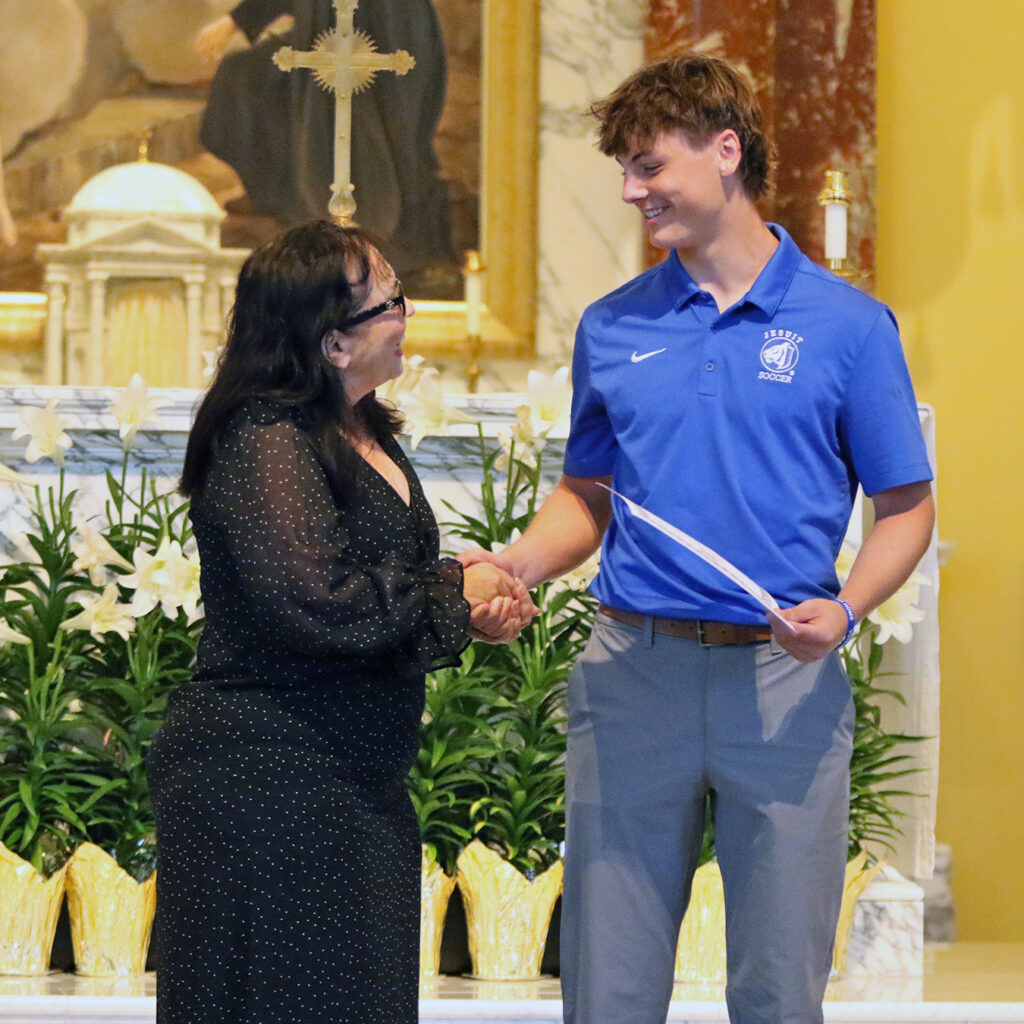
He’s volunteered for the Faith Café, the Young Men’s Service League, Teens United Florida, the Leukemia and Lymphoma Society, and the Ryan Nece Foundation, a non-profit founded by a former Tampa Bay Buccaneer that empowers teens to become leaders through volunteering.
Andrew traveled to Asheville, North Carolina, last June with the Ryan Nece Foundation to help families with home repairs still needed after the flooding caused by Hurricane Helene.
He is a pole vaulter on the track and field team, and in his spare time, he plays the piano at a local nursing home.
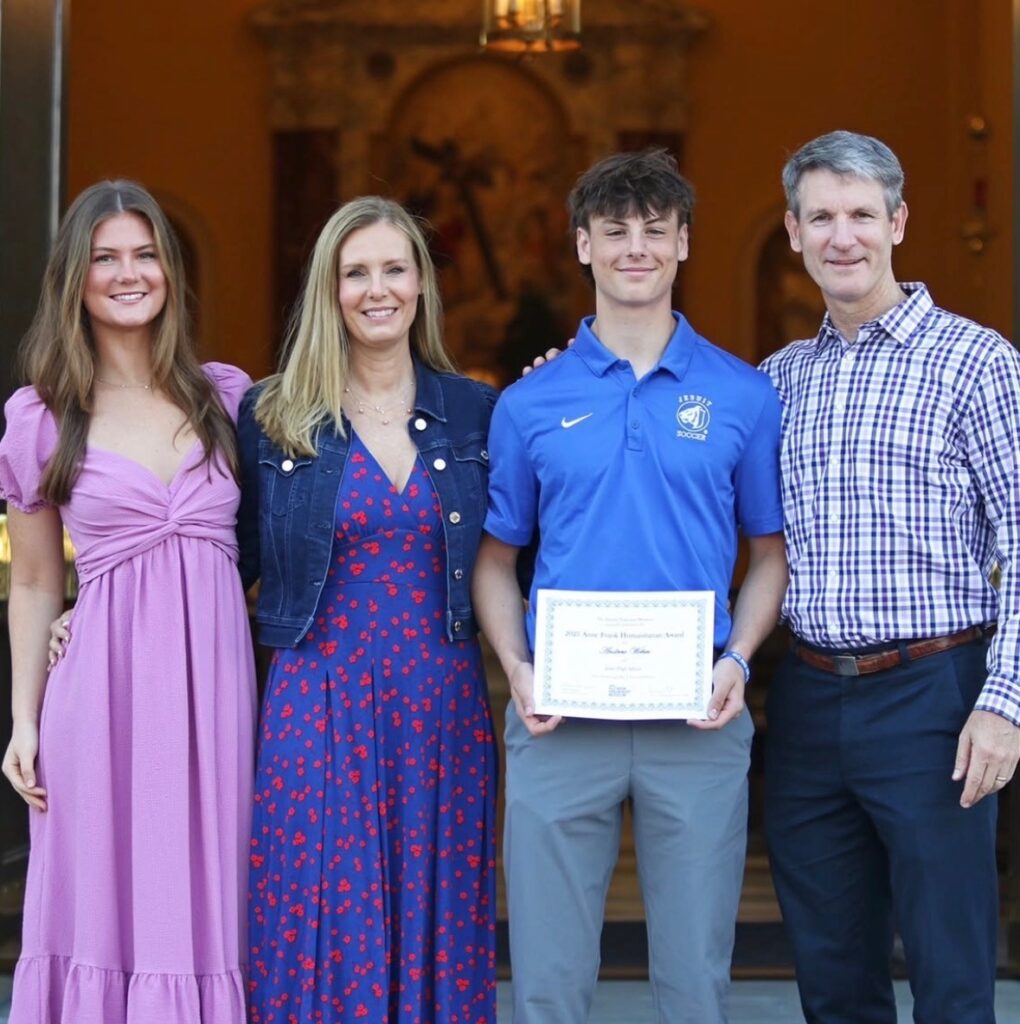
As a junior, Andrew received the Anne Frank Humanitarian Award from the Florida Holocaust Museum in Tampa for his outstanding humanitarian efforts.
Andrew’s parents, May and Tim, raised him and his older sister, Elise, to be community-minded. Elise, now a sophomore at the University of Georgia, also volunteered for the Ryan Nece Foundation while in high school.
“As his parents, we always wanted Andrew to be very involved in a lot of things and explore different passions, and luckily for him, many of those passions really stuck,” May said.
Andrew set the foundation in elementary school when he sold lemonade, handmade crafts, and rocks (crystals and gems) from a stand in the front yard of the family’s Tampa home. He said he would raise maybe $100 over several weeks and donate the money to charities such as Dogs Inc (formerly Southeastern Guide Dogs).
“I was 8,” he said. “I felt the money could benefit other people more than it could benefit me.”
“His heart was always generous,” May said.
For a teenager as service-oriented as Andrew, he certainly found a home at Jesuit, where students are required to complete a minimum of 150 hours of community service during their four years. Andrew, though, has accrued more than 500.
Yet, the decision to attend Jesuit was not easy.
“It was a very hard decision,” Andrew said.
His options were these: his district school, where Elise was a rising junior and where a lot of his friends were headed, or Jesuit, an all-male parochial school with demanding academic standards.
For help, Andrew turned to his role model: his big sister.
“She said, ‘Andrew, if you pass up this opportunity, you might regret it for the rest of your life.’ So I said, ‘I'm going to listen to you,’” Andrew said.
Thinking back on it now, Andrew added, “She was right.”
He has no regrets.
Andrew’s two trips to Orfanato Valle de Los Angeles (the Valley of the Angels orphanage) outside of Guatemala City with his classmates opened his eyes to how fortunate he is to live in America.
The orphanage did not have air conditioning, and hot water was spotty at best.
Wi-Fi? Yeah, right.

“I just put down my phone and started living in the environment, living how these kids live, and I realized that life can be fun,” Andrew said.
The Jesuit students spent nine days with at-risk children, teaching them English and about their faith.
Andrew called the experience “life-changing.”
“In Tampa, we really live in a bubble,” he said. “There are things I don’t take for granted anymore.”
Like AC, hot water, and a strong Wi-Fi signal.
And how a simple act of kindness can make a world of difference in someone’s day.
During the summers, he and his mom deliver Meals on Wheels to older adults and others unable to leave their homes without difficulty. It’s a bonding moment between the two, quality time spent together for a mom and her son.
“It's probably my favorite thing that we have done together,” May said.
“It’s the favorite thing that I do,” Andrew said.
They don’t rush through their route. Instead, they spend a few minutes at each stop, checking on the people receiving the meal, making small talk, and letting them know they matter.
When they first started delivering the meals, May told Andrew: “We’re probably the only people they're going to talk to that day, so even though this is sort of a blip on your radar, this is their day; this is their weekend; this is their week. So, make it count.”
Andrew took that lesson to heart.
A man for others.
“I feel like if I were in that situation where I needed help, I obviously want someone to do the same thing for me,” he said. “Spreading Jesuit’s values across what I do is a big part of why I do it. What I've learned here, it really propels me to do what I do in such a great way.”
Andrew wants to major in business in college. Where? He hasn’t decided. His choices are the University of Georgia, the University of Tennessee, Boston College, and Florida State University.
Where will that major lead him? He’s not sure.
“I can tell you it will be with people,” May said. “Whether it's finance or accounting, marketing or entrepreneurship, his love is working with people. I think it's just what comes naturally to him. He motivates people and makes people feel better about themselves. So, that’s my prediction.”
ST. PETERSBURG, Fla. – Life, it’s often said, is what happens when you’re making other plans.
Tasia Mathis planned on joining the U.S. Navy Reserve. Then her grandmother, with whom Tasia and her younger brother Jeremiah lived with, died suddenly from complications of kidney failure.
“The papers were signed, but I wasn’t able to go through with it,” Tasia said. “I had to make sure he was OK.”
Tasia, 20 at the time, became her brother’s guardian.
While Tracy Crawford’s passing in June 2023 ended Tasia’s goal of joining the Navy, it didn’t end her goal of a bright future for herself and Jeramiah.
For that, she credits Florida's private school scholarships managed by Step Up For Students.
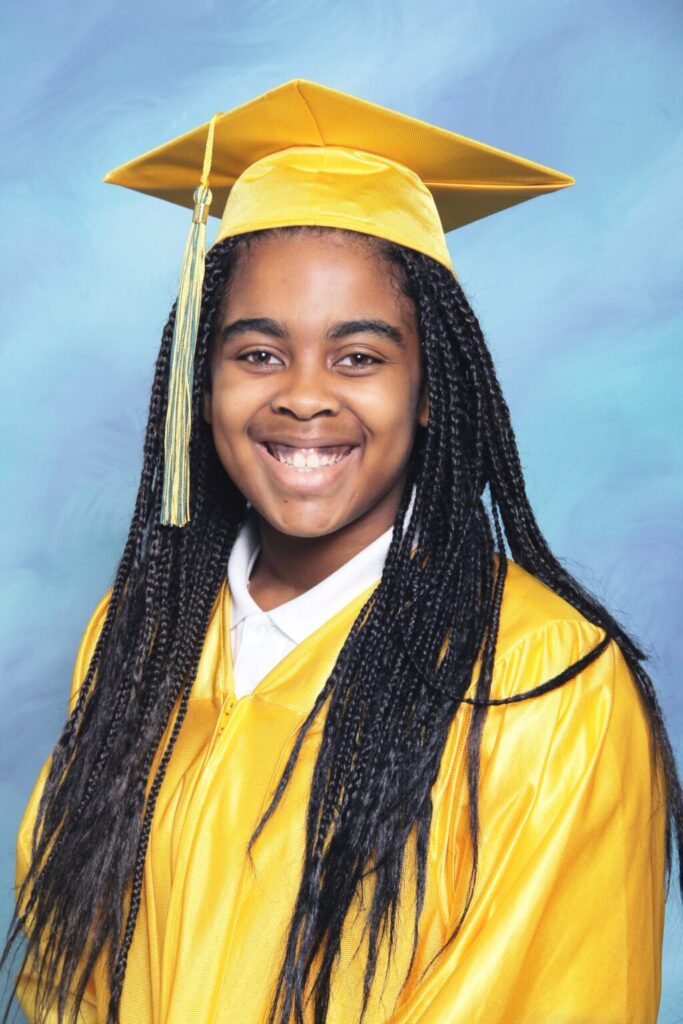
The scholarships enabled Tasia, now 22, and Jeremiah to attend Academy Prep Center of St. Petersburg for middle school and allowed Jeremiah, 15, to continue his private school education at Admiral Farragut Academy in St. Petersburg, where he is a sophomore this year.
“(The scholarship) gave us the opportunity to go to a school that we probably wouldn't be able to go to,” Tasia said. “It gave us the opportunity to expand our knowledge so good things can come into our lives.”
Tasia is studying to become a phlebotomist and works as a teacher at the Academy for Love and Learning in St. Petersburg.
Jeremiah would like to attend the United States Air Force Academy and work in cybersecurity.
The two, who share an apartment in St. Petersburg, have goals and are working toward them with a determination forged by Tracy Crawford, their grandmother, and reinforced by their years at Academy Prep.
“They don’t let you give up,” Tasia said when asked what she liked about attending Academy Prep. “Even if you had issues, they never let you give up.”
Could you blame them if they did?
Tasia was 8 and Jermiah was three weeks old when their mom died. Staci Crawford was only 34 when she suffered a heart attack. That left the children in the care of their grandmother, whose failing health forced Tasia to find work as a counselor at the Police Athletic League when she was 14.
“I had to help out with the bills,” she said. “By the time I was 16, I was cooking, washing everybody's clothes, helping my grandmother out the best I could.”
So, when asked what it’s like to have his sister as his guardian, Jeremiah said, “It’s kind of all I’ve known.”
Tracy wanted Tasia to attend a school that would challenge her academically and offer a safe environment. That’s why she used the private school scholarship to send her to Academy Prep.
At first, Tasia said, it wasn’t a good match. She was not a fan of the school’s long days (7 a.m. to 5 p.m.) or the fact that she had to wear a uniform.
“It took her a while to buy in, and then once she did, she was a high-achiever, and she set the tone for the other kids,” said Lacey Nash Miller, Academy Prep’s executive director of advancement.
For that, Tracy gets a big assist.
“She made sure my grades were straight, my attitude was straight,” Tasia said. “By seventh grade, it all came together.”
For high school, Tasia attended her assigned school because it offered a BETA (Business, Entrepreneurial, Technology Academy) program that interested her.
Jeremiah attended his assigned elementary school, but Tracy wasn’t a fan of his assigned middle school.
“It wasn’t up to her standards,” Tasia said. “She wanted to challenge him.”
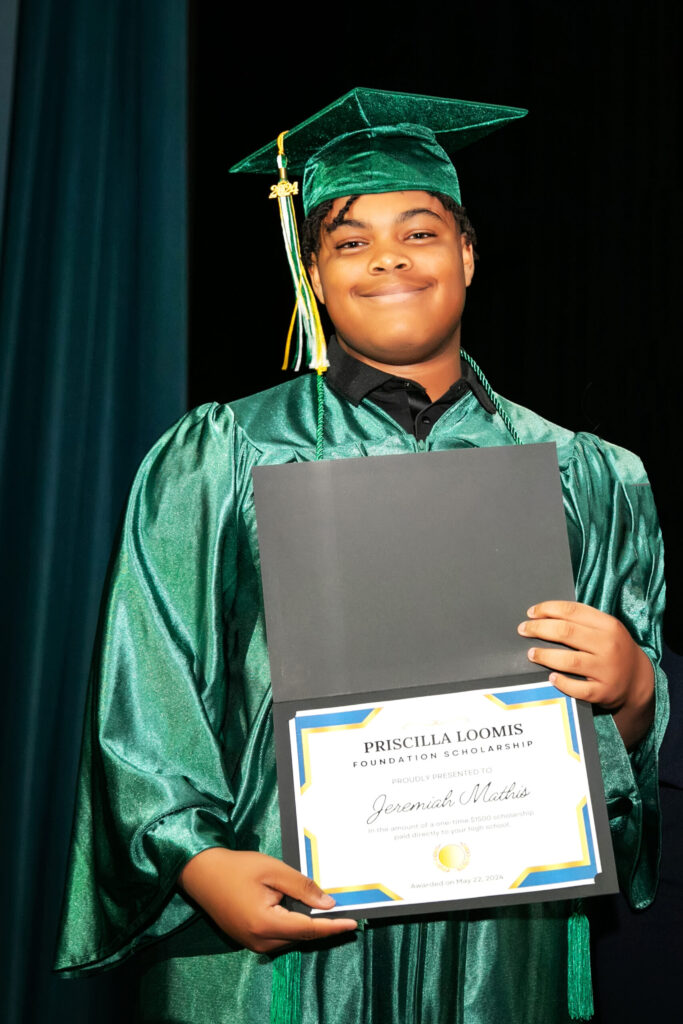
So, like his sister, Jeremiah headed crosstown to Academy Prep, where he said he benefited from the school’s academic environment and the self-discipline the teachers try to instill in the students.
Jeremiah said he became more extroverted during his years at Academy Prep.
“I was naturally a quiet person. I didn’t talk much,” he said. “Now, I talk to people. I try to start conversations.”
He also credited his teachers, specifically Zack Brockett, a science teacher, for guiding him toward being a young adult.
“He pushed us to grow up, so that we can go into high school as mature students,” Jeremiah said.
His teachers at Academy Prep describe Jeremiah as a quiet student who completed his assignments on time, helped out around campus, and amazed them with his drawing ability.
“Jeremiah is very self-driven,” Britanny Dillard, Academy Prep’s assistant head of school, said. “He’s one of those people that you kind of underestimate because he's so quiet that you don't even truly realize the talents that he actually has. He’s not the first to raise his hand, but he knows the answer.”
Jeremiah was a member of the school’s track team. He threw the shot put and discus. At graduation, Jeremiah received the Priscilla E. Frederick Foundation, worth $1,500 toward the balance of his freshman year tuition at Admiral Farragut. Frederick is a former Olympic high jumper who competed for Antigua and Barbuda in the 2016 Summer Games. Her foundation awards scholarships and grants to students raised in single-parent households. Jeremiah was the first Academy Prep student to earn that scholarship.
He is a soft-spoken, unassuming young man with a growing vinyl record collection and an interest in graphic novels and comic books. He will participate in track and field this year and will take an aviation class, which he feels will benefit him when he gets to the Air Force Academy.
Jeremiah spends his high school volunteer hours at Academy Prep. He helps grade papers, organize classrooms, and move supplies around campus.
Jeremiah and Tasia are spoken highly of at Academy Prep. Both Dillard and Nash Miller said they were “heartbroken” when they learned of Tracy’s death, and both admitted they were worried for the future of the siblings.
“They only had each other, and I think it speaks highly of Tasia that she was willing to accept that role,” Dillard said.
Said Nash Miller: “The news that her grandmother passed just gutted me. She had all these plans, and she just cancelled them to be her brother’s primary caregiver. What a superhero to put her brother’s needs ahead of her own.”
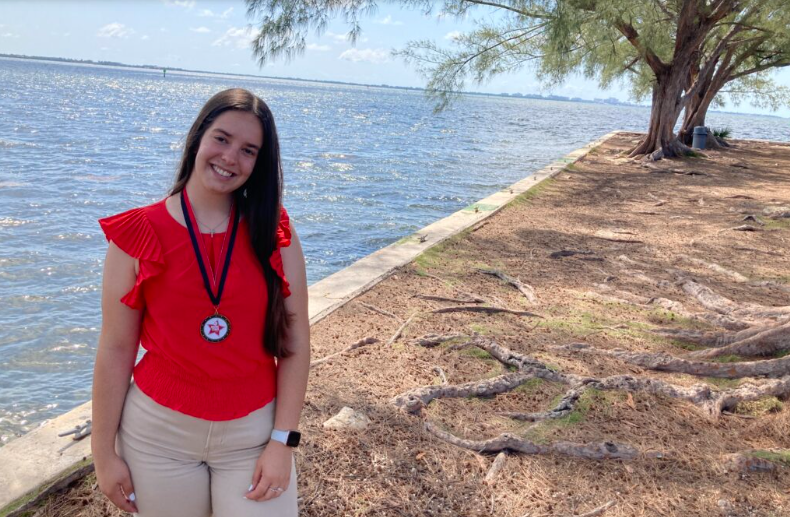
Among Ilen Perez-Valdez’ many accolades: National Honor Society member, Immaculate-LaSalle’s Spanish Honors Society president, Science Honors Society vice president, and English Honors Society treasurer.
MIAMI – Nery Perez-Valdes wanted to become a doctor, but life got in the way.
She fled Cuba for Miami with her mom when she was 11 and found herself working at 14 to help pay the bills. Nery would become a single mom and for a long stretch worked two jobs to keep the lights on and food on the table.
Nery always wanted a private school education for her daughter, Ilen, and a Florida Tax Credit Scholarship made possible by corporate donations to Step Up For Students allowed that to happen.
“I was a single mom since I was three months pregnant, and when I’m saying, ‘single mom,’ I’m telling you ‘single mom.’ No child support. No help. No nothing. Period. The end,” Nery said. “Thanks to Step Up For Students, Ilen was able to get the education I wanted for her.”
Ilen has made the most of that opportunity – and then some.
She graduated this spring near the top of her class at Immaculate-LaSalle High School, a prestigious Catholic school in Miami. She has a scholarship to the University of Miami and plans to major in neuroscience and double minor in business administration management and Spanish. Her goal is to attend medical school and become a pediatric oncologist.
“My mother never received a college education. She was barely able to graduate high school. All she has done since she got (to the United States) is work, work, work,” Ilen said. “She came here looking for the American dream. I feel like if I succeed, she can live out her American dream through me.”
Ilen has received a Florida Tax Credit Scholarship since kindergarten. She said she’s grateful for the opportunity to receive a quality education – first at Saint Agatha Catholic School, and then at Immaculata-LaSalle.
“It was really difficult to make ends meet when I was younger, so I wouldn’t have been able to attend a private school where I received such an excellent education,” she said.
To continue reading, click here.
 Editor’s note: This article about Black Minds Matter founder Denisha Allen appeared recently on theharlemtimes.com. To read a report about Black educator-entrepreneurs authored by Allen and Step Up For Students’ Ron Matus, click here.
Denisha Allen’s journey from a troubled student to a master’s degree graduate and leader in education reform is a model of the American Dream. Born in a poor neighborhood in Jacksonville, Florida, Denisha’s early experience with public schools was about as bad as it gets.
Her life at home was a struggle, and going to school was like going off to battle. Her mom and uncles had already dropped out, and her teachers had already given up on her because she shared their last name. She was terrified of being called on in class because she was reading below her grade level and regularly had to avoid getting into physical and emotional fights with her classmates.
Then things began to change. She moved in with her godmother who applied for a state scholarship program to a small private school. It was a revelation. Her new school was immaculate, and every day, teachers greeted the kids with smiles and sunny personalities.
She was able to let her guard down and for the first time felt compelled to compete in academics. She received one-on-one tutelage, and her reading and math ability jumped above her grade level. Denisha’s biggest concern became not achieving honor roll. In junior and senior year, she achieved straight A’s and went on to graduate with a master’s in social work from the University of South Florida.
She worked in the U.S Department of Education for two years and then the American Federation for Children where she started Black Minds Matter.
Denisha went on to share her success story at her old school and church. While her family wasn’t thrilled about the idea of sharing her humble beginnings, the experience was a form of therapy. She felt like a celebrity when she was invited by Governor Charlie Crist of Florida to promote his program for education reform and an expansion bill to target corporate dollars at primary school scholarships.
To continue reading, click here.

Serving students on the south side of Peoria, Illinois, an area that struggles with high unemployment, poverty and crime, South Side Christian Academy is a “faith-funded school,” self-described as one with faith that God will provide the funds needed to educate students.
Editor’s note: This commentary from Keri D. Ingraham, a fellow at Discovery Institute, director of the American Center for Transforming Education, and a visiting fellow at the Independent Women’s Forum, appeared earlier today on washingtonexaminer.com.
On the heels of a historic year of school choice advancement, including legislation that enacted universal or near-universal school choice programs in seven states, Illinois is poised to go in the opposite direction, delivering a blow to low-income families.
Specifically, the Democratic-controlled legislature in Illinois is positioned to let the Invest in Kids $100 million tax-credit scholarship program, enacted in 2017, sunset at the end of this calendar year. The action will nix a school choice program currently providing educational options to 9,000 low-income students.
As a tax-credit scholarship, the school choice program is not directly funded with taxpayer dollars but is privately funded by people and businesses who contribute through a qualified scholarship-granting organization.
Regardless, state lawmakers intentionally opted not to extend the program during the spring legislative session by failing to include it in the state’s budget implementation bill. Several other bills introduced during the session that would have extended the program also failed.
According to Myles Mendoza, founder and former President of Empower Illinois, the organization that led the inception of the tax credit scholarship policy, “despite daily pleas throughout the legislative session to extend the school choice program from parents, grandparents, foster parents, and guardians of children receiving the tax credit scholarship, Democratic House Speaker Chris Welch didn’t seem to even notice.”
The Democrat lawmakers’ loyalties lay with the public school teachers unions, who are stark opponents of school choice because having more children enrolled in public schools increases teacher staffing levels, equating to more members’ dues into union coffers, and who spend millions of dollars fueling Democratic political campaigns every year.
It’s a vicious funding cycle, with Democrat politicians and teachers union leaders pledging unwavering allegiance to each other in this quid pro quo relationship. Clearly, the importance of providing low-income students an opportunity to receive a better education pales in comparison.
But there was another reason the teachers unions pressured Illinois’ Democratic lawmakers to ensure the school choice program ends: The program shed a glaring light on the magnitude of parents seeking to free their children from the failing union-controlled Illinois public schools.
According to test data released by the Illinois State Board of Education, a startling 70% of Illinois public school students fail to read at grade level, and 75% fail to meet proficiency in math.
To continue reading, click here.
 A new study from a professor of economics in the Gatton College of Business and Economics at the University of Kentucky finds positive correlation between states’ K-12 student achievement and their education choice policies.
According to the paper, “Enhancing economic freedom via school choice and competition: Have state laws been enabling enough to generate broad-based effects?” released in early May, states with school choice programs saw large improvements in statewide test scores.
The report follows a study released earlier this year from Patrick J. Wolf, Jay P. Greene, James D. Paul and Matthew Ladner that shows similar results.
“This paper’s basic findings indicate strikingly large fourth grade reading and math test score gains for states that have adopted voucher programs and/or Education Savings Accounts,” wrote the researcher, John Garen.
The study shows that charter schools produced positive test score improvements, though only if the state’s enabling charter school law was not deemed “restrictive.”
Additionally, Garen found that increases in per-pupil spending correlated with improved test scores, but this impact was significantly smaller than offering a voucher or education savings account.
The paper compared National Assessment of Educational Progress (NAEP) scores from 1992 to 2019 and to the availability of school choice programs and the restrictions on student eligibility, as well as scholarship funding. However, the research did not include home education or district open enrollment policies in the results.
The study also considers whether school choice laws permit or restrict enrollment and new school entry, total public school per-pupil spending, and adjusts for the student’s race, income and learning disability status.
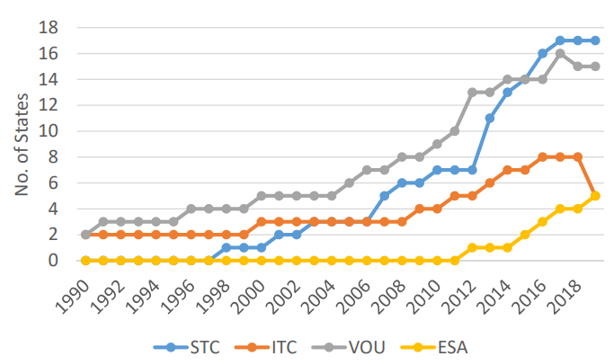
The number of states offering private school choice programs has grown steadily over the last two decades. (Scholarship Tax Credit (STC), Individual Tax Credit (ITC), Voucher (VOU), Education Savings Account (ESA))
According to Garen, for every $1,000 increase in per-pupil spending, there was a corresponding increase of 0.25 points in reading and 0.14 in math.
States with charter schools, however, saw decreases in both math and reading scores, but this may be impacted by restrictive charter school laws. States with less restrictive charter school laws, which would allow more students and schools, saw an increase of 0.65 points on the NAEP, the equivalent of increasing per-pupil spending by $2,500.
A statewide voucher program improved reading by 2.25 points, and the education savings account improved reading scores by 3.46 points, an effect that is 13 times stronger than simply increasing per-pupil spending.
Math scores also improved significantly in states with voucher and ESA programs. According to the researcher, the effect of an ESA program on statewide math scores was 27 times stronger than increasing per-pupil spending by $1,000.
States with ESA programs observed in the study include Arizona, Mississippi, North Carolina, Tennessee, and Florida.
Here are some additional findings:
According to Garen, vouchers and education savings accounts were better funded than tax credit scholarships but funded less than traditional public schools.
“Such programs,” the research concludes, “are associated with large improvements in Grade 4 reading and math NAEP test scores and are much bigger than the effect of school funding. Moreover, they are associated with lower school costs, implying a double dividend of better outcomes at lower cost.”
The report was published May 1.

Spring Valley School in Birmingham, Alabama, one of 457 private schools in the state serving more than 81,500 students, is a college preparatory school whose mission is to provide excellence in education for bright students with learning differences.
Editor’s note: This article appeared last week on al.com.
Alabama lawmakers passed tweaks to the state school choice landscape during the 2023 session but turned down proposals for sweeping expansions. Two school choice bills, one expanding the decade-old Alabama Accountability Act to allow school choice for students with disabilities, and one remaking the 8-year-old public charter school commission, received final passage Thursday.
The Alabama Accountability Act was expanded to allow more students to be eligible for tax credit scholarships, more money for individual scholarships, higher amount of tax credits available and more schools designated as priority – previously called “failing” – meaning more families could claim tax credits for moving their child away from a priority school.
The act now allows students with disabilities, specifically those with an Individualized Education Program or Plan called an IEP, to be eligible for tax credit scholarships to pay for tuition and fees. In addition, students with IEPs can use scholarship proceeds to pay for therapeutic services such as speech and occupational therapy.
More than 80,000 students statewide have IEPs. Currently, only students whose family income is below 185% of the federal poverty level are eligible. That level was raised to 250% under the changes.
About 2,800 students are using tax credit scholarships during the current school year according to the Alabama Department of Revenue. At its peak, more than 4,000 students used the scholarships.
Scholarship availability depends on how much money was contributed to the scholarship granting organizations that determine student eligibility and distribute scholarships. That figure, too, was increased to $40 million from the current level of $30 million.
Just under $20 million in contributions were claimed for tax credit purposes in 2021, according to the Department of Revenue.
To continue reading, click here.

