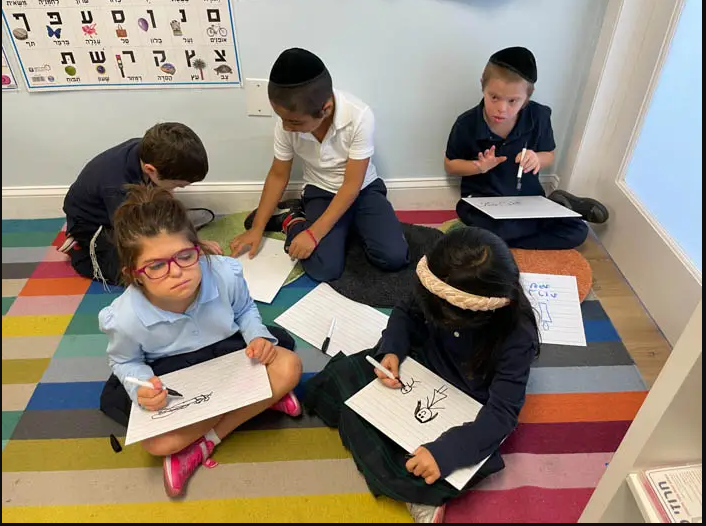
The hard work and determination of two South Florida mothers, along with support from Teach Florida, led to the launch of JEMS Academy in North Miami Beach. The school serves children with special needs, many of whom attend using Florida’s Family Empowerment Scholarship for Students with Unique Abilities.
Like many worthy endeavors, it started with two determined moms.
Both Avigayil Shaffren and Shoshana Jablon had children with unique abilities. Shaffren’s son was born with cerebral palsy, which affected his left side. Jablon’s son was born with Down Syndrome and later was diagnosed with attention deficit hyperactivity disorder.
Shaffren’s son attended a charter school for the first four years of his life. The program had its benefits, such as therapies and personal attention that she says he wouldn’t have received anywhere else. But when it came time to start kindergarten, she said, “it was awful.”
Despite her son being assigned a “shadow,” he made little progress. An evaluation turned up other diagnoses, which further complicated things. School officials gave Shaffren a choice: she could have her son repeat kindergarten or place him in a specialized school that would meet his educational needs.

JEMS students, whose unique abilities vary widely, frequently help each other with assignments.
The Shaffrens chose to have him repeat kindergarten, but Shaffren, who is Orthodox Jewish, was concerned about her son’s religious educational needs, especially as he got older. Shortly thereafter, she was laid off her job. Though three months of unemployment brought hardship, it also offered an opportunity.
Shaffren turned to her friend, Jablon, who is also Orthodox Jewish, and said, “That’s it; we’re done. We need to create this school, and we’re not done until we create it.”
Shaffren spent the time she would have devoted to a paying job researching Jewish special education programs, such as OROT, which is the Hebrew word for light. Based in the Philadelphia suburb of Melrose Park, OROT (pronounced OR-oh) partners with four Jewish day schools to provide an integrated education for diverse learners.
Another was SINAI Schools in New York, which is based on a similar model as well as JEWELS, or Jewish Education Where Every Learner Succeeds, a Baltimore program that incorporates therapies into the school day.
Shaffren and Jablon developed a business plan, which Shaffren felt at the time was “a house of cards that was falling apart.”
But, through hard work, determination and support from Teach Florida, they opened JEMS Academy in a building across the street from its umbrella school, Toras Chaim Toras Emes in North Miami Beach.
“It was a miracle,” Shaffren said about the process, which the women said they completed right before the new school year was about to begin.
Though Shaffren’s son was able to start first grade and continue in the umbrella school, she continued to support JEMS, which stands for Jewish Education Made Special. This past year, JEMS opened its doors with five students.
Of those, four received the Florida Family Empowerment Scholarship for students with Unique Abilities. The fifth student had applied but was on the waitlist. The founders say they expect that student to be awarded due to the additional funding and higher growth rates that state lawmakers allowed this year in HB 1.
According to Jablon and Shaffren, the students’ unique abilities vary widely. Staff members, who have advanced degrees in special education, personalize education to best fit each students’ needs. JEMS also provides onsite therapies. Jablon’s 10-year-old son, Nesanel, receives occupational and speech therapies there. The founders are seeking to add a Hebrew reading specialist and build a sensory room.
You can see a video of a typical day at JEMS here.
“It’s mushrooming, really growing,” Jablon said. “We just keep adding things as we see what the needs are.”
The program also includes a music program, which Jablon said serves as a type of therapy for students, some of whom experience anxiety or have autism. A staff member also brings a therapy dog.
“They really act as a cheering squad for one another,” she said. “If someone does something inappropriate, the whole class stops.”
She said it’s a real opportunity to develop social skills because they see how to act with one another.
But one of the biggest benefits to the arrangement has been the opportunity for students at both schools to interact and bond. On Fridays, JEMS students join the Toras Chaim Toras Emes students at an assembly to end the week.

JEMS students join their umbrella school classmates from Toras Chaim Toras Emes, located across the street, for recess.
Girls from the umbrella school also visit and engage the JEMS girls in educational games and performances. Boys from Toras Chaim Toras Emes help put on Bible studies and play games and sports with the JEMS boys. JEMS students also participate in recess at the umbrella school’s playground.
Those interactions have enriched both groups, the JEMS founders say.
Jablon said she hopes getting the word out about what JEMS offers will encourage more parents to consider enrolling their children.
“In general, with parents of students of special needs, moving kids from one school to another creates a lot of instability. So, parents keep their children in programs even if they’re not that great.”
Jablon said the Miami-Dade County School District has been helpful by issuing timely individual education plans for students seeking to go JEMS so they can qualify for the Florida Family Empowerment Scholarship for students with Unique Abilities.
JEMS already has opened a second classroom. The founders hope to expand the program at other Jewish day schools as the original students get older and need to attend single-gender classes as Orthodox Judaism requires. The founders also hope to be able to teach general life skills so the students can be as independent as possible as adults.
Says Jablon: “We want our kids to exist in the larger scheme of people and activities and potential jobs in any capacity they can muster.”

Established in 2001 as a ministry of Grace Covenant Church, Grace Covenant Academy in Cornelius, North Carolina, one of 844 private schools in the state serving more than 123,000 students, prides itself on excellence in Christian education, serving 3-year-olds through Grade 8.
Editor’s note: This commentary from John Hood, a board member at the John Locke Foundation, appeared Wednesday on carolinajournal.com.
The North Carolina General Assembly is about to make all children eligible for the state’s Opportunity Scholarship program. They won’t all receive the same amounts — poor and middle-income families will be eligible for vouchers in the range of $6,500 to $7,200 per student, while upper-income households will receive much less.
Nevertheless, both proponents and opponents are quite properly using the term “universal” to describe the policy, which will go into effect for the 2024-25 academic year.
School-choice advocates are ecstatic. Critics are despondent. Although my sympathies here are evident and longstanding, I think it would behoove both sides to temper their expectations a bit. There won’t be a gigantic exodus of children from district-run public schools in the fall of 2024.
For one thing, North Carolina’s current private schools don’t have the capacity to absorb such an enrollment boom. One of the best arguments for choice programs is their potential to foster entrepreneurship in education.
Just as the creation of charters gave educators, parents, and reformers the capacity to develop new models for public education, voucher expansion will give existing providers the capacity to add new grades and campuses while creating opportunities for new entrants to the K-12 space.
It can’t all happen in a year, though. It takes time to assemble teams, build or rent facilities, hire faculty, and develop content.
Furthermore, while some families will immediately take advantage of scholarships for which they’ll be newly eligible, many others will be intrigued but cautious. They’ll do their homework about what private options are already available, where new schools will open, and when they calculate the benefits of transferring their children will exceed the costs (which aren’t purely monetary, of course).
Still other families will have little interest in taking advantage of opportunity scholarships at all, either because they’re satisfied with the education their children are receiving in public schools — district or charter — or because they don’t like the private options available.
To continue reading, click here.
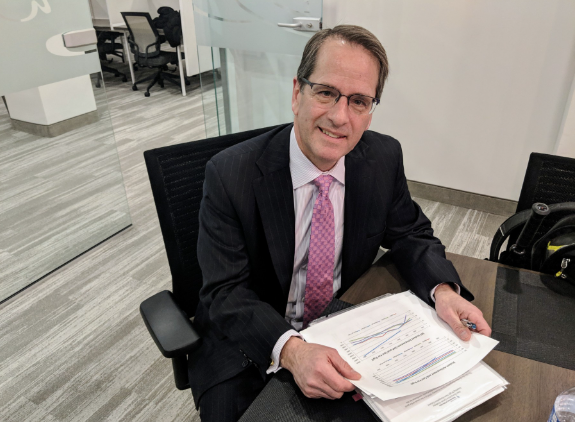
New Hampshire Education Commissioner Frank Edelblut is eager for families seeking a nontraditional instructional model for their children to find educational success.
Editor’s note: This commentary from Jason Bedrick, a research fellow with The Heritage Foundation's Center for Education Policy, appeared Tuesday on dailysignal.com.
The momentum for school choice is continuing to build nationwide.
Eight states have enacted new education choice policies or have expanded existing ones so far this year, including Indiana, Montana, and South Carolina earlier this month alone.
Of the eight, four states—Arkansas, Florida, Iowa, and Utah—enacted school choice policies that will be available to all K-12 students, joining Arizona and West Virginia in making every child eligible for education savings accounts or ESA-like policies that allow families to choose the learning environments that align with their values and work best for their children.
Indiana came close by expanding eligibility for its voucher and tax-credit scholarship policies to about 97% of K-12 students statewide. South Carolina’s new ESA is limited to low- and middle-income families, while Montana’s new ESA will expand education options for students with special needs.
More states have adopted robust education choice policies this year than ever before—and several state legislatures are still in session. This week, three state legislatures are making progress toward adopting new education choice policies or significantly expanding existing ones.
New Hampshire
This week, the New Hampshire state Senate will vote on a bill to raise the income-eligibility threshold for the state’s Education Freedom Accounts from 300% of the federal poverty line to 350% (about $97,000 for a families of four).
According to EdChoice, nearly 45% of Granite State families would be eligible. The bill has already passed the New Hampshire House of Representatives and the Senate Education Committee.
More than 3,000 students are currently enrolled in the program, which is nearly 2% of the approximately 165,000 K-12 students statewide.
“Half of the children enrolled are living below the poverty level,” said New Hampshire Education Commissioner Frank Edelblut. “These families are seeking a nontraditional instructional model for their children who may not have found educational success.”
According to the New Hampshire Department of Education, 1,504 of the 3,025 ESA students are eligible for the federally subsidized free and reduced-price lunch program, and 187 are students with special needs. Of the 1,453 students who enrolled in the ESA program for the first time during this academic year, about 400 switched from a public school.
To continue reading, click here.
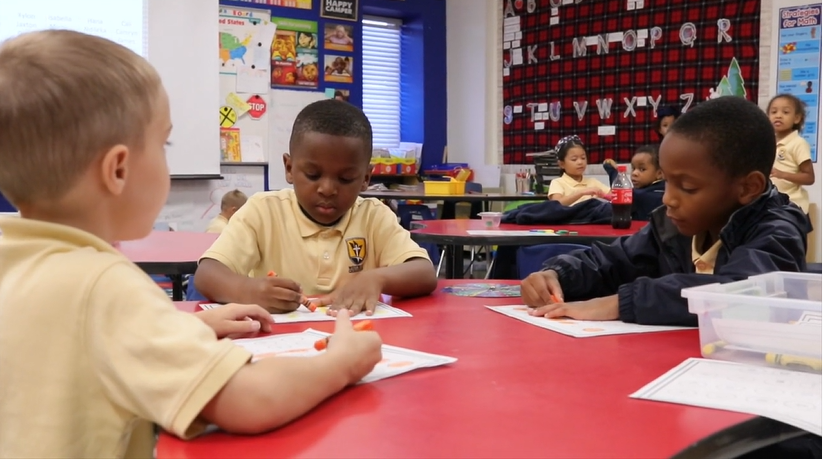
Westbury Christian School in Houston, one of 2,037 private schools in Texas serving more than 331,600 students, is a private, Christian, co-ed, college preparatory K3 through 12th grade school system. Westbury Christian exists to provide each student with the opportunity to acknowledge and respond through faith to the Word of God while participating in an educational program that stresses academic, social, emotional, and physical development.
Editor’s note: This article appeared Sunday on texastribune.org.
Gov. Greg Abbot on Sunday said he would veto a toned-down version of a bill to offer school vouchers in Texas, and threatened to call legislators back for special sessions if they don't "expand the scope of school choice" this month.
"Parents and their children deserve no less," he said in a statement. His dramatic declaration came the night before the House Public Education Committee was scheduled to hold a public hearing on Senate Bill 8, the school voucher bill. That measure passed the Senate more than a month ago but has so far been stalled in lower chamber as it lacks sufficient support.
The committee is set to vote Monday on the latest version of SB 8, authored by Sen. Brandon Creighton, R-Conroe, which would significantly roll back voucher eligibility to only students with disabilities or those that attended an F-rated campus. This would mean that fewer than a million students would be eligible to enter the program.
Abbott doesn't believe the revised version does enough to provide the state with a meaningful "school choice" program. Since the start of the legislative session, Abbott has signaled his support to earlier proposals that would be open to most students.
The governor also said he has had complaints over the new funding for the bill, saying it gives less money to special education students. It also doesn't give priority to low-income students, who "may desperately need expanded education options for their children," he said.
The centerpiece of the original Senate bill was "education savings accounts," which work like vouchers and direct state funds to help Texas families pay for private schooling.
The version approved by the Senate would be open to most K-12 students in Texas and would give parents who opt out of the public school system up to $8,000 in taxpayer money per student each year.
Those funds could be used to pay for a child’s private schooling and other educational expenses, such as textbooks or tutoring. But that idea has faced an uphill climb in the House, where lawmakers signaled last month their support for banning school vouchers in the state.
To continue reading, click here.
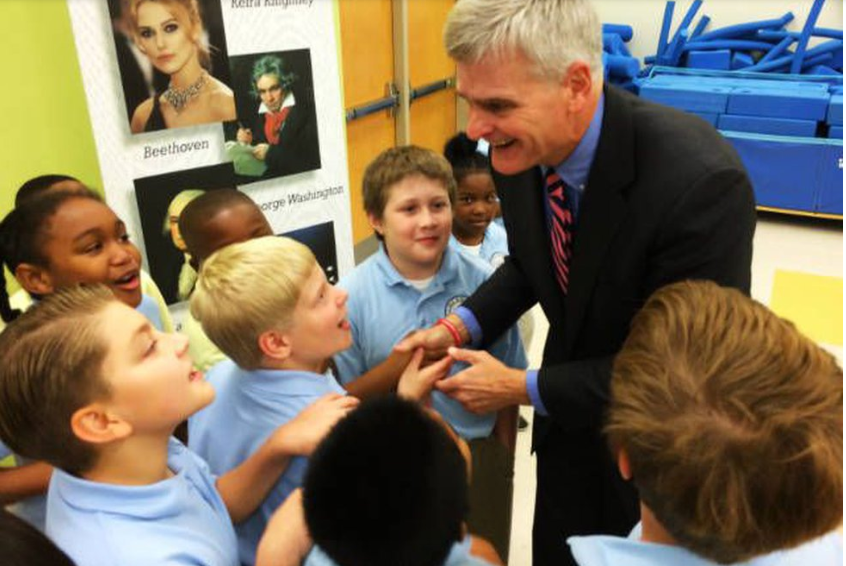
U.S. Sen. Bill Cassidy greets students at Louisiana Key Academy, a Baton Rouge charter school co-founded by his wife, during his Senate campaign in 2014.
Two U.S. senators, one Republican and one Democrat, on Tuesday introduced the Equitable Access to School Facilities Act, ensuring access to public property and providing federal grants to states for charter school facilities.
Available from the federal Charter Schools Program, the grants can be used by charter schools to acquire and renovate existing facilities, cover ongoing facilities costs, or create a reserve fund for future acquisition, renovation, or maintenance.
“Charter schools often provide a valuable option for parents looking to meet their child’s educational needs,” said Sen. Bill Cassidy (R-La), ranking member of the Senate Health, Education, Labor and Pensions Committee. “This legislation improves the learning environment for these students to help them succeed.”
"Every student deserves access to a high-quality education that prepares them for future success,” said Sen. Michael Bennet (D-Co.). This bill invests in charter schools and gives them additional tools to support students of every background.”
The day before introducing the act, Cassidy, Bennet, and Sen. Tim Scott (R-SC) brought a resolution celebrating National Charter Schools Week and commending charter schools for their contributions to education.
Nina Rees, president and CEO of the National Alliance for Public Charter Schools, praised Cassidy and Bennett for introducing the act, saying it will strengthen the Charter Schools Program so that it can remove the financial barriers to opening new charter schools and expanding existing high-performing charter schools.
“Public charter schools are an essential part of America’s public education system, and students who attend these unique public schools deserve access to facilities equal to their peers at district public schools,” Rees said.
“Lack of access to appropriate facilities restricts the growth of charter schools, limiting their ability to meet parental demand. Plus, without dedicated facilities funding, resources that are dedicated to academic programming and student services must be used for facilities.”
Nearly one year ago to the day, Bennett and Scott, along with Sen. Dianne Feinstein (D-Calif.) and a group of their colleagues wrote to Secretary of Education Miguel Cardona expressing their concern about a proposed rule from the Department of Education that they believed would jeopardize charter schools and limit families’ education options.
“During the 2020-21 academic year, nearly 240,000 new students enrolled in charter schools, representing a seven percent growth as compared to the previous academic year,” wrote Bennet. “This clearly demonstrates how critical the [Charter Schools Program] is, as it is the only federal program dedicated to supporting the creation of new public charter schools, replicating high-quality public charter schools, and disseminating information about effective practices within charter schools.”
Additional signers on the letter were Cassidy, Sen. Cory Booker (D-NJ), Marco Rubio (R-Fla.), and Richard Burr (R-NC).
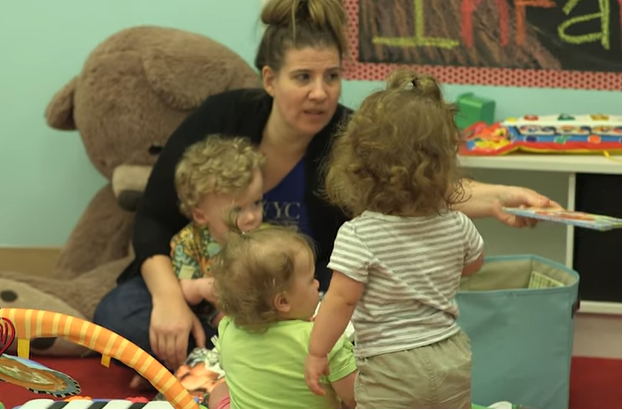
Special Care in Oklahoma City, Oklahoma, serves children with and without special needs, offering a 4-to-1 student-teacher ratio and 12 therapists as well as onsite occupational, physical, speech and behavioral therapies divided into three components: Early Childhood Education, Specialized Care, and Onsite Therapeutic Services.
Editor’s note: This first-person essay from Oklahoma mother Kelli Bruemmer was adapted from the American Federation for Children’s Voices for Choice website.
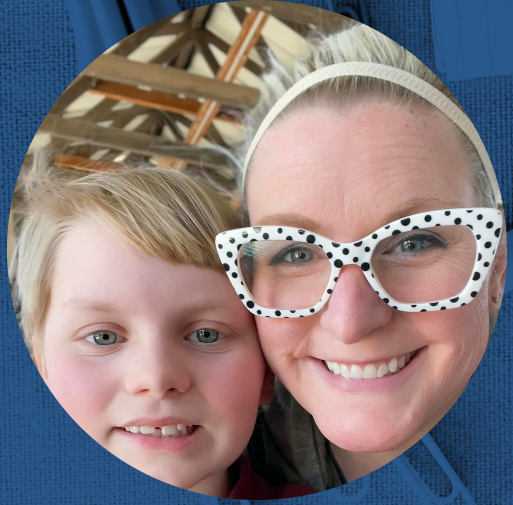
Kelli Bruemmer and her daughter, Maevyn
From a very young age, our daughter, Maevyn, struggled to communicate with others and had a difficult time understanding and processing the messages and information she received from them. When she was ready for preschool, we enrolled her in Special Care, an accredited daycare in Oklahoma City that serves children with special needs as well as children who are considered “typically developing.”
We fell in love with Special Care right away. We were impressed that Special Care’s program is accredited by the National Association for Education of Young Children. Each classroom has a lead teacher who holds at least a bachelor’s degree in early childhood education or special education, as well as two assistant teachers. The average student-teacher ratio is 4-1, so we knew Maevyn would get plenty of attention.
Maybe even more important was that at Special Care, Maevyn could see that it was okay to have a friend in a wheelchair, one in leg braces, and one like her who didn’t talk a lot. She learned that every student was special even though they were different from each other.
Then, when Maevyn was 4, she was diagnosed with autism and expressive/receptive language disorder.
We had been paying for her tuition out of pocket, which was tough, but we made it work. After her diagnosis, we became eligible for a Lindsey Nicole Henry Scholarship, a state-backed program for parents of children with special needs.
Our state’s Lindsey Nicole Henry Scholarship Act authorizes the parent or guardian of a public school student with a disability who is served under the Individuals with Disabilities Education Act and who spent the prior school year enrolled in an Oklahoma public school to exercise his or her parental option and request to have an LNH Scholarship awarded for a child to attend a participating private school approved by the State Board of Education.
The average scholarship amount is approximately $6,900. Approximately 125,000 Oklahoma children are eligible to apply. As of September 2022, 83 private schools were accepting Henry scholarships to help pay for tuition.
The financial support the scholarship provided was a big deal because we had a lot of additional costs for therapy and medication related to autism treatment.
Maevyn is 9 years old now, and the best fit we’ve been able to find for her is a public school in Oklahoma City that is not our zoned school. Once again, we are thankful to education choice policies that allow us to send her there because of the state’s open transfer laws.
Looking ahead, my husband and I are hopeful that we will find a private school option for middle and high school that will address Maevyn’s unique learning style. It’s a blessing to know that the Lindsey Nicole Henry Scholarship program will be part of that equation, enabling us to find the right school without worrying about the financial aspect.
Our ability to find the right educational environment for our daughter has been greatly enhanced by Oklahoma’s education choice policies and opportunities. It is our hope that our state – and others – will continue to put children first and provide families with the resources they need to do what they know is best.

Indiana House Ways and Means Committee chairman Jeff Thompson, left, the top House budget writer, defended the voucher program expansion, saying it gives parents the opportunity to choose what they believe is the best school for their children.
Editor’s note: This article appeared Friday on Indiana’s wrtv.com.
Republican legislators pushed through a new state budget plan early Friday that greatly expands eligibility for Indiana’s private school voucher program after they added money for traditional schools amid complaints over small funding increases they were set to receive.
This year’s legislative session came to an end with the budget vote that drew criticism of the GOP school funding plan from public schools groups and Democrats, who claimed it short-changed traditional public schools with funding increases less than the inflation rate.
The school voucher expansion in the initial budget deal announced Wednesday by Republican leaders was set to consume more than $500 million of the nearly $1.2 billion increase planned for general K-12 funding over the next two years. The revised plan added about $300 million to boost the total increase to about $1.5 billion.
House members voted 70-27 and senators voted 39-10, largely along party lines, in favor of the budget as the Republican-dominated Legislature adjourned this year’s session around 2:30 a.m.
Longtime education lobbyist Dennis Costerison said school district leaders began contacting lawmakers with concerns after school funding projections released Wednesday showed that nearly 75% of the state’s school districts would receive funding increases of less than 2% in the budget’s second year.
“With schools, and everybody else from the governor to the General Assembly, wanting to get more money for teacher salaries, where’s that money going to come from?” said Costerison, executive director of the Indiana Association of School Business Officials.
The GOP budget agreement announced Wednesday boosted total base K-12 school funding by 6% in the first year and 2% the second year. But traditional school districts would only see projected average increases of 3.5% and 1.1% after more than $500 million was diverted to pay for a 75% increase in the number of students receiving the state vouchers toward paying private school tuition.
Thursday’s revisions pushed the funding boost for public school districts to 5.4% in the budget’s first year and 1.3% in the second year, according to projections from the nonpartisan Legislative Services Agency.
To continue reading, click here.
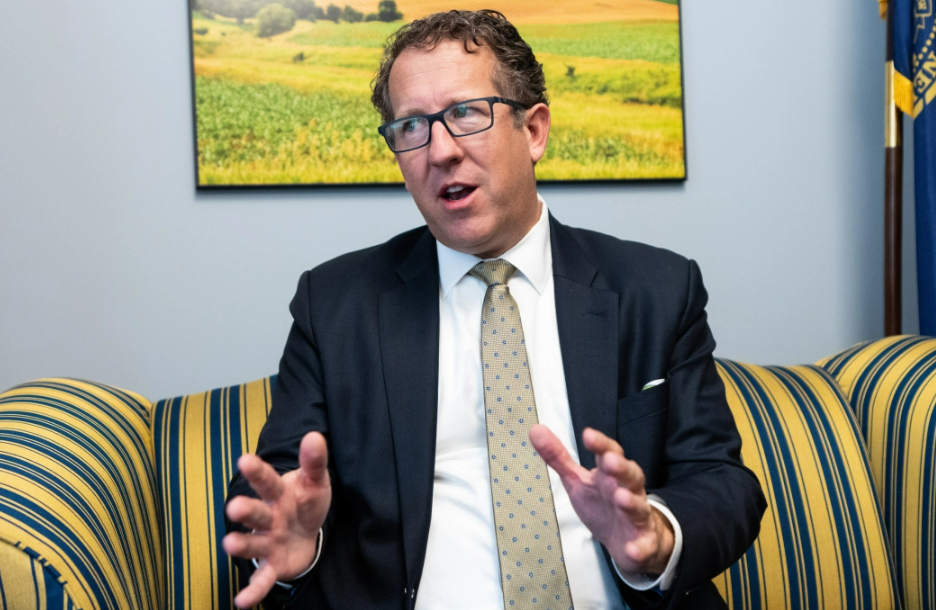
Rep. Adrian Smith, R-Nebraska, is a staunch supporter of the Educational Choice for Children Act, which would establish a tax credit scholarship program for students whose families make under 300% of their state’s median income.
Editor’s note: This article appeared Tuesday on edweek.org.
Republicans in Congress are pushing for school choice policies that allow parents to direct public funds to private schools, as education savings accounts, vouchers, and tax-credit scholarships gain momentum in GOP-dominated state legislatures.
Republican lawmakers in the U.S. House advocated for a slate of school choice policies throughout a two-hour Early Childhood, Elementary, and Secondary Education subcommittee hearing titled “School Choice: Expanding Educational Freedom For All” on April 18.
The push for expanded school choice goes hand in hand with a parallel Republican push for state and federal “parental rights” policies that allow parents a greater say in school curriculum, school library book selections, and more.
One of the policies touted at the hearing, the Educational Choice for Children Act, which Sen. Bill Cassidy, R-La., reintroduced in January alongside Reps. Adrian Smith, R-Neb., and Burgess Owens, R-Utah, would establish a tax credit scholarship program for students whose families make under 300 percent of their state’s median income.
The federal government would set aside $10 billion annually to fund tax credits for charitable donations to nonprofits that provide scholarships to K-12 students. That funding level would make it one of the largest federal education programs, behind Title I at $18.4 billion and special education at $15.5 billion.
Families could use the money to pay for private school tuition and tutoring programs, Smith said during the hearing.
“Parental involvement leads to better outcomes for students,” Smith said. “As legislators, we have a responsibility to encourage more parental involvement in education, not less. School choice is one way to do that.”
To continue reading, click here.
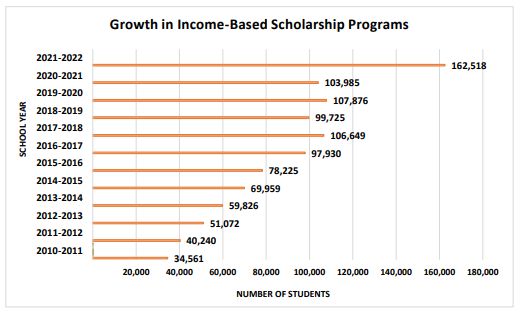 The number of Florida students participating in income-based scholarship programs served by Step Up For Students over the past 12 years has grown dramatically, from 34,561 in 2010-11, to 162,518 in 2021-22, according to a new report by Step Up For Students, the nonprofit scholarship funding organization that helps administer the scholarships and which hosts this blog.
The largest increase in Step Up students occurred between 2020-21 and 2021-22, however this was due to Step Up taking over stewardship of enrollment numbers of the Family Empowerment Scholarship for Education Options (FES-EO), a program that had previously been administered by the Florida Department of Education. Statewide enrollment for income-based scholarships increased from 142,716 to 162,518 when all sources of enrollment are included.
In the most recent year, a total of $1,715,159,524 was awarded to families from Step Up.
The annual end-of-year report looked at characteristics of private schools and enrolled students who received a Florida Tax Credit Scholarship or a Family Empowerment Scholarship for Educational Options through Step Up For Students, examining the distribution of private schools by various attributes and calculating graduation rates for 12th grade scholarship students enrolled in these schools.
Additionally, the report analyzed student demographics both in overall program enrollment and graduation rates.
Among the findings:
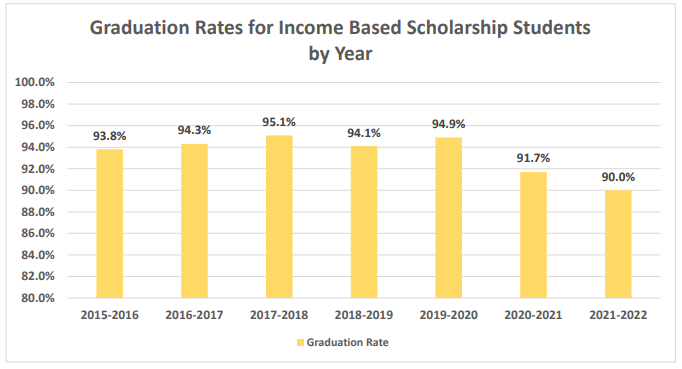
The graduation portion of the report was modeled after the National Center for Education Statistics’ biennial report, “Characteristics of Private Schools in the United States: Results from the 2019-2020 Private School Universe Survey.”
Data from the Florida Department of Education were utilized to examine these private schools along with data collected by Step Up For Students through school surveys. Data on religious affiliation were collected at the school level. Information about students’ gender, race/ethnicity, grade, single parent household status, poverty level, and graduation status were collected at the student level.
The survey received a 92.4% response rate.
*Edited to clarify that part of the growth in scholarships awarded by Step Up For Students was due to administrative changes in the FES-EO scholarship.

Kentucky Christian Academy in Campbellsville, one of 352 private schools in the state serving more than 67,000 students, partners with parents to help children grow academically and spiritually as affordably as possible.
Editor’s note: This article appeared Tuesday on thecentersquare.com.
Unlike other recent Kentucky General Assembly sessions, legislators did not pass a school choice bill before this year’s session ended last week.
However, proponents are not deterred and say steps Republican lawmakers took position their cause for success in 2024. Next year, they expect the legislature to pass a proposed constitutional amendment that would give it the power to fund school choice initiatives.
House Bill 174, filed this year by state Rep. Josh Calloway, R-Irvington, called for that amendment referendum. However, even if it cleared through the House and Senate, it would have been placed on the 2024 ballot – just like it would if it passes next year.
In January, a poll commissioned by EdChoice Kentucky found 54% of registered voters across the state supported a school choice amendment and the measure enjoyed at least 50% support in all of the state’s regions.
The strongest support is in Eastern and Western Kentucky, where 58% and 57%, respectively, support it.
In a statement to The Center Square, Jim Waters, president and CEO of the Bluegrass Institute for Public Policy Solutions, said the “temporary delay” is actually “the beginning of actual educational freedom in the commonwealth.”
Before this year’s session began, the Kentucky Supreme Court unanimously ruled last December a law creating educational opportunity accounts violated the state constitution regarding taxpayers funding public schools.
To continue reading, click here.

