Jeb Bush on Tony Bennett: "Tony will be sorely missed in Florida at a time when we need his leadership the most,'' writes former Florida Gov. Jeb Bush. Miami Herald.
 School grades: The fall of Tony Bennett might bring a new level of scrutiny to grading systems across the country. Education Week. There must be total transparency in any school accountability process, writes Nina Rees, executive director of the National Alliance for Public Charter Schools, in U.S. News & World Report.
More fallout: Dale Chu, chief of staff to Tony Bennett, resigns. Associated Press.
PARCC: Top Florida lawmakers will continue their push to abandon the PARCC testing consortium. Tampa Bay Times.
Teen work: Lauderdale Middle School students have received more than $500,000 in grants to spruce up an overpass behind their school. Sun Sentinel.
Charter schools: Even as 11 new charters open this fall in Palm Beach County, the district has another 31 applications in the pipeline. Palm Beach Post.
Magnet schools: The Pinellas County school district looks to bolster career and technical education and help low-performing schools by offering new magnet programs at middle schools. The Tampa Tribune. (more…)
The Cato Institute’s Jason Bedrick was unimpressed with my explanation for why I expect a growing embrace of Common Core State Standards by parents in Florida’s tax credit scholarship program and the private schools that serve them – and why I think that’s a good thing. Jason is a school choice stalwart with whom I often agree, so let me try again.
Common Core standards in math and English/language arts are widely adopted, high quality and transparent. They’re obviously not a silver bullet. But if implemented properly, they can help parents and teachers better educate the low-income children that are part of the tax credit scholarship program.
The reason? Academic stability and continuity are essential for these kids. When they apply for scholarships, they tend to be the lowest-performing students in the lowest-performing district schools. They face extraordinary personal and academic obstacles. Within the scholarship program, they tend to change private schools frequently.
And all too often, here’s what happens: They’re told by their current school that they’re excelling in Algebra, for instance, only to be told when they transfer to another school that they’re a year behind. We hear this complaint regularly from parents. We know this discontinuity is an issue for them.
My guess is, as more of them learn about these new multi-state standards, they will increasingly choose private schools that are using them. This consumer pressure, in turn, will spur more private schools to adopt the common standards, so they can successfully compete in Florida’s robust school choice market.
Private schools that adopt all or parts of these new standards will not sacrifice independence, flexibility or creativity, although assessments do guide curriculum and instruction. There are many ways to teach students how to, for instance, understand and solve polynomial expressions employing multiplication and division. Students who move from a New Age Montessori school to a fundamentalist Southern Baptist school will still be exposed to different curricula, teaching methods and school cultures, even if both schools are using the same content and performance standards in math and reading.
It’s true Florida’s private schools are being pressured to adopt these new standards. But the pressure is coming from the market, not the state or federal government. (more…)
What they're saying about Tony Bennett in Florida: Gov. Rick Scott and former Gov. Jeb Bush offered praise for Florida's education commissioner. The Buzz. Sen. Dwight Bullard calls for more input on the state's next education chief. Sun Sentinel. Orange County schools Superintendent Barbara Jenkins' name is coming up as a possible replacement. Orlando Sentinel. Despite a national reputation in education reform, Florida hasn’t found it easy to attract — or keep — a leader since Gov. Rick Scott took office. Miami Herald. StateImpact Florida shares Bennett's resignation letter. Florida long has allowed political donations to influence education policy, the very allegation that forced Bennett to quit, writes the Palm Beach Post. The result of Bennett's abrupt departure is more turmoil for Florida's education system. Tampa Bay Times. More from the Post, Florida Times-Union, News Service of Florida, Tampa Bay Times, Tallahassee Democrat and The Tampa Tribune.
 What others are saying: Two Indianapolis public schools might never have been taken over by the state if Bennett had offered the same flexibility he granted a year later to the Christel House Academy charter school. Indianapolis Star. Indiana's state grading system now faces uncertainty. Associated Press. Bennett's rising star in school reform is fading. Indianapolis Star. "This is, in my view, very sad news, as Bennett is widely regarded as one of the country’s smartest, savviest, and most effective education reformers,'' writes Reihan Salam for the National Review. In less than a year, Bennett has been ousted from two leading education positions, writes Valerie Strauss for the Washington Post. "Tony didn’t need the hassle. He took on these fights because they were the right ones,'' writes Neil Ruddock for the EdFly blog. More from the National Review, Hugh Hewitt, Politico, and several top education policy analysts weigh in on the Flypaper blog.
School transfers: Fewer than 300 students will be transferring out of overcrowded schools under a new Orange County transfer rule. School Zone.
Longer day: St. Lucie Elementary students will attend school for an extra hour each day to help improve their reading scores. TCPalm.
New posts: Daryl Ward will move up from assistant principal to principal at the Polk County Harrison Center for the Visual and Performing Arts. The Ledger. Manatee County Schools Superintendent Rick Mills has selected Scott Boyes to be executive director of elementary schools. Bradenton Herald.
Dual enrollment: Pasco Hernando Community College and school districts squabble over administrative fees following legislative changes that shifted program funding from colleges to the districts. Tampa Bay Times. (more…)
Editor’s note: We’ve made the point many times: Public education shouldn’t be synonymous with public schools and increasingly, in this age of rapidly expanding options, it isn’t. In a new essay, James V. Shuls, the education policy analyst at the Show-Me Institute in Missouri, expertly riffs on that theme, using the moving story of a student growing up in a tough stretch of St. Louis as a hook. Here’s a taste:
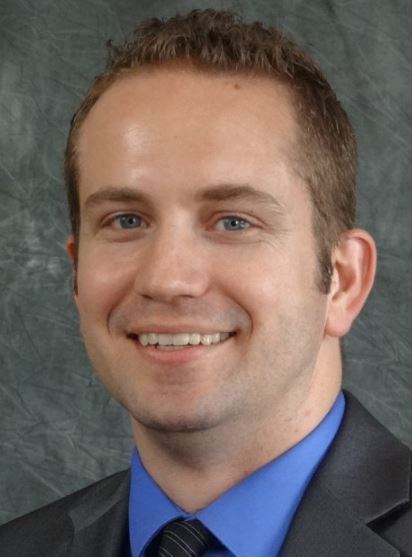
Shuls
As a child, Korey attended St. Matthew Catholic Church. In 2001, St. Matthew’s parish opened De La Salle Middle School. The small private school above Big Mo’s barbeque restaurant only had 20 students. Korey did not know what to think about the idea of attending De La Salle. In time, he would come to realize that this decision changed his life. With expected pride, he says, “De La Salle put me on a path to greatness.” This school was diferent from other schools he had attended. Class sizes were small, with more one-on-one attention. His teachers were passionate, not just about academics, but also about character. One in particular, Martha Altvater, pushed him harder than he had ever been pushed. From De La Salle, he earned a scholarship to Christian Brothers College (CBC) High School, a respected private school in Saint Louis County, and then attended Westminster College in Fulton, Mo. In 2012, he graduated with a degree in business administration; sitting in the audience was none other than Martha Altvater.
At a critical moment in his life, Korey had the opportunity to attend either a public school or a private school. He chose to attend the private school. In doing so, he chose the option that best served the public, as well as him. Had he chosen the neighborhood public school, Korey says he “might have fallen in with the wrong crowd and be in jail or dead today.” That has been the fate for many of his friends who attended the public high school. But Korey’s fate was different because he found a school that recognized and developed his potential.
Though it is a private school, De La Salle Middle School serves the public much more efectively than the district-run school, where fewer than half of the students graduate. However, instead of celebrating De La Salle as a venerable public institution, we label it as a private school and deem it unworthy of public funds.
***
This essay should not be construed to say that all private schools are great —they are not. Nor should readers think that I am saying that all public schools are bad — they are not. The point is that all types of schools — district, charter, and private — can effectively serve the public. Right now, however, we have put up an artificial barrier that prevents students from using public dollars to attend the private school of their choice. Never mind that these private schools can, as was the case for Korey Stewart-Glaze, serve the student and the public very well.
Korey Stewart-Glaze’s journey has come full circle. He now recruits students to attend the school that changed his life, De La Salle Middle School. Still, funding makes this a somewhat difficult task. Though the school provides privately funded scholarships to 100 percent of its students, they still have to pay some tuition. This severely limits the number of students the school can serve and creates a barrier for many families who simply cannot bear the cost. Our narrow definition of public education prevents De La Salle from receiving state dollars and prevents more students from experiencing the life-changing moment that Korey had. It is time we redefine public education. It should no longer mean assigning students to a specific type of school, regardless of quality, but rather that we provide access to a quality education, regardless of the type of school delivering that education.
Editor’s note: Craig S. Engelhardt is a former teacher and school administrator who directs the Waco, Texas-based Society for the Advancement of Christian Education. His new book is “Education Reform: Confronting the Secular Ideal.”

Engelhardt
Public education reflects some of America’s highest ideals and is based upon a belief in the value of both the individual and American society. Its existence reflects the belief that all children - regardless of their demographic status - should have the opportunity to grow in and pursue their potential. Its curricula reflect the belief that prosperity, liberty, and peace are rooted in individuals who are knowledgeable, skilled, reasonable, individually reflective, morally responsible, and socially supportive.
I support public education as both an ideal and a “good.” However, I claim public education harbors a systemic flaw that hinders and often prevents our public schools from fulfilling their ideals. Further, I claim this flaw has survived virtually unrecognized and unchallenged for over a century. Is it possible a scientific, astute, experienced, and democratic people could have missed a “flat world” sized flaw in a system so close to their lives and communities? I maintain we have. I have extensively written about it in “Education Reform: Confronting the Secular Ideal.”
In this scholarly book, I attempt to “tease out” the roles religion has played in education from America’s conception to the present. To do this, I start with a functional definition that describes religion as a coherent and foundational set of beliefs and values that provides a framework for reason and a source of motivation for life. Defined functionally, religions are worldviews that may or may not have a deity.
Working from this definition, I discover pre-modern (roughly pre-20th century) public and private education leaders consciously held religion to be central to their efforts. In other words, they believed individuals were shaped by their religious beliefs and the educational nurture of individuals relied upon teaching the foundational beliefs of their communities, extrapolating from pre-existing beliefs, and integrating new facts with those beliefs. The question within 19th century common schools was not whether schools should be religious, but which religious tenets were most integral to and supportive of the American way of life. This educational discernment was not merely due to prejudice or self-centered majoritarian preferences (though these played a role), but to a reasoned, experiential, and historically evident understanding of the roles of religion in society. The exclusive public support of common education seems to have been an attempt to educate non-Protestants toward many of the morals, beliefs, and perspectives considered to be “American” and indebted to the Protestant faith.
So how did secular public education become an “ideal”? First, I note it never was the ideal for the majority of the U.S. population. Even now, given a choice, I believe most parents would likely prefer to send their children to a school reflecting their “religious” views. Secular public education developed in America as a result of the confluence of two mutually supporting public commitments and a national trend - all were philosophically based, but one carried the overwhelming force of law. I believe the complexity of their interplay and the slow pace of change allowed the “flaw” of linking public education with the secular paradigm to survive to our present day with little challenge. (more…)

(books on tape and caffeine are highly recommended for long road trips in western states!)
After 2,500 miles through high deserts, forested mountains, windswept prairies, and boggy woodlands – and 190 gallons of gas and one flat tire – I’ve reached my education destination. For the past five years in Nevada, I made a consistent pitch to my colleagues and lawmakers and the governor: “Copy Florida.” Now I live here in Tampa.
Resident Floridians may not realize how well their state actually performs on the education front. You may not even recognize the similarities between Nevada and Florida.
Yes, Nevada and Florida have a very different geography and climate. For one thing, Nevada is the driest state in the U.S., and Florida will receive twice as much rain in July as Nevada gets in an entire year. Florida’s tropical climate is thick with forests, swamps and beautiful beaches. Meanwhile, Nevada occupies the Great Basin and Mohave Desert; a dry desolate place known for prickly Joshua trees, barren mountains and temperatures that soar above 120 degrees.
The landscapes aside, Nevada and Florida share similar public education students and challenges. Both states have a student population that is majority minority today. Student poverty rates and disability rates are also comparable, though Nevada has a larger English language learner population. Nevada and Florida also spend about the same amount per pupil. Interestingly, both states are vacation and retirement destinations with more tourists than residents.
Not surprisingly, education attainment rates were once very similar.
Data from the U.S. Department of Education’s National Assessment of Educational Progress (NAEP) reading exam shows that Nevada and Florida had virtually indistinguishable achievement rates just 15 years ago. That has changed dramatically. While Nevada in the past few years has started to catch up with Florida on math, the Sunshine State has soared past the Silver State in reading. NAEP’s 4th grade reading scores are also a good barometer for education success and graduation rates.
These reading achievement levels are also striking when we zero in on low-income students who are on free or reduced-price lunch (FRL). In the charts below, we compare Nevada and Florida’s FRL students on the NAEP 4th grade reading exam. In this way we examine only the attainment for the most disadvantaged students in both states. (more…)

When Step Up parents talked about their personal circumstances, the scholarship program stopped being this abstract idea and started becoming something much more real.
Earlier this month, the Florida PTA held its annual convention with at least 20 new members in attendance: parents of children who receive tax credit scholarships to attend private schools.
Many of them took time off from one or two jobs to attend. And in doing so, they participated in what is, if not a historic first, certainly very unusual – private school inclusion in an organization that historically has been devoted to public schools.
Who knows where this will lead. But good things can happen when people who are supposedly on different sides of an issue actually meet face to face. Even when the issue is something like private school “vouchers.”
As an organizer for Step Up For Students, the nonprofit that administers the scholarships (and co-hosts this blog) my job was to attend the convention as well and facilitate a meeting between PTA leaders and scholarship parents.
One of the first things we all noticed was the PTA’s platform, included in the tote bag that participants received. The platform explained that while the PTA opposes vouchers in all its forms, including tax credit scholarships, it urges the Legislature to impose strict eligibility requirements and accountability measures on all private schools participating in these programs.
“What does this mean?” one mother asked me.
“It means they’re against our program, but believe private schools should administer the same standardized tests, like FCAT,” I said.
It’s easy to be against a program you don’t know about or really understand. So, I told our parents, go to the sessions, visit the vendors, and attend receptions. “Meet with these folks and make sure they put a face to this program,” I said. “You’re our ambassadors and I’m sure this weekend will lead to understanding and a better relationship between Step Up For Students and the PTA.” (more…)
Editor's note: Jason Bedrick is a policy analyst at the Cato Institute’s Center for Educational Freedom.
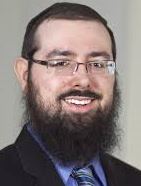
Jason Bedrick
Earlier this week, Doug Tuthill, the president of Step Up for Students, argued that Common Core can help school choice. Tuthill is a champion of school choice whose organization has helped hundreds of thousands of Florida students attend their preferred schools. That’s why it is all the more disappointing to see him advocating for a policy that would undermine the very system of diverse educational options that he’s worked tirelessly to promote.
In Tuthill’s view, common standards merely “serve the same function as the operating systems in computers or smart phones” in that they provide a common platform that’s open to an “endless supply” of different applications (curricula, lesson plans, activities, etc.) that can be customized by users.
But Common Core is not just an open-platform operating system. As Chester Finn of the Thomas B. Fordham Foundation has written, standards-based accountability requires a “tripod of standards, testing, and accountability.” My colleague, Neal McCluskey, has pointed out that a system of national standards like Common Core requires a “national tripod”: “all schools must use the same standards and tests to compare how all kids are doing, and there must be uniform punishments for schools that do not do well.”
Tuthill claims there’s nothing to fear because private schools and their parents “value their autonomy. They will oppose government efforts to mandate curriculum or instructional strategies.” But the government doesn’t have to mandate a curriculum to control content. When standards are tied to tests by which a school’s performance is evaluated, schools will have little choice but to conform. The tests will de facto dictate content: what concepts are taught when and perhaps even how. As James Shuls of the Show-Me Institute has written:
The fact is that curriculum standards don’t tell teachers how to teach in the same way that a high jump bar doesn’t tell a jumper how to jump. You could theoretically jump over a high jump bar in whatever way you would like; but because of how the jump is structured there is a clear advantage to doing the old Fosbury Flop.
Rather than providing a mere operating system, it's as though Apple told app-designers they could make any kind of app they want so long as all the apps perform the same basic function, operate at the same speed, and cost the same amount. Of course, they're welcome to vary the color scheme. (more…)
Charter to private: After continually receiving "F'' grades from the state, Escambia County's A.A. Dixon charter school opens next month as a private school in a new location. Pensacola News Journal.
Budgets: A Manatee County school official calls the district's budget process "excruciating'' as board members begin to review a 17-page proposal. Bradenton Herald. More on Manatee's budget, including indications that the board may lower the tax rate from the Sarasota Herald-Tribune. The Pasco County School Board adopts a budget that includes a slight tax increase and $26 million in spending reductions. Tampa Bay Times. Broward County teachers will get raises in the district's $3 billion budget proposal that includes a small tax increase. Sun Sentinel.
Dress codes: Two more Pinellas County schools join the list that want modified dress codes for students to put the emphasis on academics. Tampa Bay Times.
GPAs: The Pasco County School Board adopts a new formula for figuring grade point averages that includes courses taken online and in middle school. Tampa Bay Times.
Conduct: The Lee County school district investigation of former Chief Administrative Officer Alberto Rodriguez suggests he violated school board policy by misusing district phones, conducted personal business on school time and had an improper relationship with another district employee. Fort Myers News-Press. Another Lee County district investigation clears a teacher accused of striking a 10-year-old student with special needs. Fort Myers News-Press. A controversial community organizer accused of trying to extort nearly $1 million and financial favors from Palm Beach County school district officials asks for a new lawyer. Palm Beach Post.
Back to school: The Florida Retail Federation anticipates the state will buck the national trend, with shoppers here spending more for back-to-school supplies. Daytona Beach News-Journal.
TV class: A TV and film program at Pine Crest, a private school in Fort Lauderdale, now has its own $750,000 on-campus production studio where students will learn to report, produce and edit stories. Sun Sentinel.
Mentors: Leon County is looking for 500 new school mentors. Tallahassee Democrat.
Tony: Florida Education Commissioner Tony Bennett talks to Scripps Treasure Coast Newspapers about Common Core, school grades and the role of organizations like Big Brothers Big Sisters in education. TCPalm.
Summer school: A mobile media center bus provides books for Polk County students to keep them learning year-round. The Ledger.
On a mission: Jesuit High School students travel to South America on a journey to share their faith. Tampa Bay Times.
The collision of budgetary distress and school vouchers has produced a familiar financial accusation in North Carolina. But an honest accounting of the state’s new scholarships for low-income children finds no conflict with public school spending.
This is not meant to diminish the political fight over the budget there. After all, North Carolina is ranked 45th in per-student spending and 46th in teacher pay, and has been dropping in those rankings in recent years. Even some Republicans voted against the 2013-14 budget this week as the party sent a lean appropriations bill to Republican Gov. Pat McCrory on Wednesday.
The point, rather, is that the education budget is made no worse by the inclusion of a $10 million voucher program for low-income students.
Various activists and commentators have tried to make the opposite case, one portraying school vouchers as “siphoning public dollars away,” another saying private schools “seek to profit off of public schools,” another finding incongruity in not giving teachers raises while “pumping public funding into a voucher program.” The Progressive Pulse blog wrote “the larger the program becomes, the more money it will lose for North Carolinians.”
The Pulse based its claims on a legislative fiscal evaluation of the scholarship program that was previously approved in the House, but pointedly ignored the local tax savings. When local and state are combined, the evaluation put the five-year savings at between $23.4 million and $52.3 million.
What’s more, the savings are likely to be much greater because the evaluation used a methodology that, to put it charitably, is outside the mainstream. (more…)

